
Plant common ninebark — a quick note to anchor this piece for readers.
Plant common ninebark: Quick notes
This post may contain affiliate links. If you make a purchase through links on our site, we may earn a commission.
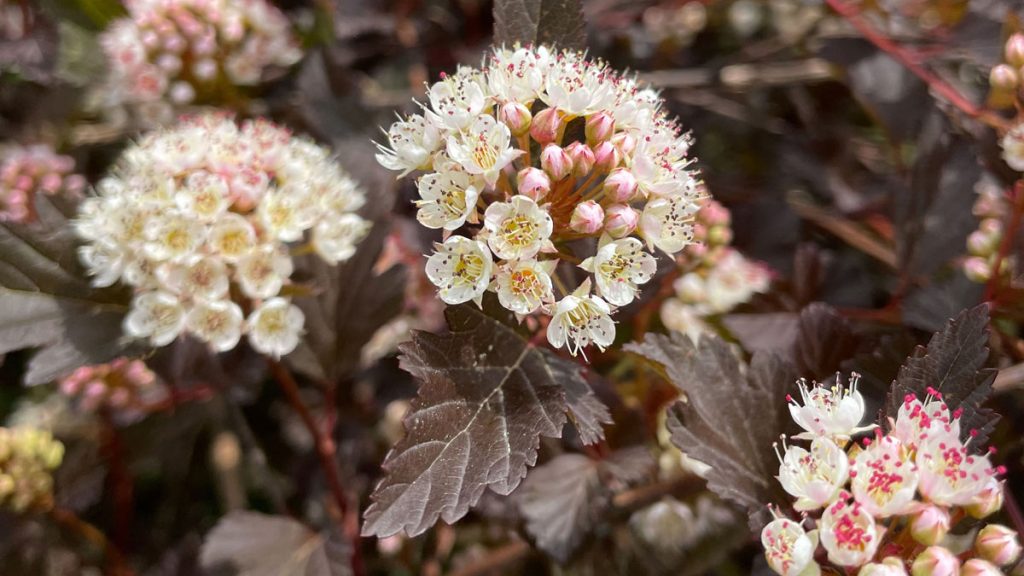
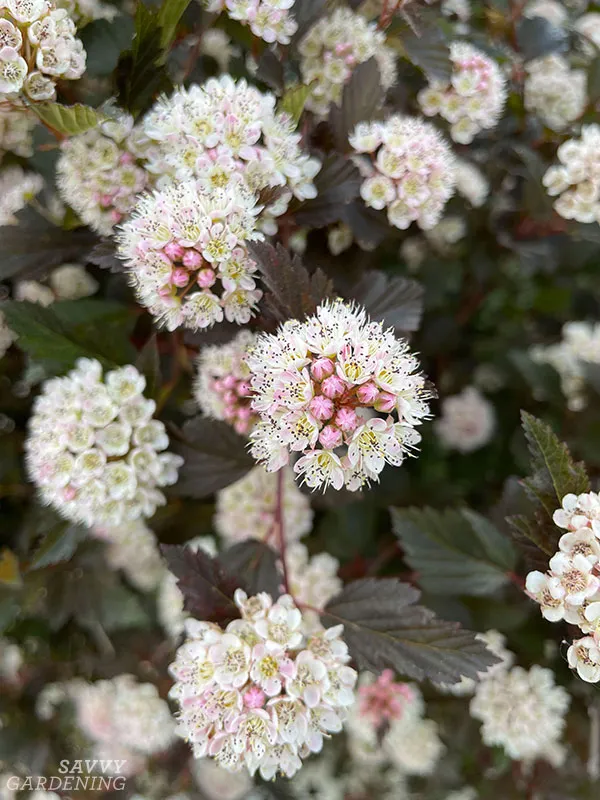
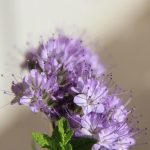
If you are looking to fill a space in the garden with an interesting-looking, fast-growing shrub, consider a Common ninebark. I was introduced to ninebarks via Tiny Wine, with its gorgeous maroon-colored foliage. While the leaves may be a strong selling point, the flower clusters, which look like half pom poms, are so pretty when you look at them up close. And when in bloom, they are absolutely buzzing with bees. Pollinators love ninebarks, which is another reason to add it to the landscape.
A member of the rose family, the Common ninebark (Physocarpus opulifolius) is native to a great deal of North America. The hybridized Tiny Wine would be considered a nativar, as would another popular variety called Little Devil ninebark. However it is possible to find Common ninebarks. I’m able to order the shrub from a local-to-me nursery that sells native plants.
What does a ninebark look like?
Ninebarks are very attractive shrubs with leaves along the lengths of their stems that have serrated edges, similar to those of a Manitoba maple. The leaves of the Common ninebark have more of a greeny copper color, while Tiny Wine has more of a bronze maroon foliage.
Ninebarks are pretty upright shrubs, though when they really start to grow and the stems become laden with blooms, it weighs them down. Flowering happens in the late spring, usually around early June. Some years they bloom twice! I have photos of flowers in August.
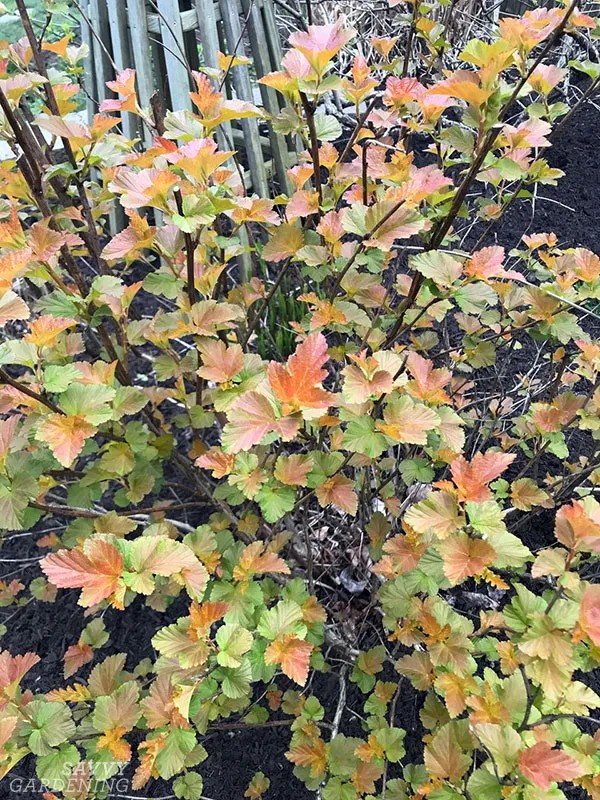 The foliage of ninebarks provides visual interest in the garden from early spring when they start to leaf out through to late fall.
As the flowers fade, they become seed capsules that look like little umbrellas that have blown inside out. That is the fruit, which helps to feed the birds in the winter. One of my ninebarks is just off my living room window and I often see juncos and house sparrows among the branches.
Ninebarks have exfoliating bark. This means the bark naturally peels away from the stem as the plant grows. And apparently there are nine layers, hence the shrub’s name.
Be aware of a ninebark’s eventual size
While my Tiny Wine is considered a dwarf variety, it still grows to be about 36 to 60 inches (91 cm to 1.5 m) high. That’s five feet! The size might be a bit intimidating for people with a small space. A common ninebark can grow from five to 10 feet tall and spread about six to 10 feet wide. That one you definitely need space for.
 The color of a ninebark’s foliage provides visual interest through the fall.
Where to plant a ninebark
Ninebarks will tolerate dry and wet soils, from sandy to loamy. They also don’t mind a bit of clay loam. Once established, they are drought tolerant. One of mine is planted in my front yard garden that gets full sun. The soil is quite dry and poor, but it thrives despite these conditions. Another of my ninebarks gets a lot of afternoon shade, but still thrives.
Common ninebarks do well in cold climates. They are hardy down to USDA zone 2, which is -50°F to -40°F (-46°C to -40°C). One of mine gets a lot of exposure in winter, but comes back each spring with vigor. Ninebark shrubs are also deer and rabbit resistant.
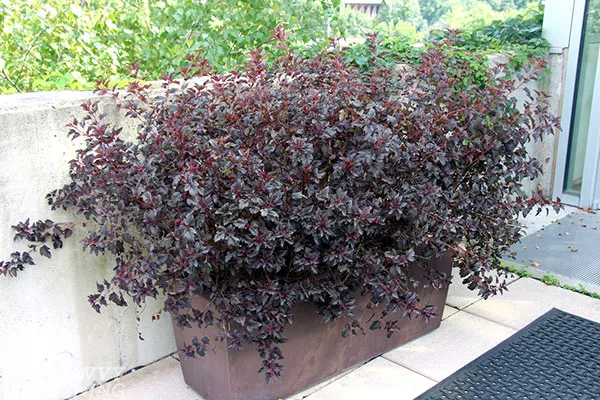 While ninebarks will spread their tentacles of leaves and flowers in a garden, you can also use them as container plants to create a little privacy barrier on a patio or porch.
Potted ninebarks at the garden center may come in a variety of sizes. Even small, young shrubs will grow quickly! Choose a spot of the garden that gets full sun to partial shade. Soil should be well draining. Dig a hole slightly larger than the root ball and amend the soil with compost. Place your shrub and fill in the soil so that the top of the root ball is almost level with the garden.
Pruning ninebarks
Ninebarks bloom on old wood, so be mindful of how much and when you prune A good time of year is after the shrub has bloomed. As with many shrubs, avoid pruning more than one-third of the branches. Eliminate any dead wood that doesn’t have any leaves on it and thin the center of the shrub to promote good air circulation.
One year I got a bit overzealous with the pruners and was worried about the fate of my diminished shrub. However, the next spring it came back as if nothing had happened—and then some! Tiny Wine is referred to as a dwarf variety, but it is very big.
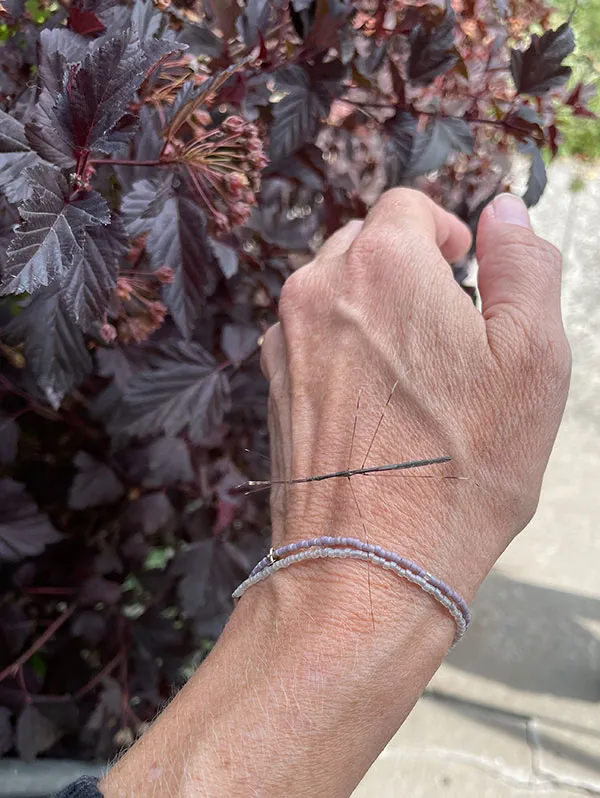 While this photo focuses on a stick bug I found in my house (I was setting it free outside), it also shows the seed capsules of a ninebark that has flowered.
I don’t tend to use fertilizers on my ninebarks. They have always done well in my garden. I’ll just amend the soil around them with compost when I’m working to build up the soil of the whole garden.
Ninebark pests
Ninebarks are pretty hardy, but there is the odd affliction that could affect them. Depending on the weather of the growing season, the stress of too much or too little water can lead to leaf spot. Aphids sometimes find the new growth to feast on. But a hard spray from the hose can get rid of them. One year one of my ninebarks got powdery mildew. It was a damp year, but the following spring it was fine.
We reference Plant common ninebark briefly to keep the thread coherent.









Small note – I appreciate the point about “Plant a Common Ninebark for its Interest” — very helpful. Will try it.