Every philodendron drops leaves eventually. It’s part of the plant’s natural cycle. Older leaves yellow and die as the plant puts energy into new growth. If you’ve got a philodendron with a few crispy or yellowed leaves at the base, you don’t really need to worry.
That said, if you do want to tidy up the plant and make it look a little healthier, there’s a right way and a wrong way to remove them. Pulling leaves off by hand, cutting in the wrong spot, or using dirty tools can leave your plant vulnerable to disease or stuck with unsightly bare stems that won’t produce new growth.
A few small details in how you trim dead philodendron leaves will help your plant bounce back. Here’s how to get it right.
Know What to Remove
Largely yellow leaves from any houseplants should be removed.
Not every yellowing leaf needs to come off immediately. A leaf that’s partially yellow but still mostly green is still contributing energy to the plant. Let it finish dying back on its own before you cut it. Once a leaf is fully yellow, brown, or crispy, it’s no longer doing anything useful and can be removed.
Beyond dead leaves, look for stems that have lost all their foliage, leaves with visible pest damage (chewed edges, sticky residue, or webbing), and any growth that’s broken or badly damaged. These are all worth removing when you’re already trimming.
Don’t remove more than about a quarter of the plant’s total foliage at once. Taking too much off at one time can stress the plant. If your philodendron has a lot of partially damaged leaves, spread the trimming over a few sessions rather than doing it all at once to give it the best chance of recovery.
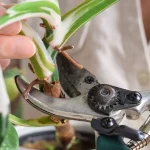
 Don’t trim dead philodendron leaves with blunt tools.
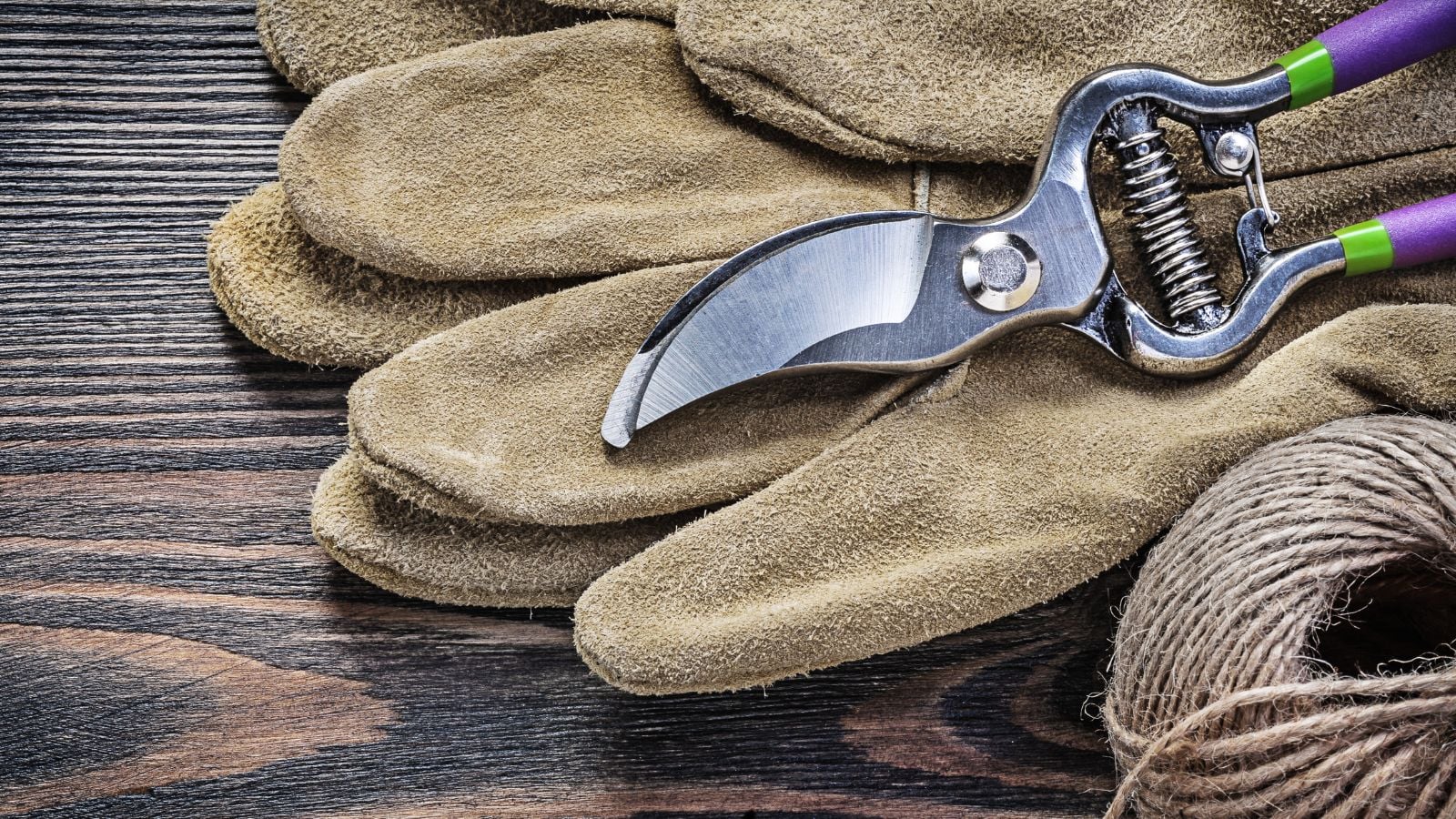
When it comes to tools, a sharp pair of scissors is fine, but the important thing is that the cut is clean. Dull blades crush the stem rather than cutting through it, which damages the tissue and creates a larger wound that takes longer to heal and is more vulnerable to infection.
Although it is tedious, always clean your tools before you start. Wipe the blades with rubbing alcohol or a diluted bleach solution (one part bleach to nine parts water). This takes a few seconds and prevents you from transferring bacteria from another plant. If you’re trimming multiple plants in the same session, sterilize between each one.
Also wear gloves to trim dead philodendron leaves if you have sensitive skin. Philodendron sap contains calcium oxalate crystals that can cause irritation on contact. It’s not dangerous on skin alone, but it can be unpleasant.
Cut in the Right Place
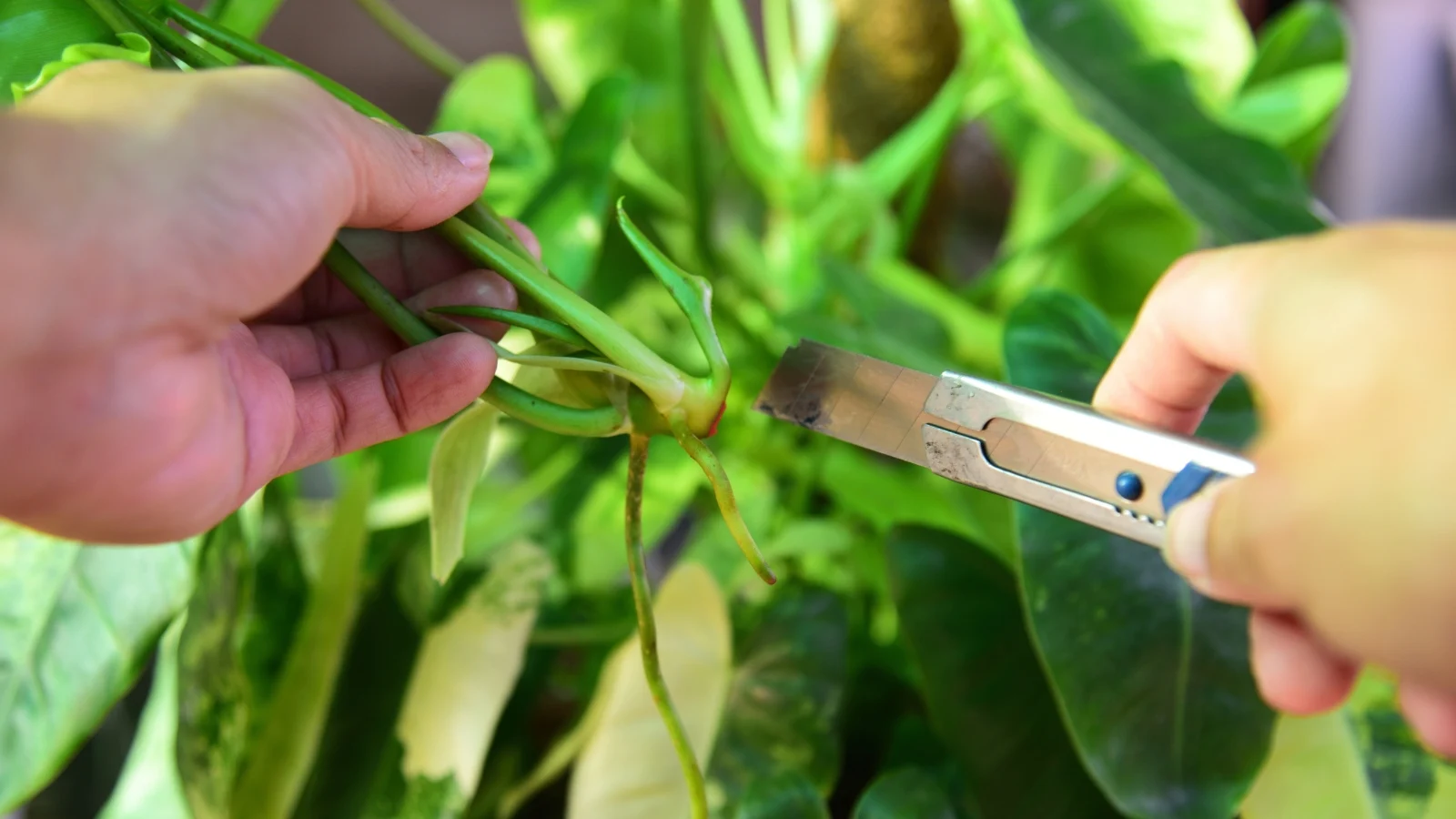 Just like propagation, where you cut is important.
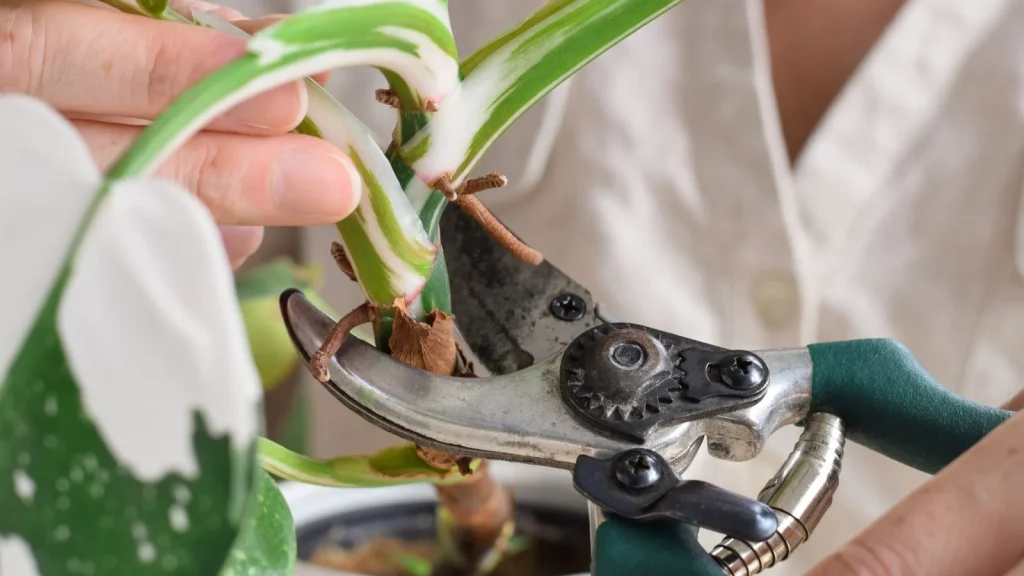
This is where most people make mistakes. Don’t just snip off the leaf blade and leave the stem (called the petiole) attached to the plant. A leafless petiole won’t produce a new leaf. Remove the entire petiole back to where it connects to the main stem or vine.
For vining philodendrons (like heartleaf), cut just above a node. That’s the small bump on the stem where a leaf or aerial root emerges. New growth comes from nodes, so cutting above one encourages the plant to branch from that point. If you cut too far between nodes, you’re left with a dead stub.
For upright philodendrons, cut the petiole as close to the base as possible without damaging the others. These types don’t branch the same way vining species do, so the goal is a clean removal rather than encouraging a specific growth point.
If a stem is entirely leafless or heavily damaged, you can cut it all the way back to the soil line. As long as other stems remain healthy, the plant should recover.
Timing
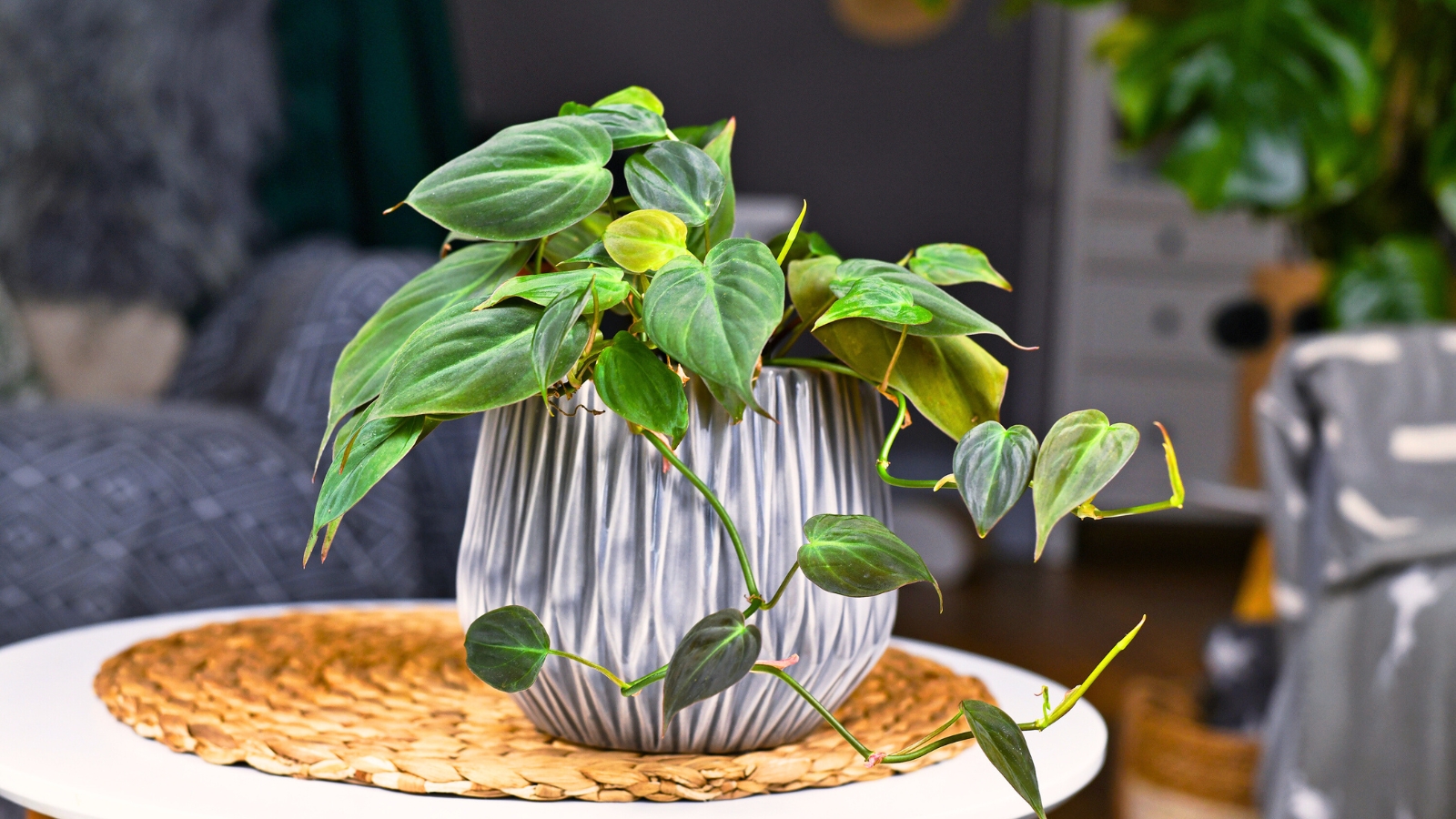 There is no advantage to leaving completely dead leaves on the plant.
You can trim dead philodendron leaves at any time of year. The plant isn’t going to suffer because you trimmed off a brown leaf in winter. If something is dead, there’s no advantage to leaving it on.
If you’re doing more significant pruning (cutting back leggy growth, reshaping the plant, or removing large sections), spring or early summer is better. The plant is actively growing and will recover faster and push out new growth more quickly than it would during the slower winter months.
Avoid heavy pruning when the plant is already stressed from being recently repotted, moved to a new location, or recovering from a pest issue. Adding pruning stress on top of other stress tends to slow recovery rather than helping.
Identifying a Problem
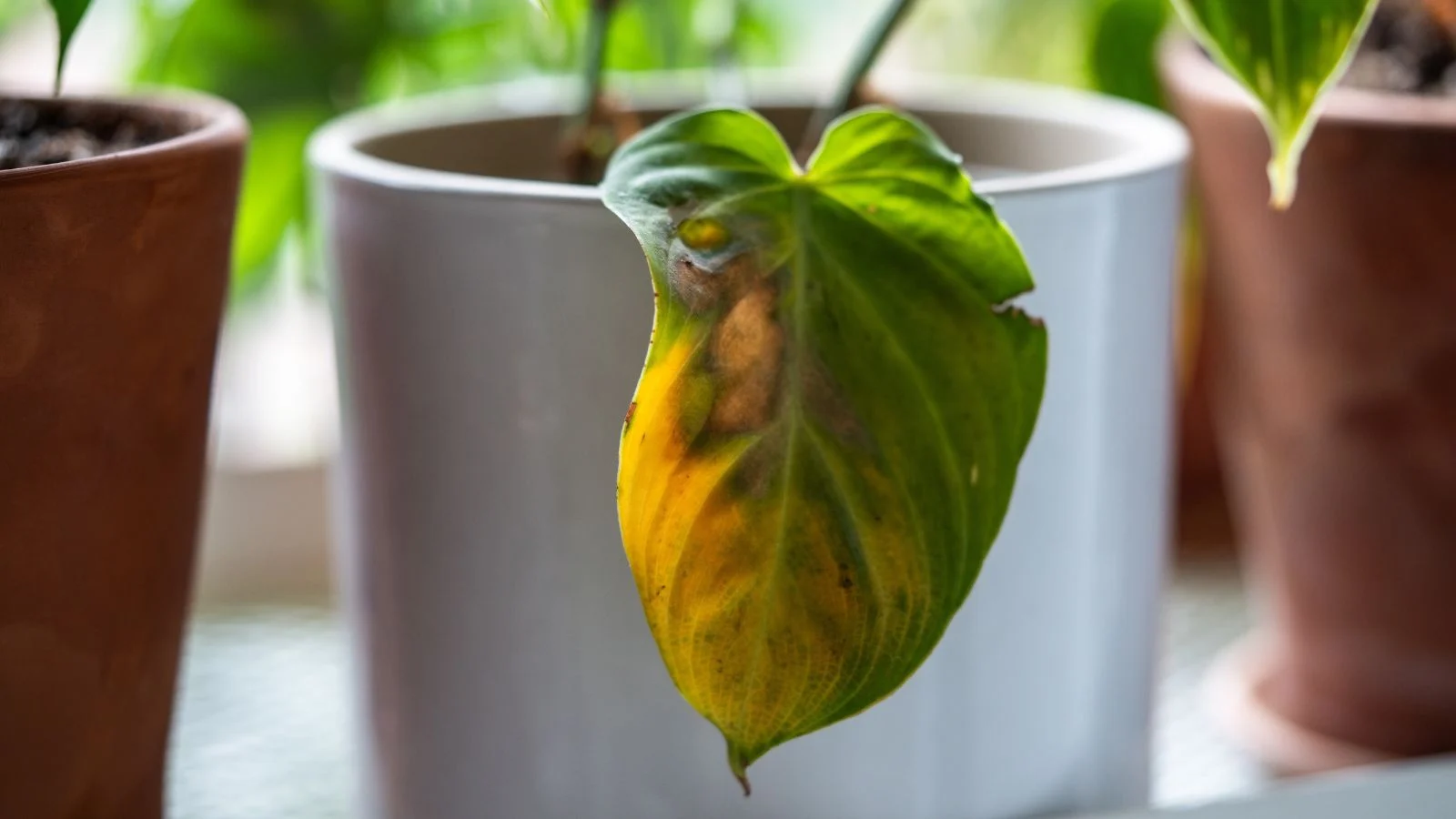 If dead leaves show up often, look for the causes of the problem.
A few dead leaves here and there are normal. A sudden increase in yellowing, browning, or leaf drop usually isn’t. If your philodendron is losing leaves faster than it’s producing new ones, the dead leaves are a symptom rather than the problem, and trimming alone won’t fix it.
Overwatering is the most common cause. Philodendron roots sitting in soggy soil lose access to oxygen and begin to rot, which shows up as yellowing leaves that feel soft and mushy rather than dry and crispy. If the soil is consistently wet and the leaves are turning yellow from the bottom up, check the roots for rot and repot if needed.
Too much direct sunlight can scorch leaves, leaving them with brown, papery patches that don’t recover. Move the plant to a spot with bright indirect light. Too little light, on the other hand, tends to produce leggy growth with sparse leaves rather than dead ones, but the plant will look unhealthy overall.
If you’re seeing yellowing along with sticky residue, tiny webs, or small insects on the undersides of leaves, pests are likely involved. Remove the affected foliage and treat the plant before the infestation spreads.