Squash seeds indoors. A brief context to set expectations.
Squash seeds indoors: Quick notes
Squash is one of those crops that’s easier to direct sow than to transplant. The roots are sensitive, and a plant that gets root-bound or handled roughly during transplanting may never fully recover. So why bother starting indoors at all?
Because sometimes the season doesn’t give you a choice. If you’re in a cooler climate where the growing season is short, waiting until the soil is warm enough to direct sow can mean your squash doesn’t have time to mature before frost.
Starting squash seeds indoors three to four weeks early bridges that gap and gives you a harvest you might not get otherwise. The key is keeping the indoor phase short and handling the transplant carefully.
Round Zucchini Summer Squash
Round Zucchini Summer Squash Seeds
Dirani Summer Squash
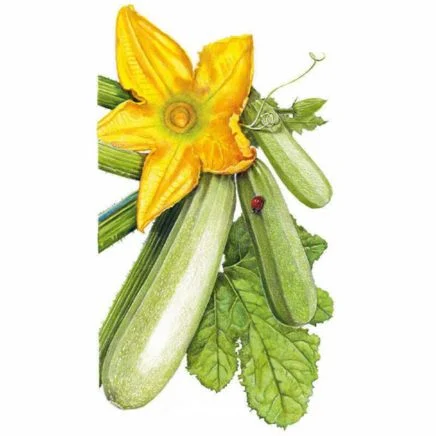
Dirani Summer Squash Seeds
Gelber Englischer Summer Squash
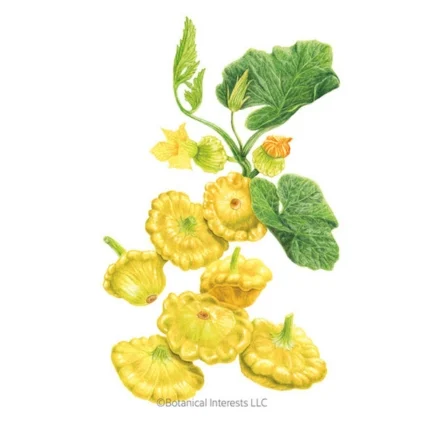
Gelber Englischer Summer (Patty Pan) Squash Seeds
Get the Timing Right
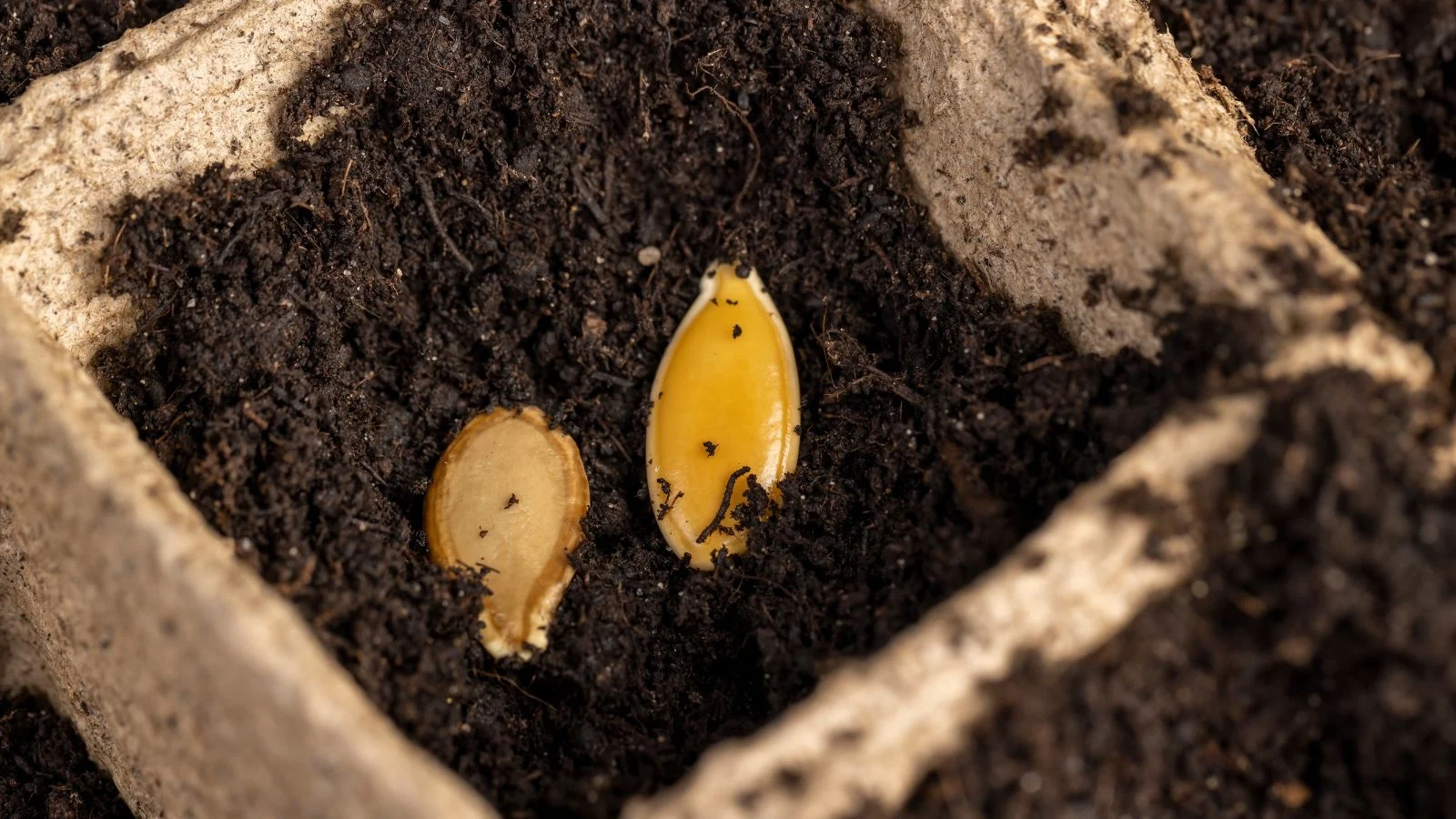 Start squash seeds indoors about four weeks before your last frost date.
The window for starting squash seeds indoors is narrow. Sow seeds three to four weeks before your last expected frost date. Squash seedlings grow quickly, and a plant that’s been sitting in a small pot for six weeks will be root-bound and leggy by the time conditions are warm enough to transplant. Plus, root-bound squash rarely recovers well.
Count backward from your last frost date and add about two weeks (since you’ll need to wait until the soil is consistently warm before transplanting). That gives you your sowing date. If you’re in a warm climate with a long growing season, direct sowing outdoors once the soil reaches 70°F (21°C) is usually the simpler and more reliable approach.
Use the Right Containers
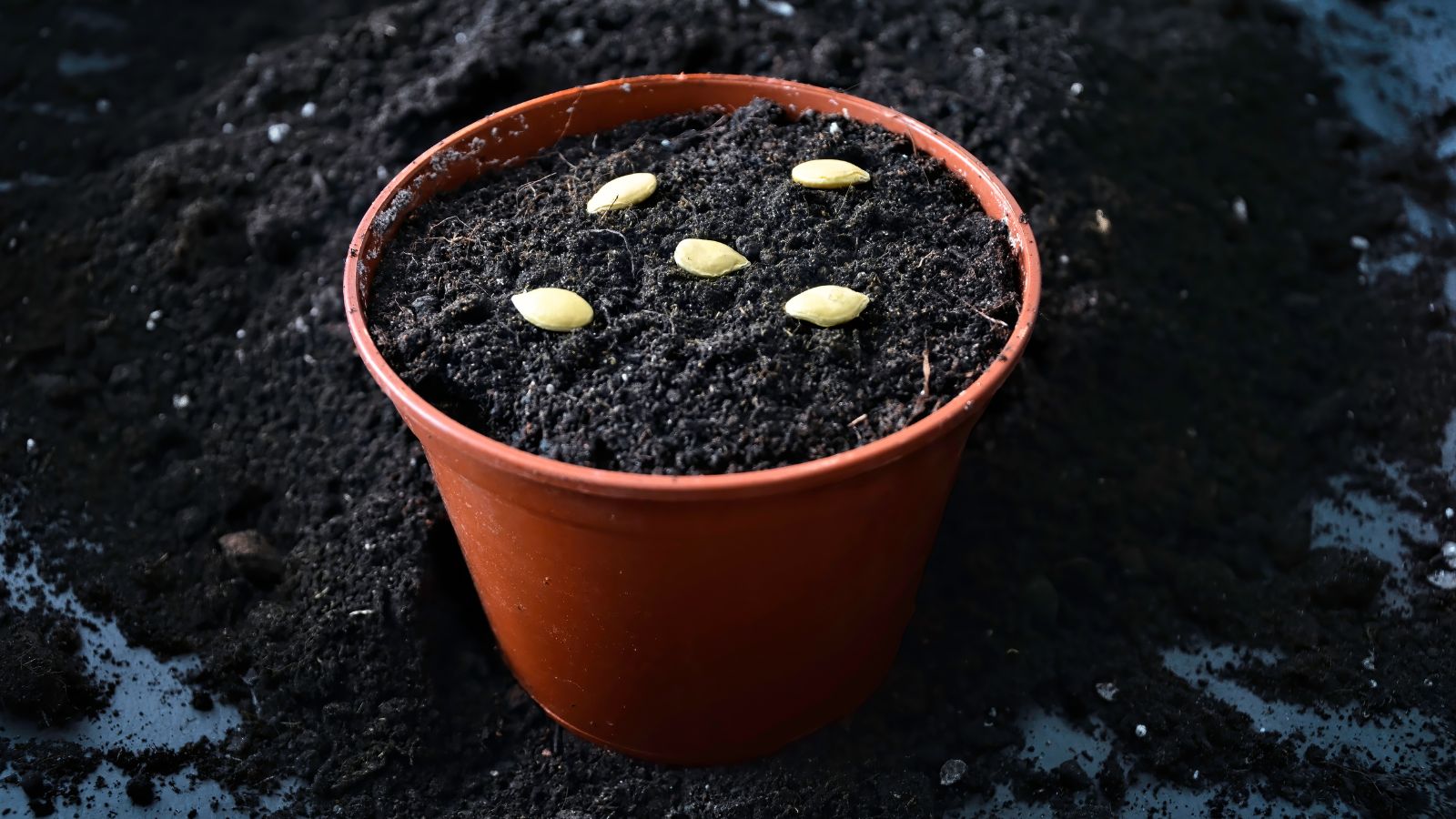 Unless you’re growing in pots all season, it’s best to start in biodegradable pots.
Because the roots are sensitive to disturbance, biodegradable pots (peat pots, coir pots, or paper pots) are the best option. You plant the entire pot into the ground at transplant time, and the roots grow through the material without ever being disturbed.
Use pots that are at least three inches across. Squash seedlings are vigorous and will outgrow anything smaller within a couple of weeks. Four-inch pots give you a little more buffer if conditions keep you from transplanting on schedule.
Fill the pots with a light, sterile seed-starting mix. Don’t use garden soil, which compacts in small containers and can introduce diseases. The seed-starting mix should be pre-moistened before you sow (damp but not waterlogged).
Sow the Seeds
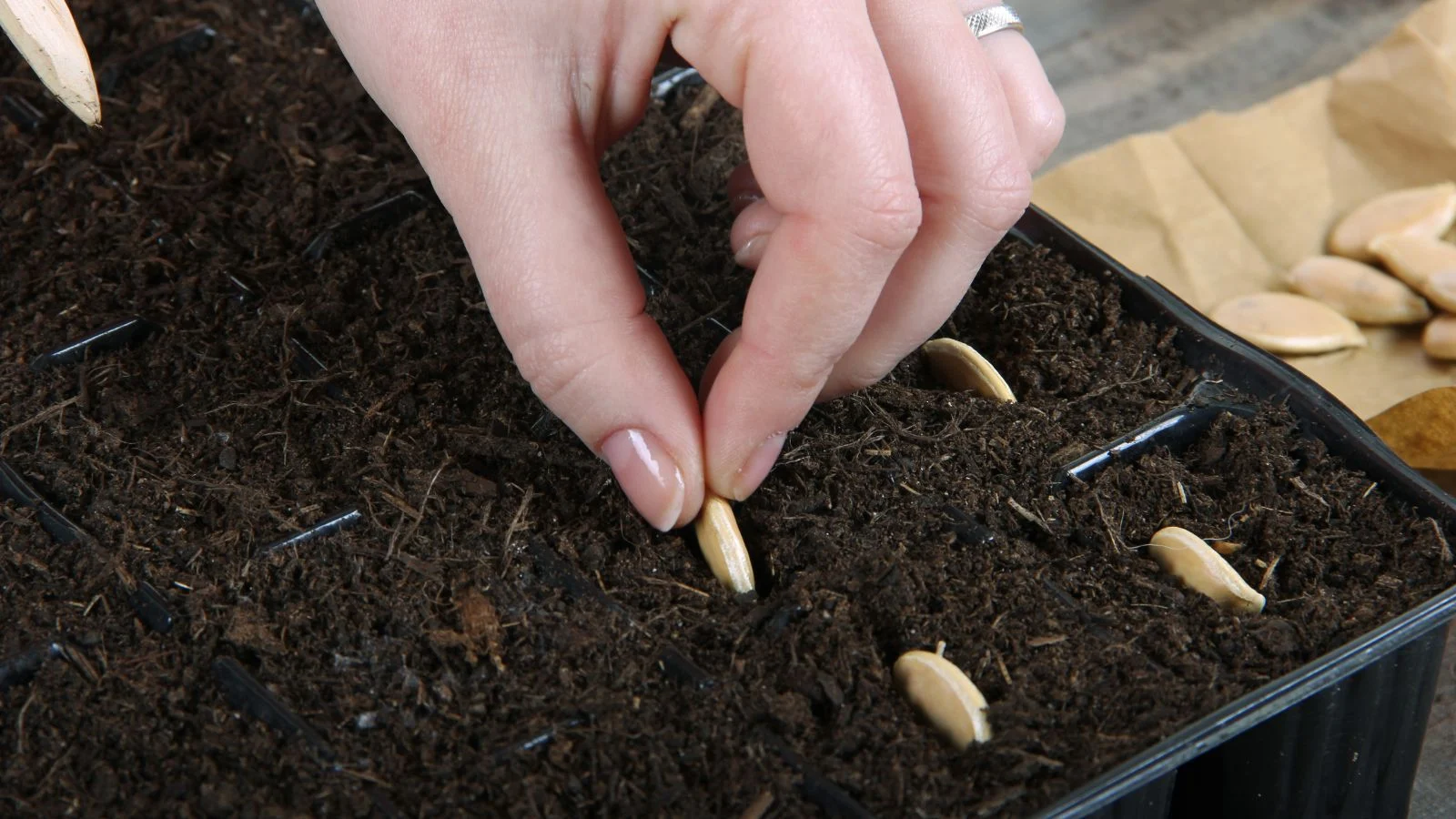 Cover the seeds to trap moisture until they germinate.
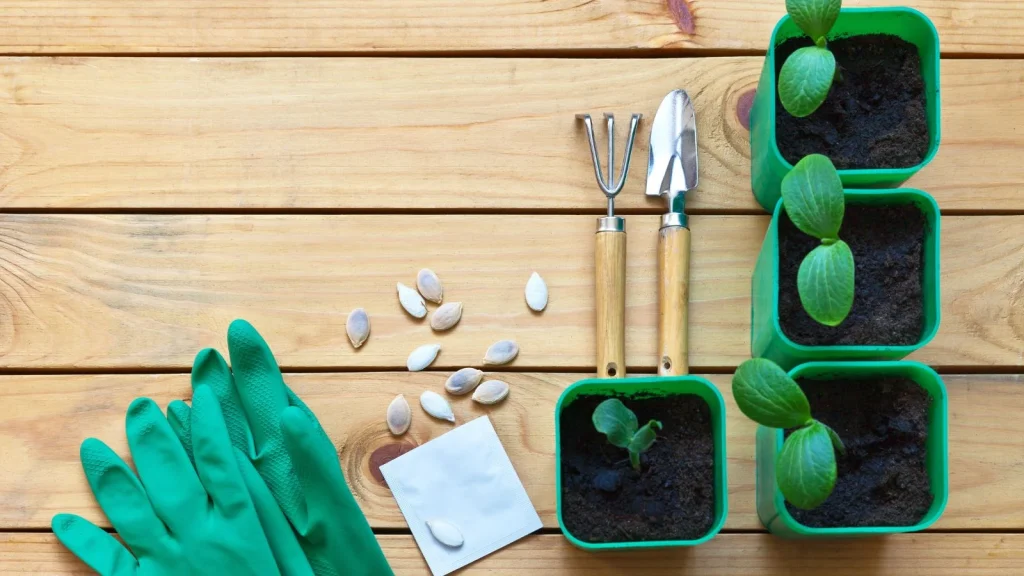
Plant one to two squash seeds indoors per pot, about an inch deep. Cover loosely with seed-starting mix. If you have a humidity dome or plastic wrap, cover the pots to hold in moisture during germination.
Squash seeds germinate best in warm soil, so a heat mat underneath the pots speeds things up considerably. Without supplemental heat, germination can take longer, pushing out your transplanting times.
Once the first seedling emerges, remove the dome. The seedling needs light and air circulation from this point on, and keeping the humidity dome in place after germination can lead to damping off (a common fungal disease).
Give Them Enough Light
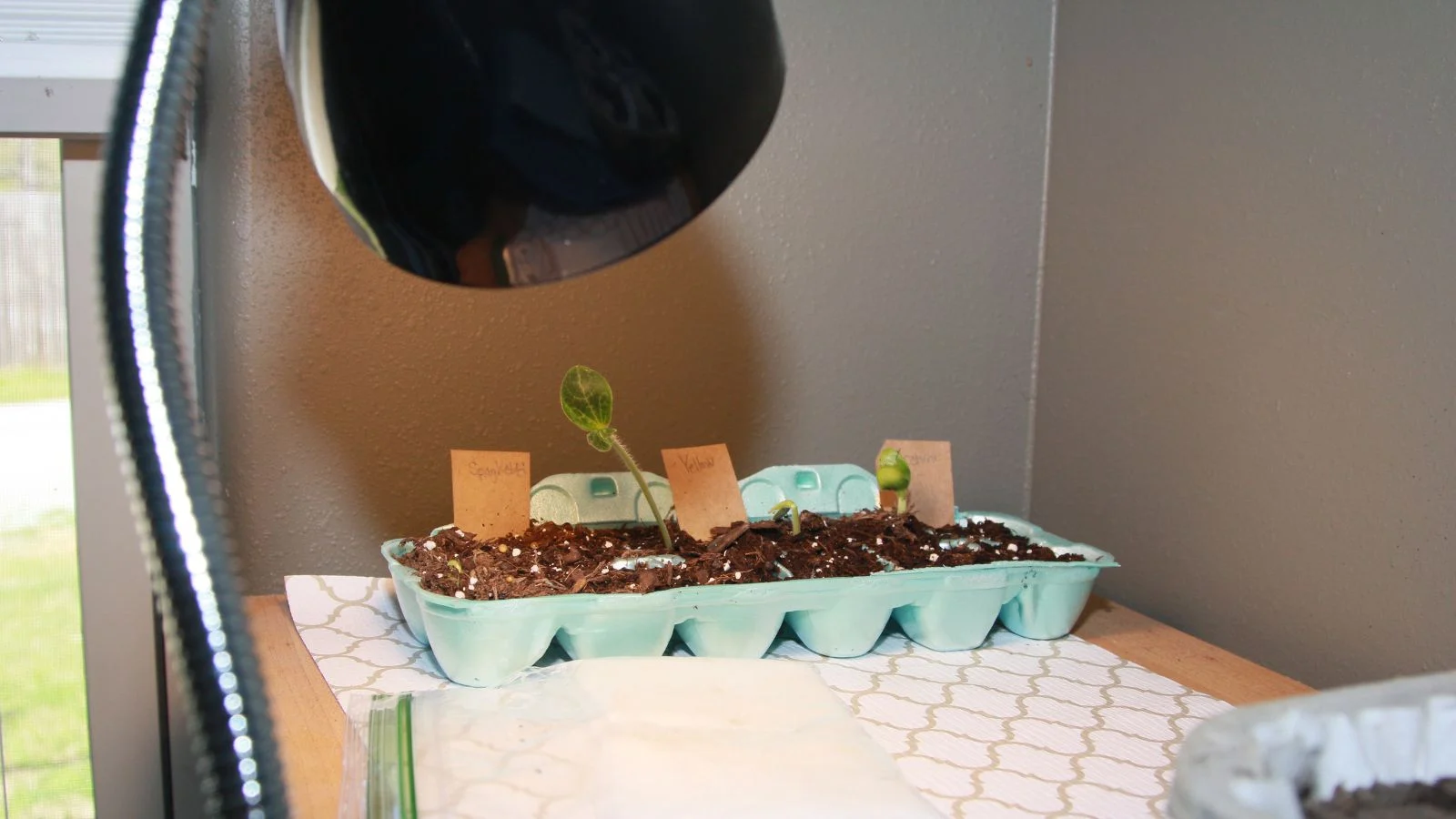 Use a grow light for the strongest possible seedlings.
Squash seeds indoors that don’t get enough light become tall, thin, and weak. That is exactly the kind of plant that struggles to survive transplanting. If you’re growing near a window, a south-facing one with unobstructed light is the minimum. But in most cases, a grow light produces better results because you can control the intensity and duration.
Position the light two to three inches above the tops of the seedlings and run it for about 14 hours a day. Raise the light as the plants grow to maintain that distance. Seedlings that are stocky and compact with short spaces between leaves are in much better shape for transplanting.
Water from the bottom when possible to keep the soil surface drier and reduce the risk of fungal problems. Set the pots in a shallow tray, add water to the tray, and let the soil wick it up. Once the soil surface feels moist, pour out any remaining water. If you’re using a biodegradable pot, the material should stay damp but not soggy.
Harden Off Before Transplanting
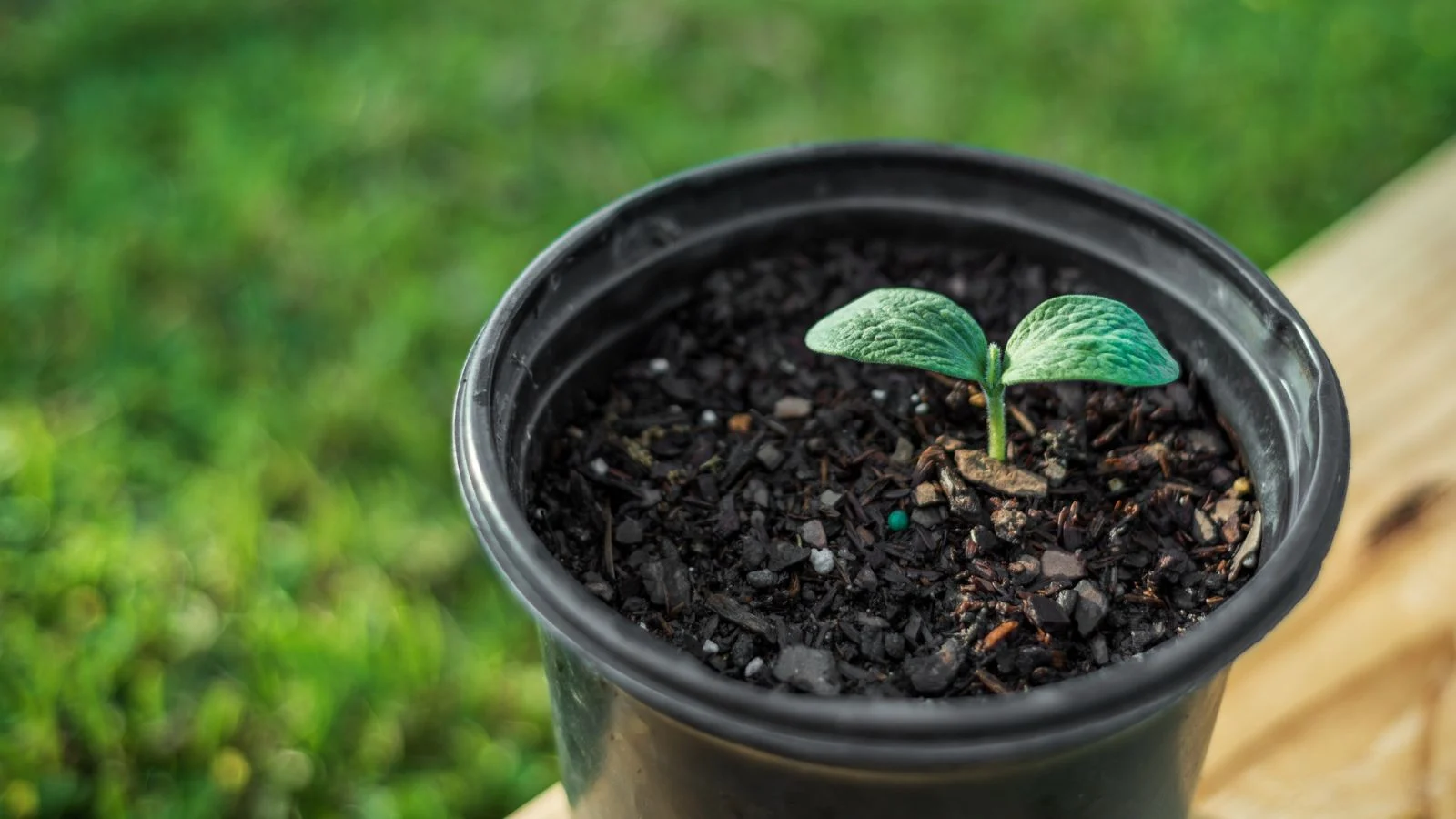 Give your seedlings a chance to acclimate to outdoor conditions.
Moving a squash seedling directly from a warm indoor environment to the garden is a reliable way to stunt or kill it. The plant needs a transition period to adjust to outdoor conditions: wind, direct sun, temperature swings, and lower humidity.
Start about a week before you plan to transplant. Place the seedlings outdoors in a sheltered, partially shaded spot for an hour or two on the first day. Each day, increase the time outside and gradually introduce more direct sun. By the end of the week, the plants should be spending the full day outdoors.
Bring them inside at night if temperatures drop below 50°F. Squash is a warm-season crop and doesn’t tolerate cold, even briefly. Rushing hardening off or skipping it altogether will impact transplanting and establishment.
Transplant Carefully
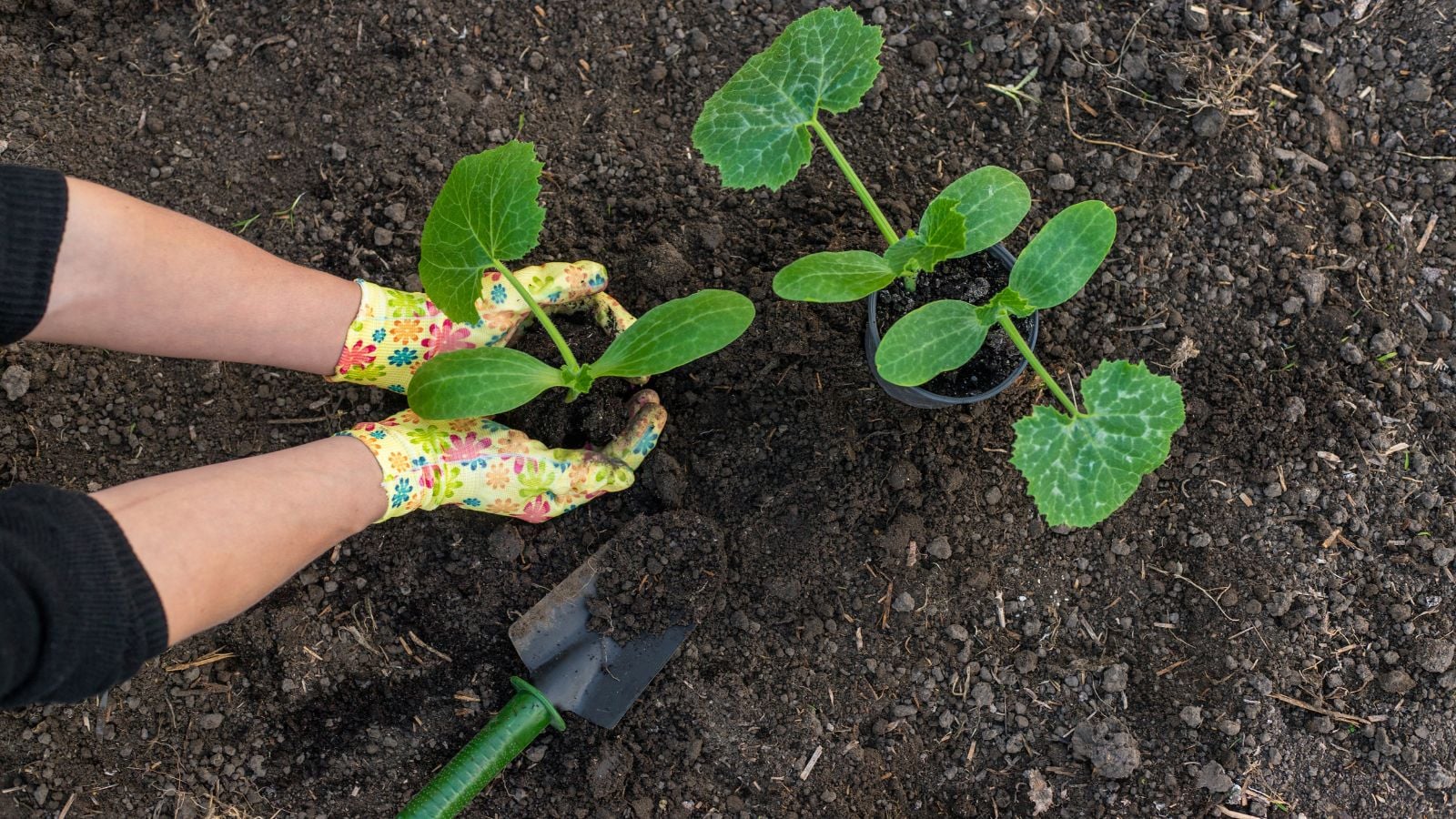 Avoid disturbing the roots when transplanting.
Wait until the soil temperature is at least 60°F (16°C), and ideally closer to 70°F, before transplanting. Cold soil stalls squash growth and can undo the advantage you gained by starting indoors. A soil thermometer is useful here, since air temperature and soil temperature don’t always match up in spring.
Transplant on a cloudy day or in the late afternoon to reduce stress from direct sun. If you used biodegradable pots, plant the entire pot, but tear off or fold down any rim that extends above the soil line.
Water deeply at planting and keep the soil consistently moist for the first week or two while the roots establish. Squash seedlings should have no more than two to three sets of true leaves at transplant time. Any larger than that and the roots have probably already filled the container, which makes recovery slower.
If your seedlings get ahead of you, transplant them anyway. A slightly overgrown plant still has a better chance in the ground than one that stays in a small pot.