
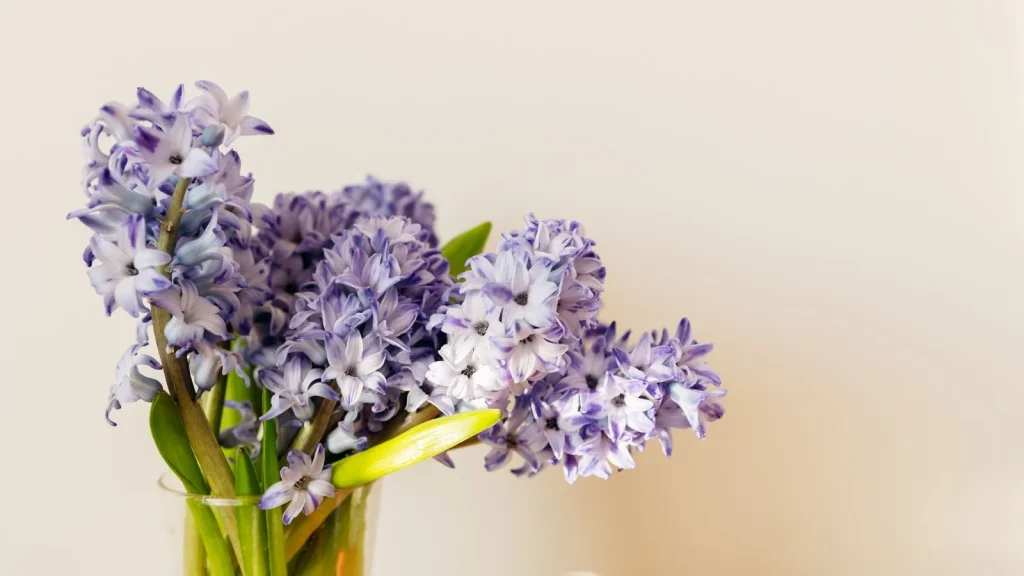
Cut hyacinths last — a quick note to anchor this piece for readers.
Cut hyacinths last: Quick notes
Few cut flowers fill a room with scent the way hyacinths do. A small bunch on a kitchen table can perfume the whole house, which is part of their appeal. So it’s understandable that you would want to make their beauty last as long as possible in a vase.
How long your cut hyacinths last depends on how you cut, condition, and display them. With the right care, hyacinths should last about a week to ten days in a vase, which is a significant improvement over other short-lived cut flowers. Here are some tips to make cut hyacinths last.
Don’t Cut Stems Too Short
Keep part of the basal plate attached to the stem.
Hyacinths are sold (or cut from the garden) with a white, bulbous base still attached to the bottom of the stem. That base is part of the bulb, and it helps the flower continue to take up water after cutting. If you cut it off entirely, the stem has a shorter vase life.
When trimming hyacinths to fit a vase, cut as little as possible from the bottom to make cut hyacinths last. A thin shave off the very bottom of the base is fine to freshen the cut, but removing the whole thing can reduce vase life by several days.
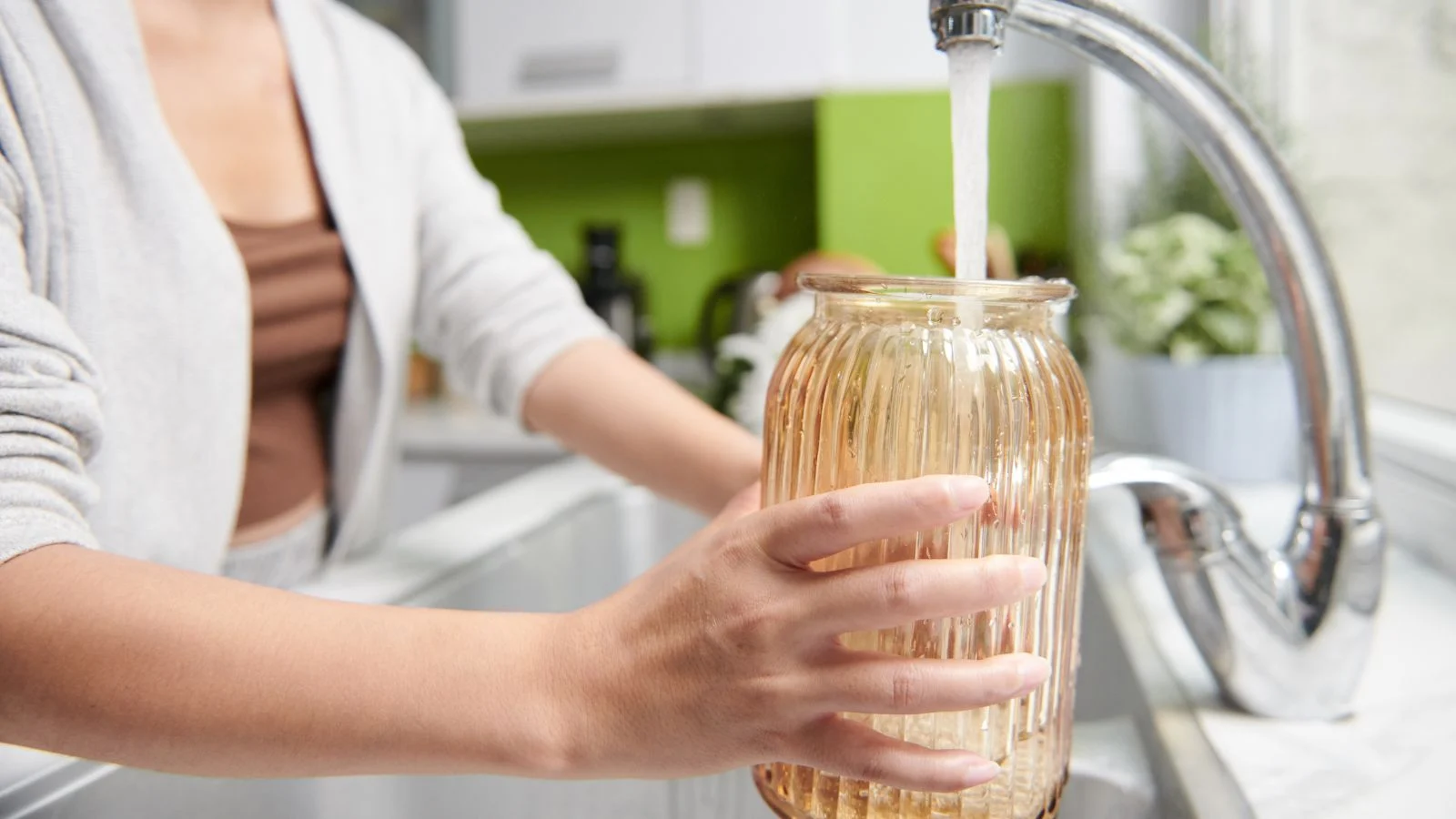 Don’t leave stems drying out for too long.
Get the blooms into water as soon as possible after cutting, whether you’re bringing them in from the garden or unwrapping a store-bought bunch. Use cool water, not warm, as hyacinths stay fresher in cold water. Fill the vase with enough water to cover the stems by a few inches. You don’t need to submerge them deeply.
If you’re cutting from the garden, bring a bucket of cool water outside with you and place the stems in it immediately after cutting. Even a few minutes of sitting in warm air without water can shorten their life.
Use a Clean Vase
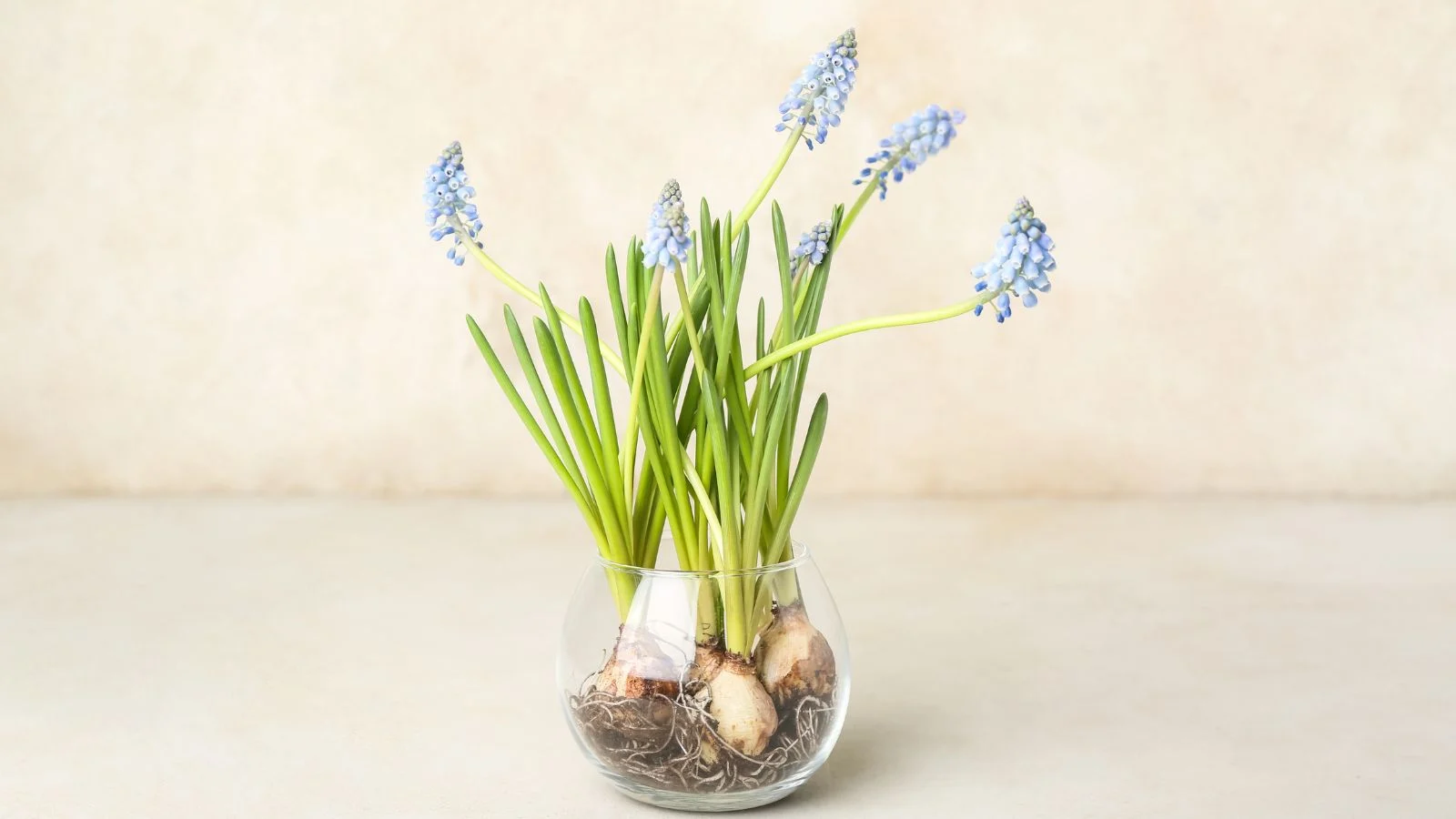 Any bacteria from previous flowers can spread to the new ones.
Hyacinth stems release a sticky, slimy sap into the water that encourages bacterial growth faster than most cut flowers. Starting with a clean vase gives you a head start against the cloudiness and odor that can develop within a day or two.
Wash the vase with hot, soapy water before use. If you want to be thorough, a quick rinse with a diluted bleach solution (a few drops of bleach in a cup of water) and then a rinse with clean water sterilizes the glass.
Choose a vase with a narrow opening if you can. Hyacinth stems are soft and tend to flop sideways under the weight of the flower heads. A taller, narrower vase supports the stems and keeps them upright, which prevents the blooms from falling under their own weight.
Replace the Water Often
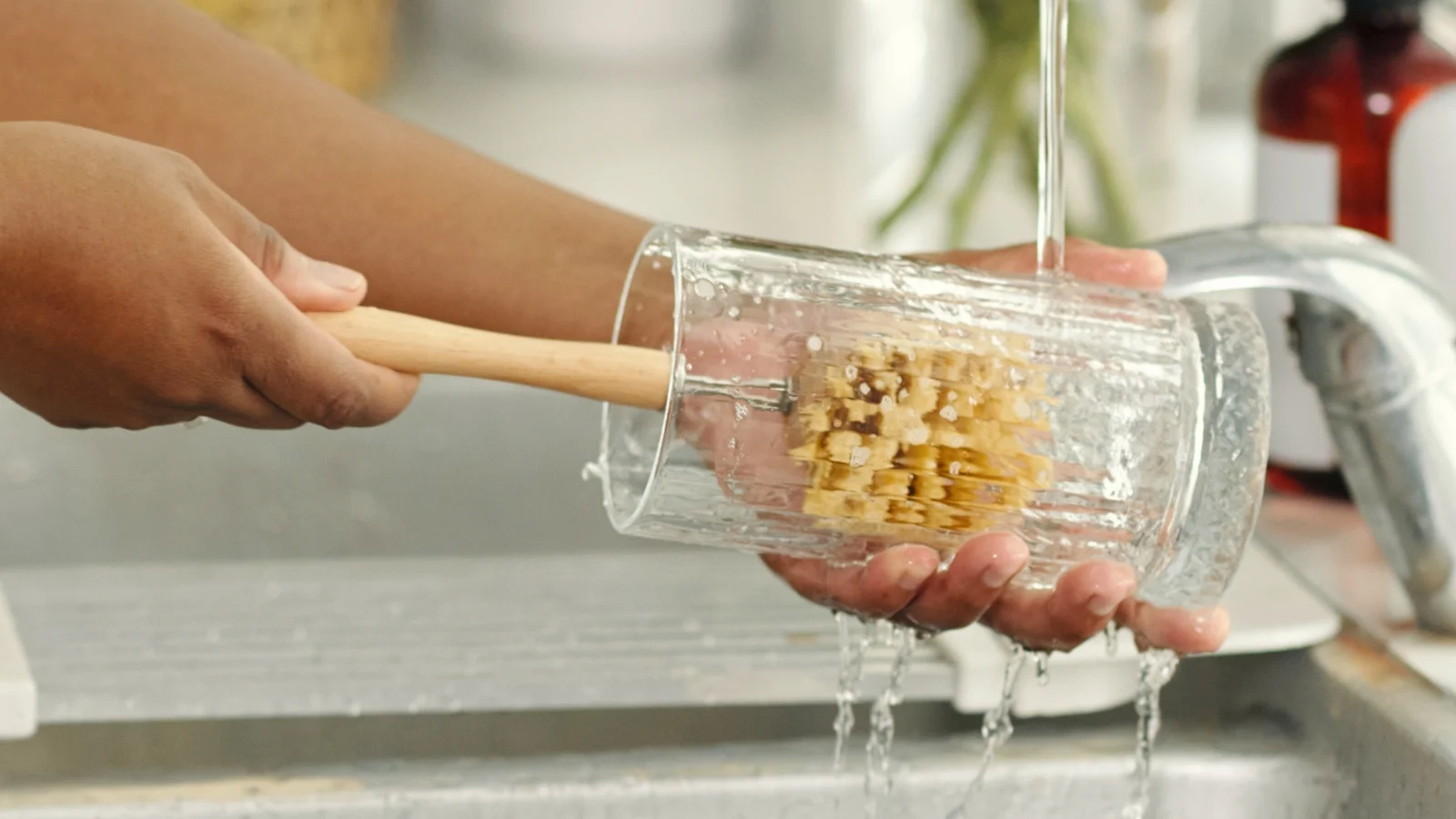 Clean water ensures your cut hyacinths last.
With most cut flowers, changing the water every few days is enough. Every day or two is better if you want to make cut hyacinths last. The sap they release clouds the water quickly and creates an environment where bacteria thrive, which clogs the stems and shortens the flowers’ life.
When you change the water, rinse the stems under cool running water to remove any slimy residue before putting them back in the vase. Rinse the inside of the vase, too. Fresh, clean water is the single most effective thing you can do to make cut hyacinths last.
Keep the Vase Out of the Sun
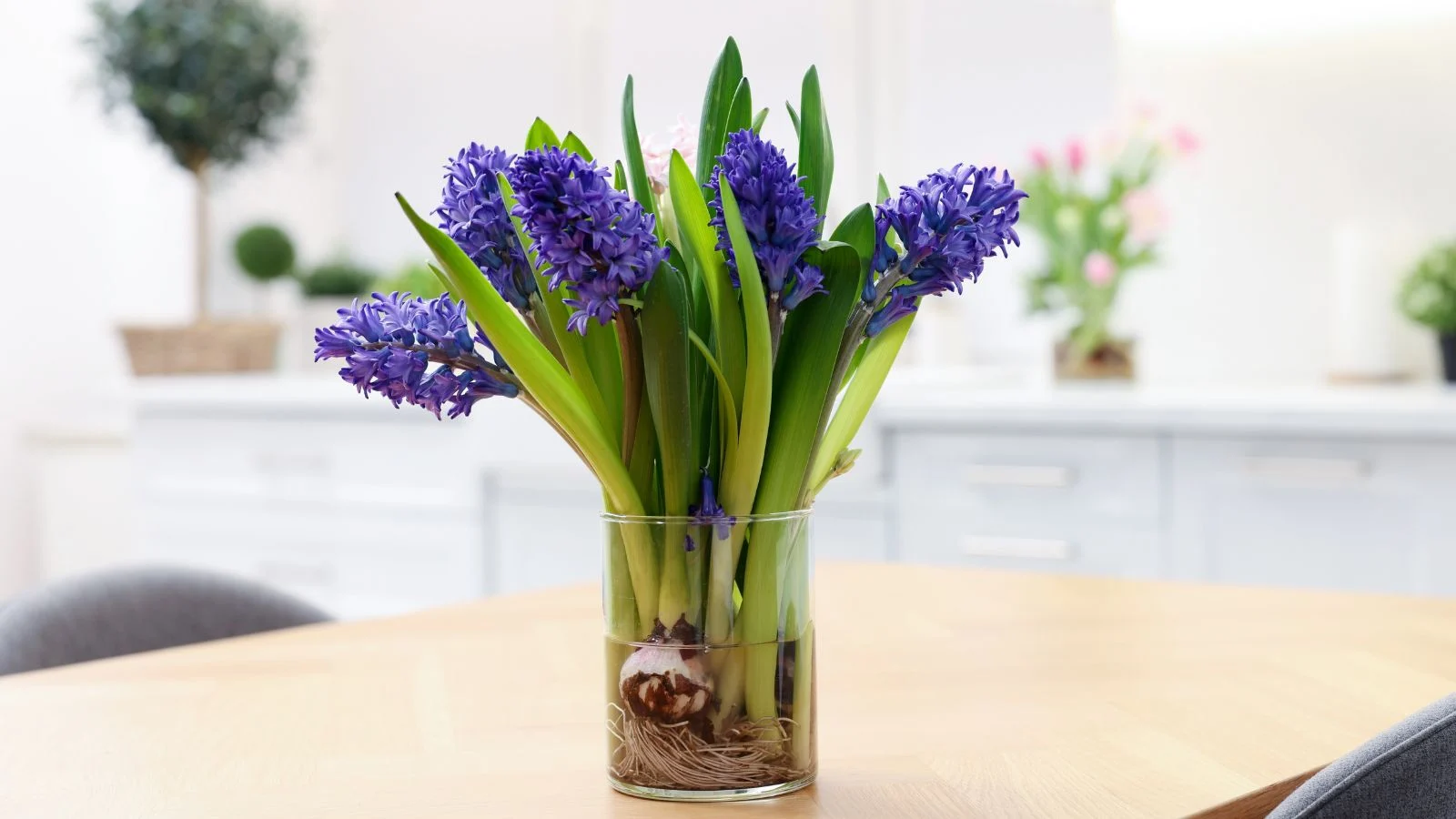 Cooler areas away from direct sun protect the blooms.
Hyacinths last longest in a cool spot with indirect light. Direct sunlight and heat speed up the blooming process outdoors, but once cut, they fade and wilt faster. A north-facing windowsill, a hallway table, or a kitchen counter away from the window are all good locations.
Avoid placing the vase near a heat source (a radiator, a sunny window, or a vent). The warmer the room, the faster the flowers decline. If your house tends to run warm, moving the vase to the coolest room you have makes a noticeable difference.
Place Them in the Refrigerator Overnight
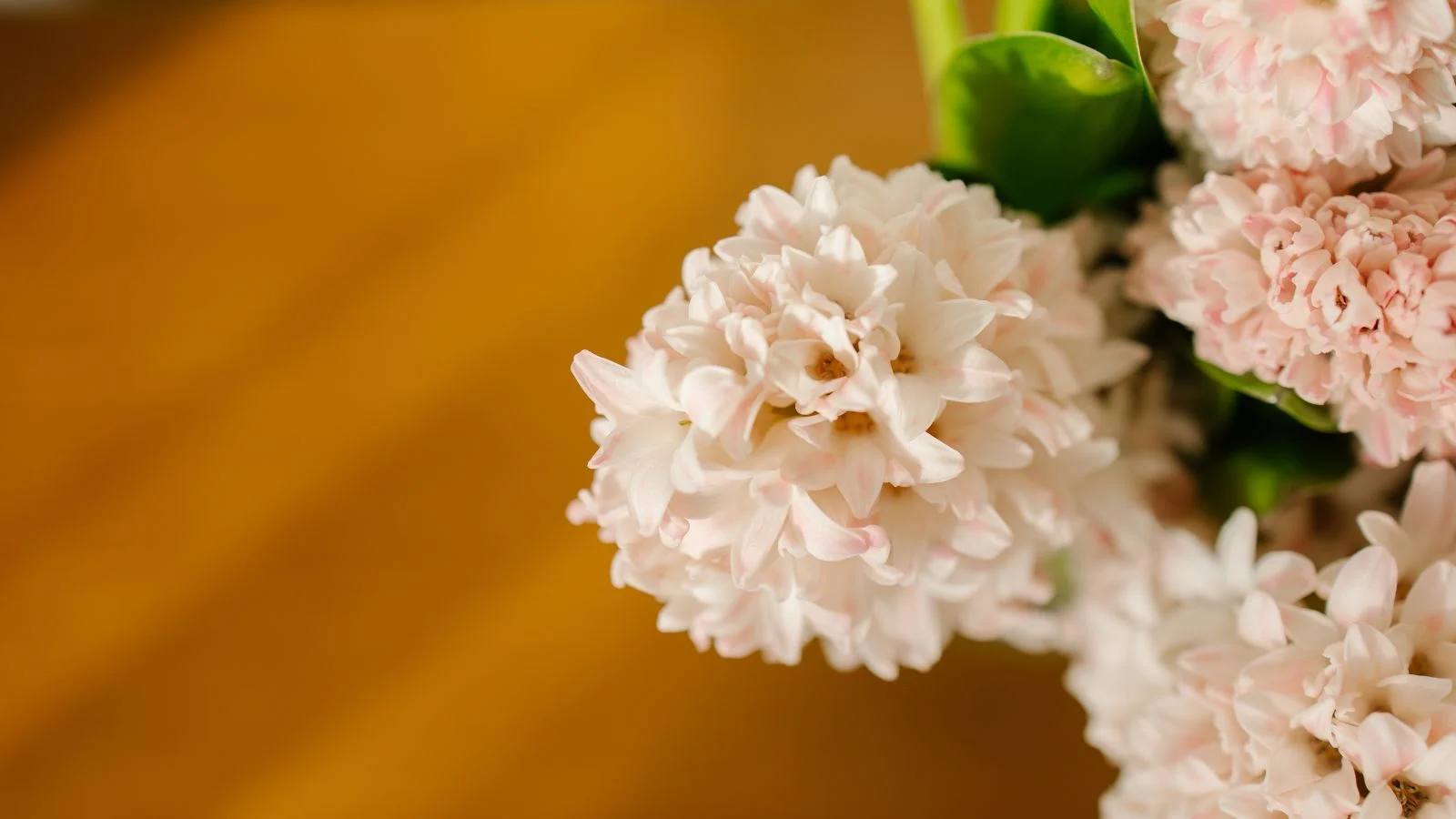 Florists use cold rooms for all flowers, including hyacinths.
This is a trick florists use, and it works well with hyacinths if you have the space. Putting the vase in the refrigerator overnight slows down the aging process and can add several days to the display.
The ideal temperature is between 35°F and 40°F (2°C and 4°C). Keep the flowers away from fruit and vegetables in the fridge, as ripening produce releases ethylene gas, which causes cut flowers to deteriorate faster. If your fridge is too full to fit a vase, even a few hours in a cold room (an unheated porch, garage, or mudroom) on cool nights helps.
You don’t have to do this every night to see a benefit. Even chilling them once or twice during their vase life helps make cut hyacinths last.
Recut the Stems
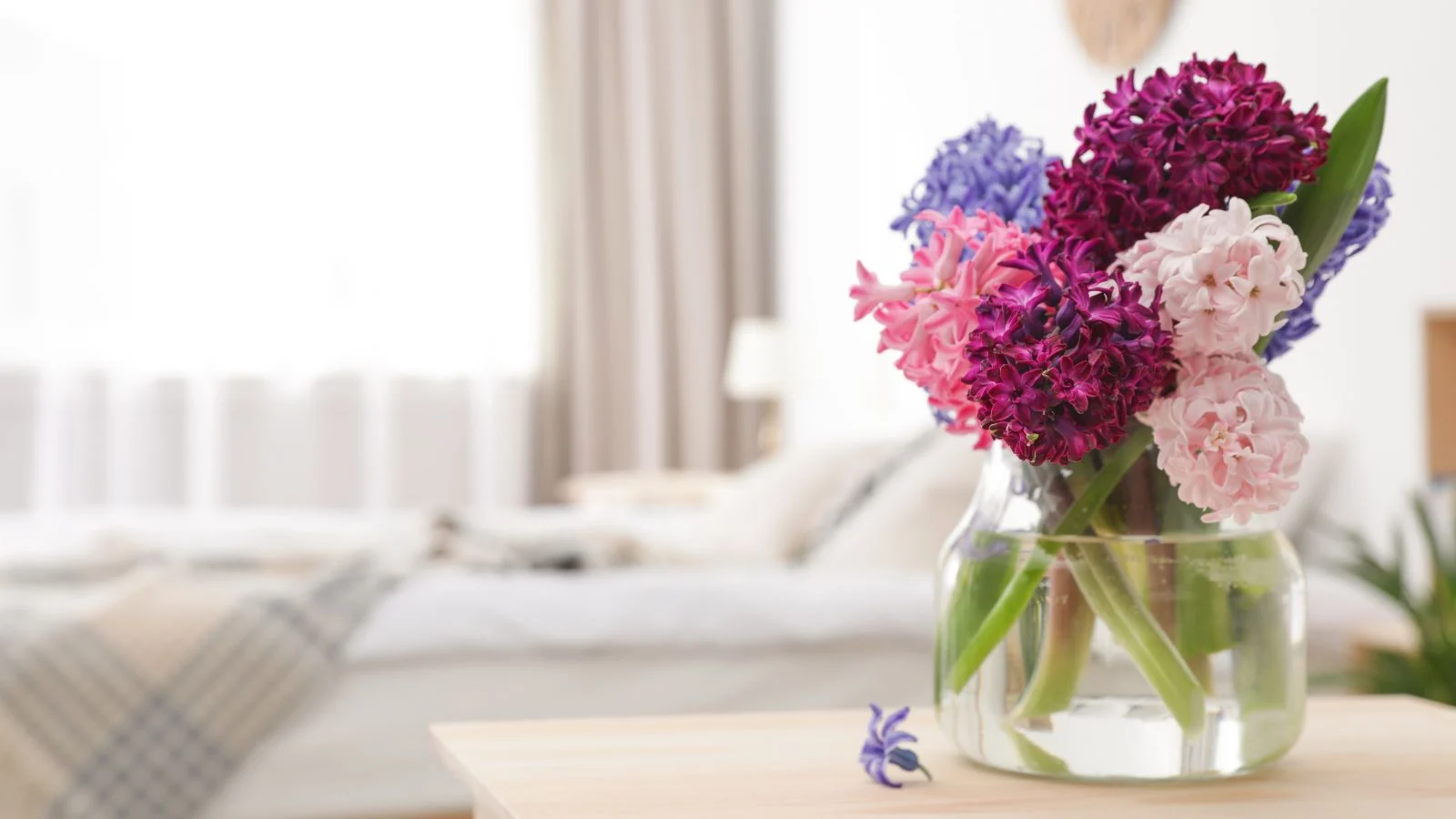 A trim later on will revive the stems.
If your hyacinths start to look tired after a few days, recutting the stems can revive them. The cut end of a flower stem gradually seals over and becomes less efficient at drawing up water. A fresh cut reopens the pathway.
Trim about half an inch from the bottom at a slight angle, using a clean, sharp knife or scissors. Avoid crushing the stem, which damages the tissue and restricts water uptake. A fresh cut paired with fresh water is the closest thing to a reset you can give a cut flower.
Grow in Water From the Beginning
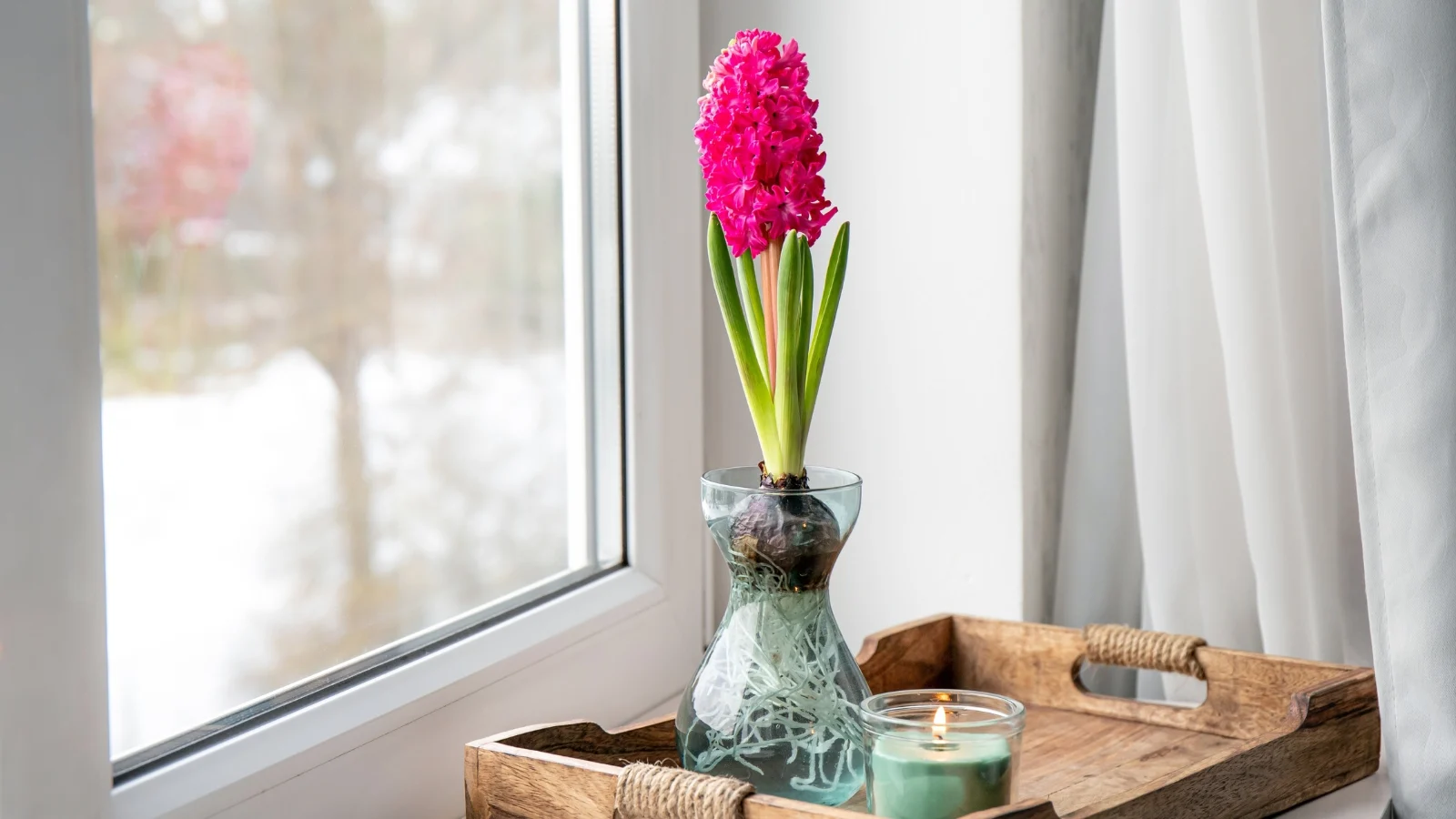 Grow the bulbs indoors to enjoy the full extent of the flowers.
If you’d rather skip the cut-flower stage entirely, forcing hyacinth bulbs in water gives you a longer-lasting display and an interesting look that cut stems can’t replicate. A hyacinth forcing vase (the hourglass-shaped glass designed to hold the bulb above the water) lets you watch the roots develop, and the flower spike emerge over several weeks.
Place a pre-chilled bulb in the vase with the base just touching the water and set it in a cool, dark spot until the roots are a few inches long and the shoot starts to emerge. Then move it to a bright, cool room. The flower will bloom on the bulb and last as long or longer than a cut stem, with the added appeal of watching the whole process from root to bloom.
This approach takes some advance planning (the bulbs need about 12 weeks of cold before forcing), but if you’re a fan of hyacinths and want the longest possible display, it’s worth trying.









On a similar note – I adore the colors here; feels really homey. Great share.
Tiny tip • Neat idea — simple and effective. Will try it.
PS – Loved this about “How to Make Cut Hyacinths Last” — such a nice idea. Will try it.
PS – Loved this about “How to Make Cut Hyacinths Last” — such a nice idea. Will try it.
PS – Loved this about “How to Make Cut Hyacinths Last” — such a nice idea. Will try it.
On a similar note • This feels very authentic — great post. Thanks for this!
Beautifully done; the instructions are easy to follow.