Growing eggplant from. A brief context to set expectations.
This post may contain affiliate links. If you make a purchase through links on our site, we may earn a commission.
Growing eggplant from seed isn’t difficult and is the best way to take advantage of the many excellent varieties available in seed catalogs. Plus, you get to control the growing conditions which means the healthiest possible plants to grow in your garden. In this article you’ll learn two options for growing eggplant from seed, get step-by-step instructions, and discover my favourite eggplant varieties to grow.
What is eggplant?
Eggplant (Solanum melongena) is a vegetable in the nightshade family along with tomatoes, peppers, and potatoes. It’s grown for the fruits which have a spongy texture making them perfect for absorbing flavors and sauces. There are many different varieties of eggplants you can grow in your garden offering a wide range of fruit sizes, shapes, and colors.
Indigo Blade, for example, yields long, super slender fruits with dark purple skin. Rosa Bianca, on the other hand, has a squat round shape and lavender colored skin. Or maybe you want to grow a pale hued eggplant like Icicle or White Knight, which has cylindrical-shaped fruits and snowy white skin. More on outstanding eggplant varieties to grow from seed at the bottom of this article.
Why you should be growing eggplant from seed
There are many reasons why you should be growing eggplant from seed, but the biggest benefit is that it allows you to choose from the many outstanding varieties available from seed companies. Most garden centres carry just one or two varieties of eggplants, but you can find dozens in seed catalogs.
Plus, when you sow your own eggplant seeds you control the timing and the growing conditions to ensure your season starts with the strongest, stockiest seedlings.
When I’m picking out eggplant varieties to grow, I think about what I want in terms of plant size (certain varieties have more compact plants which are better in containers), fruit size, shape, and color, as well as variety maturity and disease resistance. It’s essential to select eggplant varieties that will grow well in your region and if you live in a short season climate like me, look for early maturing options.
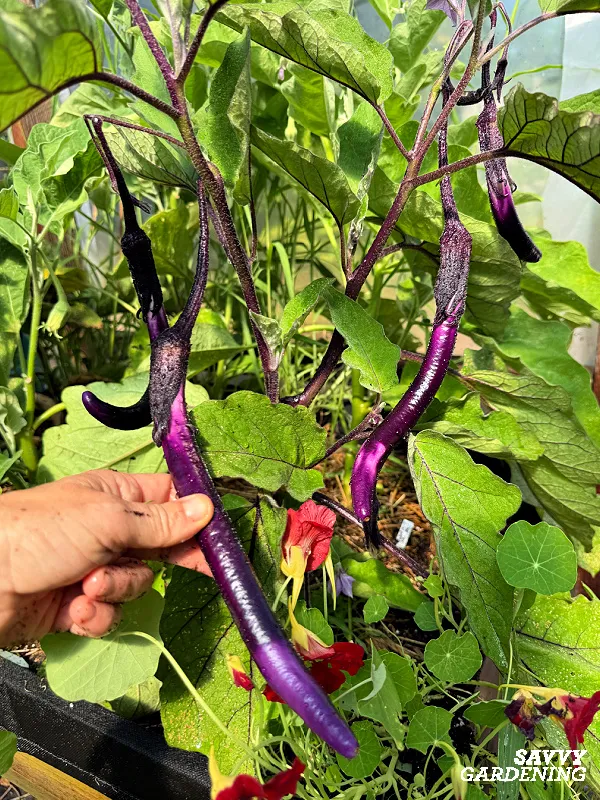 Growing eggplant from seeds gives you access to the wide selection of varieties found in seed catalogs, like Indigo Blade.
Growing eggplants from seed: Getting the timing right
It’s important to start eggplant seeds indoors at the right time. Sow them too early and you’ll be struggling to find space for the growing plants. Wait too long and they may not have enough time to produce fruits by the end of the growing season. Most varieties need between 65 to 80 days from transplanting to start yielding a crop. The days to maturity shifts from variety to variety, however, so be sure to read the seed catalog or seed packet closely.
Generally speaking, eggplants, like tomatoes and peppers, are started indoors 6 to 8 weeks before the last expected spring frost. Use this frost date calculator to find out your last frost date. This allows you to calculate the time of planting for eggplant seeds.
Two options for growing eggplant from seed
There are two main way methods for growing eggplant from seed. The first is to pre-germinate the seeds by placing them in a damp paper towel. The other is likely more familiar; sowing the seeds in potting mix. Below I explore both of these techniques to help you decide which works best for you.
Option 1: Starting seeds in paper towels
Germinating seeds in paper towels is exactly what it sounds like and it’s an approach that offers several advantages to gardeners. First, it allows you to test the germination rates of seeds that are a couple of years old. That way you don’t waste space in your pots or cell packs planting old seeds that won’t germinate. However, starting seeds in paper towels is also helpful for pre-germinating certain types of seeds like tomatoes, peppers, and eggplant. Once the seeds sprout I transplant them into soil cubes, cell packs, or pots. As noted above, this ensures no empty cells or soil cubes from lack of sprouting, but also eliminates the need to thin seedlings.
Read our guide on how to start seeds in paper towels to learn all the tricks!
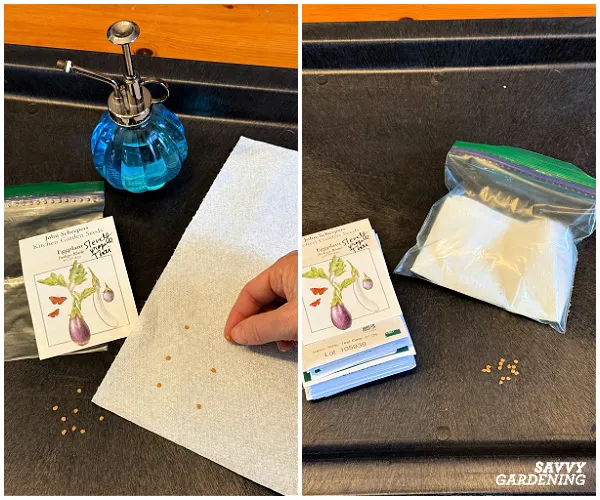 Starting eggplant seeds in a paper towel lets you pre-germinate the seeds to ensure every one you end up planting results in a strong seedling.
Option 2: Growing eggplant from seed in potting mix
The most common way of growing eggplant from seed is to sow the seeds into potting mix in cell packs, plug flats, or soil cubes. This skips the paper towel step, but if your seed isn’t fresh, you may find empty cells or pots where the old seed failed to germinate. Here are the 8 steps of growing eggplant from seed in potting mix:
Step 1 – Fill your containers or make your soil cubes
I’m a big fan of using flats of cell packs or trays of soil cubes for starting eggplant seeds because it’s such an efficient use of space. Once you have your containers, fill them with lightly damp potting mix. Or, if you’re making soil cubes, use a soil blocker to form the compressed cubes of potting soil. (Read our guide to soil blocking)
Step 2 – Plant eggplant seeds
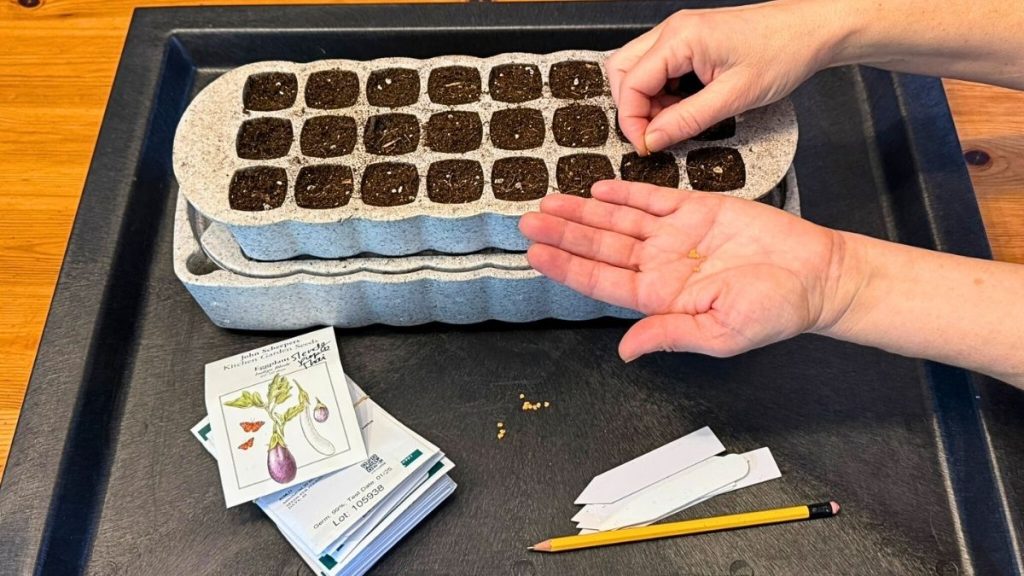
Sow your eggplant seeds a quarter inch deep with one to two per cell, soil cube, or pot. These will eventually be thinned to the strongest seedling. If you pre-germinated seeds in paper towels, carefully lift a sprouted seed and transfer it into the growing mix. Repeat until all the seeds are planted. I place a humidity dome or a piece of plastic wrap on top of the tray to prevent the growing mix from drying out. Remove as soon as the seeds germinate.
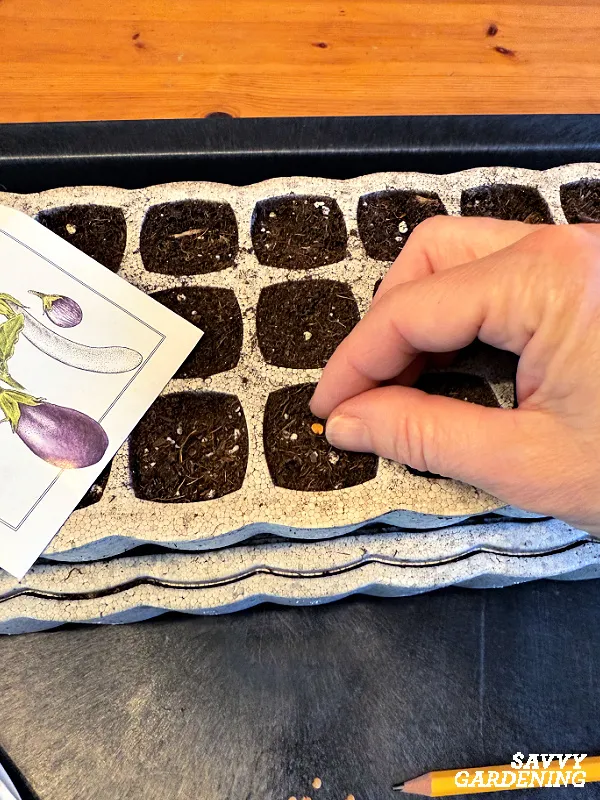 Plant one to two seeds per cell, eventually thinning to the most vigorous seedling.
Step 3 – Provide a warm environment for the seeds to sprout
Eggplant is a heat-loving vegetable so it makes sense the seeds germinate best in warm temperatures. To improve germination rates and times, maintain a soil temperature in the 80 to 90 degrees F (26 to 32 degrees C) range. To do this I use a seedling heat mat. Once about half of the seeds sprout, remove the mat as too much heat can prompt leggy seedlings.
Step 4 – Give your eggplant seedlings lots of light
Lack of light is the biggest challenge for indoor seed starters. To get around the low light of late winter, the time for starting eggplant seeds, I use grow lights. I have both LED grow lights and florescent grow lights, much preferring LED fixtures. They’re energy efficient, don’t produce excessive heat, and have a long lifespan. I keep my lights on for 16 hours each day, using a timer to turn them on and off. If you don’t have a grow light, find your sunniest window and turn the seedlings every day or two to help them grow straight.
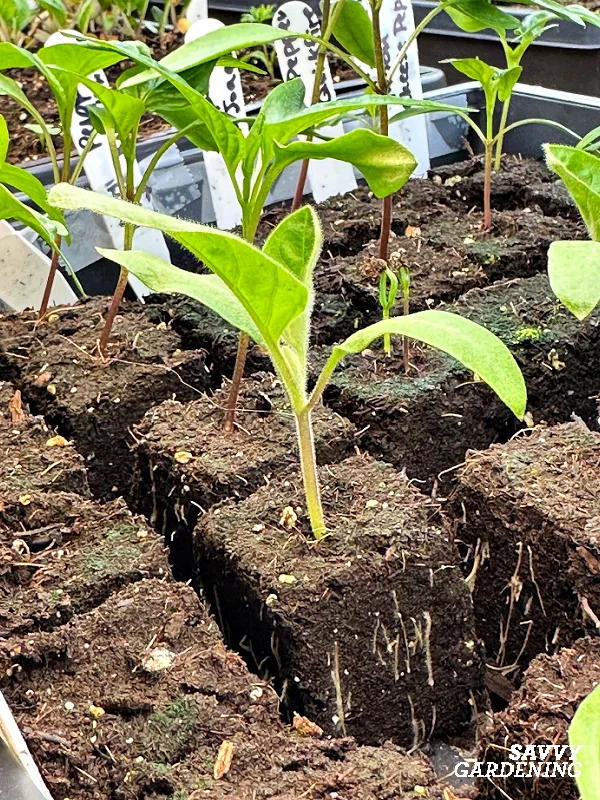 I like planting eggplant seeds in soil cubes as it results in a very robust root system and healthy plants.
Step 5 – Water your seedlings
It’s best to take a light hand when it comes to watering eggplant seedlings. Ideally, the growing mix should be lightly damp; never wet and never completely dry. The frequency of waterings will change as the seedlings grow and need more moisture. But initially water only when the top surface of the growing mix is dry to the touch.
Step 6 – Improve air circulation
I keep a small oscillating fan in my seed-starting room to encourage good air flow. This reduces fungal issues and helps toughen up the stems and leaves of seedlings to prepare them for outdoor growing.
Step 7 – Fertilize regularly
Once eggplant seedlings have their second set of true leaves start to fertilize them every two weeks. I use an organic water soluble fertilizer, like fish emulsion, diluting it to one-quarter strength. Always read product labels for specific application advice.
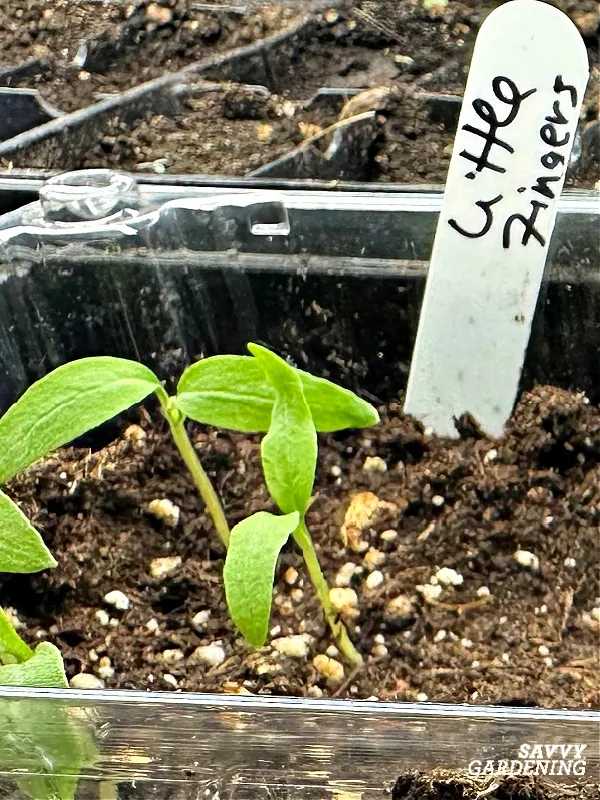 Give eggplant seedlings plenty of light from a sunny window or place them beneath a grow light.
Step 8 – Harden off the seedlings
Hardening off indoor grown seedlings is an important step as it acclimatizes them to outdoor growing conditions. This process takes about 5 to 7 days. Begin by putting the trays of seedlings outdoors in full shade and then bring them back inside that night. The following day place them outside again, but this time give them an hour or two of morning light before moving them into shade. Repeat, gradually introducing them to more and more light each day. After a week they’re ready for the garden.
More eggplant growing tips
- Pick the best site – To promote the healthiest plant growth and biggest possible harvest, plant eggplants seedlings in a sunny garden bed with fertile, well-drained soil. Aim for a soil pH in the 6.2 to 6.8 range and amend with compost or rotted manure before planting. Use row covers the first week or so to protect the seedlings and provide extra warmth.
- Support the plants – As soon as I plant my eggplant seedlings, I set up supports. They won’t need them for weeks, but it’s important to insert cages, stakes, or trellises before the plants are too big, otherwise you risk damaging the branches. These keep the plants upright and prevent the branches from breaking under the weight of the growing fruits.
- Water consistently – The best way to prevent blossom end rot is to ensure eggplants receive a steady supply of moisture. You can use soaker hoses, a watering wand, or a watering can to deliver water to the root zone. Mulch plants with straw to hold soil moisture.
- Fertilize eggplants – Eggplants are heavy feeders and fertilization is a necessary task to encourage healthy growth and plenty of delicious fruits. Pick an organic fertilizer with a balance of nitrogen, phosphorus, and potassium. I usually use a product with an analysis in the range of 4-4-8, 2-5-3, or 3-4-4. Apply in spring at planting time and side dress plants in summer when they start to flower.
- Watch for pests – Common pests include aphids, flea beetles, and Colorado potato beetles. Practice crop rotation and use insect netting overtop plants to limit their access. Plant flowers to encourage lots of beneficial insects like ladybugs and lacewings.
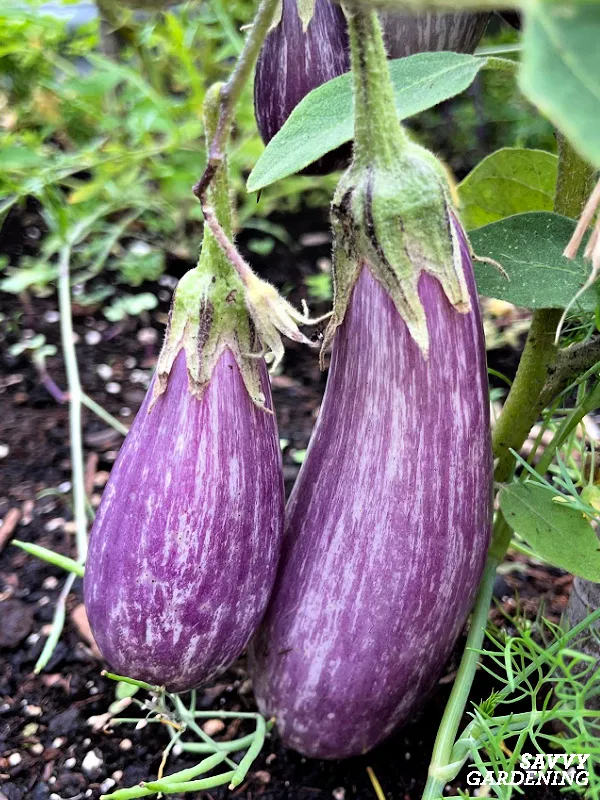 Fairy Tale is an award-winning eggplant ideal for garden beds as well as containers.
6 Favorite eggplant varieties to grow
- Fairy tale – Fairy Tale is an award-winning variety grown for its abundant harvest of purple and white streaked fruits. Those fruits, which are best picked when 3 to 4 inches long, are produced on compact plants that grow up to 2 feet tall. Expect a mild flavor, few seeds, and no bitterness.
- Patio baby – As the name suggests, this compact cultivar is ideal for containers and fabric planters. It’s very early to yield and the fruits are dark purple and 2 to 3 inches long.
- Ping Tung Long – This is one of my all-time favorite eggplant varieties to grow because of the productive plants and tender fruits. Asian eggplants often have long, slender fruits, and Ping Tung Long is no exception. The ready-to-pick eggplants will be a foot long, but less than 2 inches wide. The bright purple skin is very thin and doesn’t need to be peeled. Expect excellent performance in garden beds and containers.
- Black Beauty – Black Beauty is a popular heirloom variety and has a traditional squat eggplant shape. Each fruit has deep purple, glossy skin and grows about 6 inches long and 4 inches wide.
- Rosa Bianca – An Italian heirloom, Rosa Bianca has rounded pink and lavender fruits that grow 6 inches across and long. This is a perfect variety for stuffing, but it’s also delicious in eggplant parmesan or grilled.
- Indigo Blade – I’ve been growing Indigo Blade for a few years now and always eagerly await the unique fruits. Growing up to 16 inches long, but just an inch and a half wide, I like to toss these on the grill for a simple side dish.
Other recommended eggplant varieties include Icicle, Hansel, Gretel, and Orient Express.
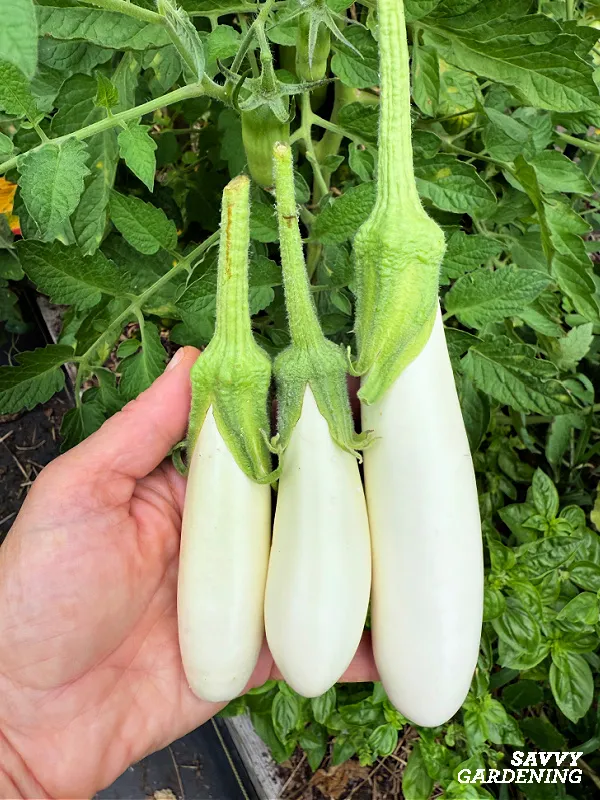 Another award-winner, Icicle eggplant produces a heavy crop of white cylindrical-shaped fruits.