Attract more hummingbirds — a quick note to anchor this piece for readers.
Attract more hummingbirds: Quick notes
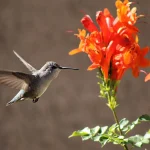
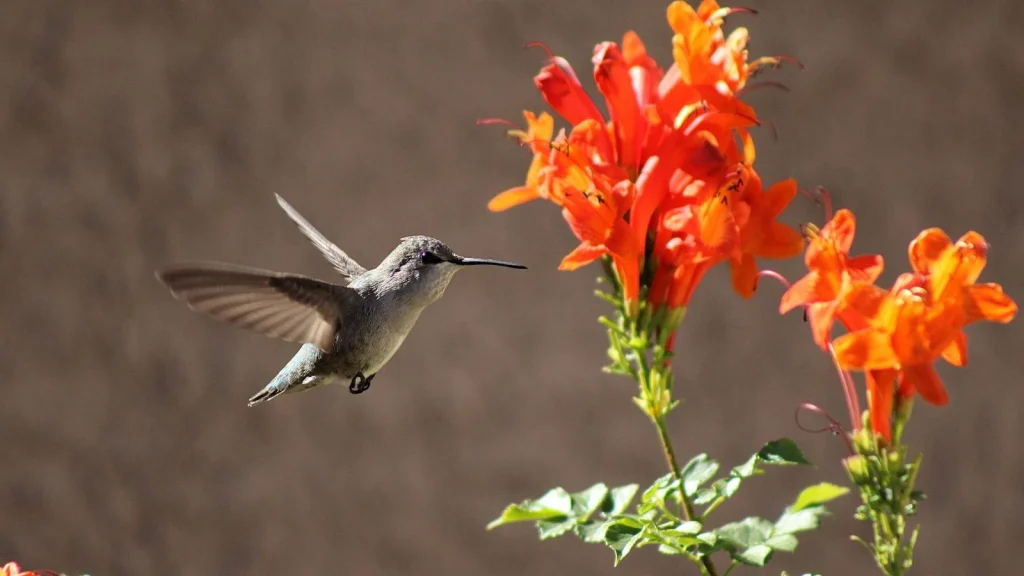
Multiple vines attract hummingbirds, and they are specifically interested in red-flowered ones. This is largely due to the cones in their retinas, which are heightened at the red to yellow parts of the visible spectrum. However, hummingbirds aren’t only attracted to reds and yellows if other plants have adequate nectar.
So you don’t have to have a completely crimson palette to bring in these fast-moving birds. Having one or two will signal to them as they search for food sources, but you can include other vining plants with high nectar content to keep them mobile. If you have enough food, they may even find a spot to build one of their industrious little nests.
If your growing space is already suited to other pollinators, and you haven’t grown a few vines specifically for hummingbirds, now is a great time to plant one or two (or more if you have space). Include these, and plant them where they are visible. Then, watch these tiny birds as they migrate through. If you’re lucky enough to live somewhere they stay year-round, they’ll thank you for doing so.
Amethyst Falls Wisteria
Funny Valentine Blend Cypress Vine
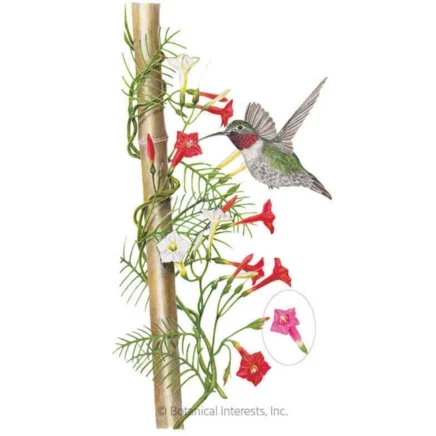
Funny Valentine Blend Cypress Vine Seeds
Tangerine Beauty Crossvine
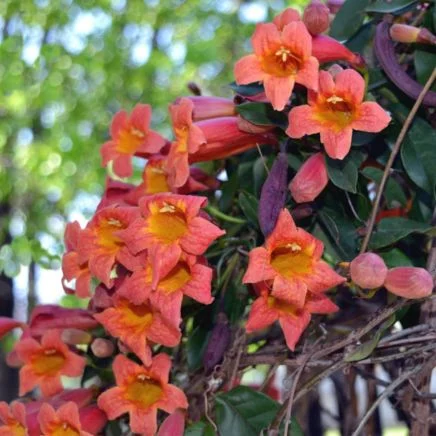
Tangerine Beauty Crossvine
Amethyst Falls Wisteria
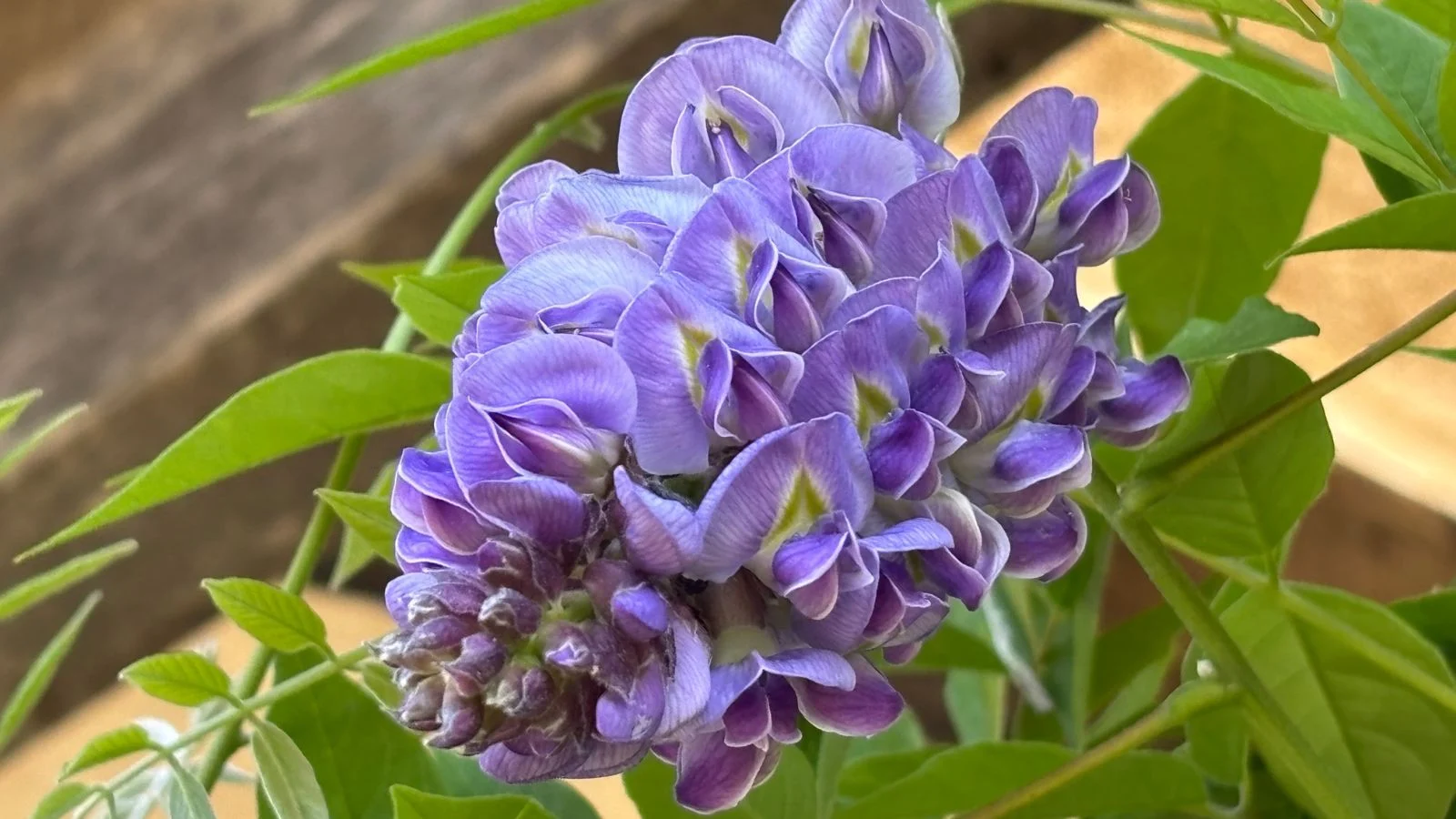 Long flowers droop from the vines.

botanical name
Wisteria frutescens ‘Amethyst Falls’

sun requirements
Full sun

height
8-25′

hardiness zones
5-9
If red, yellow, and orange aren’t your favorite colors, how about amethyst purple? That’s what this variety of the North American native wisteria brings. These vines attract hummingbirds and are some of the first to bloom in spring, even before they leaf out. They smell incredible, too.
Using natives instead of more commonly sold invasive wisterias offers hummingbirds the specialized nutrition they need. Both the plants and the birds have evolved together over millennia, and while non-natives will feed them, it’s more like having fast food rather than a nourishing meal for our winged friends.
This particular wisteria needs a large area to spread out and climb. It’s not terribly aggressive, but it will take over the area you plant it within. Provide a really good support in the form of a fence, specialized trellis, or pin it to a brick wall. An A-frame won’t cut it here. You’ll need something sturdy.
Tangerine Beauty Crossvine
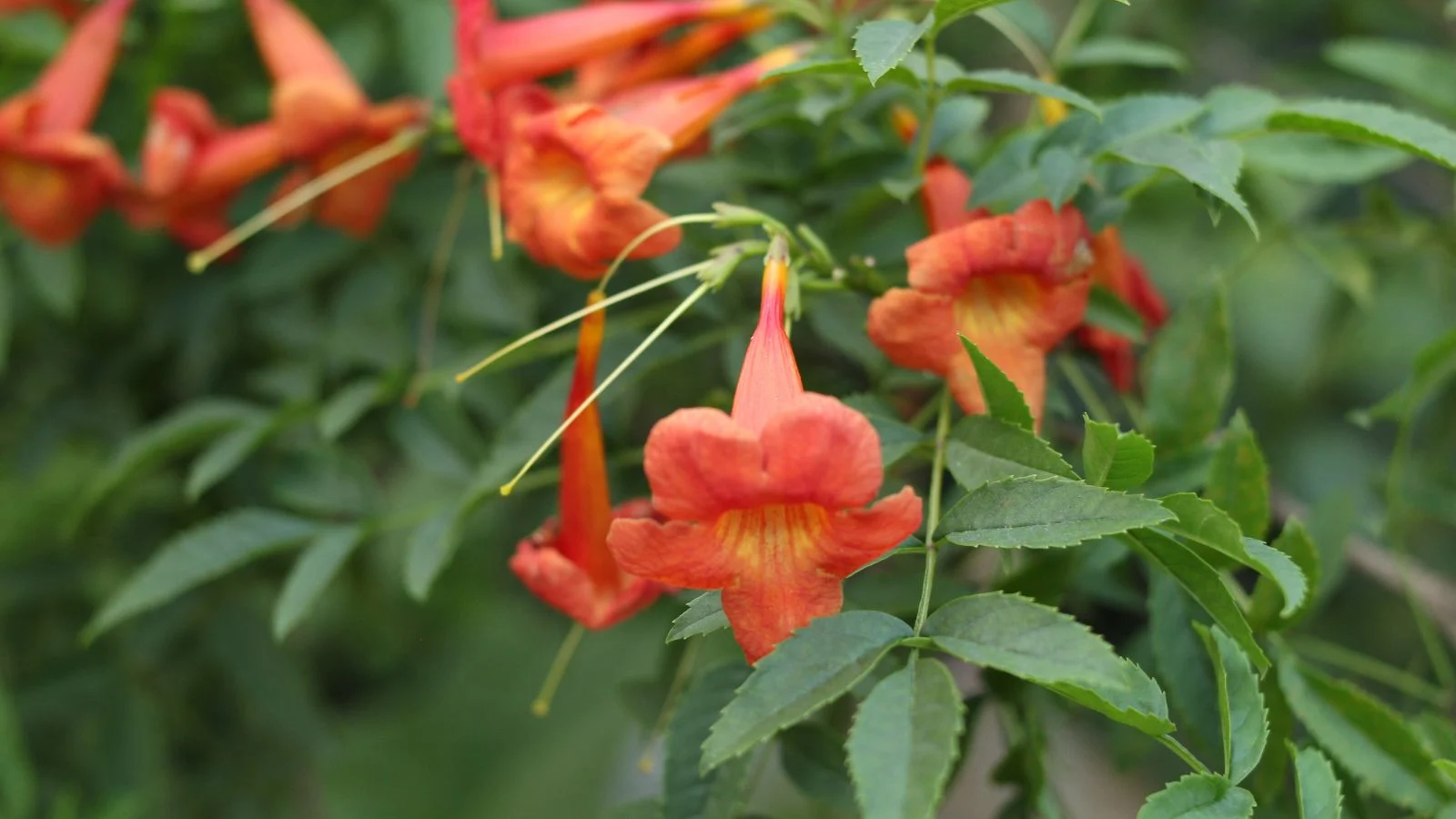 The bright blooms along long vines attract hummingbirds.
botanical name
Bignonia capreolata ‘Tangerine Beauty’
sun requirements
Full sun to partial shade
height
30-50′
hardiness zones
5-9
Speaking of natives, how about a crossvine? These large plants don’t take off immediately, but they need a lot of space to expand and grow. The vines attract hummingbirds largely because of their reddish-orange trumpet-shaped flowers. They’re highly adaptable and grow in coastal conditions, as well as dry semi-wooded sites.
If you want to control yours, look out for sprouts in spring, and pull them as they appear. You won’t have to do that as much as you would with some others on this list, but keep that task in your back pocket in case yours is really happy.
This variety was bred for deeper coloring on the blooms, but has all the other characteristics of the straight species. It needs plenty of support. It is also flammable, so plant it at least 50 feet away from your home, especially if you live in a wildfire-prone region.
Funny Valentine Blend Cypress Vine
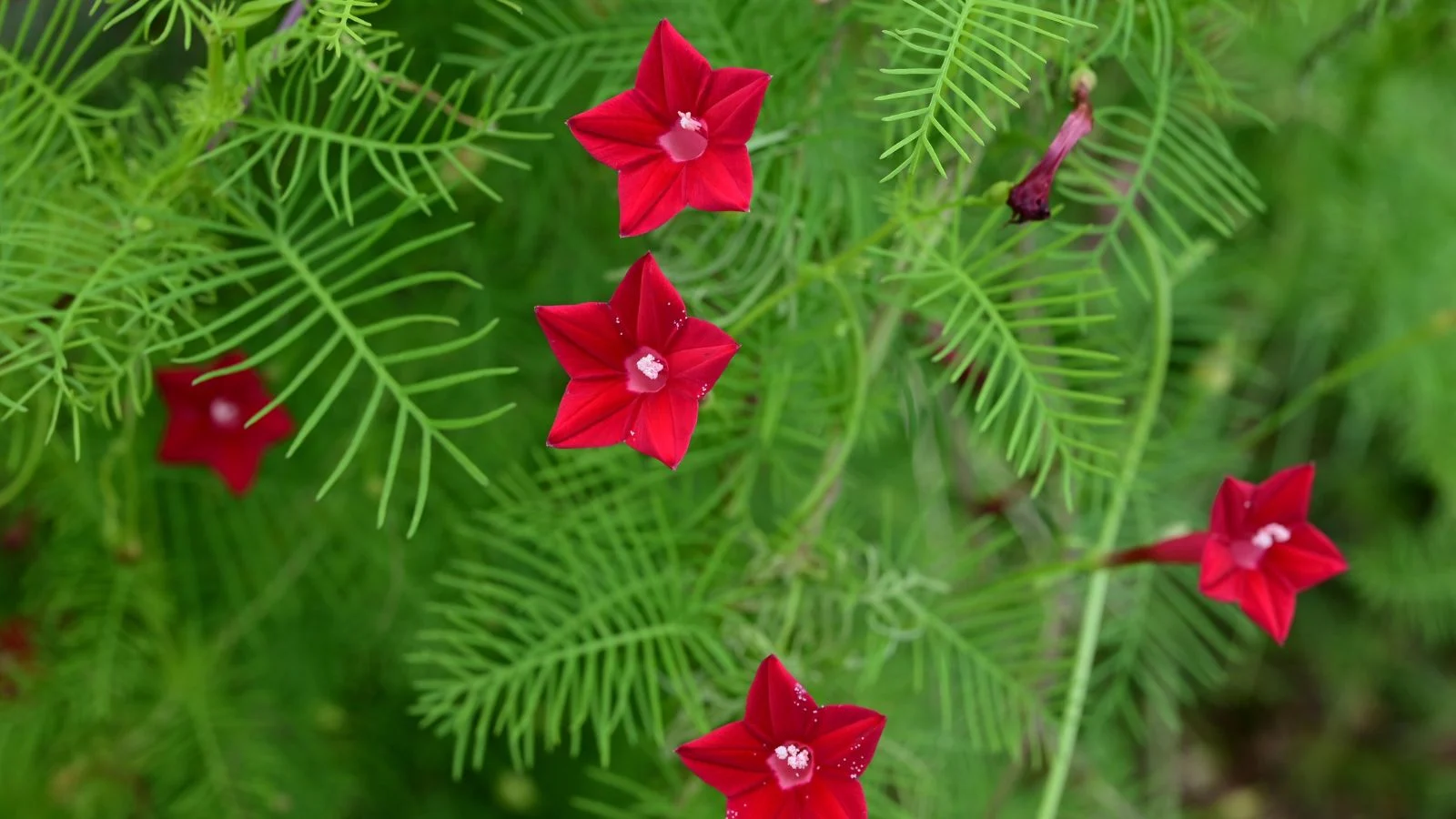 The ferny foliage has great ornamental value.
botanical name
Ipomoea quamoclit ‘Funny Valentine’
sun requirements
Full sun
height
6-20′
hardiness zones
11-12
This stunning morning glory relative is a magnet for hummingbirds. It will stand out in your garden with its deep crimson, white, and pink star and trumpet-shaped flowers, and its almost fern-like leaves. It’s a native from Mexico and South America, where hummingbirds reign, and in most of the US and Canada, it’s grown as an annual.
That annual nature in most of North America controls some of its sprawl, which can reach up to 20 feet in optimal conditions. In that regard, it’s invasive in certain areas – mostly in the southern portions of the States. Arizona has banned this plant due to its tendency to push out natives.
In moist areas of the Southeast, this is an easy plant to pull if it grows aggressively. And while its mature size is large, it can be cultivated in a container if you choose. The flowers are hummingbird attractants after all.
Coral Honeysuckle
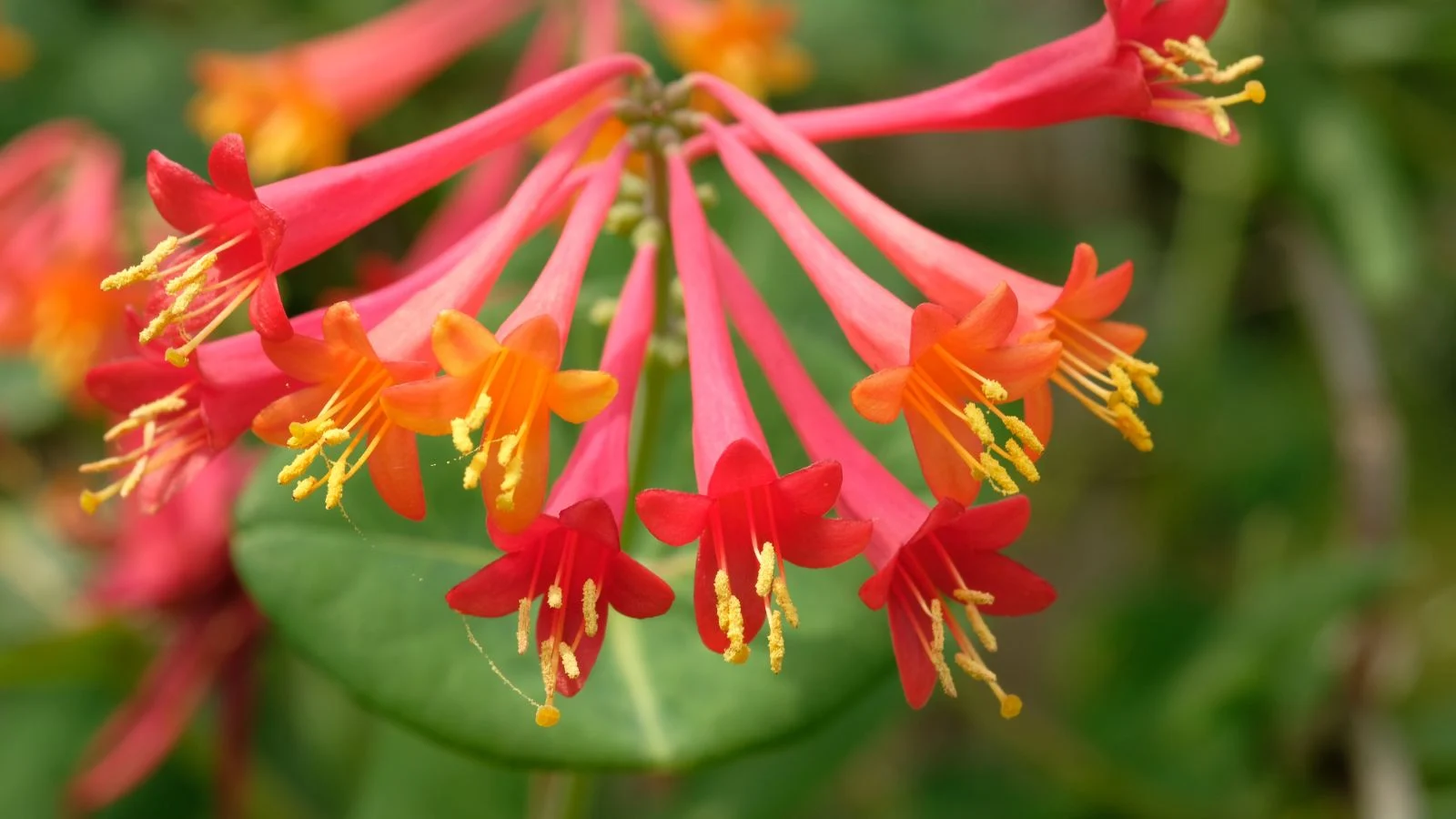 This is one of the best honeysuckles for home gardens.
botanical name
Lonicera sempervirens
sun requirements
Full sun to partial shade
height
10-20′
hardiness zones
4-9
One of the best honeysuckles out there is coral honeysuckle. Like many on this list, it has the reddish blooms in the trumpet shape that hummingbirds love. It’s also a host plant for various beautiful butterflies, so if you plant one, prepare to have it munched on. It’s a natural part of the ecosystem’s cycle.
What you get outside the benefit to pollinators is semi-evergreen leaves and a slower growth rate than some of the others listed here. It blooms in spring, just as migrating hummingbird populations make their way north, and in warmer regions, it will bloom again in fall.
I grew this one on a fence in full Texas sun, and it thrived. I noticed, however, that it did divert to the shadier side of the fence, so if your soil tends to be dry and your summers are hot, a little partial shade in the afternoon will help it stay cool. It’s a flammable vine that should be planted away from your home.
Virgin’s Bower
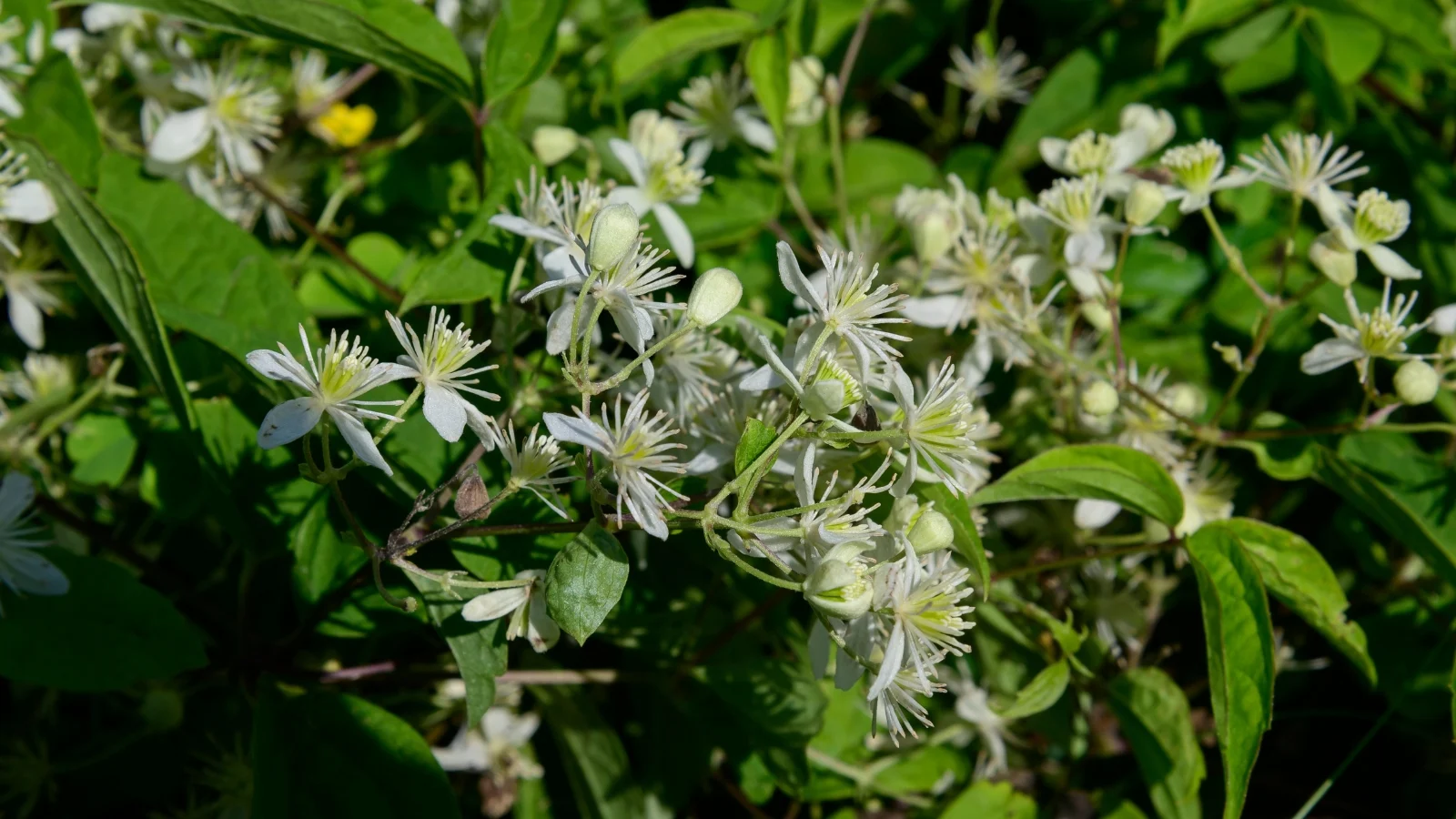 These vines attract hummingbirds in shady spaces.
botanical name
Clematis virginiana
sun requirements
Full sun to full shade
height
15-20′
hardiness zones
6-8
Shade gardeners, rejoice! These vines attract hummingbirds, even though they lack the typical shape and color the birds prefer. Instead, you get bunches of minute, white flowers that have four to five petals each. They can handle any sunlight conditions, though they have a small hardiness range from zones 6 through 8.
If you need a plant that fills in an area quickly, this eastern native will do it. It’s vigorous and deciduous. As flowers fade in late summer, they make way for plumed seed heads. These fall to the ground and grow new vines, but they also feed wildlife that use seeds as food during winter.
Yellow Passionflower
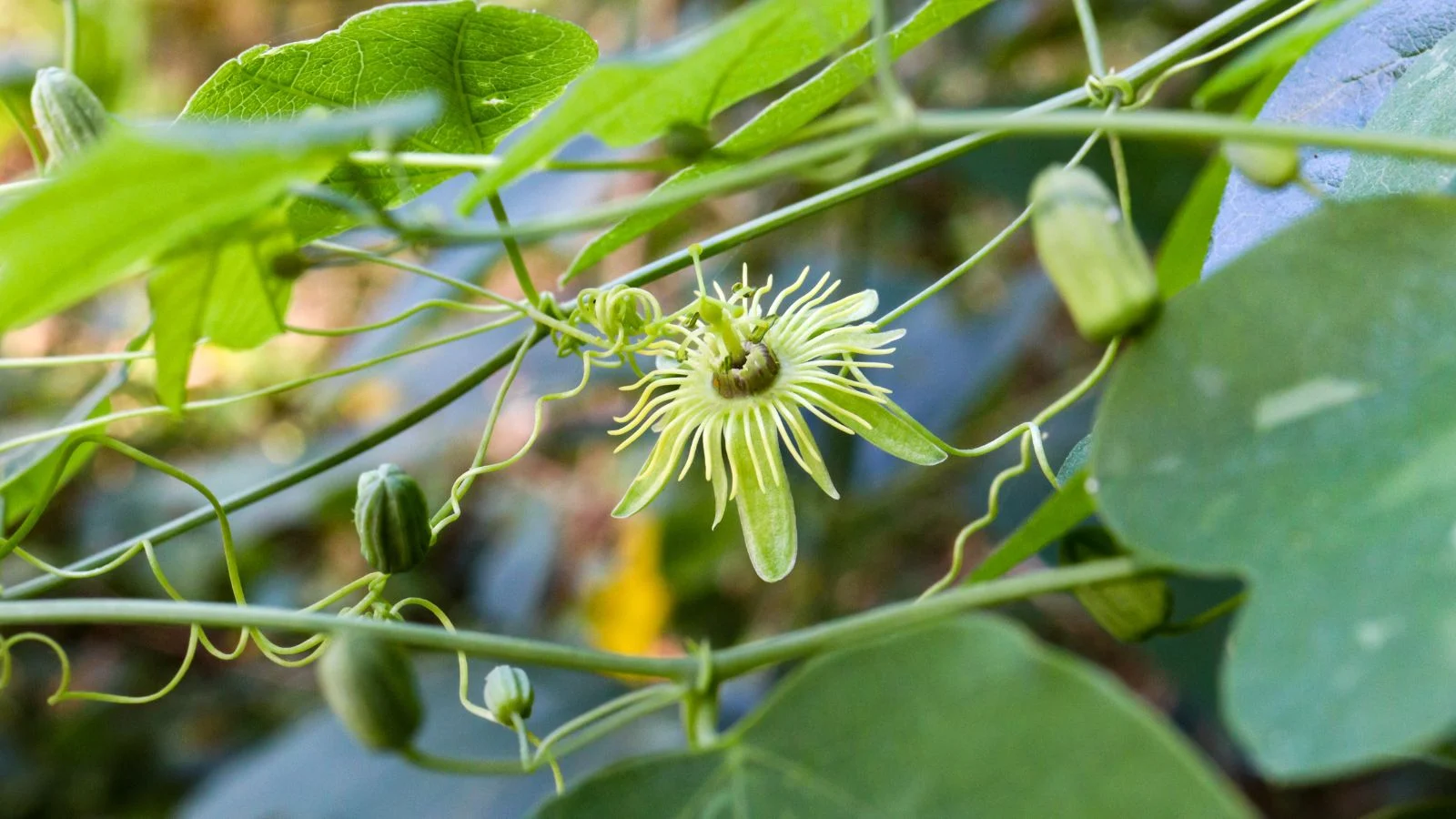 The pale yellow flowers are incredibly unique.
botanical name
Passiflora lutea
sun requirements
Full sun to partial shade
height
10-20′
hardiness zones
5-10
I have to throw a rare plant on this list, and this one is much less vigorous than the others here. It’s best planted in the ground or in a raised bed, but it won’t aggressively sprawl and climb through the garden. This Passiflora species is commonly called yellow passionflower, or dwarf passionflower. Its relatives are notorious for overtaking areas, but this one is not.
Instead of the typical passionflowers, these are pale yellow and much smaller. While it can handle some full sun, I typically see it growing in partially shaded areas near trees. This eastern native doesn’t need much once it establishes itself in the landscape, and the vines attract hummingbirds, even though they’re sparse.
When not in bloom, P. lutea has attractive three-lobed leaves that stand out among surrounding foliage. The berries that form after the flowers fade are food for mammals and seed-reliant birds. This one has multiple benefits, and if you can locate a source for one, grow it! You’ll have a rare plant in your garden.
Trumpet Creeper
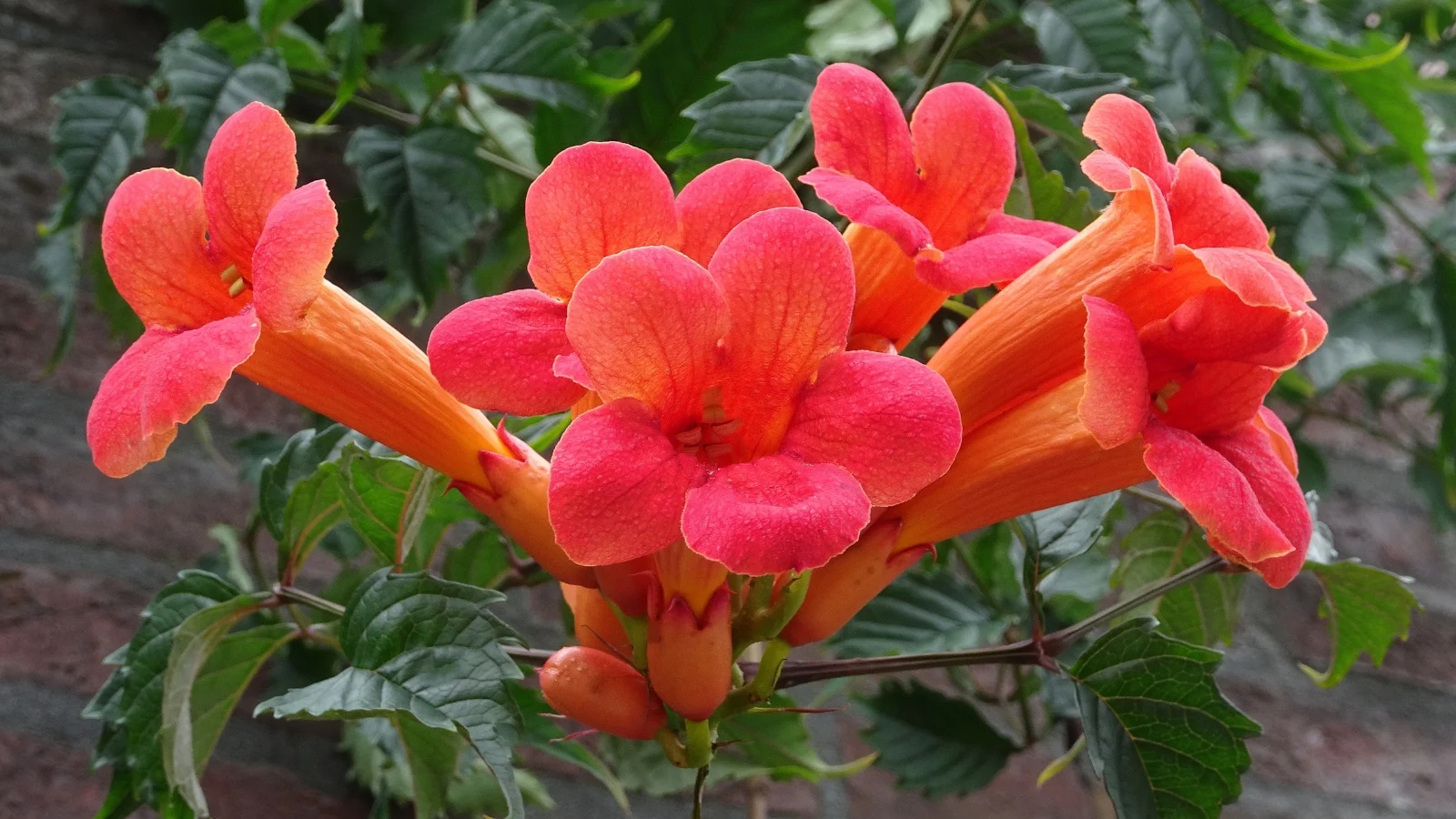 Ensure you’re prepared to manage growth when planting this vine.
botanical name
Campsis radicans
sun requirements
Full sun to partial shade
height
30-40′
hardiness zones
4-10
The first thing anyone should say about trumpet creeper is that it is not a plant to throw into a small garden. Its growth is so vigorous that it can take out large trees. However, if you have a large space and plenty of room for this one to take over, these vines attract hummingbirds and are some of the best to grow for winged friends.
Due to the high-climbing orange trumpet-shaped blooms, hummingbirds tend to be the premier pollinator for this vine. This is a heat and shade-tolerant plant that is easy to grow, too (too easy, even). As long as you’re careful where you plant a trumpet vine, it can serve as an excellent source of food for hummingbirds, deer, and rabbits.
We reference Attract more hummingbirds briefly to keep the thread coherent.