
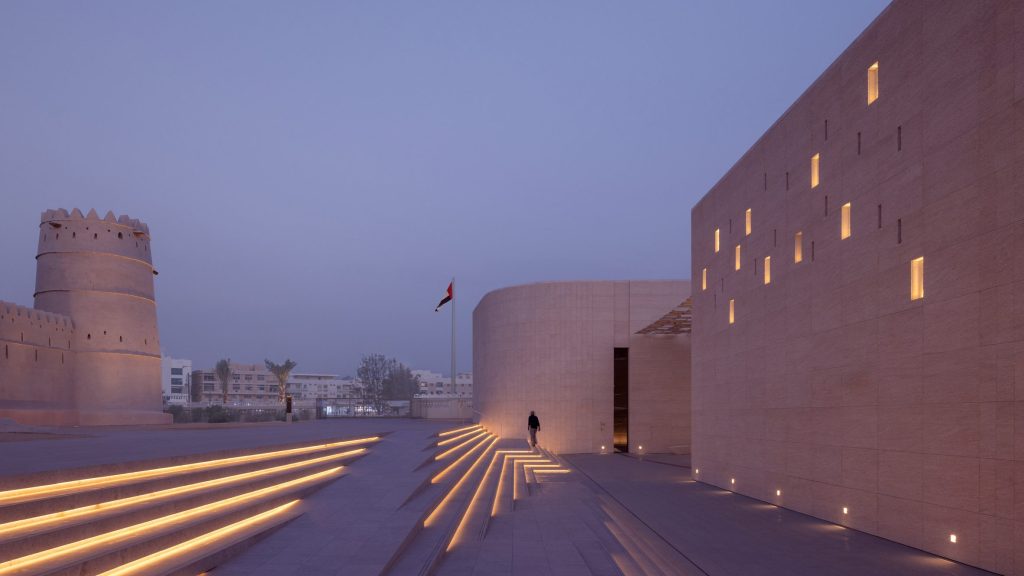
Dubai studio Dabbagh Architects has renovated the mud-brick Sultan Fort and extended the Al Ain Museum in Abu Dhabi, incorporating archaeological remains discovered during construction.
Dedicated to the history and archaeology of the area, the museum is located alongside the UNESCO-listed Al Ain Oasis in the town of Al Ain.
Dabbagh Architects aimed to balance the two historic structures – an early 20th century fort and UAE’s first museum, built in the 1960s – with a contemporary building to create “a vessel for memory”.
Dabbagh Architects has renovated the mud-brick Sultan Fort (right) and 1960s museum (centre) and created a contemporary extension (left)
“The core concept was to position architecture as a vessel for memory,” Dabbagh Architects founder Sumaya Dabbagh told Dezeen.
“Rather than imposing elements on the site, the project was conceived as a careful weaving of archaeology, historic structures, and contemporary architecture,” she continued. “The museum is designed to showcase over 8,000 years of history, allowing the site itself to lead the narrative.”
“Here, tangible form becomes a framework through which the intangible – memory, identity, and place – are experienced, ensuring continuity between past, present, and future.”
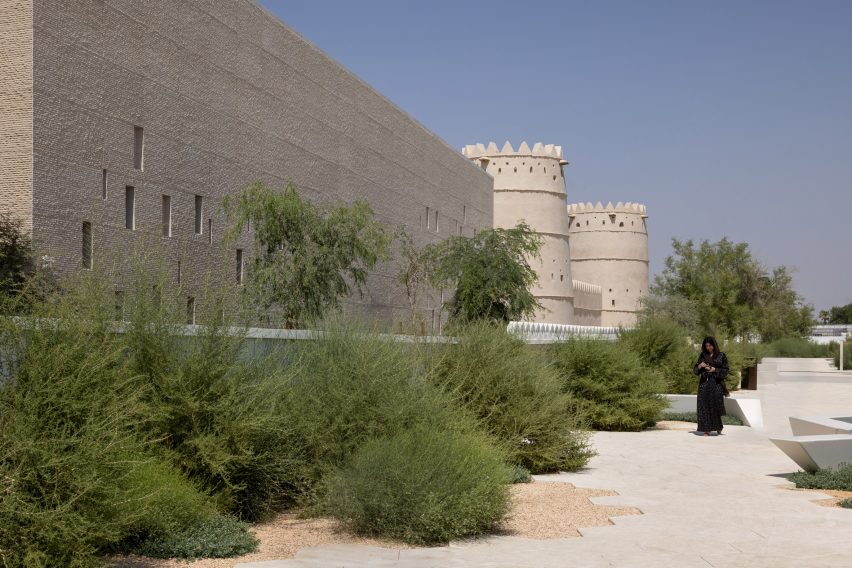 The museum is focused on the area’s archaeology
Dabbagh Architects renovated the large brick fort and its round corner towers, as well as the original single-storey museum building.
Alongside these historic structures, the studio added a modern extension that, along with the two existing buildings, forms an entrance plaza. The extension is formed from a series of interconnected blocks connected by small courtyards.
Dabbagh Architects creates calligraphy-covered contemporary mosque in Dubai
“Designing within such a historically significant site meant listening closely to the archaeology, the landscape, and the cultural memory embedded within it,” explained Dabbagh.
“We engaged closely with archaeologists, conservators, and heritage specialists, allowing the site’s multiple historical layers to guide the architectural response. Rather than treating these conditions as constraints alone, we embraced them as opportunities to shape a museum that safeguards heritage while revealing its continuity across time.”
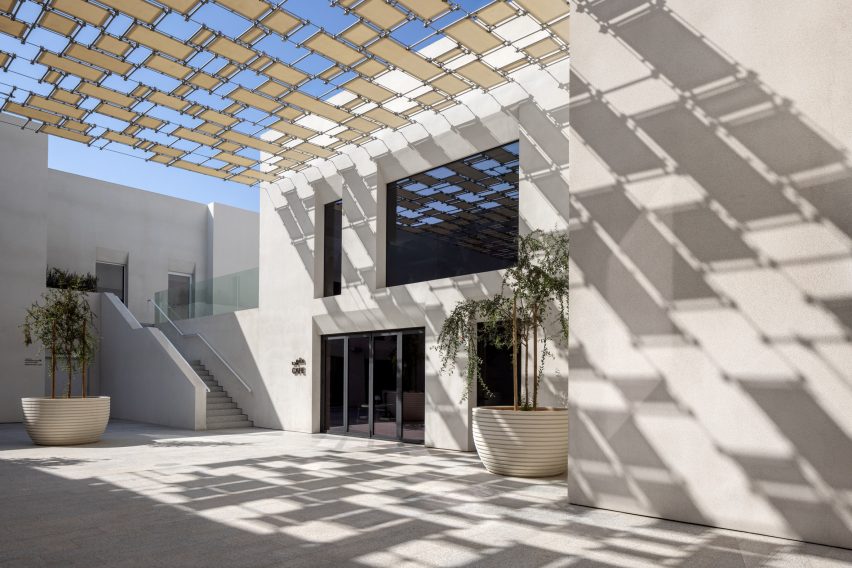 It is arranged around several courtyards
During construction work on the museum, a tomb and a series of irrigation systems and wells were discovered on the site. This led to design alterations that allow these archaeological remains to be showcased.
Several of the larger gallery spaces are arranged around these uncovered archaeological remains, which are preserved where they were found.
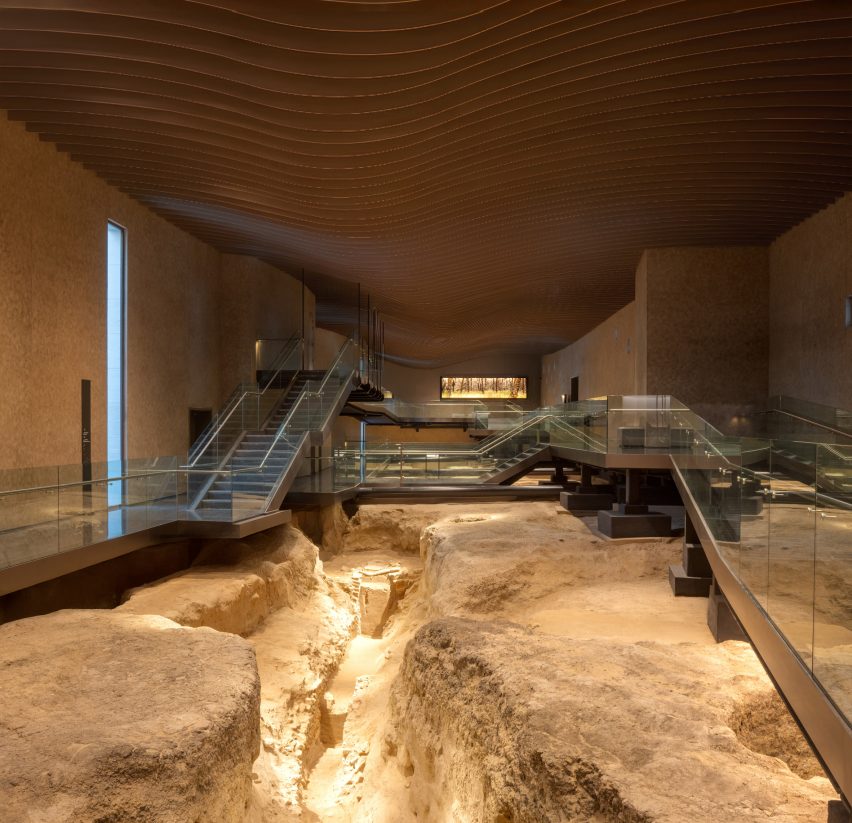 Some of the galleries were built above archaeological remains
“Honouring the historic and archaeological elements was always central to our design approach,” explained Dabbagh. “The new building was carefully positioned and scaled to frame, rather than dominate, the site’s existing structures and excavations.”
“The architecture is woven around the archaeology, allowing it to remain visible, accessible, and central to the visitor experience,” she continued.
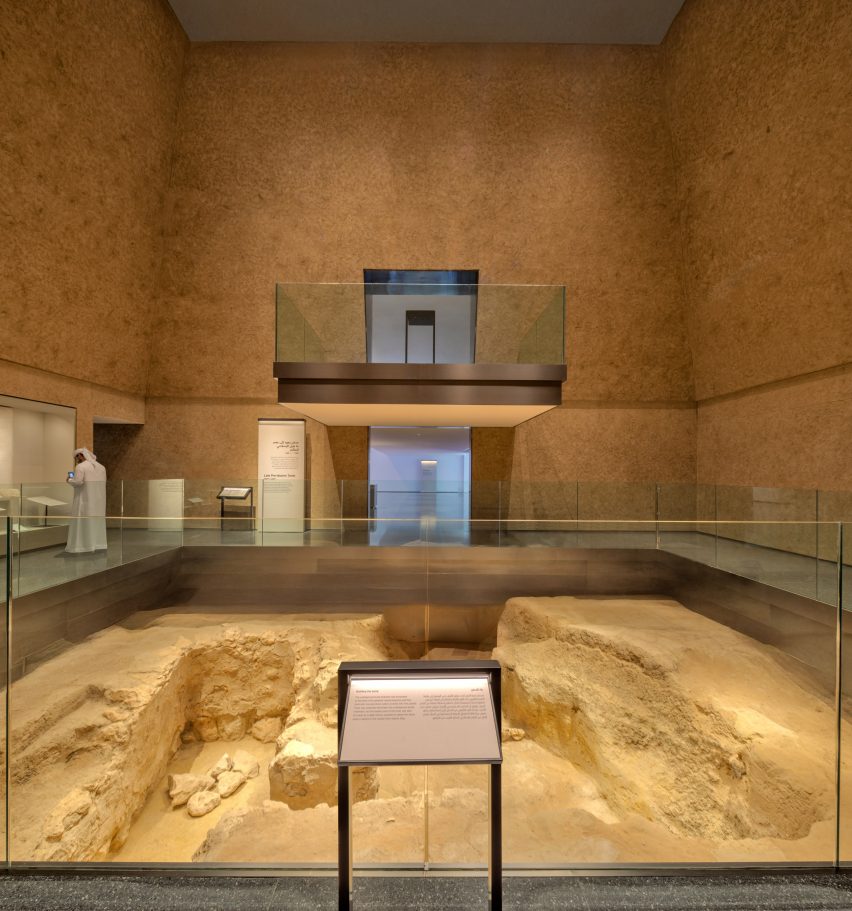 The remains were discovered during construction
These archaeology-focused galleries were finished in chiselled limestone to evoke the neighbouring fort and distinguish them from the museum’s other spaces.
Alongside these earthy-colour spaces are a series of more traditional white-box galleries as well as a cafe, shop, research library, conservation laboratories and offices. All these areas were finished in bright white render.
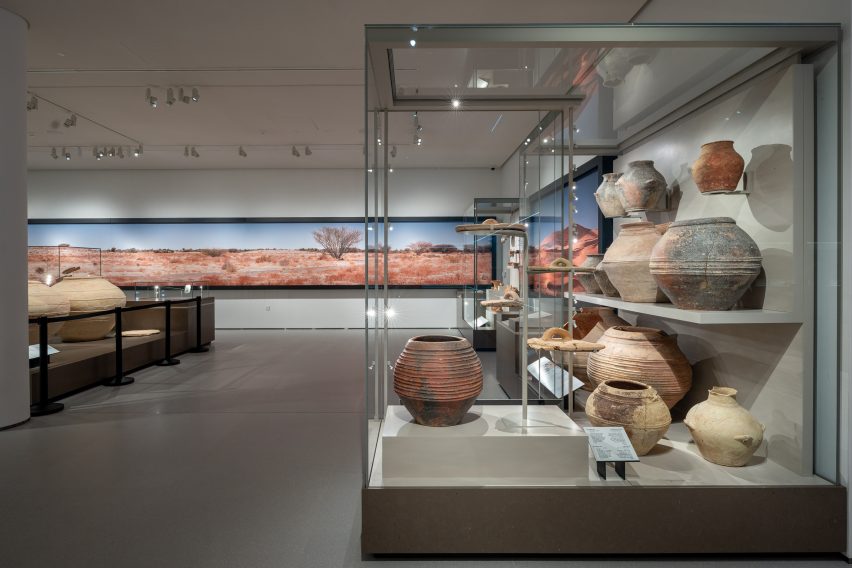 The museum also includes white-box galleries
Overall, Dabbagh hopes that visitors to the museum leave with a “sense of connection to the site”.
“The museum is designed to foster reflection, understanding, and belonging, allowing visitors to experience heritage as a living continuum,” she said.
“Ultimately, we hope the architecture brings a deeper appreciation of the UAE’s rich history and a renewed sense of pride in its cultural identity.”
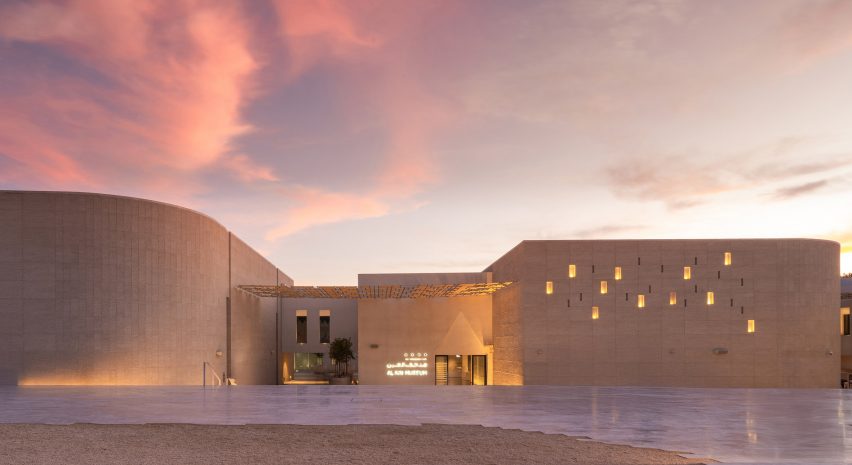 Al Ain Museum is entered from a newly formed entrance plaza
Dabbagh Architects was founded in 2008 by Dabbagh, who was a judge for the Dezeen Awards 2024. The studio previously designed a calligraphy-covered mosque in Dubai.
The photography is by Gary O’Leary.
Project credits:
Architect: Dabbagh Architects
Principal: Sumaya Dabbagh
Design lead: Hala Nahas
Design team: Hana Younes, William Java, Tala Al Shukairy
Site supervision team: Mamdouh el Fallal, Sherif Touma, Faustino Alimodian,
Myrto Tsitsinaki, Burak Dolu (Conservation)
Engineering: Buro Happold
Landscape architects: WAHO Landscape Architects
Conservation architects: SeARCCH
Lighting consultants: Nulty
Cost consultants: Matthews Southwest
















PS · Such a warm note about “Dabbagh Architects renovates and extends” — nice. So cozy.
Also · Totally agree — that really resonates with me. Will try it.
PS • I appreciate the point about “Dabbagh Architects renovates and extends” — very helpful. Thanks for this!
FYI — So cozy — makes me want a cup of tea and a quiet afternoon ☕. Thanks for this!