5. Chickweed
Chickweed (Stellaria media) is an invasive weed (it’s right there in the name!) that came to North America from Europe.
Fortunately, it also has edible leaves, stems, and flowers, so you can put it to good use.
As an added bonus, it can be evergreen and survives the winter under dense conifer cover where few other plants can thrive, which means you have a winter source of nutrients.
Chickweed has a sweet, grassy flavor that makes a nice addition to salads or a sandwich. Use the leaves of this weed instead of basil to make pesto.
Dried, it makes a tasty tea. Of all the plants on this list, it’s one of the best-tasting, so don’t pass it up.
Medicinally, it can be used to make a poultice, as a diuretic, and as an emollient. The tea is useful for treating a dry cough.
Chickweed is an annual that crawls along the ground, with small, oval leaves, a round stem, and small white flowers. It’s common in garden beds, especially rose beds.
Don’t confuse it with scarlet pimpernel (Anagallis arvensis), which is toxic, and has square stems and red flowers.
Look for the line of hairs on just one side of the stem. The side where these appear changes between each node That’s a definitive way to tell chickweed apart from any lookalike.
6. Chicory
More and more these days, chicory (Cichorium intybus) is being cultivated once again as a veggie and a coffee substitute rather than being pulled as an unpleasant weed.
It’s easily identified by its bright blue-purple inflorescences on stalks that grow up to three feet tall. Look for it on roadsides and in disturbed areas.
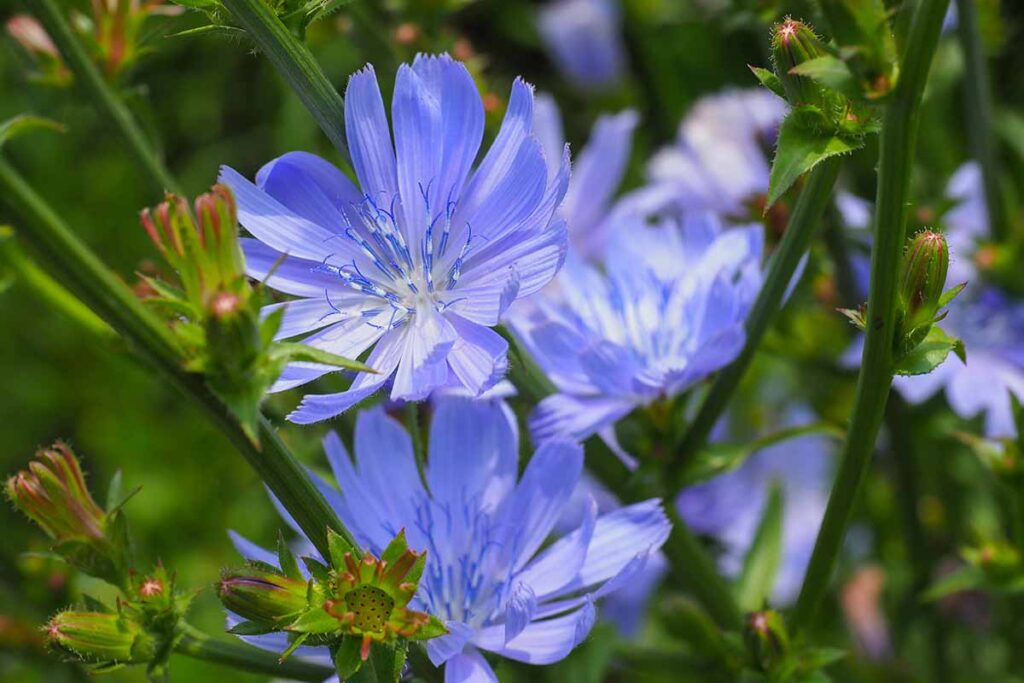
The roots, leaves, and flowers are all edible, but the root is what most people use.
If you roast the root in the oven until it’s dark brown and hard, you can grind it and brew it like coffee. The leaves have a spicy flavor, while the flowers are a bit more subtle.
Most people prefer the flavor of dandelion greens over the more bitter ones of chicory, but I find it’s a matter of proportion.
Just like endive can be a fabulous addition to a bowl full of lettuce greens, some chopped chicory leaves are also a pleasant addition.
If the leaves aren’t your thing, harvest the crown of the plant, remove the root and the green parts of the leaves, and eat the crown whole or chopped.
Medicinally, it’s considered an inferior substitute for dandelion, with the same diuretic, laxative, and liver-stimulating qualities.
I always feel lucky to have chicory in my yard. Not only is it edible, but I think the flowers are simply stunning.
The vibrant blue-purple hue stands out, and each blossom only appears for a day before it is spent.
Learn more about cultivating chicory here.
7. Claytonia
Claytonia includes several species of plants that go by various names, such as miner’s lettuce, spring beauty, pink purslane, and candy flower.
The latter common name is no misnomer. The blossoms are so incredibly floral and sweet that you might think you’re eating candy.
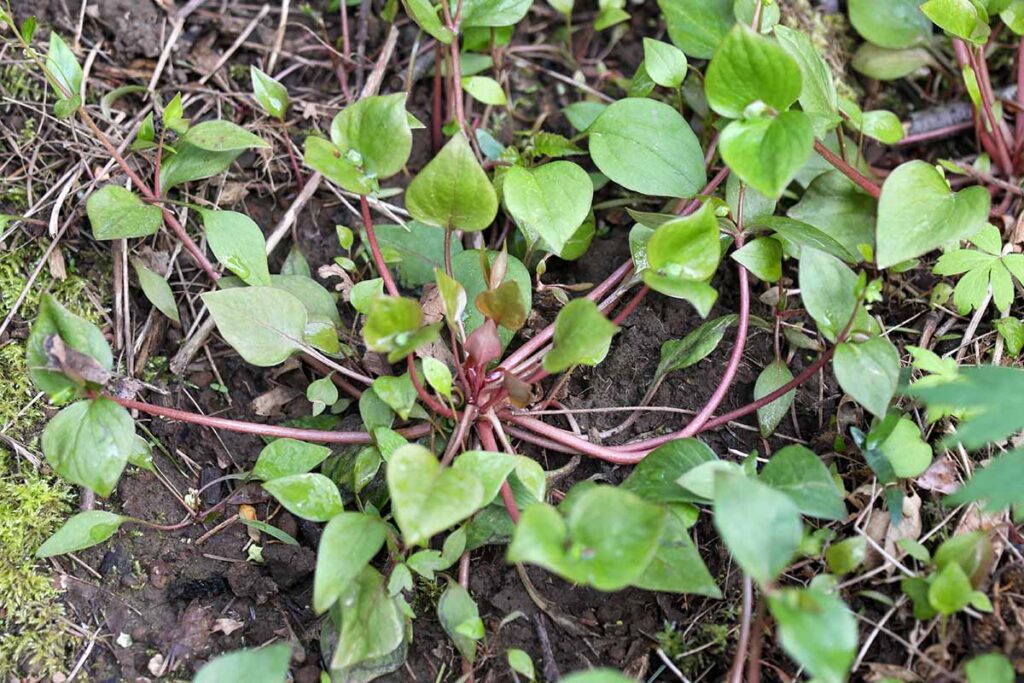 Photo by Kristine Lofgren.
These plants are related to purslane, and miner’s lettuce (Claytonia perfoliata) is perhaps the easiest to identify. It has little cup-shaped leaves that are speared by the stem of the plant.
Candy flower (C. sibirica) has small white, pink and white striped, or pink flowers atop fleshy stems.
Our guide to growing miner’s lettuce (Claytonia perfoliata) has more information.
8. Cleavers
Cleavers (Galium aparine) earned their name because the leaves cleave to clothing, pet fur, and just about anything else they can get their tiny hooks into.
This species prefers moist areas, but it’s not too picky and you can find it in drier areas, as well.
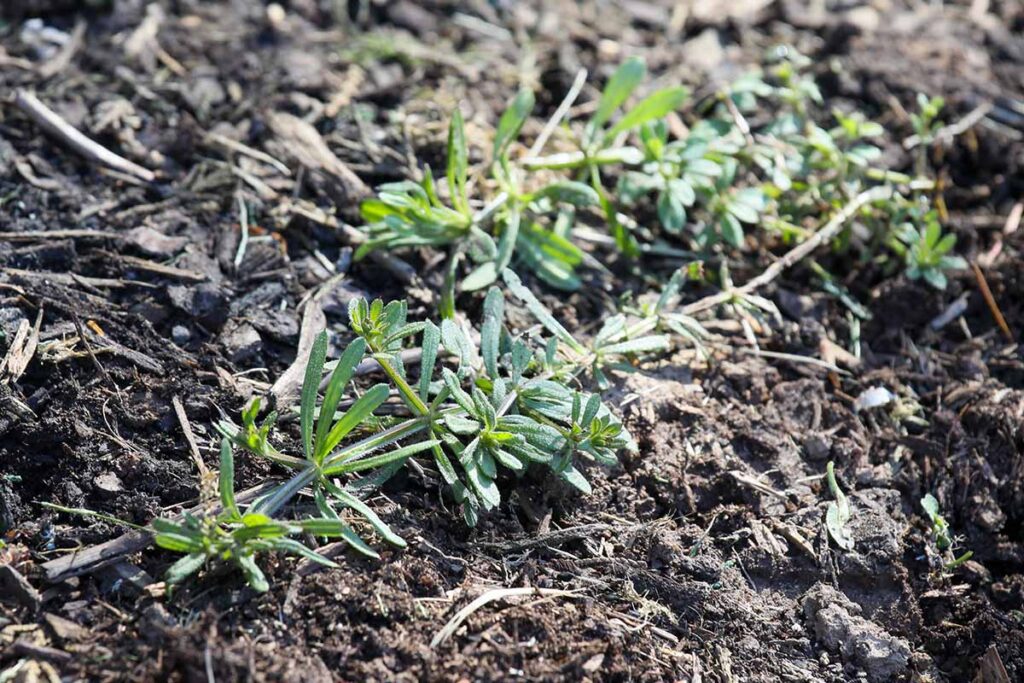 Photo by Kristine Lofgren.
The shoots and leaves are edible, but keep in mind that there are annual and perennial forms of this plant, and the perennials have leaves that are covered in jagged hooks.
These hooks will become stuck in your throat, making them difficult to swallow unless you boil them first. Young leaves or ones from annual forms don’t have the hooks.
This plant looks somewhat like sweet woodruff, with five lanceolate leaves emerging from a central stalk, and small white flowers.
This plant is used medicinally as a diuretic and topically as a salve.
9. Clover
Clover is cultivated in some areas of Europe and North America as fodder, but in others, it is an annoying weed.
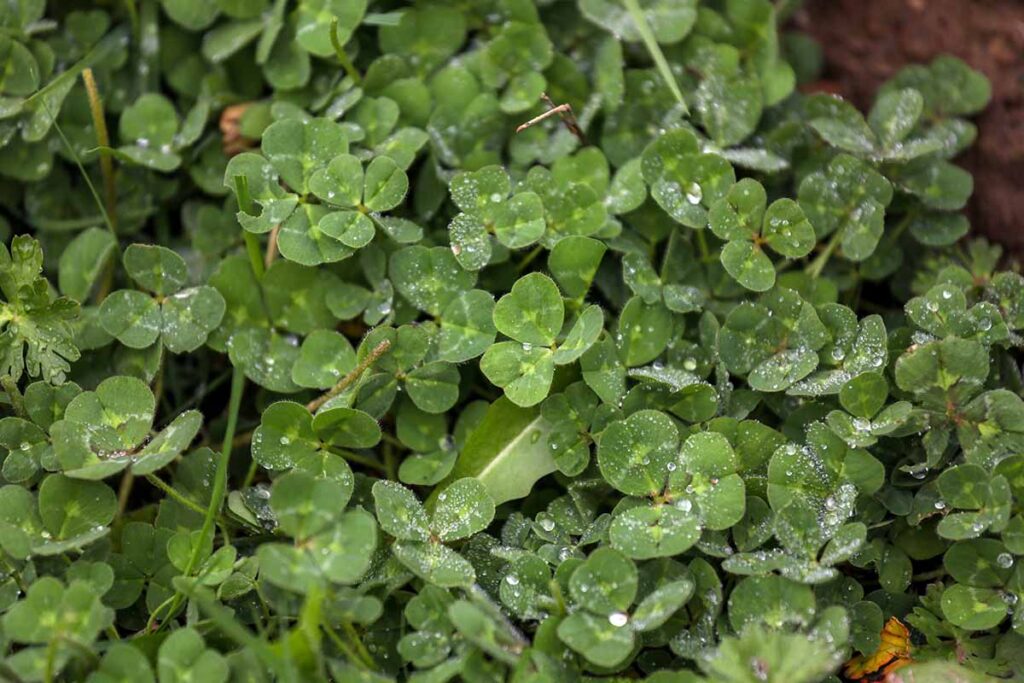 Photo by Kristine Lofgren.
Red clover (Trifolium pratense) is particularly worth pulling from your garden because it’s high in protein, calcium, and B-complex vitamins, and vitamins A and C.
Eat the leaves and flowers.
A tea made from the leaves can be used to soothe coughs and throat irritation.
10. Creeping Charlie
Ground ivy, or creeping Charlie (Glechoma hederacea), has kidney-shaped, toothed leaves and purple flowers from March to June, depending on where you live.
It’s extremely common in lawns and other garden areas that receive regular moisture.
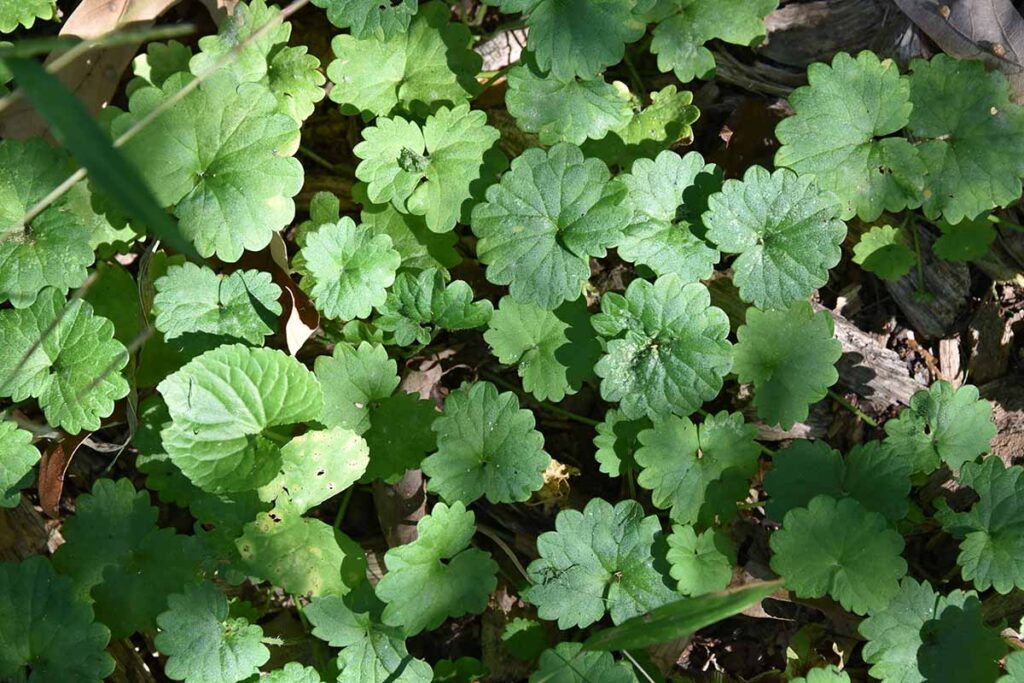
While it’s toxic to horses in large amounts, the leaves are safe for human consumption.
The dried, crushed leaves are used medicinally to treat coughs, bronchitis, and other lung issues.
11. Dandelion
We all know and love the good old dandelion (Taraxacum spp.).
With its oblong, heavily toothed leaves and bright yellow inflorescence, it’s a common weed in lawns, fields, gardens, and roadsides.
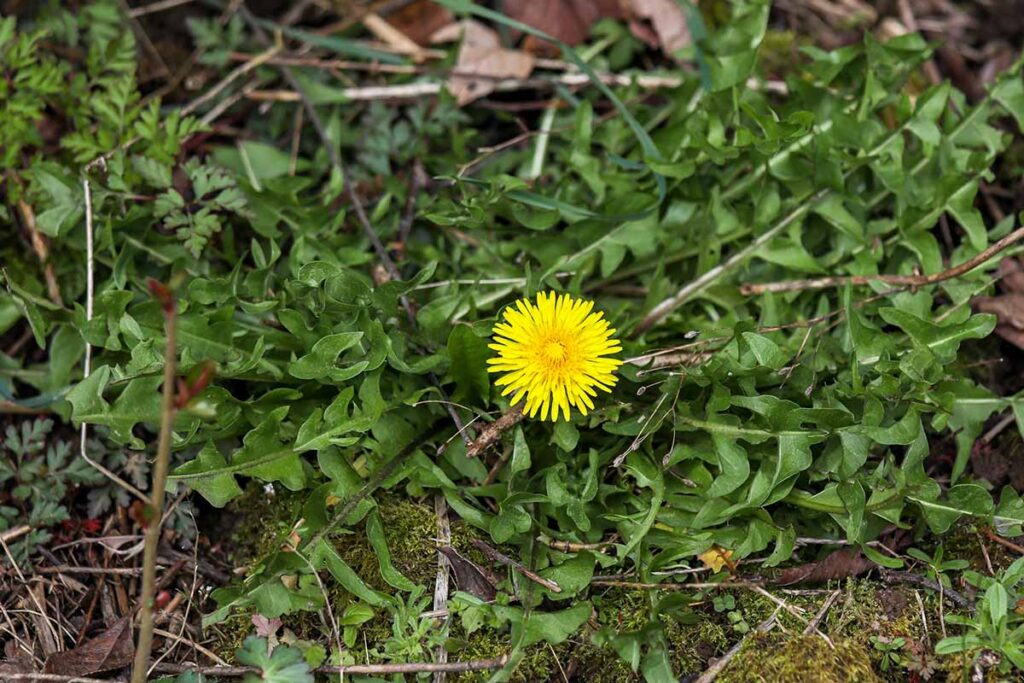 Photo by Kristine Lofgren.
The roots, flowers, and leaves are all edible. The young leaves are grassy and mellow, while the older leaves take on a bitter flavor.
They’re edible raw or cooked, and the flowers are best eaten raw.
You can make dandelion wine, syrup, and coffee, or even harvest the tightly-packed flower buds to make dandelion capers. And dandelions have more beta-carotene than carrots!
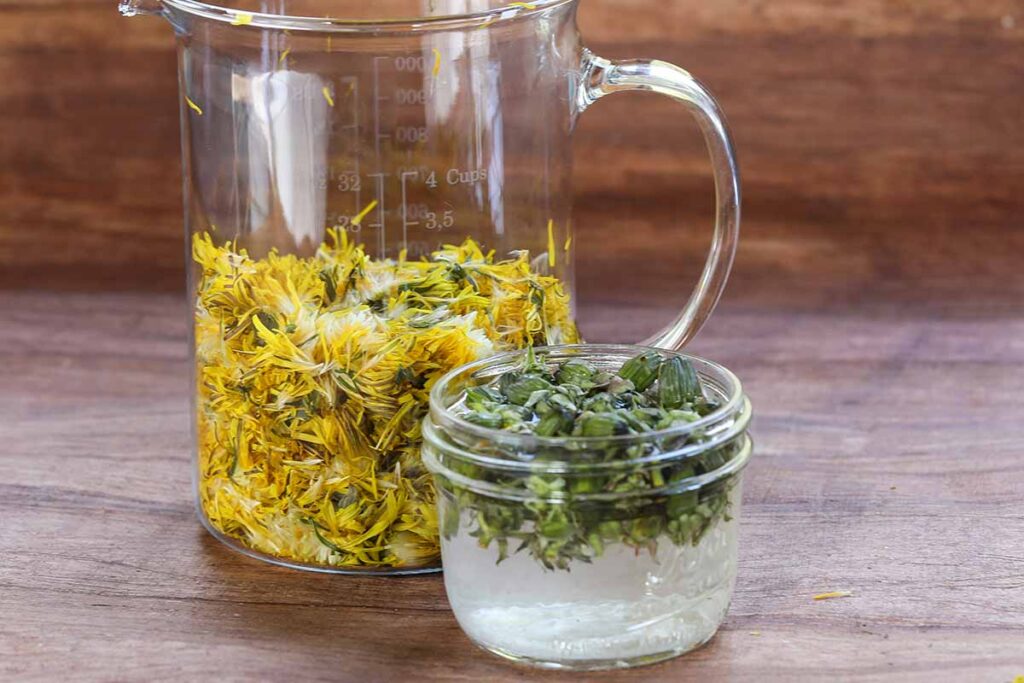 Photo by Kristine Lofgren.
You can even find newer cultivars of dandelions that are intended to be cultivated and eaten or grown as ornamentals.
It’s about time dandelions made a comeback, because they have been an important part of human culture for as long as we have kept records.
If you missed harvesting the young leaves, you can place a piece of cardboard over the plant for a few weeks to blanch it and reduce the bitterness.
If you plan to harvest the roots, at which point the leaves are usually older and bitter, consider drying the leaves to use as a parsley-like herb.
It’s also valuable medicinally for digestive issues and treating skin injuries.
Learn more about dandelions here.
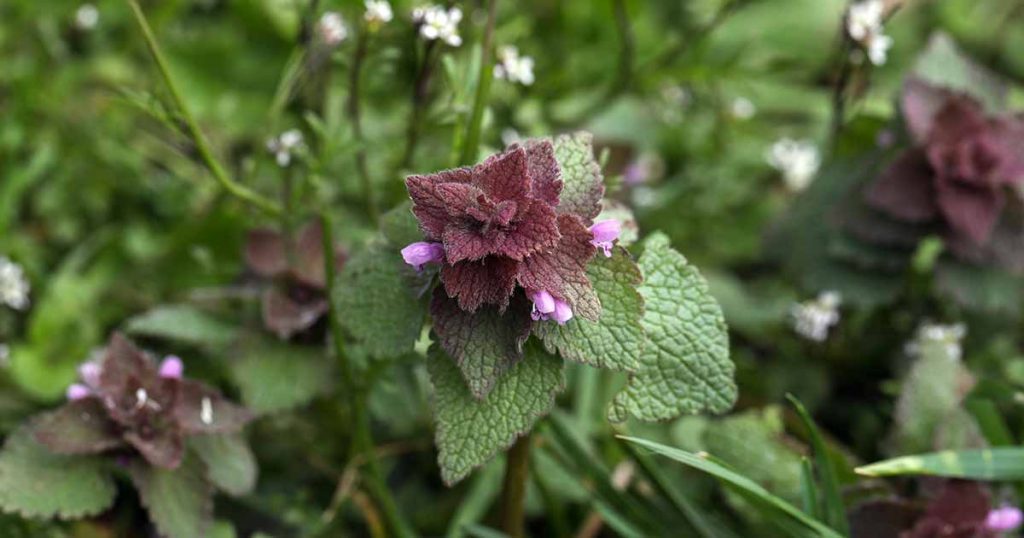
12. Dead Nettle
Dead nettle (Lamium purpureum) is in the mint family, but these plants look more like stinging nettles.
When you rub the leaves between your fingers, however, you can understand the mint relation because of the pungent aroma that’s released.
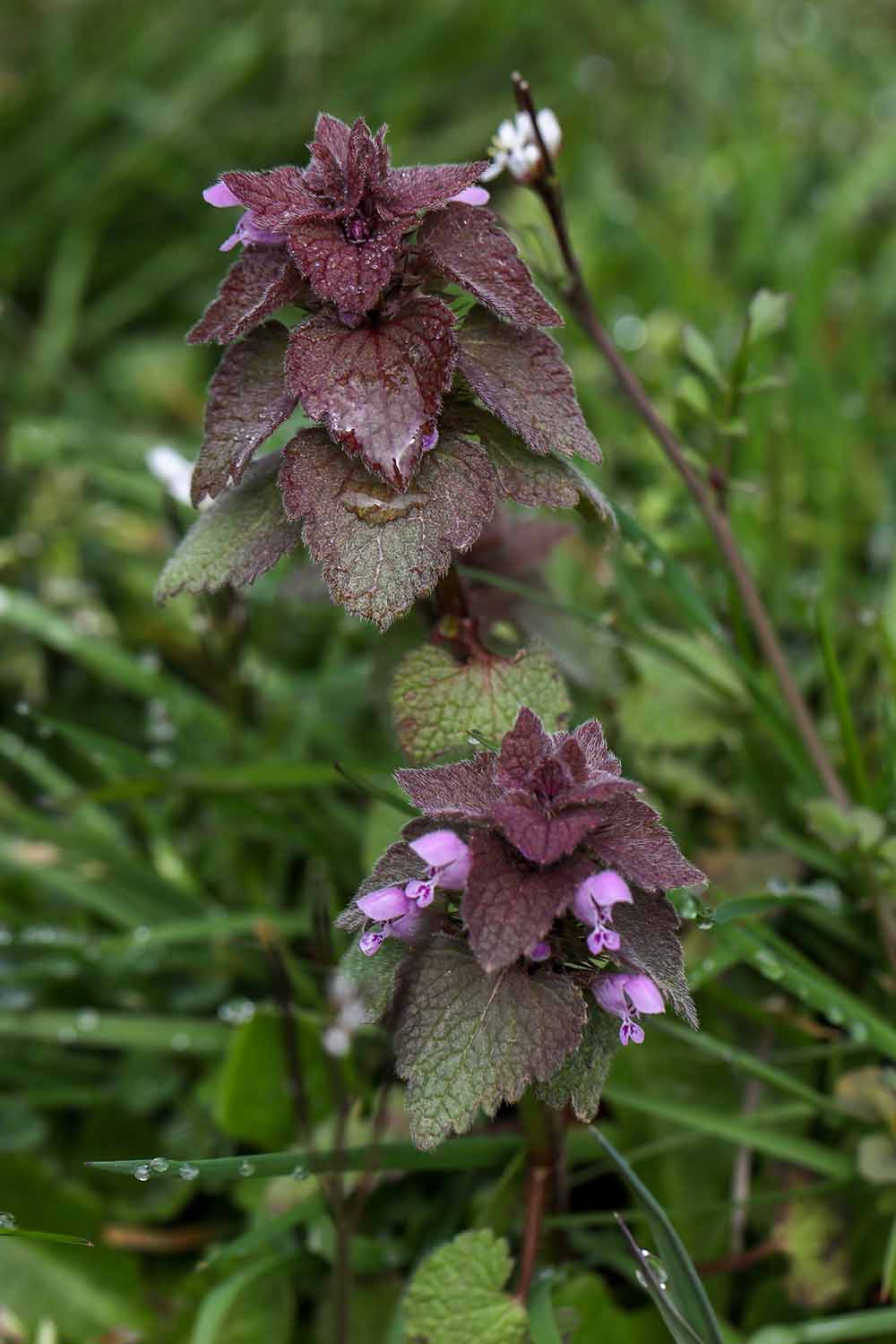 Photo by Kristine Lofgren.
You can find this weed almost everywhere – in lawns, disturbed areas, gardens, and just about anywhere else that they’re given the opportunity to grow.
They pop up early in the year and stick around during the winter in mild regions, where they send up purple flowers.