Pests and Disease
Japanese honeysuckle is extremely resilient and rarely troubled by pests or disease.
That said, infestations are worth treating promptly, as pests can spread readily to other garden and landscape plants.
Deer and rabbits may browse the foliage occasionally, but neither is likely to cause lasting damage, and the vine compensates readily by pushing new growth after moderate nibbling.
If either becomes a persistent problem, fencing off the area or moving container-grown plants out of reach are both effective options.
Insects
Pest insects are unlikely to cause serious harm to Japanese honeysuckle, but it’s worth acting quickly when signs of infestation appear to prevent spread to neighboring plants.
Aphids
Aphids are tiny, pear-shaped insects ranging in color from nearly transparent white to bright red.
Check under leaves and along stems for their presence, and watch for curling, yellowing, or wilting foliage.
Treat with neem oil applied according to package instructions, a strong blast from the garden hose, or by manually removing them with gloved hands.
Learn more about identifying and treating aphids here.
Caterpillars
Caterpillars can cause significant defoliation, and their presence is usually apparent through discolored leaves, holes chewed along leaf edges, and frass on leaf surfaces.
Honeysuckle attracts more than a dozen species of Lepidoptera, many of which are important pollinators as adults, so relocation is preferable to extermination where possible.
Move larvae by hand to another area where they can continue to forage.
Scale
Scale insects appear as small, dome-shaped shells ranging from tan-brown to shimmering gold, and include armored, soft-bodied, and mealybug types.
Signs of infestation include curling or wilting leaves, cotton-like white deposits, and black sooty mold on foliage.
Treat with neem oil or insecticidal soap applied according to package instructions, and be prepared to repeat applications for a large infestation.
Our guide to dealing with scale has more information.
Vine Weevils
Of the insects on this list, vine weevils have the greatest potential to damage Japanese honeysuckle, and can cause plant death relatively quickly on young vines.
Adults are shiny, black, and less than half an inch long, feeding at night and leaving half-moon-shaped notches with brown, dead borders along leaf margins.
More damaging are the larvae, which hatch from eggs laid in the soil at the base of the plant and feed on roots while girdling stems and cutting off the flow of nutrients.
Affected plants will wilt and decline, with foliage turning brown or rust-colored.
To treat a larval infestation, drench the soil with beneficial nematodes (Steinernema carpocapsae, Heterorhabditis heliothidis, or Steinernema kraussei in cooler conditions) when soil temperature permits, and apply a pesticide formulated for adult weevils to reduce egg-laying.
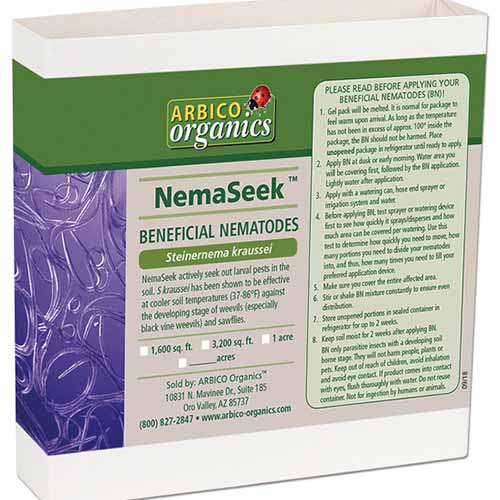
NemaSeek Beneficial Nematodes
If you need to introduce nematodes in cooler temperatures, consider the Steinernema kraussei species, available from Arbico Organics.
Disease
There are a few diseases worth watching for, along with one physiological condition not caused by a biological pathogen.
Canker
Canker, caused by the fungus Insolabadsidium deformans, spreads through standing water and tends to target plants already weakened by damage or pest activity.
Symptoms include yellow or brown leaves and dark spots on the undersides of leaves or stems.
Remove affected foliage early with sterilized pruning shears, dispose of infected material in a sealed trash bag, and ensure no standing water remains near the plant.