
Culture how flowers: a concise orientation before we get practical.
Culture how flowers: Quick notes
In her new book, floral designer and writer Christin Geall takes us on a global tour, discussing the culture of flowers with originality and wit. Well-paced and fabulously illustrated, Flora Culture: How Flowers Shaped Our World is a high-energy romp, backed by proper research and Geall’s personal experience. Treat it like an actual coffee table book, not left to languish in a pile but in full view, and dip into it. Picking a heading at random, be it Aroids, Chromophobia, or Endonyms, give yourself a leisurely few minutes to read, look, and think. We’ve been doing just that; here is a flick through:
Photography courtesy of Flora Culture.
Above: Many photographs in the book are from artists, the result of painstaking picture research. Shown here, Flowers for Lisa #1, 2014 by Abelardo Morell.
Chapters are arranged alphabetically; terms used in the headings are not always known beyond the world of floristry and ecology. “Cold Chain: Plants on the Move” explains the lack of logic in sending plants around the world. The bizarre facts around the cold chain (the means of refrigeration used for storing and transporting perishables) are allowed to speak for themselves. For instance, the UK imports 90 percent of its cut flowers, this is despite considering itself a nation of gardeners—my aside.
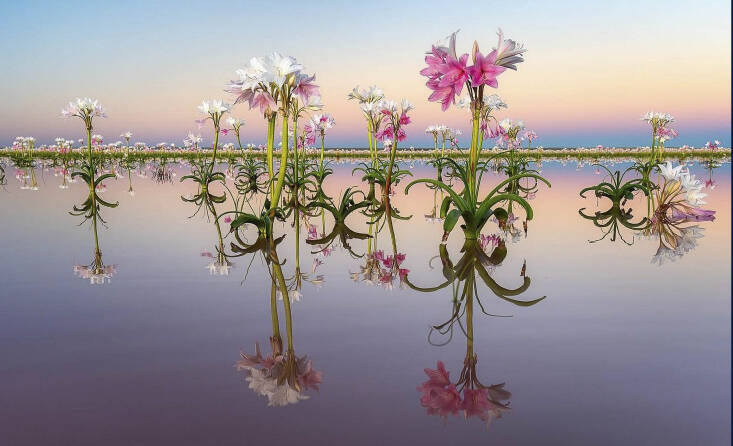 Above: Sahndhof lilies (Crinum paludosum), photographed by Kyle Goetsch. They bloom every few years in Namibia, when the stars align, ie, when 6 to 12 inches of rain accumulate in (generally) dry lakebeds.
The chapter on bulbs is a feast, describing familiar and not so familiar geophytes (terrestrial plants with underground storage systems.) Most rely on xeric conditions but many of the South African species (such as Crinum, shown above) are adapted to water. In a changing climate they will find the conditions they need. “If soil erodes around a geophyte or a rock is in the way, the plant is capable of moving. What? Yes!” writes Geall. “By alternately swelling and shrinking its roots, a geophyte can miraculously pull itself through soil.”
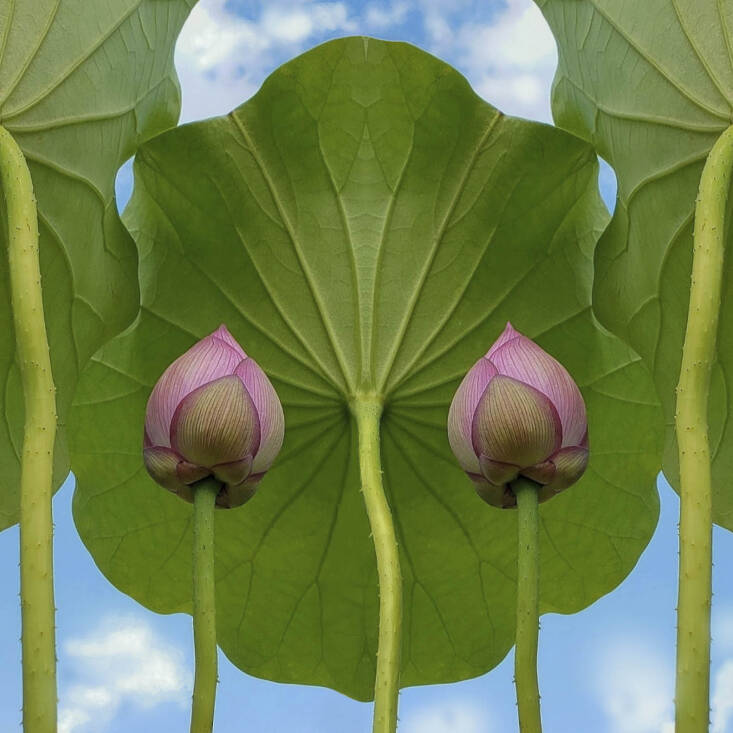 Above: Nelundo ‘Thousand Petal’ in the garden of Billy Van Bakker.
Emergents are plants that flower above water but the term can also refer to plants that rise above surrounding greenery. It particularly fits the lotus flower, which does both (“water lily leaves float on the water; lotus leaves hover above the surface.”). Other plants discussed in this chapter include miraculous papyrus, once “the cornerstone of civilization” but reduced now to about 30 cultivated acres in Egypt.
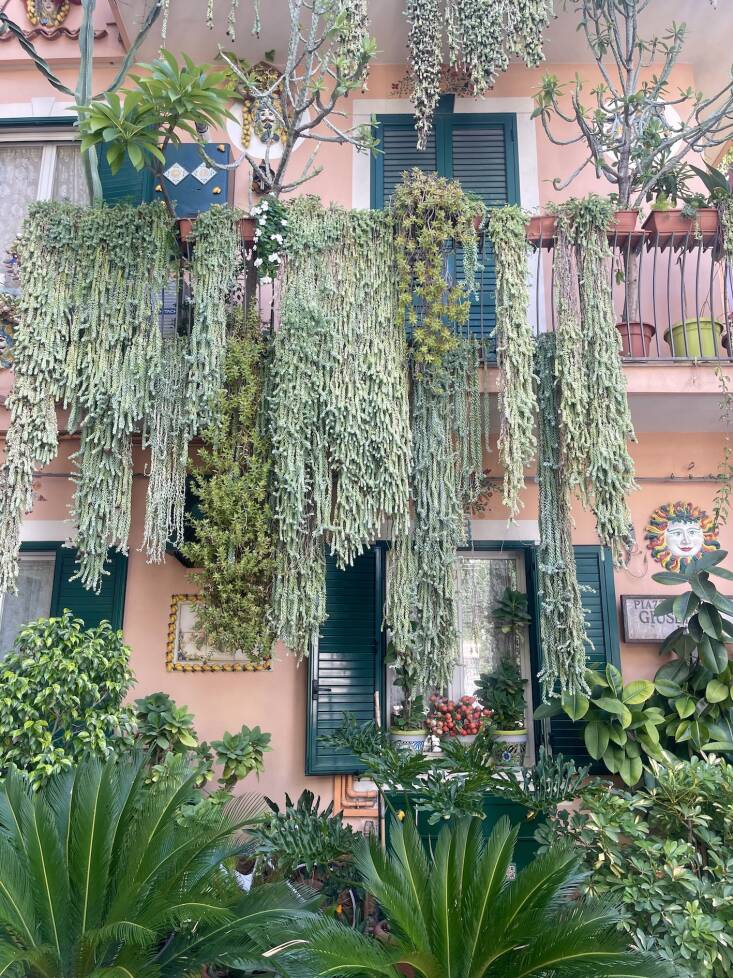 Above: From the chapter titled “Subtropical,” a Sicilian balcony and courtyard in Italy.
Geall looks at the “favored climes” of places like southern Europe, Morocco, and Japan, all considered subtropical and therefore the ideal climactic region for growing plants. Balboa Park in San Diego is in a subtropical zone and displays a rich variety of plants that were introduced to Southern California in the 19th century. The “Queen of Balboa Park” Kate Sessions was instrumental in this and like her plant collecting colleagues around the western hemisphere, she was able to import flowers that she fancied, with impunity. One legacy of this child-in-a-sweetshop situation today is the idea that anything that’s not native is more interesting. “Only about 27 percent of ornamental plants sold in the United States have North American roots,” writes Geall.
Culture how flowers comes up here to connect ideas for clarity.













Also • Nice and clear — thanks for the step-by-step. Love this! ✨
Heads up: Yes, that small tip really helps. So cozy.