

Grow creeping thyme — a quick note to anchor this piece for readers.
If you don’t want to leave your garden bare and empty, ground covers are an easy fix. They don’t just make things look better, they also do some real work in the background.
Once they spread out, they help hold the soil in place, keep moisture from drying out too fast, and stop weeds from popping up everywhere. So you end up doing a lot less work later on.
Creeping thyme is one of those plants that just quietly does its job year after year. It grows low, spreads out nicely, and fills those awkward empty spots with a soft green layer.
And when it blooms, you start seeing these tiny flowers that really lift the whole space and make it feel more alive. You can even walk on it a bit, and it gives off a light, pleasant smell, which is why it works so well for paths and stepping stones.
Why Choose Creeping Thyme?
This perennial hardy plant is a great choice if you want something that looks good but doesn’t need too much care. It grows low to the ground and spreads on its own, slowly filling empty spaces without much effort.
Another nice thing is, it doesn’t need much water once it settles in. It actually prefers dry, well-drained soil, so you don’t have to keep watering it again and again. And unlike grass, there’s no mowing, which makes things a lot easier.
When it starts to bloom, you’ll see tiny flowers that add a soft touch of color across the ground. It also attracts bees, which helps your garden stay active and healthy.
And since it can handle a bit of walking and gives off a light smell when stepped on, it works really well along paths and stepping stones.
When to Grow Creeping Thyme from Seed?
The best time to start creeping thyme from seed is in early spring. This is when the weather starts to warm up, and the seeds get the right conditions to grow. If you’re starting indoors, you can sow the seeds a few weeks before the last frost.
If you prefer to sow seeds directly in the garden, wait until the frost has passed and the soil feels a bit warm. Creeping thyme seeds need warmth and light to germinate, so colder weather can slow things down.
If you live in a warmer climate, you can also try sowing in early autumn. Just make sure the plants get enough time to grow before the weather turns too cold.
How to Grow Creeping Thyme from Seed?

Growing creeping thyme from seed is a good option if you want to cover a bigger area without spending too much money.
A small packet of seeds can give you many plants, which is great if you’re working on pathways or open spaces.
It does take a little patience in the beginning, as thyme grows slowly at first. But once it gets going, it spreads on its own and fills the space nicely over time.
Things You’ll Need
- Creeping thyme seeds
- Light, well-drained soil
- Seed tray or small pots (or garden bed)
- Water spray bottle or gentle watering can
- A sunny spot
1. Prepare the Soil
Start with soil that feels light and loose. Creeping thyme does not grow well in heavy or wet soil, so it’s important to fix that first.
If your soil feels tight or sticky, mix in a bit of sand or compost to improve drainage. This helps water move through easily and keeps the roots from sitting in moisture.
You can grow seeds in trays, small pots, or directly in the garden.
If you are using containers, make sure they have drainage holes at the bottom. Good drainage is one of the most important things for thyme.
2. Sow the Seeds
Thyme seeds are very tiny, almost like dust, so handle them gently. Sprinkle them lightly over the soil surface. Try not to dump them all in one spot. Even if they fall a bit close together, it’s okay, you can thin them out later.
There’s no need to be perfect here. Just aim for a light, even spread so each seed gets a bit of space to grow.
3. Lightly Press, Don’t Bury Too Deep
After placing the seeds, gently press them into the soil using your hand or a flat object. Do not bury them deep. Thyme seeds need light to germinate, so keeping them on the surface or just slightly covered works best.
If you cover them too much, they may struggle to sprout or take much longer.
4. Water Gently
Watering needs to be soft and careful at this stage. Use a spray bottle or pour water very lightly so the seeds don’t get washed away. The goal is to keep the soil slightly moist, not wet.
Too much water can cause problems like rotting or pushing the seeds too deep into the soil. So it’s better to water a little at a time and check the soil with your finger.
5. Germination Time
Now comes the waiting part, and this is where patience really matters. Creeping thyme seeds usually take around 2 to 3 weeks to sprout, sometimes a bit longer depending on the temperature.
Keep the soil lightly moist during this time and place the container in a warm, bright spot. A sunny window or outdoor area with good light works well. Once you start seeing tiny green sprouts, you’ll know the seeds are doing their job.
At this stage, just continue gentle care, and slowly you’ll see the seedlings getting stronger day by day.
Also Read: 27 Edible Ground Covers to Feed You and Beautify Garden
Seedling Care After Sprouting
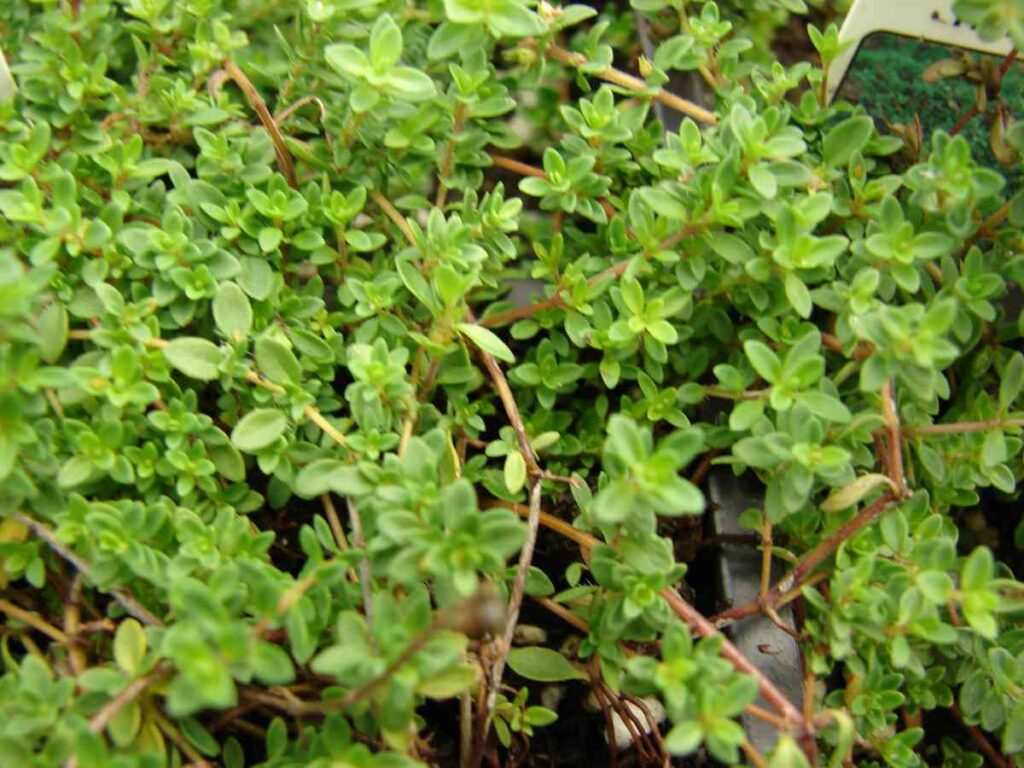
Light Requirements
Once the seedlings come up, they need plenty of light to grow strong. Place them in a sunny spot where they can get at least 5 to 6 hours of sunlight each day. If they don’t get enough light, they may grow thin and weak.
Watering Tips
Keep the soil slightly moist, but don’t overwater. Creeping thyme does not like too much water, even at this stage. Let the top layer of soil dry a little before watering again. It’s better to water lightly than to soak the soil.
Thinning Seedlings
When the seedlings grow a bit bigger and have a few leaves, you can thin them out. Remove the weaker or crowded ones so the stronger plants have space to grow. This helps them become healthy and spread better later on.
Transplanting Outdoors
Wait until the seedlings are a bit strong and have a few sets of leaves before moving them outside. They should look healthy, not too thin or weak. Also make sure the weather is warm and there is no more frost, so the plants can settle in without stress.
While planting, give each seedling enough space to grow. Keep about 6 to 12 inches between plants. It may look a bit empty in the beginning, but creeping thyme will slowly spread and fill the space over time.
Choose a sunny spot in your garden where the plant can get plenty of light. It grows best in full sun and well-drained soil. Try to avoid places where water collects, as too much moisture can damage the plant.
Common Mistakes to Avoid
One of the most common mistakes is overwatering. Creeping thyme does not like soggy soil, and too much water can cause root rot.
Poor drainage is another issue. If the soil holds water for too long, the plant may struggle to grow. Always make sure the soil drains well.
Too much shade can also slow down growth. Without enough sunlight, the plant may become thin and produce fewer flowers.
Where to Use Creeping Thyme in Garden?
Creeping thyme works really well along garden pathways where you want a soft, natural look. It can handle a bit of walking and even releases a light smell when stepped on, which makes the space feel more pleasant.
It’s also perfect for planting between stepping stones. Instead of leaving those gaps empty, thyme slowly fills them in and creates a nice green cover with tiny flowers during the blooming season.
You can also use it along the edges and borders of garden beds. It grows low and spreads neatly, giving your garden a clean and finished look without much effort.
Also Read: 6 Best Ground Cover for Chicken Run
Conclusion
Creeping thyme is a simple plant that gives a lot back. It looks good, needs very little care, and comes back every year once it’s established.
If you’re just starting out with gardening, this is an easy plant to try. With a little patience in the beginning, it will slowly grow into a soft, beautiful ground cover that you can enjoy for years.

Khaja Moinuddin, a computer science graduate, finds joy in gardening and homesteading. Join him on this blog as he shares his experiences in homesteading, gardening, and composting
A short mention of Grow creeping thyme helps readers follow the flow.
















On a similar note — Nice take on “How to Grow Creeping Thyme from Seed?” — I’ll try that soon. So cozy 👍
Also • Loved this about “How to Grow Creeping Thyme from Seed?” — such a pleasant idea. Love this!