
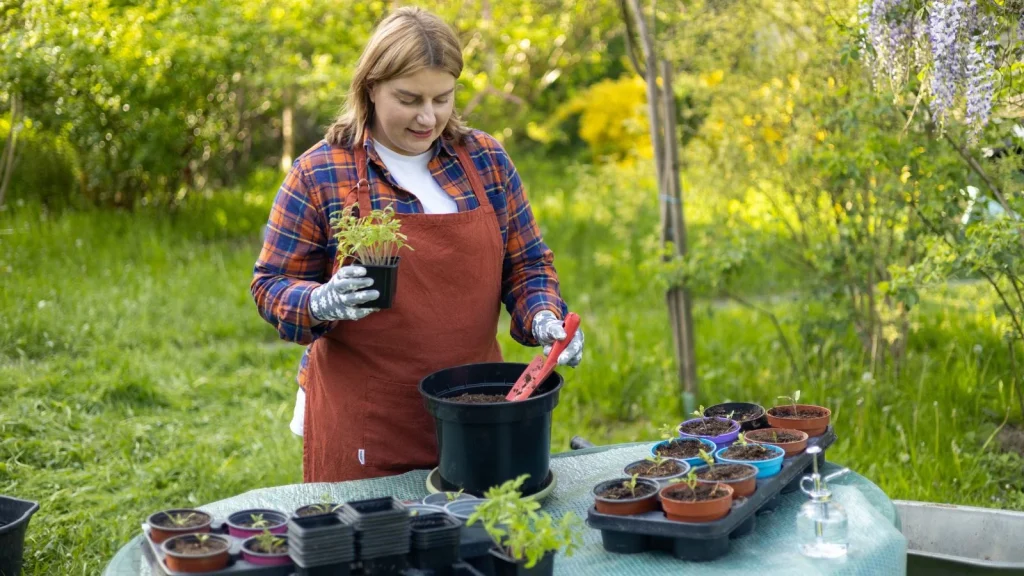
Your tomato seedlings — a quick note to anchor this piece for readers.
Your tomato seedlings: Quick notes
Starting tomatoes early from seed gives you much better control over variety selection and timing. These benefits are obviously great, but it also means managing several transplant stages before seedlings ever reach the garden.
That first move of tomato seedlings to larger pots is critical. Unfortunately, mistakes can set them back significantly or even kill them.
Tomato seedlings signal their readiness fairly clearly if you know what to look for. They need to be large enough to handle but not so established that they’re outgrowing their current space to the detriment of their own health.
Hit that window correctly and transplanting is straightforward, with seedlings barely noticing the move and continuing their growth without interruption.
The first leaves that emerge after germination (the cotyledons) don’t count as true leaves. These are simple, rounded leaves that look nothing like mature tomato foliage. True leaves appear next and have the characteristic shape of tomato plants. You want to see at least two sets of these true leaves before transplanting.
Height is a secondary indicator that works alongside leaf development. Seedlings around three or four inches tall generally have the root system necessary to support transplanting, though this varies slightly depending on variety and growing conditions. Compact varieties might be ready at slightly shorter heights, while vigorous varieties could be taller.
Container Size
Make sure containers have drainage holes.
For tomato seedlings at this stage, five-inch pots work well. These are large enough to support several weeks of growth but not so big that you’re drowning tiny root systems.
Individual pots are better than transplanting multiple seedlings into shared containers. Tomatoes need good air circulation around foliage and eventually develop substantial root systems that compete if forced to share space. Starting them in separate containers from this point forward prevents the need to separate entangled roots later.
Make sure containers have drainage holes. It’s easy to grab whatever’s available and not realize until you’re done transplanting that water has nowhere to go. Tomato seedlings are particularly sensitive to overwatering at this vulnerable stage, and drainage is non-negotiable for success.
If you’re reusing containers from previous seasons, clean them thoroughly before use. Old soil residue can harbor diseases that affect young seedlings, and starting with sanitized containers prevents introducing problems at this vulnerable stage.
Preparing a Soil Mix
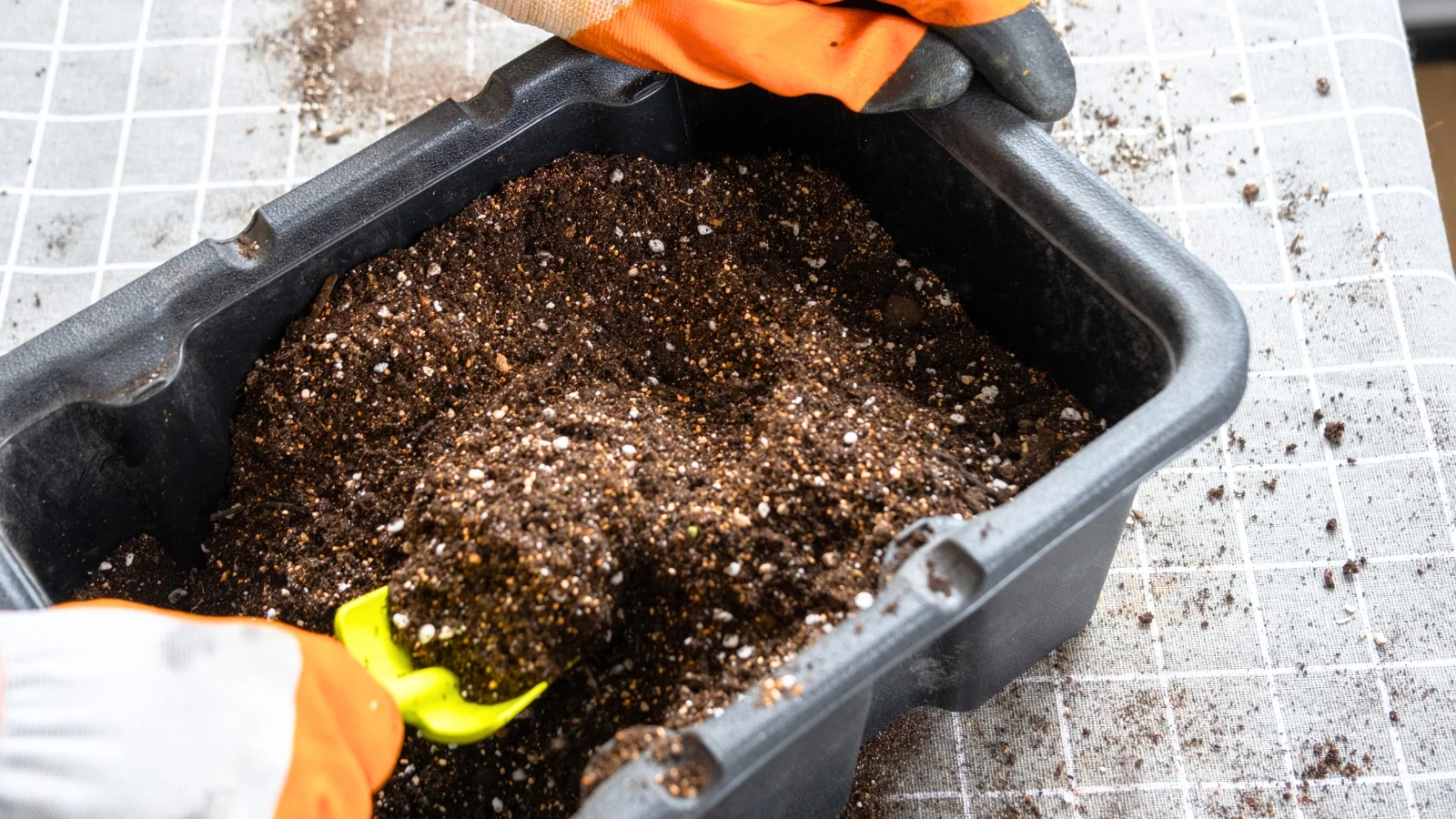 Use a commercial mix or make your own.
Don’t use the same seed starting mix for transplanting that you used for germination. Transplanted seedlings benefit from something a little richer that can sustain them through several weeks of growth.
A quality potting mix formulated for container growing works well for tomato seedlings. Avoid garden soil or heavy mixes that compact in containers. Tomato roots need oxygen as much as they need water and nutrients.
A basic ratio of 60% potting soil, 20% compost, and 20% perlite creates a blend that drains well while providing nutrients and beneficial microorganisms. This isn’t necessary if you’re using a commercial potting mix, but it’s an option if you prefer more control over what your seedlings are growing in.
Fill containers to within half an inch of the rim, leaving space for watering without overflow. Press soil down gently to eliminate large air pockets, but don’t compact it heavily.
Transplanting
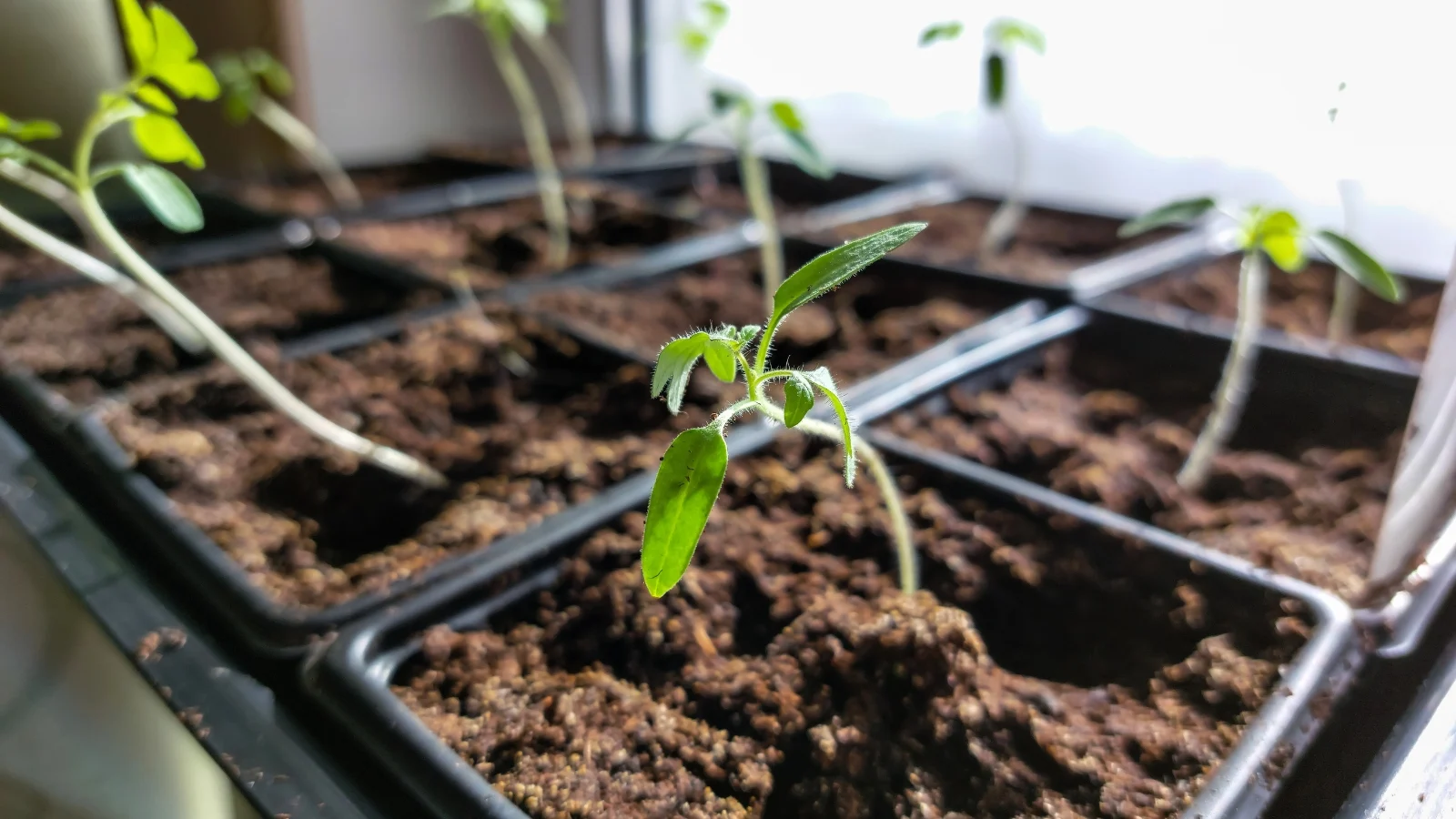 Planting deeply creates a stronger root system and sturdier plant.
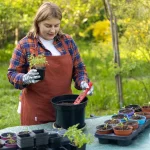
Handle seedlings carefully when moving tomato seedlings to larger pots since stems are fragile and easily damaged. Never grab them by their stems, which can crush tissue and kill the seedling even if damage isn’t immediately visible.
Water seedlings in their original containers an hour or two before transplanting. Hydrated seedlings tolerate the stress of transplanting better than thirsty ones. The root ball should lift out cleanly rather than crumbling apart if the soil moisture is right.
Push from the base of your seed tray, or use a tool like a butter knife or small trowel to gently lift seedlings from their cells. Lift from beneath rather than pulling from above. The goal is to get the entire root ball out intact with minimal disturbance.
Make a hole in the center of your prepared container deep enough to bury the seedling up to its first set of true leaves. Tomatoes have the useful ability to develop roots along buried stems, so planting deeply creates a stronger root system and sturdier plant. This is unique to tomatoes and similar crops (most seedlings would rot if buried this deeply).
Lower the seedling into the hole and gently firm soil around it, making sure there are no air pockets. The seedling should sit firmly in place, with the soil level reaching right up to those first true leaves.
Care
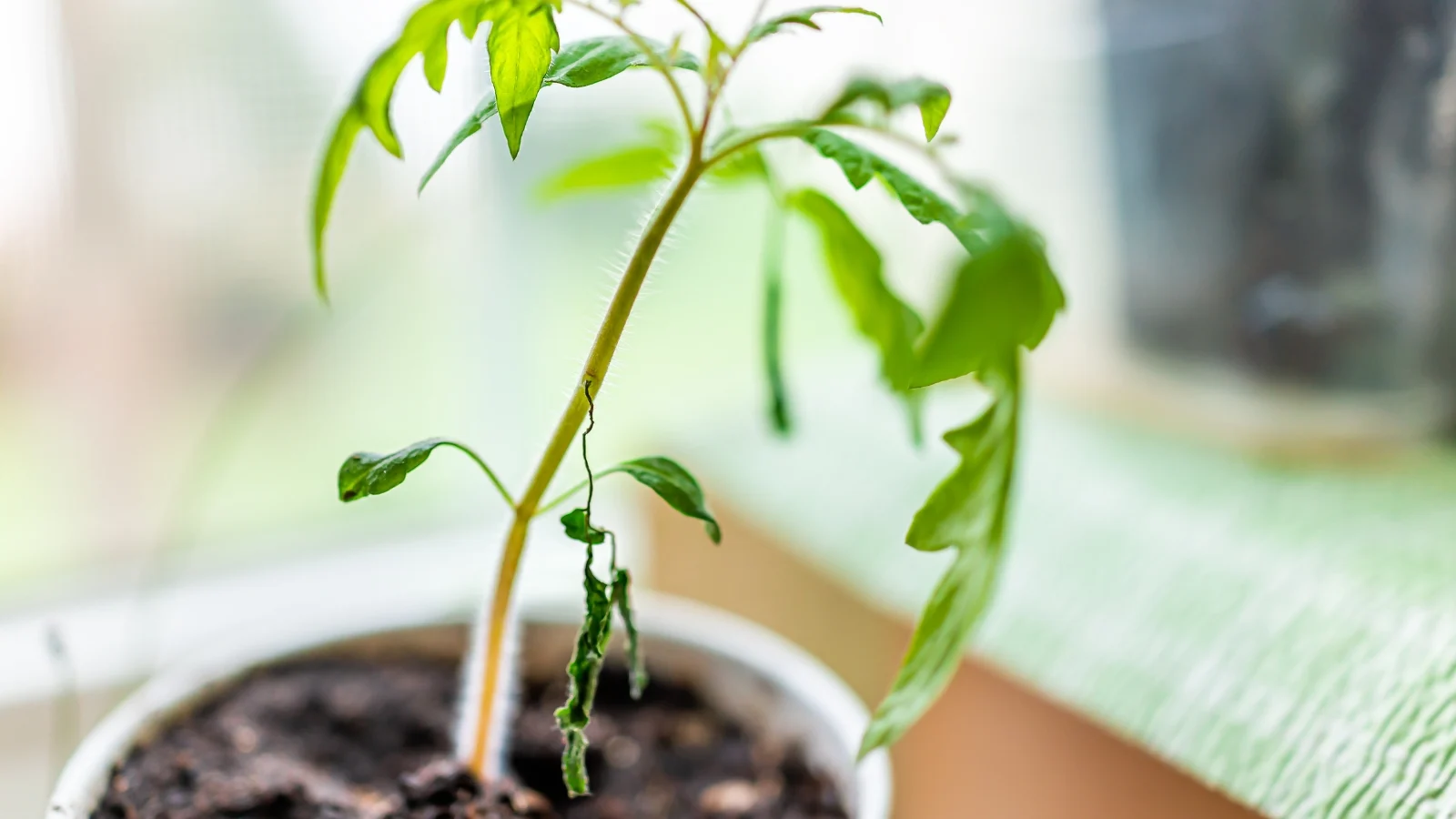 Water carefully during the establishment period.
Transplanted seedlings need a few days to recover from the move before resuming normal growth. Treat them gently during this adjustment period, and they’ll quickly establish in their new containers without setback.
Keep seedlings out of direct sun for the first few days after transplanting. Bright indirect light is fine, but harsh sun stresses plants that are putting energy into root establishment. Once you see signs of new growth (typically within a week), you can gradually move them into brighter conditions.
Water carefully during the establishment period. Check soil moisture daily since smaller root systems in larger pots mean uneven water uptake initially. As roots grow into the new soil, you’ll notice watering frequency decreasing as the root system spreads and can access moisture throughout the container.
Start fertilizing about a week after transplanting, once seedlings show signs of resumed growth. Use a balanced liquid fertilizer diluted to half strength to avoid burning tender roots. Tomato seedlings don’t need heavy feeding at this stage.
As seedlings grow and fill their pots with roots, they may need one more transplant into larger containers before heading to the garden, or they might be ready to go straight outside if timing works out. Watch for signs that roots are filling the current pot (roots visible at drainage holes, rapid drying between waterings, slowed growth) and either transplant again or begin hardening off for outdoor planting.
A short mention of Your tomato seedlings helps readers follow the flow.












FYI · So homey — makes me want a cup of tea and a quiet afternoon ☕. Love this!
PS · Such a warm note about “When to Move Your Tomato Seedlings into” — lovely.
PS: Loved this about “When to Move Your Tomato Seedlings into” — such a nice idea. Will try it.
FYI • A lovely idea for the season — perfect timing. Great share.
Also — I appreciate the detail — very helpful indeed. Great share.
On a similar note: I appreciate the point about “When to Move Your Tomato Seedlings into” — very handy. So cozy.
FYI · Such a warm post; this made me smile 👍
FYI • This is a small change with a big impact — thanks! Saving it 🙂
Tiny tip · Absolutely — that’s a lovely detail. Thanks for this!
Tiny tip · Absolutely — that’s a lovely detail. Thanks for this!
FYI — So pretty — the details are delightful. Will try it.
Quick thought — Loved this about “When to Move Your Tomato Seedlings into” — such a great idea. Saving it.
Tiny tip — I appreciate the point about “When to Move Your Tomato Seedlings into” — very handy. So cozy.
PS – Such a gentle approach — I really like it. Will try it.
Quick thought • Nice timing — I’ve been thinking about something like this. Great share.
Great addition — thanks for pointing it out. So comfortable.
Also — Such a warm post; this made me smile. Saving it.
PS • pleasant take on “When to Move Your Tomato Seedlings into” — I’ll try that soon. Saving it.
Heads up · I appreciate the point about “When to Move Your Tomato Seedlings into” — very helpful. So cozy.
Tiny tip — Practical and pretty — bookmarking this. Saving it 💡
PS: This tip on “When to Move Your Tomato Seedlings into” is so useful — thanks for sharing. Thanks for this!
Tiny tip: So true — this connects with me. Will try it.
Tiny tip: So true — this connects with me. Will try it.
Tiny tip: So true — this connects with me. Will try it.
great timing — I’ve been thinking about something like this. Great share.