Start tomato seeds: a concise orientation before we get practical.
Tomatoes are popular among home gardeners, not just because of their taste, but because they’re surprisingly easy to grow and don’t need much maintenance.
And honestly, starting them from seed still costs way less than buying a full-grown plant from a nursery.
But here’s something many beginners get wrong—timing. Like most vegetable plants, tomato seedlings need a bit of extra care in the early stages.
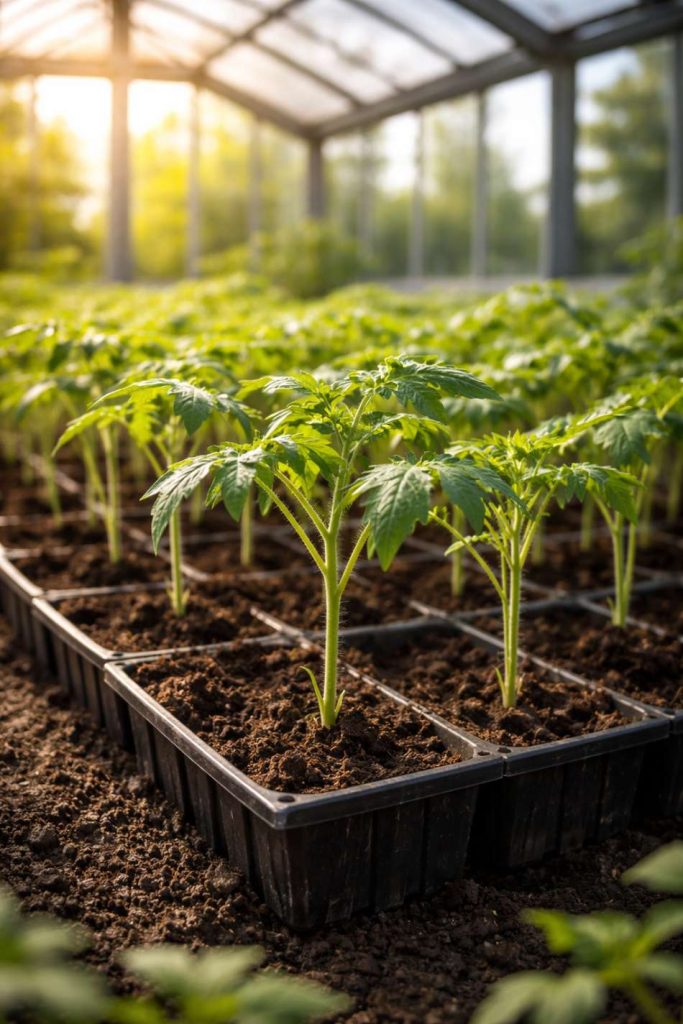
And if you’re using a greenhouse, starting seeds at the right time can make all the difference between weak plants and a strong, productive harvest.
Don’t Start Too Early or Too Late
It’s tempting to start tomato seeds as soon as you feel that first hint of spring—but timing matters more than most gardeners realize.
Tomatoes grow fast, and if you start too early, they’ll quickly outgrow their space before it’s warm enough to move them outside.
On the flip side, starting too late means your plants won’t have enough time to develop, which can lead to a smaller and delayed harvest.
When seeds are started too early in a greenhouse, especially without enough light, seedlings can become tall, weak, and leggy. They may look like they’re growing well, but they struggle once transplanted.
Start too late, and you’ll be playing catch-up all season, with plants that stay smaller and produce fewer fruits.
Getting the timing right from the beginning sets the tone for strong, healthy plants later on.
So, When Should You Start Tomato Seeds in a Greenhouse?
A good rule of thumb is to start your tomato seeds about 6–8 weeks before your last expected frost date.
This window gives your seedlings enough time to grow strong roots and sturdy stems without becoming overgrown or stressed.
By the time outdoor conditions are warm and stable, your plants will be at that perfect stage—big enough to transplant, but not cramped or struggling in their containers.
But here’s where many gardeners get tripped up—your local climate matters more than the calendar. If you’re in a warmer region where frost ends early, you can start a bit sooner.
In cooler areas, it’s better to hold off, even if you’re eager to begin. Starting too early in a greenhouse that doesn’t get enough light or warmth can still lead to weak, leggy plants.
Also Read: 9 Tips for Growing Vegetables in a Greenhouse
Here are a few quick things to keep in mind:
- Don’t rely on dates alone—watch your local weather
- Make sure your greenhouse gets enough consistent light
- Avoid letting seedlings sit too long in small containers
- Wait until nights are warm enough before planning transplant
An easy way to take the guesswork out of it is to work backwards from your transplant date.
Think about when your outdoor temperatures are consistently warm (especially nighttime temps staying above 50–55F).
From there, count back 6–8 weeks—that’s your ideal seed-starting time. This simple trick helps you stay on track and avoids the common mistake of rushing things too soon.
Greenhouse Conditions that Actually Matter
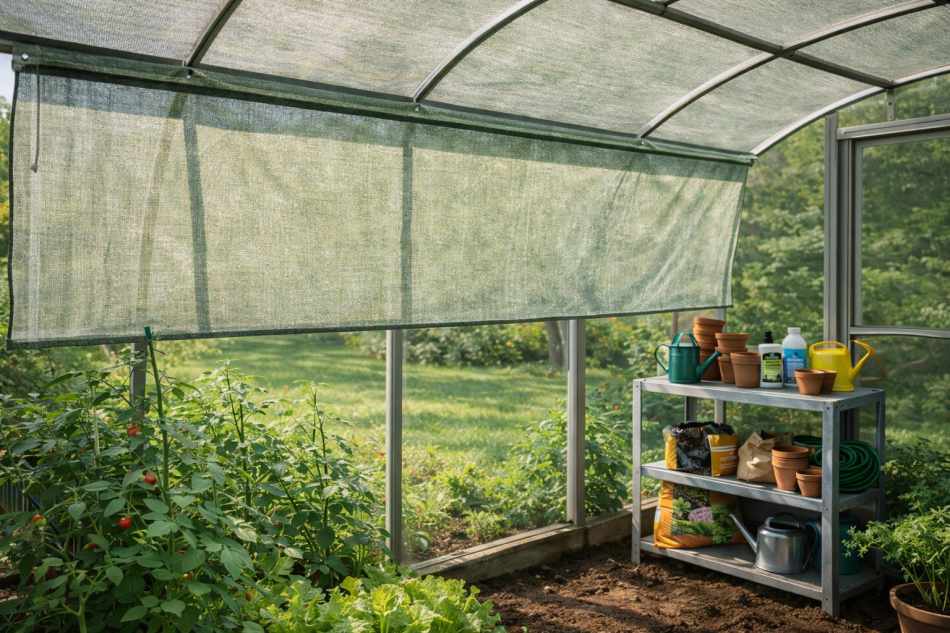
Once you’ve got your timing right, the next thing that really makes a difference is your greenhouse environment.
Tomato seeds aren’t too fussy, but they do best when a few key conditions are just right—especially in those early stages.
Ideal Temperature for Germination and Growth
For germination, tomato seeds prefer warm soil, ideally around 70–80. At this temperature, seeds sprout quickly and evenly.
Once they’ve germinated, slightly cooler conditions—around 65–75F during the day—help seedlings grow strong without becoming too leggy.
If it’s too cold, growth slows down, and if it’s too warm without enough light, plants can become weak and stretched.
Check this: 17 Low Cost DIY Greenhouse Plans
Light Requirements (And What Happens If There’s Not Enough)
Light is just as important as temperature. Tomato seedlings need plenty of bright light—at least 12–16 hours a day.
In a greenhouse, this usually means placing them where they get maximum sunlight.
If light levels are low, seedlings will start leaning and stretching toward the light source, becoming thin and fragile, which makes them harder to manage later.
Humidity and Airflow Basics
Humidity plays a role early on, helping seeds germinate, but once seedlings appear, airflow becomes more important.
Too much moisture combined with still air can lead to problems like damping off, where seedlings suddenly collapse.
Allowing fresh air to circulate—by opening vents or ensuring gentle airflow—keeps plants healthier and reduces the chances of disease.
Also Read: When to Start Planting Seeds Indoors?
Starting Seeds the Right Way (Without Overcomplicating It)
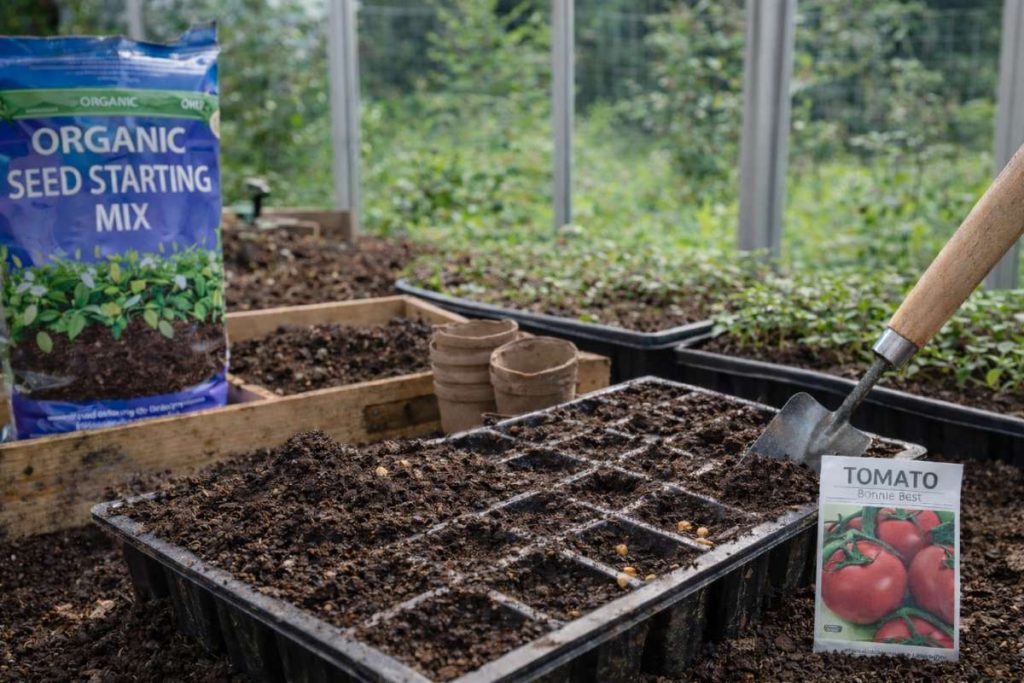
You don’t need a fancy setup to start tomato seeds successfully. In fact, keeping things simple often works best.
As long as you get a few basics right, your seeds will germinate just fine and grow into healthy seedlings.
Soil Mix, Containers, and Depth
Use a light, well-draining seed-starting mix rather than regular garden soil. It helps prevent compaction and allows roots to develop easily.
You can use seed trays, small pots, or even recycled containers with drainage holes. Plant the seeds about ¼ inch deep, cover lightly with soil, and gently firm it down—no need to press too hard.
Watering Do’s and Don’ts
Watering is where many beginners go wrong. Keep the soil consistently moist, but never soggy.
Overwatering can lead to rot or damping off, while letting the soil dry out too much can stop germination. A gentle mist or bottom watering works well to avoid disturbing the seeds.
Simple Setup that Works
Place your containers in a warm spot inside the greenhouse where they get good light. You can cover trays with a humidity dome or plastic wrap to retain moisture until seeds sprout, but remove it once seedlings appear.
Keep things clean, warm, and well-lit—that’s really all you need to get started without overcomplicating the process.
How to Care Young Tomato Seedlings?
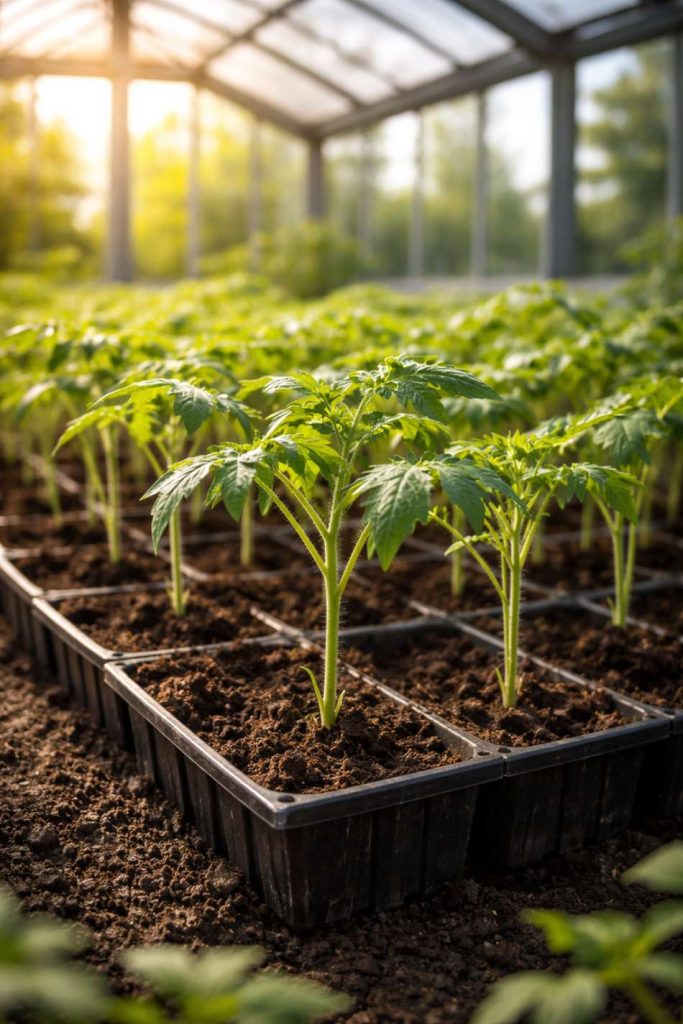
Once your tomato seeds have sprouted, the real work begins. This stage is all about helping your seedlings grow strong and steady, not fast and weak. A little attention here makes a big difference later on.
When to thin Seedlings
It’s common for multiple seeds to sprout in the same cell or pot. While it might feel wasteful, it’s best to thin them early.
Once seedlings develop their first set of true leaves, keep the strongest one and snip the others at the base instead of pulling them out. This avoids disturbing the roots and gives the remaining plant enough space to grow properly.
Feeding (Or Not Feeding Too Early)
Tomato seedlings don’t need fertilizer right away. Most seed-starting mixes already provide enough nutrients for the first couple of weeks.
Once the seedlings have a few sets of true leaves, you can start feeding lightly with a diluted liquid fertilizer. Overfeeding too early can do more harm than good, leading to weak or burnt roots.
Preventing Leggy Plants
Leggy seedlings are thin, stretched, and weak—usually caused by not enough light or too much warmth.
To prevent this, make sure your seedlings get plenty of bright light and keep temperatures slightly on the cooler side after germination.
If needed, rotate trays regularly so plants grow straight. Strong light and proper spacing are the key to compact, sturdy seedlings.
Common Mistakes that Set You Back
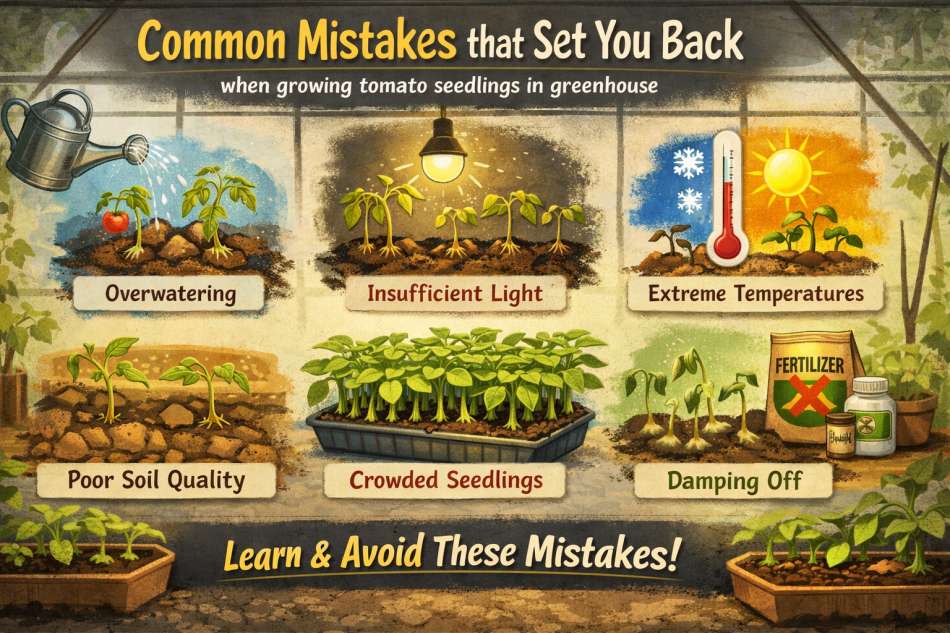
Even when you do most things right, a few small mistakes can slow your tomatoes down. The good news is—they’re easy to avoid once you know what to watch for.
Starting Too Early in a Warm Greenhouse
It might seem like a head start, but starting seeds too early in a warm greenhouse often backfires.
Seedlings grow quickly, and without the right light and space, they can become tall, weak, and hard to manage before it’s even time to transplant. You end up babysitting plants longer than needed, which adds more work and stress.
Not Enough Light = Weak Plants
Tomatoes love light, and seedlings need a lot of it from day one. If they don’t get enough, they stretch toward the light source, becoming thin and fragile.
These leggy plants may survive, but they rarely grow into strong, productive plants later on. Good light is one of the biggest factors in early success.
Overwatering and Damping Off
Too much water is one of the most common issues when starting seeds. Constantly wet soil can lead to damping off, a fungal problem that causes seedlings to collapse suddenly.
It’s frustrating because everything can look fine one day, and the next, your seedlings are gone. Keeping the soil moist—not soaked—and allowing some airflow helps prevent this problem.
When and How to Transplant Seedlings?
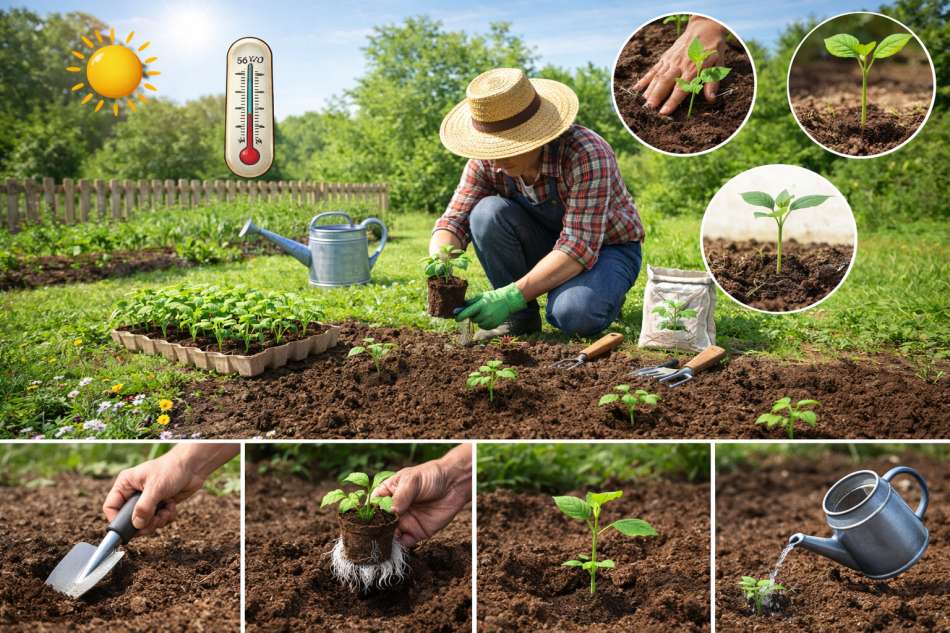
After weeks of careful growing, there comes a point when your tomato seedlings are ready to move on. Transplanting at the right time—and doing it the right way—helps them settle quickly and keep growing without stress.
Signs Your Seedlings Are Ready
Your seedlings are ready when they have at least 2–3 sets of true leaves, sturdy stems, and a well-developed root system. They should look compact and healthy, not tall and floppy. Another good sign is when roots start filling the container but aren’t tightly bound yet.
Hardening Off (Even from a Greenhouse)
Even greenhouse-grown seedlings need a bit of adjustment before facing outdoor conditions.
Start by exposing them to fresh air and slightly cooler temperatures for a few hours a day, gradually increasing the time over a week. This process, called hardening off, helps prevent transplant shock and prepares plants for wind, sun, and temperature changes.
Moving to Garden Beds or Bigger Pots
When transplanting, choose a warm, calm day if possible. Plant tomatoes deeper than they were in their pots—bury part of the stem, as it can grow additional roots.
Water well after transplanting and provide support early, like stakes or cages, so plants grow upright from the start.
Check this: 48 Vegetables You Can Plant in March
Conclusion
Growing tomatoes from seed in a greenhouse doesn’t have to be complicated. Keep things simple, focus on timing, and give your seedlings the right conditions early on.
In most cases, a small tweak—like starting seeds at the right time or improving light—can make a huge difference in the strength of your plants and the size of your harvest.

Khaja Moinuddin, a computer science graduate, finds joy in gardening and homesteading. Join him on this blog as he shares his experiences in homesteading, gardening, and composting