
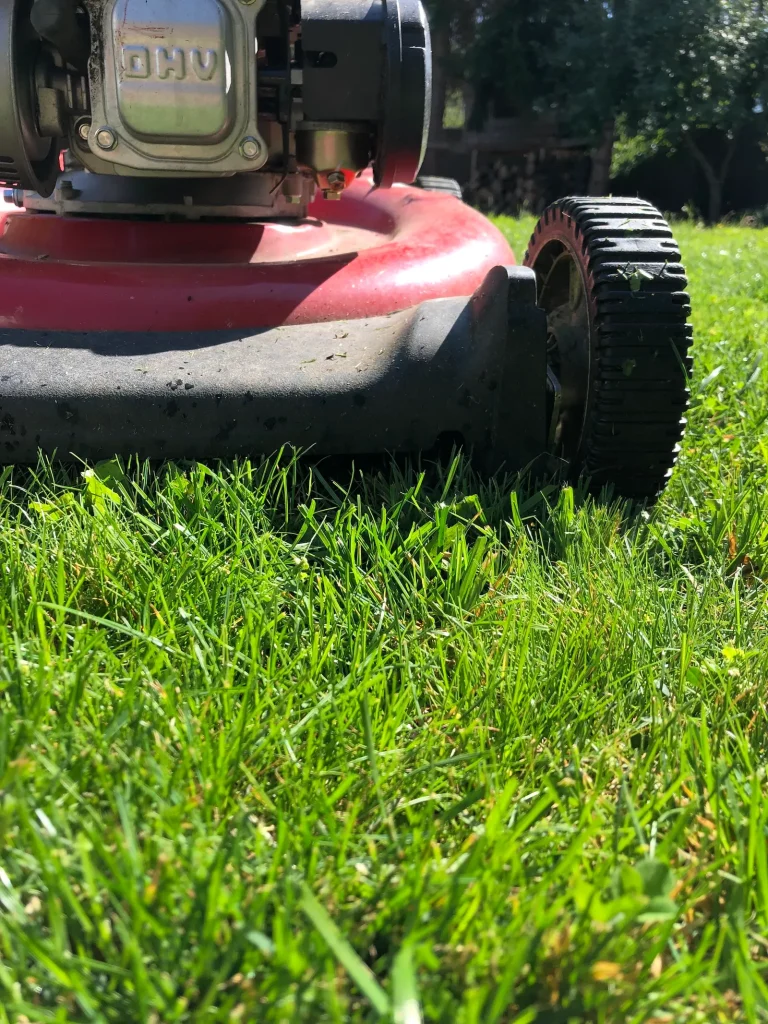
With grass clippings. A brief context to set expectations.
With grass clippings: Quick notes
Grass clippings are a valuable resource. Whether left on the lawn, composted, or used as mulch, they provide essential nutrients, improve soil health, and reduce waste.
Grass clippings contain nitrogen, phosphorus, and potassium, which can supply up to ~25% of a lawn’s nitrogen needs. Properly managed clippings help recycle nutrients, retain soil moisture, and reduce fertilizer use.
Options for handling grass clippings from your lawn
You have several options for handling lawn clippings, depending on your lawn care goals and available space:
Leave them on the lawn
Leaving short grass clippings on the lawn allows them to decompose quickly and return nutrients to the soil. To ensure effective decomposition:
- Mow frequently so the clippings are under an inch long
- Cut no more than one-third of the grass height at a time
- Mow when the grass is dry to prevent clumping
- Use a mulching mower to break clippings into smaller pieces
Use them as mulch
Grass clippings can be used as mulch in flower beds, vegetable gardens, and strawberry patches. Spread a thin layer around plants in garden beds to retain moisture, suppress weeds, and enrich the soil. When using clippings as mulch:
- Let the clippings dry before spreading
- Apply a thin layer (1-2 inches) to avoid matting
- Do not use chemically treated clippings
Compost them
Grass clippings make excellent compost material when mixed with dry leaves, straw, or other brown materials. To compost clippings effectively:
- Mix clippings with carbon-rich materials to prevent odor
- Turn the pile regularly to speed up decomposition
- Avoid adding clippings treated with herbicides
- Do not use chemically treated clippings
Incorporate them into soil
Clippings can be worked directly into garden soil to boost organic matter. To use them effectively:
- Mix small amounts into the topsoil
- Avoid overloading any one area
- Combine with other organic materials for balance
- Do not use chemically treated clippings
Bag and remove excess clippings
If clippings are too long or clump together, and you don’t have a compost heap available at home, collect and dispose of them through a municipal yard waste program or composting facility.
Avoiding Common Issues
Common issues with lawn clippings include thatch buildup, clumping, smothering, and spread of weeds.
Thatch Buildup
Some worry that leaving clippings on the lawn causes thatch. However, properly managed clippings decompose before contributing to thatch.
To prevent buildup:
- Keep mowing blades sharp for clean cuts
- Mow at the right height to produce short clippings
- Rake or spread out thick clumps of clippings
Clumping and Smothering
Thick clumps of grass can block sunlight and airflow, leading to uneven lawn growth.
Prevent clumping by:
- Mowing frequently to keep clippings small
- Avoiding mowing when grass is wet
- Using a mower with a mulching feature
Weed Spread
Grass clippings can contain weed seeds. Seeds can come from weeds in the lawn, the surrounding landscape, or from neighboring properties.
To prevent spreading weeds:
We reference With grass clippings briefly to keep the thread coherent.
A short mention of With grass clippings helps readers follow the flow.
- Mow before weeds go to seed
- Use clippings only from a well-maintained lawn
- Compost thoroughly to kill weed seeds











Quick thought · This is a small change with a big impact — thanks!
Grass clippings? Y’know, they’re like the day’s half-remembered sigh. Let ‘em pile in the nook where the clover sways, or scatter like confetti to the bare soil. Compost ‘em, sure—let the kitchen scraps and last year’s guilt turn to crumbly gold. But if you’re feelin’ restless, toss ’em in the breeze’s path. Those little green ghosts?
They could pile into a haystack, whisper secrets to the wind. Grass clippings braid crowns for the weeds—tiny green chokers. Why not toss them in a stream? Let fish nibble gold. We might compost them, feed the dirt its daily multivitamins. Or scatter them like confetti at a forgotten ball. Weeds love this—small offerings, loud in their quietly. If you step on a path of hay, it’s just the lawn moving on.
In gardens where autumn’s breath does whisper,
A question lingers, a task to ponder:
What fate befalls the grass that’s clipped and jetted?
In nature’s cycle, a role to be settled.
Beneath the trees where leaves in splendor fall,
Grass clippings blend and enrich the soil’s thrall.
A compost’s heart with nitrogen they feed,
In seasons future, where verdant growth will lead.
Or spread them forth as a verdant blanket,
To smother weeds and keep the garden intact.
A humble act, yet a gift most grand,
From seasonal cycle, a healthy land.
So in this time of harvest, green and bright,
Consider clippings, a benison of light.
For in their humble form, a world they shape,
Where every leaf and blade lay claim and stake.