Vegetable adobo with. A brief context to set expectations.
Vegetable adobo with: Quick notes
Gardeners must observe and abide by the rules of season. It is what it is. Cooks may choose to ignore them—seasonless supermarkets make strawberries and basil and green leaves possible in every month of the year. But for cooks who are also gardeners and growers there is a deeper connection—we know what grows when, and sometimes we have the ingredients at hand, for inspiration and creation. Which brings us, at winter’s end and on the fickle cusp of spring, to the union of calamansi—a small, sour citrus fruit—and root vegetables in a vegetable adobo.
The bright citrus, overwintering indoors in our house, breathes new life into the familiar stalwarts of the winter crisper drawer, long before spring’s produce arrives in our gardens at farmers’ markets.
Above: The mise en place for an early spring root vegetable adobo.
Ubiquitous in Filipino cuisine, calamansi, also known as calamondin (Citrus x microcarpa), evolved in Maritime Southeast Asia and is usually used unripe, before it turns orange. Traditional Filipino adobo combines soy and vinegar in slow-braised meat-based dishes. In this root vegetable riff, sweetly earthy vegetables and aromatically sour calamansi are a fortifying digression. Fresh bay leaves, from our indoor tree, add a satisfyingly authentic layer of aroma. (The Mediterranean bay leaves in adobo would have been a Spanish colonial introduction.)
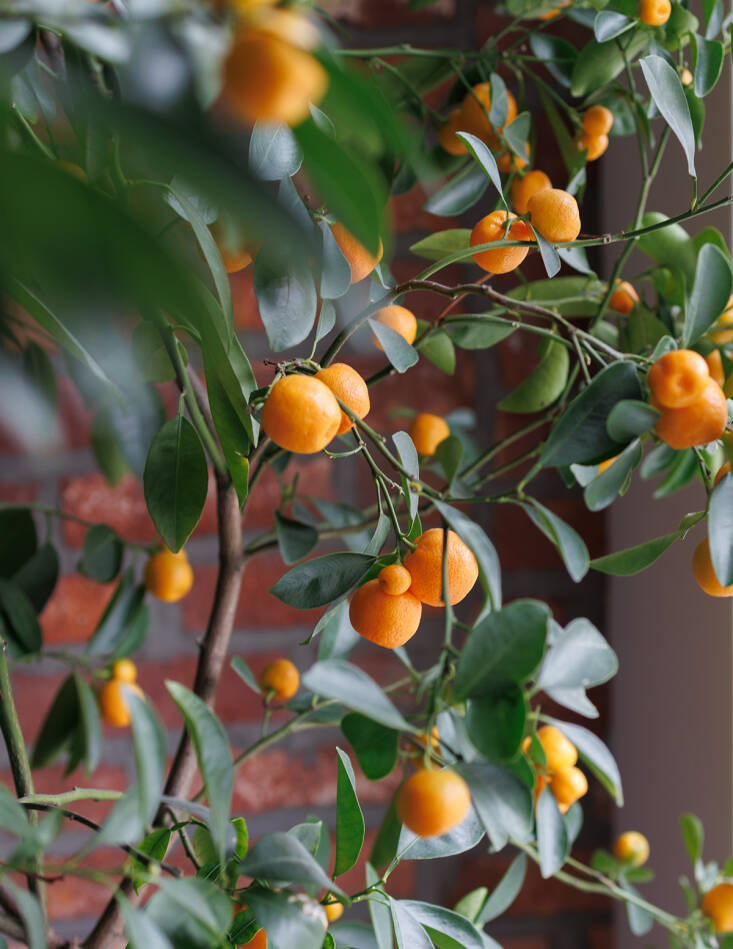 Above: Ripe calamansi on our tree, overwintering indoors.
While calamansi are sold unripe at markets, the fruit I collect from our relatively-low-fuss-for-an-indoor-citrus-tree are ripe and orange, but still piercingly sour. Their skin has the aroma of clementines, with very little pith, and little bitterness, as a consequence. Each small fruit—ranging from a quarter of an inch to one inch in diameter—contains up to three seeds.
Learn more about this versatile fruit, here: Calamansi—A Petite and Intensely Flavored Citrus.
A 24 to 36-inch tree from Four Winds Growers is $65.
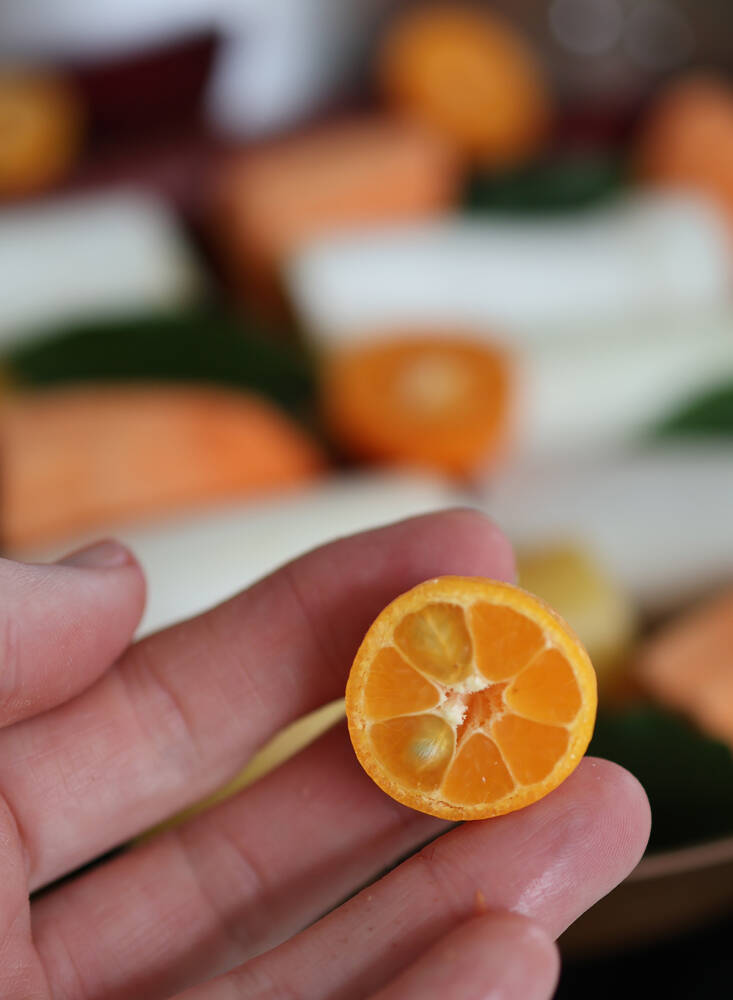 Above: Small, but mighty.
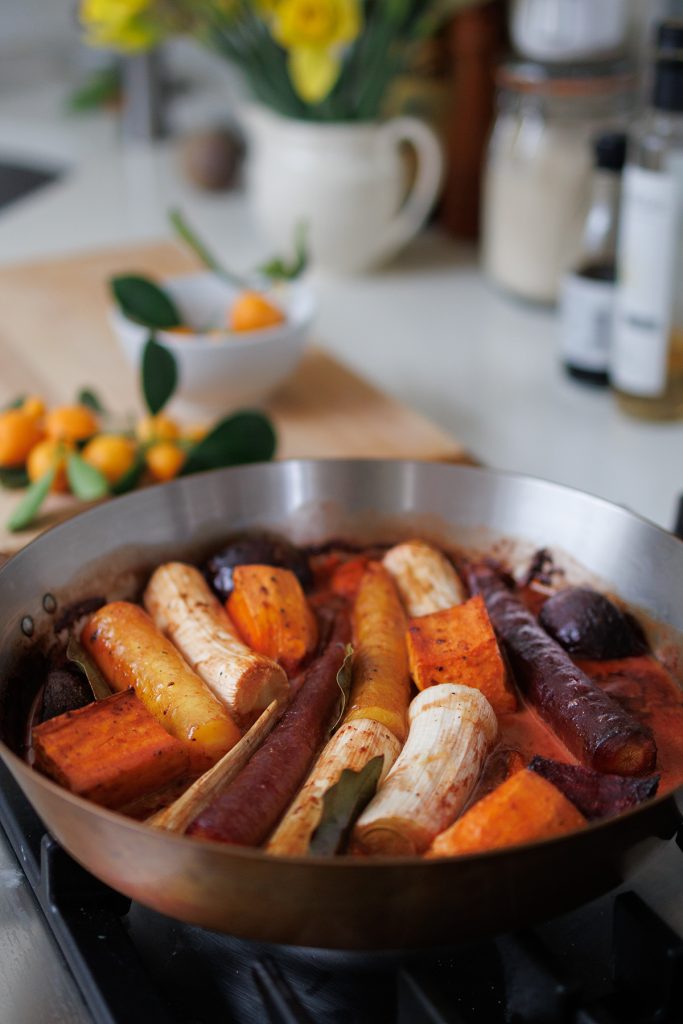
 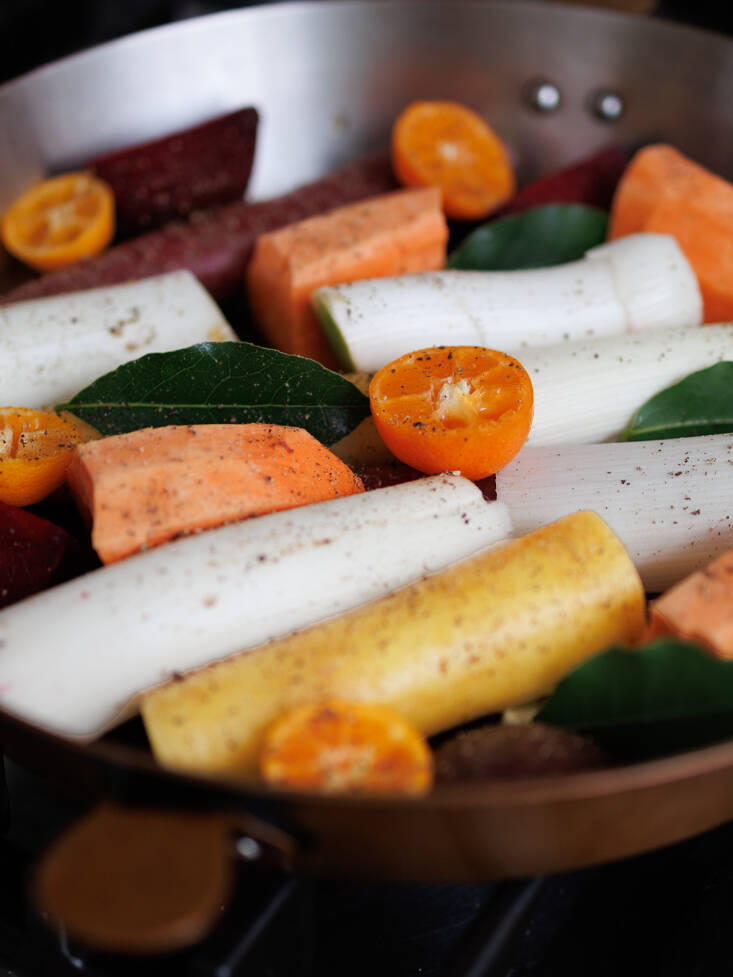 Above: As the vegetable adobo cooks, the ripe citrus collapse slowly and become tenderly edible pops of flavor.
 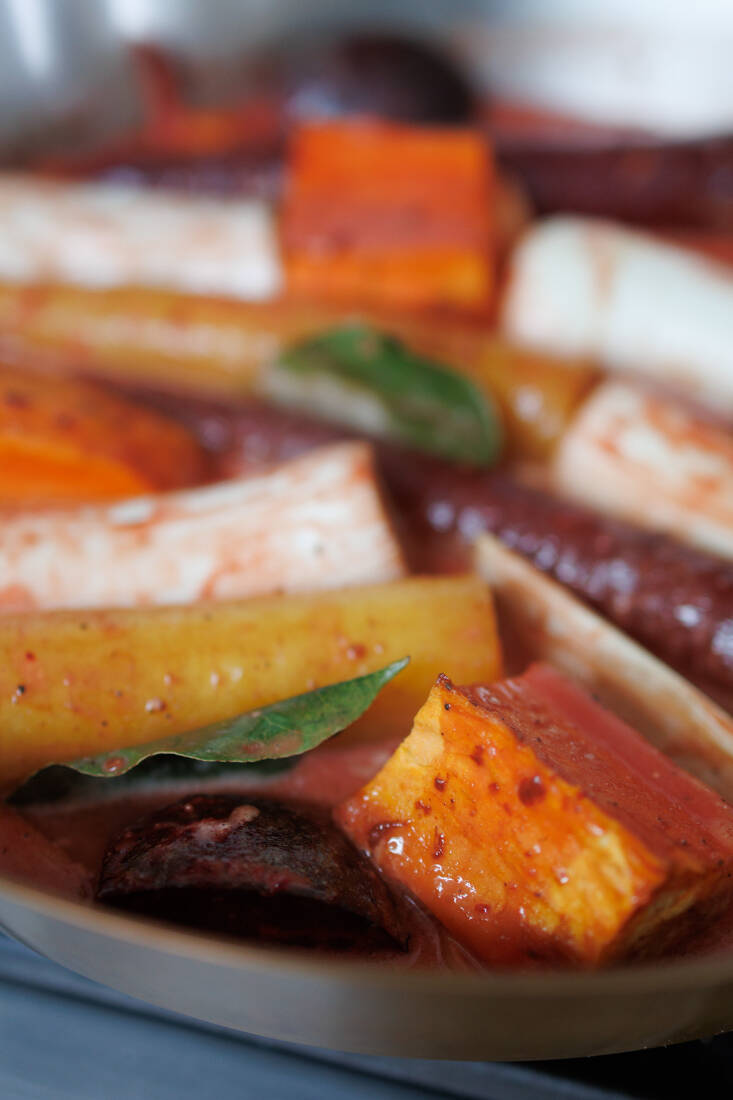 Above: Halfway through cooking, the vegetables are turned.
 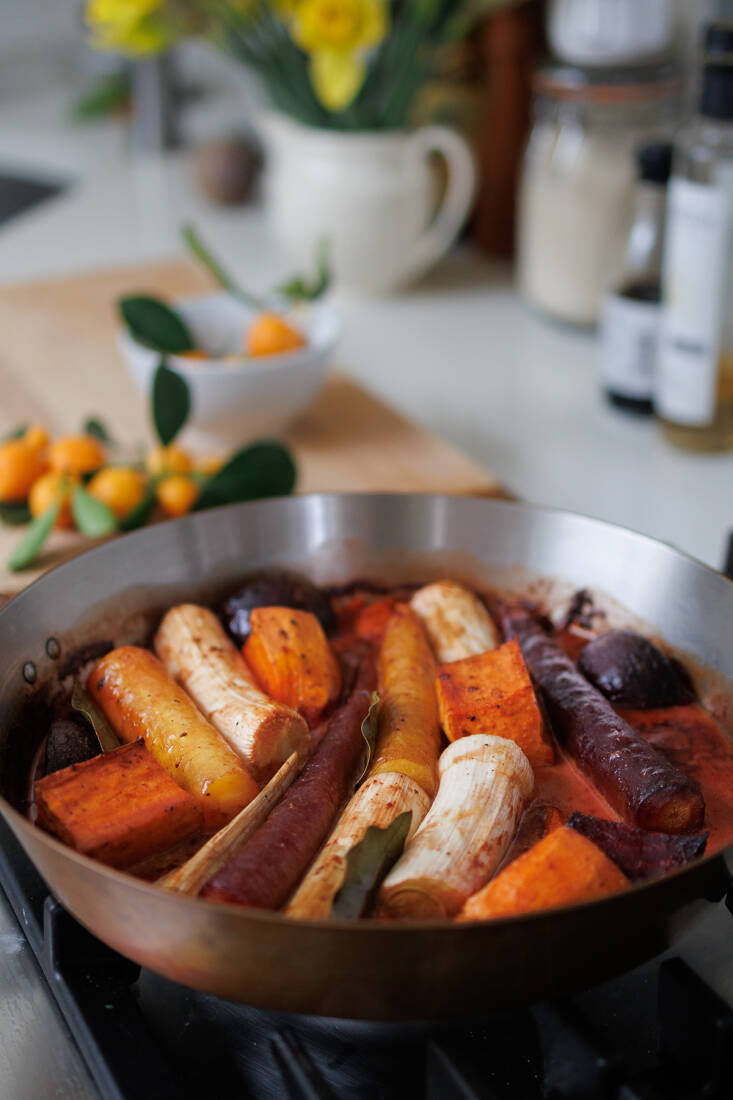 Above: Vegetable adobo, ready for a cold March evening.
The essence of a Filipino adobo is the savory sauce—salty with soy sauce, sour with vinegar (and calamansi in this case), and svelte with optional coconut milk. So feel free to improvise with the vegetables in it: You could also add waxy potatoes, parsnips, turnips, and even leafy greens like beet greens, kale or chard, as long as those green things go in about 25 minutes before the end of cooking time, stirred in and under the other vegetables. If you love baby spinach, add that five minutes before the end and stir into the sauce.
Vegetable adobo with comes up here to connect ideas for clarity.
We reference Vegetable adobo with briefly to keep the thread coherent.