Your hoya bloom: a concise orientation before we get practical.
Your hoya bloom: Quick notes
I love growing hoyas for their beautiful, waxy leaves. If that was all they offered, I would be happy year-round. But if you can get the conditions right, these houseplants have an added bonus: flowers.
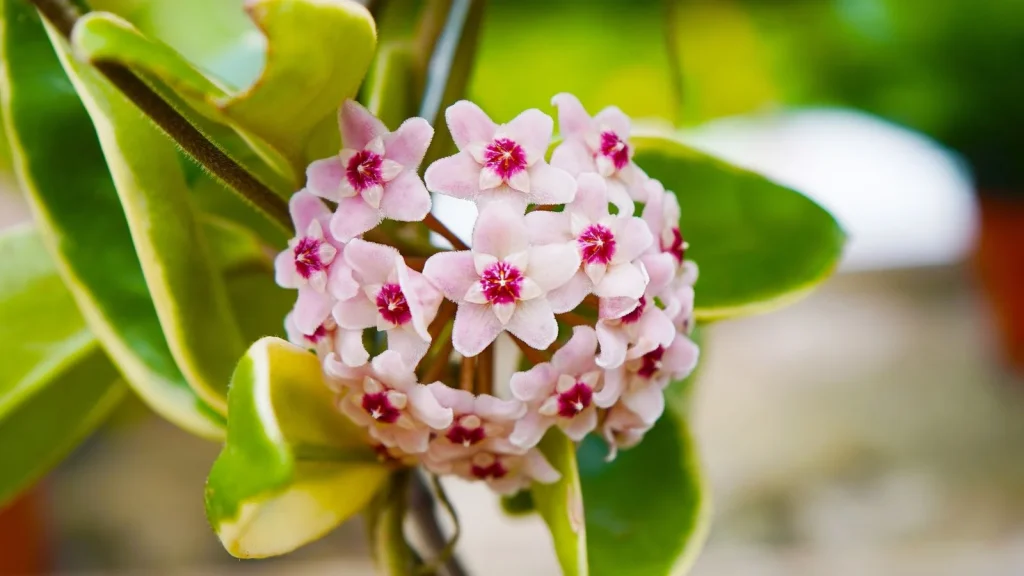
The waxy, clustered flowers are stunning when they finally appear, but many hoyas seem perfectly content to just grow leaves year after year without ever setting buds.
Hoyas aren’t actually that picky about blooming, but they do need the right conditions to trigger it. Most varieties will flower reliably with the right environmental change, and there’s one method in particular that works surprisingly well without much effort.
When Do Hoyas Bloom?
Hoyas only flower after a few years of growth.
Hoyas typically bloom in spring and summer when they’re actively growing, though some varieties can flower sporadically throughout the year once they’re mature enough.
The keyword there is “mature”. Young hoyas won’t bloom no matter what you do. Most need to reach two to three years old before they’re capable of flowering, and some slower-growing varieties take even longer.
Once a hoya has bloomed from a particular spot on a vine (called a peduncle or spur), it will often bloom from that same spot again in future years. This is why you should never remove spent flower stems completely. Just let the flowers drop naturally and leave the spur intact.
The blooming window varies by species. Hoya carnosa and its varieties tend to bloom in late spring through summer, while Hoya pubicalyx can flower almost year-round in ideal conditions. If your hoya is mature enough to bloom but hasn’t yet, it’s probably missing one of the environmental cues that trigger bud formation.
The Easy Way to Get a Hoya to Bloom
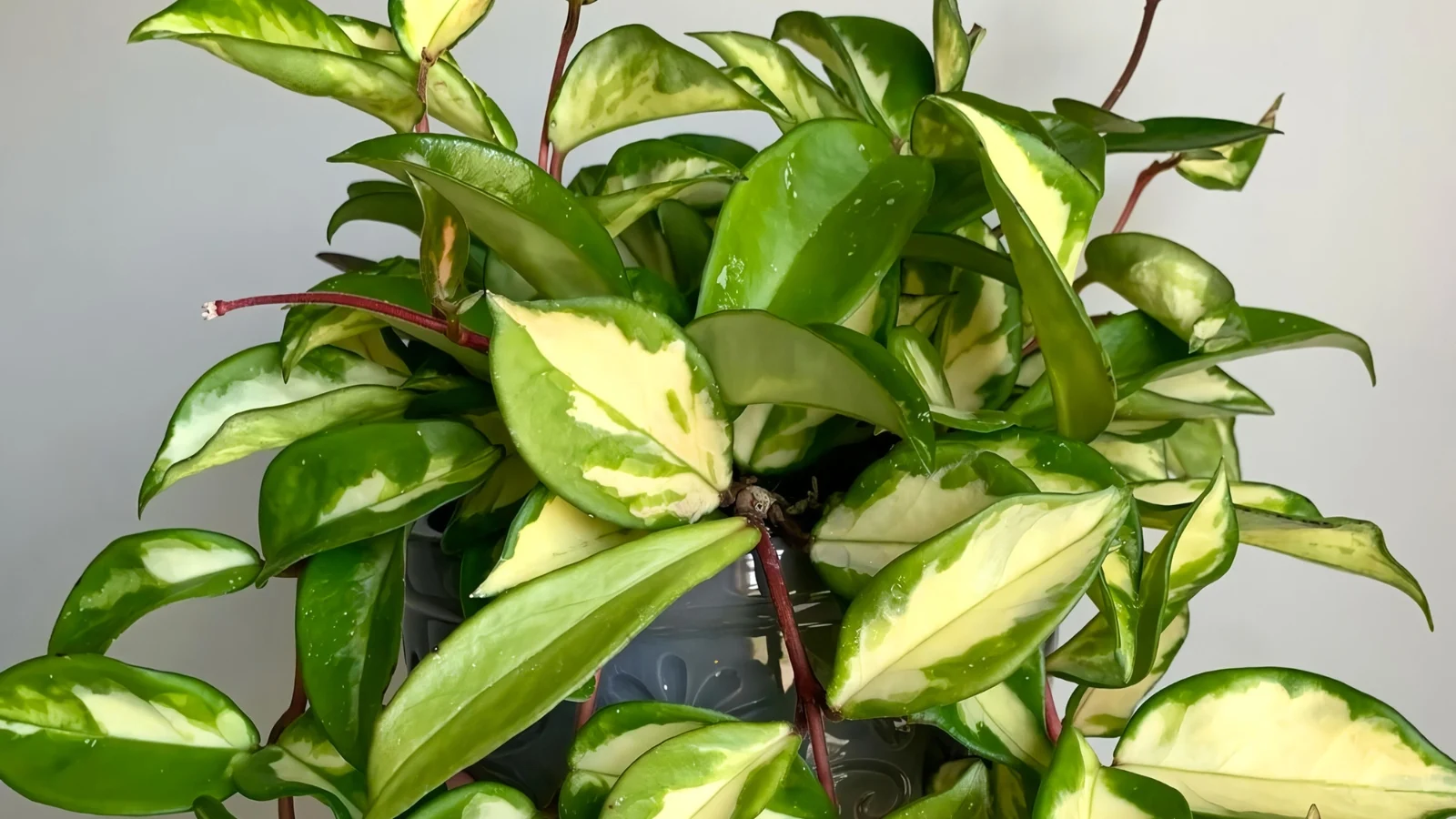 Some slight stress encourages the plant to push out new flowers.
Here’s the method that works best and requires the least ongoing effort: let the plant dry out more between waterings. Overwatering is common with these houseplants, which impacts health and flowering.
Hoyas are semi-succulents with thick leaves that store moisture, and they actually perform better with occasional drying than with constant moisture. More importantly, this mild drought stress often prompts them to bloom as a survival response.
Instead of watering when the top inch or two of soil feels dry, as you would with many houseplants, wait until the leaves just start to feel less firm before you water again. They shouldn’t be completely shriveled or wrinkled, but a slight softness indicates the plant has used up its water reserves and is ready for more.
During late winter and early spring when you’re trying to encourage blooming, extend this dry period. Let the soil dry out and wait a few extra days before watering. You’re creating just enough stress to trigger the plant’s reproductive instinct without actually harming it.
Other Methods
If reducing watering alone doesn’t trigger blooming, there are other approaches worth trying.
Adjust Lighting
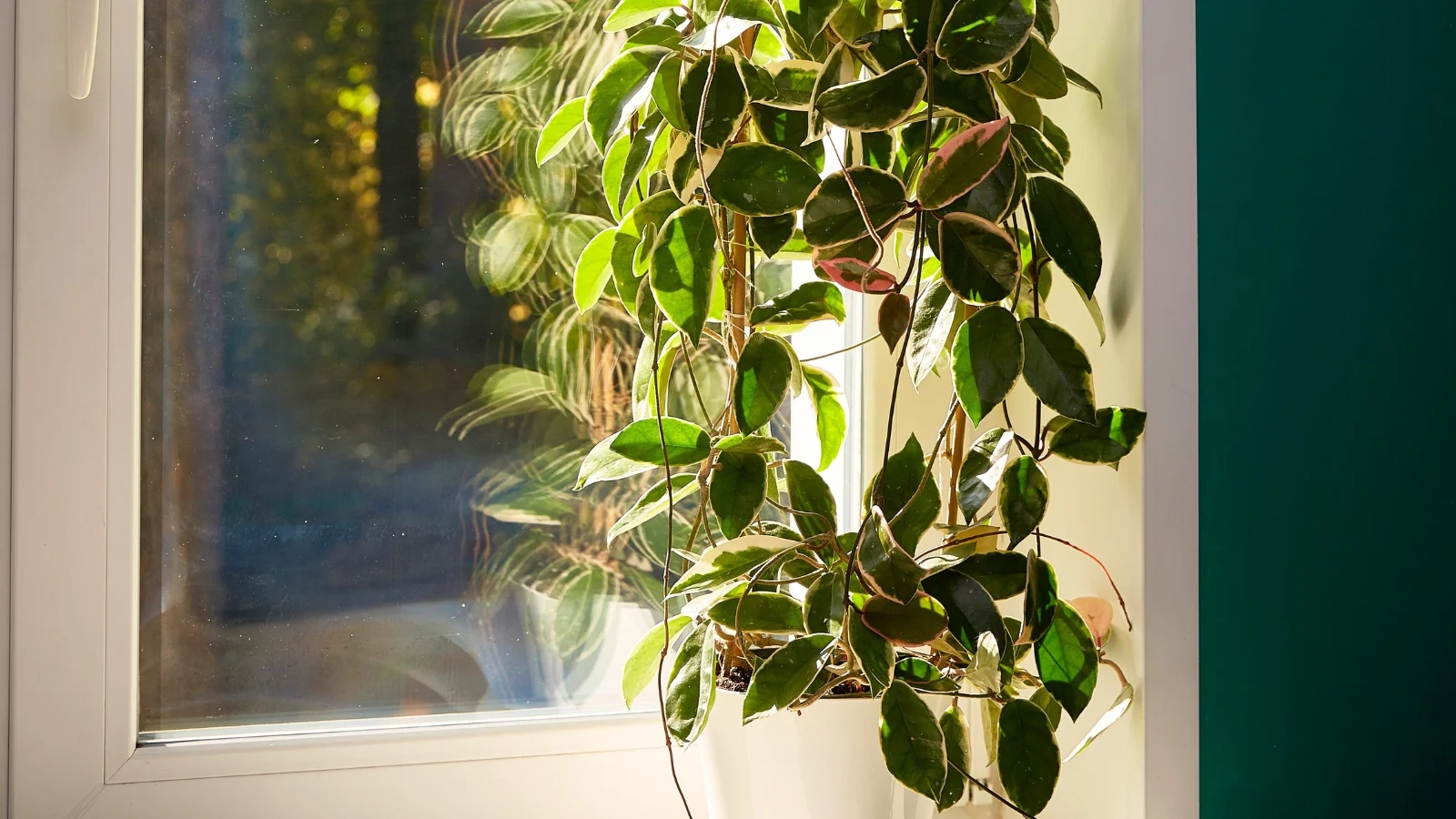 Make sure they have plenty of sunlight.
Hoyas need bright, indirect light to bloom well. With too little light, they’ll grow slowly with no flowers, focusing all their energy on survival rather than reproduction. If your hoya is sitting more than a few feet from a window or in a north-facing room, insufficient light might be the problem.
Move the plant closer to an east or west-facing window where it gets several hours of gentle direct sun in the morning or late afternoon. You can also use a grow light if natural light is limited.
More light alone doesn’t always trigger blooming. But inadequate light will definitely prevent blooming, so it’s worth addressing even if it’s not the complete solution.
Increase Humidity
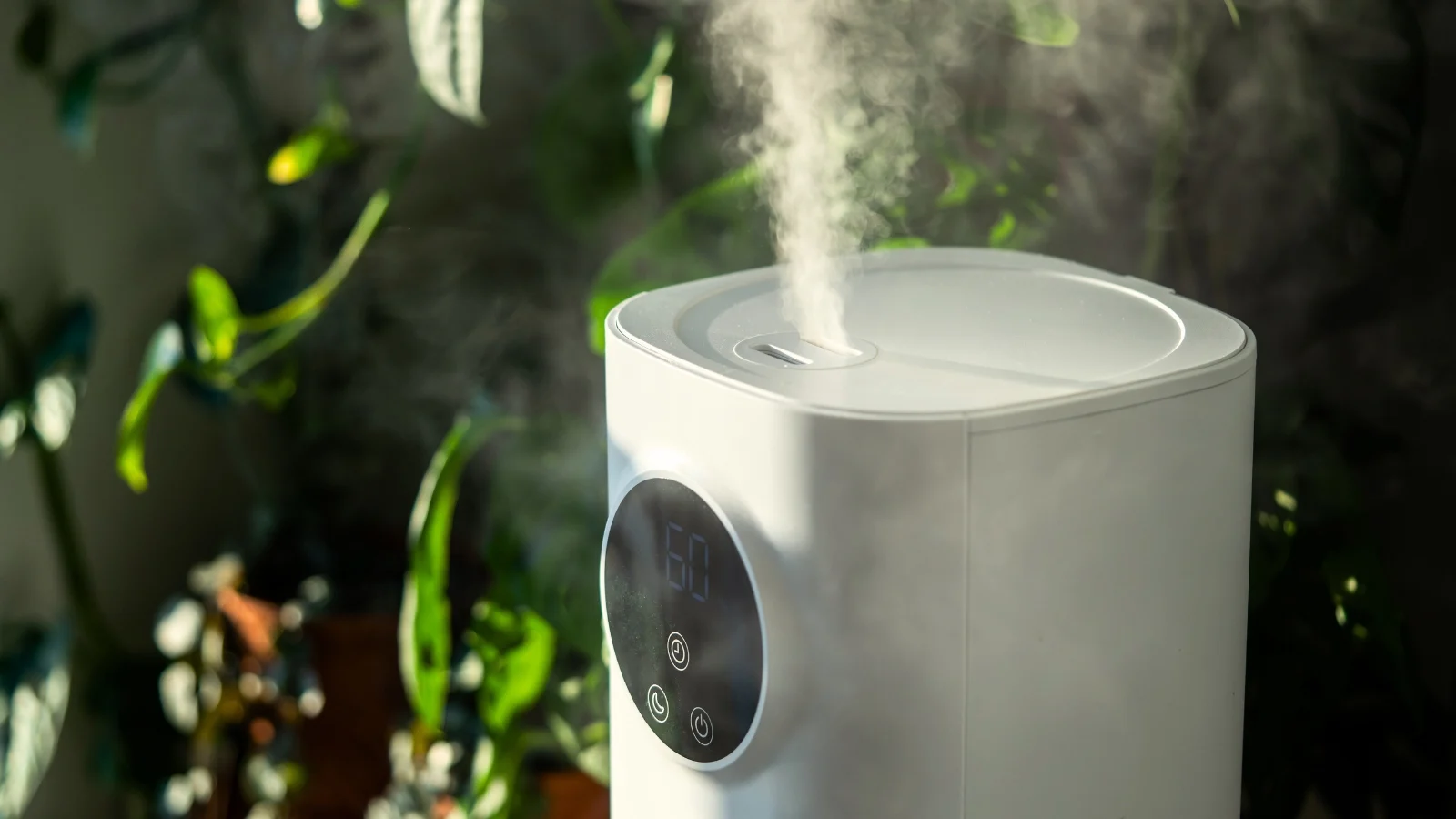 Boost the humidity to create the tropical conditions they love.
While hoyas tolerate average household humidity, higher moisture levels can support better overall health and potentially encourage blooming. Many hoyas come from tropical environments where humidity stays consistently elevated, and replicating those conditions helps the plant thrive.
You can increase humidity around your hoya by grouping it with other plants, placing it on a pebble tray filled with water (making sure the pot doesn’t sit directly in the water), or running a humidifier nearby. Aim for humidity levels around 60% if possible, though even a minor increase from typical indoor levels can make a difference.
The benefit of higher humidity is more about creating optimal conditions for the plant overall than directly triggering blooming.
Fertilize
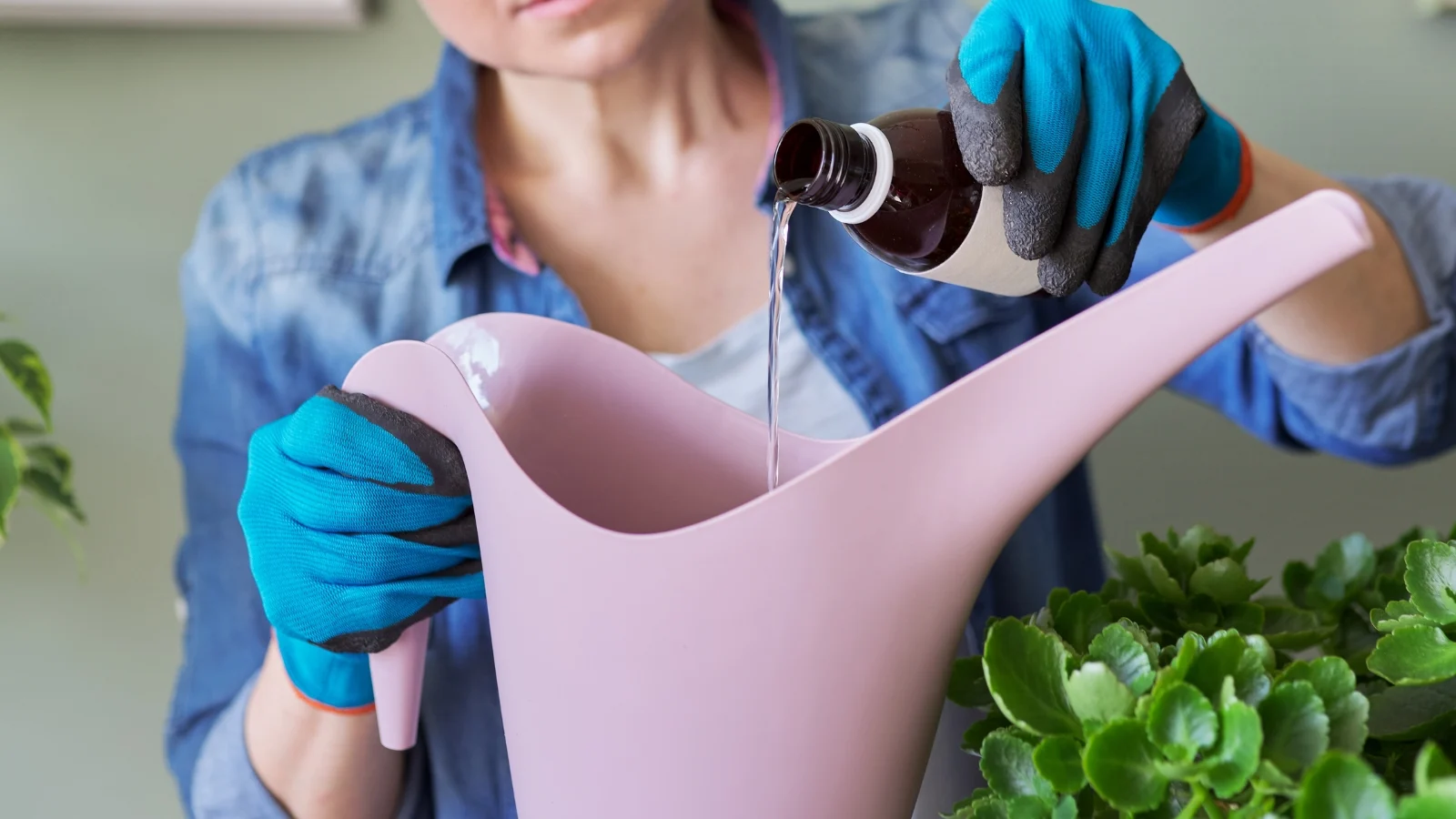 Extra nutrients will also promote flowering.
Hoyas bloom more readily when they’re well-fed, particularly with fertilizer that’s higher in phosphorus (the middle number on fertilizer labels). Phosphorus supports flower production, while nitrogen promotes leaf growth.
Use a balanced fertilizer diluted to half strength every two to three weeks during the growing season, or switch to a bloom-boosting formula with higher phosphorus content when you’re actively trying to encourage flowering. Stop fertilizing in winter when growth naturally slows, then resume in spring.
Fertilizer alone won’t force a hoya to bloom if other conditions aren’t right, but nutrient deficiency can certainly prevent it. Fertilizing supports the plant’s ability to bloom rather than directly triggering it.
Key Takeaways
Of all these methods, the reduced watering approach is the one I’d try first. It requires the least setup and helps create a better watering schedule for growers who tend to overwater.
If your hoya still won’t bloom, start trying the other methods, like better light, higher humidity, and appropriate fertilizing.
A short mention of Your hoya bloom helps readers follow the flow.
We reference Your hoya bloom briefly to keep the thread coherent.