Spicebush tea recipe — a quick note to anchor this piece for readers.
Spicebush tea recipe: Quick notes
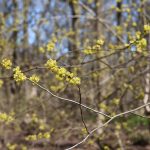
Lindera benzoin, commonly known as spicebush, is the first native tree to shimmer into pale yellow bloom in Northeastern woods and gardens, weeks after forsythia has begun to shout (without delivering, for hungry pollinators), and around the same time that the earliest cherry blossoms attract the attention of social media feeds. But quiet spicebush has a hidden superpower—scratch a twig, and it is released: The twigs are intensely and upliftingly scented. While spicebush berries (which are drupes, really) receive the most attention from native food connoisseurs, the winter-bare or spring-flowered branches (and later leaves) make a very refreshing spicebush tea, or tisane. It’s a year-long treat, even in winter, when the twigs’ aroma is undiminished. But spring fever requires a tonic, and this is a good one.
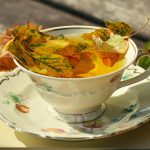
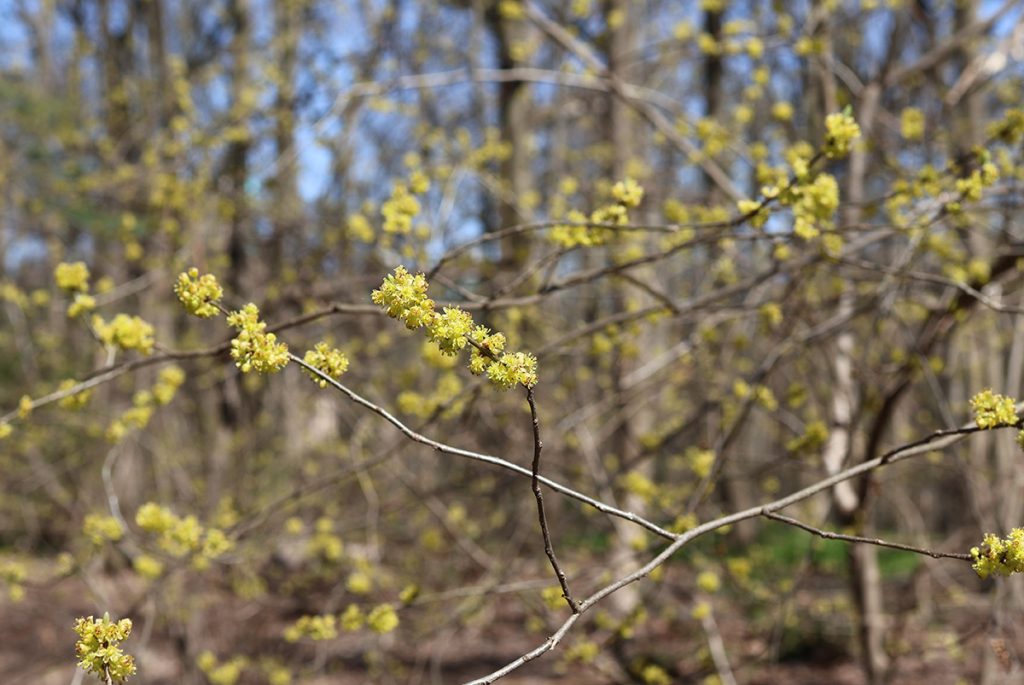
Above: After steeping for five minutes, spicebush tea turns sepia and, later, amber. 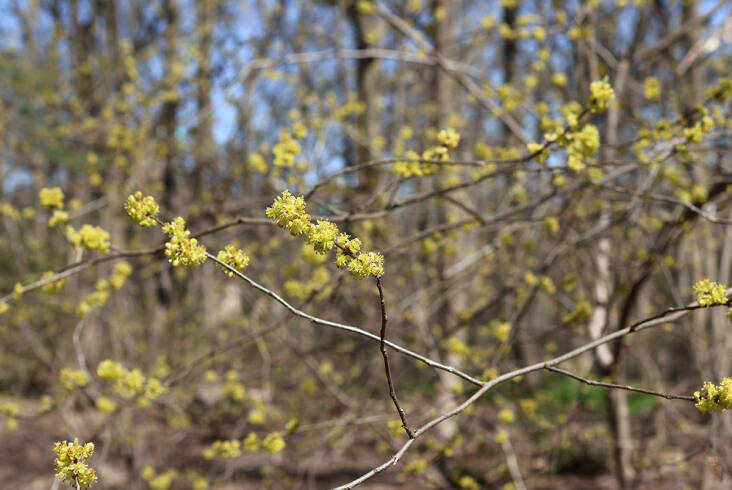 Above: Spicebush is Lindera benzoin, a native understory tree.
Native Americans within range of spicebush brewed spicebush tea and used the late-summer fruit to flavor rich food. Colonists followed suit. As a spice, it is one I use more frequently than most. Spicebush has a reputation among herbalists as a digestive aid and fever reducer, and the bark is said to have stimulant properties. Lindera benzoin warrants scientific exploration.
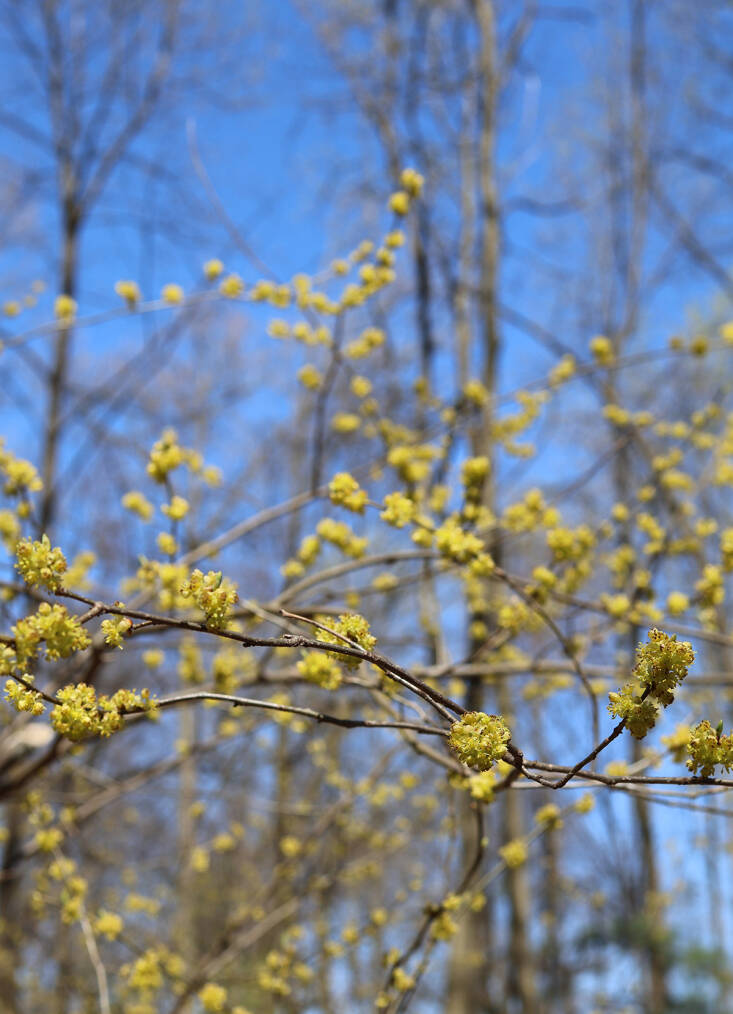 Above: Spicebush is dioecious, with male and female flowers on different trees.
Spicebush tea is the most mellow iteration of this strongly flavored plant. The orange zest, black pepper notes that are piercingly appealing in the freshly-scratched bark, crushed leaves, and fruit are softened when the twigs are steeped for five or more minutes in boiling water. The color of spicebush tea starts yellow and deepens to a rusty pink and then amber the longer it sits. The flavor is woodsy. You can almost hear a white-throated sparrow singing as you sip.
(If you are new to spicebush as a culinary ingredient, see many more spicebush uses, recipes, and cultivation tips in my book Forage, Harvest Feast – A Wild-Inspired Cuisine. I know, shameless plug—but it’s relevant.)
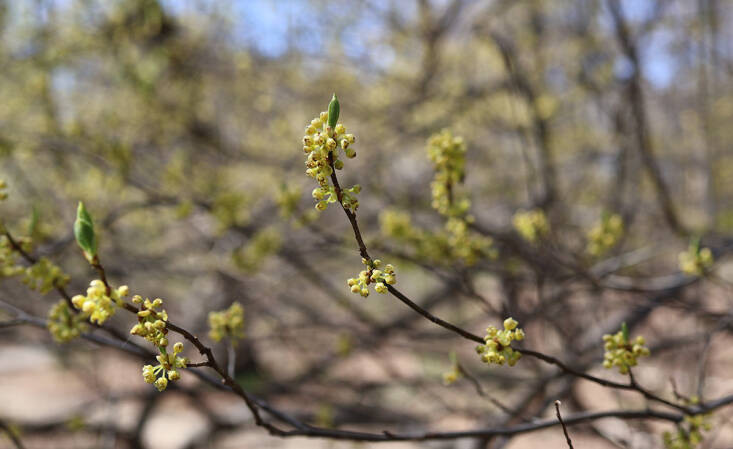 Above: After leafing out, the leaves can also be steeped for tea, too.
 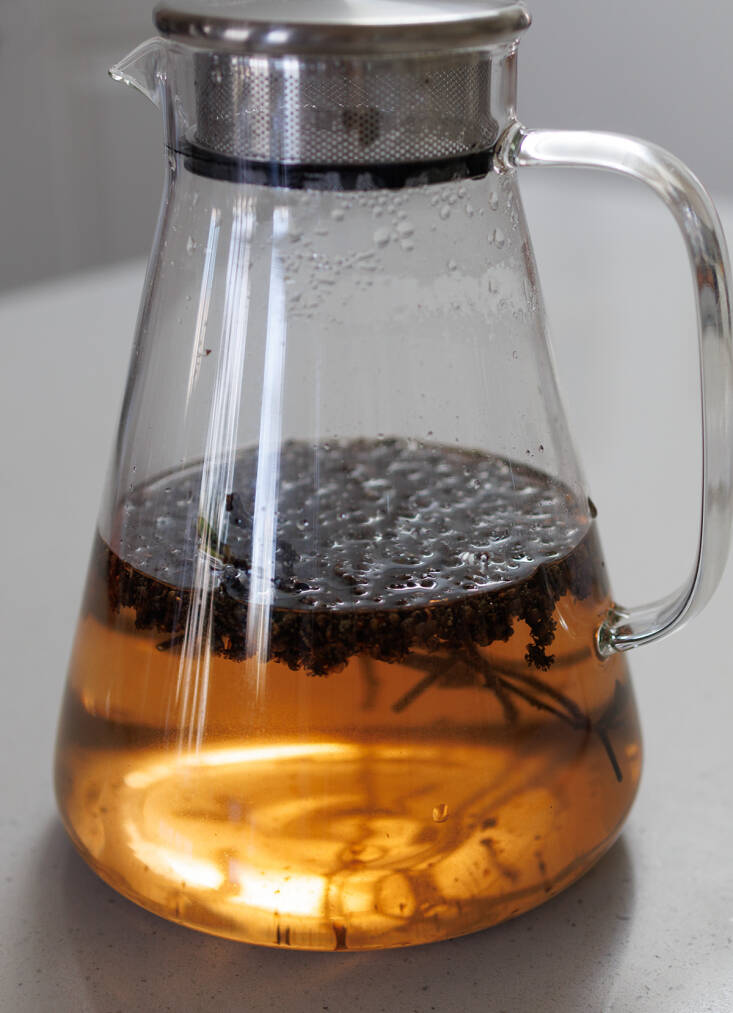 Above: The longer the twigs and flowers infuse, the deeper the color of the tea.
A glass teapot is fun if you like to see your ingredients, but any teapot or mug will do. For one cupful of spicebush tea, use three to four 4-inch twigs that you have first scratched up with a knife to expose the aromatic wood within. You can also use flowers, which have the mildest flavor of all. (Bear in mind that if you harvest flowers from a female tree you are reducing fruit-yield for a later summer harvest.) As the trees leaf out, you can use those, too, instead of twigs alone.
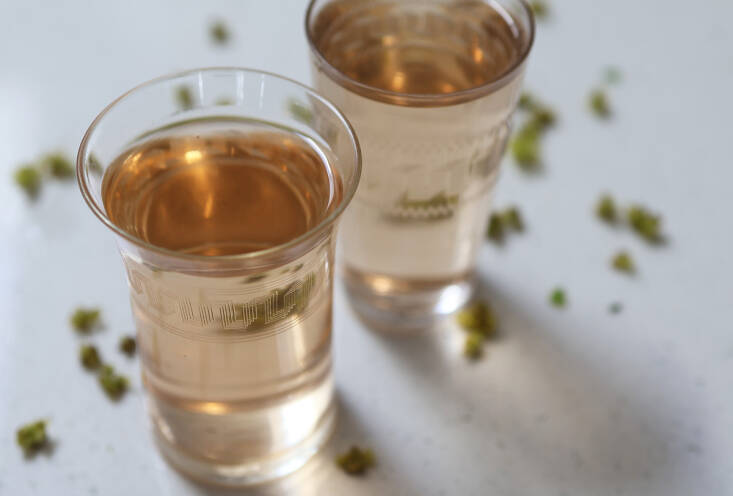 Above: Sipping spring sunshine.
Spring Spicebush Tea
For 6 cups
Make a large batch and enjoy it hot, cold, or re-heated.
- 6 cups water, boiled
- 12 fresh spicebush twigs, about 6 inches long, bark scratched
- 1 cup spicebush flowers
Pour the boiled water over the twigs and flowers (or leaves) in a pot. Allow to steep for a minimum of five minutes. Strain and pour.
(Visited 44 times, 44 visits today)
Spicebush tea recipe comes up here to connect ideas for clarity.