Shelling diaries part: a concise orientation before we get practical.
Shelling diaries part: Quick notes
You can read my 2026 Shelling Diaries Part One HERE and Part Two HERE.
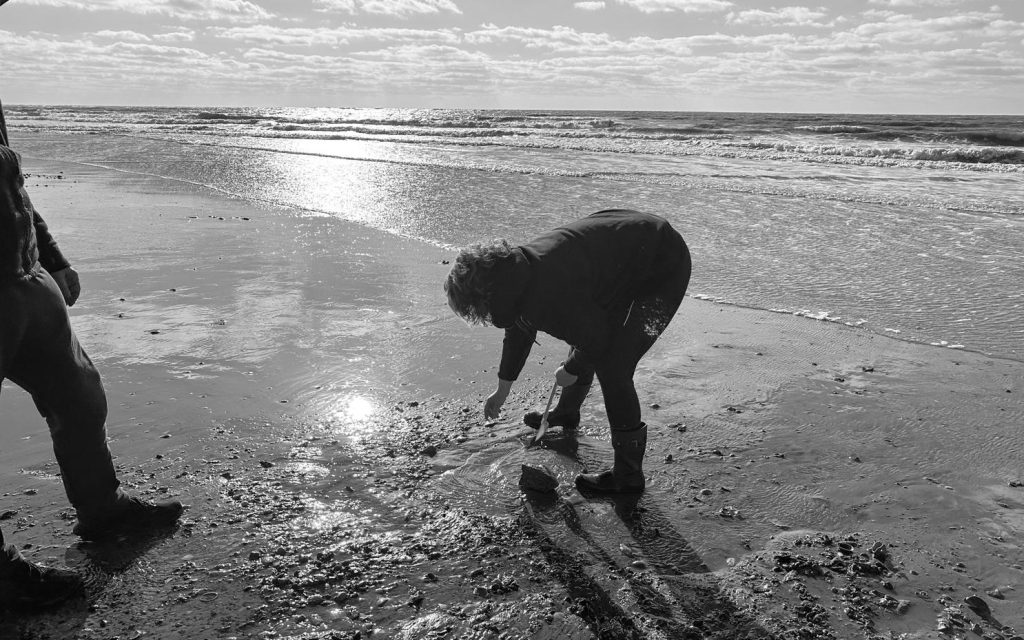
Jeff jokingly said we should bring shovels to dig in the whelk graveyard, but then he actually found some decent sand shovels in the garage of our rental house, so it wasn’t really a joke anymore. We were going to visit that spot again and, this time, we were going to do some serious shelling.
The morning was brisk, in the low 50s, so we all bundled up, and I wore my wool socks and wellies. Packing the boots was a last-minute decision based on last year, when I thought I might get hypothermia walking barefoot on the beach. Last year, we were at Isle of Palms during an unseasonably cold stretch, but I was not prepared for it. All I had were swim leggings and tunics, linen dresses, and leggings. I was cold most of the time and didn’t have anything to wear on my feet at the beach for insulation. This year, I packed for everything from sunny and hot to rainy and cold. Most of the week was delightful, barefoot beaching weather, and I started feeling a little silly for bringing the boots, but I was so glad I had them for this day.
We pretty much made a beeline for the “whelk graveyard” since we were eager to use the shovels and see what else we could unearth. I had already found a lot of shells digging with broken shell pieces, so I wasn’t sure how much “buried treasure” was left. Does it replenish each high tide? Or has this hoard been buried for a long time?
The first trick was finding it again. I already found it a second time, but it did take me a while to pinpoint the exact area. For my fellow avid shellers, I’m providing a map to the buried treasure in case it continues to collect shells in its sticky clay/sand mixture. (You can find a more extensive shelling guide for IOP and Wild Dunes HERE, but this is new information.)
We used public beach access #53, since that is one of the last public access stations before the gated Wild Dunes resort. (We thought it was the last access point, but I noticed #54 on the map. We didn’t see that one while we were there, though.) Park on Palm Blvd. and walk up 53rd Street to get to the beach access. Walk north on the beach until you see rows of colorful townhouses. As a side note, this was a great section of beach to comb through the high tide shell line, look for whelks and sand dollars on the flats, and to find large whelks partially buried or rolling up in the surf as the tide came in.
I took this picture while standing on the whelk graveyard, so you can see what the townhouses look like and better orient yourself. I believe the low building in the front is the Beaches Burgers & Bar restaurant. There are usually chairs and umbrellas set up along this stretch as well, which is another good indicator that you’re in the right spot.
You can only access the area during the window between approximately two hours before and two hours after low tide. On this stretch of beach, you’ll see balls and small logs of blue clay on the beach, some gathered in clumps. There are sections of beach that are solid clay if you dig down. We didn’t find any shells in those areas. What you’re looking for is where the clay and sand are mixed, making the surface a bit “stickier” than regular sand and looser than solid clay. It seems to grab shells washed up during high tide and hold them. If you dig down a couple of inches, and the area is thick with shell fragments, that’s the sweet spot.
You can get a sense of how big the area is in the picture below… It’s not huge. Just a few feet.
The scattered shell pieces were from our digging; they are covered with sand when the next high tide comes in.
But we found more shells in addition to the ones I had already unearthed over the previous two days. My mom and sister-in-law stood by and helped sort through the spoils. I think we found about 15-20 whelks, mostly small- to mid-sized, and over 20 olives. I found 17, and my mom picked up a bunch as well.
Since all of the olive shells were gray, that made me wonder… Are there actually gray olives and whelks? Or are they stained by the sand, clay, etc. when the animal dies? I can’t believe I’ve been shelling for so many years and never looked that up before. I just assumed some whelks were pink, cream, white, or beige, and others were gray, blue-gray, and almost black.
Well, it turns out that gray whelks and olives are discolored by their environment and indicate they are old. No wonder I am so drawn to them! I am always drawn to the older thing over the newer. Almost all the shells that came out of the hole are black or gray due to the iron-rich, oxygen-deprived environment. Some of them might actually be fossils, but at the very least, they are considered “sub-fossils.”
This is a new revelation to me, and makes me even more excited about my gray and black shells.
In addition to my favorite olives and whelks, I found an interesting black slipper snail shell. We have found some slipper shells over the years, but always added them to mom’s collection. I kept this one because I liked the color.
One other interesting find was a whelk that opens opposite from all the other whelks I’ve found.
The day we dug was our last banner shelling day, but we still went out every morning. Low tide was moving toward midday, so the tide wasn’t in our favor for premium early-morning shelling. We still found some great shells along the high-tide shell line, in the flat at low tide, and buried in the surf as it was going out.
This was one of the biggest gray whelks I found on this trip. Those are always my favorites and earn an honored place in the house.
Here are my shell finds from the last two mornings…
We didn’t have any more run-ins with The Crafters (actually, they are a really sweet couple who leave shells at the 42nd Street Beach Access sign for people who might want them), and with the Shell Collection Competition behind us, both mom and I took a more relaxed approach to our shelling.
Next, I’ll share the Shell Collection Competition of 2026…
You can find more shelling details including answers to the most frequently asked questions and a link to a more complete shelling guide for Isle of Palms and Wild Dunes HERE.
We reference Shelling diaries part briefly to keep the thread coherent.