
This post may contain affiliate links. If you make a purchase through links on our site, we may earn a commission.
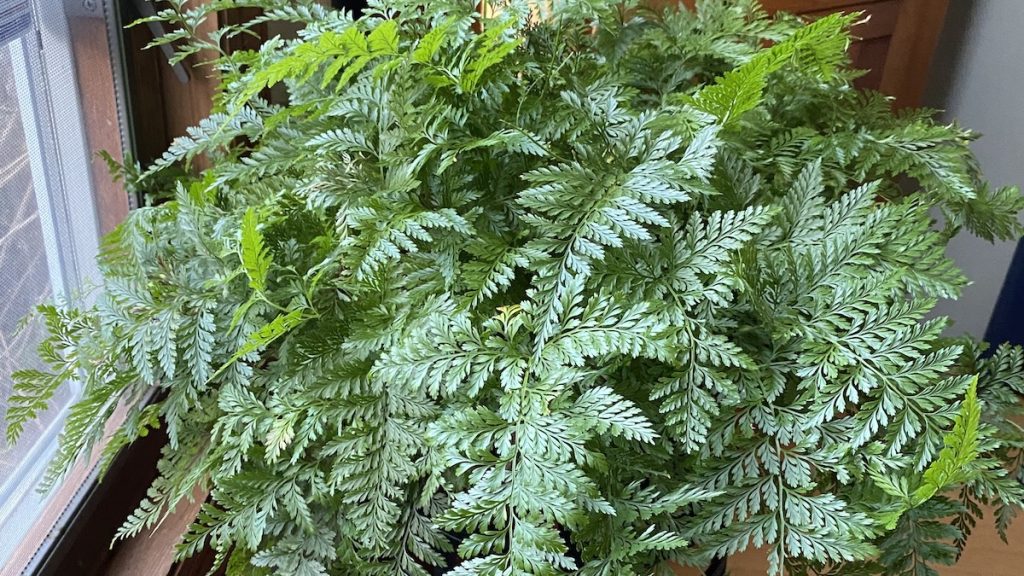
While many ferns are grown solely for their feathery foliage, it’s the unique fuzzy, above-ground roots (rhizomes) of rabbit foot ferns that make these plants a particularly special (and adorable!) houseplant. Plus, compared to what’s required for other types of ferns, rabbit foot fern care is actually pretty straightforward. That means even if you haven’t had great luck with ferns in the past, you might want to give the rabbit’s foot fern a try. In this article, I’ll share everything I know about growing these cool ferns (mine is over 10 years old!).
Introduction to the rabbit foot fern
There are roughly 40 different kinds of ferns in what’s known as the “Davallia” genus. No, the word “Davalli” doesn’t translate to mean “fuzzy-footed fern,” but it should! The genus is actually named after the 18th century Swiss botanist Edmond Davall. But many of the different Davallia ferns do have furry rhizomes which look like the hair-covered feet of rabbits, squirrels, and similar critters.
Perhaps the most popular among them? Davallia fejeensis—the rabbit foot fern. (You might also see this one represented as Davallia solida var. fejeensis.) Native to the Fiji islands, Davallia fejeensis‘s common name is the rabbit’s foot or rabbit foot fern.
A few of its fuzzy-footed relatives include Davallia pyxidata or Davallia canariensis, both of which are known as the hare’s foot fern. And both Davallia mariesii and Davallia trichomanoides are sometimes called squirrel’s foot ferns. Some other names you may come across as you seek out the different Davallia ferns are deer foot fern, bears paw fern, and the silver hare’s foot fern.
All of these unusual beauties are epiphytic ferns. In their natural habitats, they use the surface of trees or other large plants as a kind of scaffolding on which to grow, rather than growing in the soil. Akin to orchids and air plants, rabbit foot ferns will thrive in moss-lined wire baskets and other unusual containers—really anything which will permit their furry “feet” to wander freely.
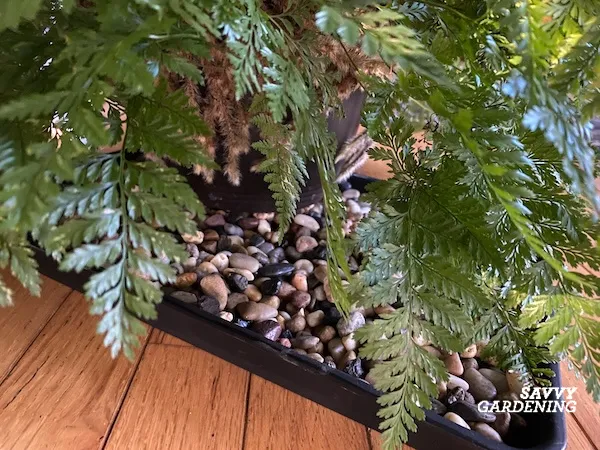 The fuzzy brown rhizomes of the rabbit foot fern make it easy to see how the plant got its common name.
Characteristics and appearance of rabbit foot ferns
Each of these furry-footed houseplants has attractive delicate fronds, a supporting root system, and a series of leg-like rhizomes covered with what appear to be small hairs. Most often, these dangling growths may be white or a light beige to yellowish-brown hue; however, the rhizomes of the different Davallia-type ferns can vary in length, growth habit, and color.
When growing in their respective natural environments, these ferns’ rhizomes serve to anchor plants to trees, rocks, or similar supporting structures, and tiny new fiddleheads emerge from each rhizome. Eventually, the fiddleheads grow taller and will unfurl themselves to become new fronds.
What’s more, you need not worry about toxicity to pets. These ferns are safe to keep around Fluffy and Fido.
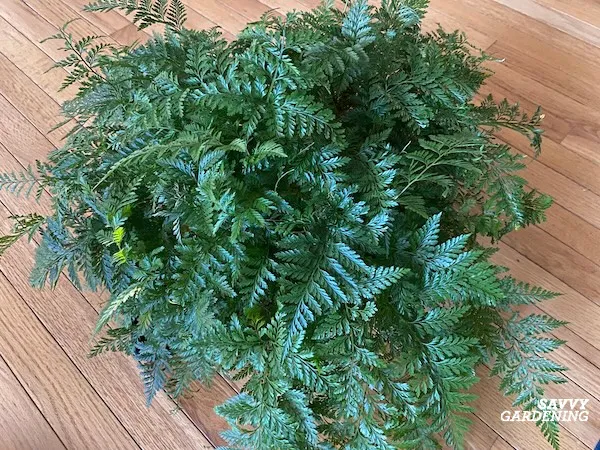 Rabbit foot ferns grow into big, beautiful plants with time and care.
Light requirements for rabbit foot ferns
Getting lighting just right is paramount for good rabbit foot fern care. Remember that in the wild, these plants stick themselves onto rocks and creep along tree branches. As a result, they’re used to some shade as well as bright, indirect light. In fact, getting direct sunlight can be harmful. If you notice your fern’s leaves looking pale or you see brown spots forming on your fern’s rhizomes, those can be signs of scorching from direct sunlight.
You can place your rabbit foot fern near a north- or east-facing window or, in very bright conditions, use a sheer curtain to reduce your fern’s exposure to harsh direct sunlight.
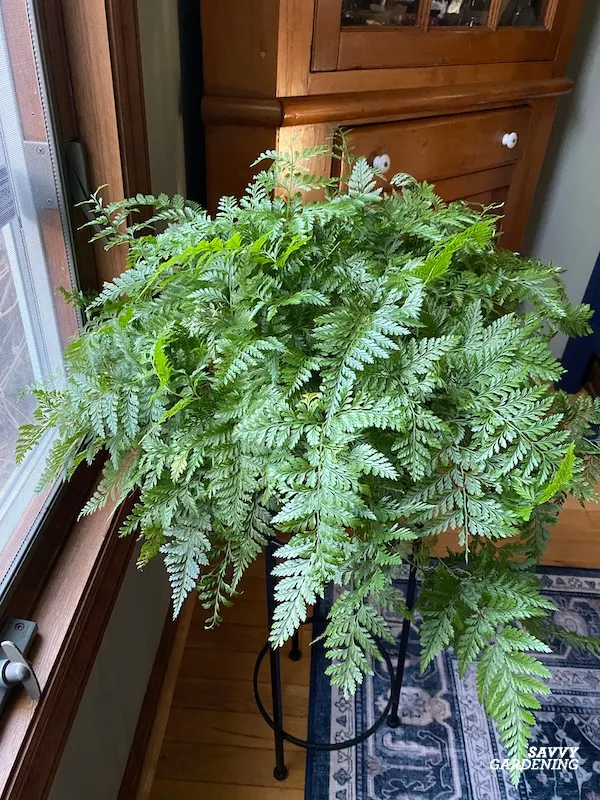 A north- or east-facing window is best for these ferns as they do not like direct sun. For brighter rooms, keep them further from the window.
Ideal temperature and humidity levels for rabbit foot fern care
Optimal rabbit foot fern care also includes providing consistent ambient temperature and humidity levels. For most of the Davallia-type ferns, temperatures between 70 and 80 degrees F (21 to 27 degrees C) are ideal. They also prefer environments with high humidity.
For best results, keep your fern away from drafts and pay close attention to the health of its leaves. If the tips or edges of your fern’s fronds are turning crunchy and brown, that can indicate that your humidity is too low. (Psst! Ferns that are exposed to air pollutants like tobacco smoke sometimes show similar damage.)
There are a few ways remedy low humidity. Provided you have adequate indirect light in these areas, you can move your fern to higher-humidity rooms like the kitchen or bathroom. You can also lightly mist your plants and their fuzzy roots once or twice each week or add a humidifier to the space.
Placing a pebble tray beneath your plants is my favorite trick for boosting humidity levels. To make a pebble tray, just fill a shallow saucer or tray with pebbles and top it off with water. As water in the tray evaporates, humidity levels in the immediate area rise slightly.
I keep my rabbit foot fern on a pebble tray filled with water (make sure the base of the pot sits ON TOP of the pebbles and not in the water!). This raises the humidity around the plant as the water evaporates, providing the high humidity this fern prefers.
Proper watering – an essential step in rabbit foot fern care
If you’re new to ferns, watering is easily the one aspect of rabbit foot fern care that may worry you the most—but it doesn’t have to be. Generally speaking, your rabbit foot fern will perform best in consistently moist soil. Note that this doesn’t mean waterlogged. An overwatered rabbit foot fern is susceptible to root rot.
If you like, you can always err on the side of caution by feeling the top inch or so of your plant’s soil. Does it feel dry? If so, go ahead and water. With time and experience, you’ll likely notice that your fern uses more water during its active growing season and needs a little less water during the winter months. I also use the weight of the pot as a gage for watering. If the pot is light, it’s time to water!
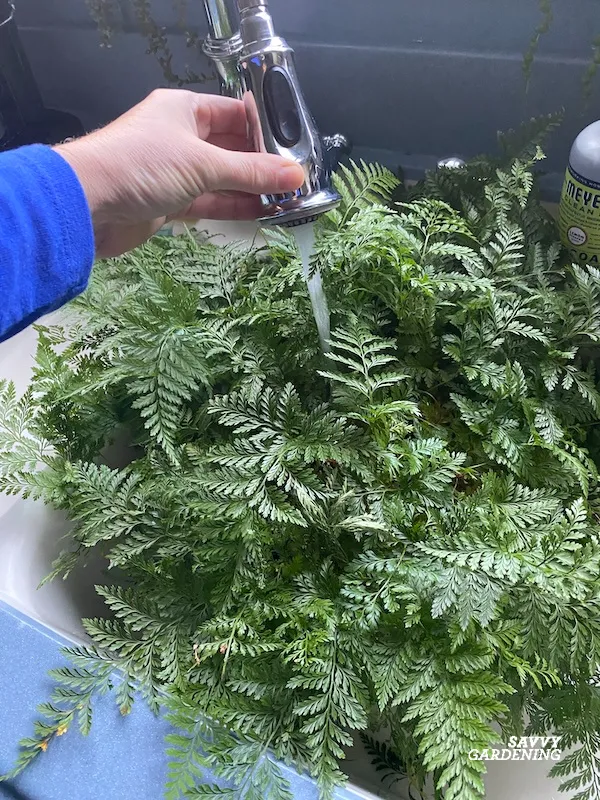 I move my fern to the sink to water every 10 days or so. I run water through the pot and also wet the rhizomes hanging over the pot’s edge.
Soil needs and fertilization of rabbit foot fern
The potting soil used for rabbit foot ferns should be light and well-draining. Because it can hold some moisture without smothering plant roots, a peat-based potting mix works very well. (If you’d prefer to avoid peat moss, you can opt for a more sustainable peat-free soil mix instead.)
Now, whether your rabbit foot fern care plan should include feeding depends in part on whether your plant is actively growing or is at rest. Changes in day length and the corresponding amount of light your rabbit foot fern gets will influence its growth. During a growth spurt, it can be helpful to water using a mild, organic liquid fertilizer once every month or so. In late fall or early winter as the days shorten, your fern’s growth will slow and you don’t need to provide additional nutrients during this period.
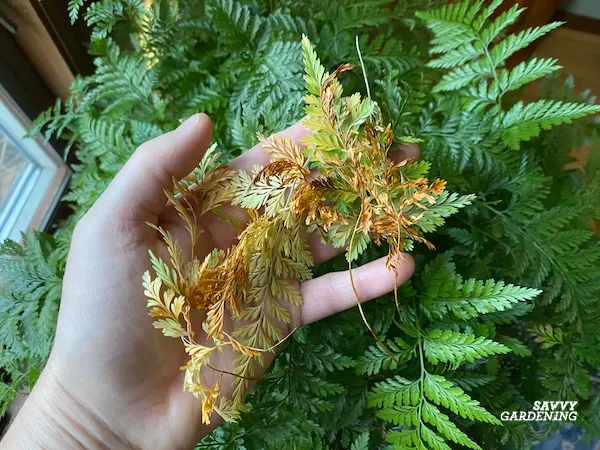 Yellow or brown fronds can indicate low humidity or too much (or too little) water. The plants aren’t fussy, but they do require some consideration.
Tips for repotting and pruning
Moving your rabbit’s foot fern plants to slightly larger containers when needed is another essential part of proper rabbit foot fern care. Any new pots you use must have plenty of drainage holes. Also, wide, shallow pots are preferable to narrow, deep ones. A wire hanging basket lined with moss can be ideal since it will allow for the plant’s furry rhizomes to creep through crevices and dangle over the sides.
To make repotting easier, water your fern the day before. At this point you can also trim away any dead or browning leaves. To begin repotting, gently move rhizomes out of the way and slide a butter knife between the edge of the soil and the inside edge of the plant’s pot. Go all the way around to loosen your plant’s hold. This makes removing it from the old pot go more smoothly.
Next, ease the fern’s root ball out of the pot, fill the bottom of your new container with soil mix, and center the fern in the new container. Before you finish putting new soil around the edges of the fern’s root system, make sure that all of the fern’s rhizomes will remain on top of the soil. In other words? You don’t want to bury these beneath the soil’s surface. To finish, water in and add a little extra soil as needed.
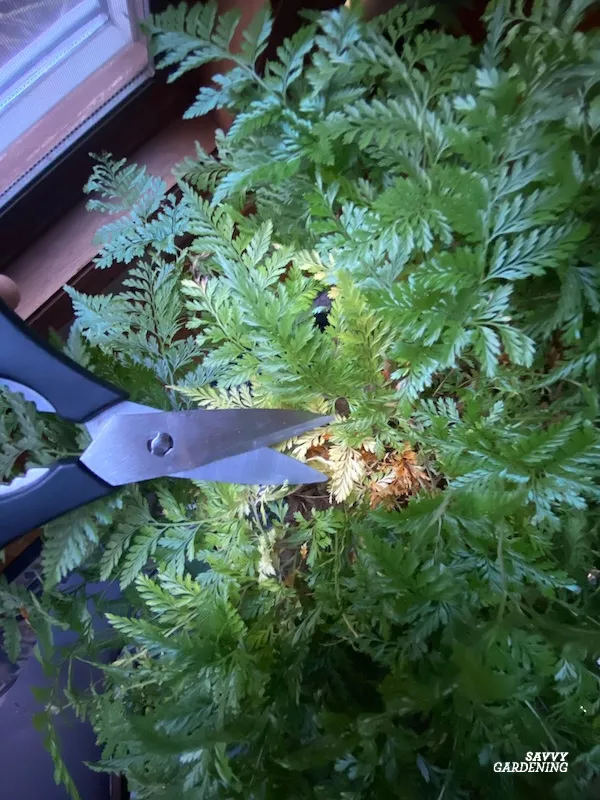 Use a sharp scissors to cut out any browning foliage. My plant spends its summers outdoors, so I often get some browning foliage when I move it back indoors for the winter.
Extra care tips for rabbit foot ferns
Your rabbit foot fern care regimen should also include regular checks for insect pests. Scale insects and mealybugs are the two most common problems that fern growers see. If you catch them early enough, they can be controlled with a targeted application of a natural horticultural oil or neem oil.
I move my plant outdoors for the summer. I place it in a fully shaded area beneath the porch overhang on the north side of our home. It is happy as a clam there, but I am careful to move it back indoors as soon as the nighttime temperatures dip into the high 50°s F. These plants will not survive frost.
Quick propagation methods
What’s better than one thriving rabbit’s foot fern? Multiple thriving rabbit’s foot ferns! Although propagation of these charming plants is possible by sowing their spores, there’s an easier way to multiply your ferns.
You can start a new plant by taking a cutting from the end of one of the furry rhizomes from your existing plant. The rhizome you choose to cut should have one or two young fronds growing out of it. Use a clean, sharp knife or garden snips to make your cut.
Next, fill a resealable plastic bag with moistened potting mix and position the piece of cut rhizome so that it makes good contact with the top of the soil. Put the sealed bag in a warm place. Once the segment has developed new roots, you can plant it in its own pot.
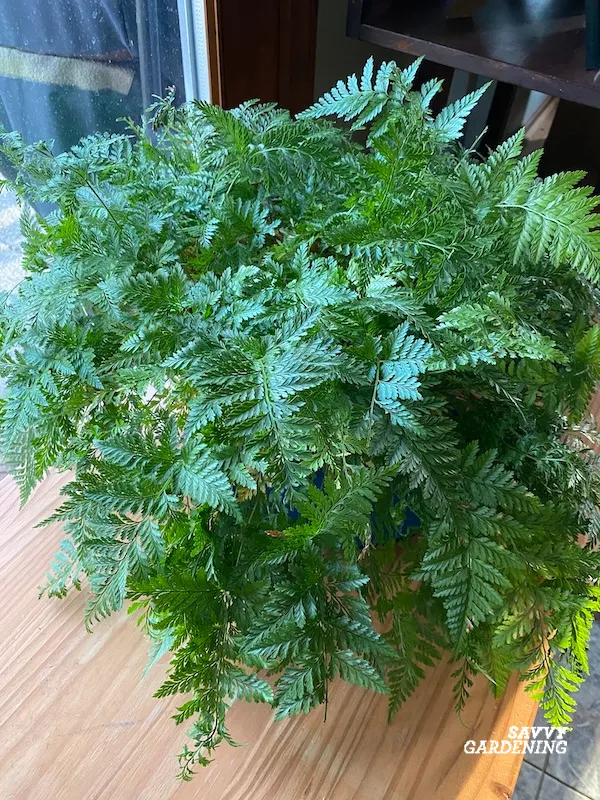 You can’t beat rabbit foot ferns for adding a touch of the tropics to your home. They are one of my favorite ferns and deserve a spot in your houseplant collection.
Best ferns forever (BFFs)
Now that you know the rabbit foot fern care basics, your own fuzzy-footed wonders are sure to flourish. Keep in mind the idea is to replicate the natural conditions that these epiphytes are accustomed to—bright, indirect light, consistently warm temperatures, and high humidity. So that your rabbit foot ferns can really stretch their “legs,” you also need to plant them in wide, shallow containers with good drainage.
As for your potting soil, it should be able to hold some moisture without becoming too heavy or compacted. When watering your fern, aim for moist-but-not-waterlogged. Finally, if you’re worried you’re going to overwater, it’s okay to allow the top inch or two of your plant’s soil to dry out a bit between watering sessions.
Looking for more gorgeous ferns to add to your collection? How about these:















Heads up — I appreciate the point about “Rabbit Foot Fern Care A Complete Growing” — very helpful. Love this!