Colourful garden ideas. A brief context to set expectations.
Colourful garden ideas: Quick notes
Mother Nature invented colour, so it only makes sense that we design gardens with colour in mind. Colour is meant to be explored, give us feeling, and brighten the world around us. Today, I’ll discuss the science and design of using colour in the garden, drawing on my own space and those I’ve photographed.
Bold colours are a high-impact, low-cost way to elevate outdoor spaces. They add personality, create focal points, and make even simple items feel intentional and stylish.
Look at the vibrancy of Mother Nature. You’ll find some of the boldest, brightest colours in the natural world, from the orange stripes of a monarch butterfly to the flamboyant yellows and reds of a canna lily.
Colour is one of the first things we notice in the garden. While scrolling through this article, pay attention to what you notice first in the photos.
I’ve long denounced millennial grey in the home and have always been drawn to colour in the garden as well. From dopamine gardens to regenerative gardening, I’m drawn to methods that inspire the gardener’s creativity and go against the grain.
This post will help you consider how you use colour in the garden and show how other gardeners have used colour to take their garden design to the next level.
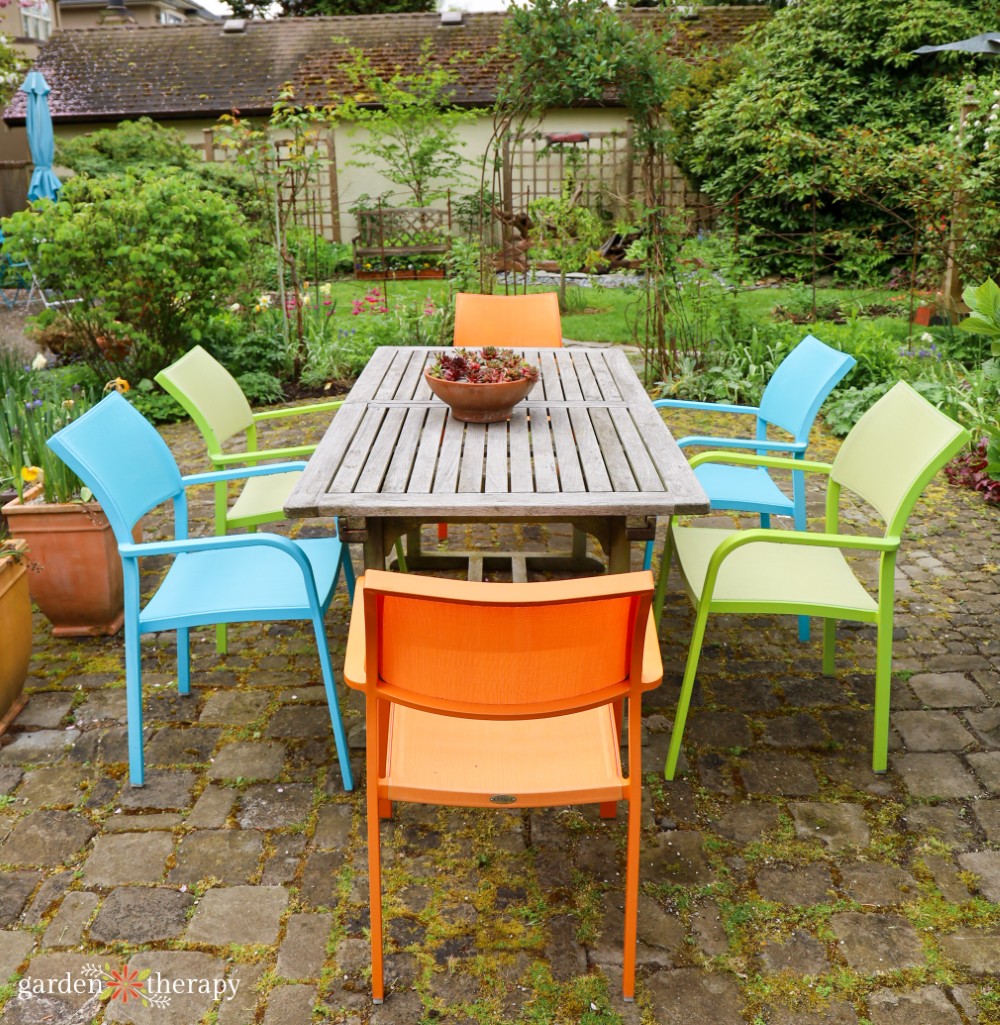
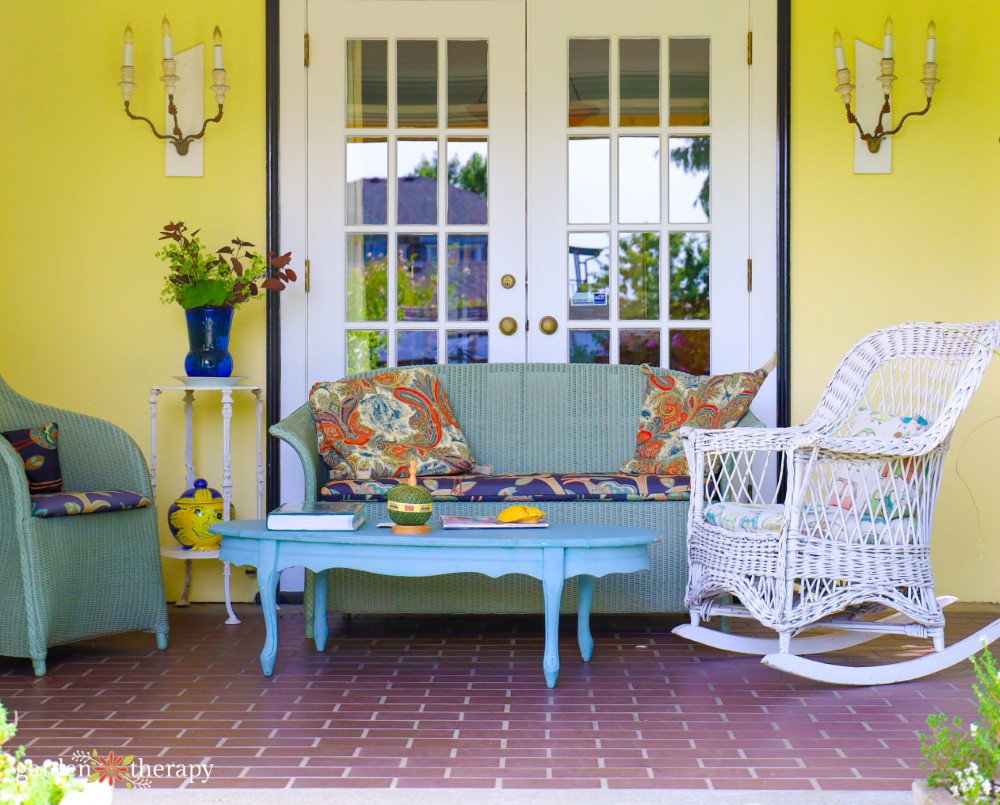 Colourful paint is an easy way to refresh furniture for the outdoors.
The Science Behind Colour
When you dive deep into the science behind colour, it’s amazing just how much it affects our day-to-day lives. Humans can distinguish an estimated two million colours. So yes, there is a difference between chartreuse and lime green.
Our colour perception has evolved specifically to help us in our environment. Just think of a tomato. When green, we know it’s not ready to eat yet. But once it turns a beautiful, crisp red, we know that it’s safe and tasty to eat.
Colour psychology suggests that colour can affect our moods, thoughts, and behaviours. Imagine how energizing it might feel to be in a room painted red, as opposed to the relaxation of being in a room painted blue.
Warm colours, such as yellow, orange, and red, are known as comforting, but they can also indicate anger. Meanwhile, cool colours, such as blue, green, and purple, can be calming but also express sadness. Colours can say so much.
You can utilize this colour theory in your art, but also in your décor, inside and out. Choosing which colours to incorporate in your garden can really change the overall feeling.
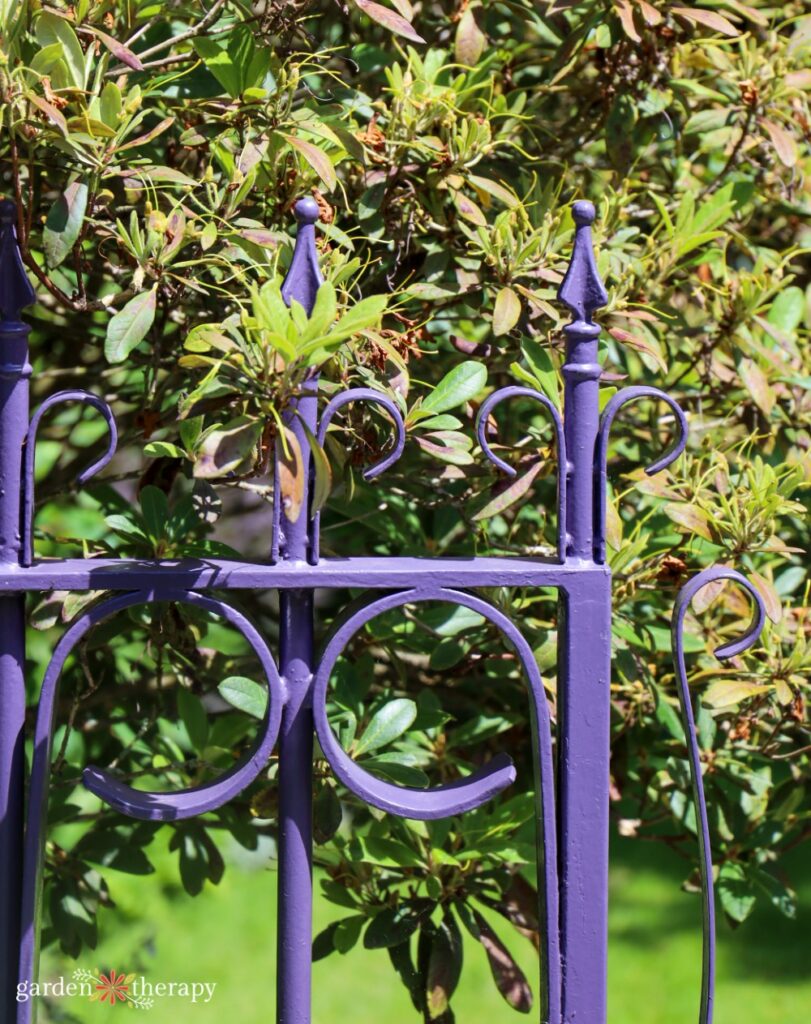 Even metal can be painted for a unique pop of colour.
Finding Complementary Colours
Colour theory explores how colours work together and what kind of emotion they elicit. You’ve probably heard of the colour wheel. This can be an incredibly useful tool for finding relationships between colours and what goes well.
Monochromatic colour is when you use varying shades of one colour. For instance, you could use bright golden yellows as well as soft pastel yellows in one garden bed to create a monochromatic appearance.
You can also pair colours that are next to each other on the colour wheel, creating what is known as an analogous colour scheme. Another option is to go with a complementary colour, which is whatever is directly opposite on the colour wheel.
Of course, you can pair whatever colours you think look good together. Colour is very personal, and we all see things a little differently.
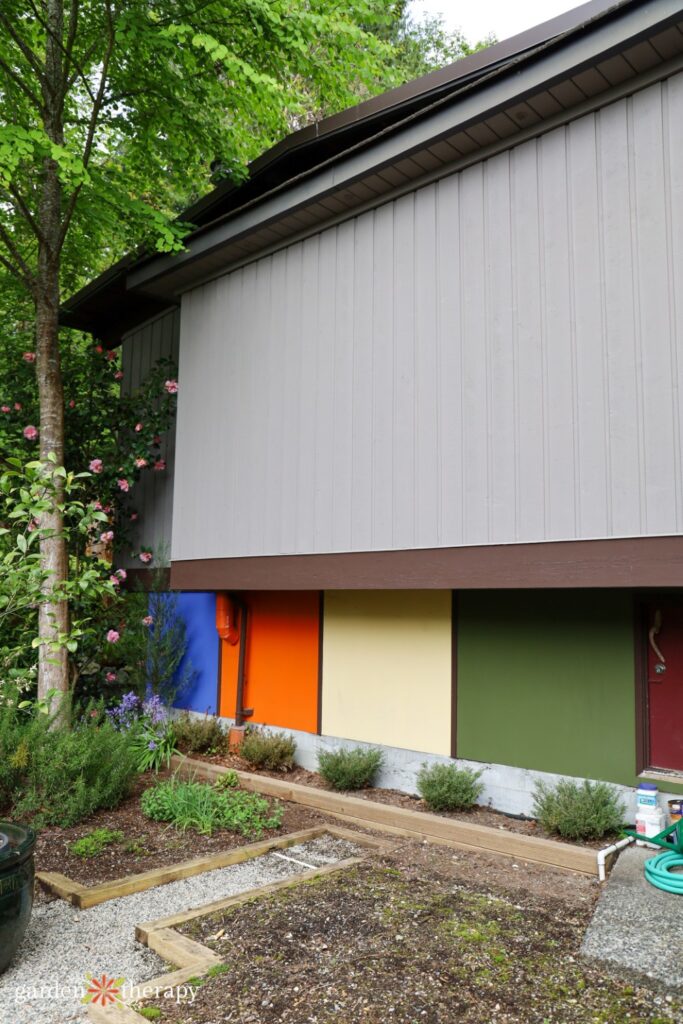 Painting this wall completely transformed the space. It instantly draws the eye.
Colour Theory in the Garden
- Green is considered the ultimate neutral in landscaping. You can never have too much of it. Japanese gardens use a monochromatic greenscape to create a calming feeling. It’s the colour of Mother Nature.
- White is one of the most versatile colours in the garden. Consider is a neutral. It works well to brighten shady areas or at night in moon gardens, but it can look too bright in areas with lots of lights.
- Purple is one of the most common garden colours, with plenty of deep and light shades to choose from. It’s known as a rich and calming colour, attracting pollinators.
- Blue is the rarest shade in the garden. There are few true blue plants. But when you do add it, blue can be a very calming colour.
- Red is exciting and brings lots of visual interest. A little goes a long way in the garden, and it’s the first thing you’ll notice. It’s historically known to represent life and vitality.
- Yellow is another common flower colour. It’s cheerful, sunny, and warm, known for boosting serotonin. It’s best spaced throughout the garden.
- Orange is another energizing colour. It’s happy and gives off a tropical feeling. It works well when planted en masse and with other warm colours, but can be difficult to pair with cool tones.
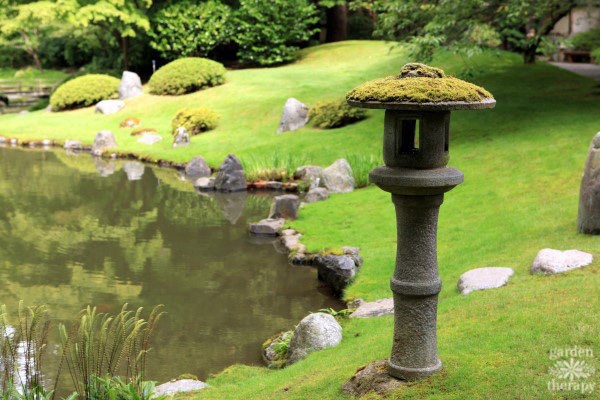 Japanese gardens utilize a monochromatic green palette to create a serene environment.
Playing With Colourful Plants
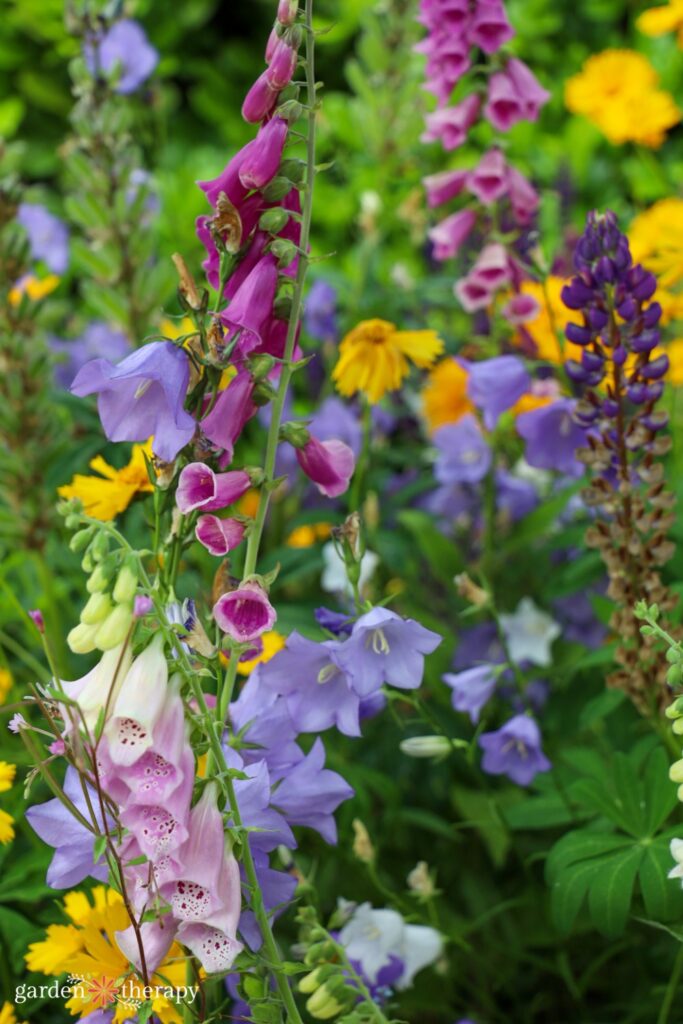
The easiest way to add colour to your garden is by popping in colourful flowers and plants. This can be incredibly cost-effective and yet have a big impact on your outdoor space.
You’ll notice there are many natural hues that emerge with the seasons. Pastels are common in the spring, bold jewel tones in the summer, and warm tones in the fall.
Consider when your plant blooms so you have year-round interest. And beyond the flowers, don’t dismiss how colourful bark, foliage, berries, etc. can also make an impact.
Your plants can also lean into a theme. A coastal garden full of white and blue or a pollinator paradise with plenty of yellow and purple wildflowers.
Colour also applies to the vegetables you grow. Nothing says “homegrown” like gold and purple cherry tomatoes garnishing a Bloody Mary.
Painting Outdoor Furniture
Beyond the plants themselves, consider how you add colour to the other elements of the garden. You can paint a wall, bench, or gate to provide an instant facelift to the garden.
Just look at how the red bench below completely transforms the garden. The pop of red is all you need to make a quick statement and add personality.
When painting, make sure to properly clean and sand the surface beforehand to ensure the paint adheres. Use paint suitable for the outdoors and the material you’re painting, such as painting on metal vs wood.
Avoid paint that might contain lead or toxins, especially those that are growing near food or edibles.
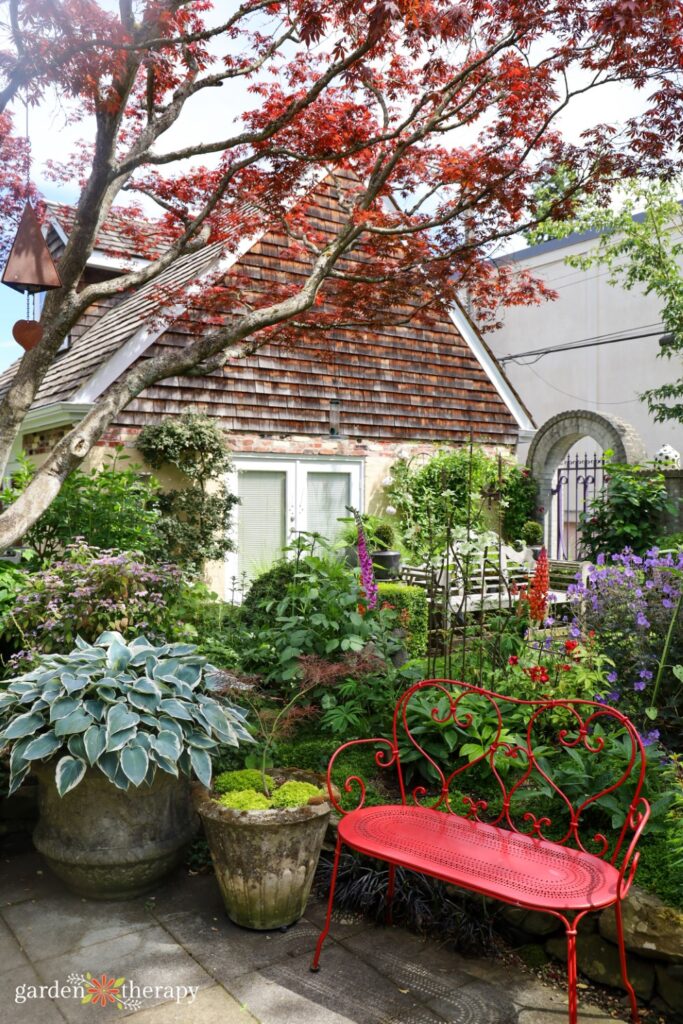 Red is a powerful colour, and just a little can really change the look of a space.
Using Colour in the Garden
Here are some more considerations for designing with colour outside:
- Colours will change appearance based on the amount of sun they get. You may want to use a bright colour in the shade, and lighter tones in the bright afternoon sun.
- Know when to use a little colour, and lots in the garden. Just a hint of bright blue may be all you need to brighten up somewhere, while a mass of pink can create a perfect wave of colour.
- Take cues from what’s already on the property, such as the exterior colour of the house, an existing bench, large container pots, etc. How can you complement them with your colour choice?
- Change colour schemes throughout the garden. The whole garden doesn’t have the match. Try playing with different colours in different garden beds and sections of the backyard.
- Repetition can help make things cohesive. For instance, you might use lots of terracotta pots in one area, utilizing a similar colour for your patio cushions, while adding a similar orange hue to a different area of the garden.
The best advice for colour? Don’t be scared to use it! The outdoors is where we’re supposed to be fun and playful, so don’t be scared to experiment with colour. It’s impossible to do it wrong.
More Garden Design Inspiration

A city girl who learned to garden and it changed everything. Author, artist, Master Gardener. Better living through plants.
We reference Colourful garden ideas briefly to keep the thread coherent.