
The birds winter: a concise orientation before we get practical.
The birds winter: Quick notes
This post may contain affiliate links. If you make a purchase through links on our site, we may earn a commission.
Much has been written over the years about winter interest perennials. However they can play a much more important role in the landscape beyond aesthetics. Consider leaving plants in the garden for the birds. Your property, however big or small, can provide nourishment and shelter not only to birds, but also to small animals and beneficial insects. I have seen birds feasting on the seed heads and berries of some of the perennials in my yard.
Birds eat a lot in the winter and it’s not just because they’re hungry. They eat to keep warm! Birds eat more to give their metabolism a boost and keep their bodies warm. Native plants are your best bets for providing food sources to birds over the winter. Why not use our backyards (and front yards) to help give local bird populations a boost? In this article I’ll share a few favorites based on the native plants in my area and the birds I see in my yard.
What do birds eat in the winter?
From seed and suet left out by humans to grazing on the seeds of your plants, hungry birds that don’t migrate need to eat all winter long. That’s why leaving plants in the garden for the birds is so important. The goal when planting is biodiversity. Different plants and areas of the garden, such as brush piles or snags, will help support a variety of bird species, but also insects, small mammals, and amphibians.
There are a few native plant databases, such as the Audubon Society in the United States, the Network of Nature in Canada, and the Lady Bird Johnson Wildflower Center for all of North America. Consult them to see which perennials, trees, and shrubs are native to your region. Then take your list to your local nursery. These plants that have always supported your local ecosystem. They’re like natural bird feeders and the more food available, the better.
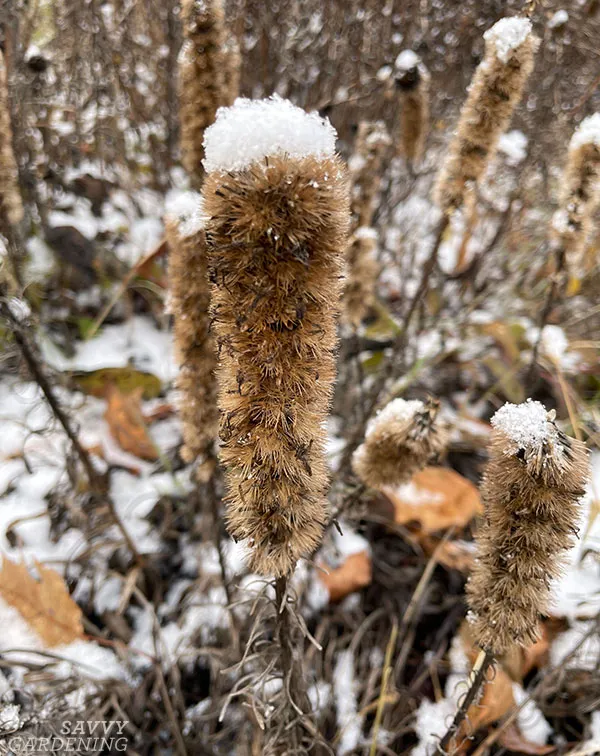 I love the bottlebrush look of liatris seed heads. They look great in the garden and feed the birds.
Leaving the leaves in the garden and on the lawn over the winter can also go a long way towards helping to feed birds. Many beneficial insects, like bees and caterpillars, overwinter underneath them.
Leave the seed heads on plants to feed the birds
I love seeing birds land on seed heads in my garden. Insects find shelter in seed heads, which the birds find, but the seeds themselves also nourish birds. Be cautious, however, as some plants drop so many seeds you could be pulling out plants as weeds come spring.
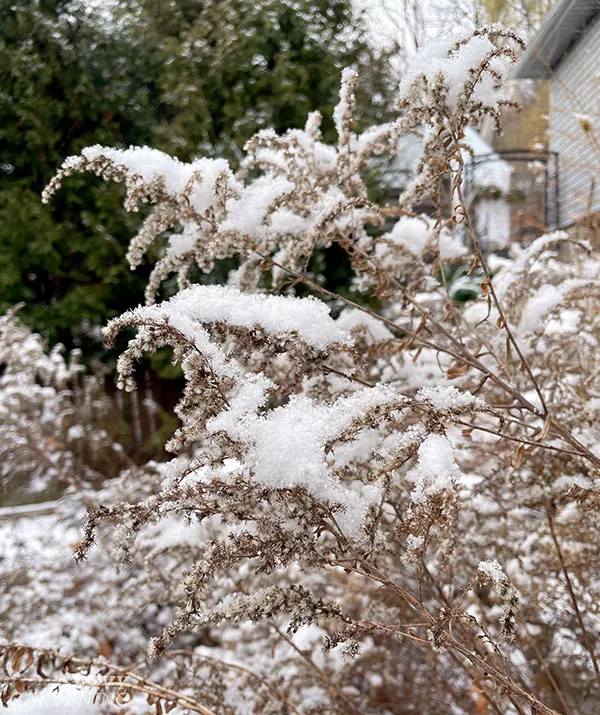 My goldenrod plants are absolutely buzzing with insects towards the end of the summer and into fall. I leave them in the garden over the winter.
Native plants in my garden that feed the birds include:
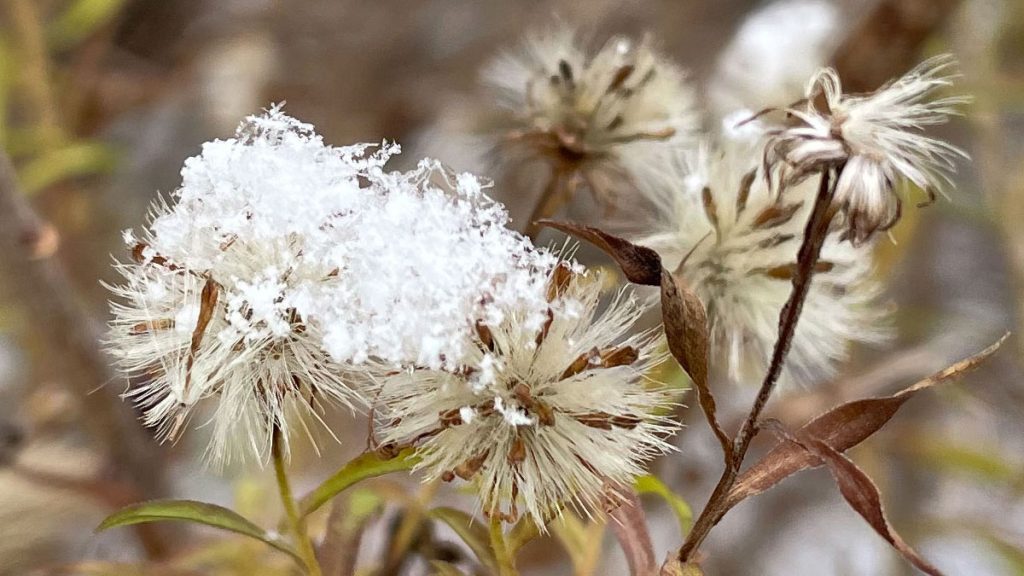
- Asters: I have a LOT of asters in my yard and I didn’t plant any of them. But I let them reseed themselves and they come back every year. They help feed the cardinals, chickadees, American goldfinches, and nuthatches that visit the yard.
- Goldenrod: As goldenrod flowers fade, they form fluffy seed heads. Larvae that find their way into the stems form galls—those round growths that appear. Woodpeckers will crack them open to reveal the tasty treats inside.
- Liatris: Liatris is a gorgeous four-season plant that I’ve written about on the site. I love how the flower stalks turn into these interesting-looking, fuzzy bottle brushes. Not only do they look cool, I’ve seen house sparrows and juncos landing on them to eat the seeds they provide.
- Coneflowers: Coneflowers aka Echinacea are another seed-filled source of nourishment. Occasionally I’ll find a small seedling that has developed from a dropped seed. But for the most part, I think most of the coneflowers in my gardens feed the birds.
- Black-eyed Susans: Black-eyed Susan plants tend to be covered in flowers, which means more seeds to feed your avian friends.
- Sunflowers: I love planting sunflowers from seed in my raised beds. They attract pollinators and attract birds at the end of the season.
Shrubs with berries
Not only can deciduous and evergreen shrubs provide visual interest and privacy in the garden, they also help provide shelter and areas to nest, as well as food to birds that don’t migrate. Look for native shrub species that produce berries and check to see whether you need to plant a male and female plant for fertilization to occur (this only applies to some species).
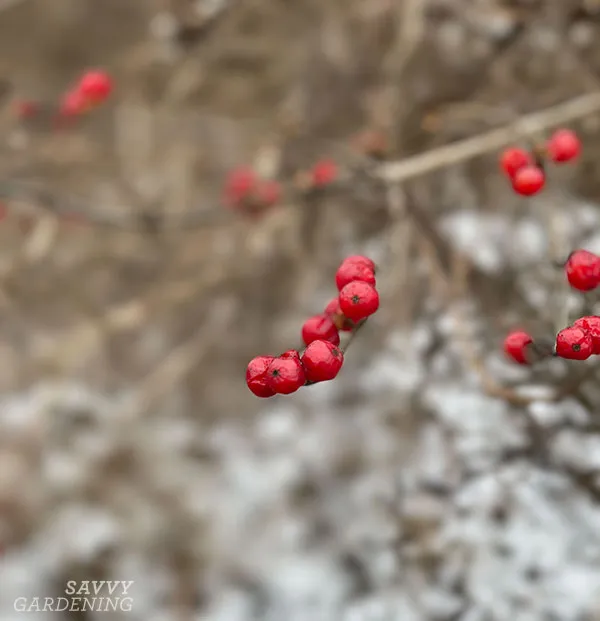 Winterberries provides sustenance to a variety of birds, including cedar waxwings, Eastern bluebirds, and American robins.
Popular shrubs with berries include:
- Native varieties of hollies (Ilex), which includes winterberry and American holly
- Cornus species of dogwoods
- Cedars and junipers
- Serviceberries
Growing native grasses to feed the birds
Native grasses provide nesting materials, as well as food and shelter for feathered friends. Some are also host plants for butterflies. Consider adding these grasses to your garden:
- Little bluestem and Big bluestem
- Pennsylvania sedge
- Northern sea oats
- Sideoats grama
- Switchgrass
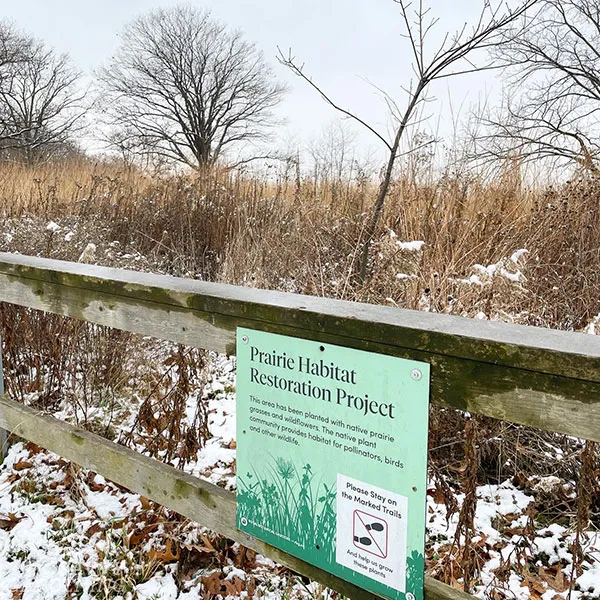 Native grasses play a big part in prairie habitat restoration projects, but they can also be used in a home garden to attract birds.
If you want to put out a bird feeder…
If you would like to leave out extra food, especially if snow is covering all the plants that birds would eat in your garden, consider suet. High in protein, the Audubon Society has a recipe on its website. You can use a suet cage to hold a block of suet. One year I hollowed out various fruits and vegetables, including squash and pomegranate and filled them with suet. I then hung them from a tree in my front yard.
Black oil sunflower seed is another bird favorite that is full of nutrients. Keep an eye out for birdseed blends that are approved by bird organizations. For example, the Canadian Wildlife Federation sells birdseed blends that have been approved by a wildlife nutritionist.
Choose a spot that provides a bit of shelter and a quick escape for the birds from predators while they eat. Keep bird feeders about five feet away from windows. Decals can help to prevent collisions.
We reference The birds winter briefly to keep the thread coherent.
The birds winter comes up here to connect ideas for clarity.








PS: Nice take on “Leaving Plants in the Garden for the Bir” — I’ll try that soon. Great share.
Quick thought – Loved this about “Leaving Plants in the Garden for the Bir” — such a nice idea.