Maintenance
Douglas fir trees. A brief context to set expectations.
Douglas fir trees: Quick notes
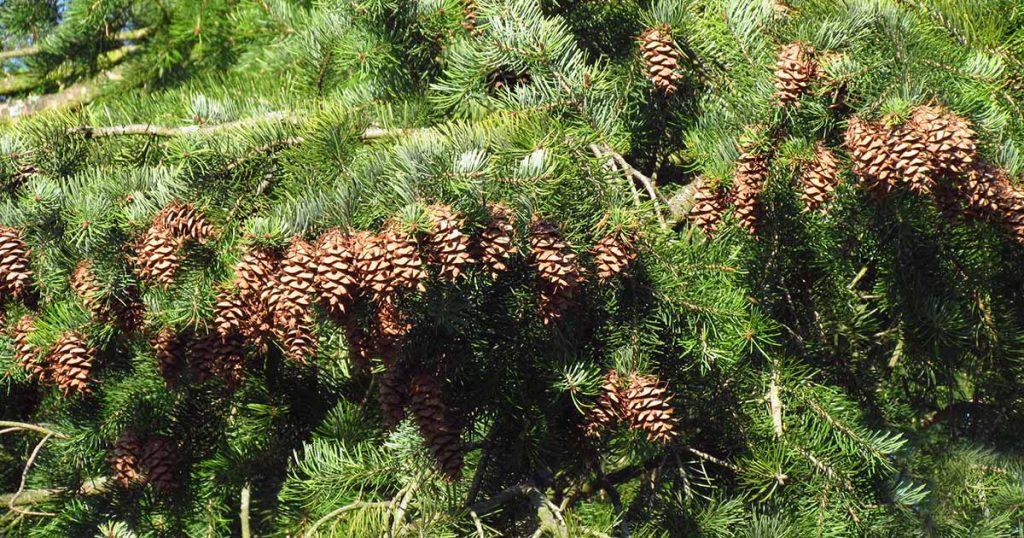
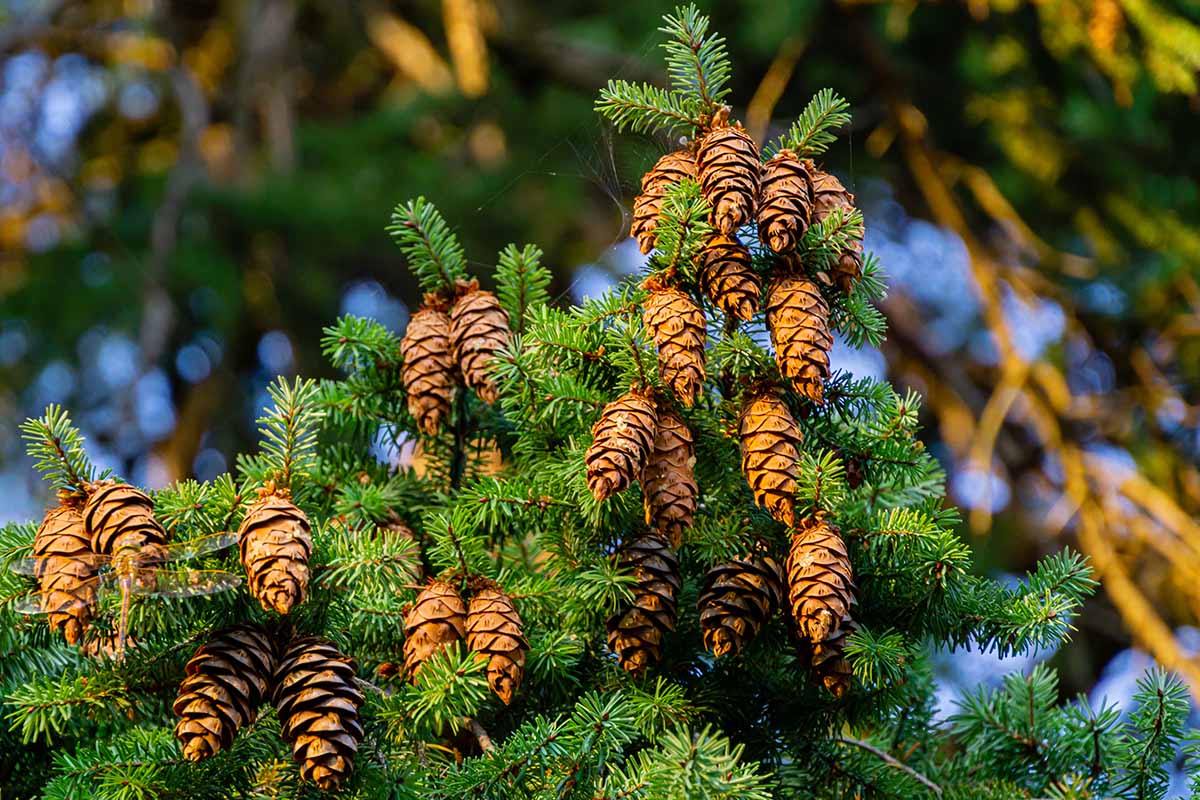
Douglas firs won’t produce cones until they are about 15 years old, but they will still be a long way off their mature size.
Along the way, you can help yours develop a pleasing shape by pruning off bent, crossing, or otherwise ugly branches.
You should always prune any branches that are dead or dying. Be sure to cut as close to the trunk or branch as you can so you don’t leave behind unsightly stumps.
Propagation
Vegetative reproduction has proven to be difficult with Douglas firs. It’s not impossible, but it’s not a good way to propagate this species. So skip the cuttings and try propagating via seed.
If you’ve never tried growing a pine family tree from seed, the process can be fun. You’ll need access to seeds, and I think it’s best to harvest your own rather than buying them.
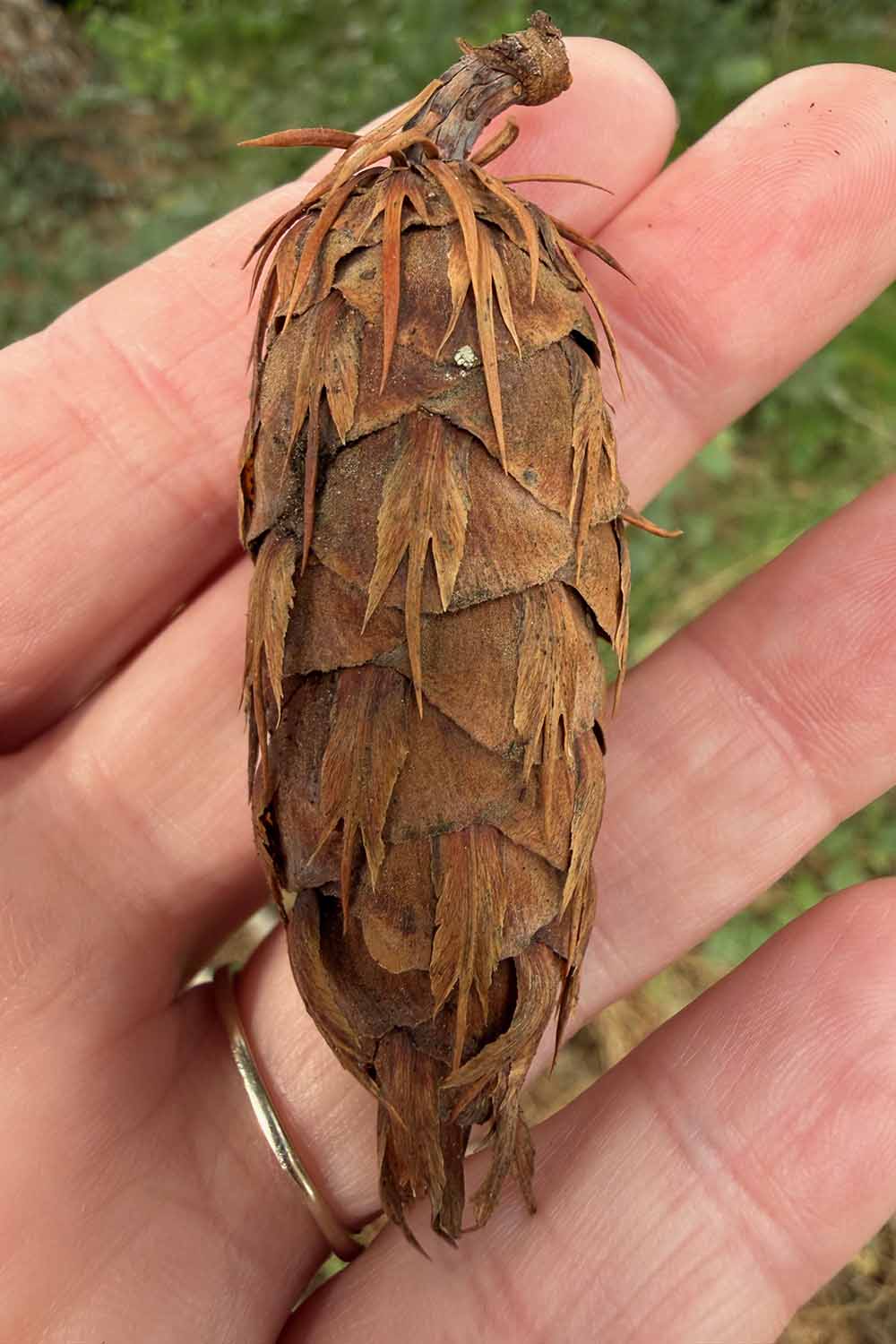 Photo by Kristine Lofgren.
Find a cone and gently pry it open to find the seeds. Then, you’ll sow those seeds much as you would any other kind.
We walk you through the entire process in our guide to growing pine seeds.
Transplanting
Your best bet is to grab a young Douglas fir tree at your local nursery. Put it in the ground by digging a hole about the size of the growing container or a bit wider.
Remove the plant from the container and gently loosen up the roots. Lower the plant into the hole you made and set it so it’s upright.
Backfill with soil, then add a bit of water to help things settle and add a bit more soil if needed.
Pests and Disease
There’s no plant species on earth that is totally impervious to pests and disease, but a mature Douglas fir is a pretty tough tree.
Deer don’t feed on mature trees, but they will devour seedlings and young specimens. It’s easy enough to put a fence or cage around them to ensure that you don’t lose your youngsters.
True dwarf mistletoe (Arceuthobium spp.) can develop on the branches and parasitize the tree, reducing growth and causing needle loss. Remove any mistletoe you see.
Young trees will often have resin blisters on the bark. This is nothing to worry about, it’s totally normal.
Pests
In general, if you keep Douglas fir tree healthy, you probably won’t have to deal with any insect pests.
Even if something comes along to nibble on your tree, it will be able to withstand a bit of disturbance.
If you’re growing young Douglas firs, you need to watch for strawberry root weevils (Otiorhynchus oratus).
The brownish adults lay eggs in soil and when the larvae hatch, they burrow down to feed on the roots.

BioCeres WP
To be safe, treat young plants with a product that contains Beauveria bassiana, such as BioCeres WP, which you can find at Arbico Organics.
Aphids
Woolly conifer aphids (Adelges cooleyi) go hand-in-hand with Doug-firs. They resemble fuzzy white clusters at the base of the needles.
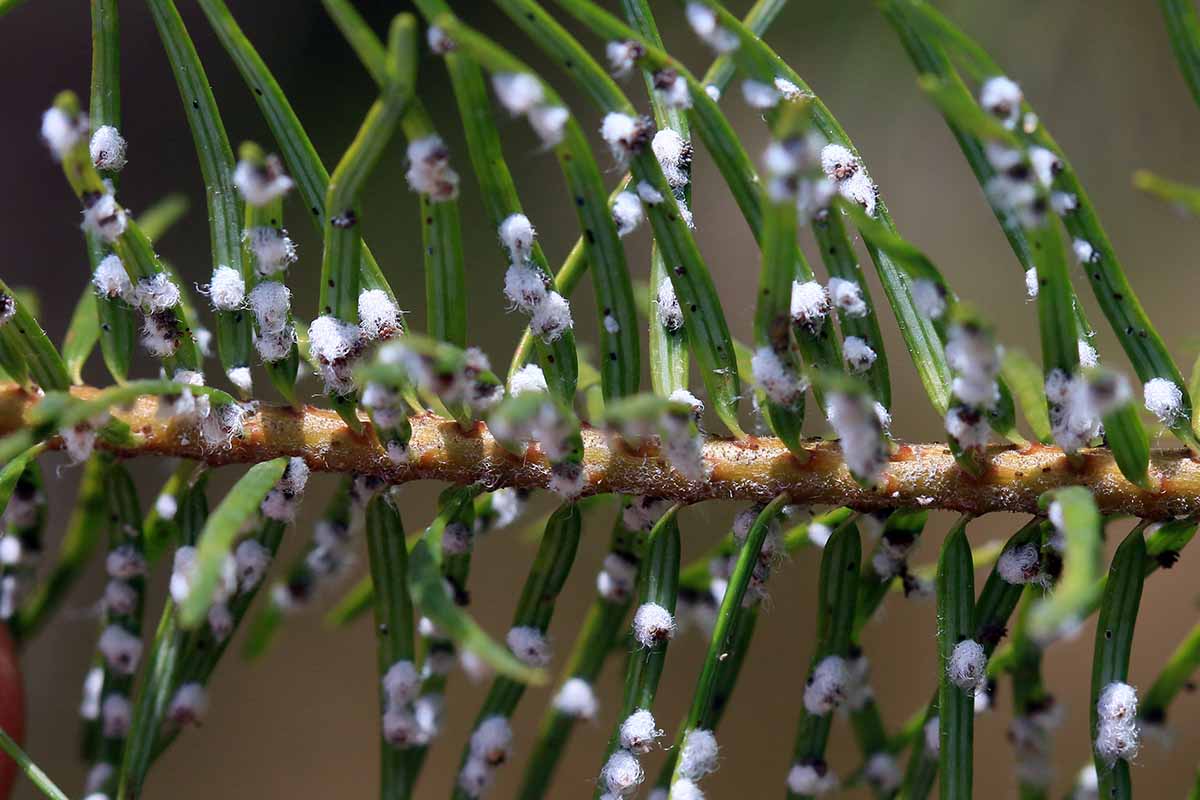 Photo by S. Rae, Wikimedia Commons, via CC BY-SA.
A large population can potentially defoliate a tree, though it’s rare. In fact, these pests will almost never cause serious or long-term damage.
You can blast them off with a strong spray of water if they concern you.
Or learn other methods, including biological control and organic pesticides, in our guide to controlling woolly aphids.
Beetles
Douglas fir beetles (Dendroctonus pseudotsugae) are mainly a problem in the tree’s native range.
They tend to target trees that have been weakened by disease, other pests, or environmental conditions.
The adults are black and rust colored, while the larvae are cream.
Symptoms include frass or a sawdust-like material at the base of the tree. You might also see holes in the bark, and the needles of an infested tree will turn rust-red and start dropping.
We reference Douglas fir trees briefly to keep the thread coherent.