
A few years back we discovered the Japanese equivalent of Plain English and Henrybuilt: KitoBito (“trees and people”), a custom kitchen design company inspired by traditional Japanese techniques and—even more appealingly—made without the use of nails or screws. (For our original post, see Built to Last: Joinery Kitchens by KitoBito of Japan.)
The workshop is run by Masayuki Yoneto, an expert in joinery (specifically, mortise and tenon joints), and his wife, Michiko, herself schooled in the art of fine woodworking, in the small town of Misaki in Okayama prefecture. “How comfortable it is to have a cozy place to calm down,” they say, as a motto of sorts. “Let’s make such a kitchen for ourselves and our family.” Today we’re visiting their serene Joinery Kitchen in a young couple’s new build in Kobe, artful details and expert joinery included. Let’s take a look.
Photography by Yoko Inoue, courtesy of KitoBito.
Above: KitoBito’s main aim in this project: making the millwork feel less like kitchen cabinets and more like furniture. The lower cabinets are made of oak sourced from Akita, Japan. Knots and imperfections are celebrated: “The thick and white parts of the trees, they are the witness that the tree lived in the forest,” the company says. For efficient storage, the company installed drawers, rather than cupboards, throughout.
Note also the multitiered Japanese fridge at right, with separate sections that keep items like vegetables and meats at different temperatures.
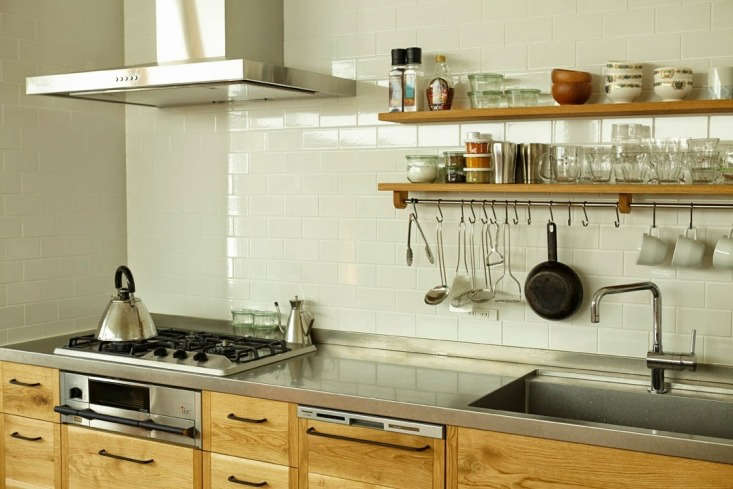 Above: The kitchen has stainless steel counters—made by hand with a vibration finish that gives it a matte, rather than shiny, look—and a backsplash of white subway tile. The millwork conceals a small-scale dishwasher. Note the slim drawer beneath the stovetop: It’s a fish grill, common in Japan in place of a full oven.
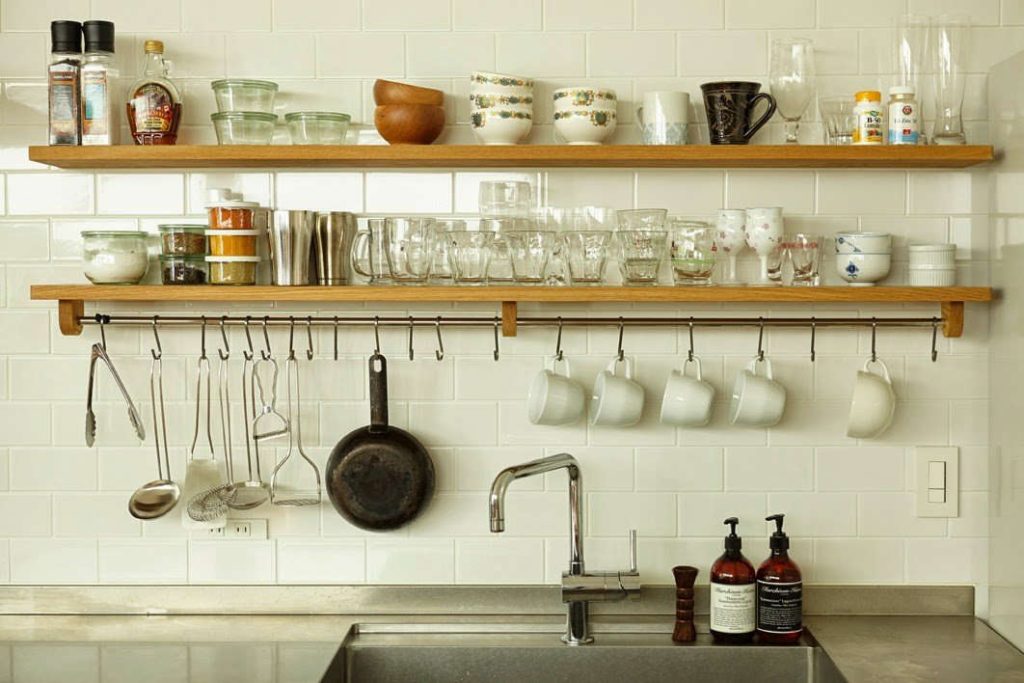
 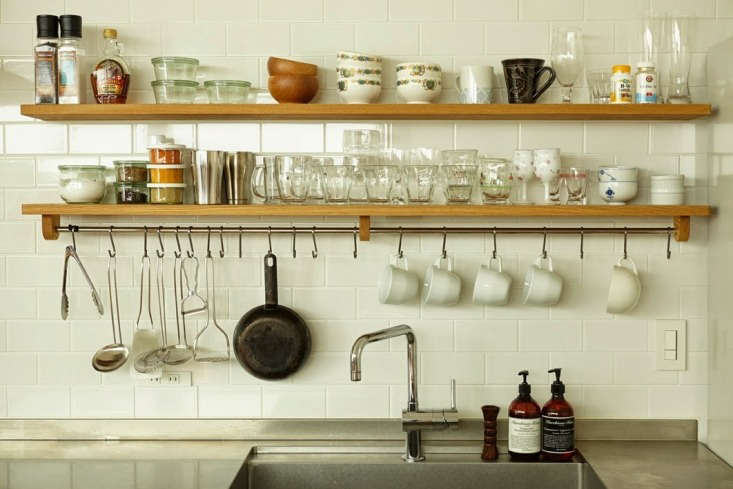 Above: Shelves and a built-in tool rail hang above the stainless steel sink. S-hooks corral tools and mugs.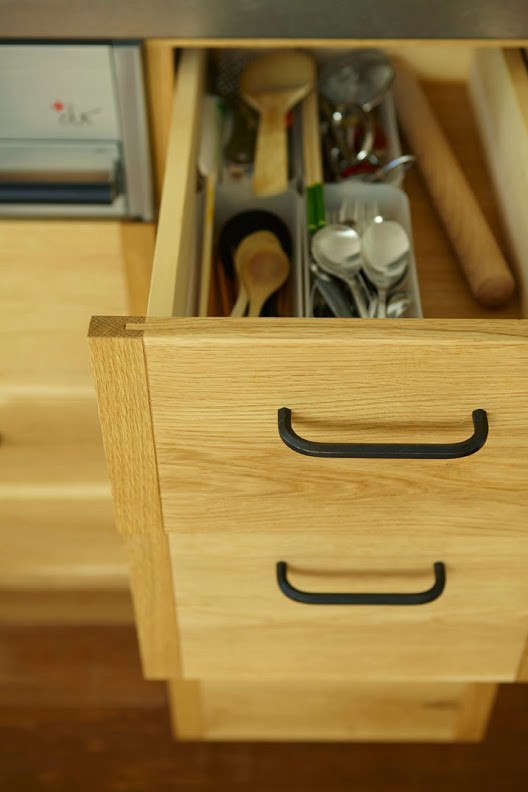
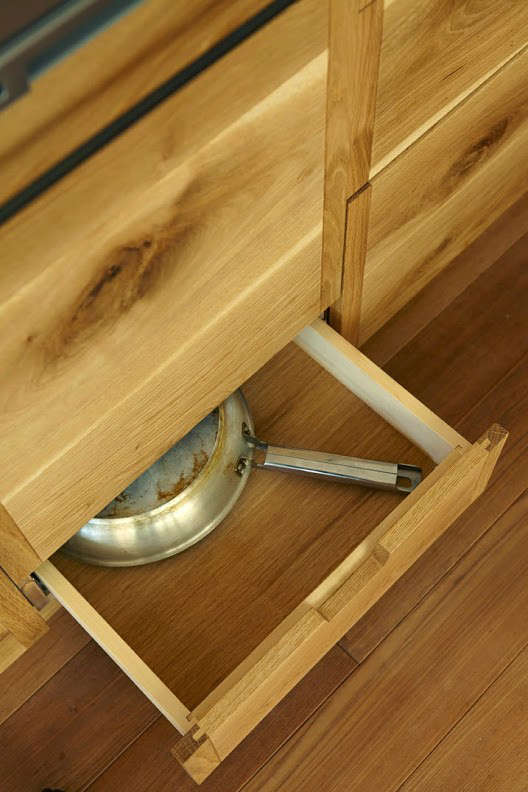
Above: The kitchen showcases Masayuki’s masterful knowledge of joinery. The drawers were handmade at the KitoBito workshop and hold trays of flatware.
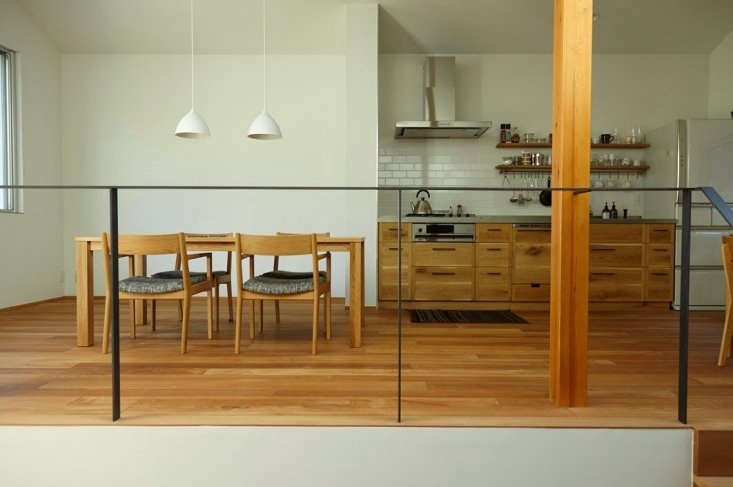 Above: The kitchen and the adjacent dining area in a neutral palette. The Joinery Kitchen design is customizable (the stainless steel counters can be replaced with marble, for example); note that fixtures and appliances—such as the stove, faucet, dishwasher, and range hood—are not included. Contact KitoBito for more information.
Getting ready to design a kitchen? Start with our Remodeling 101 posts. For more international custom kitchens, see:
N.B.: This story originally ran on February 8, 2018 and has been updated.
(Visited 7,513 times, 7 visits today)















The attention to detail in Kobe’s latest kitchen sounds incredible—it’s amazing how a space like that can feel so welcoming.
Thanks! The cozy details and thoughtful layout make it feel lived-in and welcoming—every element ties together perfectly.
Oh, that kitchen in Kobe? The craftsmanship here is just… wow. Love how the workshop blended traditional joinery with sleek modern lines—it feels like a space built to actually *live in*, not just look pretty.
Totally agree—the warmth of handcrafted details meets modern simplicity, creating a space that feels as welcoming as it.
The kitchen’s elegance lies in its balance—tradition meets modern tech seamlessly. It’s clear the workshop cared more about function than flash, like those adjustable shelving spots for smaller dishes.
Love how this space blends classic vibes with smart upgrades—like those shelves that work as hard as.
This kitchen in Kobe is such a joy—every detail feels intentional yet lived-in. The warm wood tones and soft curves make even the most modern appliances fit right in.
Love how the warm wood and gentle curves create a welcoming vibe!
Kobe’s latest kitchen gem is a masterclass in quiet luxury—clean lines that hug the space but leave room to breathe, and every joint looks like it was made to last.
The serene sophistication of natural stone and warm wood tones, paired with clean lines and durable.
The balance of sleek modernity and traditional craftsmanship here reminds me how thoughtful design can transform everyday meals into rituals.
Love how modern meets old—like marble countertops with sleek faucets.