
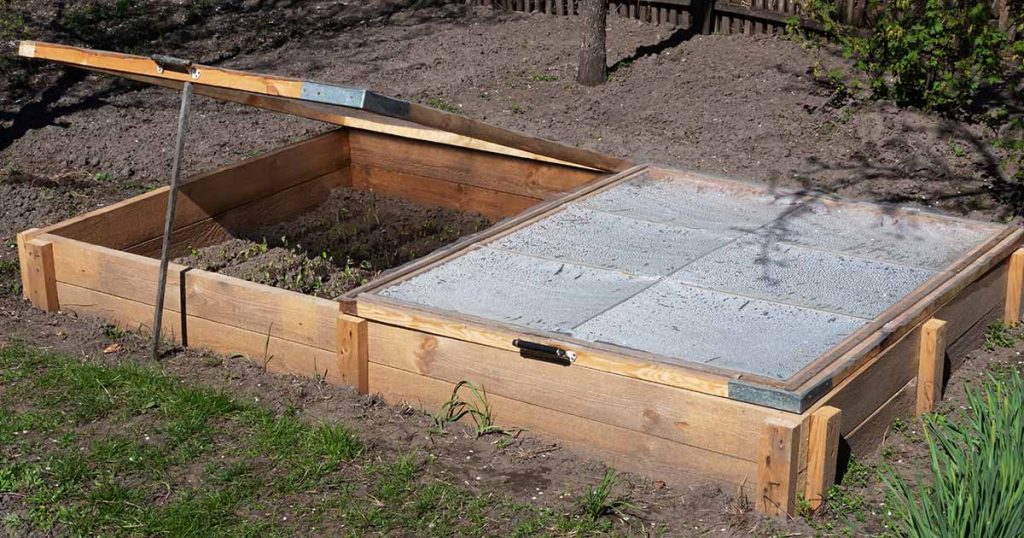
Eliot Coleman, a pioneer of four-season gardening, wrote that “gardeners should dedicate a monument to the cold frame.” I agree.
If you can’t wait to start growing in the spring but the weather has other ideas, a cold frame is your secret weapon.
In my area, the typical spring planting date is in the last week of April. But with this handy tool, I’m starting seeds in early March.
Actually, there are some cold-weather-loving crops I grow year round, but I can start just about anything a few weeks early in the spring – even tomatoes and peppers!
A cold frame is indispensable for hardening off plants that you’ve started indoors and for protecting tender crops during a surprise storm.
You can use yours to propagate seeds or to grow plants that can tolerate cooler temperatures.
And using a cold frame in the spring differs from using one in the fall or winter. It’s really the best time of year for using this indispensable “magic box.”
If you’re thinking of putting this tool to work in your garden, here’s what we’re going to talk about to help you make the most of it:
Can’t wait to start? I get it.
After a long winter, there’s nothing more exciting for a garden lover than starting up those seeds, which bring the promise of warmer weather and abundant harvests.
So let’s go!
How Do Cold Frames Work?
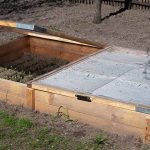
If you’ve never seen a cold frame before, it’s basically a box with an open bottom and a clear material over the top.
It is a bit like a tiny greenhouse, creating a warmer microclimate inside than the general surrounding climate.
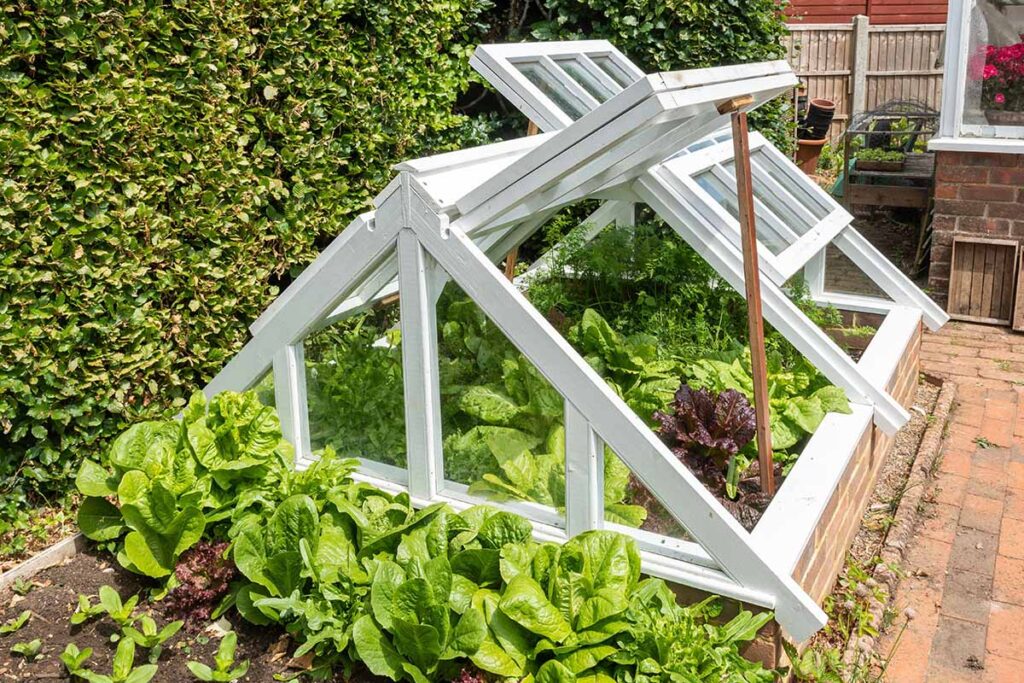 Photo via Alamy.
A well-situated and insulated structure can raise the temperature by as much as 20°F compared to the outside temperature.
Most raise the temperature between 7 and 10°F – which is still a significant amount!
This structure also protects plants from the damaging effects of drying and rehydrating repeatedly as the spring weather shifts between wet, dry, hot, and cold.
It protects plants from frost and chilling winds.
Some gardeners use their frame to create a hotbed, which raises temperatures even higher. We have a guide to creating a hotbed if that interests you.
Finding the Perfect Location
It’s all about location when it comes to making a cold frame effective.
The perfect spot would be on a slight hill that faces south without any obstructions to the east or west, and a building or windbreak to the north.
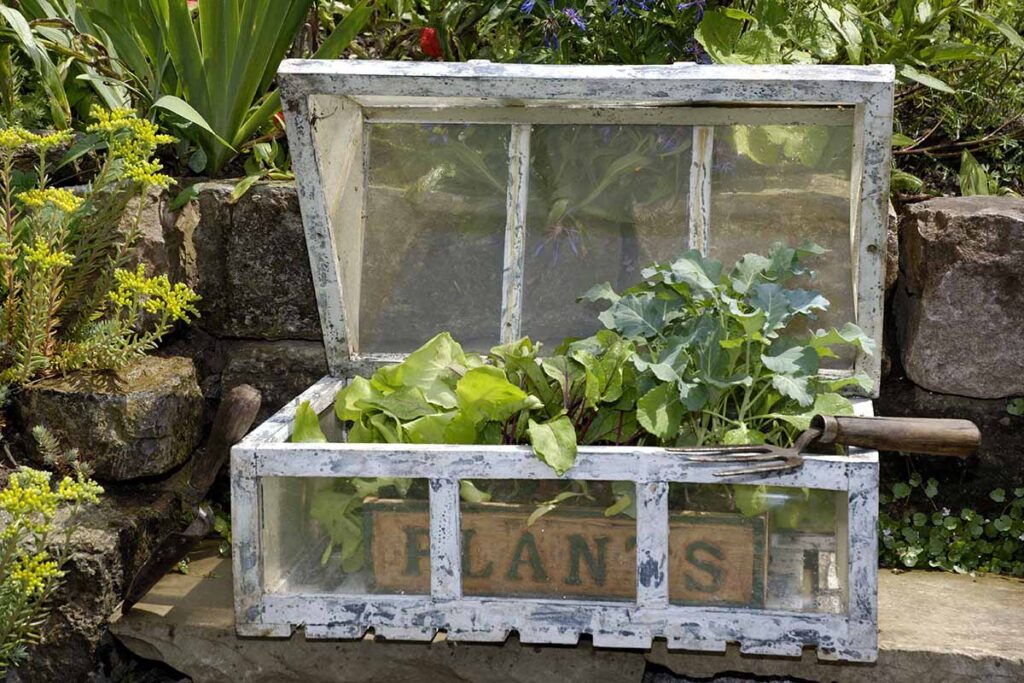 Photo via Alamy.
Heap soil, straw, or some other form of insulation on the north, east, and west sides. Or, even better, situate the structure next to a brick wall.
This can increase the temperature inside even more dramatically. The heat from the sun that’s absorbed by the bricks will be released slowly over the course of the day.
Once you’ve situated your cold frame, it’s time to decide how to use it.
There are multiple ways, including growing plants that love the cold, protecting frost-tender plants, and starting seeds.
Growing Cold-Loving Plants
Any species that you grow in the spring can be started a bit earlier in a cold frame.
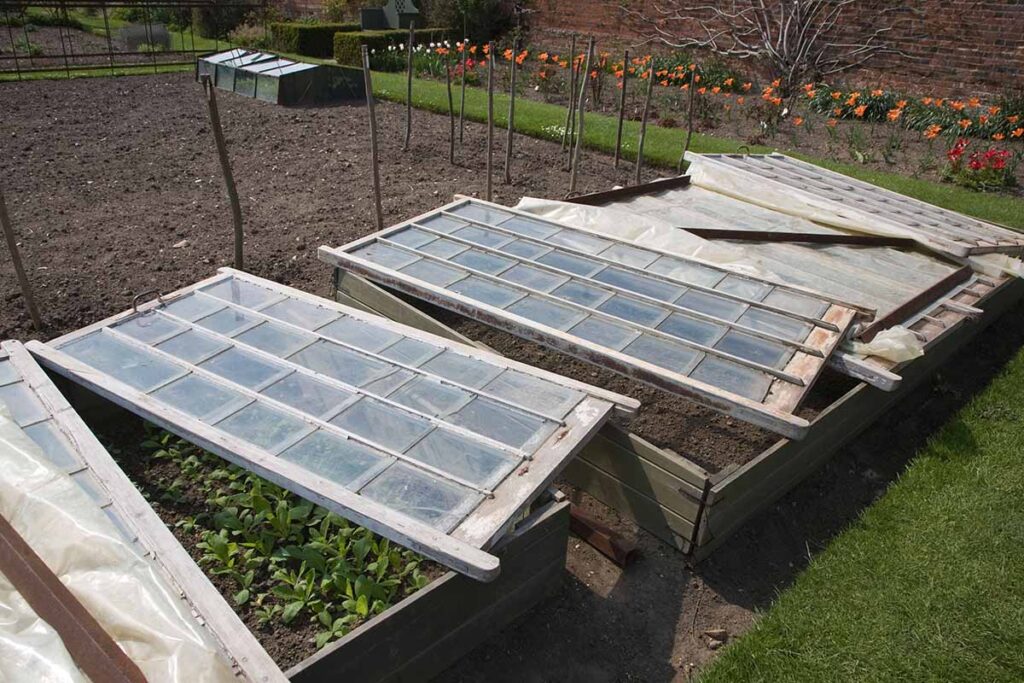 Photo via Alamy.
Try plants in the Apiaceae family, which includes carrots, celery, chervil, parsley, parsnips, and skirret.
All those lovely Asteraceae plants like chicory, endive, dandelions, lettuce, radicchio, and salsify are good candidates, too.
Of course, the Brassicaceae family, which includes arugula, broccoli, cabbage, kale, kohlrabi, mizuna, radishes, and tatsoi, are classic cool-weather options.
Various cold-tolerant plants from other families can also work nicely.
Don’t forget about beets, spinach, Swiss chard, peas, leeks, strawberries, green onions, sorrel, claytonia, purslane, and greens like mache as well.











Quick thought — Such a warm note about “How to Use Cold Frames in Spring” — lovely. Love this! ✨