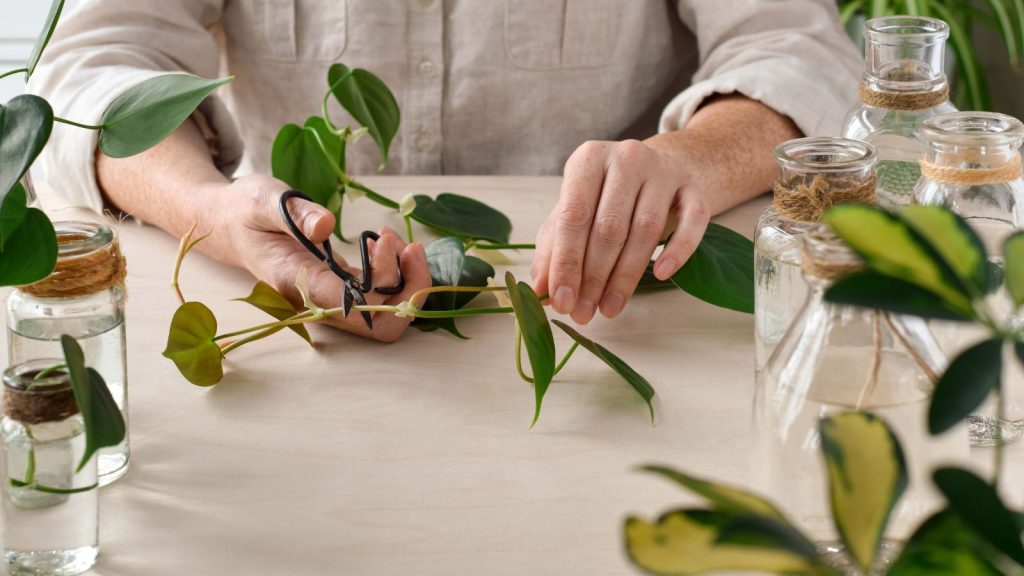
Propagate philodendron plants — a quick note to anchor this piece for readers.
Propagate philodendron plants: Quick notes
Philodendrons are probably my favorite group of houseplants. Not just because there are so many varieties to choose from, or because they’re all relatively easy to care for. It’s actually because once you have one, you can grow tens or hundreds more, with very little effort.
If you’ve never propagated a houseplant before, a philodendron is one of the best places to start. They’re incredibly easy to propagate from cuttings, no matter which type you have. As long as the plant you’re starting with is healthy and large enough, even beginners won’t struggle to propagate philodendron.
The approach below works across the wide range of philodendron types, from trailing varieties to upright growers. The anatomy varies slightly between species, but the underlying principle is the same. Roots develop from nodes, so as long as your cutting includes one, you have what you need.
Start with a Healthy Plant
Healthy philodendrons have the best chance of rooting.
A cutting can only be as healthy as the plant it came from. Starting with a strong, actively growing parent plant gives your cutting the best chance of rooting quickly and establishing well.
To propagate philodendron, look for stems with firm, vibrant foliage and no signs of disease, pest damage, or stress. Avoid taking cuttings from yellowing stems, sections with mushy or discolored tissue, or plants that have been struggling with overwatering or root rot. A cutting taken from a compromised plant carries those problems with it and is far less likely to root successfully.
It’s best to propagate during the active growing season in spring or summer. Cuttings taken during this period root faster and establish more vigorously than those taken in fall or winter. The parent plant also recovers more quickly from the pruning when it’s actively growing.
Identify the Nodes
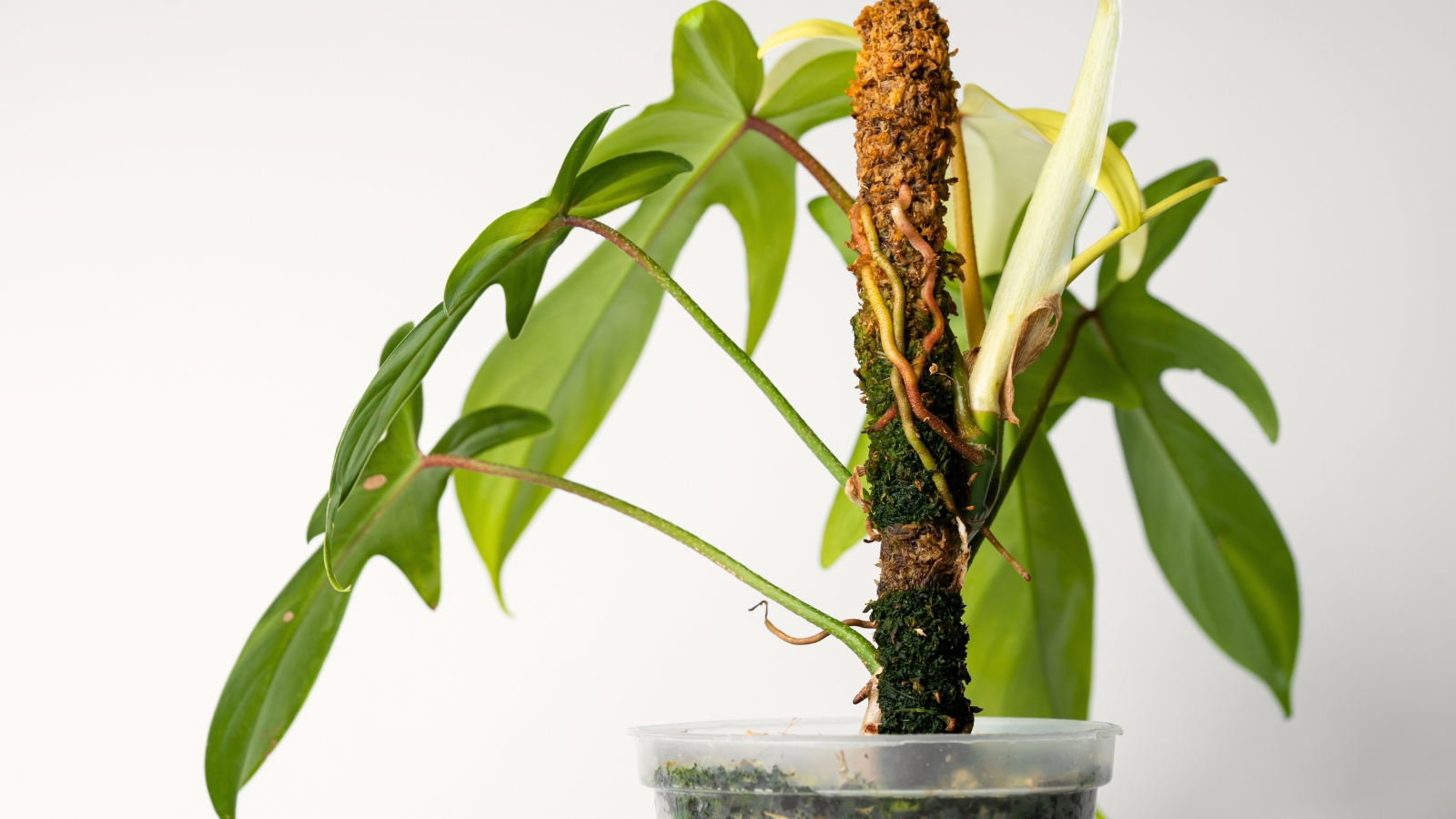 Look for points where leaf meets stem.
Nodes are the most important part of philodendron propagation. Without a node, your cutting won’t produce roots, no matter how long it sits in water.
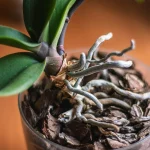
A node is the point on a stem where leaves, aerial roots, or branches emerge. On most philodendrons, nodes appear as slightly thickened or raised sections along the stem, often with a visible bump or ring. Aerial roots (if present) grow directly from nodes, which makes them easy to spot.
Every cutting you take needs at least one node, ideally two. The node is where the new root system will develop, so it’s the non-negotiable element. A cutting with a beautiful leaf but no node is just a leaf in water. It may stay green for a while, but it won’t grow into a new plant.
Take a Cutting
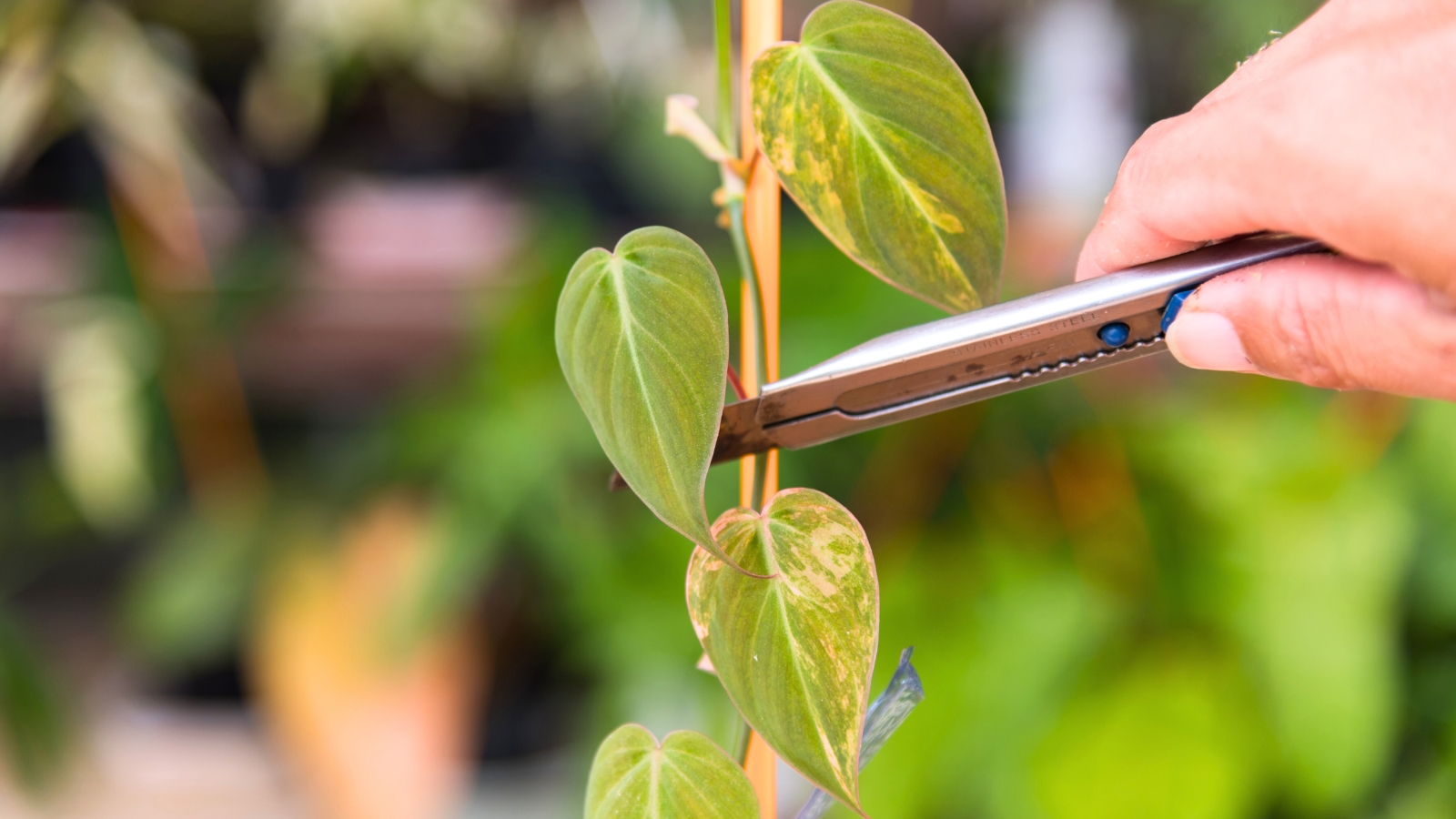 Clean your tools before making any cuts.
Once you’ve identified your nodes, use a clean, sharp blade to take the cutting. A dirty or dull blade can crush the stem tissue and introduce bacteria that cause rot before the cutting has a chance to root. It’s best to wipe your scissors or knife with rubbing alcohol before you start.
Cut the stem about half an inch below a node, making a clean, straight cut. Each cutting should include one or two nodes and at least one or two healthy leaves. Leaves provide the energy the cutting needs to produce roots through photosynthesis, so don’t remove all of them.
How long the cutting should be depends on the growth habit of your particular philodendron. On some species, a cutting with a couple of nodes might be just a few inches long. On others, you may end up with a longer section. The length matters less than making sure you have nodes, healthy leaves, and a clean cut.
You can take multiple cuttings from a single stem if it’s long enough, as long as each section has at least one node. The parent plant will produce new growth from the remaining nodes on the stem, so don’t worry about cutting it back. In most cases, pruning actually encourages the plant to branch and fill out.
Remove Bottom Leaves
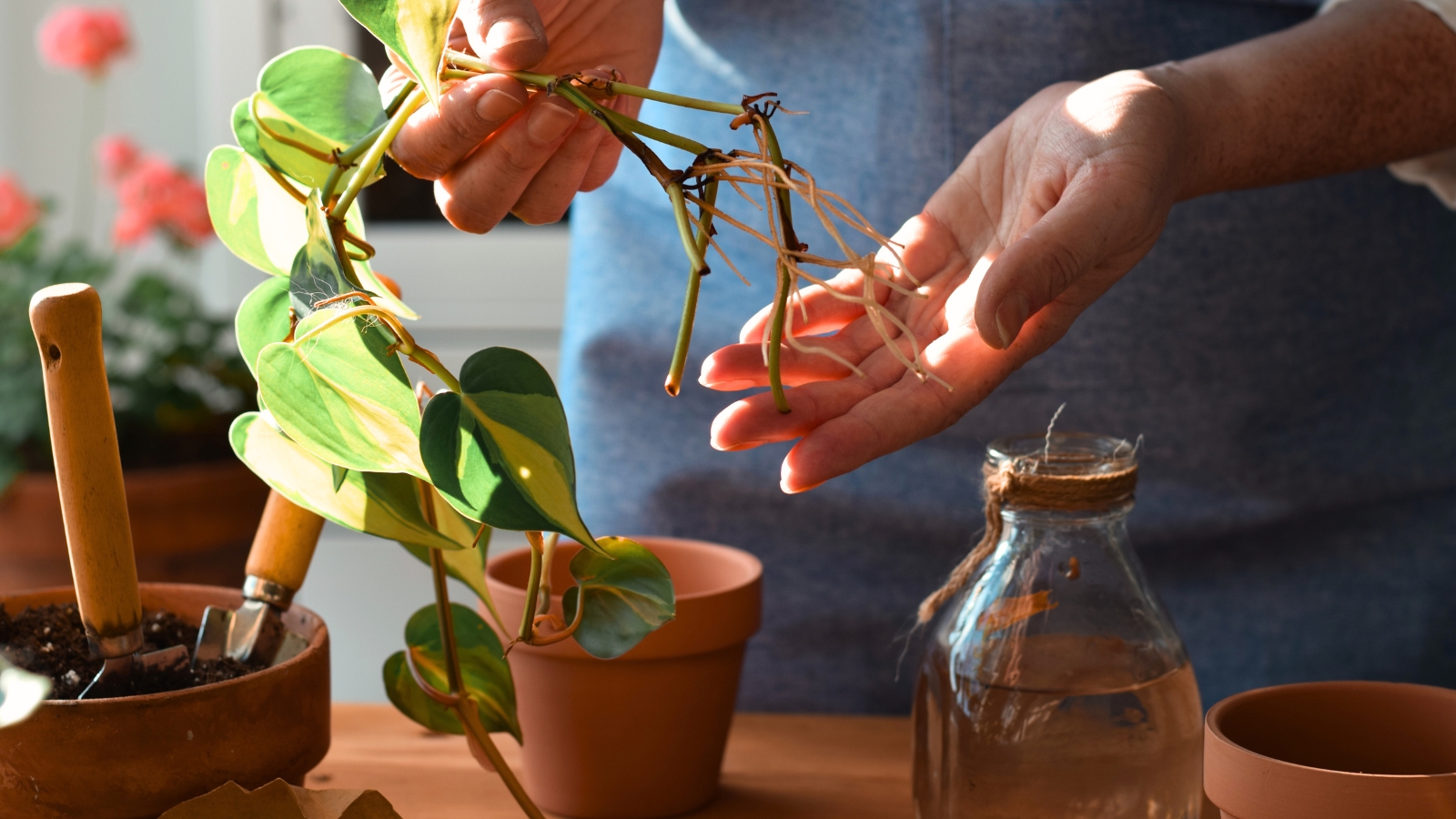 Expose the nodes by removing the bottom leaves.
Any leaves that would sit below the waterline during rooting need to be removed. Submerged leaves rot quickly, clouding the water and creating conditions that encourage bacterial growth around the cutting.
Gently remove the lowest leaves by peeling them back from the stem or cutting them close to the base. Leave the upper leaves intact to keep the cutting photosynthesizing. A cutting with one or two leaves above the waterline is ideal to propagate philodendron. If your cutting has a lot of foliage, removing an extra leaf or two reduces the amount of moisture the cutting loses through transpiration while it’s trying to root.
Root in Water
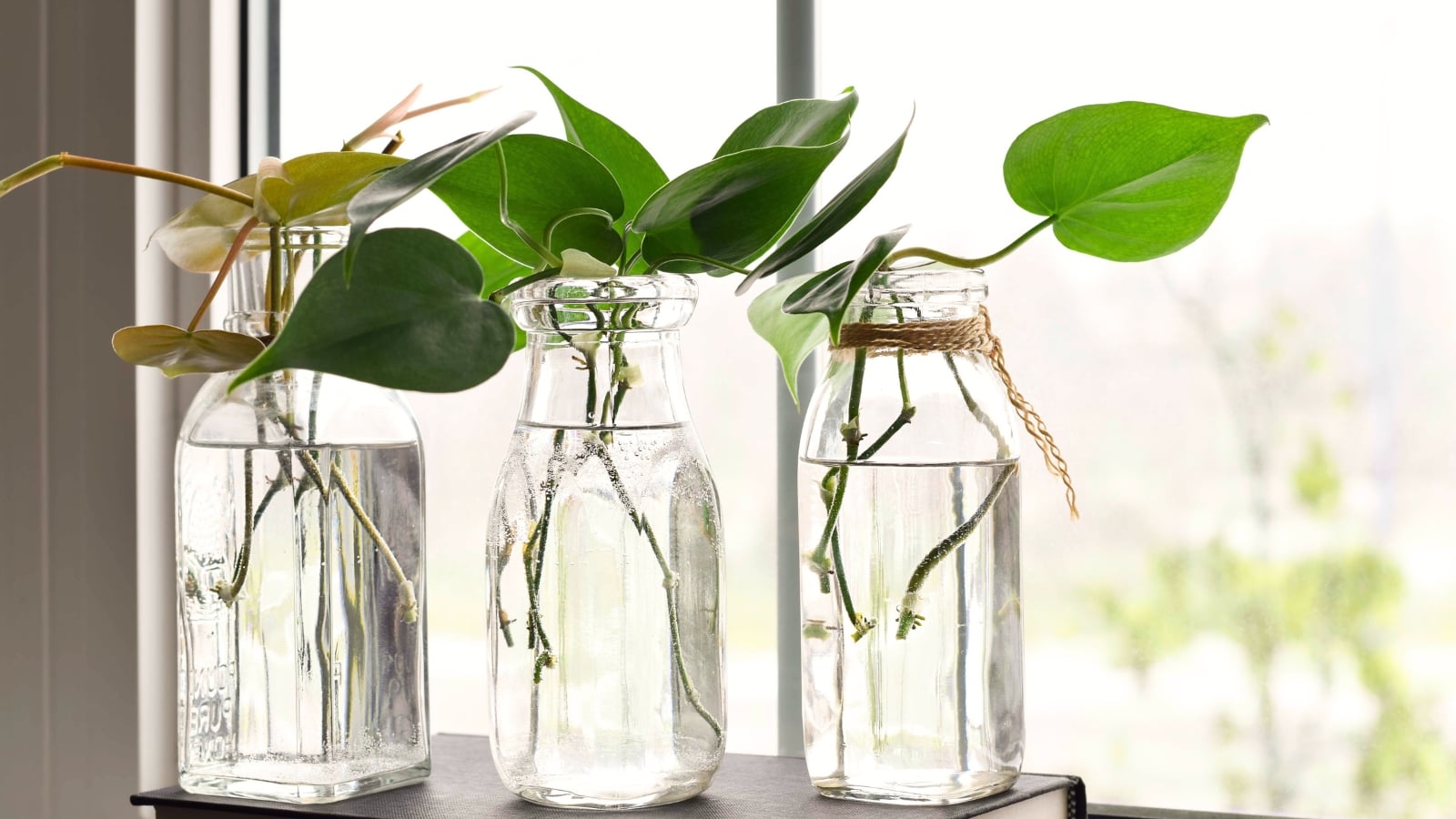 Water is the easiest way to root cuttings.
Place the cutting in a clean glass or jar filled with room-temperature water, making sure at least one node is submerged. The leaves should remain above the waterline. A clear container lets you monitor root development without disturbing the cutting.
Set the jar in a spot with bright, indirect light. Avoid direct sunlight, which can encourage algae growth. Warm, stable temperatures between 65°F and 80°F promote the fastest root development.
Change the water every few days, or whenever it starts to look cloudy. Fresh water provides oxygen to the developing roots and prevents bacterial buildup that can cause the cutting to rot. If you notice any sliminess on the stem or a foul smell, rinse the cutting under running water, trim away any soft tissue, and place it in a fresh jar.
Roots typically begin to appear within one to three weeks, depending on the species, the time of year, and the conditions. You’ll see small white or light-colored roots emerging from the node. Let them grow to at least one to two inches long before transplanting. Longer roots establish more easily in soil, so there’s no rush to move the cutting as soon as the first root appears.
Transplant
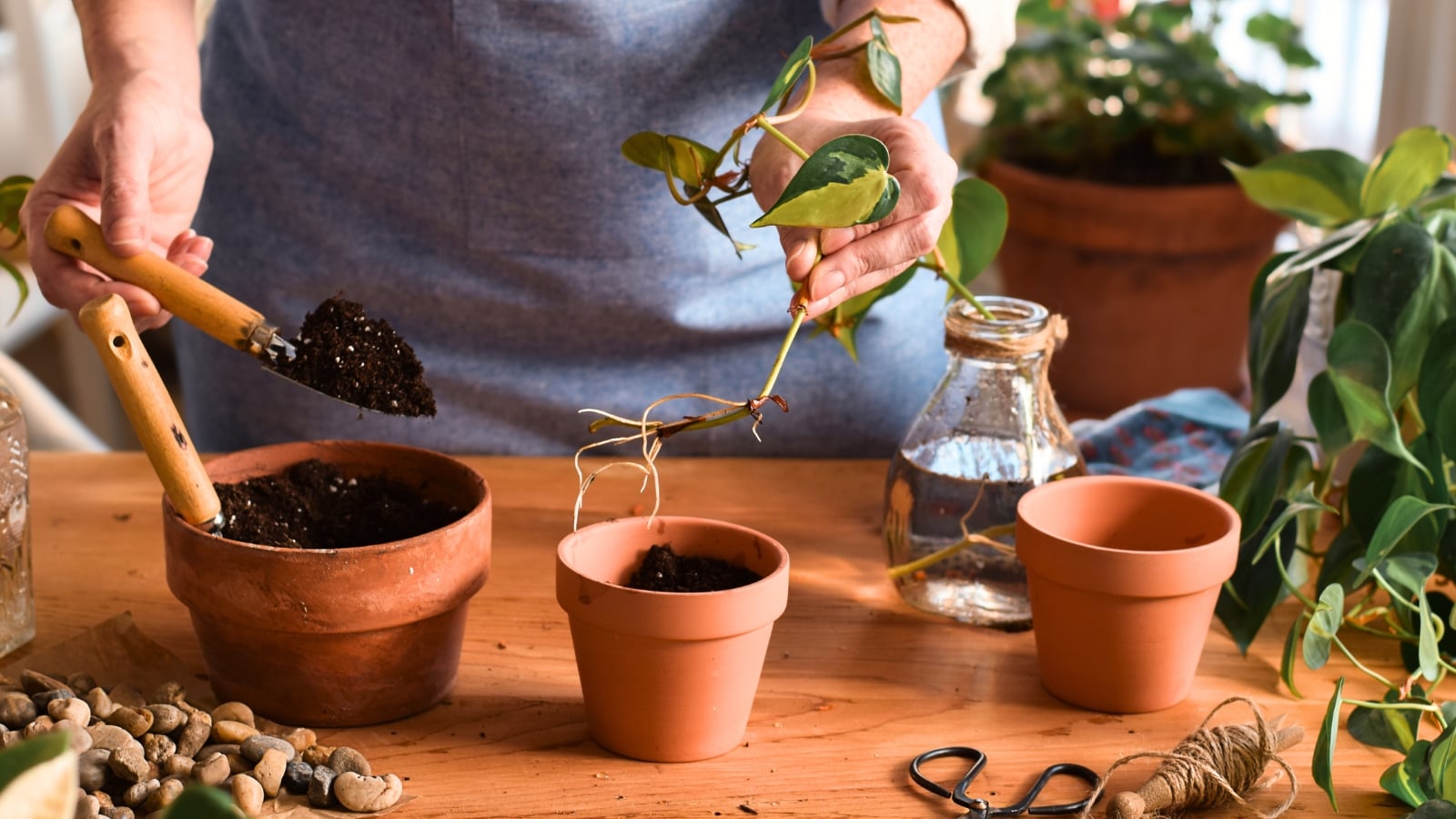 Don’t wait too long to transplant into soil.
Once the water roots are a couple of inches long, the cutting is ready to move into soil. Don’t wait too long, though. Roots that develop in water are structurally different from soil roots, and the longer they grow in water, the more adjustment the plant needs when it transitions to soil.
Choose a small pot with drainage holes. Fill the pot with a well-draining aroid potting mix, or a blend of standard potting soil with added perlite for extra drainage. Make a hole in the center, gently place the cutting so the roots are covered and the lowest node is below the soil surface, and firm the soil lightly around the base. Water thoroughly and let the excess drain.
For the first few weeks after transplanting, keep the soil moist but not soggy. The cutting needs to transition from absorbing water directly through its roots to pulling moisture from soil, and consistent moisture helps it make that shift without stress. Once you see new leaf growth, the root system has established and you can begin watering as you would a mature plant.
Place the newly potted cutting in bright, indirect light and avoid moving it around during the first few weeks. Stability helps the plant settle in. With the right conditions, new growth usually appears within a month or so after you propagate philodendron, and from there, you’ll have a fully independent plant to keep or share.
Propagate philodendron plants comes up here to connect ideas for clarity.
We reference Propagate philodendron plants briefly to keep the thread coherent.