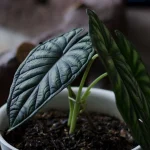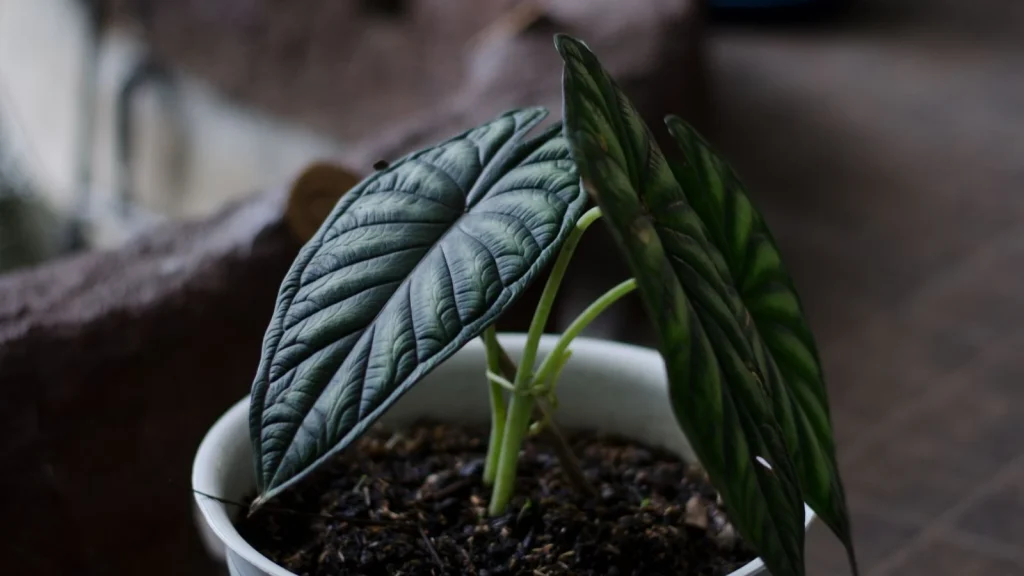
‘Dragon Scale’ alocasia is one of those houseplants you can’t help but stop and stare at. The deeply veined, textured leaves have an almost metallic quality to them, somewhere between jade green and silver, depending on the light. It’s easy to see how it got its common name.
Despite its exotic appearance, ‘Dragon Scale’ is actually one of the more manageable alocasia varieties. It has specific needs, as most tropical houseplants do, but as long as you understand what it wants and avoid a few common pitfalls, it’s not the high-maintenance diva that some make it out to be.
That said, this isn’t a set-it-and-forget-it plant. If you want a houseplant you can ignore for weeks at a time, a pothos or snake plant is a better fit. ‘Dragon Scale’ rewards attention and consistency, and in return, you get foliage that genuinely looks unlike anything else in your collection.
Alocasia baginda ‘Dragon Scale’
Exposure
Bright, indirect light
Water Requirements
Moderate
Pests & Diseases
Root rot, spider mites, scale insects, fungal leaf spot
Soil Type
Rich, well-draining (aroid mix)
What is ‘Dragon Scale’ Alocasia?
‘Dragon Scale’ alocasia belongs to the Araceae family. In the wild, the original species grows as an understory plant in warm, humid conditions beneath the forest canopy, which tells you a lot about what it needs indoors.
Unlike some of the larger elephant ear types that can take over a room, ‘Dragon Scale’ stays relatively compact. This makes it well-suited to shelves, desks, and even terrariums if you have one big enough.
One thing worth knowing upfront is that all parts of this plant contain calcium oxalate crystals, which are toxic if ingested. Keep it out of reach of children and pets.
Characteristics
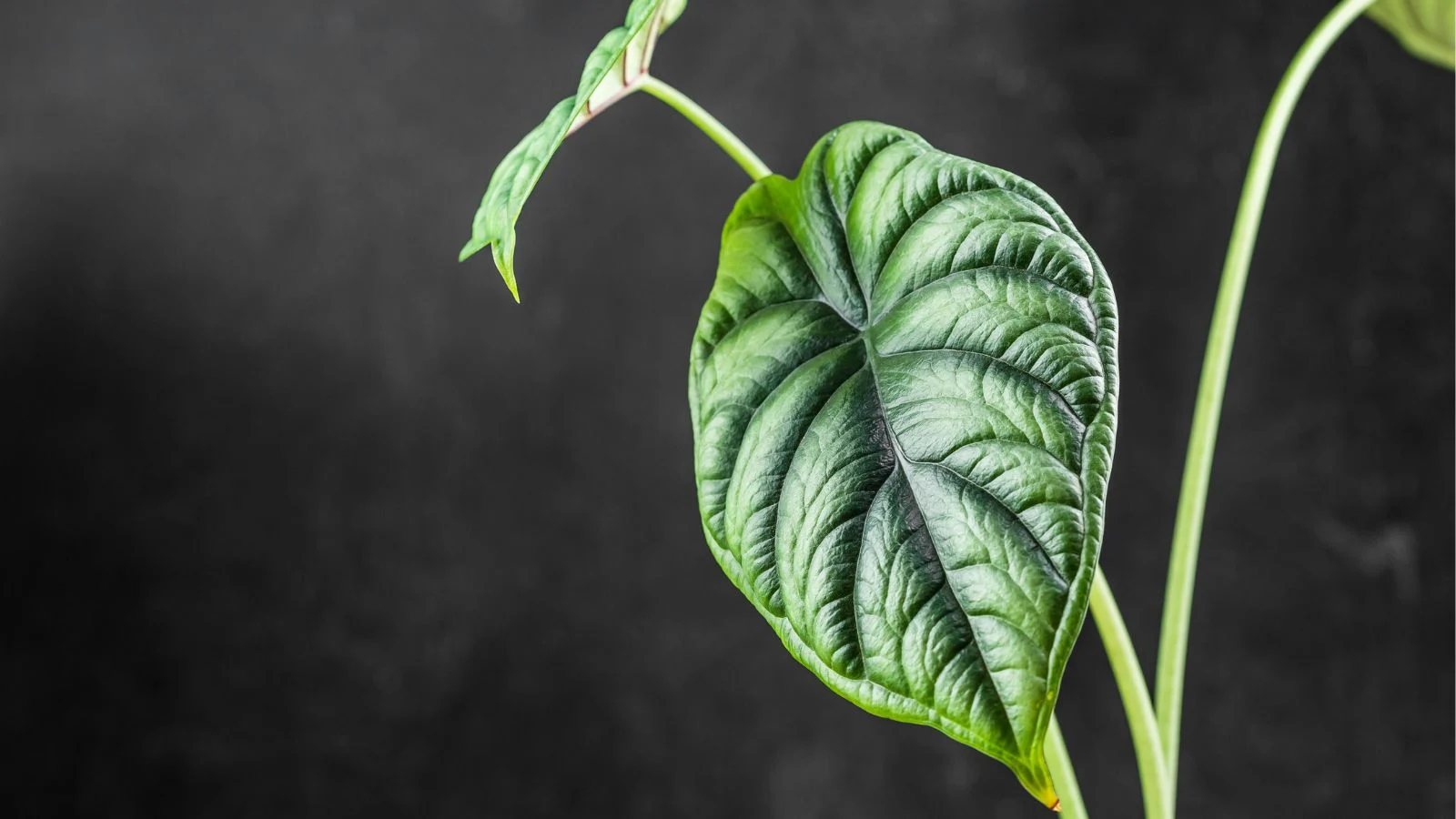 The leaves are thick and textured.
The leaves are the main attraction. They’re thick and rigid with a leathery texture, covered in deep veins that create a raised, scale-like pattern across the surface. The upper side is a silvery jade green that darkens toward the center.
New leaves emerge lighter in color and deepen as they mature, so you’ll often see a range of tones on a single plant. Mature plants can occasionally produce small spathe-like flowers in spring or summer, but these are not as common and not as pretty as the leaves. Most growers remove them to redirect the plant’s energy into leaf production.
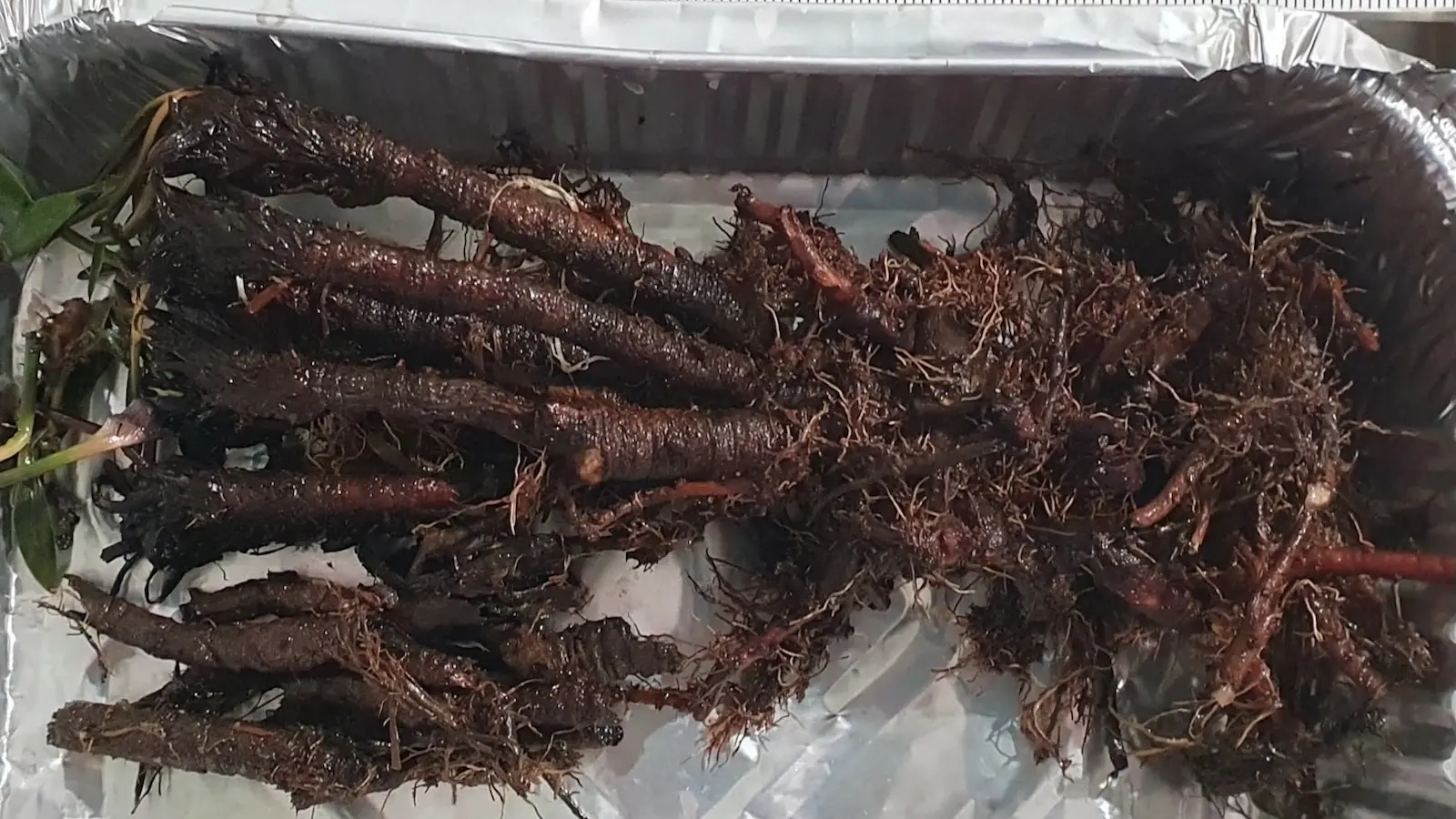
‘Dragon Scale’ grows from underground rhizomes and tubers that store water and nutrients. This is important to understand because it means the plant can go dormant in unfavorable conditions and regrow from these reserves, even if all the above-ground foliage dies back. Don’t throw away a bare plant. More on that later.
Planting
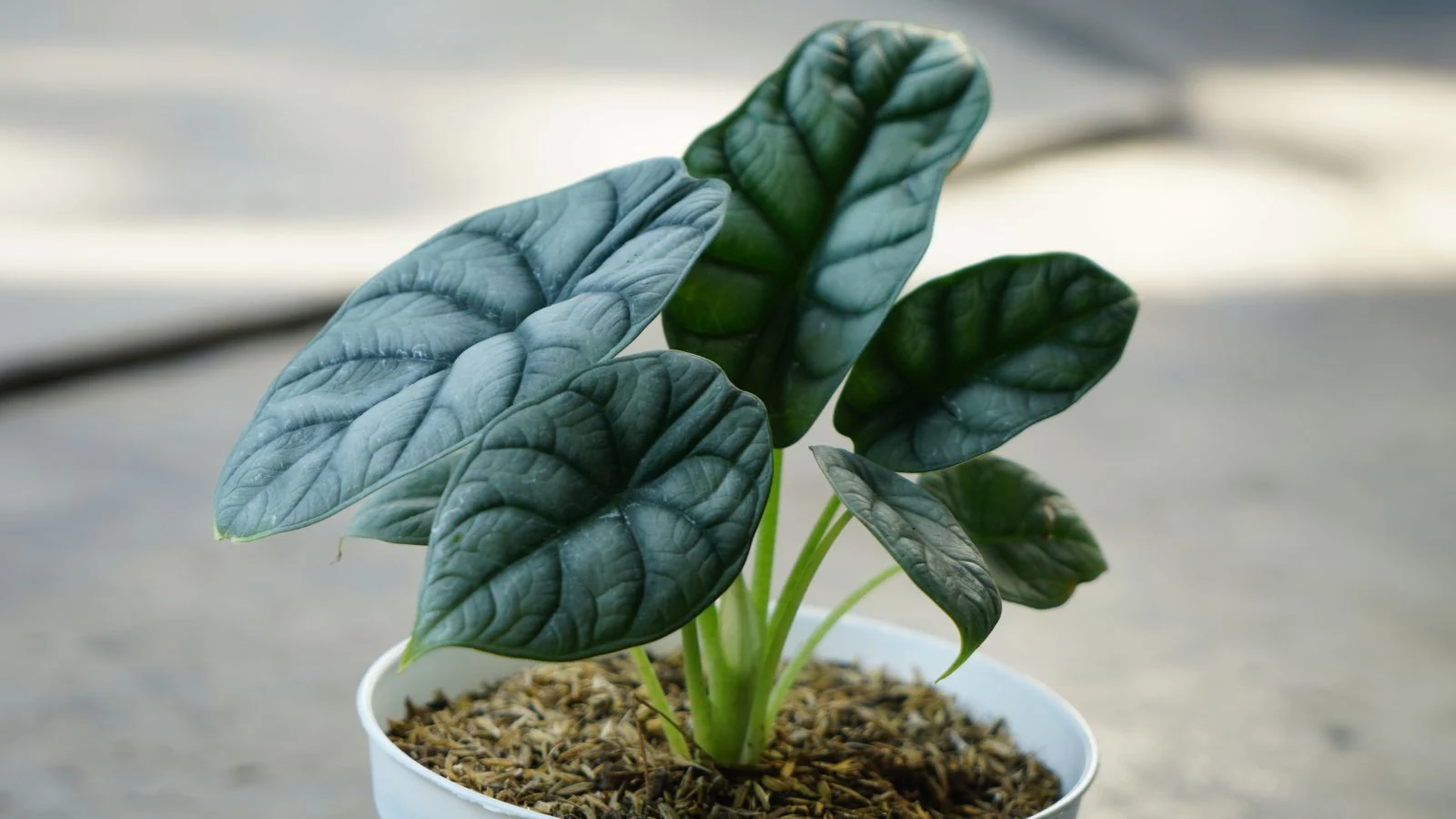 Choose a chunky, well-draining soil mix.
Choose a pot only slightly larger than the root ball. ‘Dragon Scale’ alocasia actually prefers snug conditions, and an oversized pot holds more moisture than the roots can use, increasing the risk of rot. A pot one to two inches wider than the current root system is ideal.
Drainage holes are essential. This plant cannot sit in standing water without developing root problems, so make sure excess moisture has somewhere to go. If you want to use a decorative pot without drainage, keep the plant in a plastic nursery pot inside it and remove it for watering.
When planting into a new container, position the rhizome so the base of the stems sits just at or slightly above the soil line. Burying the stems too deeply encourages rot at the base, especially in humid conditions. Firm the soil gently around the roots without compacting it.
Spring is the best time to plant or repot, as the plant is entering its active growing period and can recover from the disturbance more quickly. Avoid repotting in fall or winter when growth slows. ‘Dragon Scale’ can react to repotting by dropping leaves or going dormant temporarily, so don’t panic if it looks rough for a few weeks afterward.
How to Grow
Getting the growing conditions right is the most important part of ‘Dragon Scale’ alocasia care. As a tropical understory plant, it needs a specific balance of light, moisture, and warmth to thrive indoors.
None of these requirements are difficult to meet on their own, but getting all of them right at the same time is what separates healthy plants from struggling ones.
Light
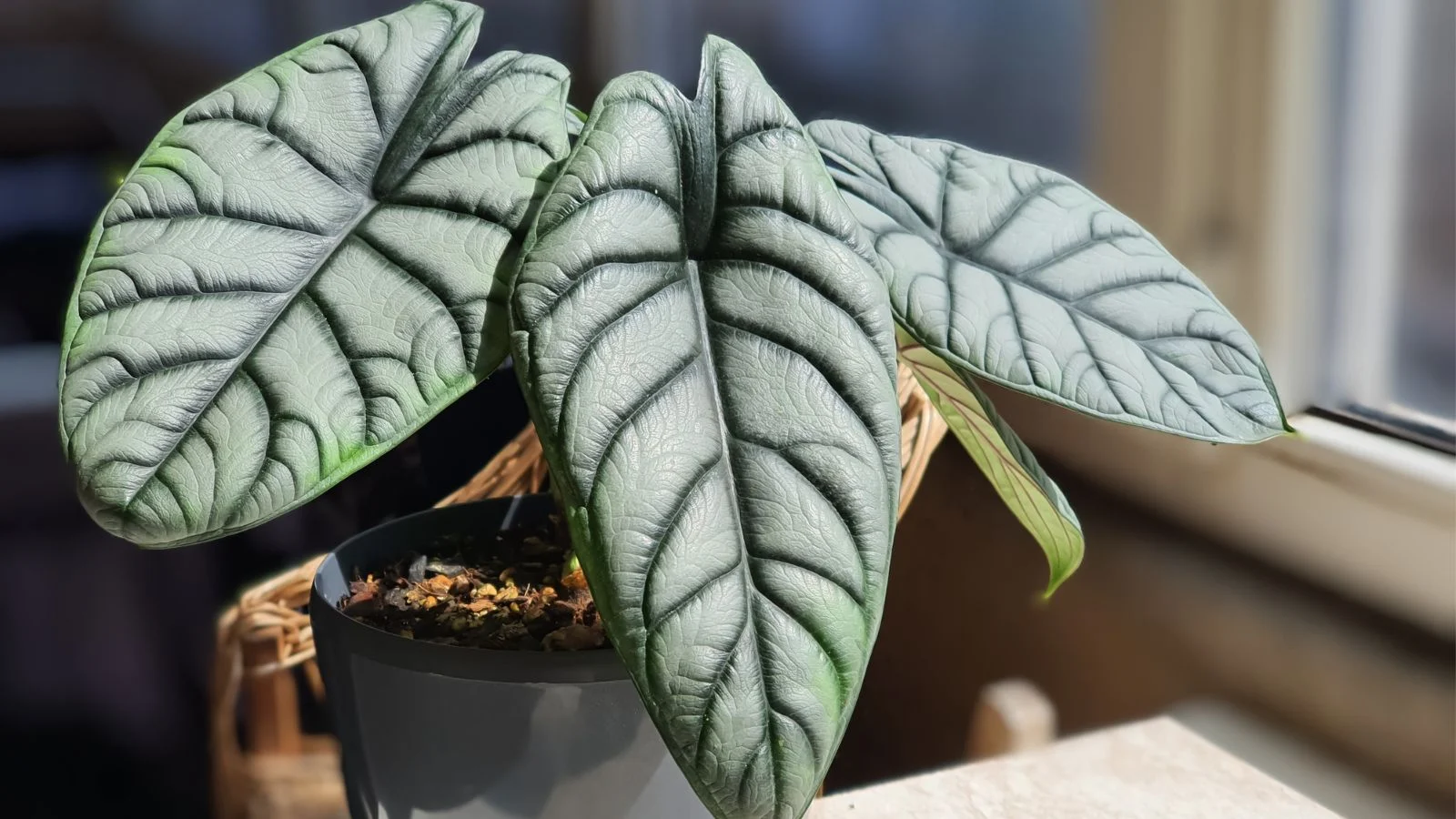 Morning sun is best to prevent leaf scorch.
Bright, indirect light is best for ‘Dragon Scale’ alocasia. In its native habitat, it grows beneath a forest canopy where sunlight is filtered through layers of foliage above, so it’s adapted to consistent light without direct exposure.
Near an east-facing window works well in most homes. A south or west-facing window can also work if the plant is set back a few feet or if a sheer curtain diffuses the strongest rays. Direct afternoon sun will scorch the leaves, leaving brown, crispy patches that won’t recover.
Too little light is also a problem. In dim conditions, the plant produces smaller leaves, grows slowly, and can eventually trigger dormancy. If your ‘Dragon Scale’ hasn’t produced new growth in months during the growing season, insufficient light is one of the first things to consider.
Water
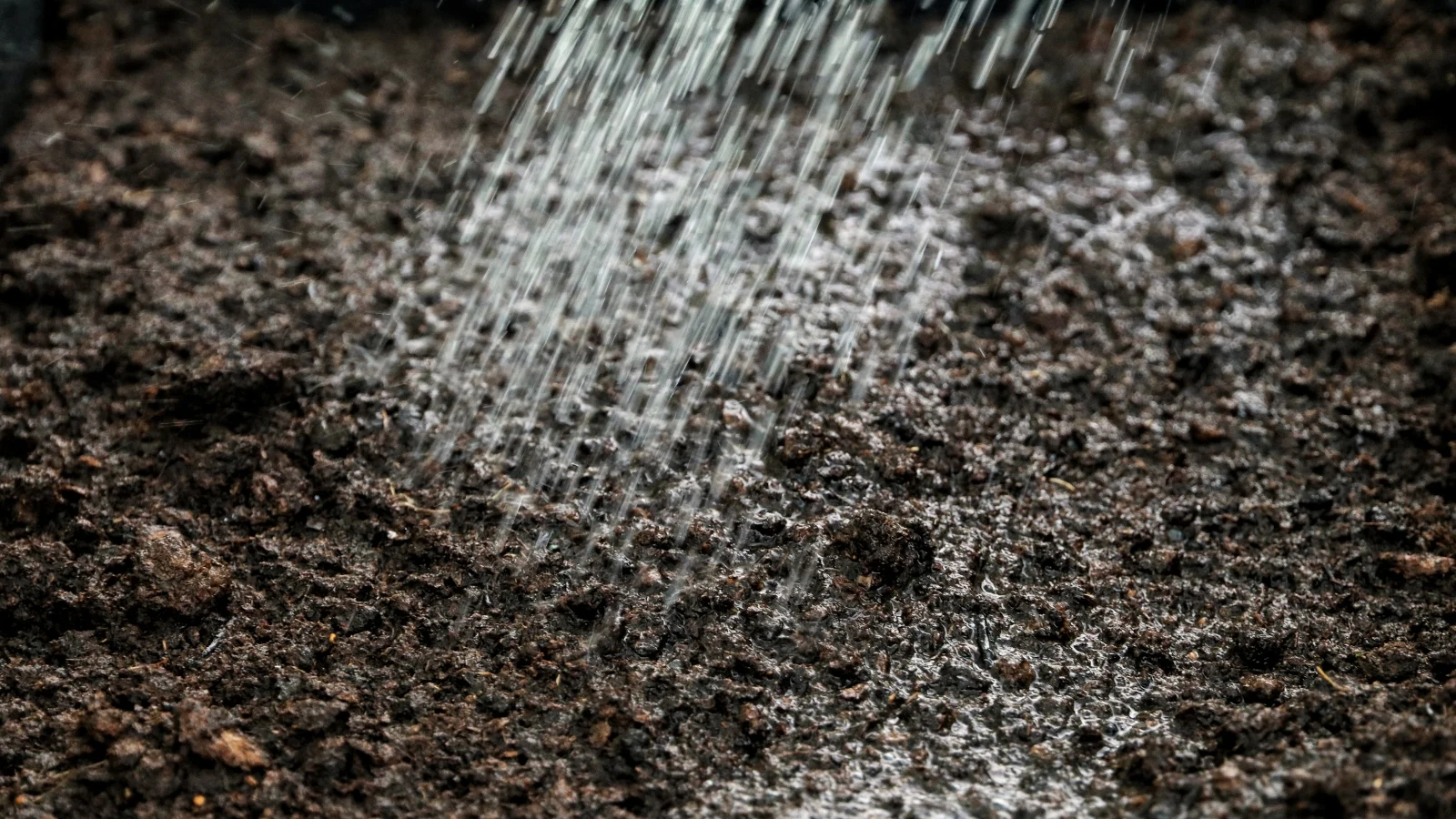 Don’t let the soil become soggy and waterlogged.
Watering is where most people run into trouble with ‘Dragon Scale’ alocasia. The goal is to keep the soil consistently lightly moist without ever letting it become waterlogged. That balance is narrower than it is for most houseplants, which is why this species has a reputation for being fussy.
Water when the top inch or two of soil feels dry. Push your finger into the soil to check rather than relying on the surface, which can look dry while the lower layers are still damp. When you water, do so thoroughly until water runs from the drainage holes, then let the excess drain completely.
Overwatering leads to root rot, which is the most common killer of these plants. If the soil stays wet for too long, the roots suffocate and begin to break down. Underwatering isn’t ideal either, as the roots can dry out and crisp up, but it’s generally easier to recover from than rot.
Reduce watering in fall and winter when the plant’s growth slows. The soil takes longer to dry in cooler, darker conditions, and continuing to water at the same frequency you used in summer is a reliable way to cause problems.
Soil
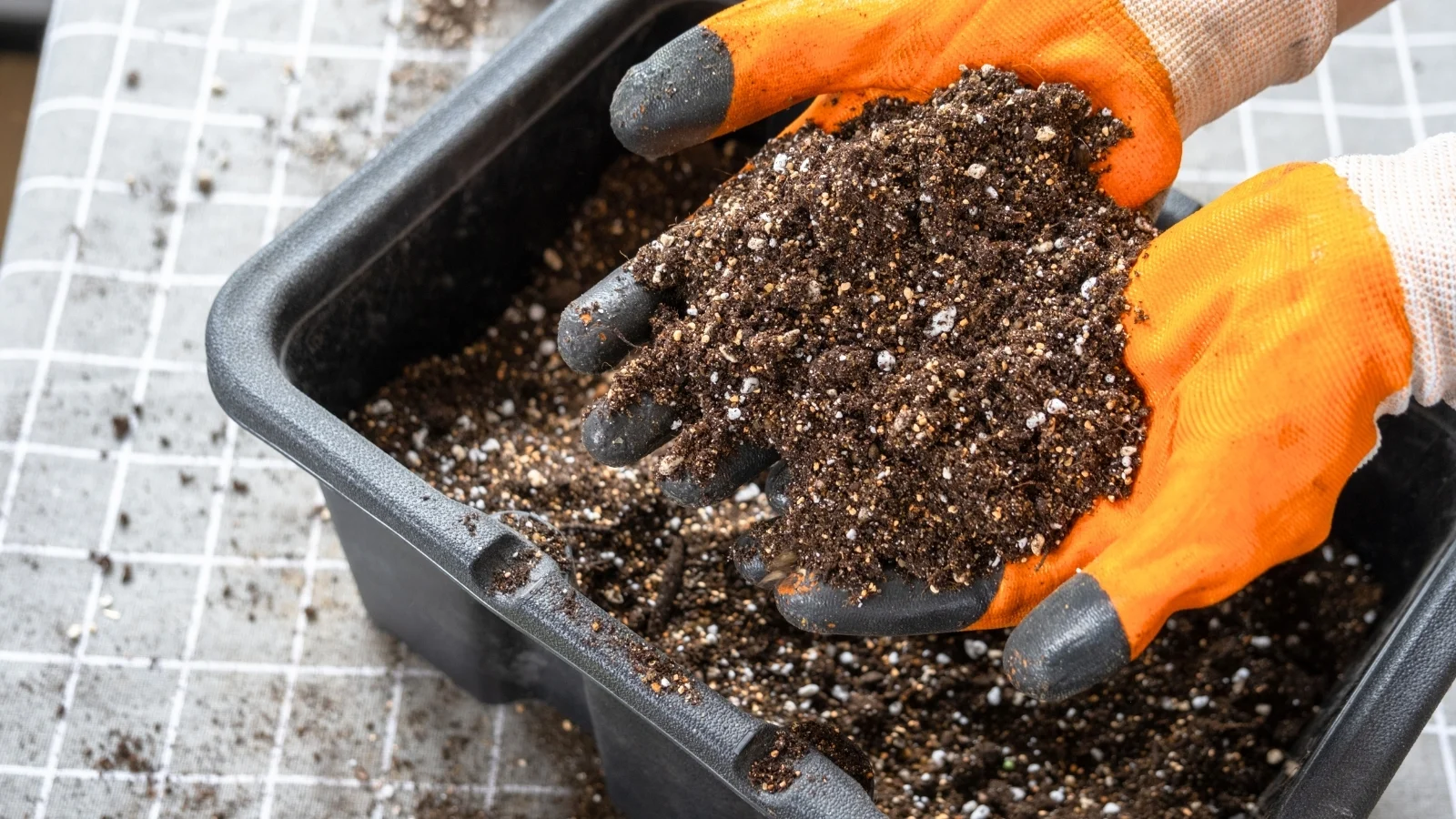 If you’re repotting, look for an aroid mix.
‘Dragon Scale’ alocasia needs a well-draining, airy potting mix that holds some moisture without staying soggy. Standard houseplant potting mix on its own is usually too dense and water-retentive for this plant.
A good mix combines peat moss or coconut coir for moisture retention with perlite and orchid bark for drainage and aeration. A roughly equal blend of these three components works well. The goal is a chunky, open texture that allows water to move through freely while keeping the roots lightly hydrated between waterings.
If you don’t want to mix your own, look for a premixed aroid potting mix, which is designed for plants with similar needs. These typically contain the right combination of organic matter and drainage amendments.
Temperature and Humidity
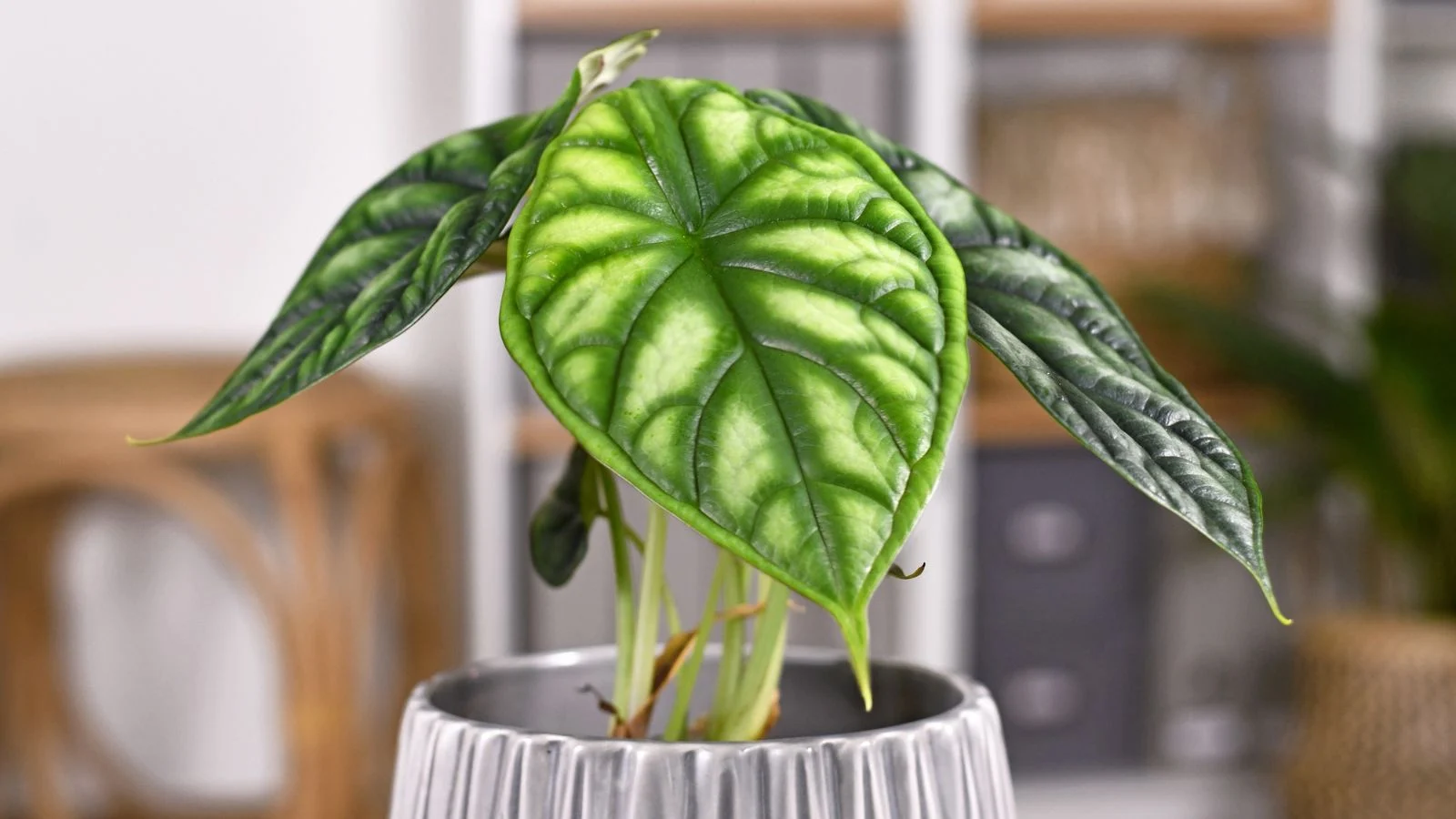 Humidity should be high year-round to keep the leaves happy.
As a tropical plant, ‘Dragon Scale’ alocasia prefers warm, stable temperatures between 55°F and 80°F. It handles the normal range of indoor temperatures without issue, but avoid placing it near cold drafts from windows or exterior doors in winter, or near heating vents and air conditioners that create hot, dry air.
Prolonged exposure to temperatures below 55°F (13°C) can trigger dormancy. The plant stops growing, existing leaves may deteriorate, and it can lose all its foliage. This looks alarming but isn’t necessarily fatal. The underground tubers store enough energy to regrow when conditions improve. Reduce watering and wait for new growth to appear in spring.
Humidity is arguably the most important environmental factor for this plant. ‘Dragon Scale’ thrives at 60 to 80% humidity, which is higher than most homes provide, especially in winter. Low humidity leads to brown leaf edges, stunted growth, and new leaves that fail to unfurl properly.
A humidifier is the most reliable solution. Grouping plants together or placing the pot on a pebble tray filled with water also helps to a lesser degree. Misting is commonly suggested but provides only a few minutes of increased humidity at best, so it’s not a long-term fix.
Fertilizing
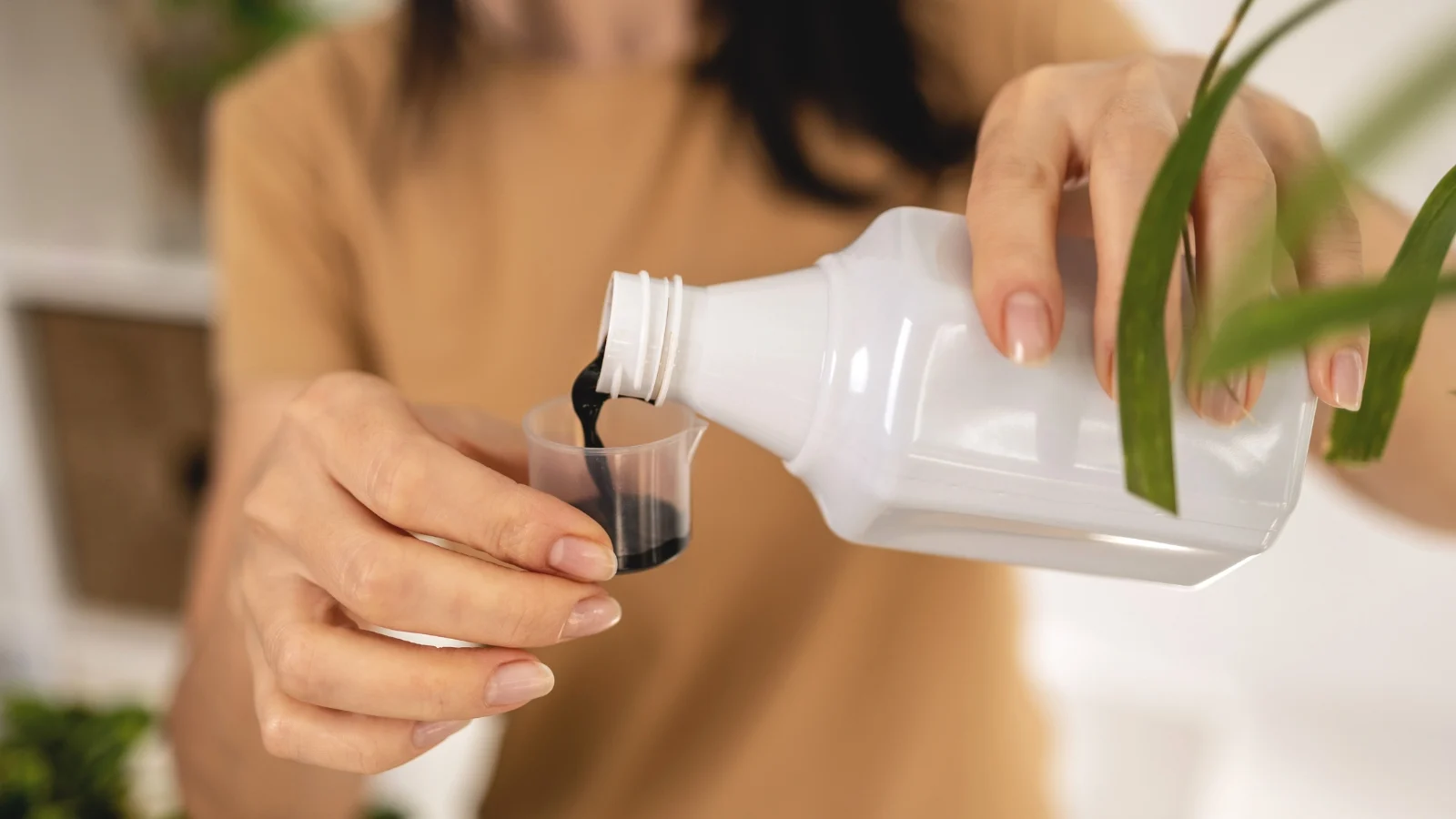 Use a diluted fertilizer to avoid overfeeding.
‘Dragon Scale’ alocasia doesn’t need heavy feeding. During the growing season in spring and summer, apply a balanced liquid fertilizer diluted to half the recommended strength once every four to six weeks. This provides enough nutrients to support new leaf production without risking root burn from excess salts.
Stop fertilizing in fall and winter when growth slows or the plant goes dormant. Feeding a dormant or slow-growing plant doesn’t encourage more growth. The unused nutrients simply accumulate in the soil and can damage the roots over time.
Maintenance
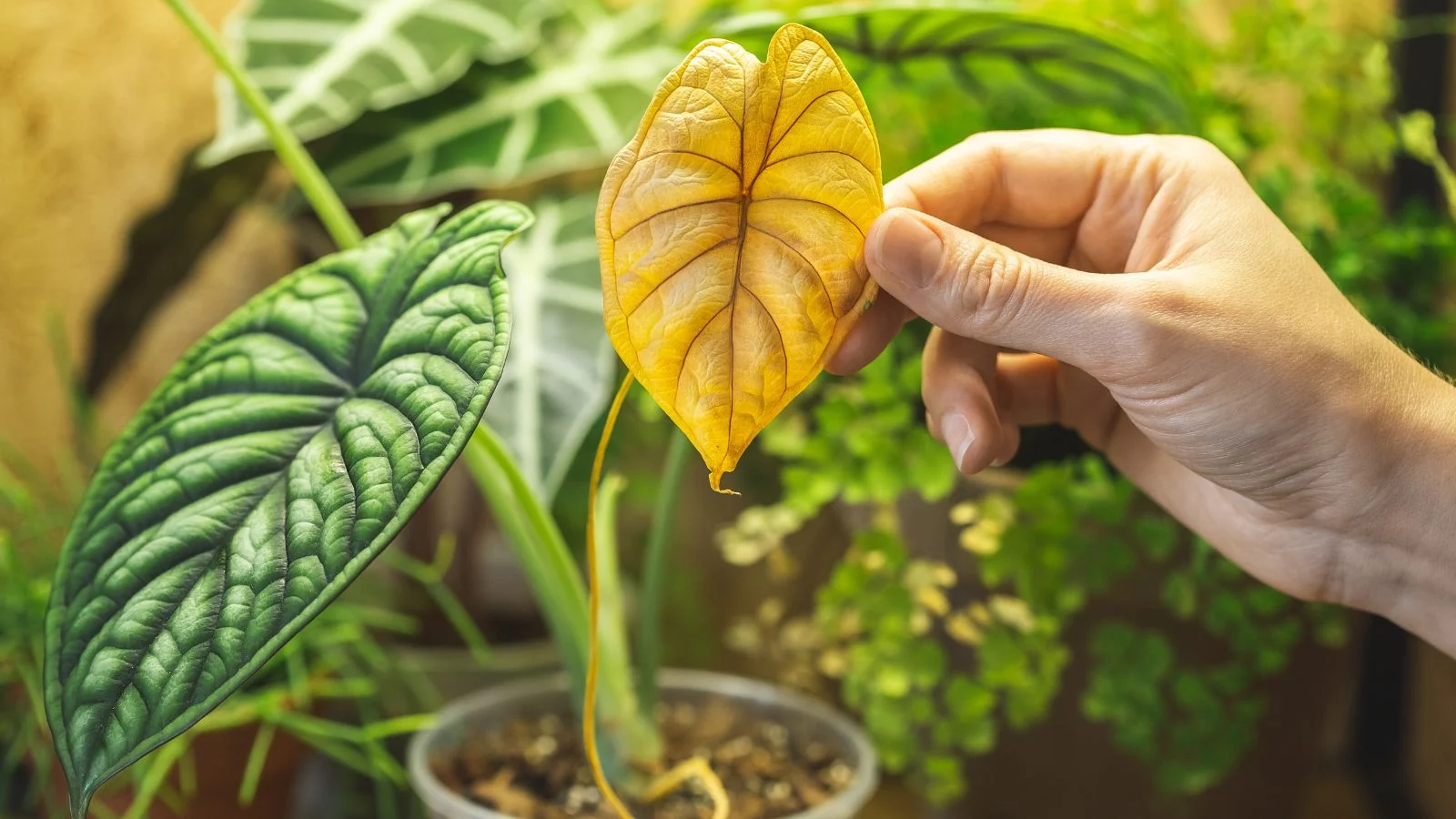 Remove yellow leaves as they appear.
‘Dragon Scale’ is a low-maintenance plant in terms of grooming. Wipe the leaves occasionally with a soft, damp cloth to remove dust that can block light and harbor pests. The textured surface tends to collect more dust than smooth-leaved plants, so this is worth doing every few weeks.
Remove any yellowing or dead leaves by cutting them at the base of the stem with clean scissors. Old leaves naturally die back as the plant produces new ones, and removing them keeps things tidy while preventing decaying foliage from attracting pests or disease.
Repot every two to three years, or when you can see roots growing from the drainage holes. Move up only one pot size at a time. Spring is the best window for repotting, and expect the plant to take a few weeks to settle in afterward.
Propagation
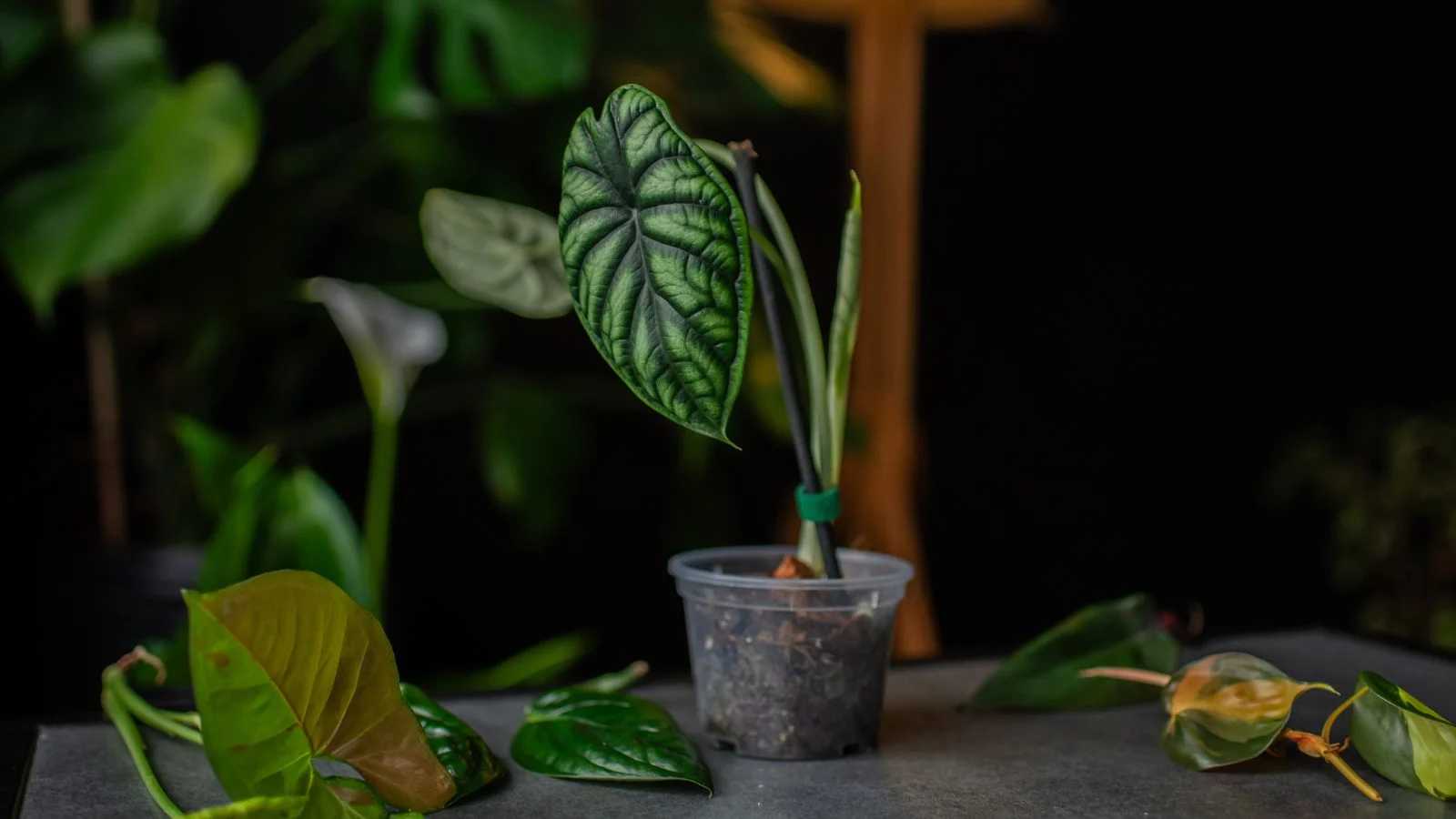 You can propagate from division or corms.
‘Dragon Scale’ Alocasia can’t be propagated from leaf or stem cuttings. The only reliable methods are division and corm propagation, both of which are best done in spring or early summer when the plant is actively growing.
Division is the easier option. A mature plant will develop multiple stems emerging from separate clumps along the rhizome, each with its own root system. To divide, remove the plant from its pot and gently separate the clumps by hand, teasing apart the roots as carefully as you can.
Each division should have its own roots and at least one or two growth points. Pot each section into its own appropriately sized container with fresh potting mix and water lightly.
Corm propagation is slower but useful if you want more plants from a single specimen. When you unpot the plant, you’ll find small, firm, bulb-like corms in the soil near the roots. These can be removed and planted in their own small pots or started in water. Keep them warm, humid, and lightly moist. New growth can take several weeks to appear, so be patient.
Don’t harvest all the corms from a single plant. The mother plant relies on them as a nutrient and water reserve, especially during dormancy.
Common Problems
‘Dragon Scale’ alocasia is generally healthy when its care needs are met, but a few issues come up regularly. Most trace back to watering, humidity, or light, so those are the first things to check when something looks off.
Wilting
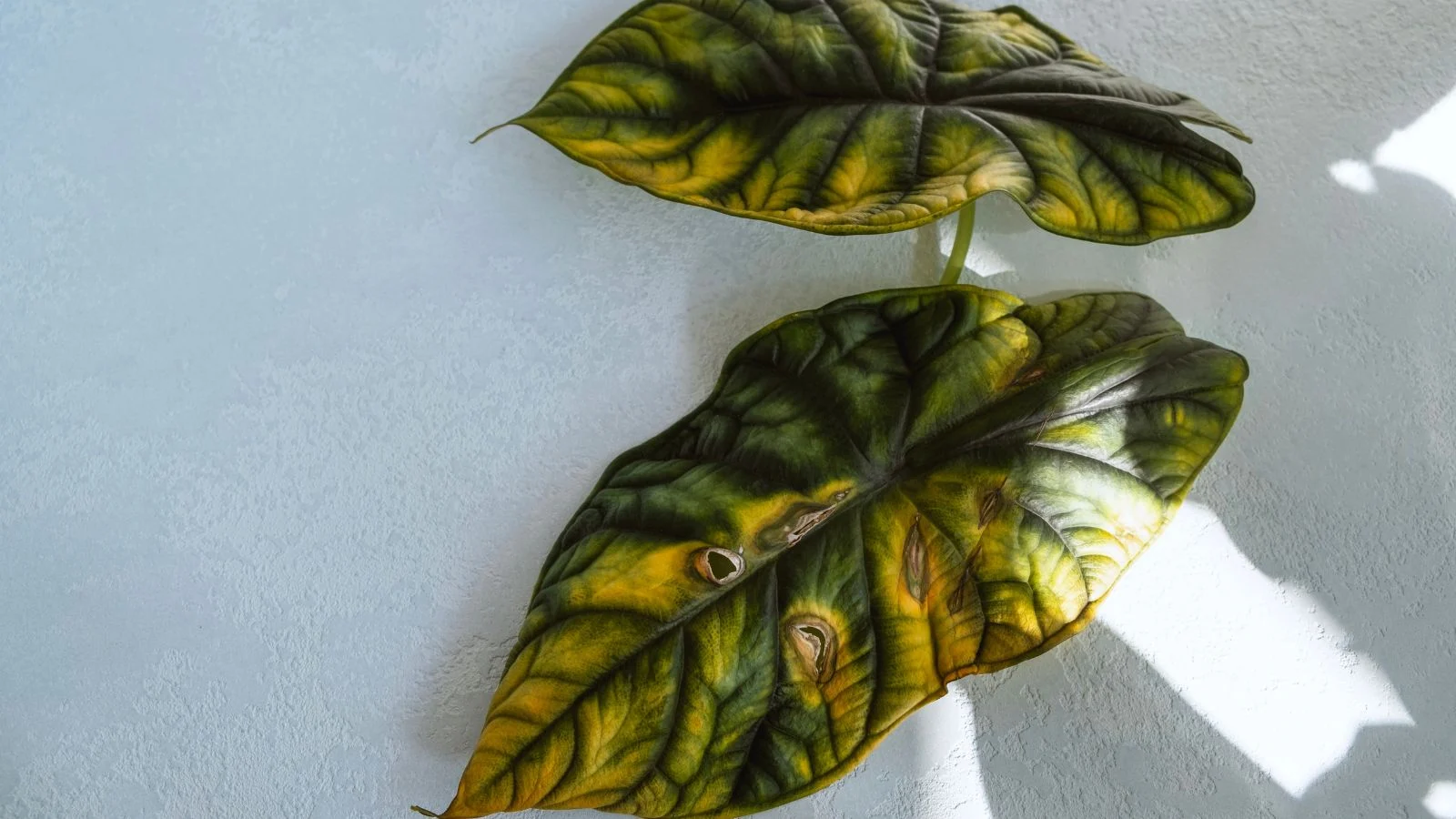 Incorrect watering often causes wilting leaves.
Wilting or drooping leaves usually point to a watering issue. If the soil is wet and the plant is wilting, overwatering and root rot are the likely causes. Check the roots by removing the plant from its pot. Healthy roots are firm and white or light tan. If they’re mushy, dark, or smell bad, trim away the damaged portions and repot in fresh, dry soil.
If the soil is bone dry and the plant is wilting, it simply needs water. Give it a thorough drink and it should perk up within a day or so. Consistent underwatering will cause long-term stress, so try to be more regular with your watering going forward.
Wilting can also happen after repotting or during a sudden change in conditions. This kind of transplant stress typically resolves on its own within a week or two if you keep conditions stable.
Discoloration
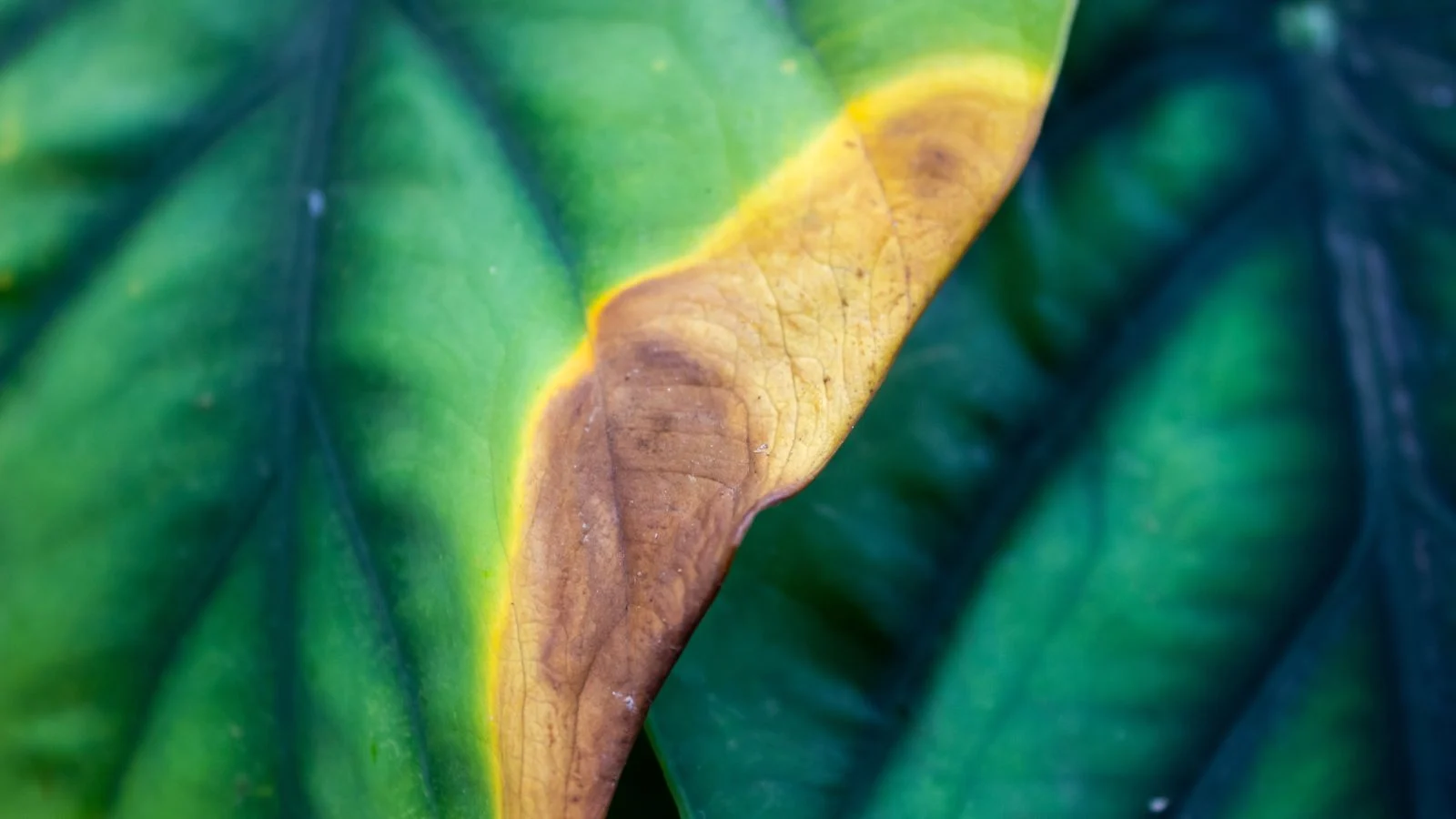 Check environmental conditions to spot the cause of the problem.
Yellow leaves are normal on occasion. ‘Dragon Scale’ alocasia typically maintains only a few leaves at a time, and older leaves yellow and die as new ones grow in. If only one older leaf is yellowing and new growth looks healthy, there’s nothing to worry about.
Widespread yellowing or yellowing of newer leaves suggests overwatering, nutrient deficiency, or insufficient light. Check soil moisture first, as overwatering is the most common cause. If the soil and roots look fine, consider whether the plant is getting enough light or if it’s been a while since you last fertilized.
Brown leaf tips and edges usually indicate low humidity or inconsistent watering. Brown patches in the middle of leaves can mean sunburn from direct light. Dark, water-soaked spots suggest cold damage or bacterial infection.
Pests
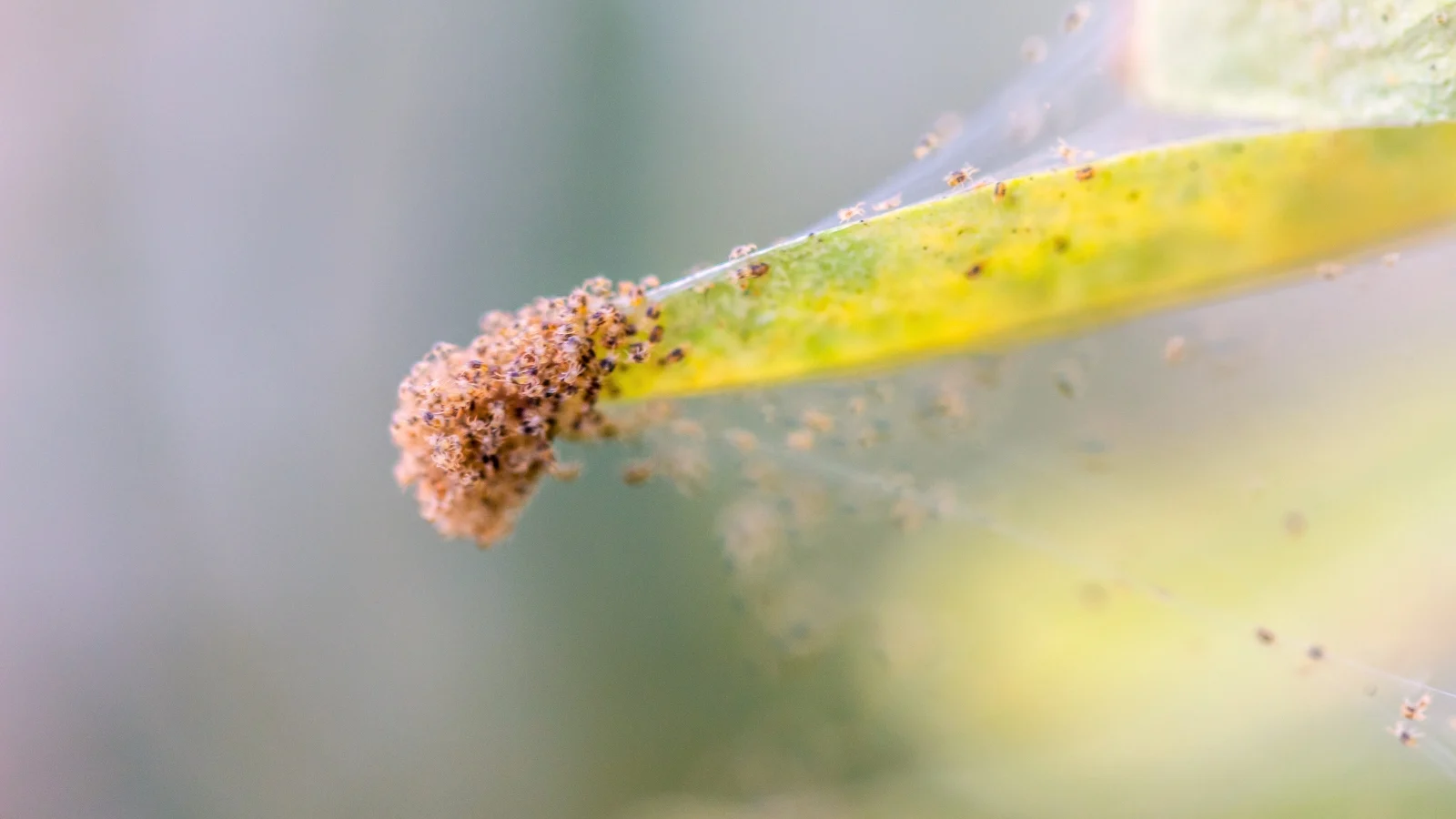 Spider mites are common problems indoors.
Spider mites are the most common pest on ‘Dragon Scale’ alocasia, and the textured leaf surface makes them harder to spot than on smooth-leaved plants. Check the undersides of leaves regularly for fine webbing, tiny moving dots, or stippled discoloration.
Mealybugs and scale can also appear, particularly on new growth. Catching infestations early makes treatment much easier. Wipe affected areas with a damp cloth, treat with insecticidal soap or neem oil, and repeat applications weekly until the problem is resolved.
Keeping humidity up is one of the best preventive measures against spider mites, which thrive in dry conditions. Regular leaf cleaning also helps you catch pest problems before they spread.
Diseases
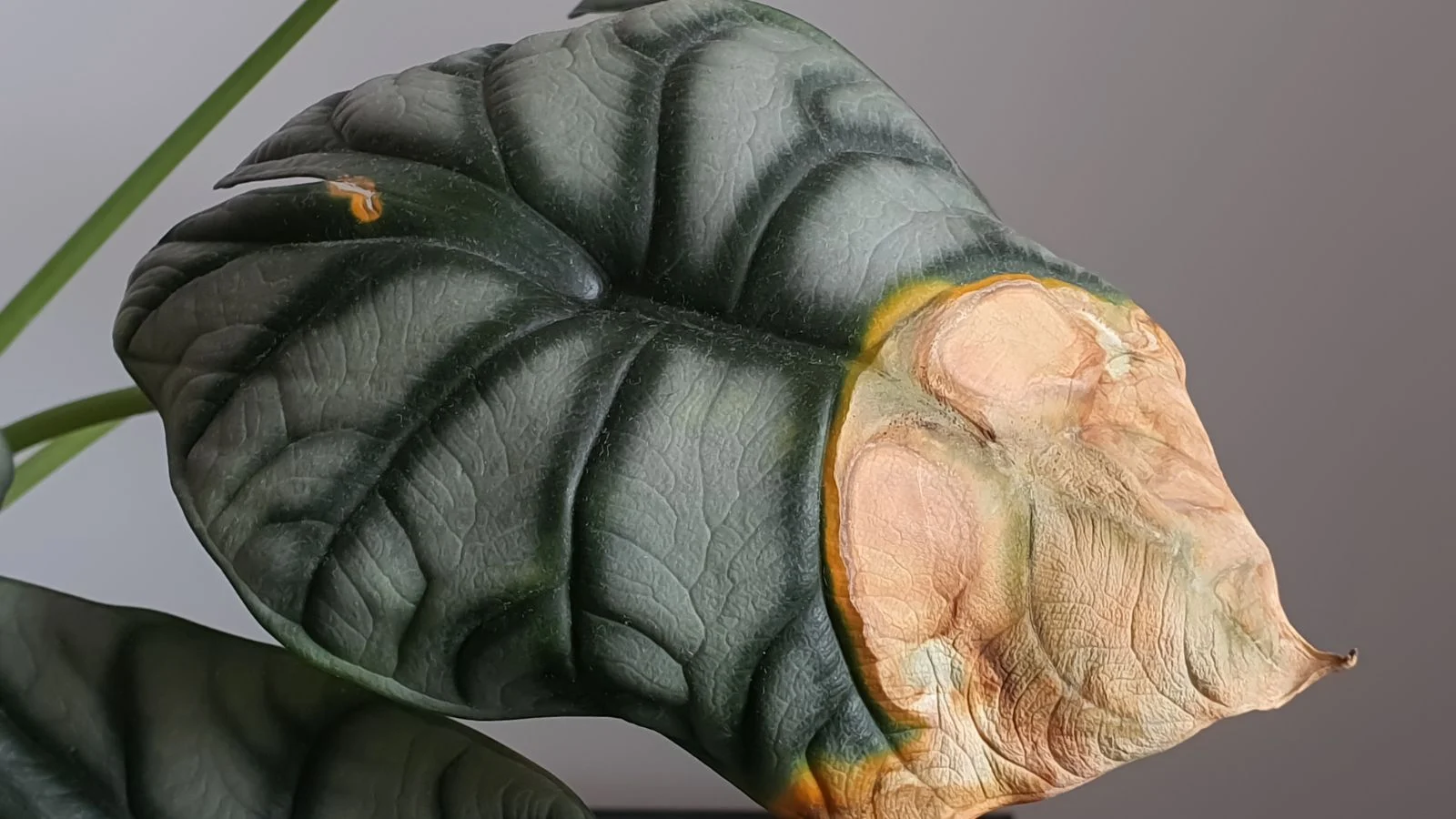 Fungal issues can develop in poor conditions.
Root rot is the most common disease issue and is almost always caused by overwatering or poorly draining soil. Prevention is straightforward: use well-draining potting mix, don’t overwater, and make sure your pot has drainage holes.
If rot has set in, remove the plant from its pot, trim all affected roots back to healthy tissue, and repot in fresh soil. Let the soil dry out slightly before watering again. In severe cases where most of the root system is lost, the plant may drop all its leaves and go dormant, but it can sometimes recover from the tubers if you provide warmth and minimal water.
Fungal leaf spots can develop in conditions with poor airflow and excess moisture on the foliage. Avoid getting water on the leaves when watering, improve air circulation around the plant, and remove any affected leaves promptly to prevent spread.
Frequently Asked Questions
Leaf loss is often a sign of dormancy, which can be triggered by cold temperatures, low light, or the stress of repotting. It can also happen naturally in fall and winter. Don’t discard the plant. Reduce watering, keep it in a warm spot with moderate light, and wait. New growth typically appears in spring.
Growth is moderate. Expect a few new leaves per growing season under good conditions. The plant only maintains a handful of leaves at any given time, so don’t expect a bushy appearance. It can take two to three years to reach full maturity.
No. Both are cultivars of Alocasia baginda and share a similar textured leaf structure, but ‘Silver Dragon’ has paler, more silvery foliage compared to the deeper green of ‘Dragon Scale.’ Care requirements are essentially the same for both.