
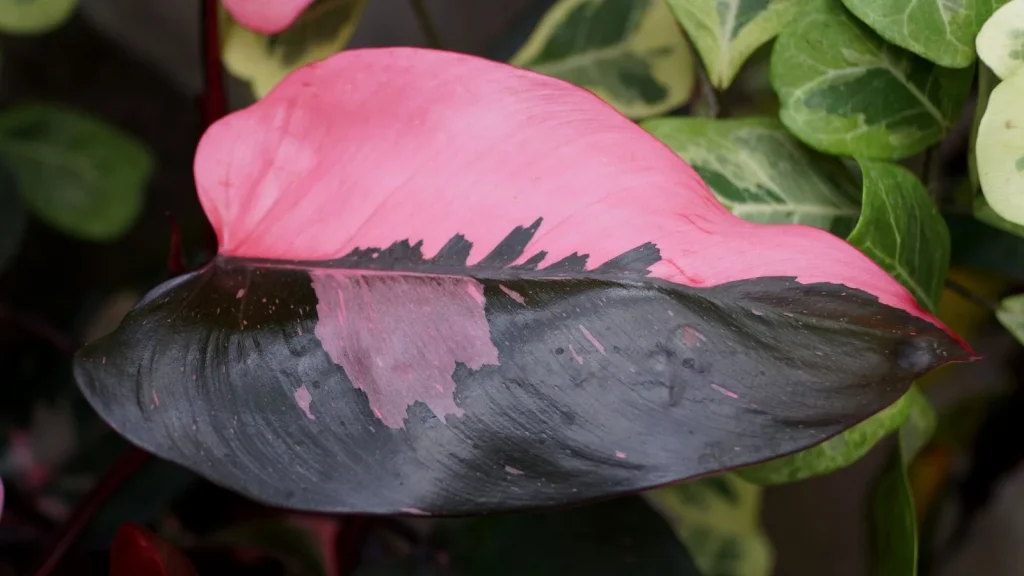
‘Pink Princess’ philodendron became one of the most sought-after houseplants for good reason. But anyone who’s owned one for more than a few months (or any other variegated plants, for that matter) knows the variegation doesn’t maintain itself.
New leaves can emerge completely green, or stop showing pink altogether if conditions aren’t right. That’s not what you want when you’ve bought this houseplant specifically for its coloring, often at quite a cost.
You can’t force ‘Pink Princess’ philodendron variegation to appear in specific patterns. But you can create conditions that encourage the plant to keep producing variegated growth rather than reverting to solid green.
About ‘Pink Princess’ Philodendron
These popular houseplants have pink patches on their leaves.
‘Pink Princess‘ is a cultivated variety of Philodendron erubescens, selected specifically for its pink and green variegation. The plant grows as a climbing philodendron with glossy, heart-shaped leaves that can display anything from small pink flecks to large patches covering half the leaf or more.
The variegation is unstable, meaning the plant doesn’t reliably produce the same pattern on every leaf. One leaf might be heavily pink while the next is mostly green with just a few pink spots. This unpredictability is part of what makes the plant desirable, but it’s also what makes maintaining variegation challenging.
‘Pink Princess’ grows moderately under good conditions, producing new leaves every few weeks during the growing season. Each new leaf is essentially a gamble in terms of how much pink it will display, though you can influence the odds.
Variegation Explained
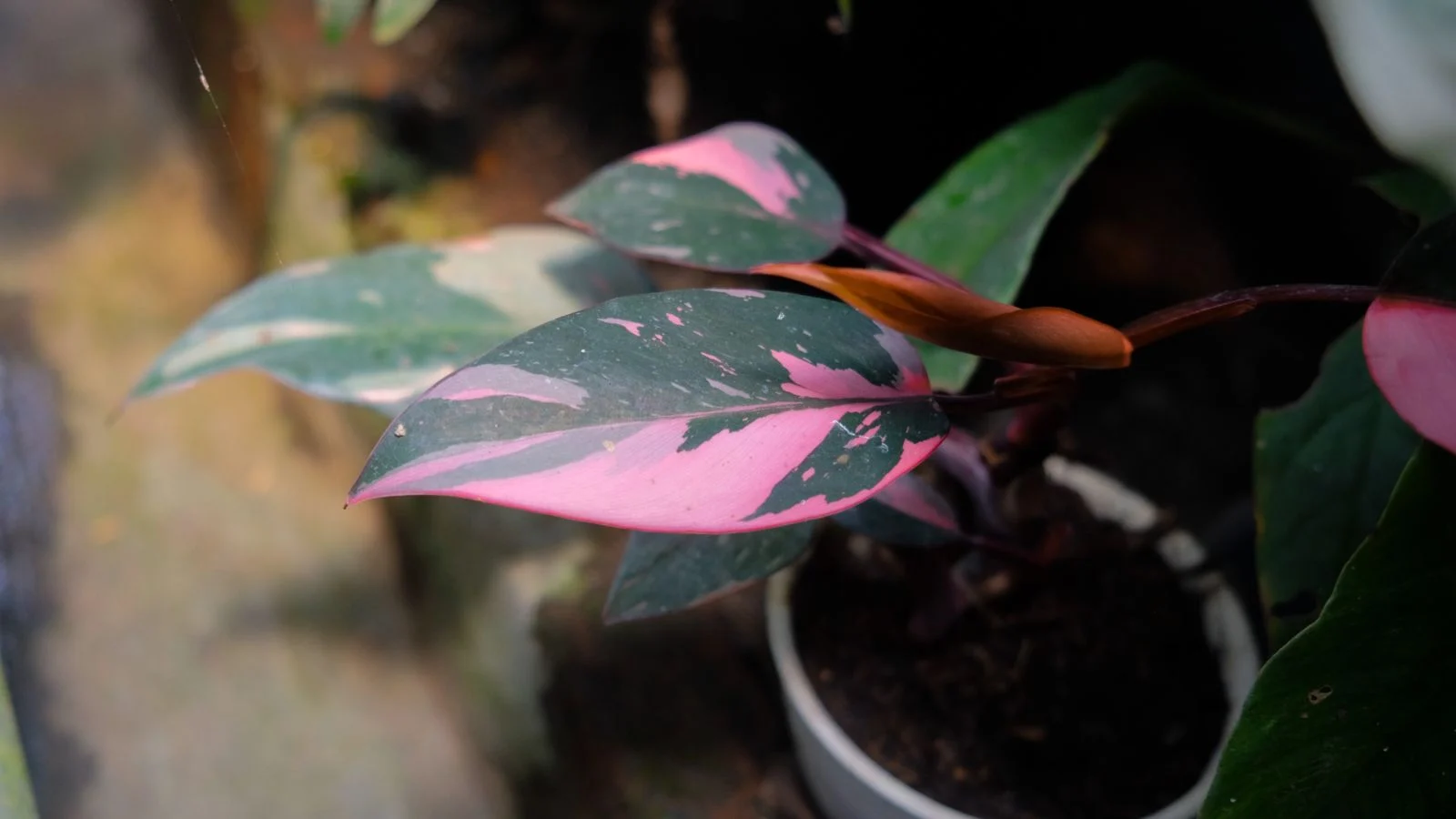 Different types of variegation have different causes.
The pink coloration in ‘Pink Princess’ isn’t actually a pigment. It’s the absence of chlorophyll in those sections of the leaf. The pink areas can’t photosynthesize, which means they’re decorative but not functional for the plant’s energy production. Only the green portions can convert light into energy.
The plant needs green leaf tissue to survive, so when conditions are less than ideal, it tends to produce more green and less pink to maximize photosynthesis. When the plant is happy and producing plenty of energy, it can “afford” to allocate resources to pink variegated growth.
Completely pink leaves (which do occasionally appear) are essentially non-functional and can’t sustain themselves long-term. The plant will usually drop these or they’ll brown and die back. Similarly, if the plant starts producing only green leaves, it means the variegation is reverting and you need to intervene.
How to Maintain ‘Pink Princess’ Philodendron Variegation
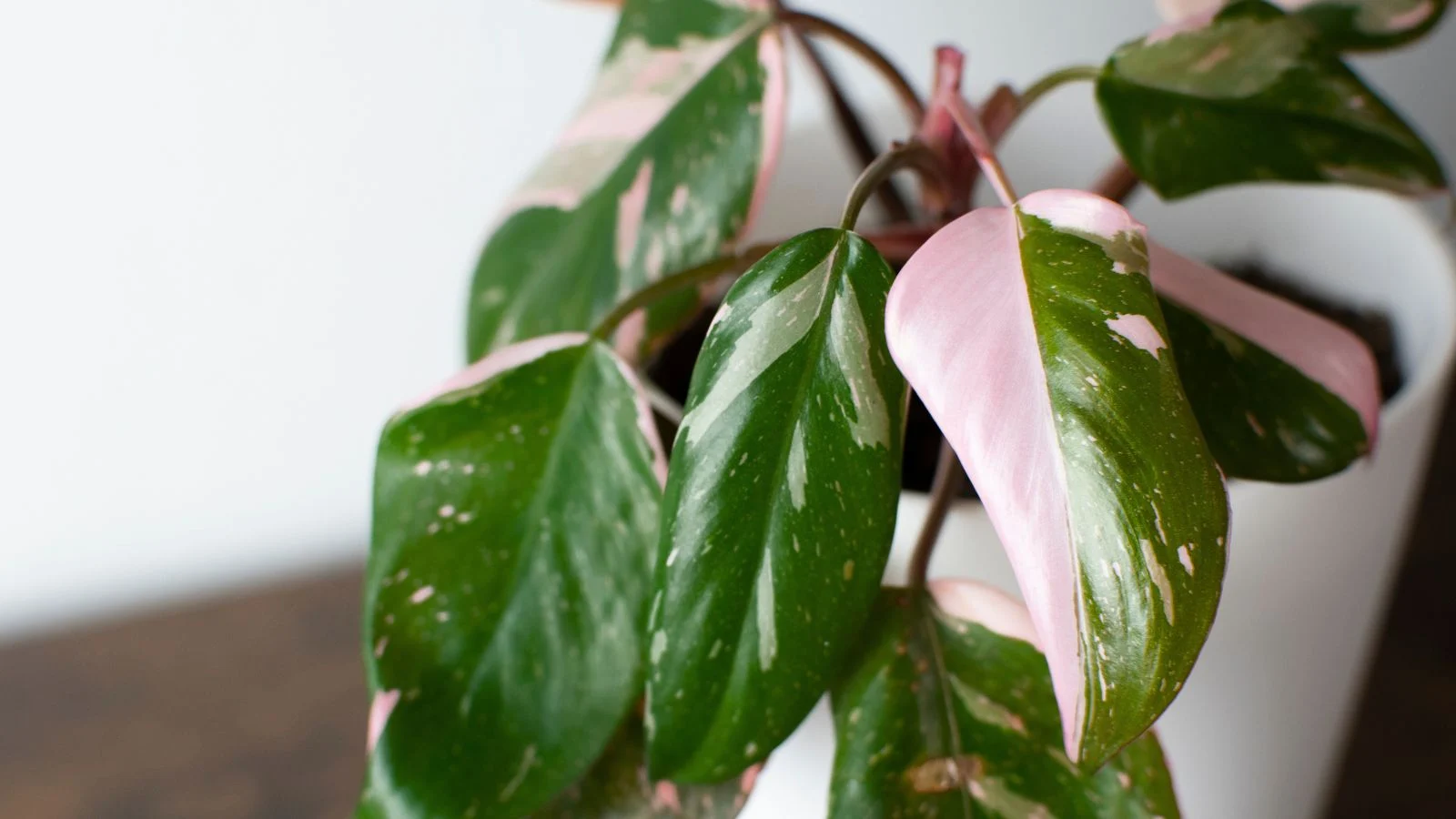 Maintaining light levels is essential.
The single most important factor for maintaining variegation is light. ‘Pink Princess’ philodendron needs bright, indirect light to produce those pink sections reliably. In too little light, the plant prioritizes chlorophyll production, pushing out increasingly green leaves with less pink over time.
Position your plant where it gets several hours of bright, indirect light daily. An east-facing window works well, providing gentle morning sun without the intensity that can scorch leaves. West-facing windows can work too, though you might need to filter harsh afternoon sun with a sheer curtain.
You want bright light, but not direct sun, on the pink portions of leaves. Those pink areas have no chlorophyll to protect them and will burn quickly in direct sunlight, turning brown and crispy. The light needs to be bright enough to support overall plant health but indirect enough to protect variegated sections.
When new growth starts coming in too green, that’s your signal to increase light levels. Move the plant closer to your light source or extend the hours if you’re using grow lights. When you notice the pink sections turning brown or looking scorched, pull back slightly from the light source or filter the light with a curtain.
Pruning is the other critical tool for maintaining variegation. If the plant produces a completely green leaf or a section of stem starts growing only green leaves, you need to cut that growth back. Green growth is more vigorous than variegated growth because it can photosynthesize more efficiently. If you let it continue, the green sections might eventually dominate.
Cut green growth back to just above a node on a variegated section of stem. This forces the plant to push out new growth from the variegated tissue, increasing the likelihood that the next leaf will show pink.
Other Care Tips
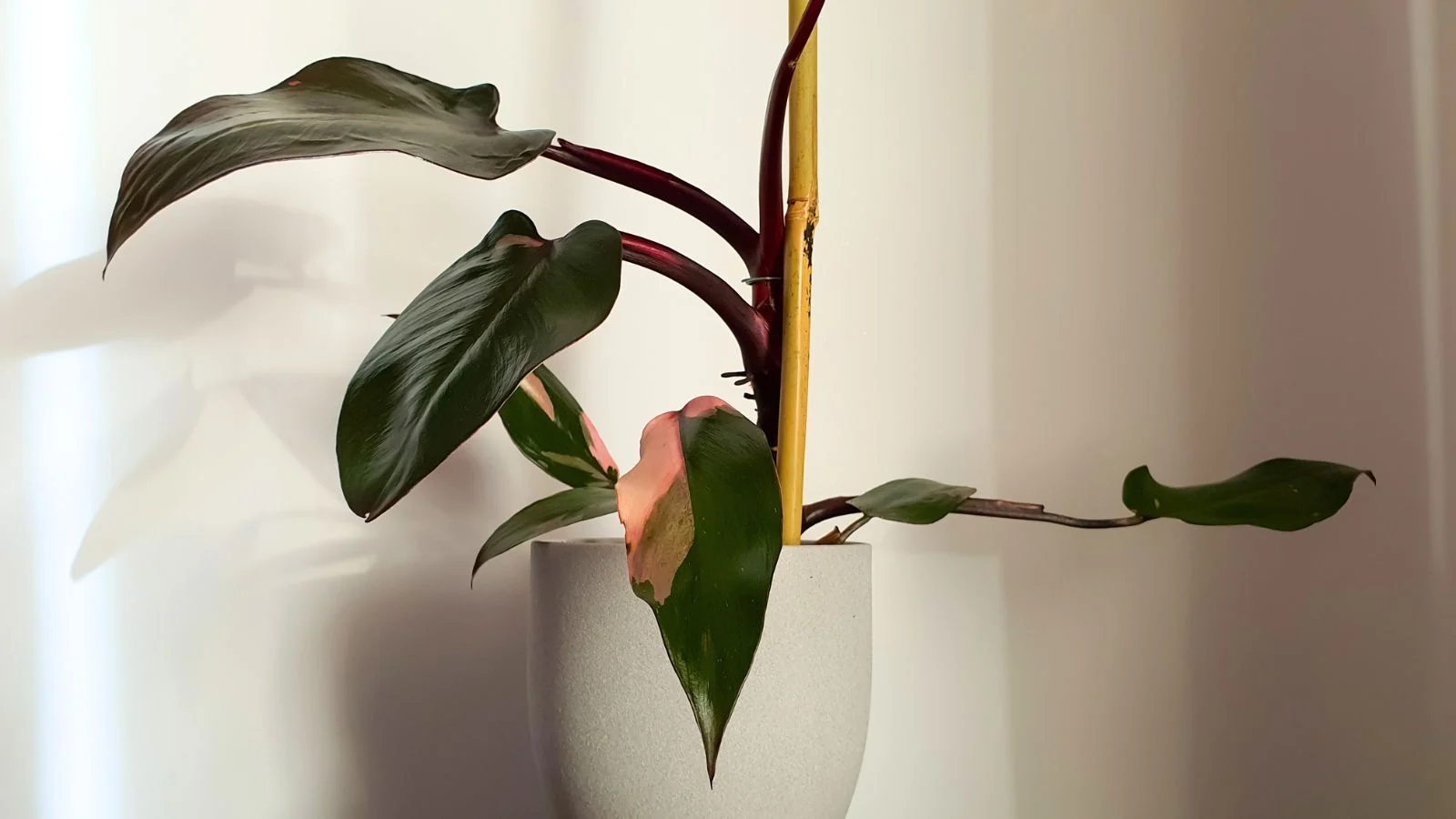 Keep the plant happy to maintain variegation in a ‘Pink Princess’ philodendron.
Beyond light and pruning, general care quality influences how well your ‘Pink Princess’ philodendron maintains its variegation. A stressed plant is more likely to revert to green, so keeping the basics right supports better variegation overall.
Water when the top two inches of soil feel dry, providing enough that excess drains from the bottom of the pot. ‘Pink Princess’ doesn’t tolerate sitting in waterlogged soil, but it also won’t appreciate drying out completely between waterings.
Humidity helps, but isn’t as essential, when it comes to variegation. These plants tolerate average household humidity reasonably well, though they’ll grow more vigorously with levels around 60% or higher. If you notice brown leaf edges or slow growth, consider increasing humidity with a humidifier or by grouping plants together.
Fertilize during the growing season with a balanced, water-soluble fertilizer diluted to half strength. Too much nitrogen can push excessive green growth at the expense of variegation, so avoid heavy feeding. I fertilize every four weeks during spring and summer, then stop entirely in fall and winter when growth slows.
The plant climbs naturally, so providing a moss pole or other support encourages larger leaves with better variegation. Climbing growth tends to produce more impressive leaves than trailing growth, though this isn’t a requirement for maintaining pink coloration.
Temperature fluctuations and drafts can stress the plant and potentially affect variegation patterns on new growth. Keep your ‘Pink Princess’ away from heating vents, air conditioning, and drafty windows. Stable temperatures between 65°F and 80°F (18°C to 27°C) work best.












On a similar note: Beautifully done; the instructions are easy to follow. So snug.