
This post may contain affiliate links. If you make a purchase through links on our site, we may earn a commission.
I was walking by my deck one day to turn on the hose when I saw a little flash of color among the patio slabs below it. There, growing out of a crack, was a blooming wild columbine. I’d seen this wildflower growing in the woods on bike rides, but I have no idea how this particular plant showed up in my backyard—in a seemingly inhospitable sliver of dirt, no less! But it showed me the resilience of this native plant with the unique downward-facing flowers.
Wild columbine can be found growing throughout Canada, from Saskatchewan eastward, and throughout much of the Eastern United States. A member of the Ranunculaceae family (aka the buttercup family), it is also called red columbine, Canada columbine, and Eastern red columbine.
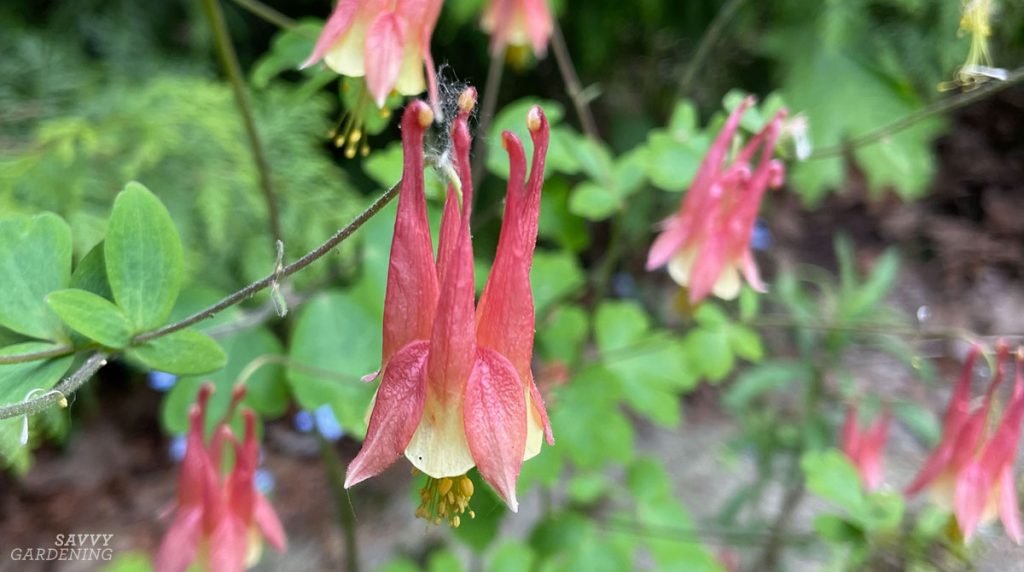
The plant itself stays fairly low to the ground, with a small mound of foliage. The leaves are compound, meaning a leaf divided into two or more leaflets. In this case there are three leaflets with rounded lobes. The flowers grow from the end of stalks that reach from one to three feet (30 to 90 cm). Columbine flowers are red with yellow centers that point downwards.
Many of the photos I take involve me turning the stems and displaying the flowers in my hand so you can see all the pretty details that face the ground.
How does wild columbine differ from other columbines?
You may see other flowers that look similar to wild columbine (Aquilegia canadensis). That’s because there are several other columbines that are native to North America and some that are native to Europe, such as European columbine (Aquilegia vulgaris). On top of that, there are dozens upon dozens of columbine cultivars, which are varieties that have been bred from the original plants for certain characteristics, like color and size.
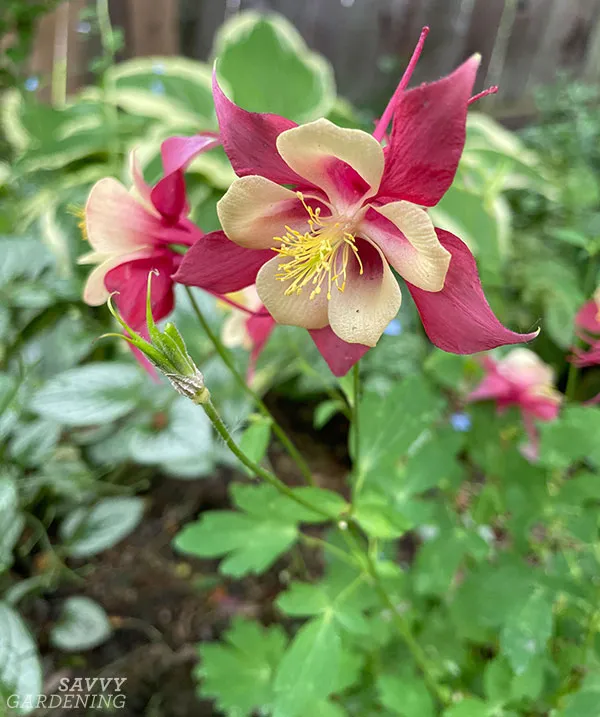 The flowers of European columbines are different than wild columbine. They are available in more colors, have more upright blooms, and often have double flowers. The spurs also aren’t pronounced as they are with wild columbine.
Columbines also are really good at cross pollinating, so if you plant a couple of cultivars side by side, you may end up with a whole new plant!
The benefits of growing columbines indigenous to your area
Pollinators, like hummingbirds, bees, and butterflies love the nectar of wild columbines, which usually bloom in late spring (May or June). Planting columbines indigenous to your region means the plants have adapted to that area’s growing conditions. And they’re familiar to the wildlife and insects that live there.
A great example of a symbiotic relationship can be found with the ruby-throated hummingbird. It is eastern North America’s only breeding hummingbird, and it looks for the red flowers of wild columbine when it returns from a winter in Central America. The outer red spurs of the flower hold the nectar, where this tiny bird’s long tongue can reach. Long-tongued insects, like bumblebees, also enjoy the flowers’ nectar.
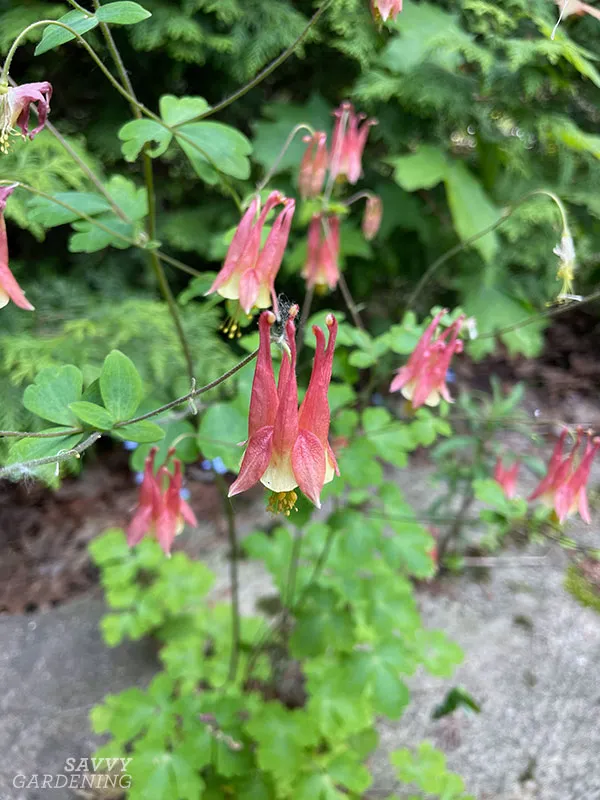 I have seen many types of columbine (including Aquilegia canadensis and Aquilegia vulgaris) growing both in the woods and out of concrete cracks, proving their hardiness in extreme growing conditions. The plant shown here is growing between patio slabs near my back deck.
Canada columbine is also the primary larval host plant for the Columbine Duskywing butterfly (Erynnis lucilius) and a host plant for the Columbine borer moth.
Where can you grow wild columbine?
Wild columbine can be grown in the cracks of pavement. I’m joking! Sort of. It’s a very hardy plant that can be planted in cold climates where temperatures dip between -40°F and -31°F (-40°C to -35°C). Traditional habitat for wild columbine is woodlands, including rocky areas. On mountain bike rides in the spring, I often stop to take photos of wild columbine in the woods, as well as other spring flowers, like trout lilies and trilliums.
Plants will thrive in loamy, well-draining soil, but also don’t mind sand and grit. They will also survive in a more moist environment. Plant them in a rock garden, or add them to your perennial garden for a splash of spring color that will attract pollinators to the garden.
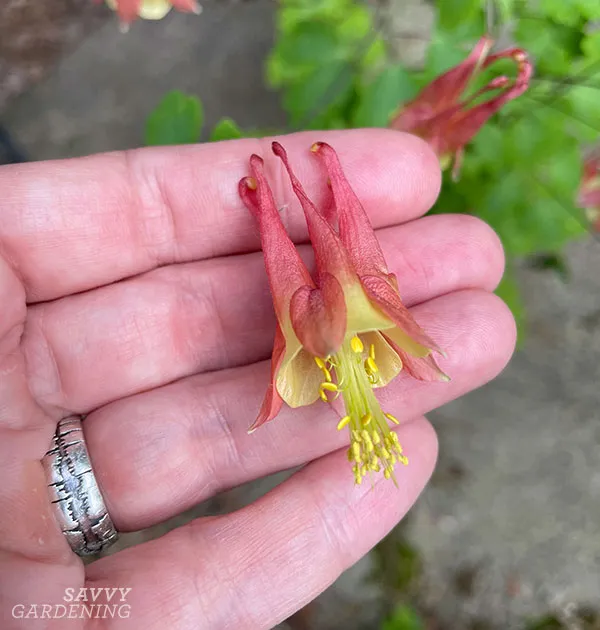 Columbine flowers point downwards, so you have to get up close to see the details. Those red triangular petals that look like hats are called spurs and the round tips at the top are the nectaries where the nectar is stored.
In the garden, choose a spot that gets full sun to part shade. Plants are very drought tolerant and both deer and rabbit resistant.
Sowing wild columbine seeds and winter sowing tips
Wild columbine seeds need a period of cold stratification to grow. They spread well by self seeding, breaking dormancy after the winter. But, if you’d like to plant them deliberately somewhere, you can scatter seeds in the fall or mid winter. This perennial is also a great candidate for winter sowing.
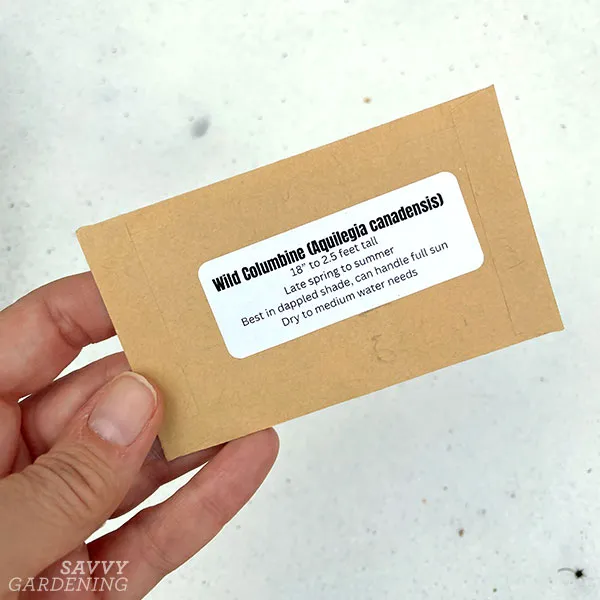 My local seed library is restocked throughout the year. One of the plants usually available for winter sowing is Aquilegia canadensis.
I love winter sowing because it doesn’t require any indoor space, which is at a premium come March and April. Winter sowing can be done in January or February. Find a suitable container—milk jug, plastic salad clamshell package, etc. Make sure there are holes poked in the top and bottom, and fill with potting mix. Scatter seeds on top and lightly fluff to cover them. Add the lid back on and set them outside. Start to keep an eye on your containers in the spring. Niki outlines winter sowing in more detail here. You can also stratify seeds in the refrigerator.
My columbines—even that little plant that lives beneath the patio stone—come back reliably each year and are a great addition to the spring garden.















This is a keeper — saving for later. Thanks for this!
Quick thought – Lovely idea; I might try this in my garden 🌿.
Great step-by-step — I’ll give this a go this weekend 👍