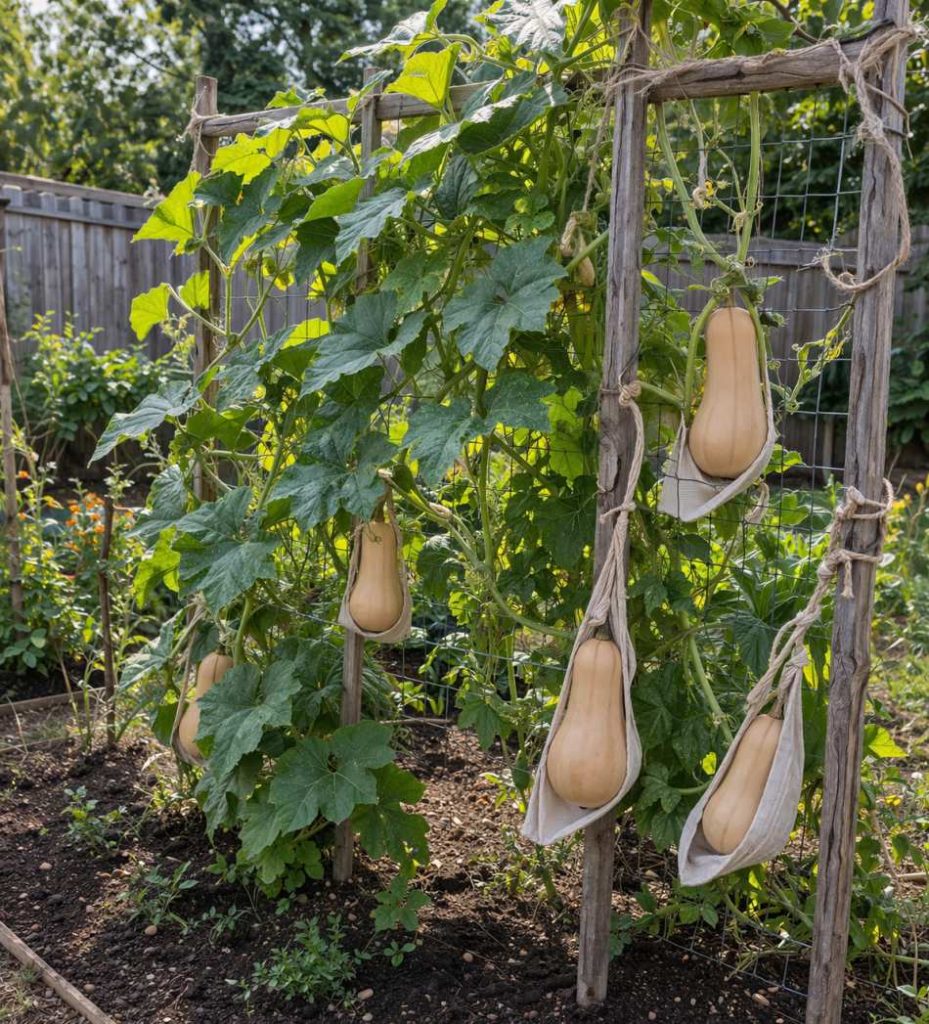
How grow squash. A brief context to set expectations.
How grow squash: Quick notes
Most squash plant varieties are vines that naturally sprawl across the ground. Small gardening spaces can easily get crowded if you leave them unsupported.
You need to train your squash plant to grow vertically on a trellis, not just to save space for other plants but also to promote healthier plant growth by improving air circulation, reducing pest issues, and making harvesting much easier.
Fortunately you can use any simple unused material to make an effective trellis to support your squash.
Before diving into the setup, let’s take a closer look at the key benefits of growing squash vertically.
Why Grow Squash Vertically?
Not just for small gardens, even large gardens can benefit if you grow squash on trellis.
- More Garden Space: Instead of letting vines spread out and take over your garden space, training them upward keeps your garden more organized and leaves room for other plants to thrive.
- Better air circulation: When vines are lifted off the ground, leaves dry faster after watering or rain, which helps reduce the risk of common fungal diseases.
- Keeping the foliage elevated also makes it harder for pests like squash bugs to hide and spread unnoticed.
- Cleaner and healthier fruits: Squash that develops off the ground is less likely to rot, develop blemishes, or get damaged by soil moisture.
Plus, harvesting becomes much easier—no more digging through dense foliage or bending down to search for hidden fruits.
How to Grow Squash Vertically?
Types like butternut, spaghetti squash, and small pumpkins naturally produce long, flexible vines that are easy to guide upward.
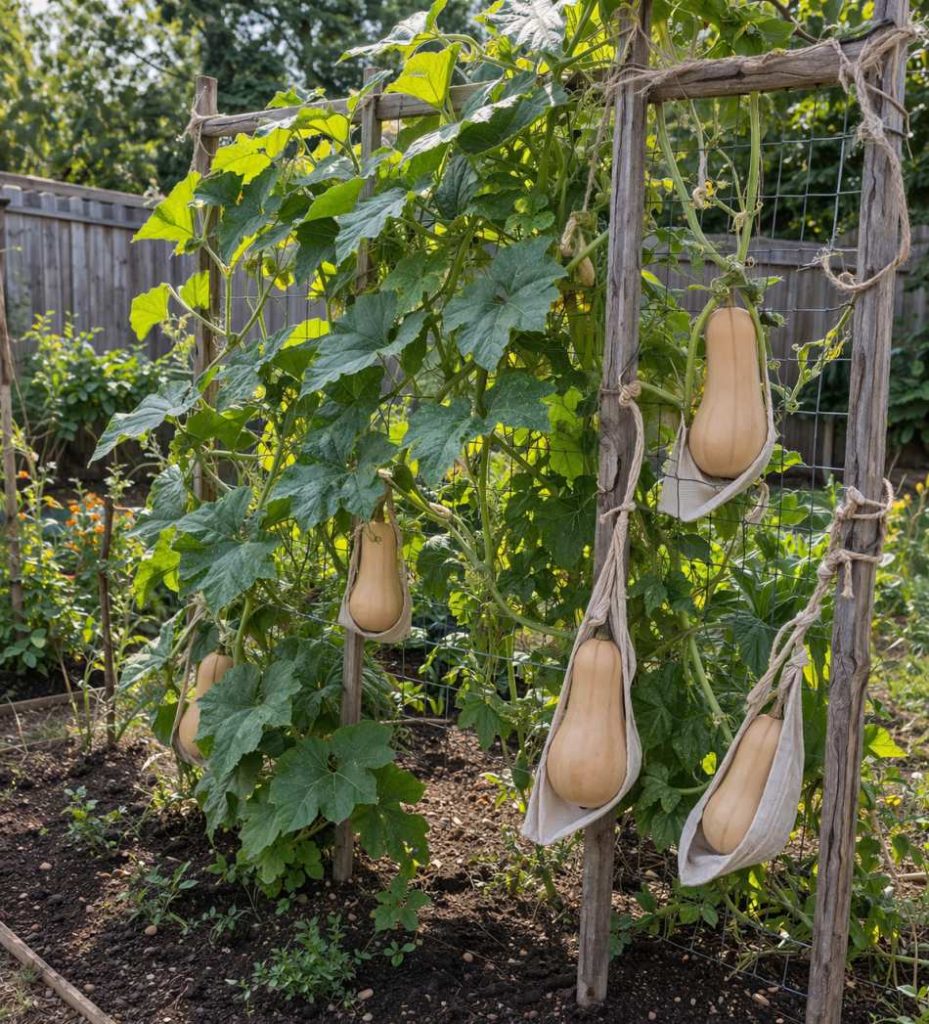
These varieties also tend to grip supports well using their tendrils, making them ideal for vertical setups.
Bush types like zucchini and yellow squash can still be grown this way, but they require more attention, such as frequent tying and stronger support, since they don’t climb as naturally.
Also Read: 17 Best Vegetables that Grow on Trellis
1. Choose the Right Location
Start by selecting a location that receives at least 6–8 hours of direct sunlight each day, as squash plants need plenty of light to produce healthy vines and fruits.
- Avoid shady or crowded spots, as poor airflow can increase the risk of fungal diseases.
- Prepare the soil well before planting. Squash are heavy feeders, so enrich the soil with compost, aged manure, or organic matter to provide essential nutrients.
- Make sure the soil drains well—standing water can lead to root rot and weak plant growth.
If you’re working with raised beds or containers, use a loose, fertile potting mix for best results.
2. Planting Squash
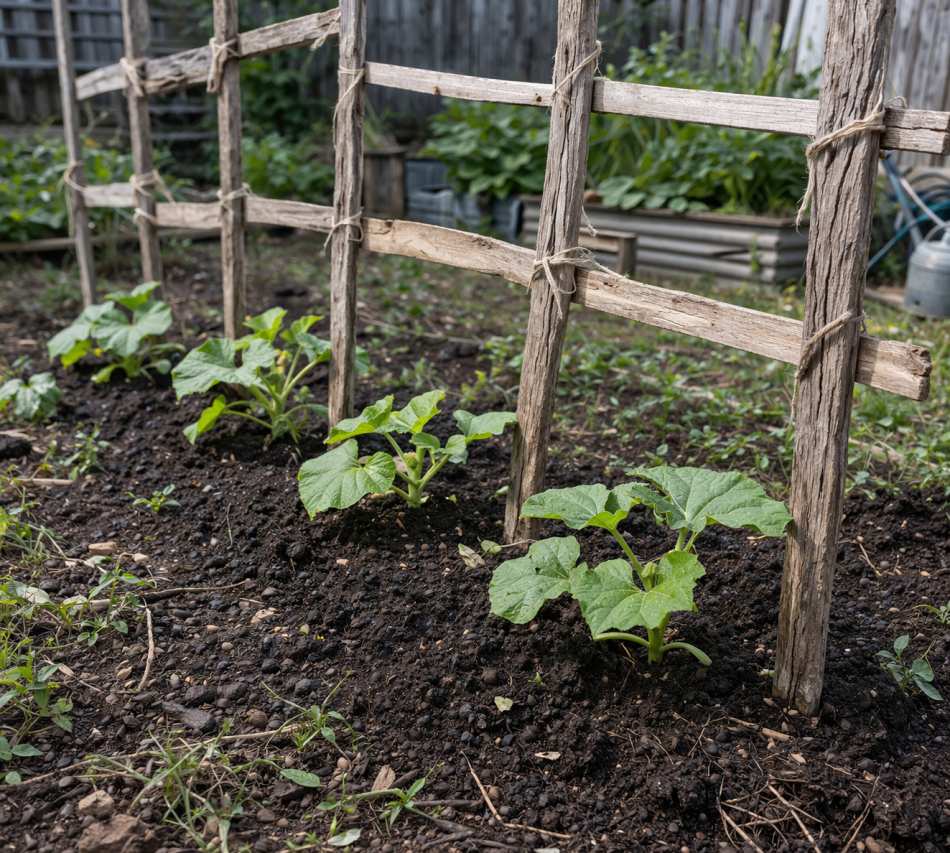
Plant your squash seeds or seedlings directly at the base of the trellis so the vines can easily find their way upward as they grow.
If sowing seeds, plant them about 1 inch deep and water gently. For transplants, be careful not to disturb the roots when placing them in the soil.
Adding a layer of mulch around the base can help retain moisture, suppress weeds, and keep the soil temperature stable as the plants establish themselves.
Spacing is important—leave about 1.5 to 2 feet between each plant to allow proper airflow and reduce competition for nutrients.
Overcrowding can lead to poor growth, increased pest problems, and higher chances of disease.
3. DIY Trellis Ideas Using Simple Materials
A strong and stable trellis is one of the most important parts of growing squash vertically.
As the plant matures, the vines, leaves, and fruits together can become quite heavy, so your structure needs to support that weight without bending or collapsing.
The good thing is—you don’t need expensive materials. Many sturdy trellises can be built using simple items you may already have at home.
Easy DIY Trellis Ideas
You can create an effective trellis using a variety of low-cost or repurposed materials.
- Bamboo poles tied together with jute twine make a simple and natural-looking support.
- Old wooden ladders can be leaned against a wall or fixed in place to act as an instant trellis.
- Wire fencing, metal mesh, or cattle panels are excellent options for durability and can hold heavier squash varieties with ease.
If you have spare wooden planks or pallets, you can build a basic frame and attach netting or wire across it for vines to climb.
Even sturdy sticks or branches arranged in a teepee or A-frame shape can work well for lighter varieties. The key is to ensure there are enough horizontal or vertical points for the tendrils to grip.
4. How to Train Squash Vines on the Trellis?
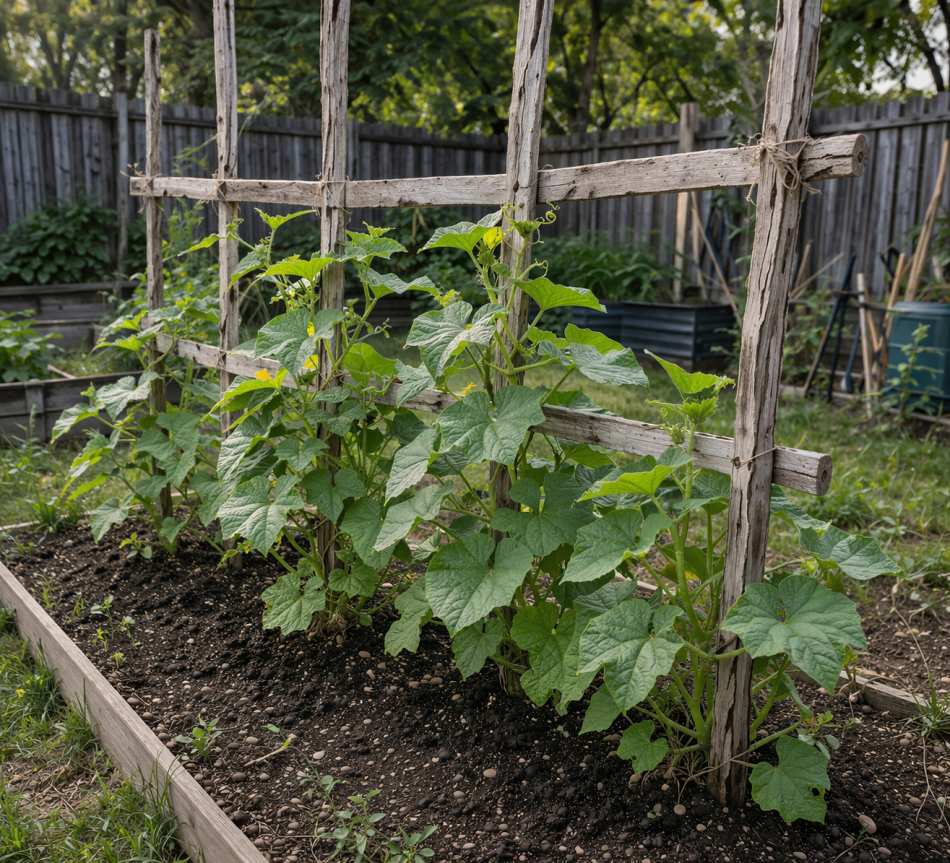
Training squash vines early is key to growing them successfully on a trellis. When vines are young and flexible, they can be easily guided upward instead of sprawling across the ground.
With a little regular attention, you can keep the plant growing neatly in one direction while encouraging strong, healthy development.
Check this: 19 Best Plants to Grow in April
How to Train Squash Vines?
- Start training when vines are still young and soft
- Gently lift and place vines onto the trellis
- Allow tendrils to naturally wrap around the support
- Use soft ties like cloth strips or garden tape if needed
- Avoid tying too tightly to prevent stem damage
- Check every few days and redirect new growth upward
How to Support Growing Fruits?
- Monitor fruits as they begin to develop
- Use cloth, mesh bags, or old T-shirts to make slings
- Attach slings securely to the trellis
- Let the fruit rest inside the sling to reduce strain on vines
- Adjust support as fruits grow larger and heavier
With consistent training and proper support, your squash vines will grow upward with ease. This not only protects the plant from damage but also results in cleaner, healthier fruits that are much easier to harvest.
How to Care for a Squash Plant?
Proper watering and feeding are essential for strong vine growth and healthy fruit production.
Since vertically grown squash relies on a limited root space, maintaining consistent moisture and nutrients becomes even more important.
Watering Squash Plants
Squash plants need deep and regular watering to support their fast growth. Water at the base of the plant so moisture reaches the roots directly, rather than wetting the leaves.
Keeping the soil evenly moist—not too dry or waterlogged—helps prevent stress and poor fruit development.
It’s best to water early in the morning so excess moisture can evaporate during the day, reducing the chances of fungal diseases.
As the plant starts flowering and producing fruits, slightly increase watering to meet its higher needs.
Feeding Squash Plants
Squash are heavy feeders, so enriching the soil from the beginning makes a big difference.
- Mix compost or well-rotted manure into the soil before planting to provide a steady nutrient base.
- During the growing season, apply a balanced fertilizer every few weeks to support vine and fruit growth.
- Once the plant starts producing squash, switching to a fertilizer higher in potassium can encourage better fruit development.
Avoid overusing nitrogen, as it can lead to excessive leafy growth with fewer fruits.
Mulching for Better Growth
Adding a layer of mulch around the base of the plant helps retain soil moisture, regulate temperature, and suppress weeds.
Over time, organic mulch also improves soil quality, giving your squash plants an extra boost.
With consistent watering and proper feeding, your squash plants will stay vigorous and productive throughout the season. This ensures healthy vines, better fruit set, and an overall successful vertical garden.
Common Problems and How to Fix Them
Even when grown vertically, squash plants can face a few common issues.
The good news is that most problems are easy to manage if you catch them early and take simple preventive steps.
Powdery Mildew
This is one of the most common squash diseases, showing up as white powdery spots on leaves. It usually develops in humid conditions with poor airflow.
To prevent it, make sure your plants are well-spaced and growing on a trellis for better air circulation. If it appears, remove affected leaves and use neem oil or a mild fungicide.
Pests (Squash Bugs & Aphids)
Squash bugs and aphids can damage leaves and weaken the plant by sucking sap. They often hide under leaves, so regular inspection is important.
Remove pests by hand or spray with neem oil or insecticidal soap. Keeping plants off the ground also makes it easier to spot and control infestations early.
Weak or Falling Vines
If vines are not properly trained or supported, they may fall off the trellis or grow in the wrong direction. This can lead to tangled growth and breakage.
Gently guide the vines back onto the support and secure them with soft ties. Regularly checking and adjusting growth helps maintain structure.
Heavy Fruits Breaking Vines
Large squash can become too heavy for the vine to hold, especially in vertical setups. This may cause stems to snap.
Use cloth slings or mesh supports to hold the fruits and reduce stress on the plant.
Poor Fruit Development
If your plant has lots of flowers but few fruits, pollination might be the issue. This can happen if there are fewer pollinators around.
Encourage bees by planting flowers nearby or hand-pollinate using a small brush to transfer pollen between flowers.
By keeping an eye on your plants and addressing problems early, you can avoid major setbacks. Healthy maintenance ensures your vertical squash garden stays productive and trouble-free.
Harvesting Squash at the Right Time
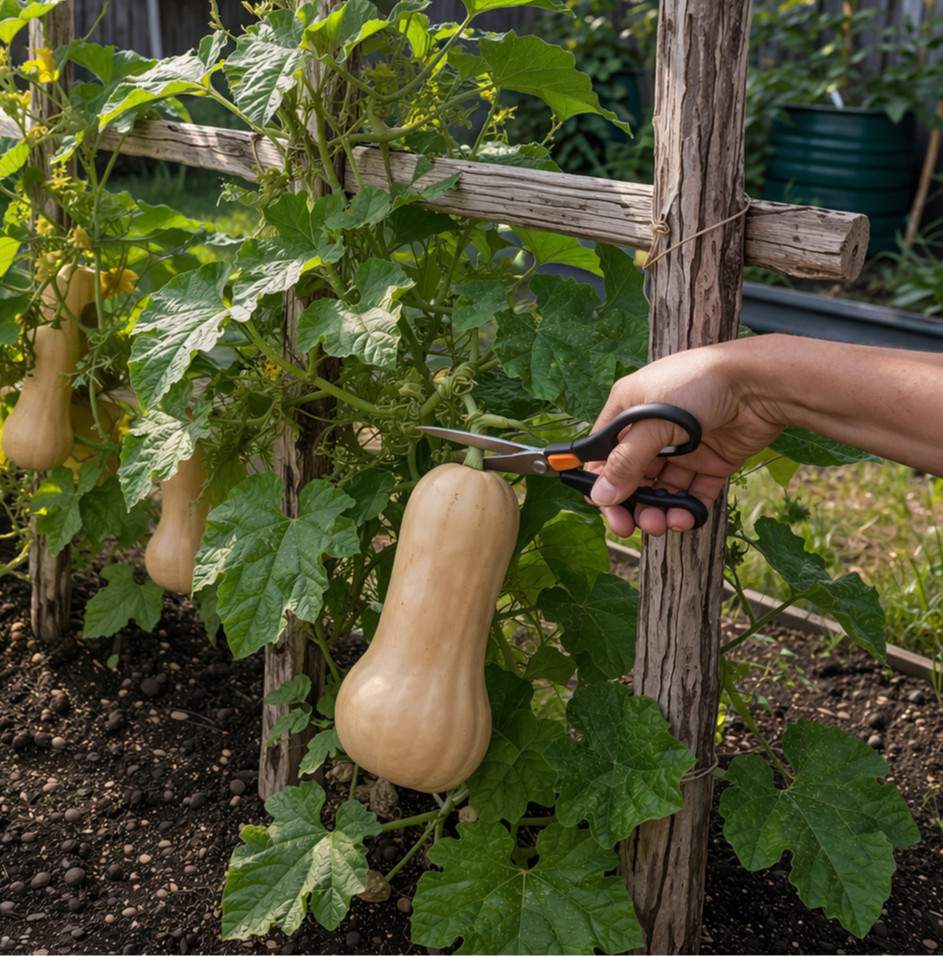
Harvesting squash at the right stage ensures the best flavor, texture, and continuous production.
- Summer squash like zucchini and yellow squash should be picked when they are still tender and medium-sized, usually around 6–8 inches long.
- If left too long, they can become tough and less flavorful.
- Winter squash, such as butternut or spaghetti squash, need to fully mature on the vine and are ready when the skin hardens and the stem begins to dry.
Use a sharp knife or pruners to cut the fruit, leaving a small portion of the stem attached to extend storage life and avoid damaging the plant.
Harvest regularly, especially with summer varieties, as frequent picking encourages more fruits to develop.
How tall should a squash trellis be?
A squash trellis should ideally be at least 5 to 6 feet tall to give the vines enough room to climb and spread.
Vigorous vining varieties can grow even longer, so if you have the space, going taller (around 6–7 feet) is even better.
Do squash plants need support for fruits?
Yes, especially when growing vertically, supporting the fruits is important. As squash grows larger, its weight can strain or even break the vine.
Using simple slings made from cloth, mesh bags, or old T-shirts helps hold the fruit and reduces stress on the plant, allowing it to grow evenly and safely.
How often should I water vertical squash?
Vertical squash plants need consistent and deep watering, usually 2–3 times per week, depending on weather and soil conditions.
In hot or dry climates, you may need to water more frequently. The goal is to keep the soil evenly moist but not waterlogged.
Also Read: 9 Tips for Growing Vegetables
Conclusion
Growing squash vertically becomes much easier with a few simple habits. Make it a routine to check your plants every few days—guide new vines, adjust ties, and ensure fruits are well supported.
Small, consistent efforts prevent bigger problems later and keep your trellis system neat and manageable.
Keep your plants healthy by avoiding overcrowding, rotating crops each season, and maintaining good airflow around the vines.
A strong trellis, regular care, and timely harvesting will ensure your squash plants stay productive and continue growing efficiently throughout the season.

Khaja Moinuddin, a computer science graduate, finds joy in gardening and homesteading. Join him on this blog as he shares his experiences in homesteading, gardening, and composting
A short mention of How grow squash helps readers follow the flow.
We reference How grow squash briefly to keep the thread coherent.