Spider plants water: a concise orientation before we get practical.
Spider plants water: Quick notes
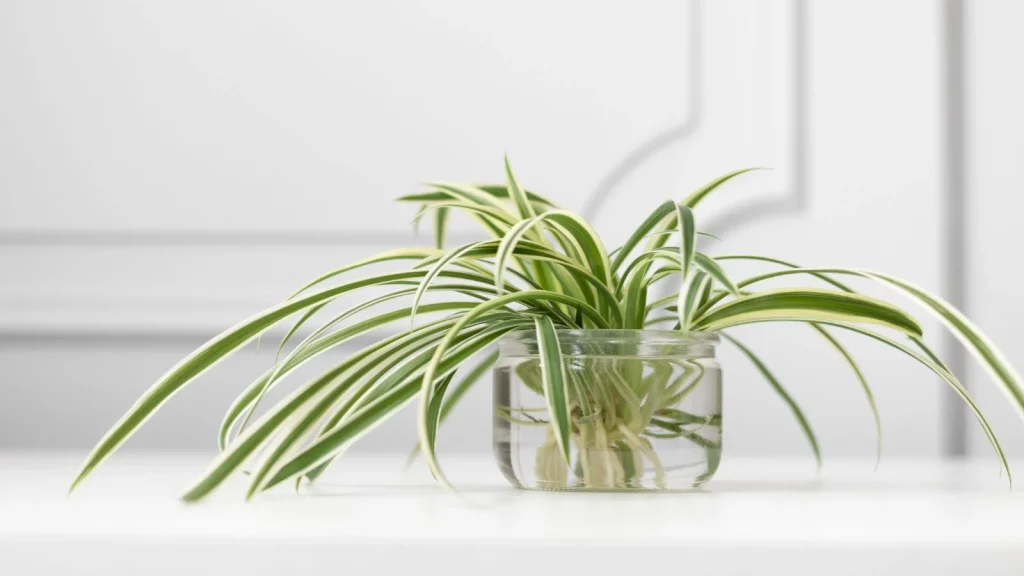
Spider plants are one of my favorite houseplants because they practically propagate themselves. Miniature plantlets dangle from the mother plant, each one just waiting to root and grow independently with almost no effort.
The traditional approach is rooting these plantlets in soil, but water propagation offers some distinct advantages. You can watch roots develop day by day, which is satisfying in a way that soil propagation isn’t. There’s no guessing whether rooting has occurred, since you’ll see it happening in real time through the glass.
Water propagation also eliminates some of the common problems that trip up beginners. There’s no risk of planting incorrectly or keeping the soil too wet or too dry. The process is straightforward enough that even someone who’s never propagated a plant before will likely succeed on the first try.
If you want to grow spider plants in water, follow these easy steps to get it right.
Trim a Plantlet from an Existing Plant
Look for plantlets with existing roots.
Spider plants produce their babies on long stems that emerge from the mother plant as it matures. These plantlets develop aerial roots even while still attached, which is why they’re so eager to establish themselves once given the opportunity.
To grow spider plants in water, first choose a healthy plantlet for propagation. Look for one that’s already developed a good root system to make the process easier. You’ll see small nubs or short roots emerging from the base. Plantlets with established roots transition to independent growth more easily, but even those without visible roots will develop them in water.
Cut the plantlet away using clean, sharp scissors or pruning shears. You can cut right at the base of the plantlet or leave a short section of stem attached. The aesthetics of the mother plant sort of matter more here than the plantlet, as you don’t want random wayward stems hanging on their own.
Some people prefer to leave the plantlet attached to the mother plant until roots are well-developed, then cut it away, but this is a bit trickier when you grow spider plants in water compared to soil.
Fill a Glass with Water
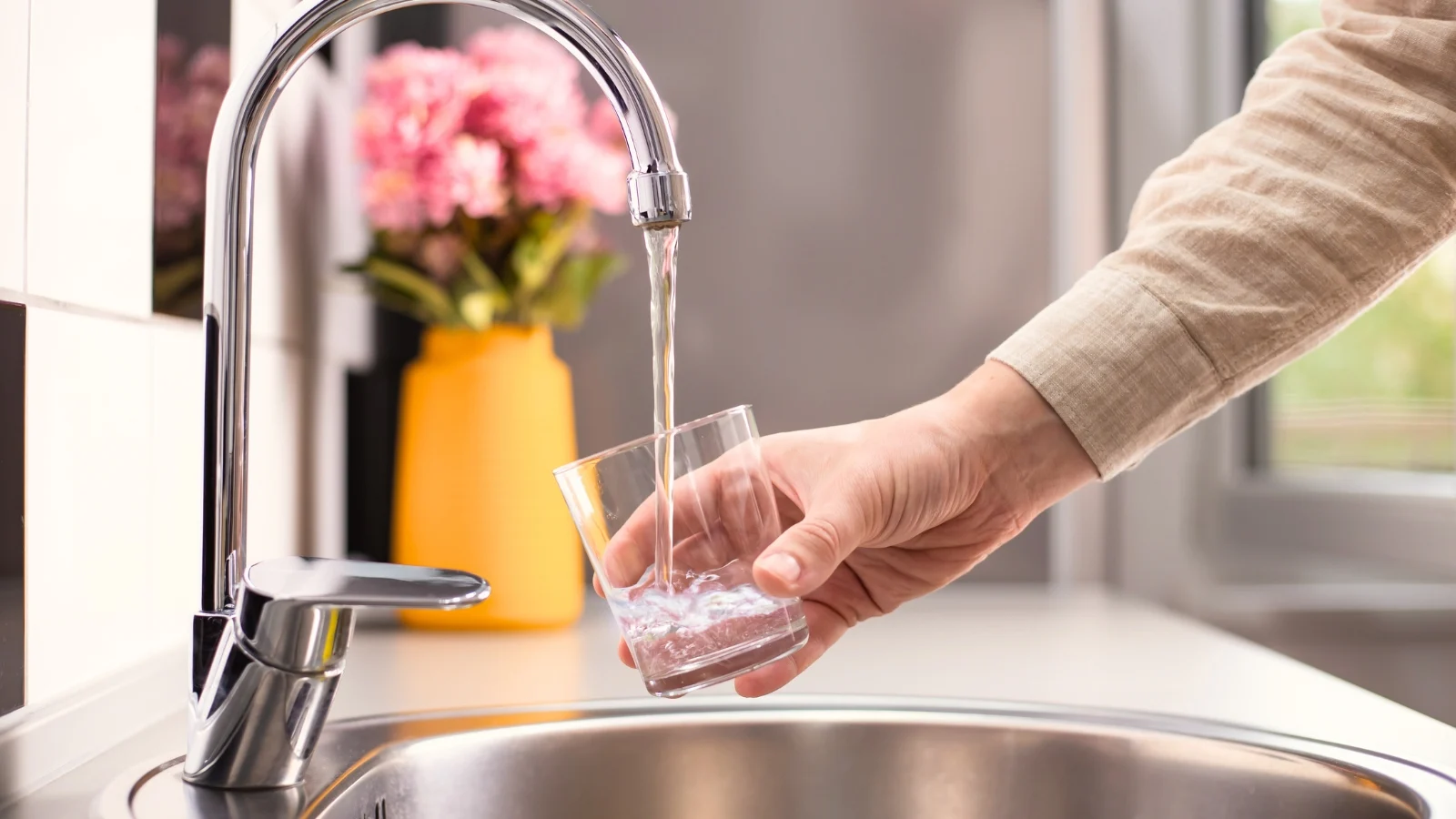 Room temperature tap water is generally fine.
Any glass or clear container works when you grow spider plants in water. I prefer something narrow enough that the plantlet can rest across the opening without falling through, but wide enough that roots have room to spread as they develop.
Small juice glasses, shot glasses, or even clear plastic cups all function perfectly well. If you don’t have one, larger glasses are fine (you’ll see why in the next step).
Fill your container with room temperature water. You want the base of the plantlet submerged just enough to encourage rooting without drowning the entire plant. Fill your glass about three-quarters full initially. This gives you room to adjust the water level once the plantlet is positioned and ensures there’s adequate water volume to support root development without constant refilling.
Cover with Plastic Wrap
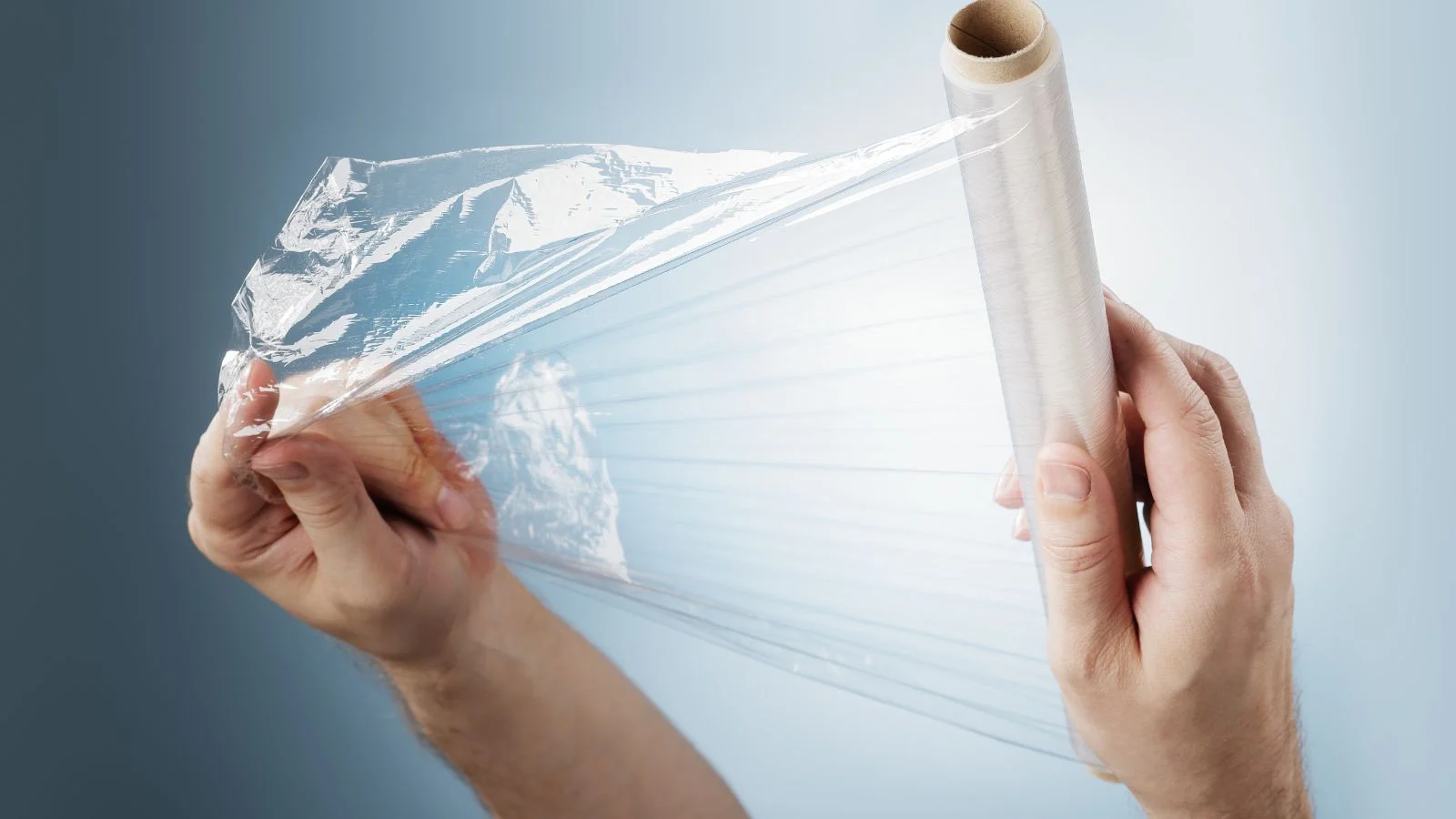 This gives the plant something to rest on.
This step to grow spider plants in water provides support for the plantlet while it’s developing roots. Without something holding it in place, the plantlet either falls completely into the water or sits unstably on the rim of the glass.
Stretch plastic wrap across the opening of your glass and secure it with a rubber band if needed. The plastic should be taut enough to support the weight of the plantlet without sagging into the water. If your plastic wrap keeps slipping, try using two layers or securing the edges more thoroughly.
This covering also helps maintain consistent humidity around the plant during the initial rooting period. While spider plants aren’t particularly fussy about humidity, the extra moisture doesn’t hurt and might speed up root development slightly.
Some people skip this step entirely and use containers with narrow openings where plantlets can rest naturally across the rim. If you have something like a small vase or bottle where the opening is just the right size, that eliminates the need for plastic wrap altogether.
Make a Hole in the Center
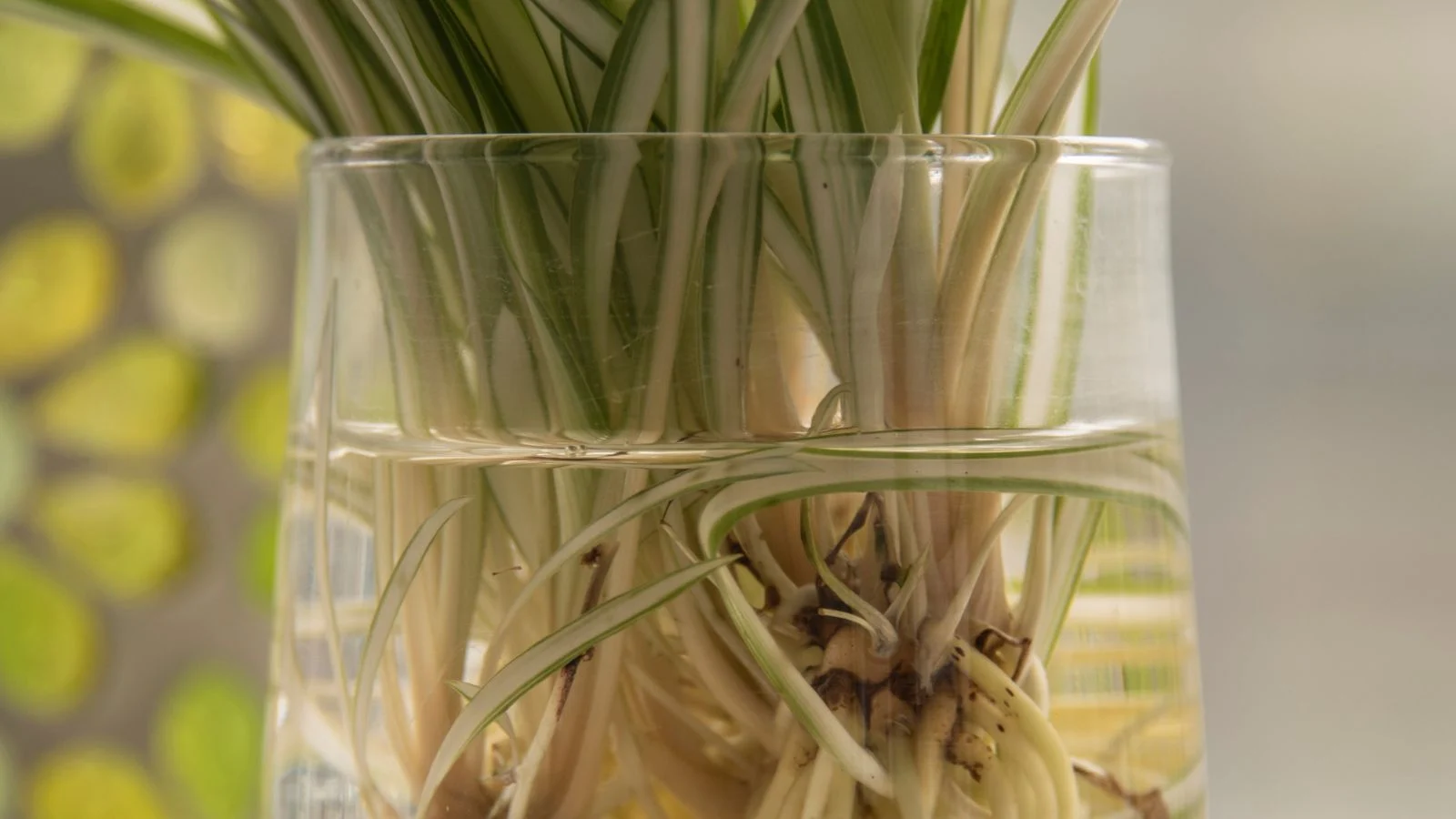 Only the base of the plantlet should sit in the water.
Once your plastic wrap is secured, use a toothpick or skewer to poke a hole through the center. This hole needs to be large enough for the base of your plantlet to fit through, but small enough to support it at the right height.
Start with a small hole and enlarge it gradually if needed to grow spider plants in water. Test the size by gently pressing the base of your plantlet against the opening. It should fit snugly without either falling through or sitting so high that roots can’t reach water.
The exact placement of this hole isn’t critical as long as it’s roughly centered. You just want the plantlet stable and positioned so its base can contact water while leaves stay above the surface and dry.
Rest the Base of the Plantlet in the Water
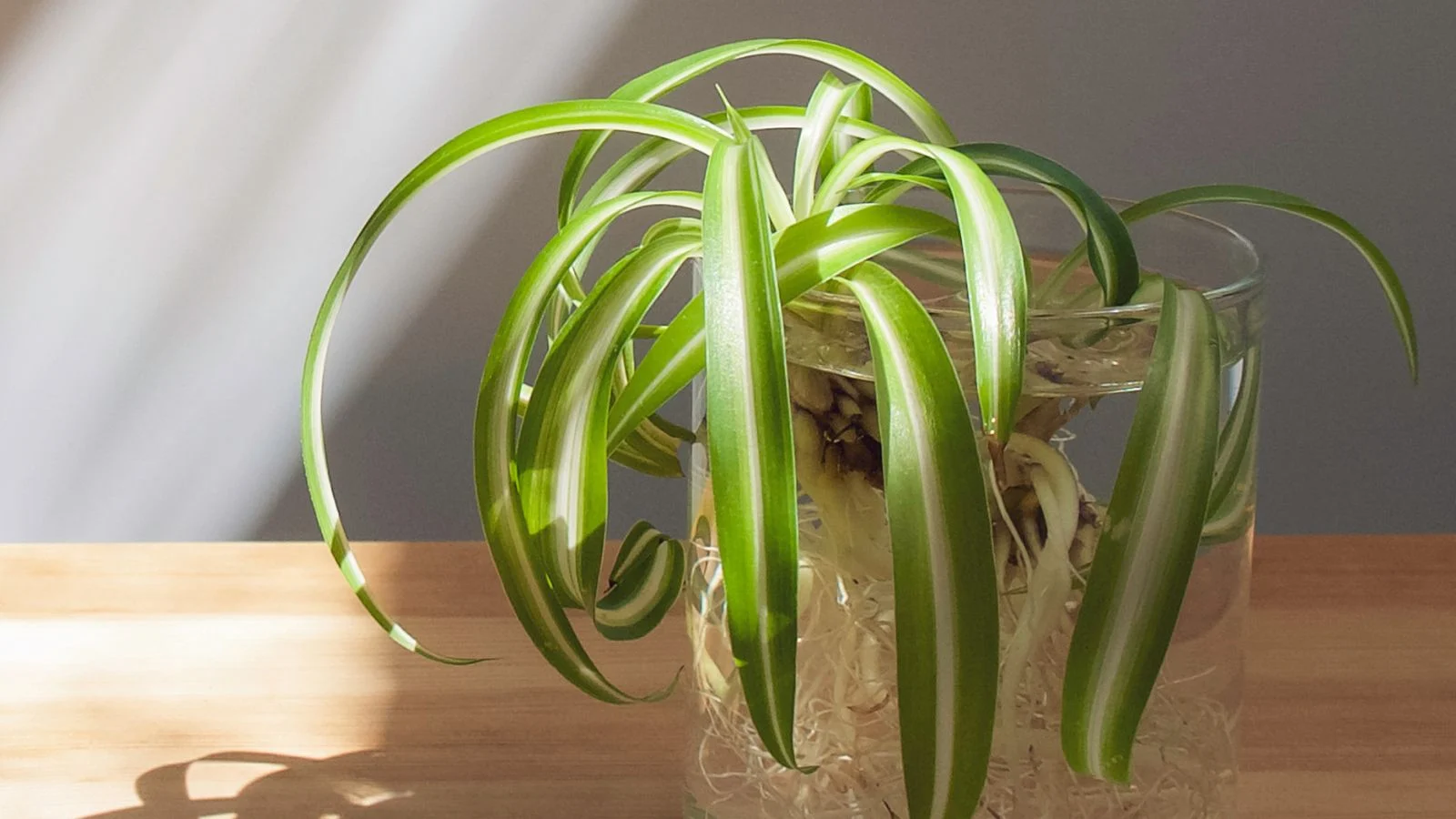
Gently lower your plantlet through the hole in the plastic wrap until its base just touches or sits slightly below the water surface. The goal is to have those developing roots (or the area where roots will emerge) in contact with water while keeping the foliage completely dry.
Adjust the plantlet’s position if needed. It should sit stable and upright rather than tilting dramatically to one side. If it won’t stay in place, the hole might be too large. Try adding another layer of plastic wrap or using a smaller container.
Check that leaves aren’t touching the water. Wet foliage doesn’t hurt established plants, but during rooting, keeping leaves dry reduces the risk of fungal problems developing.
Once positioned correctly, set your glass somewhere with bright, indirect light. A windowsill that doesn’t get harsh direct sun is ideal.
Care
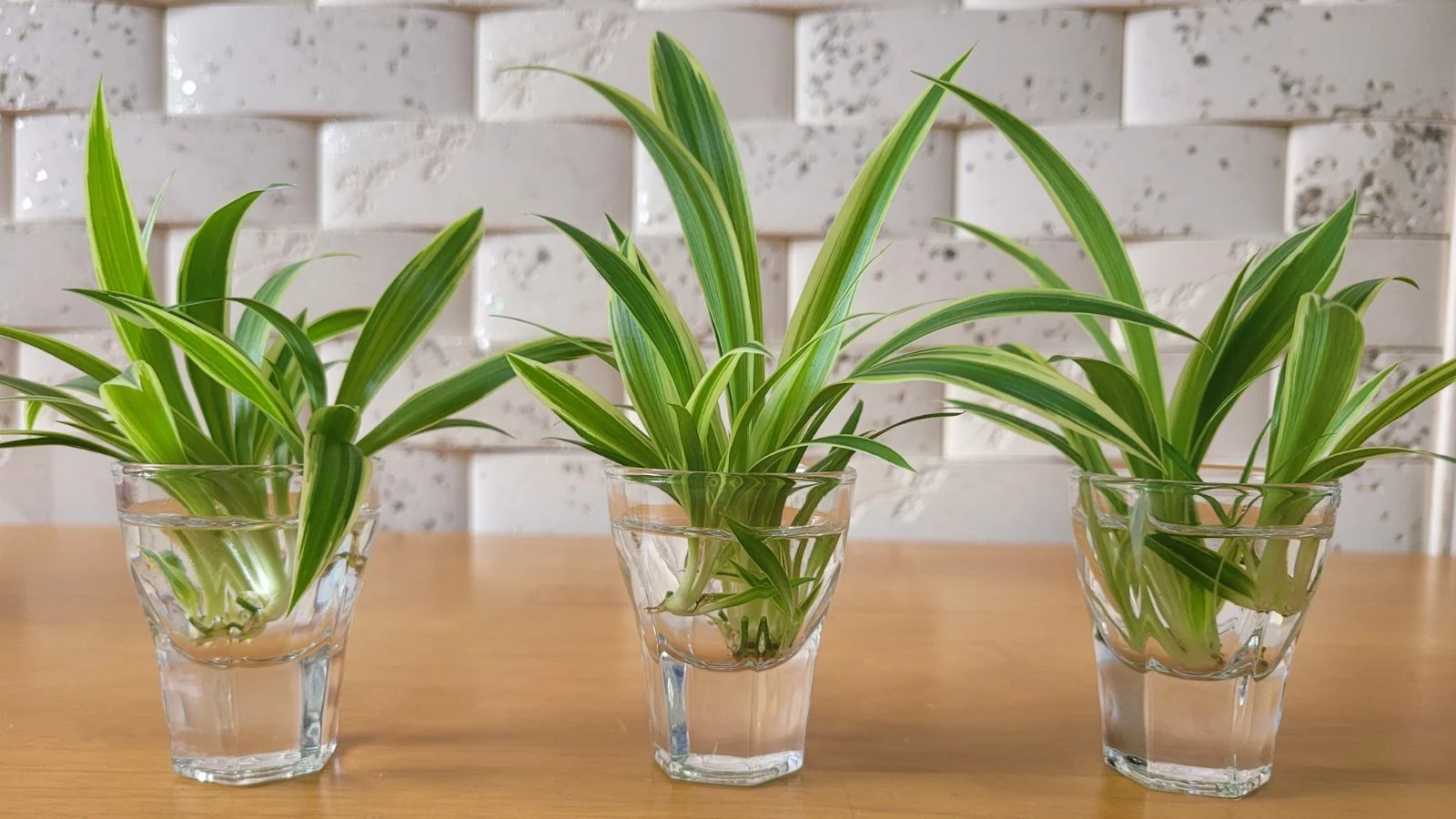 Adjust the water levels as needed.
Spider plant propagation in water requires minimal maintenance, but there are a few things to monitor as roots develop.
Change the water every few days to keep it fresh. Stagnant water can harbor bacteria and provides less oxygen for developing roots. I usually change water every four days or so, though you can stretch this to a week if the water still looks clear. Pour out the old water, rinse the container, and refill with fresh room-temperature water.
Watch for root development over the following weeks. You should see small white roots emerging from the base of the plantlet within a week or two, though timing varies based on environmental conditions.
The water level will drop as it evaporates, so top it off periodically to keep the base of the plantlet submerged. Don’t let it get so low that the roots are exposed to air. They need constant moisture at this stage.
If you notice the water turning cloudy or developing an odor, change it immediately. This indicates bacterial growth that could harm developing roots. Also check the plantlet’s base for any signs of rot. If tissue is turning brown or mushy, trim away affected areas and start fresh with clean water in a clean container.
Some people add a tiny amount of liquid fertilizer to the water once roots are well-established, but this isn’t necessary unless you want to continue growing in water long-term. Spider plants will do fine in plain water until you’re ready to transplant them to soil.
Spider plants water comes up here to connect ideas for clarity.
A short mention of Spider plants water helps readers follow the flow.