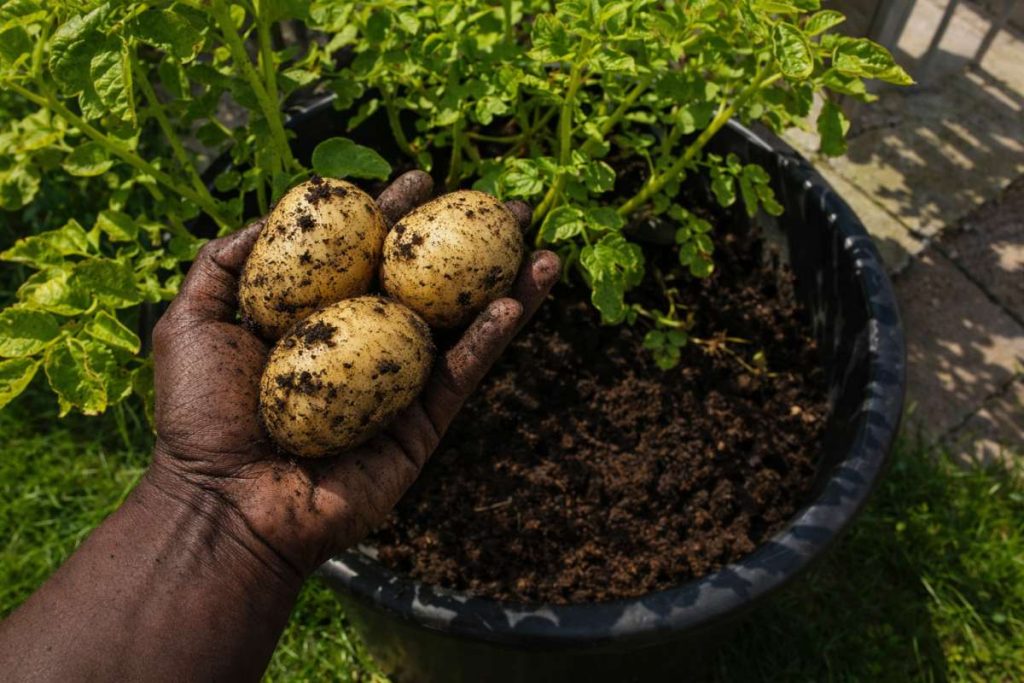
How grow potatoes — a quick note to anchor this piece for readers.
How grow potatoes: Quick notes
If you want the real flavor and texture of potatoes, then grow them in your backyard. Store-bought potatoes can never match homegrown tubers.
Don’t worry if you don’t have garden space—you can easily grow them in containers. Just be a bit careful, as even small mistakes can cause the tubers to rot or die.
So, how to start?
What’s the best way to grow potatoes in pots?
Choosing the right seed potato variety is vital—go for healthy, certified seed potatoes that suit your climate and container growing.
Plant them in a large pot with loose, well-draining soil, and as the plants grow, keep adding soil around the stems to encourage more tubers.
Keep the soil consistently moist (not soggy) and give them plenty of sunlight—stay on top of these basics, and you’ll get a great harvest.
Best Time to Plant Potatoes in Containers
If you’re wondering when to plant potatoes in containers, timing really makes a big difference. Potatoes grow best in cool weather, so you want to avoid extreme heat right from the start.
In most places, the ideal time is early spring—right when the risk of hard frost is almost gone and the soil starts warming up. If you live in a warmer climate, you can even plant in late winter or try a second round in early autumn.
The key is simple—plant when it’s cool, not cold, and give them enough time to grow before the heat kicks in. Get the timing right, and your container potatoes will grow faster, healthier, and produce better tubers.
How to Choose the Right Container?
When it comes to choosing the right container, think big and breathable. Potatoes need space to grow, so pick a pot that’s at least 12–15 inches deep with good drainage holes—this is non-negotiable.
You can use grow bags, buckets, or even large plastic containers, but make sure excess water can escape easily to prevent rot. Fabric grow bags are especially great because they allow better airflow and help keep the soil from getting too soggy.
Best Potato Variety to Grow in Containers
Choosing the right potato variety is key when growing in containers. Not all potatoes perform the same in limited space, so it’s best to go for types that stay compact and mature quickly. This helps you get a better harvest without overcrowding the pot.
Early varieties like “baby” or new potatoes are usually the best choice. They grow faster, take up less space, and are ready to harvest sooner compared to larger, late-season types. Plus, they’re perfect if you want a quick and reliable yield in containers.
Some great container-friendly varieties include:
- Yukon Gold
- Red Pontiac
- Fingerling potatoes (like French Fingerling)
- Russet (in larger containers)
Just make sure you’re using certified seed potatoes, as they’re disease-free and give you healthier, more productive plants.
How to Plant Potatoes in a Container?
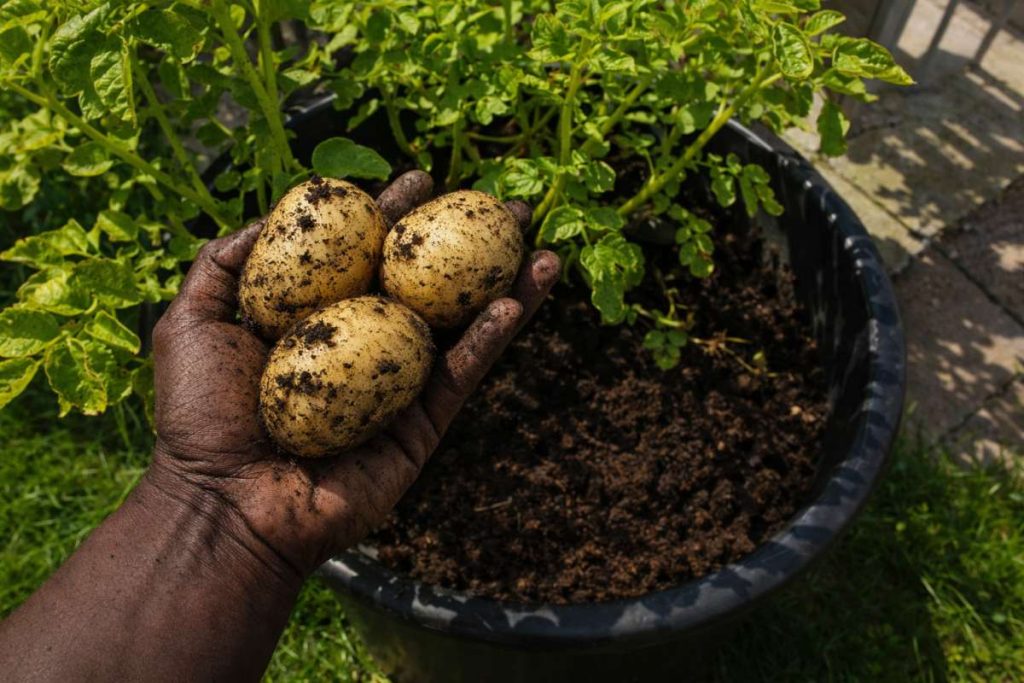
Let’s walk through it step by step—planting potatoes in a container is simple, and once you get the hang of it, it becomes a really enjoyable process you’ll want to repeat every season.
Step 1: Choose and prepare your container
Go for a large container that’s at least 12–15 inches deep and wide enough to give the roots room to spread.
Good drainage holes at the bottom are a must—without them, excess water can build up and cause the tubers to rot.
You can use grow bags, buckets, or sturdy pots. Start by adding 4–6 inches of loose, well-draining soil at the base.
A mix that’s light and airy works best, as it allows the potatoes to grow and expand easily.
Step 2: Select and place seed potatoes
Use healthy, certified seed potatoes for the best results. If they’re large, you can cut them into pieces, making sure each piece has at least one or two “eyes” (the small sprouts).
Let the cut pieces dry for a day before planting to reduce the risk of rot.
Place them on the soil with the eyes facing upward, spacing them out so they don’t compete for space—usually 2–3 pieces per container is ideal.
Step 3: Cover with the first layer of soil
Gently cover the seed potatoes with another 3–4 inches of soil. At this stage, don’t fill the container all the way to the top.
Leaving space is important because you’ll keep adding more soil as the plants grow. This layering method is what helps increase your overall yield.
Step 4: Water carefully
After planting, water the container lightly but thoroughly so the soil is evenly moist.
From here on, your goal is to keep the soil consistently moist—not too dry and definitely not soggy.
Containers can dry out faster than garden beds, so it’s a good idea to check the moisture regularly, especially in warm weather.
Also Read: How to Grow Potatoes in Tires?
Step 5: Wait for growth and start hilling
In a couple of weeks, you’ll start to see green shoots emerging. Once the plants reach about 6–8 inches tall, begin hilling by adding more soil around the stems.
Leave the top few inches of the plant exposed. This step is key—potatoes form along the buried portion of the stem, so the more you hill, the more tubers you can potentially get.
Step 6: Keep repeating the hilling process
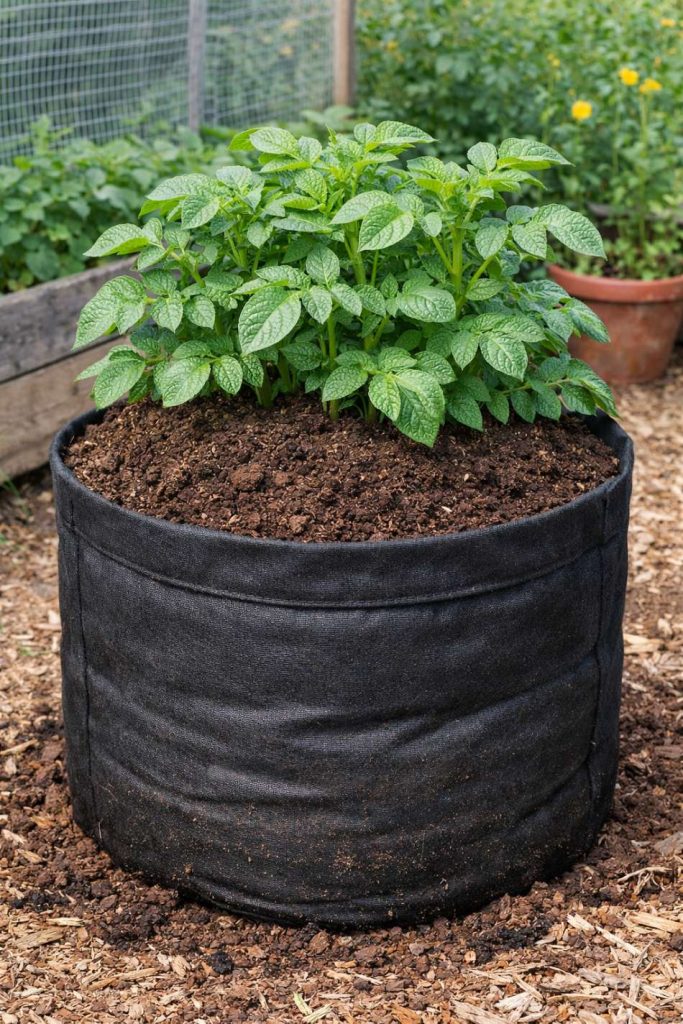
As the plants continue to grow taller, keep adding more soil every time they gain a few inches in height.
Gradually fill the container this way until it’s nearly full. It might feel like a small step, but this repeated hilling is what really boosts your harvest in a container setup.
Step 7: Provide sunlight and ongoing care
Place your container in a spot that gets at least 6–8 hours of sunlight daily. Keep watering regularly, especially during dry or hot days, but avoid letting the soil become waterlogged.
You can also add a light feeding every couple of weeks to support healthy growth, though it’s not always necessary if your soil is rich.
Step 8: Watch for signs and be patient
As the plants mature, they’ll grow lush and green. Over time, you may notice the leaves starting to yellow and die back—this is a sign that your potatoes are nearing harvest time.
At this stage, reduce watering slightly and let the plants finish their cycle.
Stick with this process, and you’ll not only grow healthy potato plants but also enjoy the satisfaction of harvesting them straight from your container.
And honestly, digging into that soil and pulling out fresh potatoes—it never gets old.
How to Care for Potato Plants?
Potatoes are relatively low-maintenance, but consistent care is what really makes the difference between an average harvest and a great one.
Since container-grown plants rely entirely on you, it’s important to stay on top of the basics throughout the growing period.
1. Watering Matters Most
Watering plays a key role in healthy tuber development. Keep the soil evenly moist, but not waterlogged—too much water can lead to rot, while dry soil can slow growth or cause uneven potatoes.
Make sure your container drains well, and check the soil regularly, especially in warm weather.
2. Give Them Plenty of Sunlight
Potato plants need at least 6–8 hours of direct sunlight daily. Without enough light, the plants can become weak and produce fewer potatoes.
Place your container in a bright, open spot where it can get consistent sun throughout the day.
3. Feed for Better Growth
Feeding your plants every couple of weeks can help boost growth. Use a balanced fertilizer to support both foliage and tuber development.
Just don’t overdo it—too much fertilizer can lead to lots of leaves but fewer potatoes.
4. Keep Hilling as They Grow
Continue adding soil around the stems as the plant grows taller. This process, called hilling, helps more potatoes form along the buried stems and also protects them from sunlight, which can turn them green.
Check this: How to Grow Potatoes in Winter?
5. Watch for Problems Early
Keep an eye on your plants for signs of pests or disease. Yellowing leaves, spots, or slow growth can signal an issue.
As the plants mature, the leaves will naturally start to yellow and die back—this is your sign that harvest time is getting close.
When to Harvest?
Knowing when to harvest your potatoes is just as important as growing them. The timing depends on the type you planted and what kind of potatoes you want—small, tender ones or fully mature tubers.
For Baby (New) Potatoes
If you’re after small, tender potatoes, you can harvest them early—usually 6–8 weeks after planting.
Once the plants start flowering, it’s a good sign that new potatoes are ready. You can gently dig around the soil and pick a few without disturbing the whole plant.
For Fully Mature Potatoes
For bigger, storage-ready potatoes, wait until the plant’s leaves turn yellow and start to die back.
This usually happens around 10–12 weeks or more, depending on the variety. At this stage, stop watering and let the soil dry out a bit before harvesting.
How to Harvest Properly?
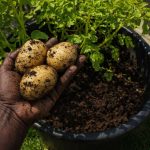
Gently dig into the soil with your hands or a small tool and lift the potatoes carefully to avoid damage. Let them dry for a few hours before storing.
Freshly harvested potatoes from your container will taste noticeably better—and honestly, it’s the most rewarding part of the whole process.
Also Read: How to Store Potatoes After Harvest?
Conclusion
Growing potatoes in containers is simple, rewarding, and perfect even if you don’t have a traditional garden space. With the right variety, a good container, and a bit of consistent care, you can enjoy a healthy and productive harvest right at home.
Just focus on the basics—proper planting, regular watering, enough sunlight, and timely hilling—and your plants will do the rest. And once you harvest your own fresh, homegrown potatoes, you’ll realize it’s absolutely worth the effort.

Khaja Moinuddin, a computer science graduate, finds joy in gardening and homesteading. Join him on this blog as he shares his experiences in homesteading, gardening, and composting
How grow potatoes comes up here to connect ideas for clarity.
A short mention of How grow potatoes helps readers follow the flow.