

Christmas cactus water: a concise orientation before we get practical.
Christmas cactus water: Quick notes
Most people grow Christmas cacti in soil, but these adaptable plants can also live in water. This is usually a temporary setup used for propagation, but if you take care of your cuttings, they can live for quite a while in the water alone, making a beautiful holiday display.
The setup is simple, and the exposed roots create an interesting visual element you don’t get with traditional potted plants.
If you’re curious about trying something different with your Christmas cactus, grow in water this holiday season. You can transplant into soil later, or see how long you can keep stems going in water alone.
Choose a Stem
Start with healthy stems for strong growth.
If you want a full-looking Christmas cactus in water from the start, you may be tempted to transplant a whole plant from soil. Unfortunately, you’ll more than likely end up with a dead plant this way. Roots that are accustomed to growing in soil can’t survive the same way in water and will likely rot, so you need to take cuttings to grow new roots suitable for water.
Start by selecting a healthy stem from your existing Christmas cactus. To grow a Christmas cactus in water, you want one with at least three to four segments that looks healthy and free from damage. Avoid stems that are thin, yellowed, or show any signs of disease or pest damage.
Any healthy growth will work, though stems that already have some branching tend to create fuller plants faster. Longer stems give you more immediate visual impact, but shorter ones will catch up over time, so don’t worry too much if you can’t find the perfect stem.
If you’re taking a cutting specifically for water growing, choose a stem from a fuller area of the plant where removing it won’t leave an obvious gap. This way, you’re essentially pruning and propagating at the same time, benefiting both the mother plant and your new water-grown specimen.
Remove a Cutting
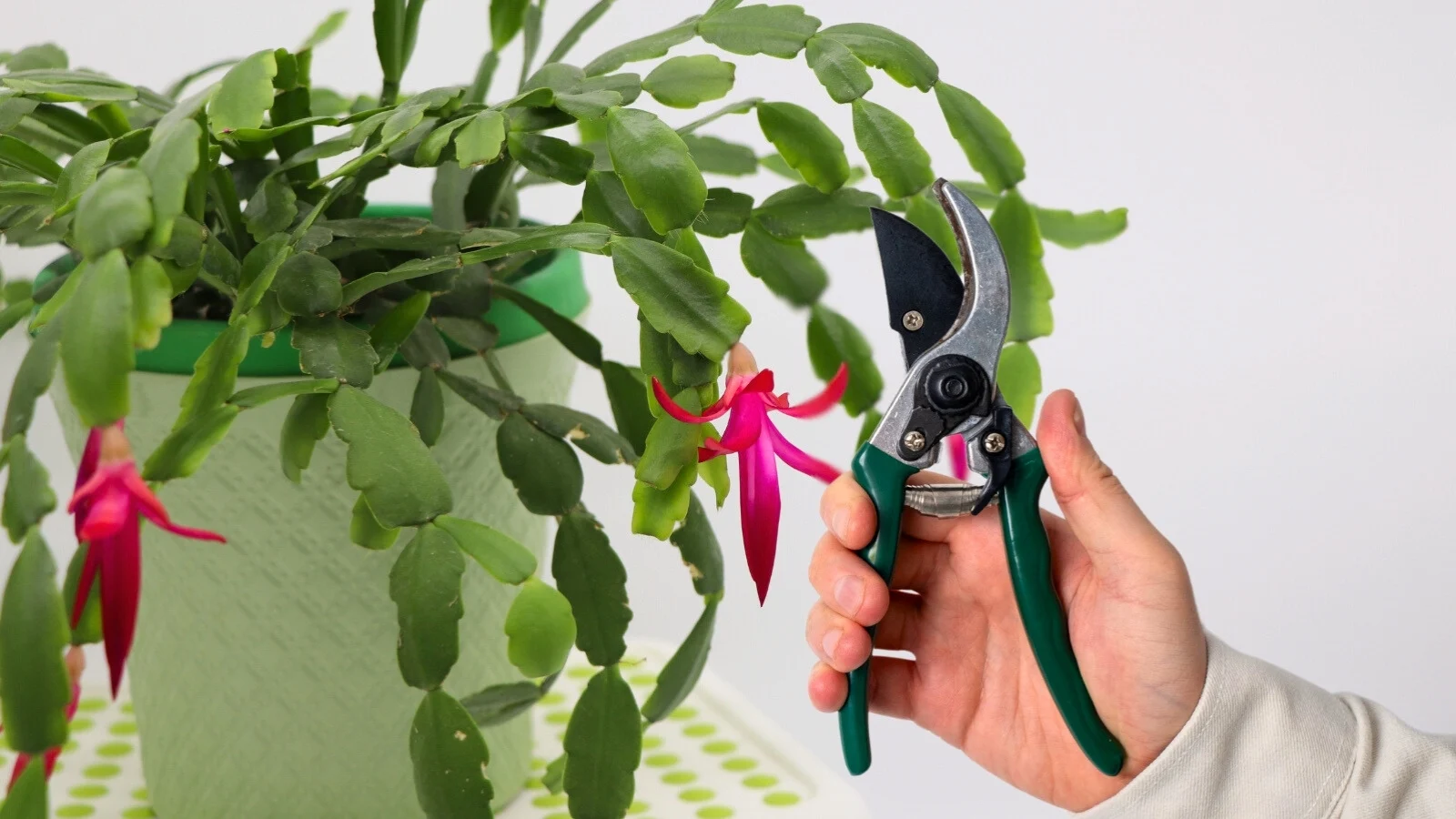 Trim a stem with several segments.
Make your cut at a segment joint using clean, sharp scissors or pruning shears. Cutting through the middle of a segment rather than at the joint looks messy and doesn’t heal as cleanly.
Gently twist the segments at the joint while pulling to separate them, or simply cut through the narrow connection point. Either method works fine as long as you’re careful not to crush or damage the tissue. A clean separation or cut heals faster and roots more readily.
Fill a Vase with Pebbles and Water
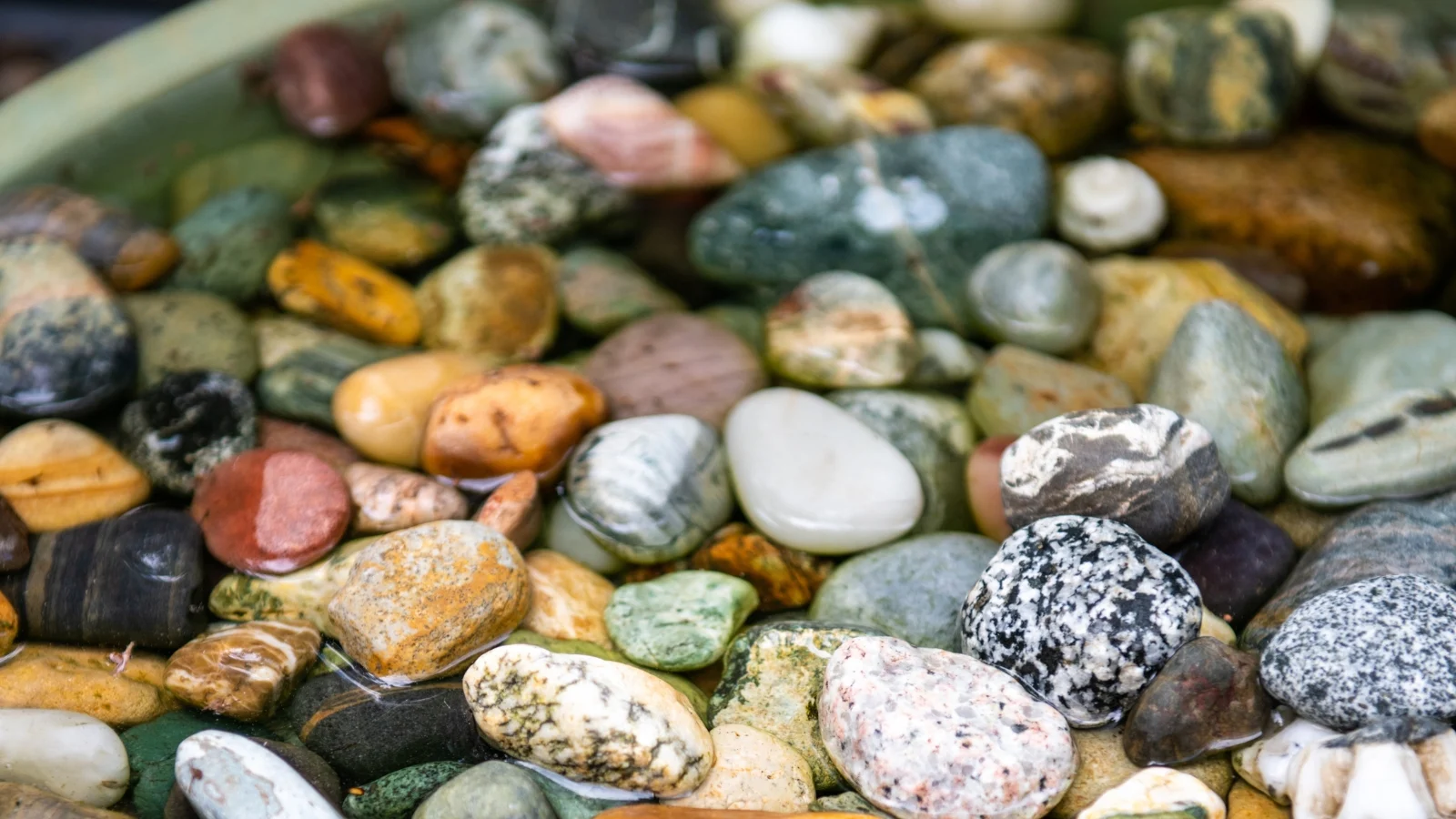 Use pebbles to keep part of the cutting upright.
Choose a clear glass container to grow Christmas cactus in water so you can watch the roots develop and monitor water levels easily. The size depends on how large you want your plant to grow. Narrow vases or jars help support the cutting upright, though wider containers work if you add enough pebbles.
Add a layer of small pebbles, aquarium gravel, or glass beads to the bottom of your container. This supports the cutting in an upright position and gives the roots something to anchor to as they grow.
Fill the container with water up to just below where the pebbles end. You want the water level high enough that the cutting will reach it, but not so high that all the pebbles and the entire stem are completely submerged. Also, room temperature tap water is fine.
Submerge the Cutting
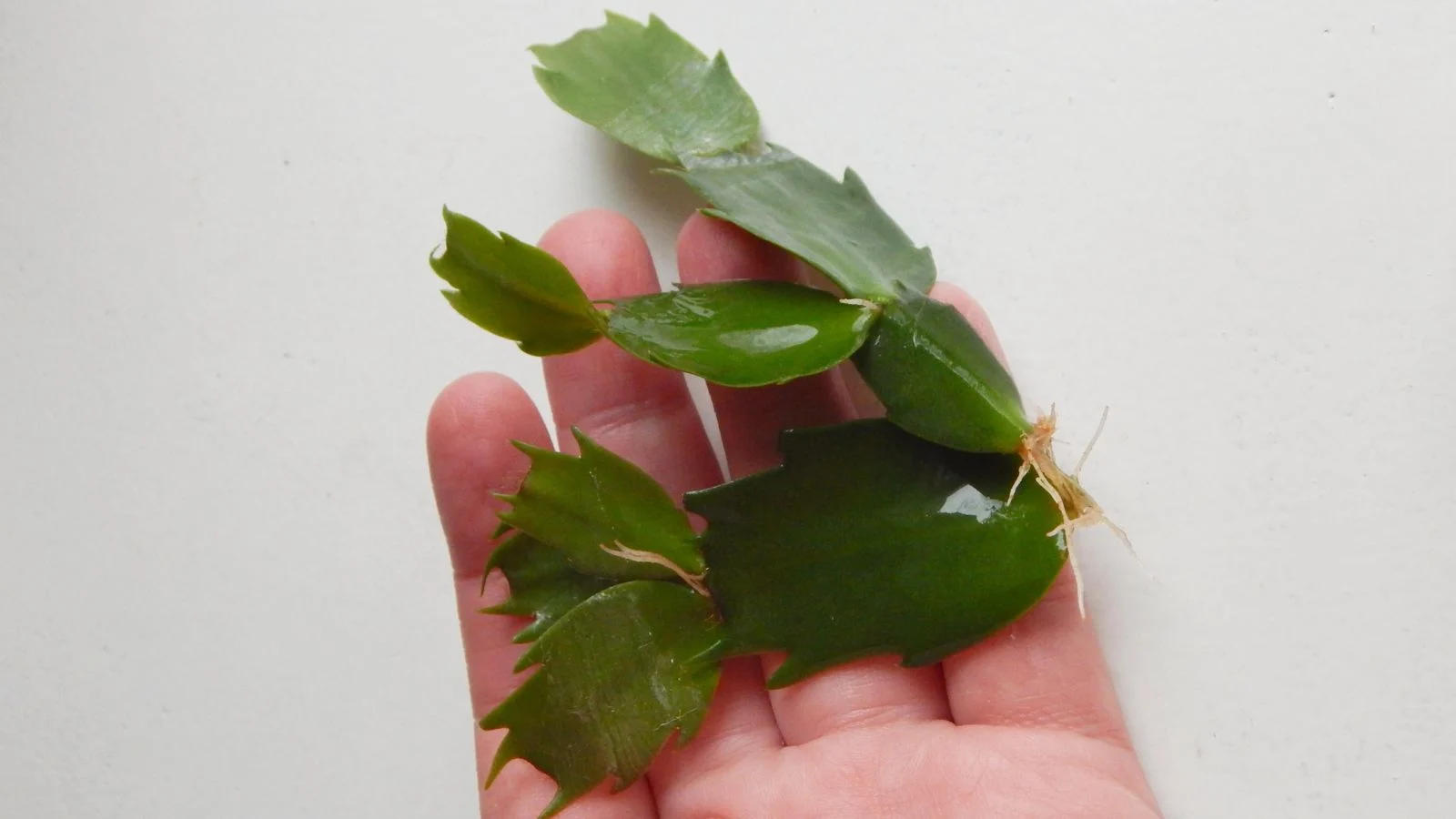 Place the bottom of the cutting in water.
Place your cutting into the container so the bottom one or two segments are submerged in water while the rest of the plant stays above the water line. The pebbles should hold it upright, but if it keeps falling over, add more pebbles to wedge it into position.
Only the bottom segments should touch water. Submerging too much of the cutting can lead to rot, especially in those first few weeks before roots establish. The segments above water need to stay dry to prevent bacterial or fungal issues.
Within a week or two, you should see small white roots emerging from the submerged segments. These roots look different from soil-grown roots, as they’re often thinner and more delicate. That’s normal for water-grown plants. As the roots develop, they’ll spread through the pebbles and fill the container.
If you don’t see roots after two or three weeks, don’t panic. Some cuttings take longer than others, depending on the time of year and the cutting’s condition. As long as the segments look healthy and firm rather than mushy or discolored, just keep waiting, and your Christmas cactus will grow in water fine.
Move the Container to a Bright Spot
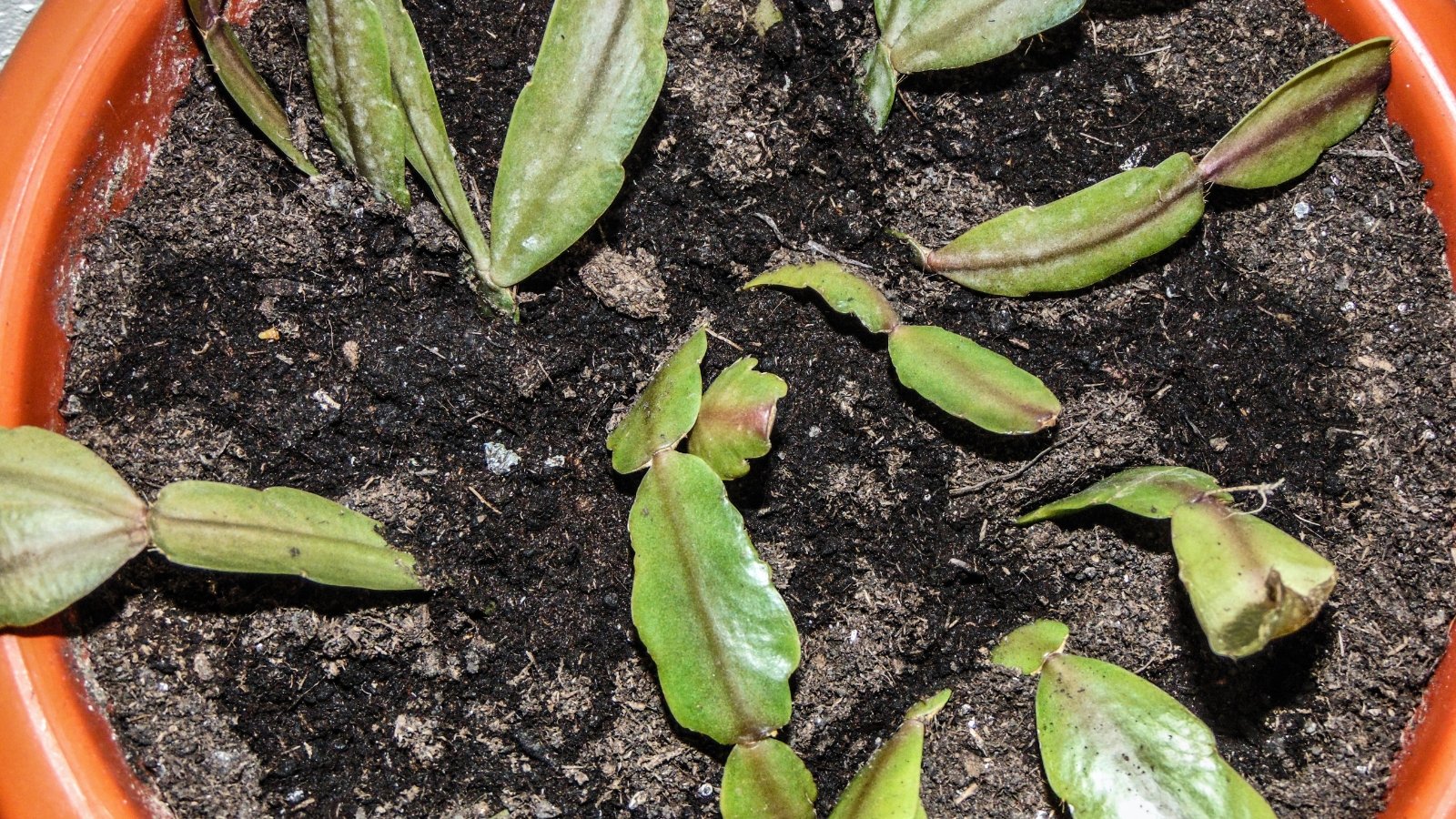 A sunny spot promotes quick root growth, whether you’re growing in soil or water.
Christmas cacti need bright, indirect light, whether they’re grown in soil or water. Place your container near a window that gets good light without harsh direct sun.
Avoid placing your water-grown cactus in dim corners or rooms with little natural light. Without adequate light, the plant will struggle to photosynthesize effectively, and growth will be weak and sparse. You might see roots develop, but the above-water portions will look sad and eventually decline.
Temperature matters too, though Christmas cacti are fairly adaptable. They prefer temperatures between 55°F and 70°F (13-21°C) around the holidays, which describes most indoor environments. Just keep them away from heating vents, air conditioning units, or drafty windows where temperature fluctuations could stress the plant.
The clear container means algae growth is inevitable over time as light reaches the water. This isn’t harmful to your Christmas cactus, but it looks unattractive. If algae becomes a problem, empty and rinse the container, clean the pebbles, and refill with fresh water. Keeping the container out of direct sunlight helps slow algae growth.
Top Up as Needed
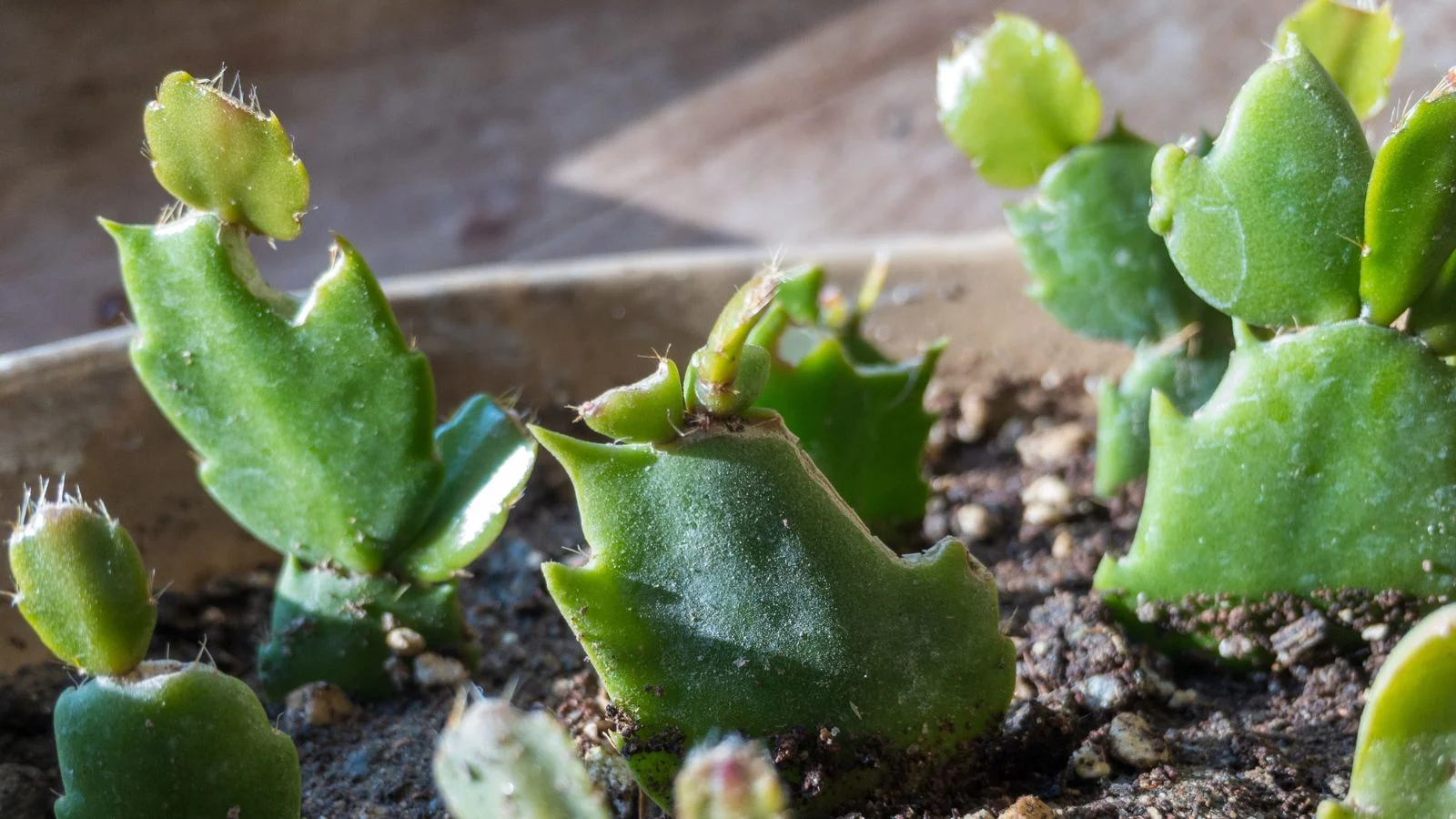 Continue to replace water as you would care for cuttings in soil.
Water will evaporate from your container, especially during winter when indoor heating dries out the air. Check the water level weekly and add more as needed to maintain the same depth. The roots should always be submerged, though the segments themselves should stay above the water line.
Use room temperature water when topping up to avoid shocking the roots with cold water straight from the tap. If your tap water is particularly hard or mineral-heavy, you might notice white deposits building up on the pebbles or container sides over time. This is normal, but can be cleaned during your periodic water changes.
Every month or so, empty the container completely and refill it with fresh water. This prevents the buildup of mineral salts and any potential bacterial or fungal issues from stagnant water. It’s also a good opportunity to rinse the pebbles and wipe down the inside of the container if algae or deposits have accumulated.
Some people add diluted liquid fertilizer to the water to boost growth and flowering. If you want to try this when you grow Christmas cactus in water long-term, use a fertilizer designed for houseplants at one-quarter the recommended strength (or even less). Too much fertilizer in water culture can burn the roots or encourage algae growth, so less is definitely more here.
A short mention of Christmas cactus water helps readers follow the flow.















On a similar note – Nice timing — I’ve been thinking about something like this. Thanks for this!
Heads up: This tip on “How to Grow Christmas Cactus in Water” is so useful — thanks for sharing. So homey.
I appreciate the tips — super useful and friendly. Thanks for this!
Small note · I like how you phrased that — very natural.