
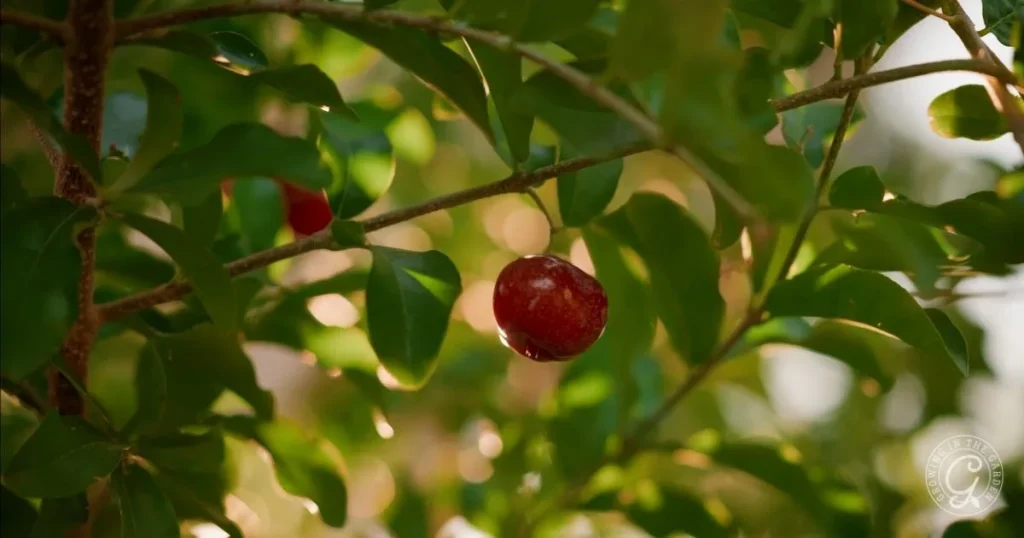
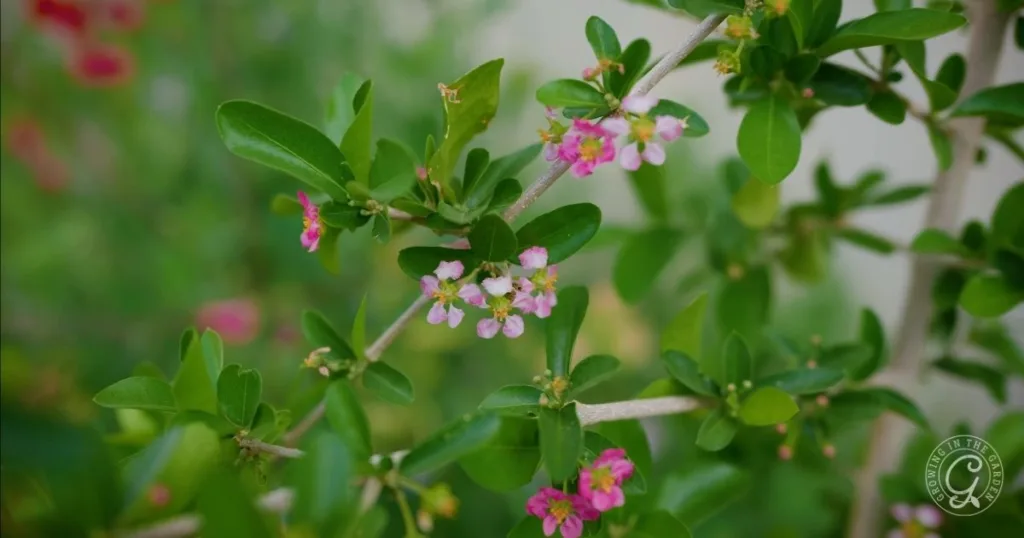
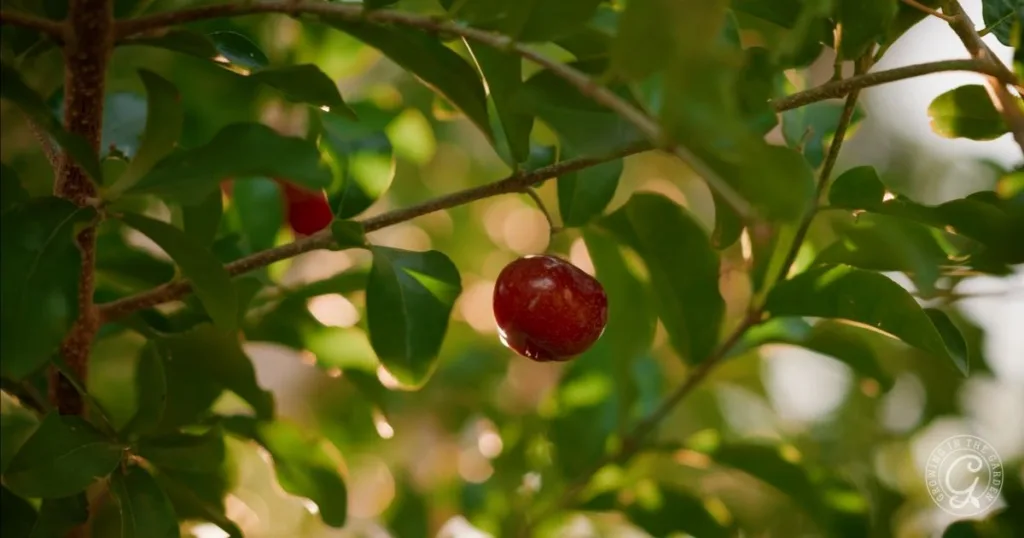
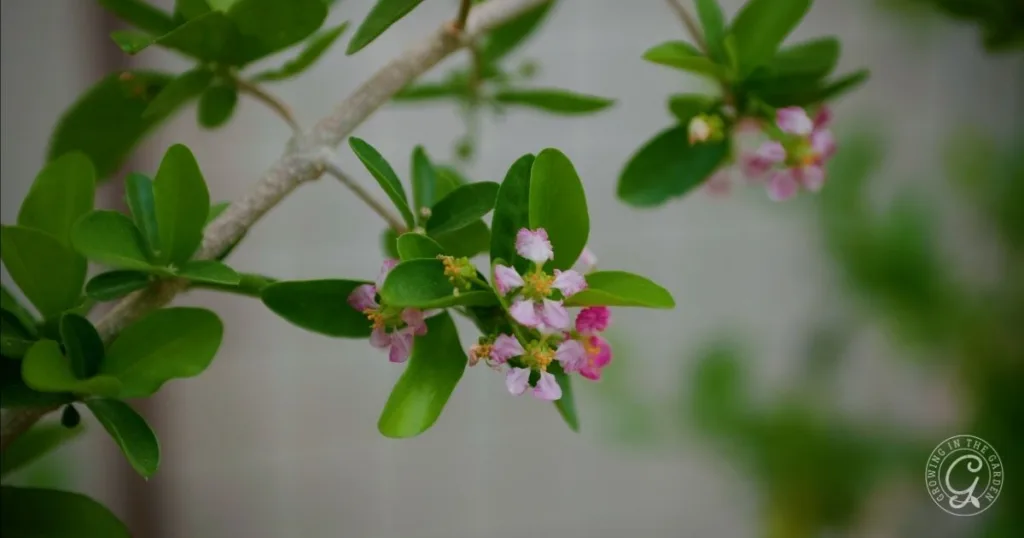
If you have ever tasted a ripe Barbados cherry (also called acerola or West Indian cherry), you know why gardeners get excited about it. The fruit is small, bright red, and famously rich in vitamin C. The plant itself is a pretty, evergreen (or semi-evergreen) shrub or small tree with pink flowers that can show up over a long season.
Barbados cherries are not a temperate “cherry tree” (Prunus) like Bing or Rainier. It is a tropical to subtropical fruiting shrub, and that matters in the low desert because our biggest challenge with growing Barbados cherries are cold snaps, wind, and getting young plants through the first intense summer.
Key Takeaways
- Barbados cherries thrive in warm climates but struggle with cold snaps; site selection and freeze protection are essential.
- These fruits grow best in full sun but may need some shade during extreme heat; good drainage is necessary for their growth.
- Plant Barbados cherries in spring after frost or early fall for best establishment; space them 10-15 ft apart for single trees.
- Water regularly during establishment and blooming for better fruit production; they can tolerate some drought but yield improves with consistent moisture.
- Common issues include freeze damage, salt buildup, and pests; protect young plants and monitor for pests to ensure healthy growth.
Quick facts
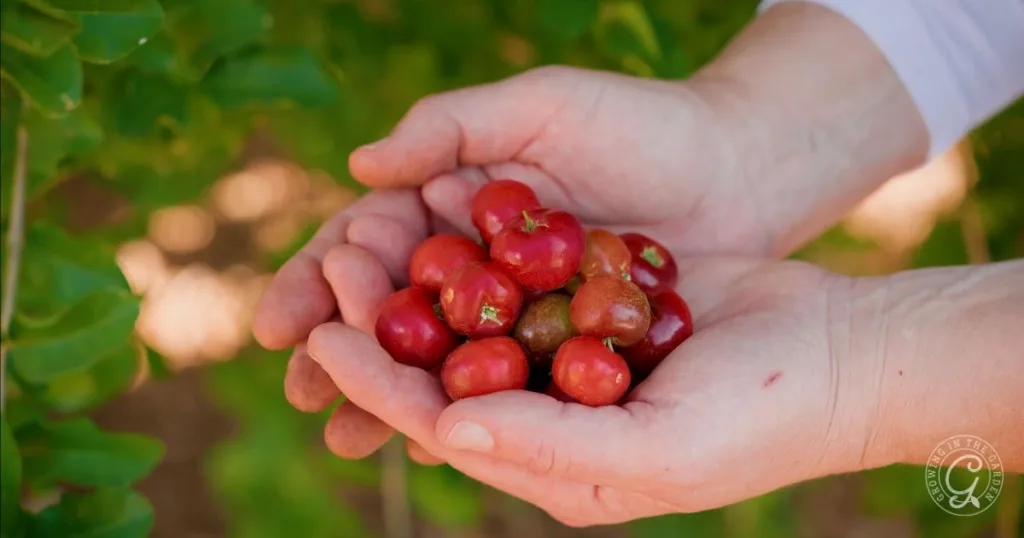
- Plant type: Shrub or small tree, often 8–15 ft tall (2.4–4.6 m), can be kept smaller with pruning
- Sun: Full sun for best flowering and fruit, but partial shade can help during extreme heat
- Soil: Needs good drainage, tolerates a range of soil types
- Cold tolerance: Young plants can be damaged around freezing, mature plants may survive brief cold dips but can lose leaves and suffer twig damage
- Fruiting: Fruit often ripens about 3–4 weeks after bloom, flowering can repeat through warm months
- Harvest note: Fruit bruises easily and deteriorates quickly. Refrigerate or freeze soon after picking
Can Barbados cherry grow in the low desert?
It can, but it is not “plant it and forget it” like citrus. Barbados cherry is best suited to warm climates; our occasional freezes make site selection and freeze protection a big part of success. Plant it in a warm microclimate and plan to cover it during cold snaps.
Which other fruit trees grow well in the low desert?
When to plant in the low desert
You want to plant so the tree can get established before it gets too hot or too cold.
- Spring: After frost risk has passed (often March in the Phoenix area) but before it gets hot
- Fall: Early fall (September), so it can establish before it gets cold
Where to plant Barbados cherry
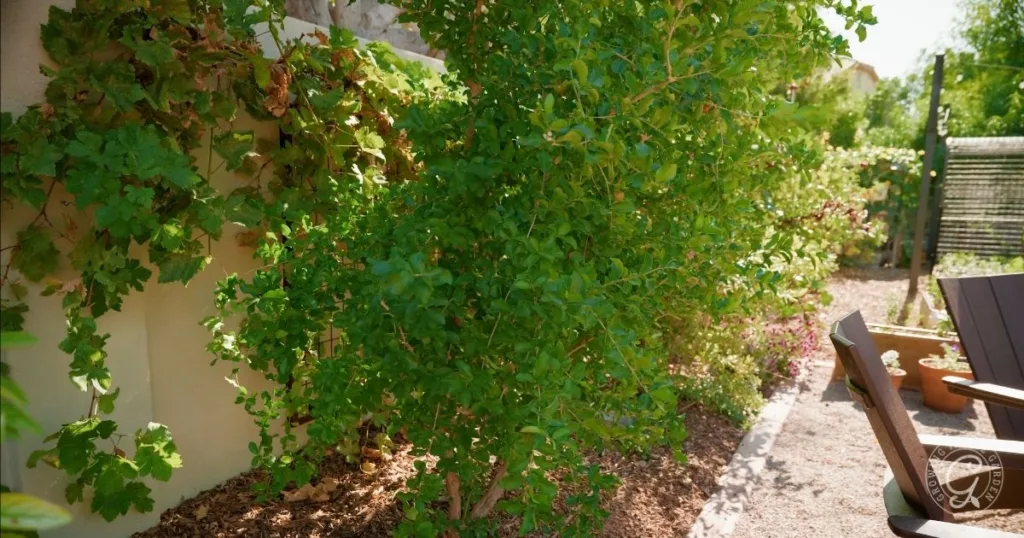
Barbados cherry fruits best with plenty of sun, but in the low desert, full sun in June and July can stress new plants.
- Full sun in winter. Young trees may need afternoon protection in summer, like filtered shade, shade cloth, or light shade from a high-canopy tree. Sunburn can damage trunks and invite pests, so the trunk-protection tips in How to Protect Citrus Bark from Sunburn are helpful.
- Barbados cherry can have a shallow root system and may struggle in windy spots. Stake young plants for their first season if needed.
- If your yard often gets hard freezes, container growing may be a safer choice.
Soil and drainage
- Good drainage is essential.
- Mulch helps in the low desert by improving moisture retention and reducing soil temperature swings.
How to plant Barbados cherry in the ground
For a simple step-by-step planting guide, see Planting Bare Root and Container Fruit Trees.
- Dig a hole about 2x as wide as the root ball, but no deeper than the root ball.
- Set the plant so the top of the root ball sits level or just higher than the surrounding soil.
- Backfill with native soil.
- Water deeply right after planting to settle the soil.
- Top with compost, then mulch 2–3 inches (5–8 cm) around the plant, keeping the mulch a few inches back from the trunk.
Spacing
How you plan to grow it determines spacing:
- Single shrub/tree: Plan on 10–15 ft (3–4.6 m) between plants
- Hedge or screen: 5–6 ft (1.5–1.8 m) apart for a thicker screen
How to grow Barbados cherry in containers
Barbados cherry grows well in containers. Growing these shrubs in containers allows you to move it to a protected area if it freezes.
Container tips:
- Use the largest pot you can manage, a whiskey barrel size would work well
- Use high-quality potting or container soil
- Expect more frequent watering than in-ground during hot weather
Growing Barbados cherry in a large pot? Many of the same principles apply from my How to Successfully Grow Citrus in Containers guide.
Watering Barbados cherry in the low desert
Newly planted shrubs need consistent moisture. In warm, dry weather, you may water several times per week at first, then gradually reduce as the plant gets established. Barbados cherries do best with consistent deep watering.
Barbados cherry can handle some drought, but flowering and fruit production improve with regular watering during dry periods. If you want harvests, make sure it gets regular water when the plant is blooming and setting fruit. Learn more here: How to Water Your Garden.
Fertilizing
Feed your soil, and your Barbados cherry will respond with growth and lots of fruit. If you have yellowing leaves, this could indicate a lack of micronutrients. Use my favorite combination of worm castings, compost, and mulch regularly to keep your soil (and your tree) happy. Learn more here: Organic Fruit Tree Fertilizing: Four Simple Steps.
- Young plants: light, frequent feedings during the growing season
- Mature plants: a few larger feedings per year
Additional support for fruit trees: Nutrient+ can help promote healing, growth, and fruiting. Apply three times a year: Valentine’s Day, Memorial Day, and Labor Day. Use alongside mulch, compost, and worm casting applications.
For containers, add a balanced fertilizer in late winter, plus a lighter water-soluble fertilizer during active growth.
Pruning and size control
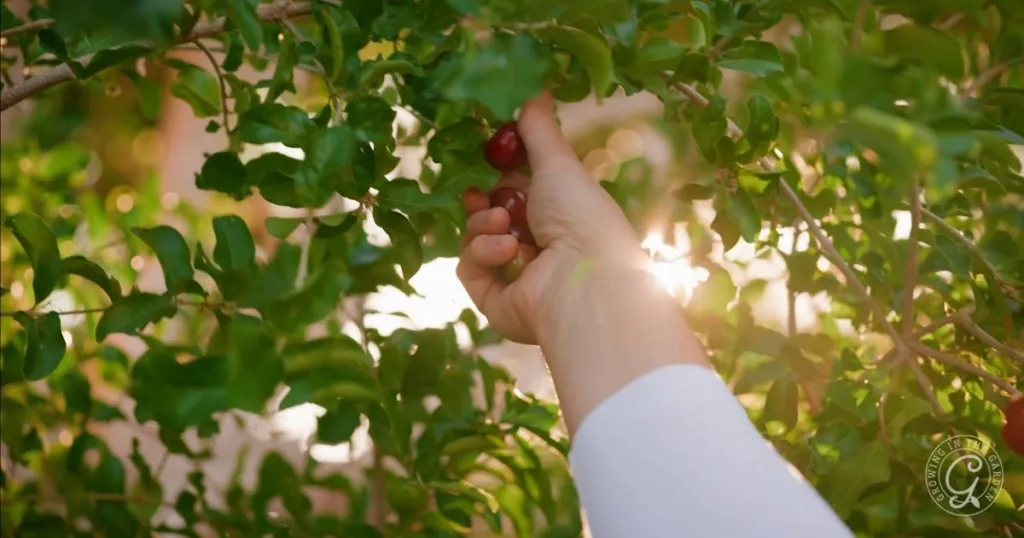
If you need to prune for size, Barbados cherry responds well to pruning. But unlike other fruit trees, minimal pruning is needed beyond shaping and removing dead or crossing branches. Light pruning after harvest can encourage new growth and improve airflow.
In the low desert, pruning also helps you:
- Keep the plant compact and easier to cover during freezes
- Reduce sunburn risk by maintaining a canopy that shades branches and trunk
- Encourage manageable flushes of new growth
Pollination and fruit set
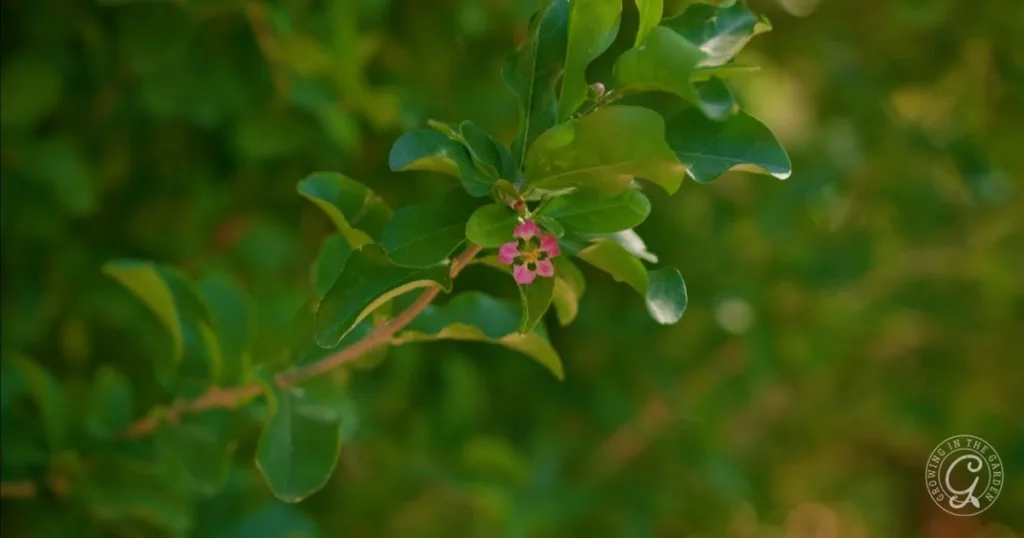
Flowers are typically pollinated by bees. If your shrub flowers heavily but sets very little fruit, check for:
- Low bee activity during bloom
- Water stress
- Excess nitrogen (lots of leafy growth, fewer flowers)
- Cold snaps during bloom
Flowering, fruiting, and harvest
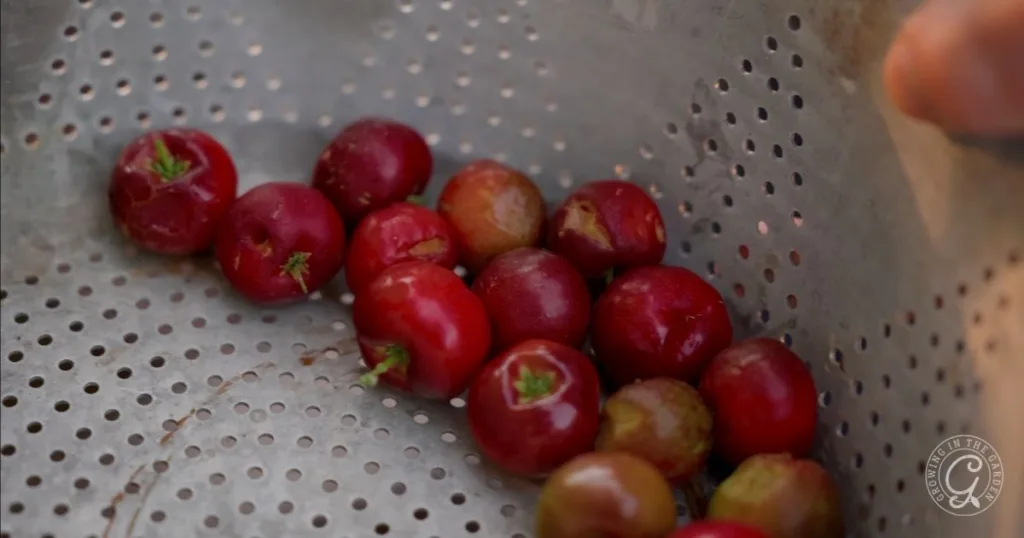
Barbados cherry can flower from spring through fall in warm climates, and fruit often ripens about 3–4 weeks after bloom.
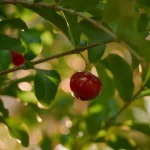
You’ll know the fruit is ripe when it turns bright red, and the fruit softens slightly. Pick gently, ripe fruit bruises easily. Ripe fruit often falls off the tree.
They taste a bit like a tropical cherry with some cranberry and citrus mixed in. If you pick too early, they are sour. Fruits have 2-3 small seeds, not a big “pit”. You can technically swallow them, but most people (including me) spit them out or strain them when making juice or puree.
Refrigerate soon after harvesting. Use them for juice, jams, jellies, syrups, and sauces. Freezing fruit soon after harvest is one of the easiest ways to preserve it. I like squeezing the cherries and adding the juice to fresh-squeezed homemade lemonade.
Common problems in the low desert
Freeze damage
This is the biggest issue. Young plants are especially vulnerable. Plan to cover plants when temperatures approach freezing. A warm microclimate helps, and containers can be moved under a patio or into a garage overnight. For more low desert frost strategy, see How to Protect Your Garden from Frost in Mild Winter Climates.
Salt buildup
Barbados cherry is not salt-tolerant. In the low desert, salts can accumulate from irrigation water and evaporation, especially in containers.
Helpful habits:
- Mulch consistently
- Water deeply enough to push salts below the root zone
- For containers, occasionally water until excess drains out to leach salts
Pests
Common pests can include aphids, whiteflies, scales, and nematodes. Monitoring and early action usually prevent big problems in home gardens. Keeping the soil and tree healthy helps it tolerate pest pressure.
Skin irritation from leaf hairs
Some gardeners report irritation from leaves. Gloves and long sleeves are a good idea when pruning or harvesting.
Low desert success tips
If you only remember a few things, make it these:
- Protect from freezes, especially the first couple of years
- Improve soil drainage and mulch deeply
- Water consistently while establishing, then keep irrigation steady during bloom and fruit set
- Watch for salt buildup, especially in containers
- Give it wind protection










FYI — Great step-by-step — I’ll give this a go this weekend. Great share ☕
Small note • pleasant take on “How to Grow Barbados Cherries (Low Deser” — I’ll try that soon. Love this! 😊
Such a warm note about “How to Grow Barbados Cherries (Low Deser” — nice.