Pests and Disease
While leaf drop as a result of changing environmental conditions is far more likely to cause problems for your plant than any other issue, you might also bump up against a few insects.
Disease pathogens come to call even less often, but it’s still a good idea to be aware of the potential culprits.
Pests
Indoor pests lack natural predators, which allows them to spread pretty much unchecked.
What’s one of the most common symptoms of a pest infestation? I’ll give you one guess…
If you said dropping leaves, you win! There are a few common pests that you’ll see on indoor plants.
Aphids
A large aphid infestation can cause leaf drop and yellow stippling on the leaves.
You will most commonly see them on the green growing tips, but they can feed anywhere.
Spraying regularly with neem oil is a standard method for dealing with these pests.
Because they’re so common, you should be sure to learn how to spot and eliminate these pests if you haven’t already.
Our article on how to deal with aphids provides helpful information to guide you through the process.
Mealybugs
Mealybugs, insects in the family Pseudococcidae, are another common houseplant pest. They will feed on ficus plants, using their piercing mouthparts to draw sap out of the tree.
When they congregate in groups, these little wingless insects are covered in a waxy coating that makes them look more like some type of fungal disease than a pest infestation.
Learn more about identifying and dealing with mealybugs here.
Scale
Scale insects appear as little brown or black lumps on the leaves, stems, or trunk.
You can remove them by wiping with a cotton swab that has been dunked in a bit of rubbing alcohol.
It’s a little tedious, and you will need to do it again every few days over the course of a few weeks, but it’s effective.
For more tips, check out our guide to scale.
Spider Mites
Spider mites love dry conditions, and it just so happens that home interiors tend to be drier than the outdoors.
These tiny spider relatives are sapsuckers and they leave behind extremely fine webbing – which is usually what will first tip you off to an infestation.
The red spider mite (Tetranychus spp.) is the most common. Learn more about how to deal with these teeny-tiny pests in our guide.
Disease
F. benjamina is rarely troubled by disease. Rotting roots are really the only issue you need to watch for.
Root Rot
Root rot can be caused by two problems. The first is standing water around the roots, and the second is disease.
More specifically, root rot is caused by the fungi Rhizoctonia solani and Fusarium oxysporum. Both of these species thrive in oversaturated soil – so in other words, don’t overwater your ficus!
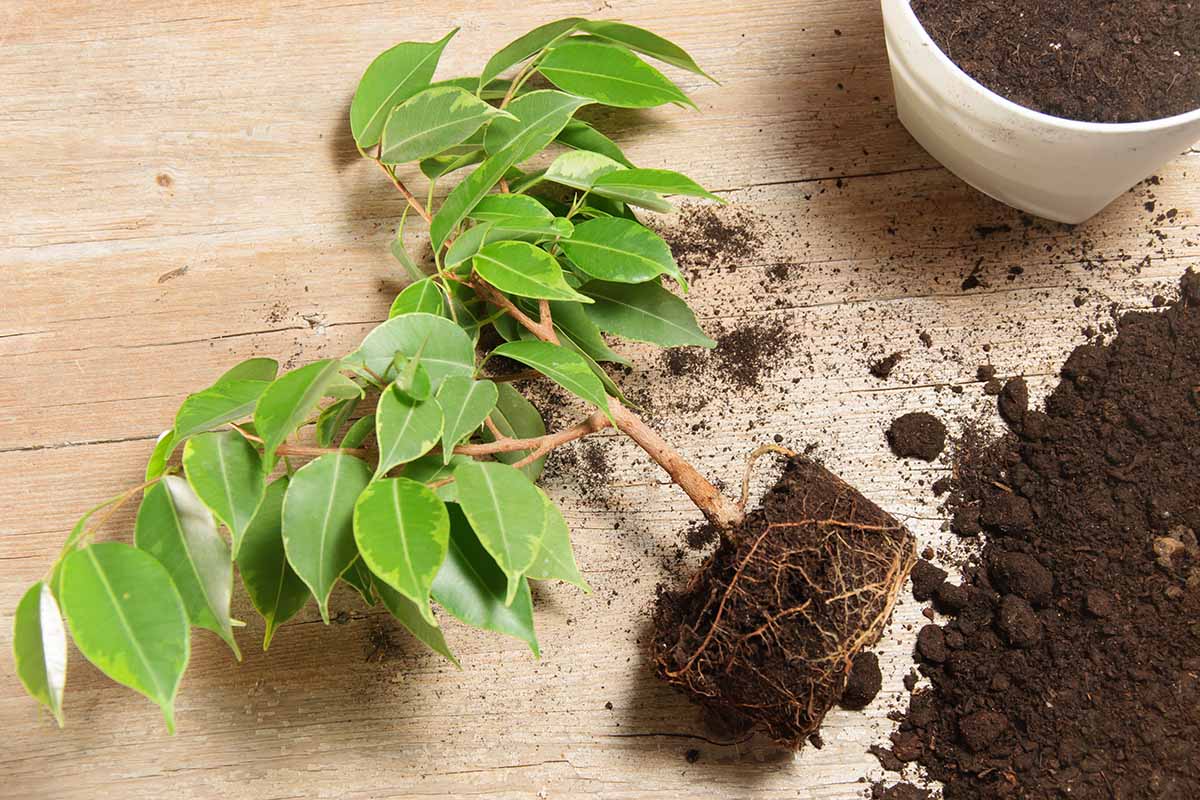
Because it’s impossible to tell whether root rot is the result of a fungus or whether the roots are simply drowning in too much water, you’ll need to treat for both probable causes.
First, remove the plant from the pot and rinse away all of the soil. Trim away any mushy or black roots.
Next, treat the roots with a biofungicide. Mycostop is an excellent option that’s very effective. Mix it with water according to the manufacturer’s directions and spray the roots.
Wipe the container clean and sanitize it with a 1:10 mixture of bleach and water (one part bleach to nine parts water). Fill it with fresh potting soil.
Repot the plant, and wait two weeks before treating the soil with the same biofungicide, following the manufacturer’s directions. Treat one more time two weeks later.
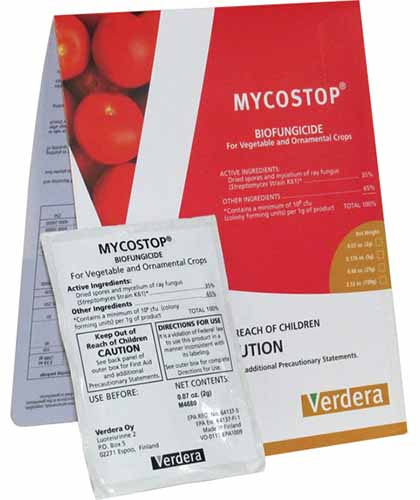
Mycostop Biofungicide
Pick up Mycostop in five- or 25-gram packets at Arbico Organics.
Find our detailed guide on preventing and treating root rot here.
Find Success with Weeping Figs
Weeping figs have a bad reputation among some growers.
They’re known for dropping their leaves at the slightest provocation – and many have resorted to placing artificial ones in their homes to avoid unnecessary cleanup.
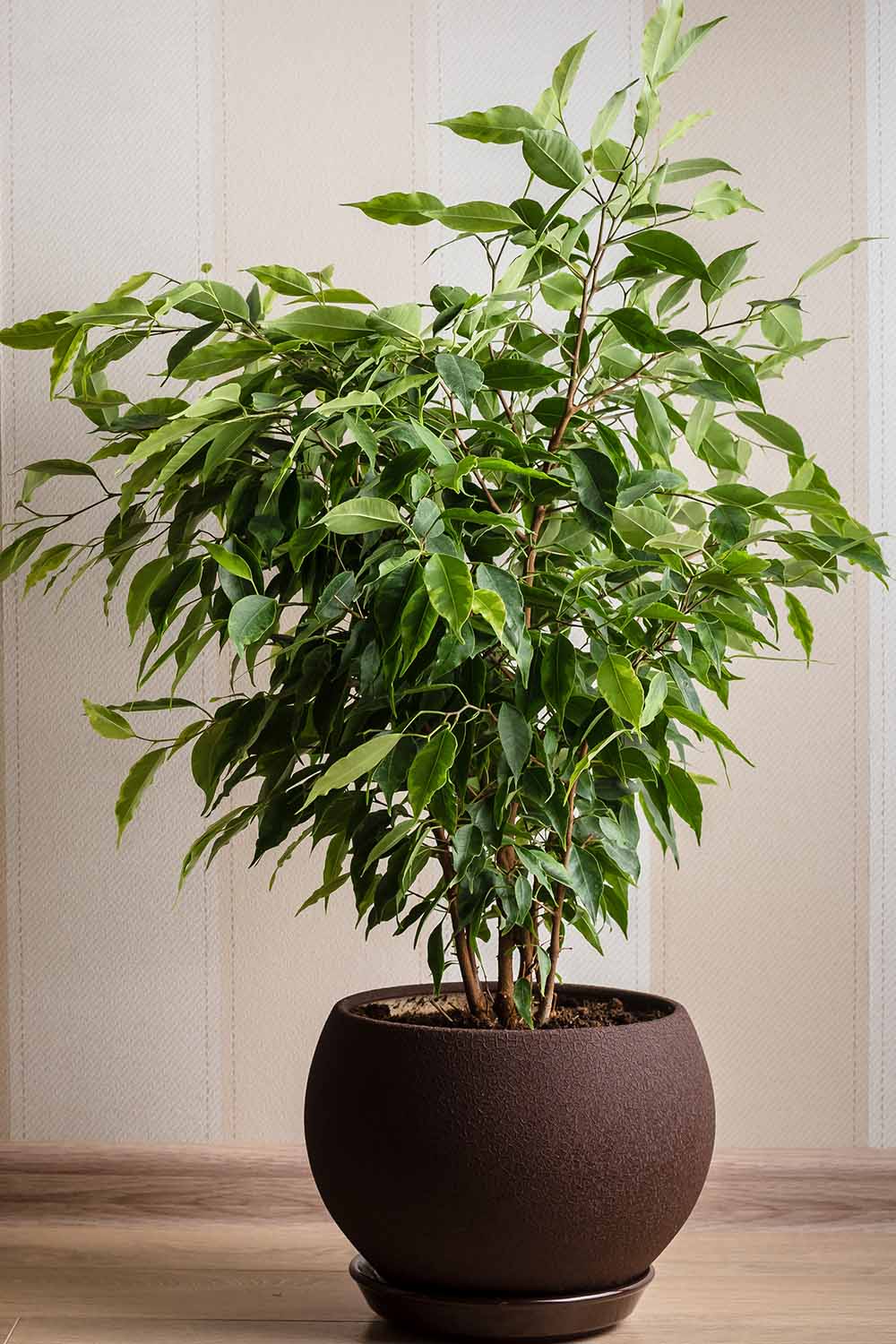
Hopefully this guide has put you on the road to success with this elegant houseplant. Knowing what to watch for, and what to avoid, goes a long way towards making your plant happy.
Are you growing a weeping fig? If so, have you had any trouble with leaf drop? What caused it? Let us know in the comments below so we can share our experiences!
If you’d like to add a few more ficus plants to your collection, you might be interested in some of our other guides next:
© Ask the Experts, LLC. ALL RIGHTS RESERVED. See our TOS for more details. Originally published January 12, 2022. Last updated February 3, 2026. Product photos via Arbico Organics, Burpee, and Fast Growing Trees. Uncredited photos: Shutterstock.