
Fertilizer
Rubber tree ficus — a quick note to anchor this piece for readers.
Rubber tree ficus: Quick notes
A liquid fertilizer for tropical plants can be added in spring or summer if needed, according to package directions.
Stop fertilizing in fall and winter when growth slows significantly.
Always water the plant before fertilizing to prevent root burn, and occasionally flush the soil with plain water to prevent salt buildup from accumulated fertilizer.
Container-grown rubber trees can be moved outdoors if temperatures are consistently above 50°F.
Be sure to place the tree in a protected place, and shield it from direct sunlight.
Rubber trees can also be grown outdoors in USDA Hardiness Zones 9 to 11 year round.
Plant the tree in an area where it receives indirect sunlight and adequate water, with good drainage.
Avoid planting rubber trees near sidewalks or foundations, as their strong roots can damage both.
Cultivars to Select
There are a number of stunningly unique varieties of rubber tree to choose from, any of which are suitable for container growing indoors.
Burgundy
This cultivar offers a true “wow” factor.
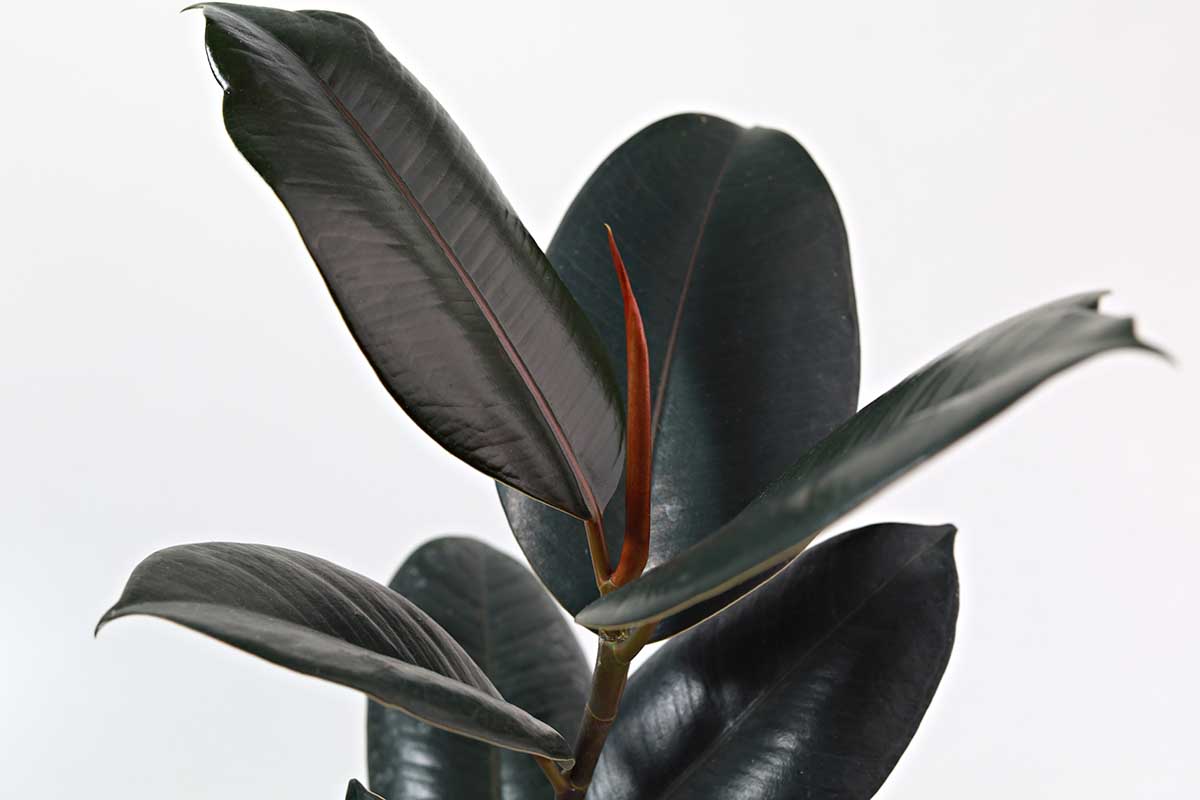
As ‘Burgundy’ matures, the leaves, branches, and trunks range from the deepest green and burgundy to almost black, sometimes with red midribs and scarlet-sheathed new growth.
Doescheri
‘Doescheri’ is another variegated variety.
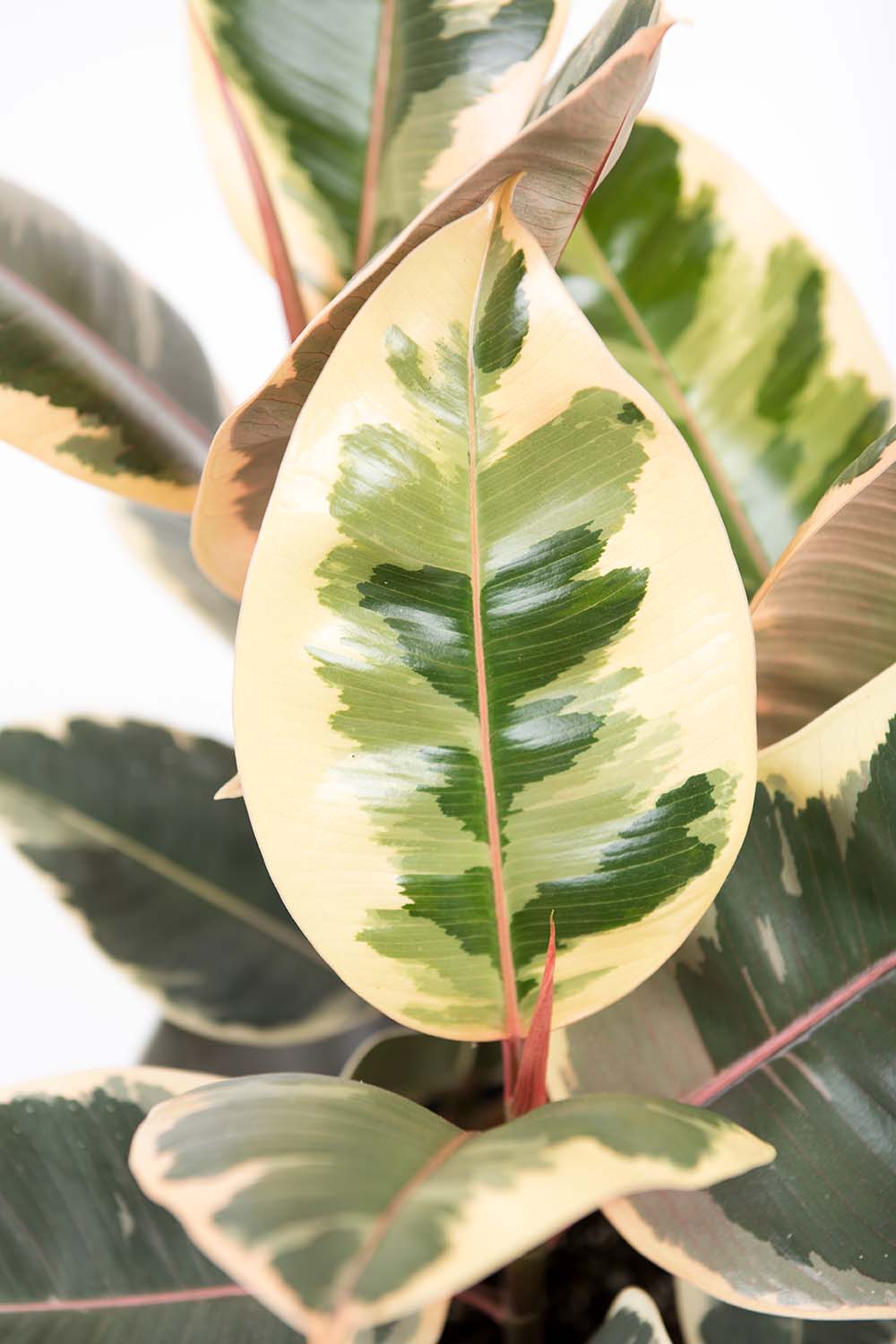
It has leaves that feature shades of creamy white, bright green, army gray, and yellow, mottled together with stunning pink margins.
Robusta
This variety is most closely related to the true species plant that grows natively in Asia and Indonesia.
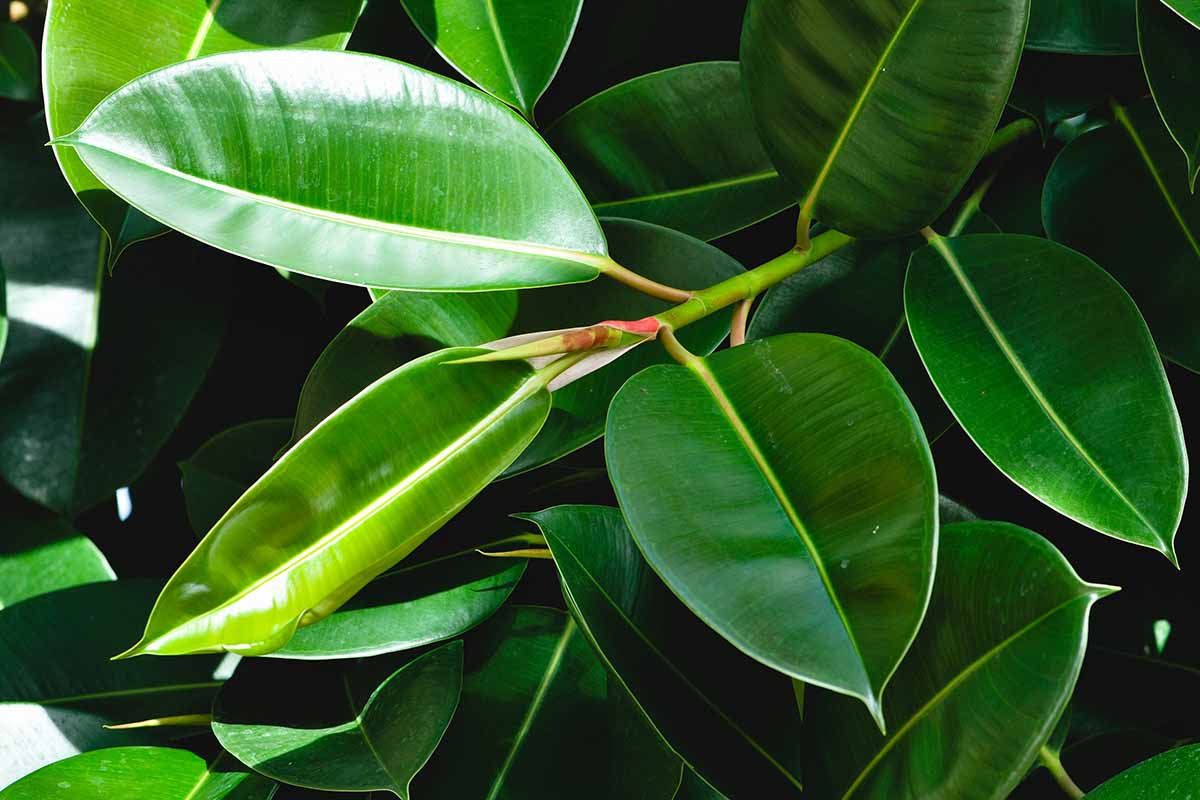
The leaves are waxy, wide, and bright green to deep green in color. The structure and color of this cultivar is perfect for adding a tropical touch to the home.
Ruby
Similar in structure to other cultivars, ‘Ruby’ is set apart by its unique coloration.
The leaves are oblong and glossy, with a deep green to burgundy upper side, and a pink to deep burgundy lower side.
The branches and trunk can be a shocking bright green, maturing to a deeper green or brown. New growth is sheathed in bright scarlet red.
Tineke
Another variegated cultivar, ‘Tineke’ is similar to other variegated rubber trees, with pink to burgundy midribs, sprouts, and leaf margins.
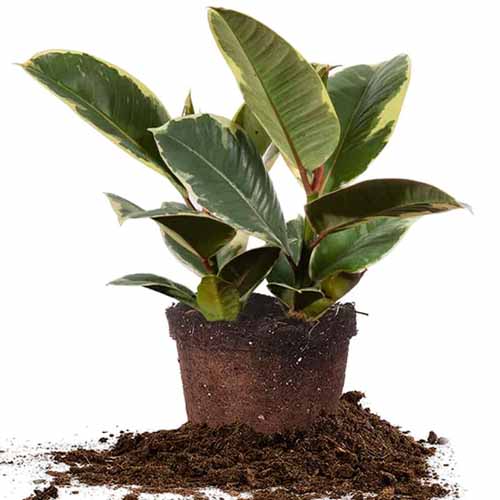
‘Tineke’
Plants are available from Perfect Plants Nursery.
Tricolor
Young plants of the ‘Tricolor’ variety have variegated cream and white leaves with splotches of pink to orange.
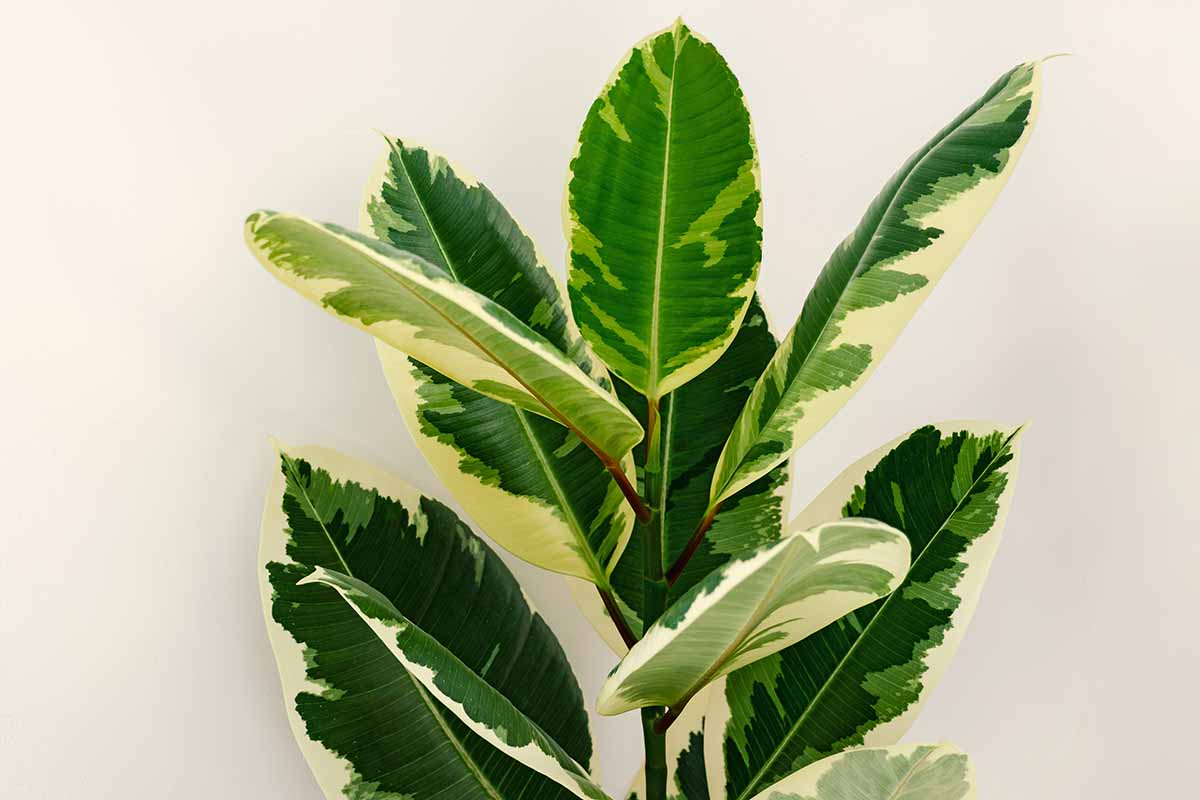
As this plant matures, the coloration leans more toward green and cream, with wide, glossy leaves.
Maintenance
Controlling growth is important for a rubber tree, whether growing indoors or outdoors, as these can become large and dense in ideal growing conditions.
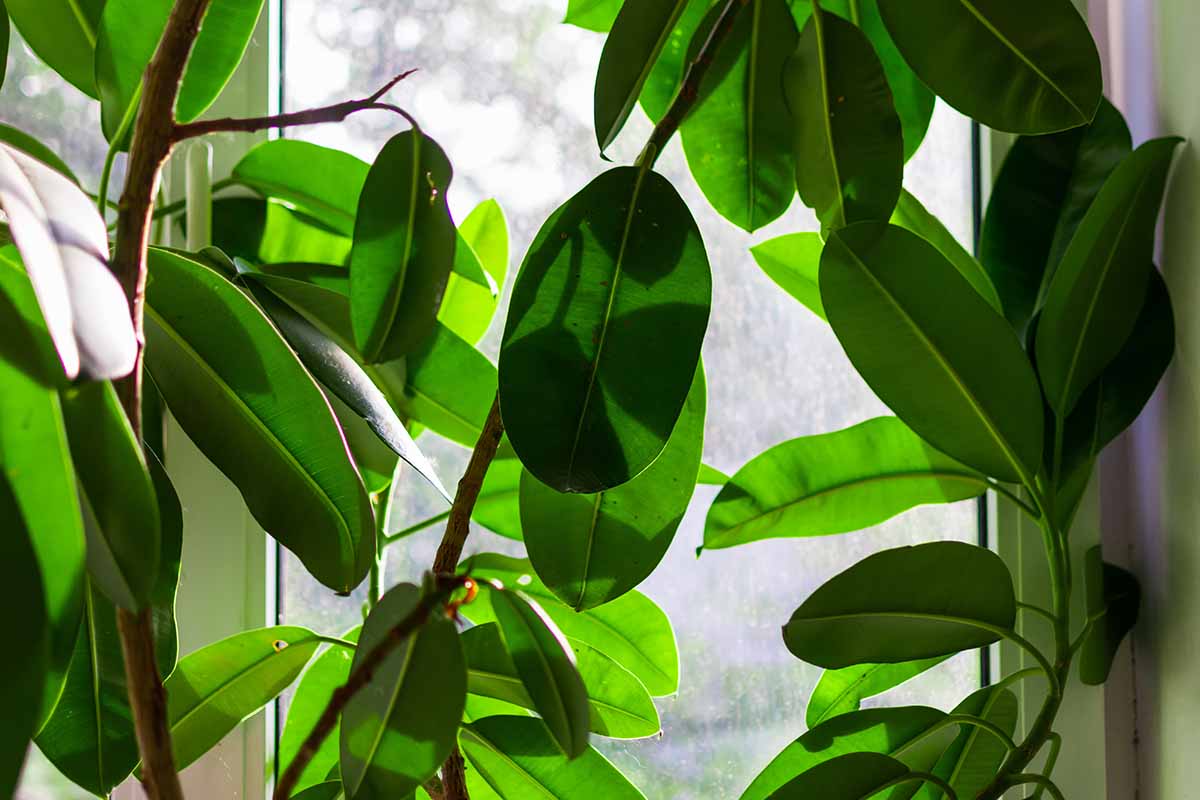
Prune back any limbs that are reaching beyond the desired size and shape of the tree.
Bear in mind that cutting the top of the tree will trigger outward growth, so only do this if the height is becoming an issue, and be sure to monitor unwanted branching and sprawling out.
Use a sharp tool, such as clean pruning shears or a garden knife, and cut just enough of the branch to maintain its shape and size.
Cutting more than is necessary can cause shock and trigger leaf drop, or even kill the plant.
Get more tips on pruning rubber tree plants here.
It’s a good idea to repot every few years as the plant grows and adding new potting medium will help to keep it nourished and healthy.
Choose a container that is one to two inches larger than the previous pot.
Add a layer of soil at the bottom, leaving space for the root system so the top of the roots will be positioned near the level of the rim.
Rubber tree ficus comes up here to connect ideas for clarity.
We reference Rubber tree ficus briefly to keep the thread coherent.











PS · I appreciate the point about “How to Grow and Care for Rubber Tree (Fi” — very helpful. Love this!
FYI — great point — I noticed that too. Love this!
FYI — great point — I noticed that too. Love this!