Water
Hardy kiwifruit vines: a concise orientation before we get practical.
Hardy kiwifruit vines: Quick notes
Keep the soil moist at all times during the growing season. The top inch or so can dry out, but don’t let it get drier than that.
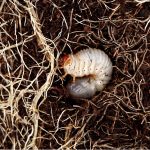
Hardy kiwis are particularly susceptible to root rot in waterlogged conditions.
Fertilizer
Feed the vines with an all-purpose fertilizer in the spring and again as the fruits start to develop.
A product like Down to Earth’s All Purpose food has the right mixture to keep fruiting vines happy.
Down to Earth All Purpose Food
Grab some at Arbico Organics in one-, five-, or 15-pound boxes.
Cultivars to Select
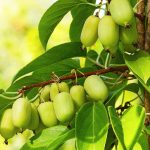
Remember I mentioned that kiwiberries are dioecious? When shopping, make sure you choose at least one male plant for every five or six females.
The male plant won’t produce fruit, they are in charge of making the pollen that pollinates the flowers that will turn into the fruit. Keep the male within 50 feet of the female plants.
Anna
“Anna” is technically named ‘Ananasnaya,’ but that’s a mouthful so she goes by Anna for short.
Ananasnaya is Russian for pineapple-like, an homage to the fruit’s flavor.
This cultivar is flavorful, but I think it’s particularly cool because the skin turns purple-red in full sun exposure.
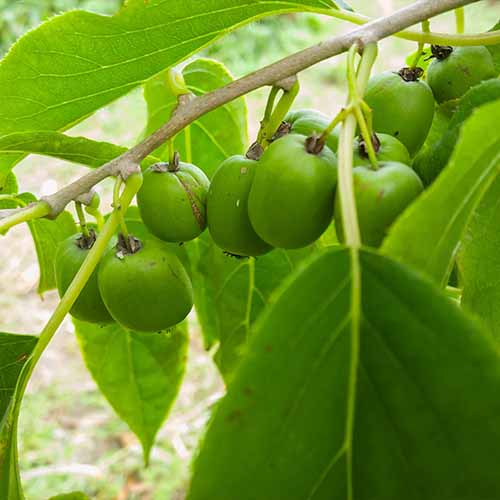
‘Ananasnaya’ aka Anna
Anna is one of the most popular options out there, both because it’s tough and the fruit has an excellent flavor.
You can find Anna vines available at Fast Growing Trees in two- and three-gallon containers along with the male pollinator ‘Meader’ (described below).
Arctic
Arctic kiwi isn’t a cultivar, it’s the common name for the species A. kolomikta. This vine can tolerate extremely cold temperatures, surviving down to -40°F.
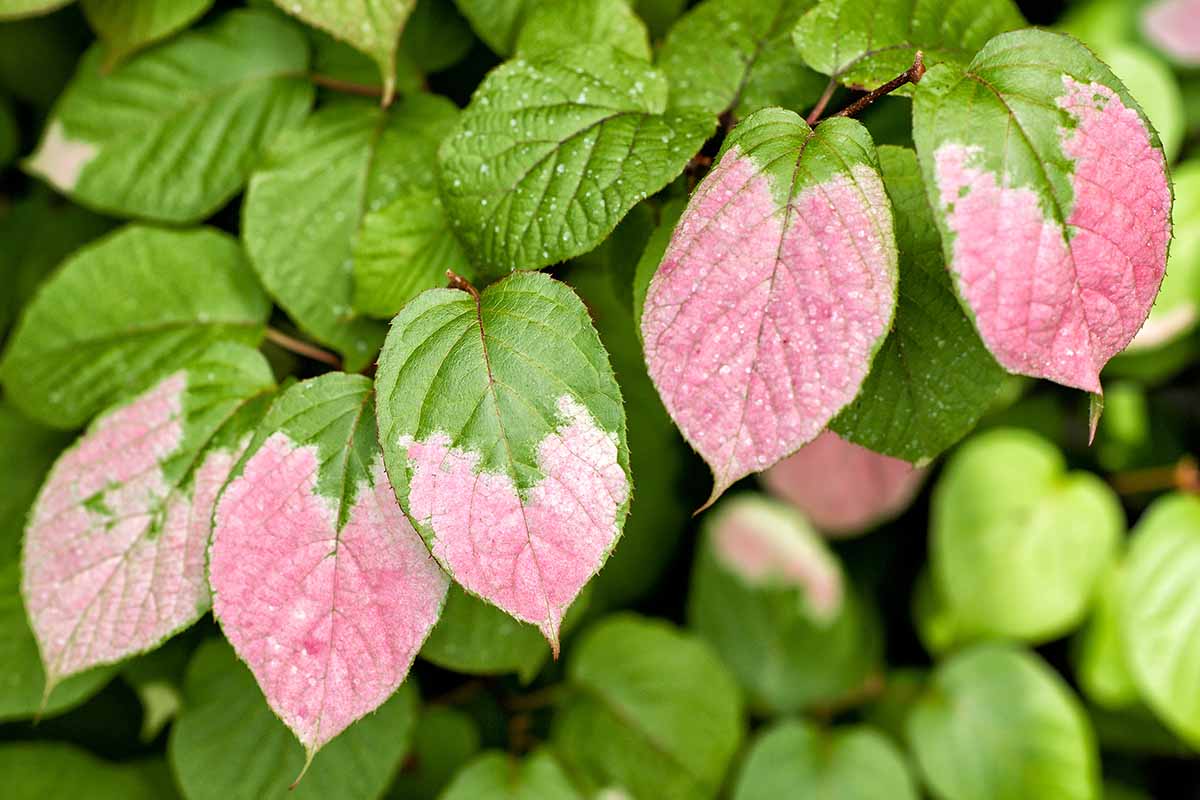
There are numerous cultivars like the females ‘Emerald’ and ‘September Sun,’ and the male ‘Pasha.’
Many cultivars are grown as ornamentals for their striking pink, green, and white leaves.
The fruits aren’t as flavorful as the A. arguta cultivars, but they’re still quite good.
Think of it as an ornamental that offers up some tasty treats rather than an edible and you’ll be in heaven.
If, like me, you’re interested in plants that do double-duty in the garden, I can’t recommend an Arctic cultivar enough.
Issai
We talked about needing a male pollinator, but that’s actually not true with this one. ‘Issai’ is self pollinating, which means no second plant is needed.
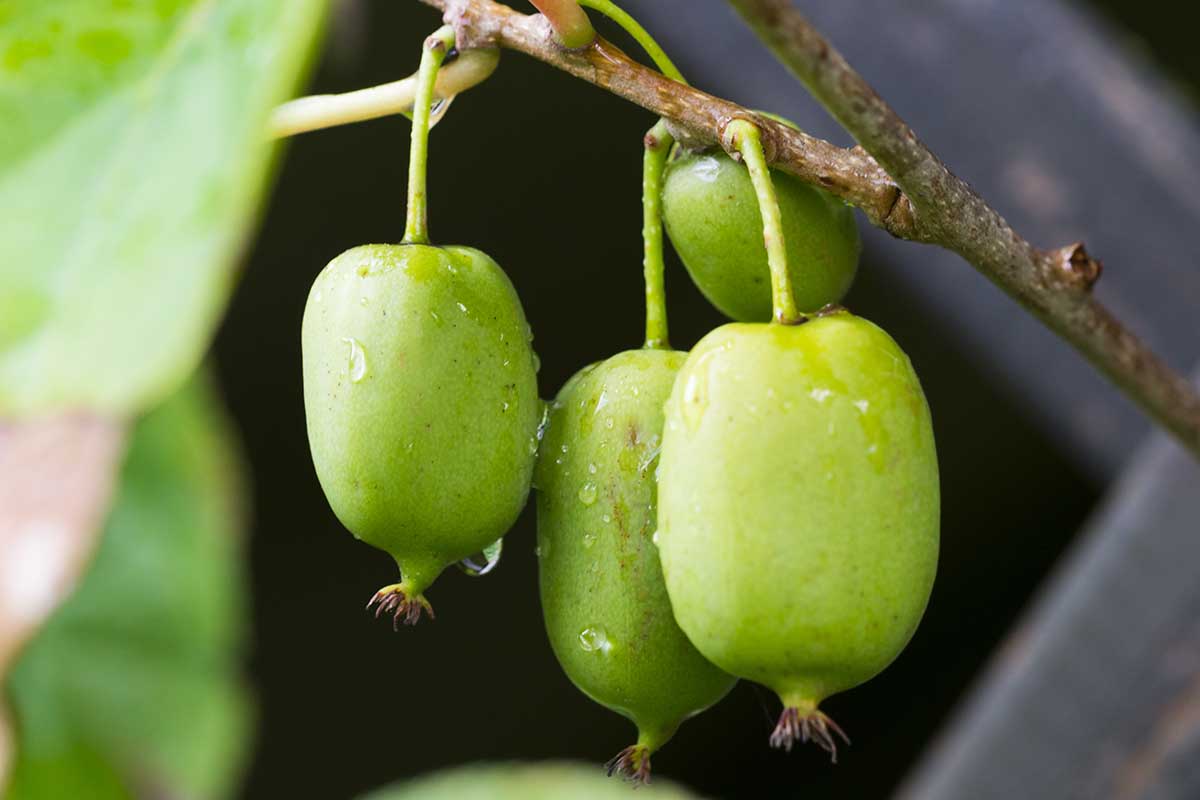
This cultivar is a hybrid of A. arguta and A. polygama, and it isn’t the most vigorous and the fruit is smaller than average, but you’ll be enjoying the sweet treats even with a single plant.
Plus, it tolerates the heat and humidity that would make other hardy kiwis struggle.
You can find plants in #2 containers at Nature Hills Nursery for your singleton growing needs.
Geneva
‘Geneva’ is a prolific producer of medium-sized, round fruits with a sweet, honey flavor.
This cultivar was discovered at Hedrick Hall, home of agricultural research at the Cornell Experiment Station in Geneva, New York.
Hardy kiwifruit vines comes up here to connect ideas for clarity.