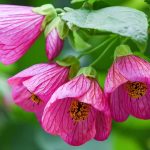
Flowering maples can tolerate too much water for a short time, but lack of moisture will stress or even kill them.
Temperature
Even though abutilons make happy houseplants, your abutilon will flower and perform best if it’s allowed to experience a period of chilly temperatures in the winter.
Not freezing, of course, but it likes temperatures around 50 to 60°F for part of the day during the winter. During the growing season, don’t worry about the heat.
While temperatures around 60 to 70°F are ideal, they’ll tolerate outside of this range as well.
To be clear, though it likes to be chilly in the winter, if you want to be certain your flowering maple survives and you live somewhere really cold, keep it indoors in the winter.
But you can grow them outdoors year-round in Zones 9 to 10 and some in Zone 8. I grow my hybrid, ‘Red Tiger,’ in Zone 8b.
It has even been exposed to a hard freeze multiple times and on it carries. A few times, I have lost a few branches, but I trim these off and it always rebounds spectacularly in the spring.
Fertilizer
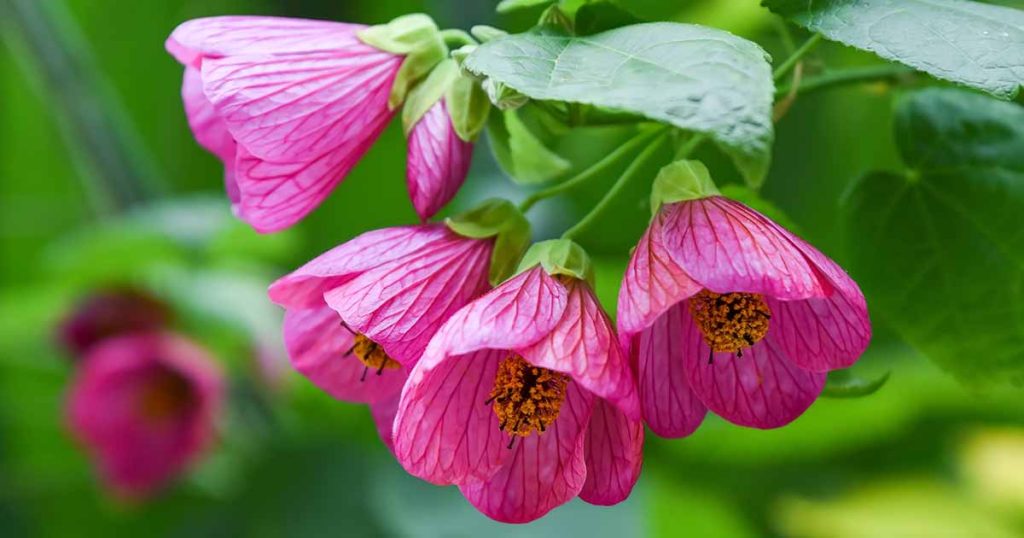
Part of what makes abutilon so charming is its near-constant flowering. But that also makes it a hungry plant.
You might need to feed as often as twice a month during the spring, summer, and fall.
If you haven’t tested your soil or you’re using a potting mixture, just go for a product formulated for flowering plants. A houseplant food works, too.
You want a fertilizer that has more phosphorus than nitrogen or potassium.
Down to Earth’s Rose & Flower fits the bill, with an NPK ratio of 4-8-4. It can be used indoors and out.
Down to Earth Rose and Flower
You can find it in one-, five-, and 15-pound boxes available at Arbico Organics.
Species and Cultivars
The various hybrids are classified as Abutilon Hybridum (A. × hybridum) and often come from unknown parentage, though they likely include some redvein (A. pictum), Darwin’s (A. darwinii), or trailing (C. magapotamica) in their lineage. Most are frost tender.
There are a few lesser-known species, like Chilean mallow (C. vitifolium) that are hard to find, but worth seeking out.
The flowers on this species look like hibiscus and the shrub itself grows to 25 feet or more.
Bella
Bell is a hybrid abutilon series in shades ranging from creamy yellow to deep red, with apricot, pink, and orange in between.
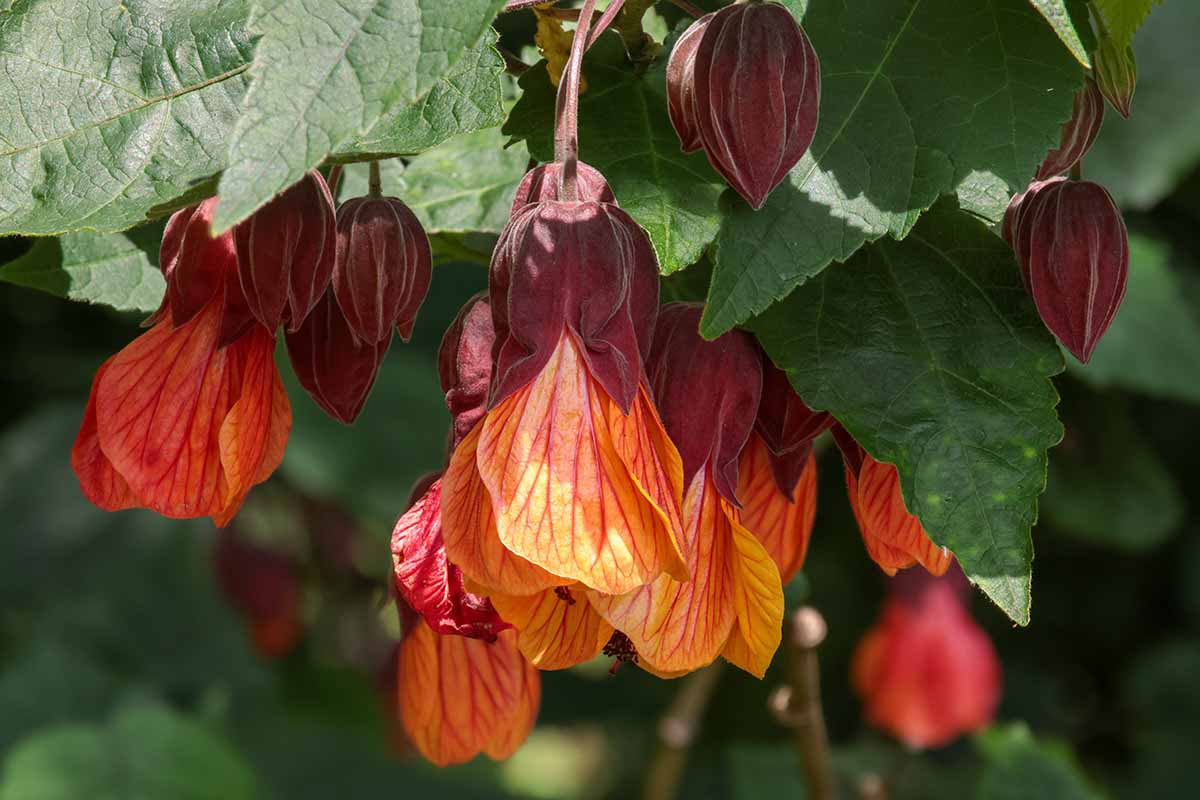
Bred to stay petite, they only grow to about 18 inches tall, which makes them ideal for growing as houseplants.
Canary Bird
‘Canary Bird’ has bright yellow blossoms that linger on the branches for a good long while.
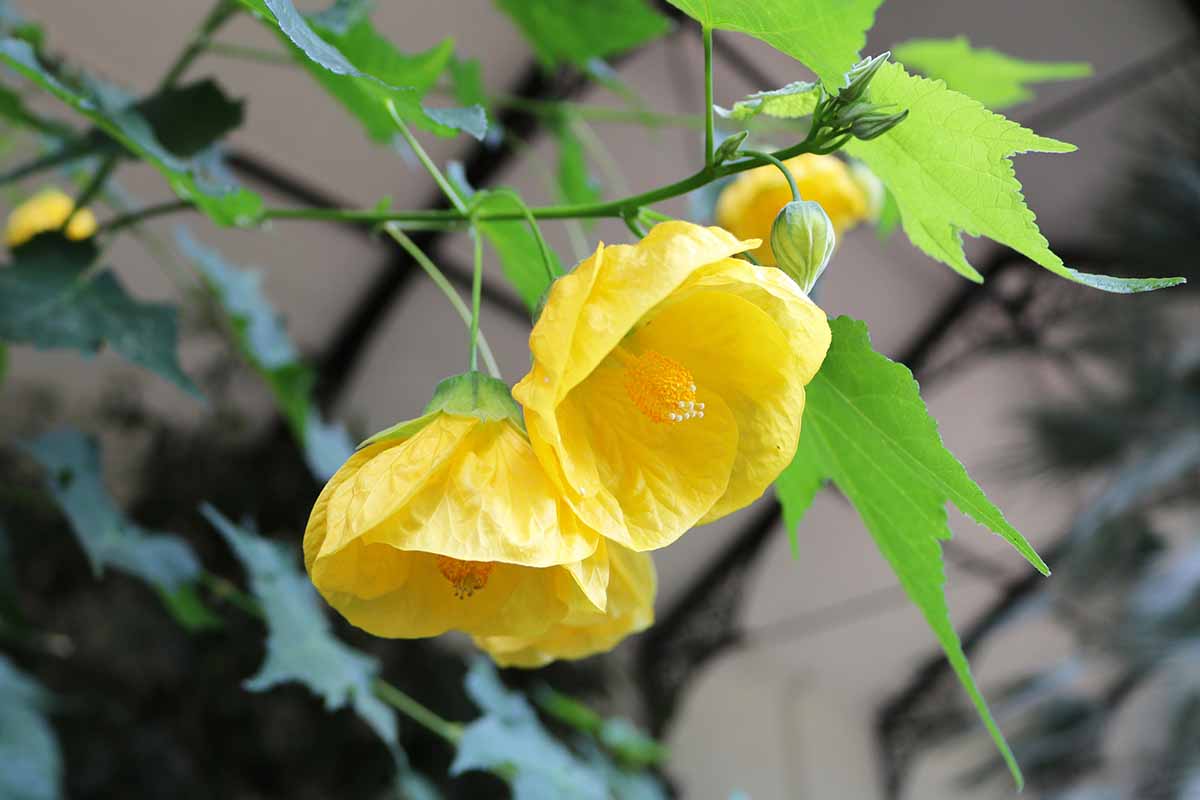
The shrub itself grows to about 15 feet tall outdoors, though you can grow it indoors, where it will stay much smaller.
The Royal Horticultural Society gave it the coveted Award of Garden Merit in 1993.
Gold Dust
‘Gold Dust’ is a charming hybrid that features large orange blossoms with dark red veins.
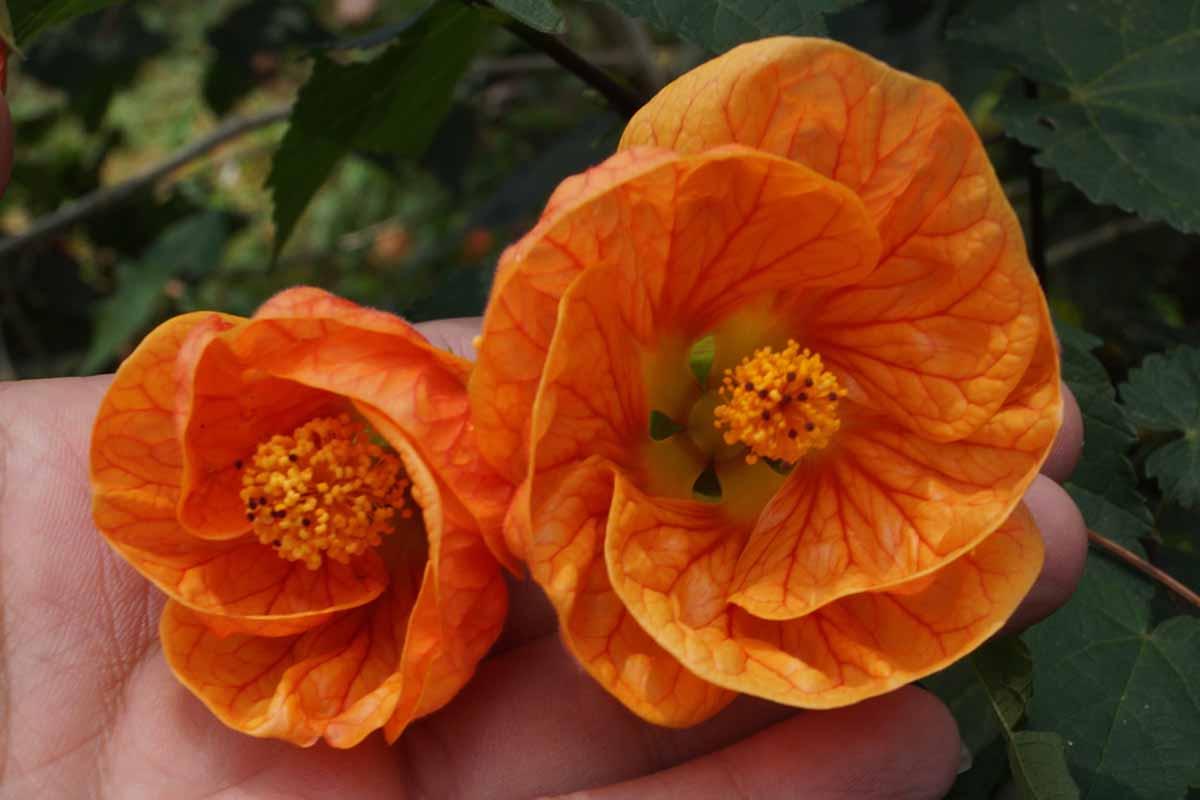
The leaves are speckled in yellow on a green base, giving it extra visual appeal even when it’s not in bloom, which is rare.
This abutilon stays under 10 feet tall and wide outdoors, making it an appealing option for growing indoors as a houseplant, as it will stay more compact that many others.
The variegated foliage also means that it thrives in lower light than other abutilons.
Nabob
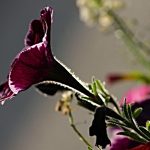
A cross between a redvein (A. pictum) and a trailing (C. megapotamica), ‘Nabob’ has glossy, dark green foliage and large, deep maroon flowers.
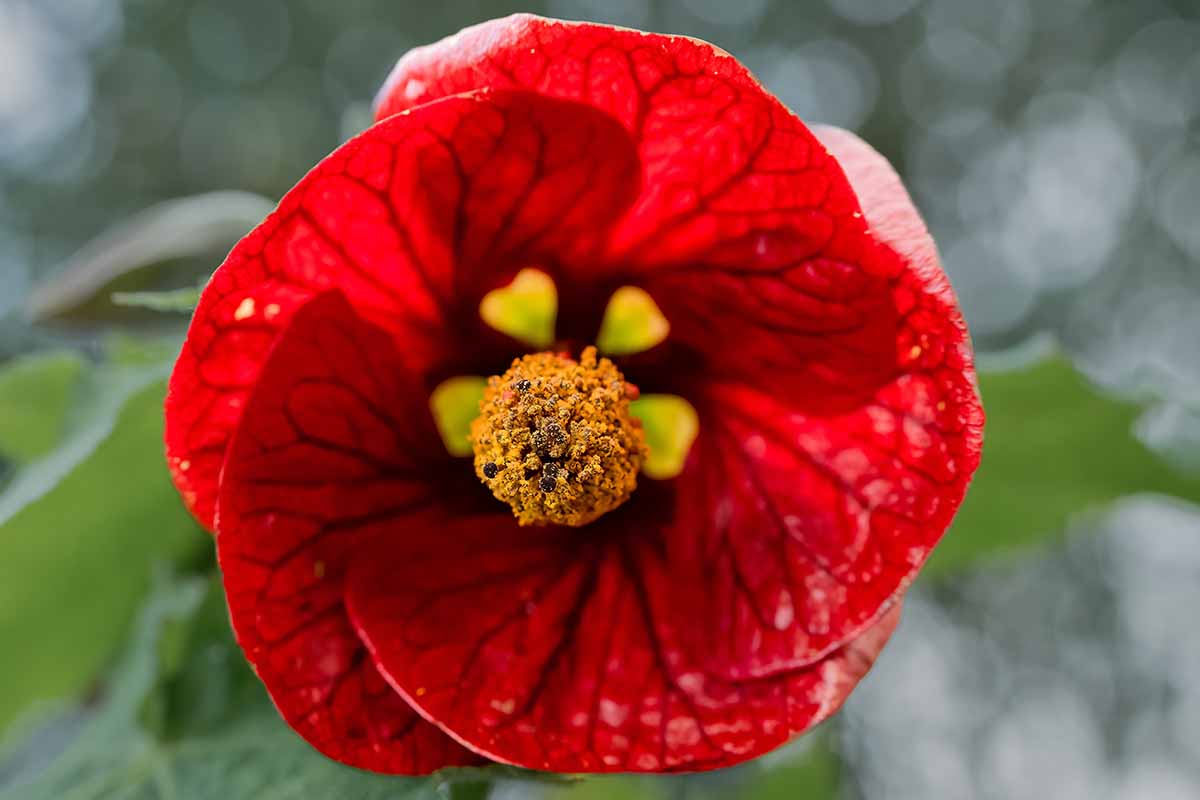
Outdoors, it will reach up to 10 feet tall, and about half that indoors. Of course, you can always prune it to whatever smaller size you like.
‘Nabob’ was given the Award of Garden Merit by the Royal Horticultural Society in 1993.
Orange Hot Lava
This abutilon hybrid featuring C. megapotamica parentage is a stunner.