

Leaning palm tree — a quick note to anchor this piece for readers.
Leaning palm tree: Quick notes
Despite their often impressive size, palm trees have surprisingly shallow root systems. They do spread quite wide, but this lack of depth can make leaning a common problem, especially if the tree is exposed to consistent high winds.
When you encounter a leaning palm tree, the instinct might be to just push the tree upright and hope it stays. But if you want a long-term fix, it’s a little more complicated than that. The shallow roots make them somewhat easier to reposition, but also mean they need careful support while new roots establish in the corrected position.
Young palms respond better to straightening than mature specimens. A palm that’s been leaning for years has adapted its growth, and forcing it upright might stress the tree more than leaving it alone. But you can usually fix a leaning palm tree if the problem is recent or the tree is young.
Install Supports
Install supports first to give you something to attach the trunk to.
Before you touch the trunk itself to fix a leaning palm tree, set up the support system that will hold it upright during the correction process. Trying to straighten a palm without supports ready means you’re either holding the tree yourself (impractical for anything beyond a small tree) or risking the tree falling back to its original lean once you step away.
Drive stakes into the ground on the side opposite the lean, positioning them far enough from the trunk that you’re not damaging roots but close enough to provide effective support. For a palm leaning significantly, you might need stakes on two or three sides to provide stability from multiple angles rather than just pulling from one direction.
Metal or thick wooden posts work well to fix a leaning palm tree, depending on palm size. They need to be driven deep enough that they won’t pull out when you’re applying tension to straighten the tree. A good rule of thumb is burying at least a third of the stake’s length, or more if you’re dealing with soft or sandy soil that doesn’t hold well. Adjust the angle to whatever will support your particular palm the best.
If your palm is in a particularly exposed location or the lean is severe, consider using three stakes arranged in a triangle toward the trunk. This distributes force more evenly and prevents the tree from pivoting.
Gently Push Upright
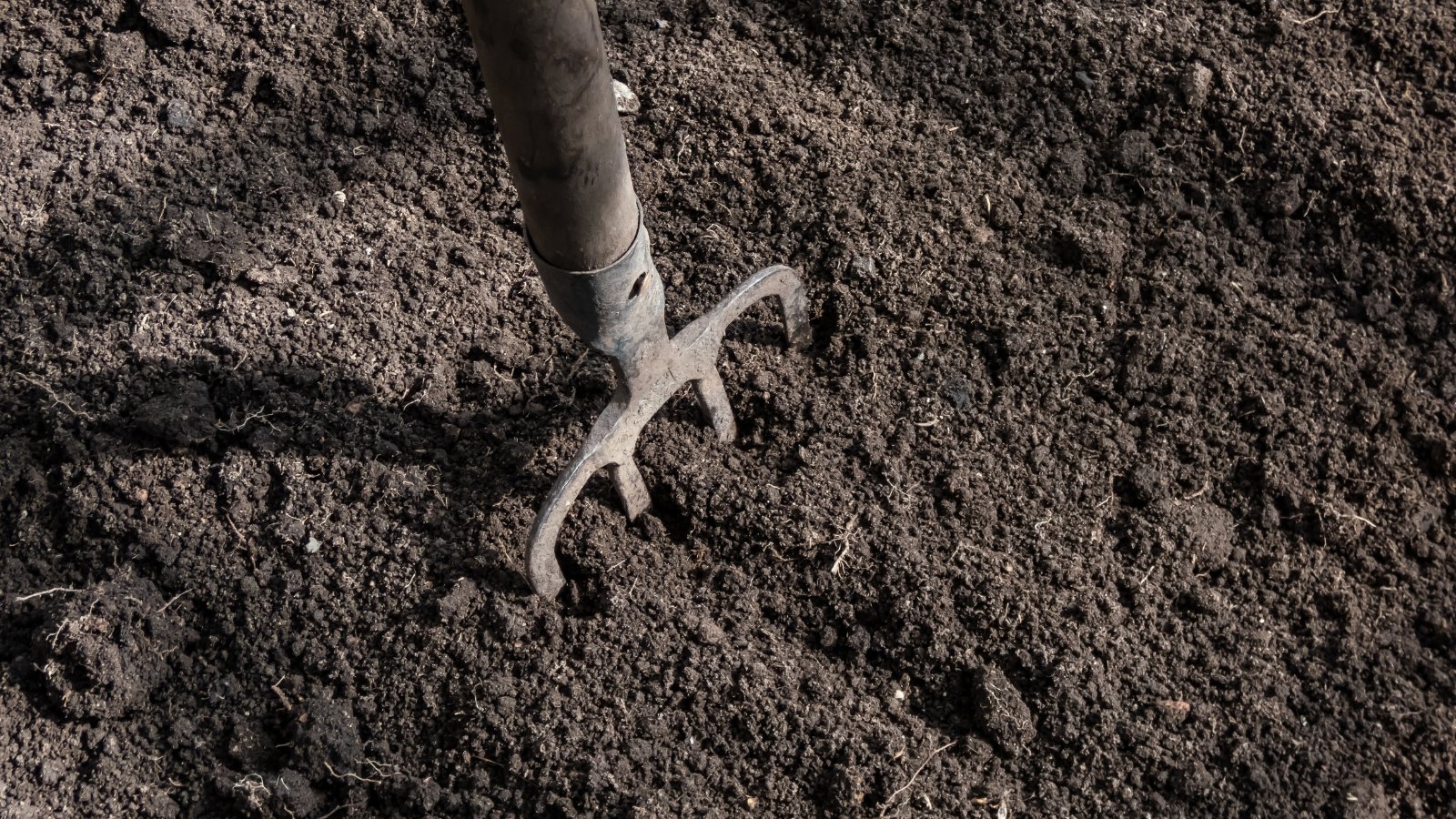 Loosen the soil to gently push the tree upright.
With supports in place, it’s time to reposition to fix a leaning palm tree. This needs to happen slowly and carefully to avoid damage.
Start by loosening the soil around the root zone if it’s compacted. Watering beforehand helps with this process. Use a garden fork to gently work the soil, creating some give that allows the root ball to shift. Don’t dig so aggressively that you’re severing major roots.
Apply pressure gradually to push the trunk straight up. For smaller palms, you might be able to do this manually by pushing steadily against the trunk. Larger palms require rope (or even vehicle assistance) if the tree is substantial and the lean is significant.
If the tree won’t budge despite reasonable pressure, reassess what’s holding it rather than applying more force to fix the leaning palm tree. You might need to loosen more soil, or there could be rocks or roots creating anchor points that need addressing before the tree will move.
For palms with severe leans, you might not be able to correct to perfect vertical in one session. Plan to shift the tree partway, let it stabilize for a few weeks, then make additional adjustments.
Use Adjustable Ties to Attach Trunk to Supports
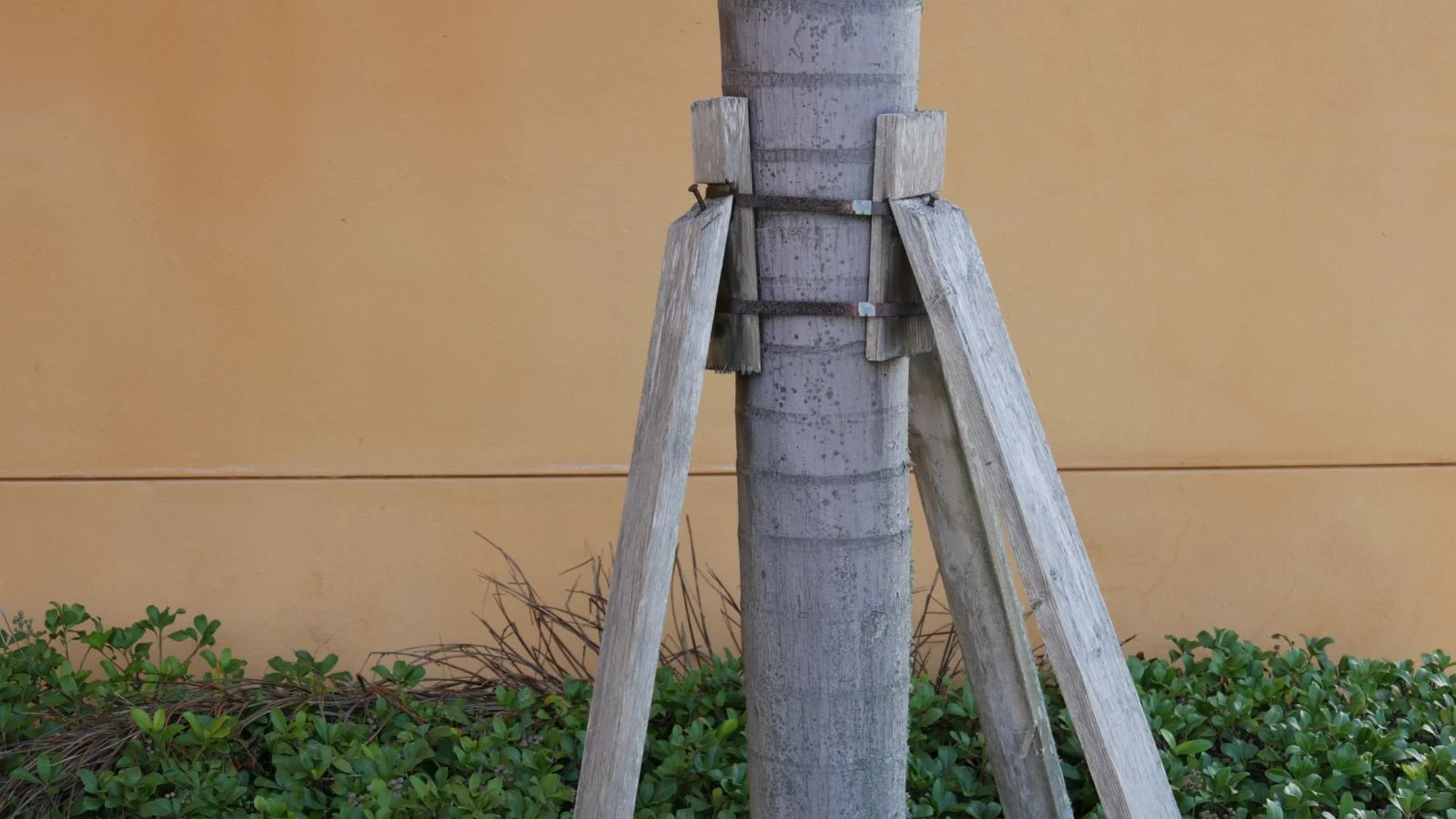 While unadjustable solutions work for mature trees, younger trees require flexibility.
Once you’ve maneuvered the palm to a more upright position, secure it to your support stakes using materials that won’t damage the trunk. Palm trunks are fibrous and less woody than typical trees, making them vulnerable to damage from improper ties.
Use wide, soft materials for ties rather than wire. Tree strapping, wide fabric strips, or rubber tree ties all work well. The width distributes pressure across a larger area, preventing the concentrated stress that creates wounds.
Attach ties around the trunk at whatever height allows for a good angle to your support stakes. Wrap the material around the trunk at least once to distribute pressure evenly, then extend it to the stake and secure it firmly. The tie should be snug enough to hold the tree in position but not so tight that it digs into the trunk.
Use adjustable knots or fasteners that you can tighten or loosen as needed to fix a leaning palm tree. As the tree settles or shifts slightly, being able to make small adjustments maintains proper position without starting over.
If you have a large tree and several stakes, only push them into the trunk with a protective material in place, like another piece of wood positioned vertically. Don’t let any sections with pressure on the tree dig into the trunk.
Leave enough slack that the tree can move slightly in wind if possible. Rigid support that allows no movement can damage the tree over time. The supports should prevent the palm from returning to its lean while still allowing some natural flex and sway.
Pack the Soil
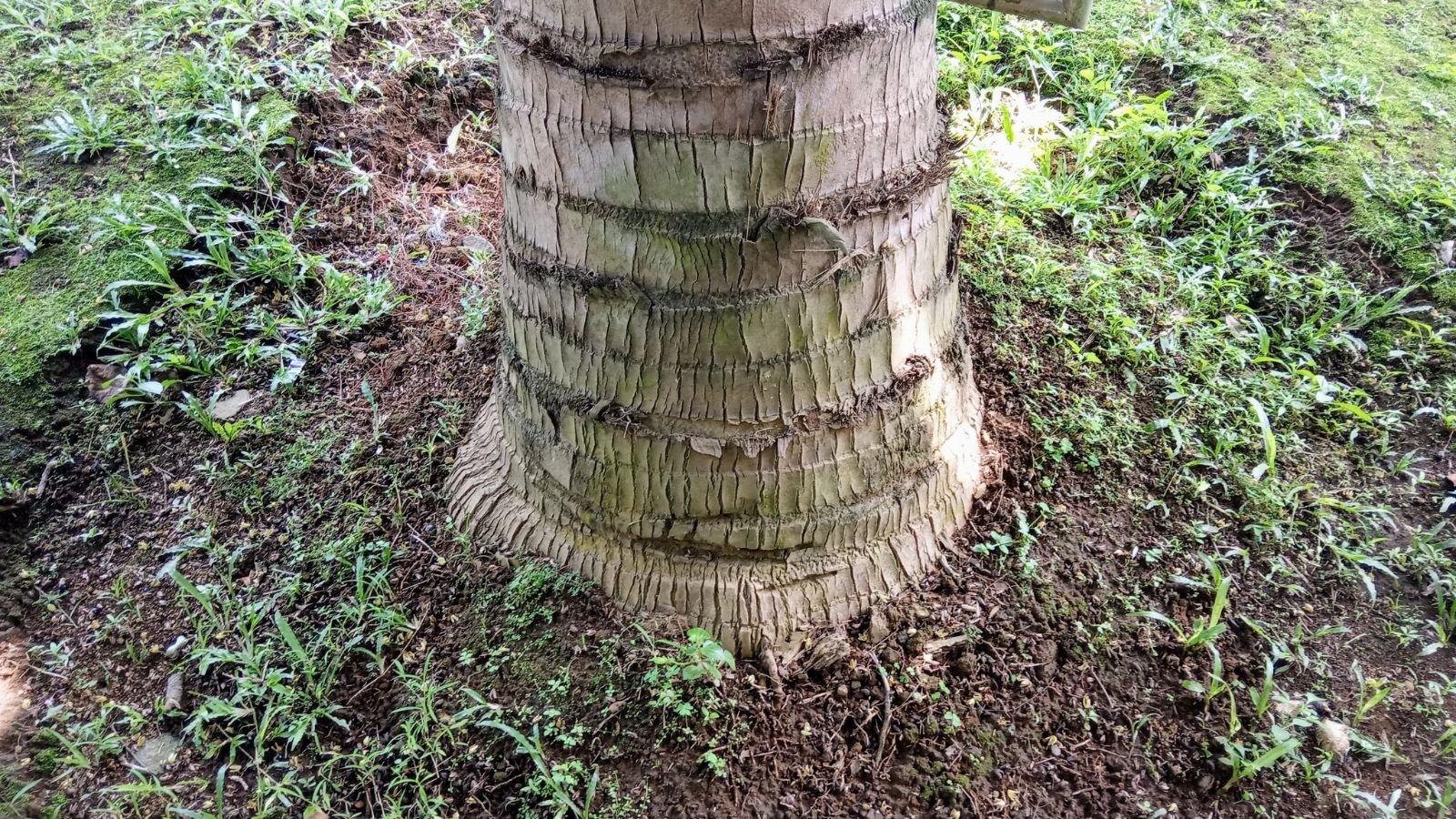 Press the soil around the base as an additional form of support.
With the tree repositioned and secured, address the soil around the root zone to provide stability as roots re-establish in their new position. The act of straightening has likely created gaps and loosened soil that needs to be packed back down to support the tree properly.
Fill any voids around the roots with soil, working it in thoroughly so there are no air pockets. Use your hands or a tamping tool to firm soil around roots without compacting it heavily. Add soil around the base of the tree if the straightening process has exposed roots or created depressions. The root crown should end up at the same level it was originally.
Water the area thoroughly after repacking the soil. This settles soil into remaining gaps, and it helps stressed roots begin recovery. Provide enough moisture that the soil is uniformly damp throughout the root zone.
Add a layer of mulch around the base if the area is bare soil. This conserves moisture, moderates temperature, and protects roots as they re-establish. Keep mulch a few inches away from the trunk itself to prevent moisture-related problems, but cover the surrounding root zone.
Adjust As Needed
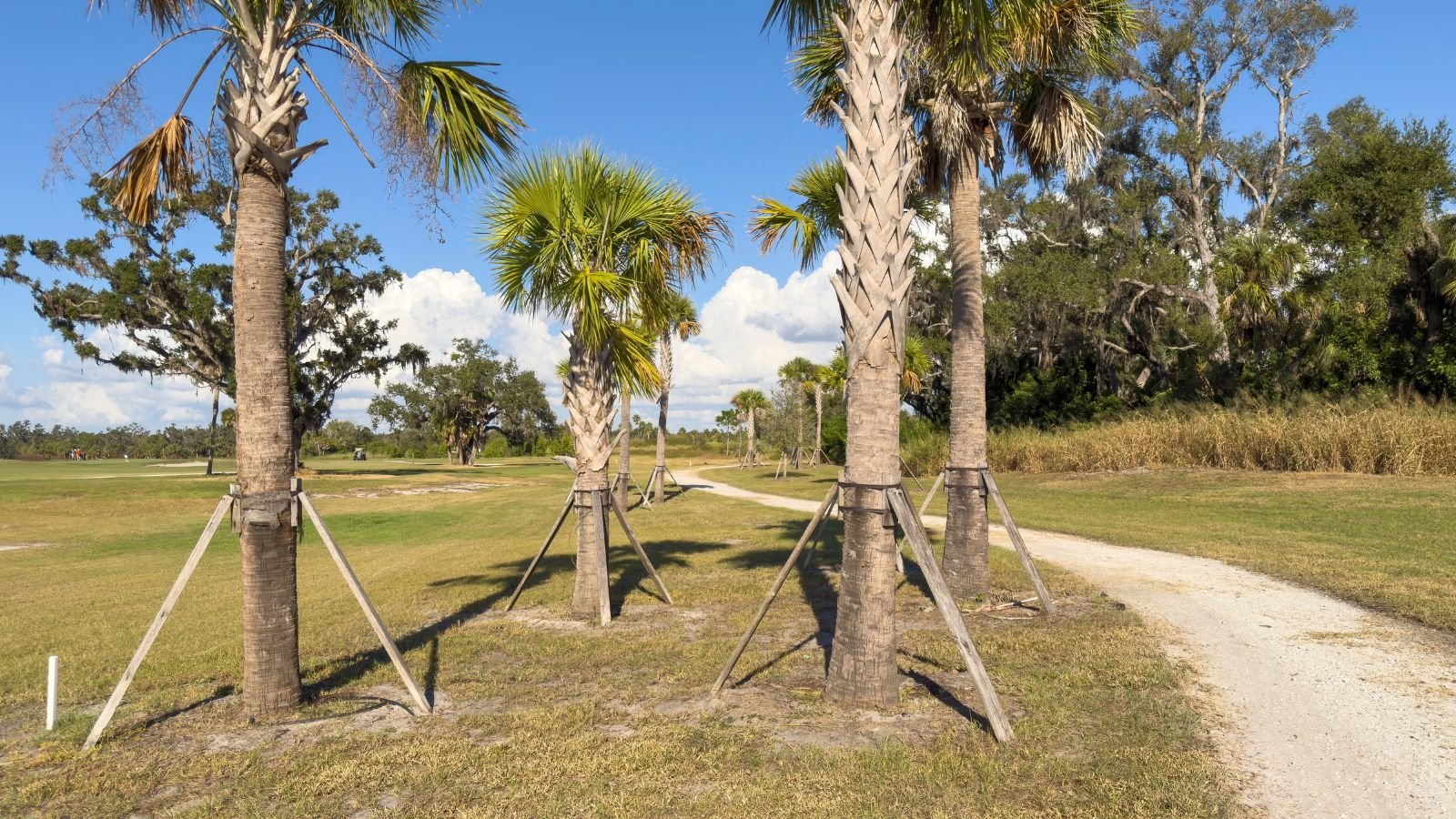 Move your supports as the tree grows.
You’ll need to monitor and adjust over the following weeks and months as the tree settles and roots establish in the new position.
Check the tree weekly for the first month after straightening. Small shifts are normal and easily corrected by adjusting tie tension. Adjust ties as the trunk grows. Palm trunks expand slowly, but ties that fit snugly when installed can become too tight after months of growth. Loosen or reposition ties before they begin constricting the trunk or cutting into tissue.
Weather requires attention, too. Strong winds can test your support system and reveal weaknesses. After storms, check that stakes haven’t shifted, ties remain secure, and the tree hasn’t been pulled back toward its original lean.
Plan to leave supports in place for at least six months to a year, depending on palm size and the severity of the original lean. Young palms establish more quickly and might only need support for a growing season, while mature specimens could need assistance for a full year or longer before roots have anchored sufficiently.
If these steps haven’t worked, you may need to dig up the entire tree and replant. This is not ideal, not only due to the work required, but also due to the stress this places on the tree. If your palm tree is otherwise happy, consider leaving the lean as is rather than risking the health of your palm.














PS · Nice take on “How to Fix a Leaning Palm Tree” — I’ll try that soon. Great share.