
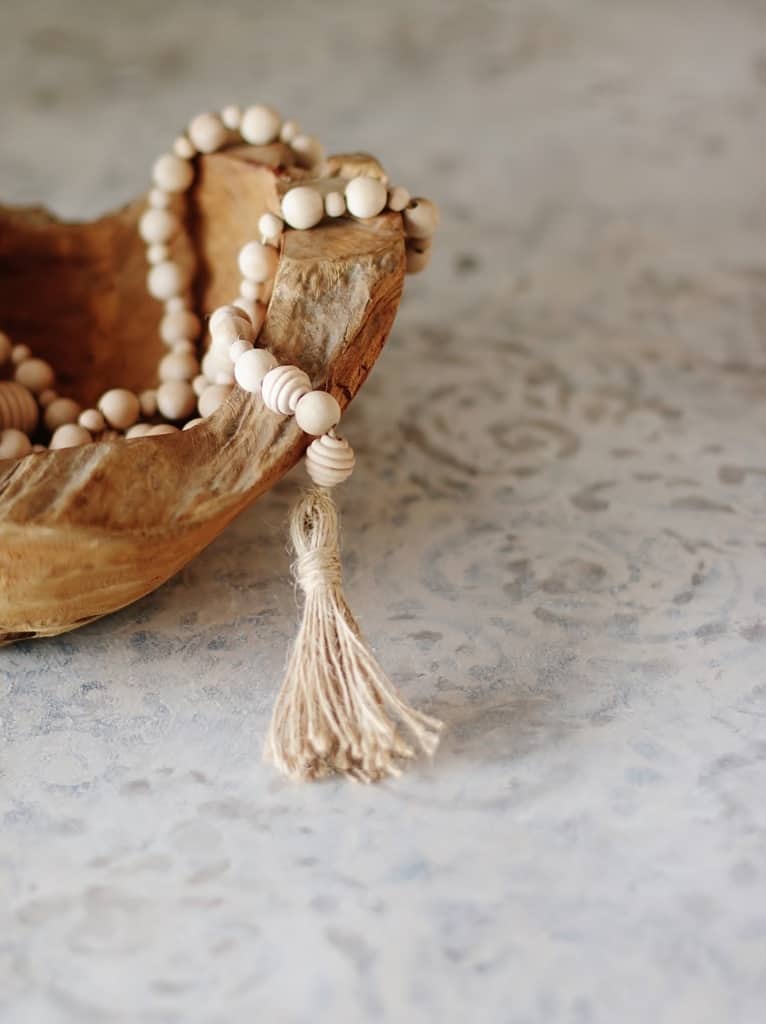
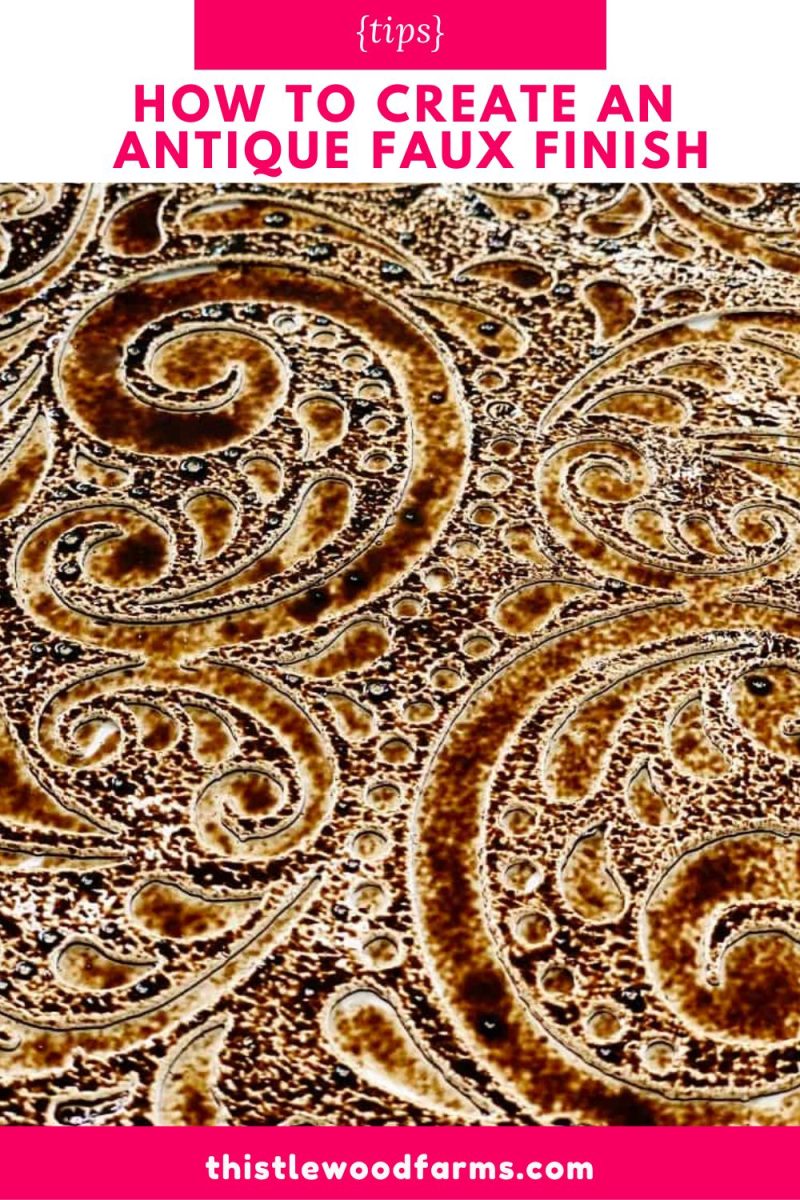
Ever wonder how to create a faux antique finish? Here’s the step-by-step on how to create this patterned patina.
A long time ago in a land far away, I used to own a faux finish business with a friend.
It was called “How Great Thou Art.”
We created stria on walls and layered plaster finishes with raised damask patterns and weathered wood finishes and distressed antiqued pieces with layers of character.
The amazing thing about faux finishes?
No two are exactly alike.
You have to let the finish talk to you.
You have to let it tell you what it wants to be.
And that’s EXACTLY what happened with the finish on this table. I thought it was going in one direction. I had an image in my mind of what I wanted the table to look like.
But the faux finish knew better.
It knew where it wanted to end up.
So here’s our journey together, the finish and I.
And wait until you see what the table looks like now.
How to Create a Faux Antique Finish With Patterned Patina
supplies:
stencil (similar)
stencil brush
Minwax stain (Provincial)
foam brushes
white paint
Polycrylic sealant
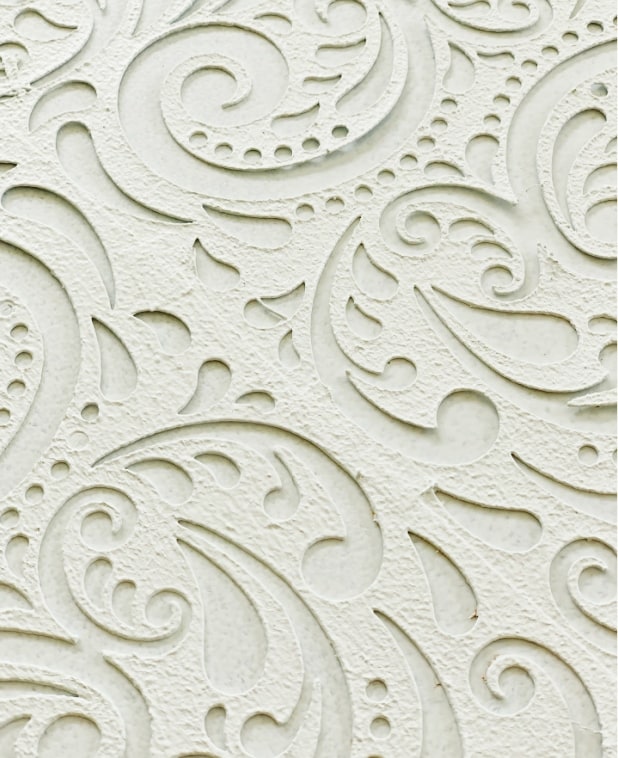
1. Start with a stencil
I love a good over-sized stencil.
This was just a stencil I had lying around, but I found a similar one.
You can see it here.
I love the random swirls and flowers and leaves.
The table was painted white and I started by taping a stencil to the top.
2. Stencil with stain
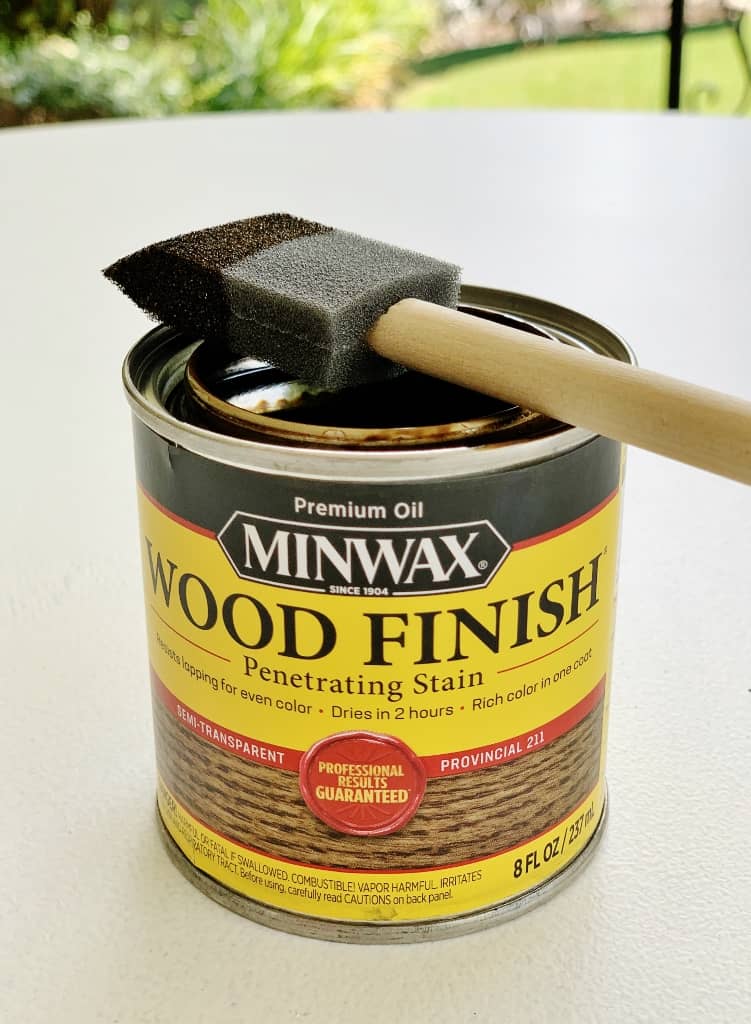
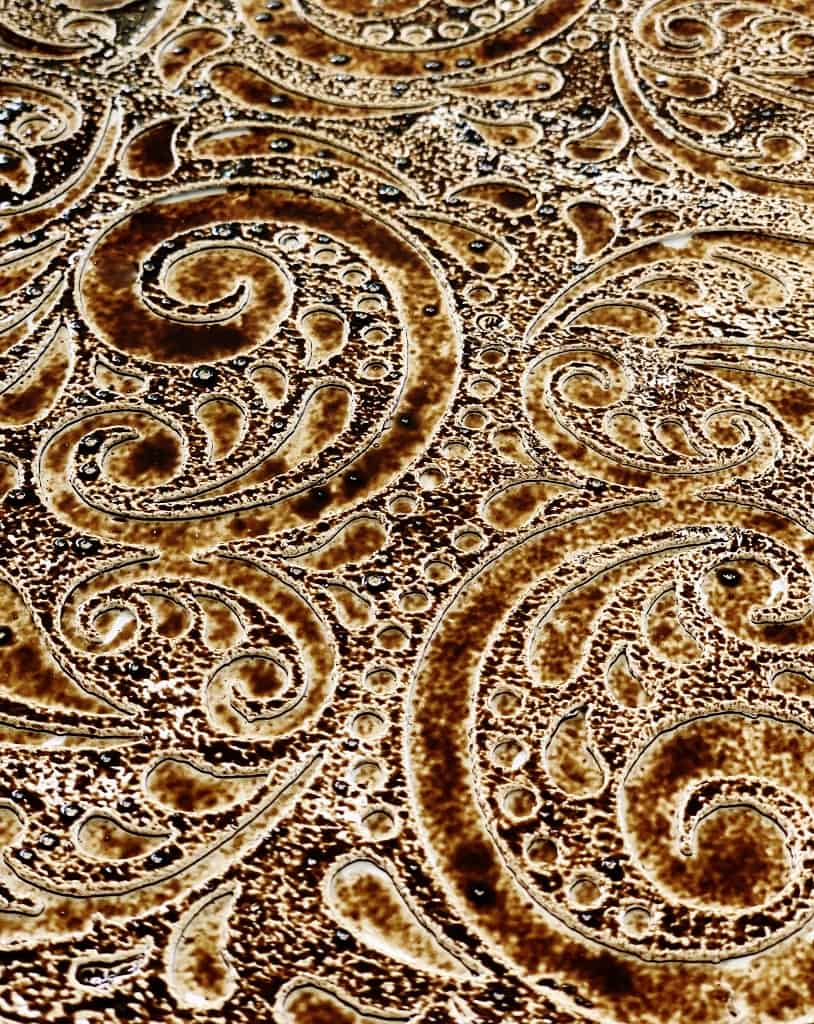
I took a sponge brush and dabbed the stain into the stencil. This is my favorite stain color. It’s called Provincial from Minwax and it’s perfect for getting that aged look.
This is my first attempt when I took this picture.
I actually ended up with much less stain on future stencils.
Just a few quick stencil tips from a past faux finisher:
- use a brush like this one that’s flat on the bottom
- keep the brush flat
- don’t turn the brush so the paint gets under the stencil
- make sure to check to see if you missed any part of the stencil before you lift it off
- lift the stencil up when you remove it rather from side to side
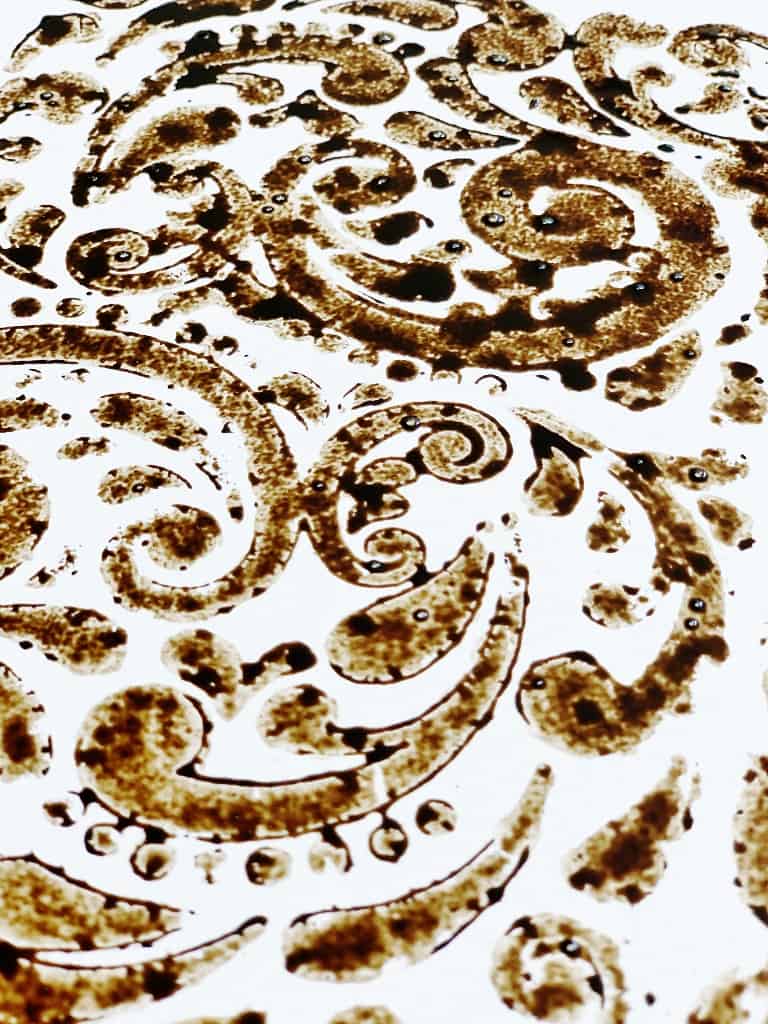
3. Let the stain dry
Here’s what the stencil looked like when I pulled it away. You can see the stencil pattern the stain left behind.
Next, I let the stain dry until it was tacky.
And then?
This is where the finish started talking to me.
The stained, stenciled tabletop looked like it had too much contrast.
So I decided to do this.
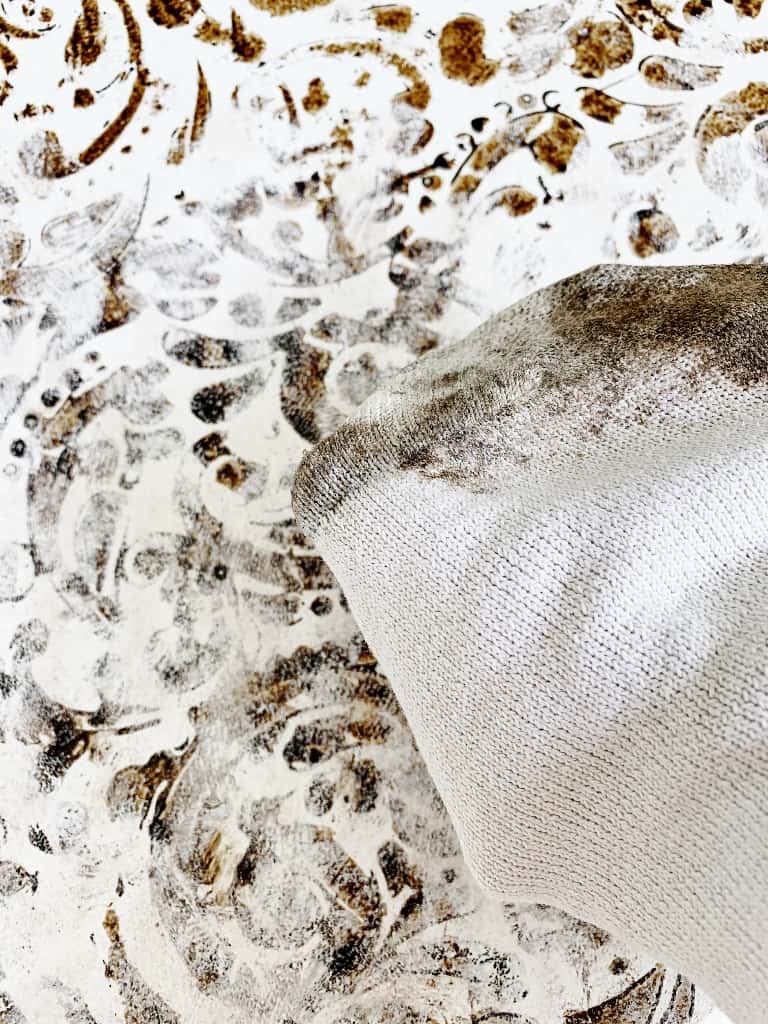
4. Dab the tacky stain lightly
When the stain was slightly tacky and almost dry, I used a sock to lightly dab at parts of it.
I know this is so random. A sock, you are saying? Is this going to work out? Where are you going with this finish, KariAnne.
You are right. It wasn’t where I was going originally.
But I LOVED it.
It gave a kind of mottled look to the stencil and blended the stain into the white and added a layer of distressing to the table top.
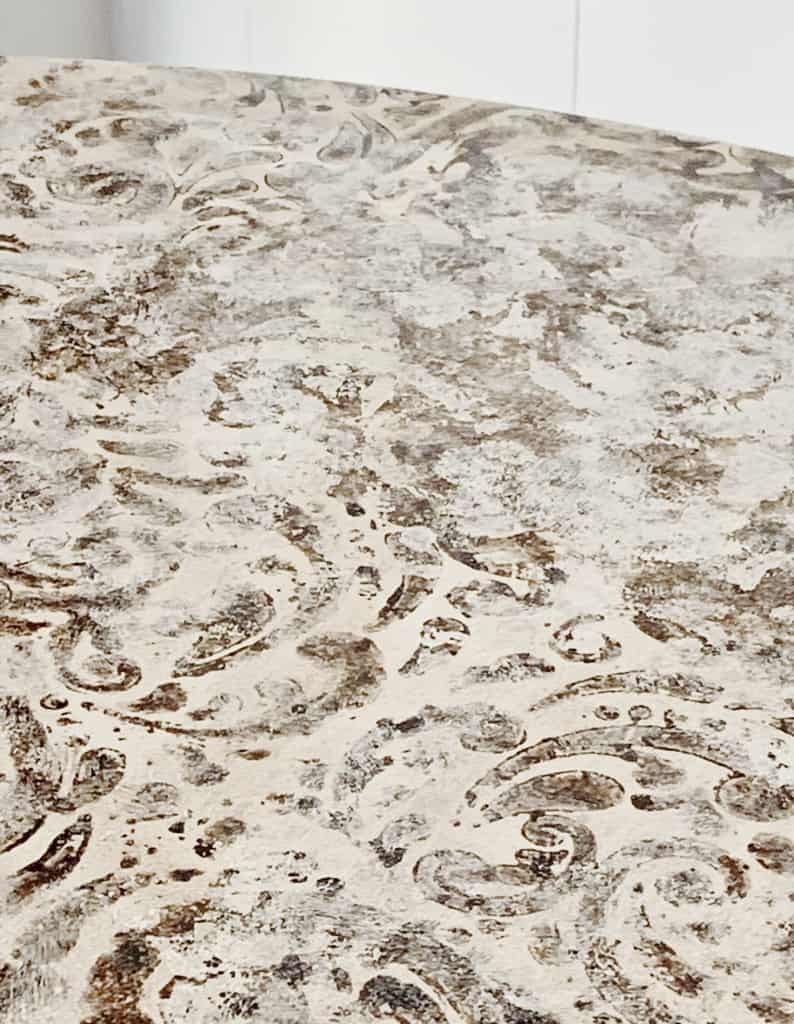
5. Wipe down the tabletop with stain
Next, I wiped down the entire tabletop with a layer of stain.
I just used a sock to wipe it down to add a little color and break up the stark white of the table.
Here’s what the tabletop looked like after it dried.
LOVE that patina.
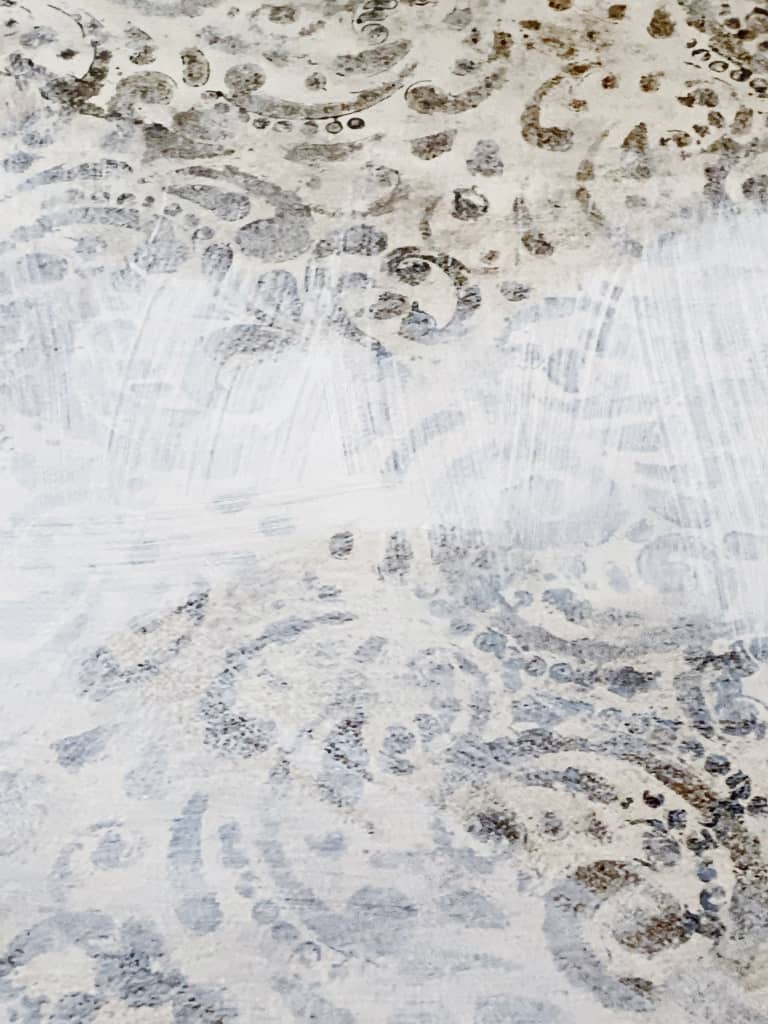
6. Dry brush white paint
I wanted to add another layer of stenciled stain to give it even more depth.
So I cross-hatched white paint over the dried stencil pattern.
Cross-hatching is just taking a little bit of paint and brushing it in opposite directions as shown.
Then I let the white paint dry.
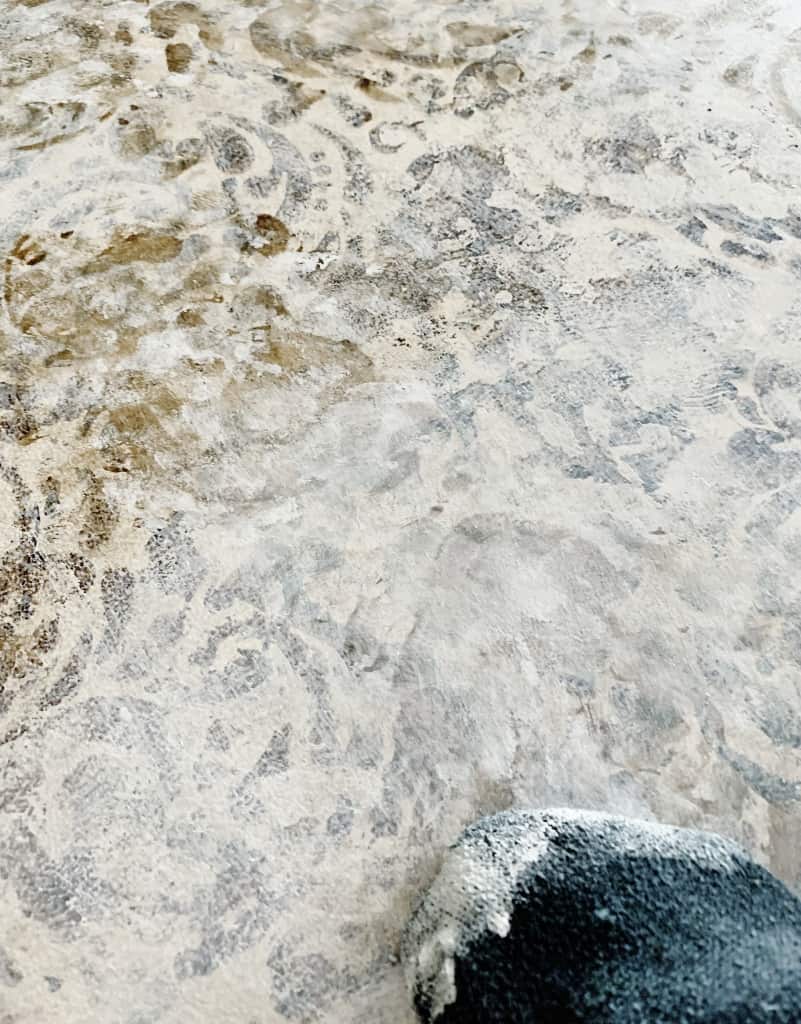
7. Whitewash the table
For the last layer of the finish, I wiped the entire tabletop down with a thin layer of white paint.
I wanted to lighten the finish and make it look a little more aged.
I let the white paint dry and the table was ready.
8. Seal the table top
Next, I sealed the table top with two coats of a water-based sealant.
Polycrilic in satin is my favorite.
You want to make sure that you use a water-based sealant because an oil-based sealant will turn your table yellow.
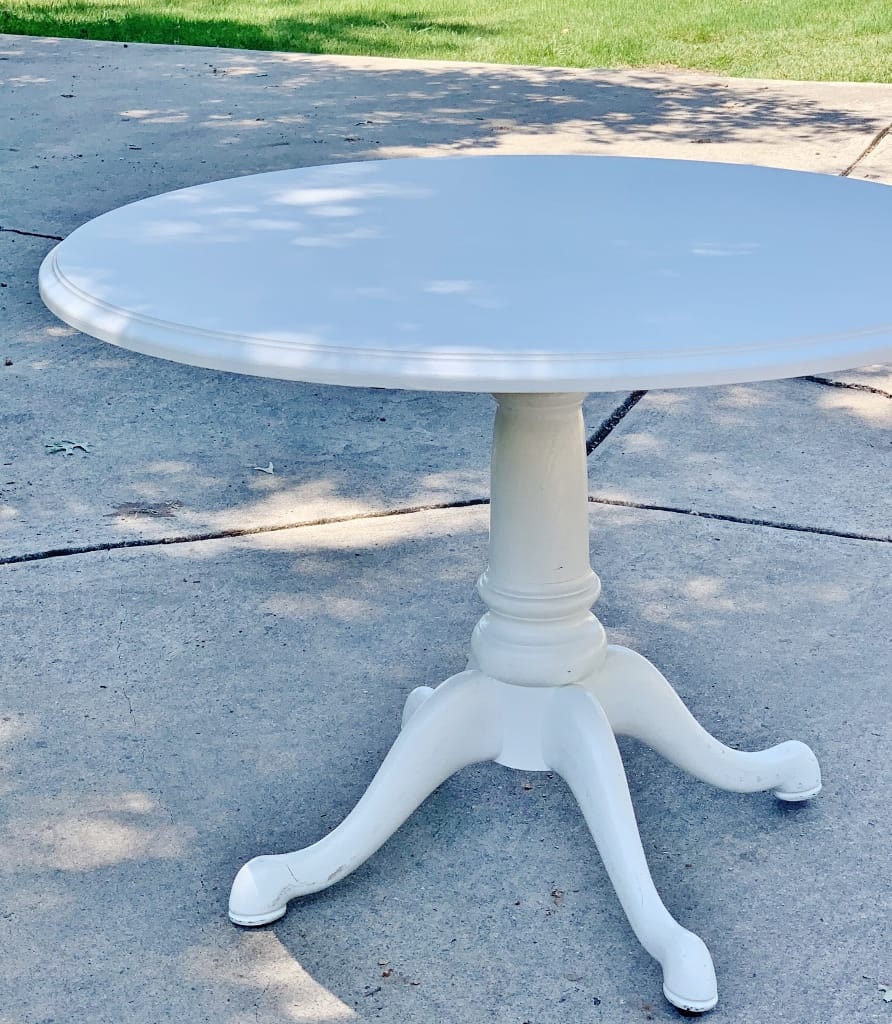
Here’s what my table looked like before.

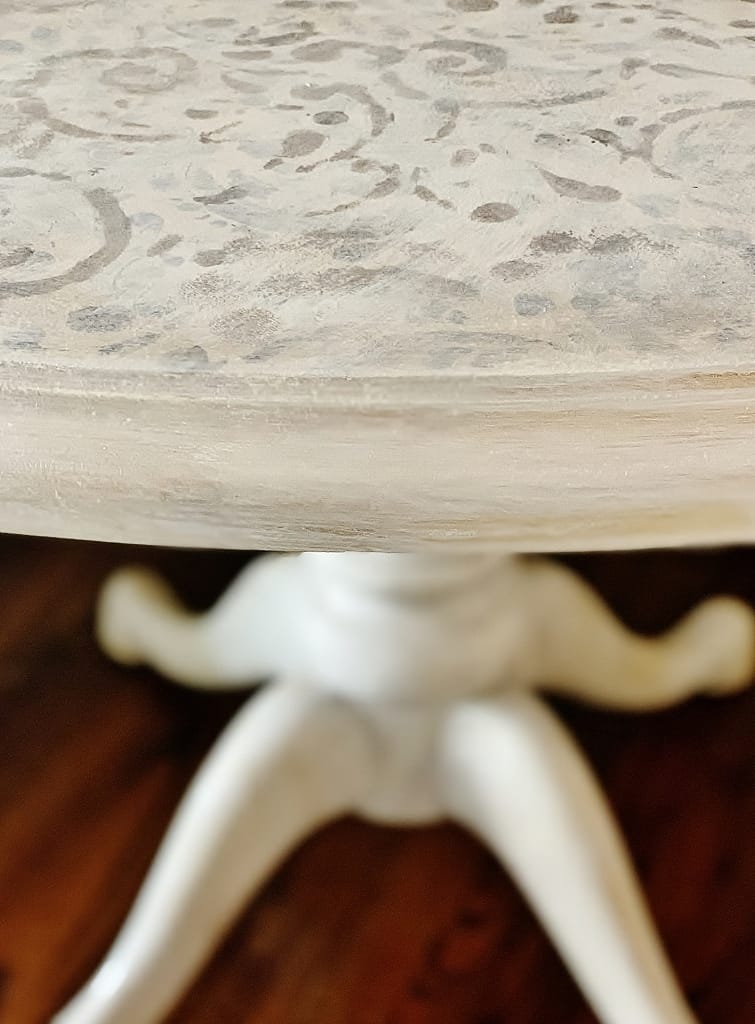
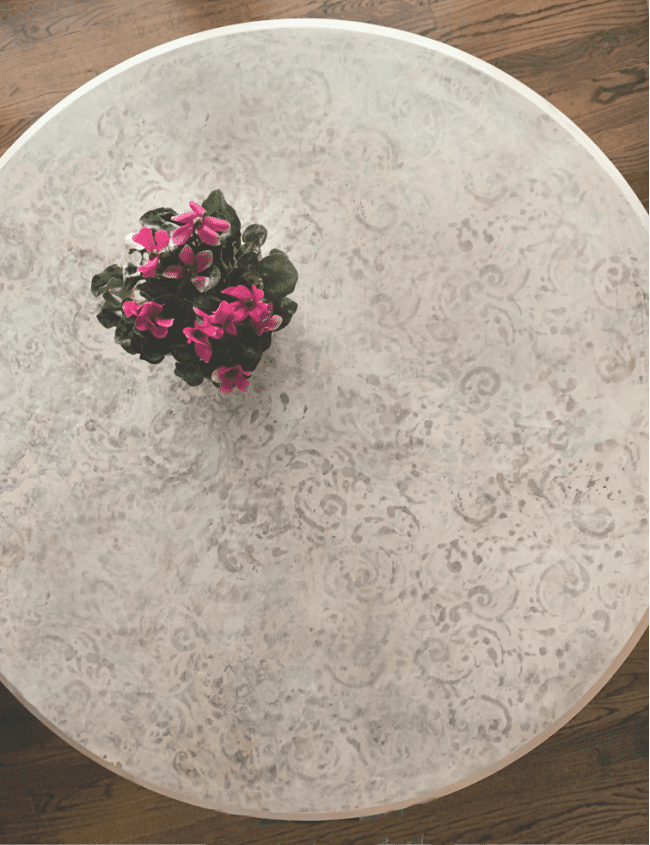
DOESN’T IT LOOK AMAZING?
It was only $40 at the thrift store.
And now?
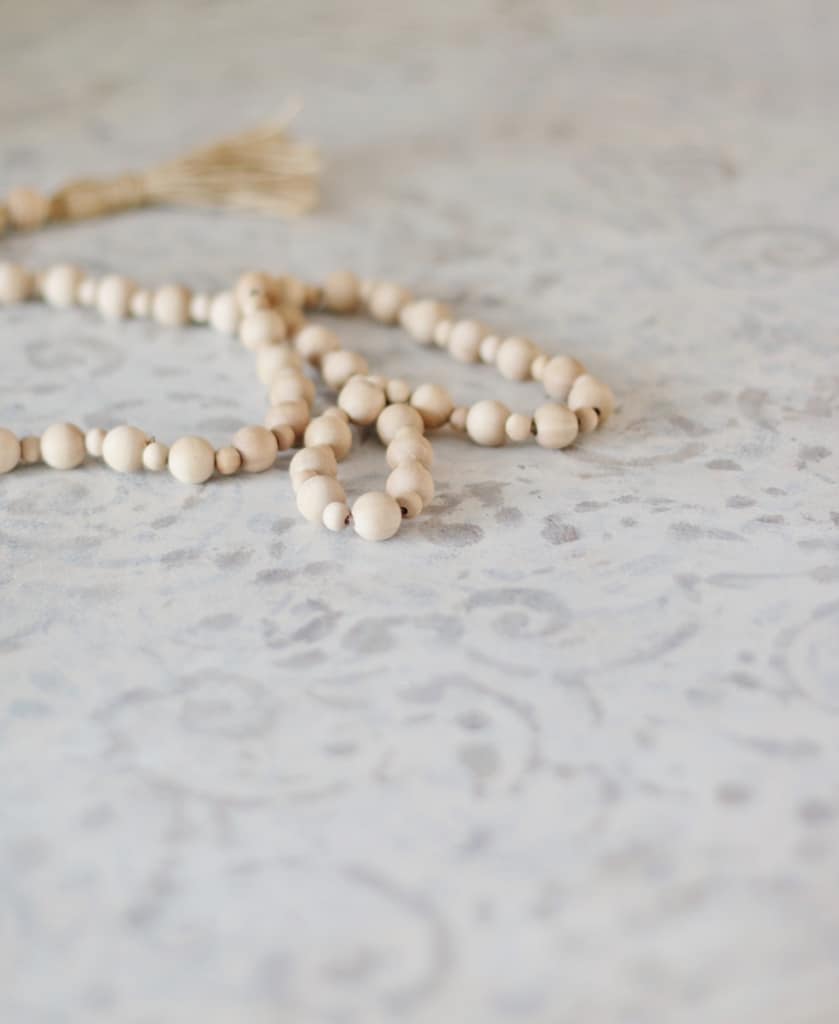
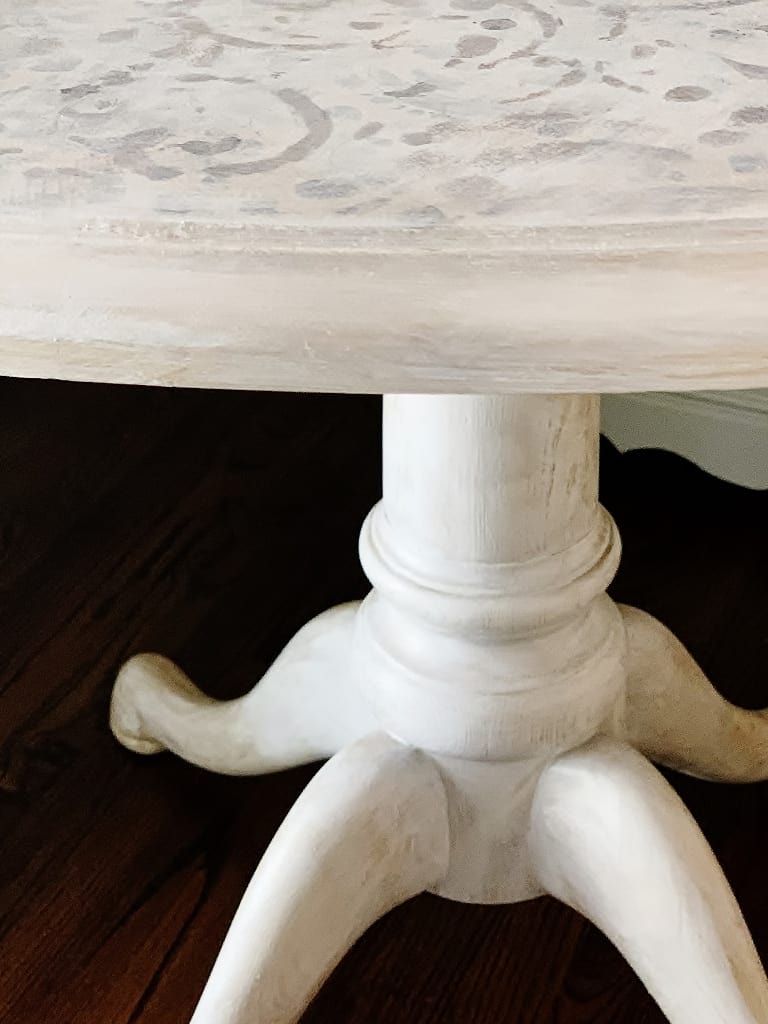
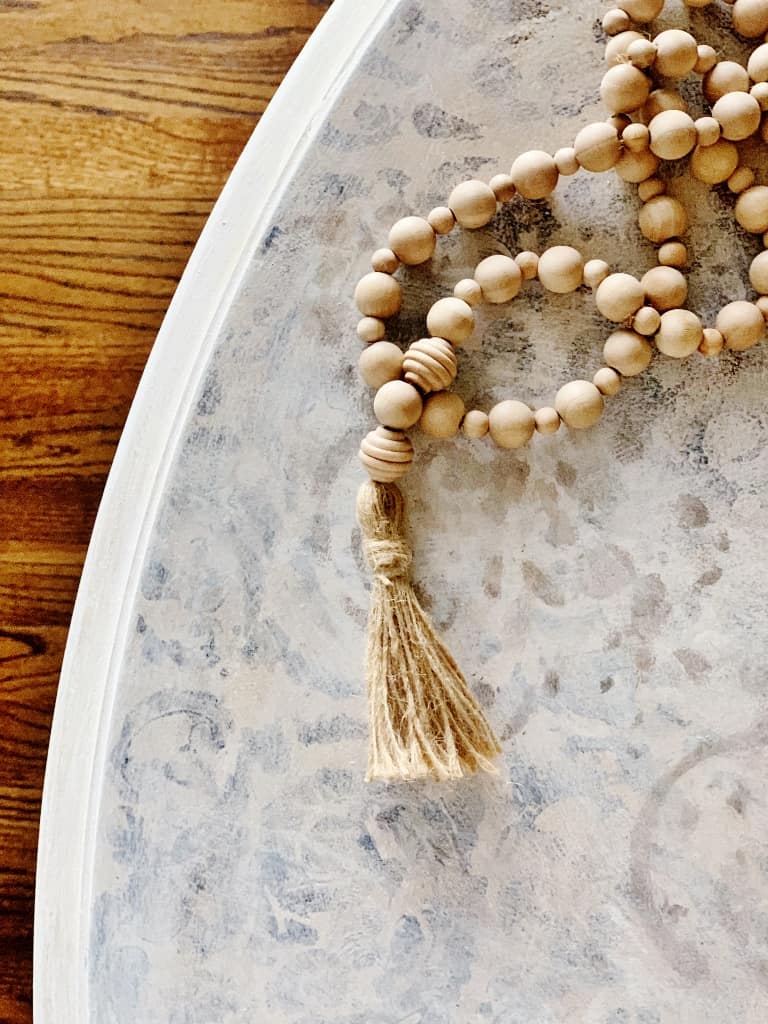
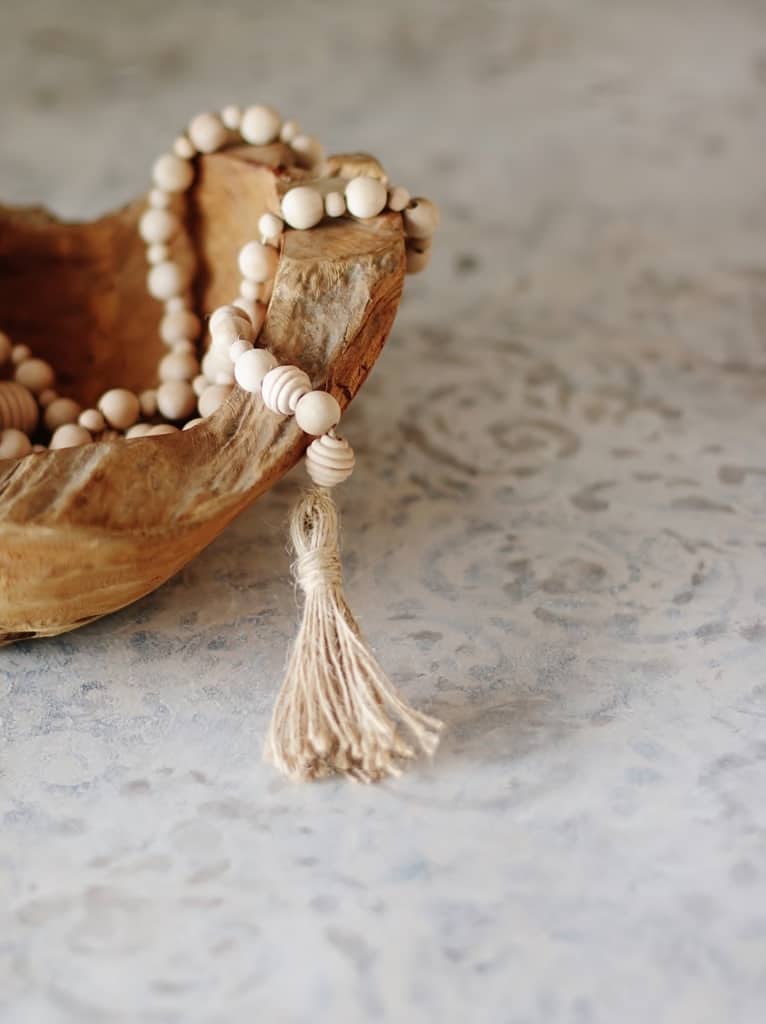
It looks like it has the perfect faux antique finish patterned patina.
This wasn’t where I was going.
I had a different kind of finish in mind when I started. Something a little more like leather with a stenciled stain patterned you couldn’t really see.
But the finish? It knew what it wanted to be.
So, friends, there’s a lesson here to be learned. The moral of this paint and stain story?
When your faux finish speaks….
….be sure and listen. 🙂
Disclosure: affiliate links are used in this post.















PS • A gentle, thoughtful post — brightened my morning. Thanks for this!