
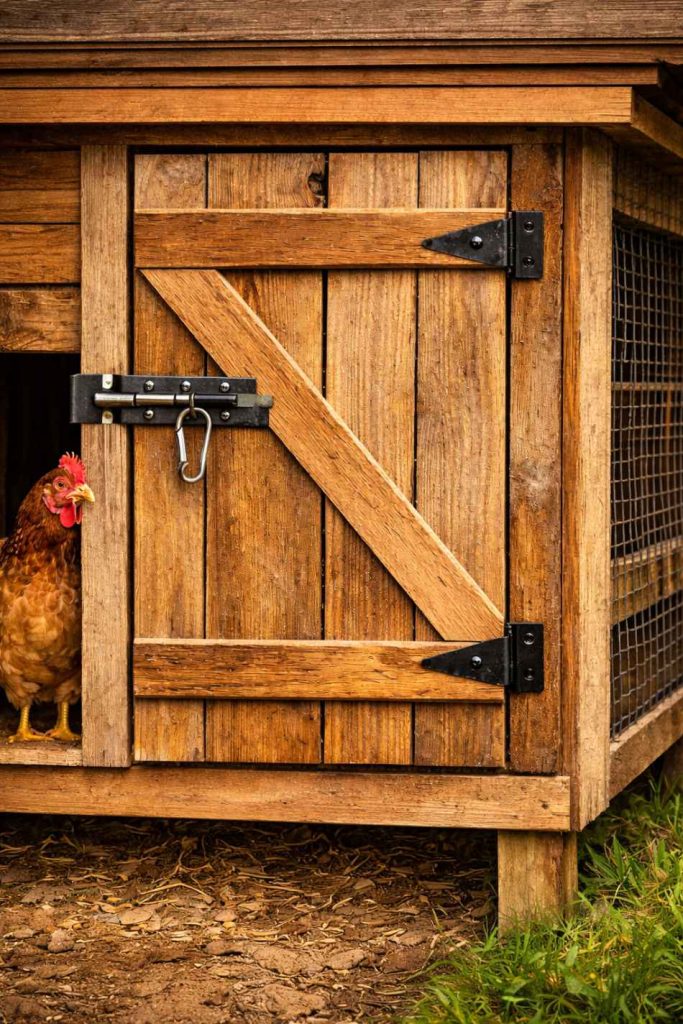
Door for chicken — a quick note to anchor this piece for readers.
A chicken coop door may look like a small part of your coop, but it plays a huge role in keeping your flock safe and comfortable.
A well-built door protects chickens from predators, shields them from wind and rain, and allows you easy access for feeding, cleaning, and collecting eggs.
Whether you are building a coop from scratch or replacing a worn-out door, making one yourself is a cost-effective and satisfying project.
This step-by-step guide explains everything you need to know—from choosing the right materials and tools to installing a secure latch and weatherproofing your door for long-term use.
Importance of a Strong Chicken Coop Door
A strong chicken coop door is essential for keeping your chickens safe and comfortable. It acts as the first line of defense against predators and harsh weather. A weak or poorly fitted door can leave gaps that invite danger and cause stress to your flock.
A well-built door also makes daily chicken care easier. It allows smooth access for feeding, cleaning, and egg collection while ensuring the coop stays secure at night.
Key Reasons a Strong Door Matters:
- Protects from predators: Keeps out dogs, foxes, raccoons, snakes, and rodents that may try to enter the coop.
- Blocks bad weather: Prevents rain, wind, and cold air from getting inside the coop.
- Improves security at night: Ensures chickens remain safely locked in after dark.
- Prevents escapes: Stops chickens from wandering out when they shouldn’t.
- Reduces stress for chickens: A secure environment keeps them calm and healthy.
- Makes maintenance easier: Provides easy access for cleaning and daily care.
- Increases durability of the coop: A strong door supports the overall structure of the coop.
A sturdy chicken coop door is not just a simple entryway—it is a vital part of keeping your flock protected and your coop functioning properly.
Also Read: 19 DIY Movable Chicken Coop Plans
Types of Chicken Coop Doors
Before building your door, decide which type best suits your coop and climate.
1. Swing Door (Hinged Door)
This is the most common and easiest type to build. It opens outward or inward on hinges and closes with a latch. It is suitable for most backyard coops.
2. Sliding Door
This door moves up and down or side to side in grooves. It is harder for predators to force open and works well for small coop entrances.
3. Wire Mesh Door
This door is used mainly for ventilation. It allows airflow while still keeping predators out. It is often paired with a solid door for nighttime use.
4. Automatic Door
These doors open and close using light sensors or timers. They are convenient for busy owners and provide reliable nighttime security.
Materials and Tools Required
Materials:
- Plywood or wooden boards
- Wooden strips for framing
- Galvanized wire mesh (optional)
- Hinges (2–3 heavy-duty)
- Screws or nails
- Predator-proof latch or lock
- Wood glue
- Exterior paint or sealant
Tools:
- Measuring tape
- Hand saw or power saw
- Drill or screwdriver
- Hammer
- Pencil
- Level
- Sandpaper
Using treated or weather-resistant wood will increase the lifespan of your door.
How to Build a Door for Chicken Coop?
A good chicken coop door keeps your birds safe from predators and bad weather while making your daily chores easier. With a few basic tools and some simple steps, you can build a strong, reliable door for your coop in no time.
Step 1: Measure the Coop Door Opening Carefully
Accurate measurements are the foundation of a well-fitting chicken coop door. A door that fits properly will close securely and move smoothly without leaving gaps for predators or drafts.
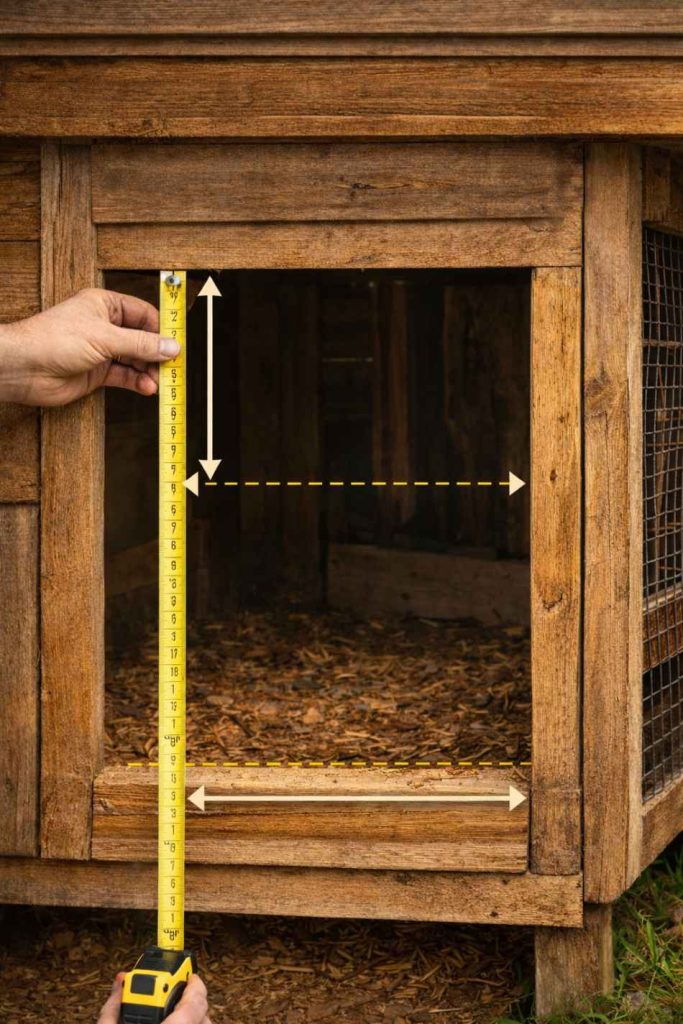
Start by measuring the height and width of the coop opening using a measuring tape.
Take measurements at more than one point to ensure the opening is square. Always allow about ½ inch of clearance on all sides so the door can open and close without rubbing against the frame.
Mark your measurements clearly on the wood using a pencil and straight edge. Double-check all dimensions before cutting. A door that is too tight may swell and stick during wet weather, while a door that is too loose can create dangerous gaps that allow predators to enter.
Also Read: How to Make a Cheap Chicken Coop?
Step 2: Cut the Door Panel
Once measurements are complete, cut your wooden board according to the marked dimensions. This will form the main body of your door.
Depending on your design choice:
- Solid door: Use a single piece of plywood or wooden board for maximum protection.
- Ventilated door: Build a wooden frame and attach galvanized wire mesh in the center to allow airflow.
- Combination door: Use wood on the lower half for security and wire mesh on the upper half for ventilation.
After cutting, smooth all edges with sandpaper. This prevents splinters, reduces the risk of injury, and helps the door seal more tightly against the frame.
Step 3: Construct a Reinforced Door Frame
A reinforced frame keeps the door straight and prevents warping over time, especially in changing weather conditions.
Cut four wooden strips to match the height and width of your door. Arrange them into a rectangular shape and secure the corners using screws and wood glue for added strength. This frame supports the door panel and distributes weight evenly.
Attach the main door panel or wire mesh securely to this frame. Reinforcing the door is especially important for larger doors or doors made from thinner wood, as it adds stability and long-term durability.
Step 4: Attach Hinges Properly
Hinges allow the door to open and close smoothly, so they must be installed carefully.
Position the hinges along one vertical side of the door. Use:
- Two hinges for small doors
- Three hinges for larger or heavier doors
Ensure the hinges are evenly spaced to distribute the door’s weight properly. Screw them tightly into the door frame, making sure they are straight and aligned. Poor hinge placement can cause the door to sag or bind over time.
Also Read: How to Heat Chicken Coop without Electricity?
Step 5: Mount the Door on the Coop
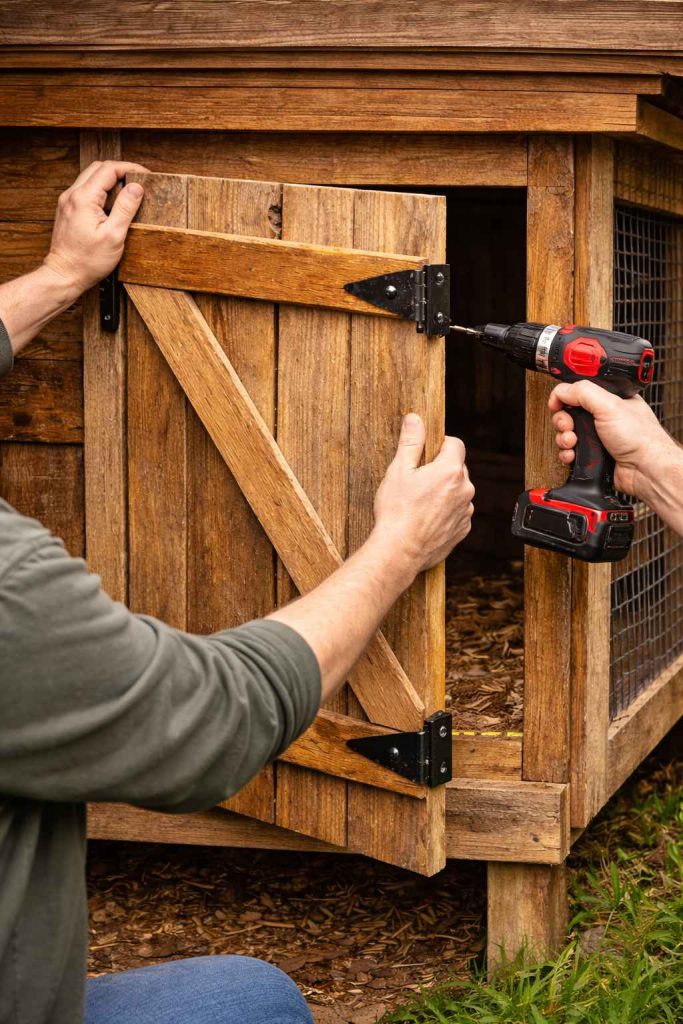
Hold the door in place over the coop opening and attach the hinges to the coop wall or door frame. A second person can help keep the door steady while you screw it in.
Check the alignment using a level if available. Open and close the door several times to ensure smooth movement. Make small adjustments if the door rubs against the frame or does not sit evenly.
A properly mounted door should swing freely without scraping or sticking and should close tightly against the coop frame.
Step 6: Install a Predator-Proof Latch
A latch is one of the most important safety features of a chicken coop door. Many predators are clever and can open simple hooks or loose fasteners.
Strong latch options include:
- Sliding bolt with a carabiner clip
- Spring-loaded latch
- Padlock-style latch
Install the latch at a height that chickens cannot reach but is easy for you to operate. Avoid basic rotating hooks or loose catches, as animals like raccoons can easily manipulate them open.
Step 7: Weatherproof the Door
Weatherproofing protects your door from rain, sun, and humidity, increasing its lifespan.
Begin by sanding all rough areas and edges. Then apply an exterior-grade wood paint, varnish, or sealant to the entire surface. Allow the door to dry completely before installing or using it.
This step prevents moisture from soaking into the wood, reducing the risk of rot, swelling, and cracking over time.
Also Read: How to Clean and Disinfect the Chicken Coop?
Adding Insulation for Cold Climates (Optional)
In colder regions, insulating the door helps keep warmth inside the coop and protects chickens from harsh winds.
Effective insulation options include:
- Foam board installed on the inside of the door
- Rubber weather stripping around door edges
- Double-layer wooden panels with insulation in between
Be careful not to block ventilation entirely. Chickens still need fresh air to prevent moisture buildup and respiratory problems.
Optional: Installing an Automatic Chicken Coop Door
Automatic chicken coop doors add convenience and extra security.
These doors open and close based on:
- Timers
- Light sensors
- Remote control systems
Benefits include consistent opening and closing times, reduced risk of forgetting to lock the coop at night, and better protection against predators. Automatic doors can usually be installed using the same door frame you have already built.
Maintenance and Regular Inspection
Routine maintenance ensures your chicken coop door stays strong and reliable for years.
To keep your door in good condition:
- Check hinges monthly for rust or looseness
- Tighten any loose screws
- Inspect the door for cracks or gaps
- Replace damaged or weak latches immediately
- Repaint or reseal the door once a year
Regular inspection prevents small issues from becoming major security risks and ensures long-lasting protection for your flock.
Common Mistakes to Avoid
Building a chicken coop door may seem simple, but small mistakes can reduce its effectiveness and put your chickens at risk. Avoiding these common errors will help ensure your door is strong, secure, and long-lasting.
1. Using Thin or Weak Wood
Choosing thin or low-quality wood can cause the door to bend, crack, or warp over time. Weak wood may not hold hinges and latches securely, making it easier for predators to force the door open. Always use sturdy plywood or treated lumber that can withstand weather changes and daily use.
2. Leaving Gaps Around the Edges
Gaps around the door frame may look harmless, but they create easy entry points for rodents, snakes, and other predators. Even small spaces can allow animals to squeeze inside. A properly fitted door should close tightly against the frame with minimal gaps. Adding wood trim or weather stripping can help seal any small openings.
3. Installing a Weak Latch
A weak or simple latch is one of the biggest security risks for a chicken coop. Predators like raccoons are smart and can open basic hooks or twist latches. Always install a strong, predator-proof latch such as a sliding bolt with a carabiner or a spring-loaded lock to keep the door securely closed at night.
4. Forgetting to Weatherproof the Door
Unsealed wood absorbs moisture from rain and humidity, which leads to swelling, rotting, and cracking. Over time, this makes the door difficult to open and close and shortens its lifespan. Applying exterior paint or sealant protects the wood and keeps the door strong through all seasons.
5. Making the Door Too Small
A door that is too small can make it difficult for chickens to move in and out comfortably. This can cause crowding, stress, and even injuries as birds push through the opening. The door should be wide and tall enough for your largest chicken to pass through easily without crouching or squeezing.
Also Read: What Should Be Inside a Chicken Coop?
Conclusion
A well-built chicken coop door is a small detail that makes a big difference in the safety and comfort of your flock.
By using strong materials, taking accurate measurements, and installing secure hinges and latches, you can create a door that protects your chickens from predators and harsh weather.
With proper weatherproofing, optional insulation, and regular maintenance, your chicken coop door will remain durable and reliable for years.
Avoiding common mistakes and choosing the right door style for your coop and climate ensures smooth daily operation and peace of mind.
In the end, a strong and thoughtfully built coop door helps create a secure home where your chickens can thrive.

Khaja Moinuddin, a computer science graduate, finds joy in gardening and homesteading. Join him on this blog as he shares his experiences in homesteading, gardening, and composting
We reference Door for chicken briefly to keep the thread coherent.
Door for chicken comes up here to connect ideas for clarity.
















Tiny tip: Such a warm post; this made me smile. Great share.
Heads up: Well said — couldn’t agree more. Will try it.
Heads up: Well said — couldn’t agree more. Will try it.
Heads up: Well said — couldn’t agree more. Will try it.
Heads up: Well said — couldn’t agree more. Will try it.
Heads up: Well said — couldn’t agree more. Will try it.
Heads up: Well said — couldn’t agree more. Will try it.
Heads up: Well said — couldn’t agree more. Will try it.