Apart plant carrots: a concise orientation before we get practical.
Apart plant carrots: Quick notes
This post may contain affiliate links. If you make a purchase through links on our site, we may earn a commission.
As long as you prepare the planting bed properly and know how far apart to plant carrots, you should be able to harvest loads of these sweet treats. If you’ve never grown your own before, you’ll probably be shocked by just how much better they can taste than the bagged carrots you can find in large grocery store chains. What’s more, there are specialty carrot varieties you can choose to best match your growing conditions, season length, climate, and the ways you prefer to use this popular root veggie. In this article you’ll get expert tips on spacing carrots for the biggest and best quality roots.
Why you need to know how far apart to plant carrots
Because they flourish in cool weather, carrot crops can be grown in early spring and again in the fall. And besides traditional garden spaces, carrots will thrive in raised beds, large pots, or even in deep window boxes. Getting how far apart to plant carrots just right matters because, if your plants are too crowded, their roots won’t have the room they need to really flourish. Seedlings that are growing too close to one another can become stunted and deformed. That means any carrots you end up with will likely be much thinner and smaller than they otherwise might have been.
Crowded carrots are also more susceptible to disease and insect pest infestations. By affording each individual plant enough room and also by leaving enough space between rows of carrots, you allow for improved air circulation for your plants. You’ll also be able to more easily inspect the carrot patch for insect intruders, too.
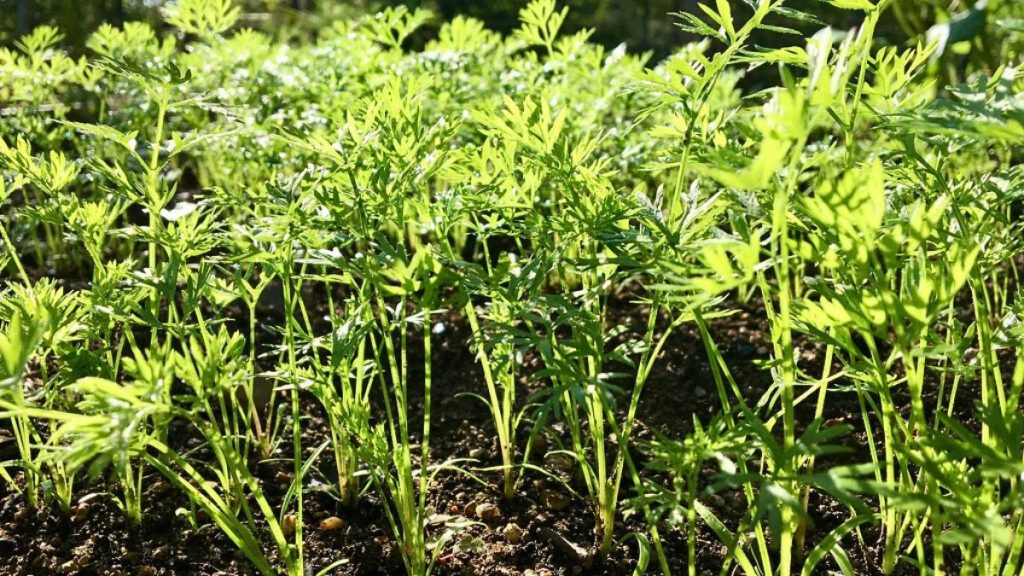
 Knowing how far apart to plant carrots results in big, high quality roots.
How variety impacts the best carrot seed spacing
Whether they’re long and slender, short and stubby, or bright purple, the varieties you choose do directly influence how far apart to plant carrots. Here are some different carrot types you might want to try:
- Short-and-stubby “baby” types—Just three inches long at maturity, Little Fingers are ready to harvest in about 57 days. Their diminutive size makes them perfect for pickling or canning. To develop properly, Little Fingers need about one and a half to two inches of space between seedlings.
- Longer varieties—Long-and-skinny Tendersweet carrots take about 80 days to mature and can grow 10 inches long or more. Allow two inches between these seedlings.
- Novelty mixes—Some carrot types provide a pop of purple, bright yellow, creamy white, or even red. A couple to try include Carnival Blend and Starburst Blend which mix different varieties in the same seed packet. So, how do you know how far apart to plant carrots if you choose a mix of different types? A good general rule for these is to allow up to three inches between seedlings, since some carrots may have broader “shoulders” than others.
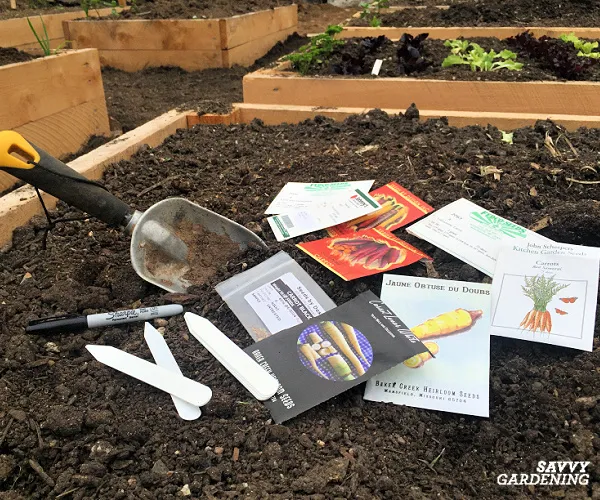
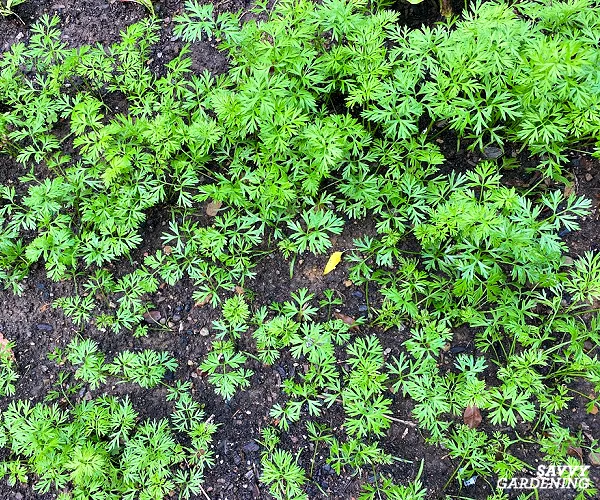 Plant carrot seeds in wide bands or rows. Most gardeners plant more seeds than they need with the goal of thinning as the seedlings grow.
Seed planting distance vs thinned plant distance
Rather than try to space the tiny seeds perfectly during planting, most people sprinkle more seeds than they’ll need with the intention of correcting the distance between small plants once they’ve emerged. When planting carrots, create a shallow trench across the soil surface where you want them to grow and drop seed in.
Plant seeds at a depth of about one-quarter of an inch. Once seeds are in place, you must keep the seed bed moist. I use a long handled watering wand to saturate the soil every day or two. Germination usually takes at least 10 days. Once carrot seedlings are about an inch tall, you can thin them so that the carrots you leave in place will have enough room to fully mature. The distance you’ll leave between thinned carrots depends on the variety you’ve chosen to grow and how wide their shoulders will be at maturity. When in doubt, err on the side of giving your carrots some extra space.
Ideal spacing between carrot seeds in row gardens
How far apart to plant carrots in a traditional garden bed depends on the varieties you’ve chosen and how soon you intend to harvest them. If you’re growing very large carrots and want to harvest full-size veggies, you may need to leave as much as three inches between individual plants. If, on the other hand, you intend to harvest them early to use as “baby” carrots, you don’t need to leave as much space between them. As for how much space to allow between rows of carrots, one foot is a safe bet for the bigger types and six inches between rows is plenty for babies.
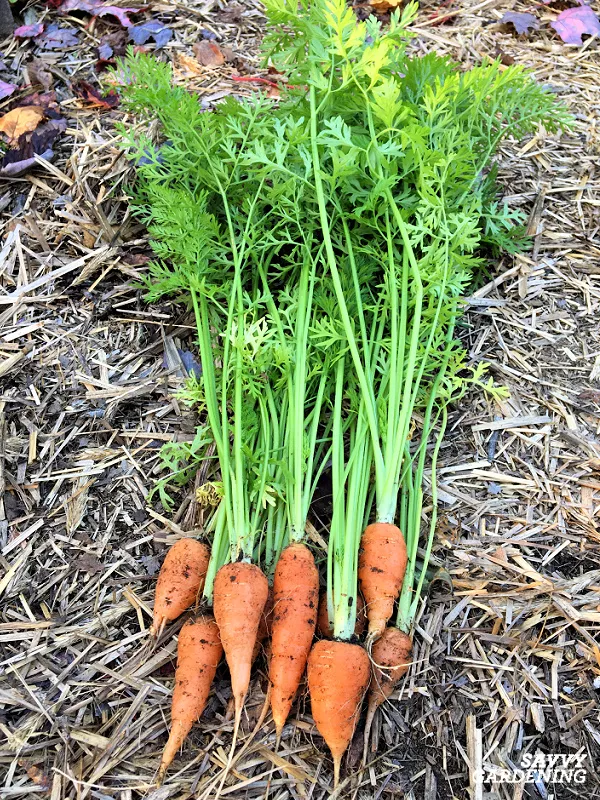 Carrot spacing can also depend on the types you’re growing. Plant baby carrots closer together than wide-shouldered varieties.
How far apart to plant carrots in raised beds
When considering how far apart to plant carrots in raised beds, again, it comes down to the varieties you choose. Since space is slightly more limited, you might opt for one of the short-and-stubby carrot types. You can usually get away with a distance of an inch-and-a-half to two inches between these kinds of carrots. However raised beds generally have deep, loose soil, making them ideal for growing long and slender Imperator-type carrots like Sugarsnax. These are best thinned to one and a half inches in between plants.
(Pro-tip: You might also bury some screen wire or hardware cloth at the very bottom of your raised bed. This keeps mice, voles, and other critters from unearthing your harvest.)
How far apart to plant carrots in containers
Regarding how far apart to plant carrots in containers, you’re largely constrained by the size of your pots. Because space is much more limited in containers, you’ll likely want to choose a specialty variety like Tonda di Parigi carrots which mature in a couple of months and are just an inch or two long. Leave at least an inch-and-a-half bewteen these itty-bitties.
That said, you can grow larger carrots in containers. However, because many larger varieties need about three inches apart, you won’t be able to accommodate as many of them.
 One of the reasons that carrots fork or twist in the garden is overcrowding.
Tips for thinning carrots
Some people thin their carrots by gently pulling the extra carrot seedlings out of the ground. Others choose to snip the leaves off of the plants they wish to eliminate. No matter which method you use, your goal is the same—to leave a uniform amount of space between the carrots you leave in place.
Rather not mess with thinning at all? Although it is more expensive, you can always opt for carrot seed tape. Your carrots will be perfectly spaced, but unfortunately there are fewer choices regarding carrot varieties you plant.
Other ways to encourage good root growth
Before planting your carrot seeds, you should make sure to break up the soil surface and the planting bed itself. For the tiny roots to appear and grow unimpeded, your soil should be fine, loose, and well-draining. Carrots grown in heavy clay or soil with lots of rocks seldom reach their full potential. You can improve drainage and add nutrients by working finished compost, worm castings, and other kinds of organic matter into your soil ahead of planting.
Once seedlings sprout, keep an eye out for weeds, removing them before they have the chance to overtake your crop.
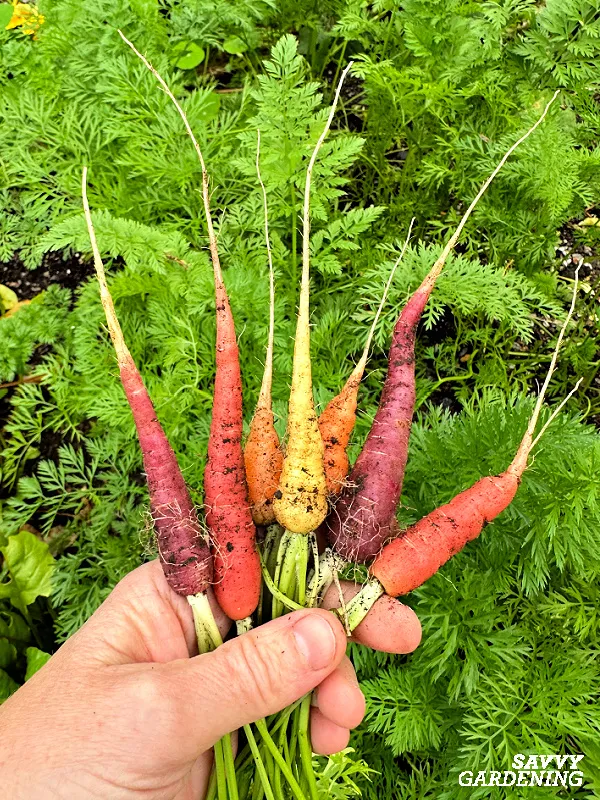 I thinned these baby rainbow carrots to let the remaining roots size up. A delicious garden snack!
Keep calm and carrot on
When it comes to how far apart to plant carrots, their spacing ultimately depends on the requirements of the varieties you choose and the size of your container or garden bed. Whether you intend to harvest fully grown, large carrots or prefer to pick them before they have a chance to fully mature also will play a part.
The ideal cool-weather crop, carrots come in a variety of unusual colors, shapes, and sizes. Plan to leave at least an inch-and-a half between smaller, “baby” varieties. And leave two to three inches between larger types you intend to harvest at maturity. Finally, remember to keep your planted seeds moist and only plant in soil that is well-worked and loose.
A short mention of Apart plant carrots helps readers follow the flow.