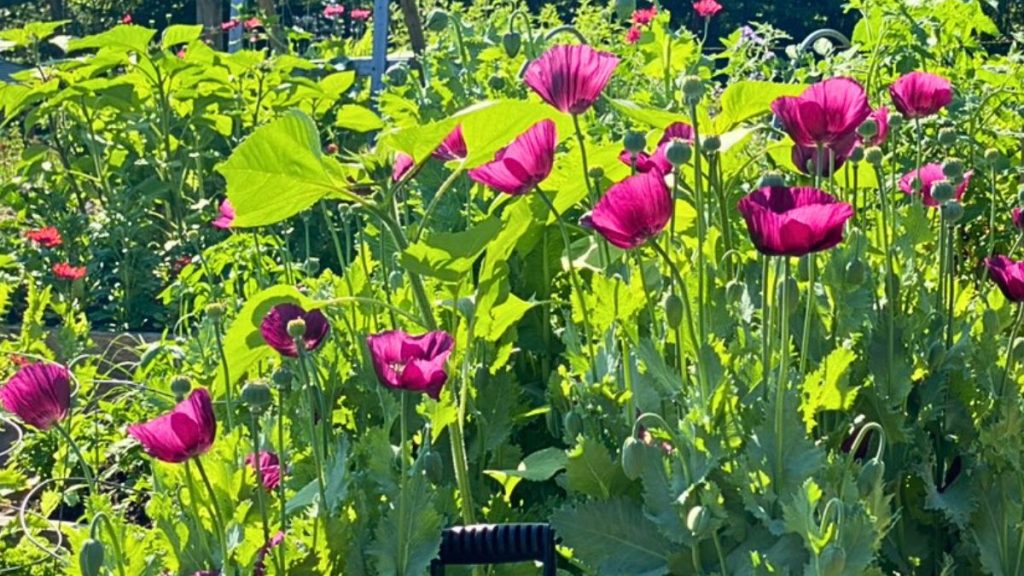
Growing poppies from — a quick note to anchor this piece for readers.
This post may contain affiliate links. If you make a purchase through links on our site, we may earn a commission.
Poppies are fantastic garden plants adding vibrant summer color to flower and vegetable beds and the papery blooms are pollinator-friendly, attracting many species of bees to your yard. Growing poppies from seed is easy and it’s the best way to enjoy the many types and varieties of poppies in your garden. In this article you’ll get expert tips on when and how to plant poppy seeds, the best types of poppies to grow from seed, and how to care for the seedlings.
Poppy basics
From wildflower meadows to cottage gardens to vegetable beds, colorful poppies lend their brilliant hues to summer spaces. Depending on the species and variety, the color range includes white, pink, cherry, scarlet, orange, mauve, and deep maroon, almost black, with every shade in between. Poppies generally flower from early to mid-summer summer, with some types, like California poppies, blooming for months.
If you want poppies in your garden you need to understand the basics of growing poppies from seed. This is because most types of poppies form taproots and don’t transplant well. Direct seeding is the best way to growth healthy plants and lots of papery blooms. Poppy seeds are tiny and if you plant them too deeply, you’ll have disappointing results. Plant poppy seeds in a dedicated poppy bed or mix them with other annuals like bachelors buttons, Larkspur, or calendula. I like to sow seeds in my raised vegetable beds to attract bees to my summer garden.
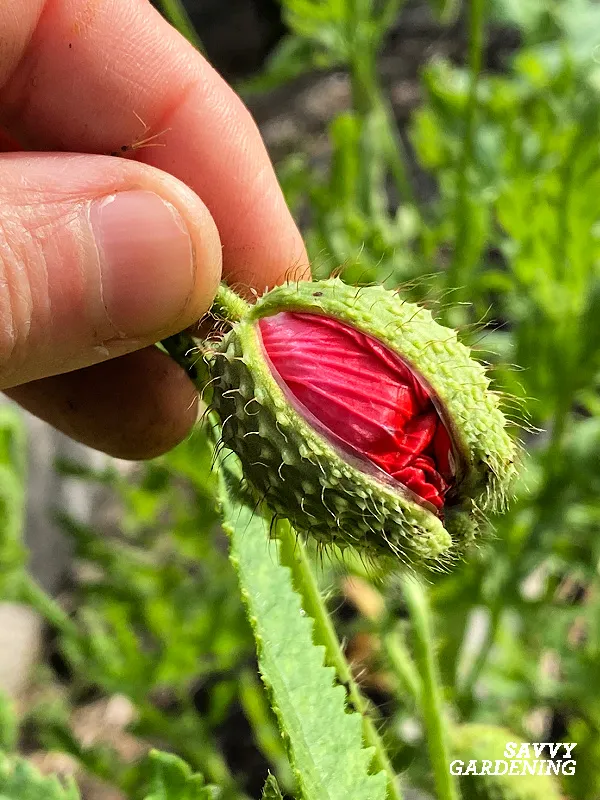 Once a poppy bud starts to show its color, it won’t be long before it’s in full bloom.
Types of poppies
There are many types and varieties of poppies available to grow including perennial oriental and celandine poppies, as well as the legendary blue Himalayan poppies. However, in this article I’m going to focus on four types of (mostly annual) poppies I grow from seed.
1) Shirley poppies (Papaver rhoeas)
This annual poppy is beloved by gardeners for its ease of cultivation, 5 to 6 week blooming period, and the tissue paper blooms that are 2 to 4 inches across. The classic red corn poppy adds vibrant color to garden beds, but there are dozens of varieties and mixes you can plant. Some of my go-to’s include Amazing Grey, Angel’s Choir, and Legion of Honor.
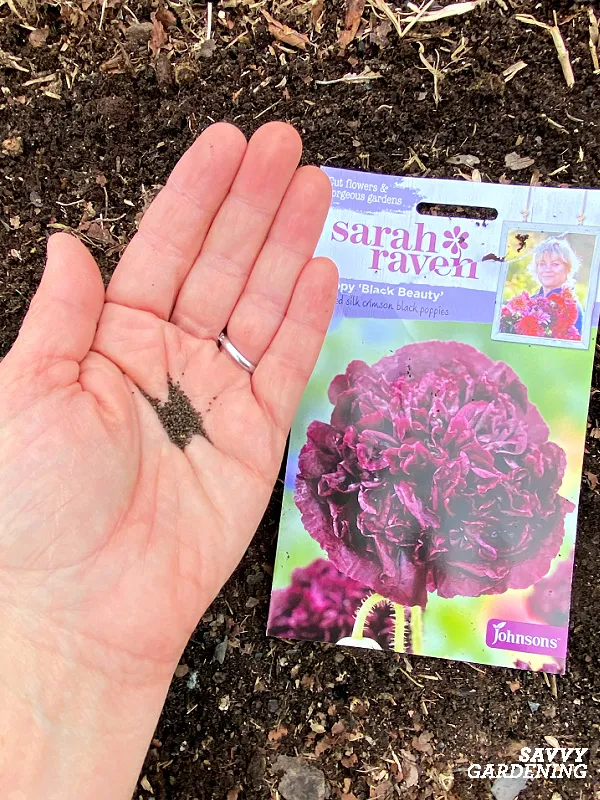 Direct seeding is the best way to grow poppies like Breadseed, Shirley, and California.
2) Breadseed poppy (Papaver somniferum)
Also called opium poppy, this is a carefree annual that is very easy to grow from seed. The plants are 3 to 4 feet tall and produce large saucer-shaped flowers in arresting shades of purple, white, mauve, salmon, pink, and red. Most have dark petal splotches that surround the center pod. The mature seeds are edible and can be collected for cooking and baking. I like growing Hens and Chicks, Lauren’s Grape (also called Hungarian Blue), and various double peony varieties.
3) Iceland poppy (Papaver nudicaule)
Iceland poppies are typically short-lived perennials, but self-sow so will likely return year after year. I prefer to direct seed, but this is a poppy that can also be transplanted. To start the seeds indoors, sow them into plug flats 8 weeks before you plan on transplanting. Time your seedling so you’re planting them outdoors in mid-spring when the temperatures are still relatively cool. Place the seeds on the surface of the potting mix and cover with a thin layer of vermiculite. They are slow to germinate and grow so be patient.
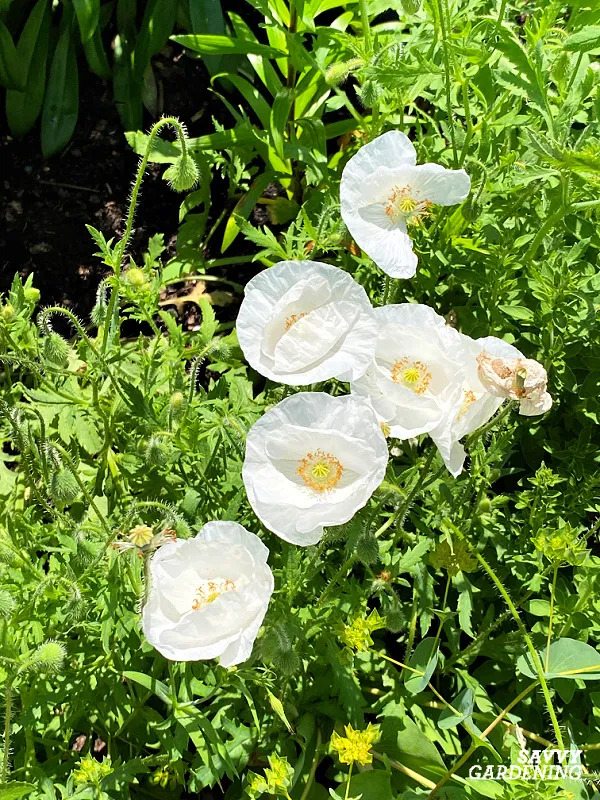 Direct seed Iceland poppies or start them indoors at least 8 weeks before the transplant date.
4) California poppy (Eschscholzia Californica)
The last type of poppy I grow from seed isn’t a true poppy, but categorized with poppies in seed catalogs due to their similar appearance and growth habits. California poppies, which are compact plants, are native to parts of the United States and flower for several months. Bloom color ranges from orange to yellow to pink to white with some varieties even having double flowers with layers of pretty petals.
Growing poppies from seed: The best site
Poppies are fairly hands-off plants, but they do have preferred growing conditions. Sow the seeds in a sunny spot with well-draining soil. The soil should be of moderate fertility to encourage the best show of blooms. Very poor soil results in few flowers.
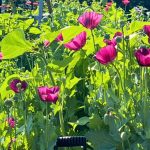
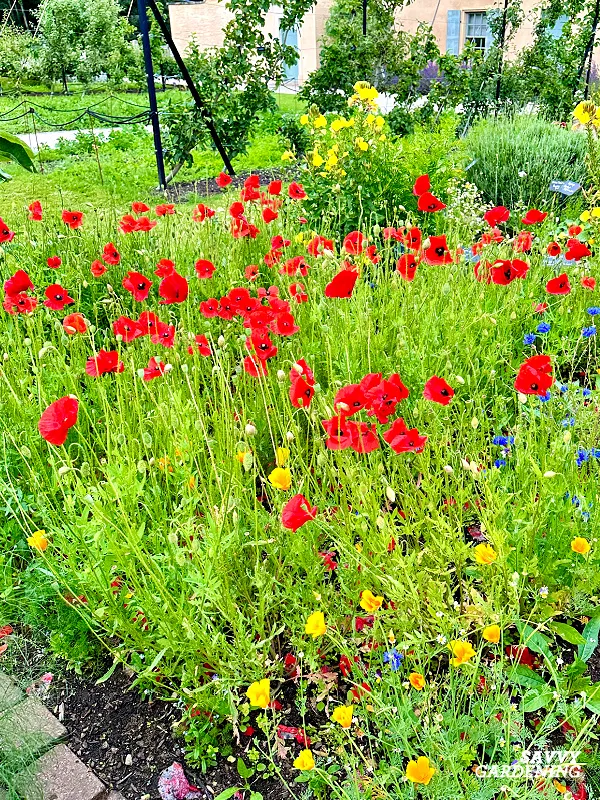 Brilliant scarlet corn poppies are an eye-catching addition to the summer garden.
Growing poppies from seed: Timing
There are two options for when to plant poppy seeds; in autumn or in early spring.
- Fall planting – Poppy seeds are incredibly resilient and respond well to fall planting. The cold temperatures and increased moisture of winter stratify the seeds and prompt germination the following spring. This works well when you want to direct seed in flower gardens where the soil isn’t disturbed by tilling or digging.
- Spring planting – If planting poppies in spring, aim to direct seed as soon as the soil has thawed and is workable. Because I grow annual poppies in my vegetable beds to attract bees, I prefer to sow the seeds in spring. The main reason for this is that I don’t prepare the soil in my raised beds until April and if I planted in autumn, the seeds may be deeply buried as I add compost and other organic materials to the soil in spring. Once the beds are prepped, I sow poppy seeds.
Growing poppies from seed
Unlike many types of annual flowers, poppies don’t transplant well and should be direct seeded into garden beds. Don’t plant them deeply, no more than an eighth of an inch deep, as most types need light to germinate. I just scatter them over the soil surface and press a dry hand gently over the seeding area to ensure good soil-seed contact. I don’t bury my poppy seeds. Try to sow poppy seeds thinly, spacing them 3 to 4 inches apart. Overcrowded poppy seedlings don’t size up and have fewer flowers. If you find it very challenging to plant poppy seeds evenly, try mixing the seeds with a few tablespoons of sand. This allows more even seed sowing.
If planting in spring, keep the seed bed moist to encourage good germination. I use a long-handled watering wand with a shower setting to provide a gentle flow of water. Once the seedlings have sprouted and are growing well, I’ll thin the plants to 6 to 8 inches apart for Shirley poppies, 8 to 10 inches for breadseed poppies, and 3 to 4 inches for California poppies.
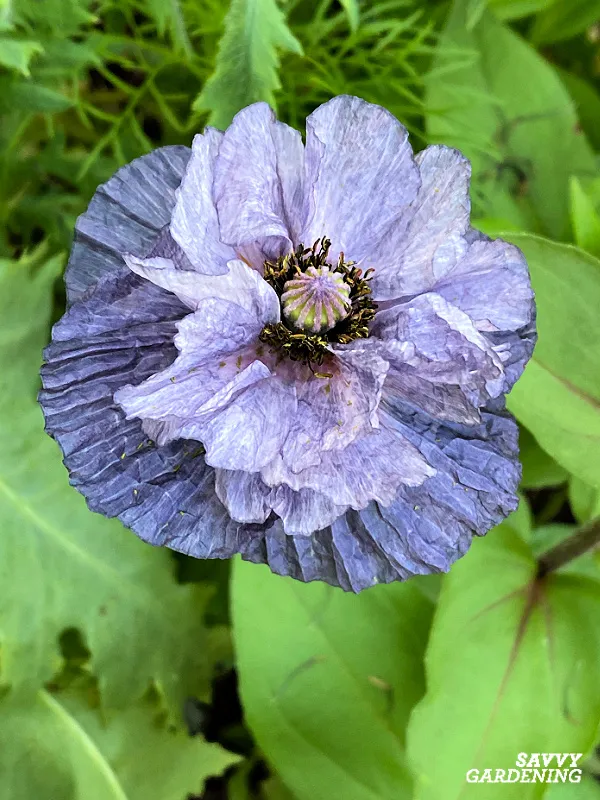 Amazing Grey is a spectacular Shirley poppy with unusual purple-grey flowers.
Caring for poppy plants
As the seedlings grow, continue to keep the bed lightly damp. I water my poppy bed every week if the weather is warm and there has been no rain. By early summer the first pods appear at the top of long stems. The poppy flowers will open soon after – to the delight of both native bees and honeybees.
Poppy blooms are a short-lived treat, but the plants typically pump out lots of flowers. Once the petals fall, enjoy the plump seed heads or deadhead the spent flowers to prolong bloom time. Just be sure to let some seed heads mature in the garden to ensure the plants self-sow. If you haven’t had much success with poppy plants re-seeding, I’d recommend leaving a good quantity of the buds to dry and scatter their seeds.
You can also collect the fully dry seeds for sharing with friends or saving to plant in new garden beds the following season. Shake the seeds into a paper bag or clip the ‘caps’ from the seed pods and pour the seeds into a paper bag or seed envelope. With their narrow blades, garden snips are the best tool for this job. Poppies are self-pollinating but bees move pollen and your varieties may not come true-to-type. I don’t mind as my poppies are always beautiful, regardless of cross pollination.
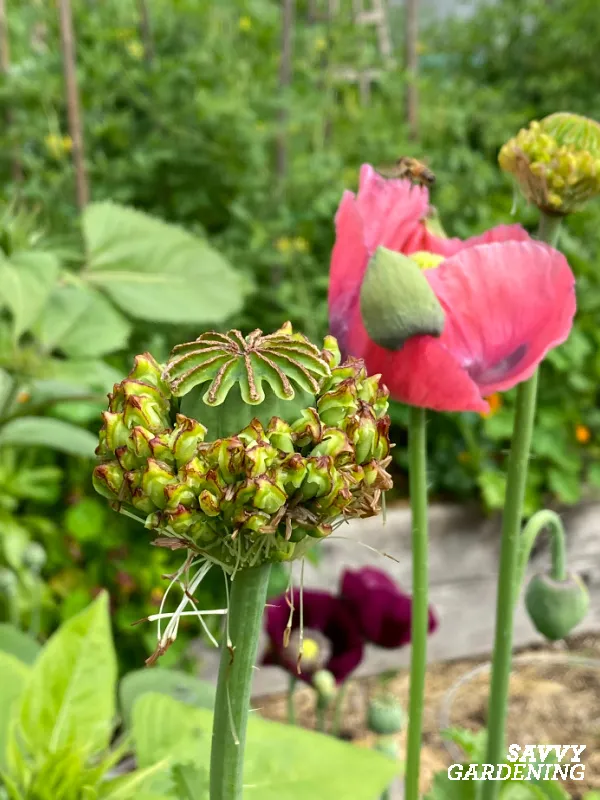 Hen and Chicks poppy has unique seed pods with the center pod (the ‘Hen’) surrounded by tiny pods (the ‘chicks’).