
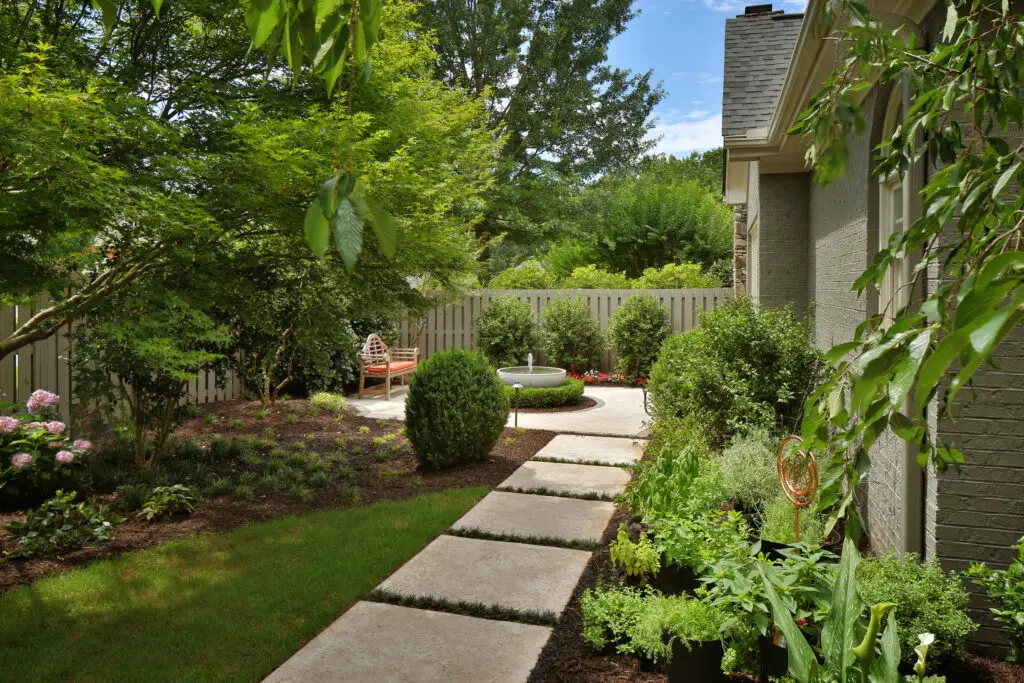
A great path should make your garden easier to enjoy and keep your plants thriving. With a few smart choices, you can create garden paths that protect roots and soil health without sacrificing comfort or style.
Start With a Quick “No-Dig” Map
Before you outline a path, look at what’s already established. Tree roots are most sensitive within the drip line (under the outer edge of the canopy), and feeder roots in beds often spread wider than the plant’s visible footprint.
If you need a path close to a tree, stay outside the drip line when possible. When that’s not realistic, choose a method that adds material on top rather than cutting into the soil. Also mark irrigation and utility lines to ensure you don’t damage anything.
Choose a Build-Up Path Instead of a Dig-Down Path
Excavating soil is one of the fastest ways to damage roots. Sometimes you can see the roots easily, but more often you don’t notice the fine roots until plants start struggling later.
Here’s a root-friendly approach to building your path:
- Lay down cardboard (remove tape) or plain brown paper to suppress weeds.
- Add 2–4 inches of mulch, wood chips, or fine gravel.
- Define edges lightly, but avoid deep edging cuts near trees and bed borders.
This keeps the root zone intact and helps preserve soil structure while still giving you a clear walking surface.
Keep Soil Compaction in Check
Repeated foot traffic compresses soil, making it harder for roots to get oxygen and water. Wider paths help spread weight, and softer surfaces like wood chips are typically more forgiving than hard pavers. If you use stepping stones, set them on top of the base instead of sinking them deep.
Consider Wind as Part of Your Path Design
Paths don’t just guide your feet. They can guide airflow. Wind can dry out beds quickly, especially when paths create a breezy corridor through the yard.
To calm the wind without disrupting roots, start with the least invasive options: taller plantings or shrub groupings placed where they won’t require deep footing. And if you’re already upgrading your yard layout, a fence can also function as a windbreak. Just make sure you consider the important factors of a new fence installation before you commit.
A Simple Rule of Thumb
When in doubt, choose the option that requires less digging and more layering. You’ll end up with a path that feels good underfoot and a garden that keeps growing strong beneath it.













PS: A gentle, thoughtful post — brightened my morning. Thanks for this!
✨ FYI • I appreciate the point about “Garden Paths That Protect Roots and Soil” — very helpful. Thanks for this!
Heads up- Practical and pretty — bookmarking this. Great share.