
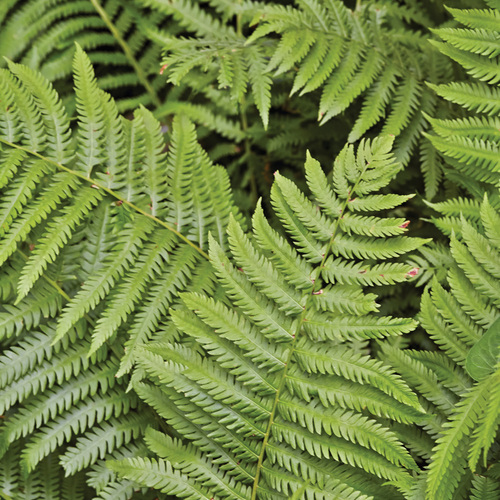
Fill gaps southeast. A brief context to set expectations.
Fill gaps southeast: Quick notes
Discover fast-growing plants for the Southeast, selected by regional expert Jay Sifford. From juniper to tiarella, these versatile plants thrive in shady spots and help fill garden gaps quickly, making them dependable background players for Southeast landscapes.
Read More Regional Reports for the Southeast Here
‘All Gold’ shore juniper
Photo courtesy of millettephotomedia.com
Name: Juniperus conferta ‘All Gold’
- Zones: 6–9
- Size: 1 foot tall and 8 feet wide
- Conditions: Full sun to partial shade; average, well-drained soil
- Native range: Japan and Sakhalin Island, Russia
I’ve had a love affair with this juniper since I first saw it 20 years ago. What’s not to love? ‘All Gold’ isn’t as prickly as many junipers. It sports chartreuse foliage with reddish stems, and it is one of the few junipers that performs well in light shade. Some afternoon shade may be appropriate in the Deep South, but give it full sun in cooler climates for brighter chartreuse foliage. In partial shade, it will produce Granny Smith apple–colored growth. During winter, the foliage bronzes a bit, providing seasonal interest.
Give this plant well-drained conditions; soggy soil is its nemesis. In late autumn, clear any fallen leaves trapped inside the branches to prevent decaying organic matter from causing dieback over winter.
Read More: Designing with Chartreuse in Southeast Gardens
Ostrich fern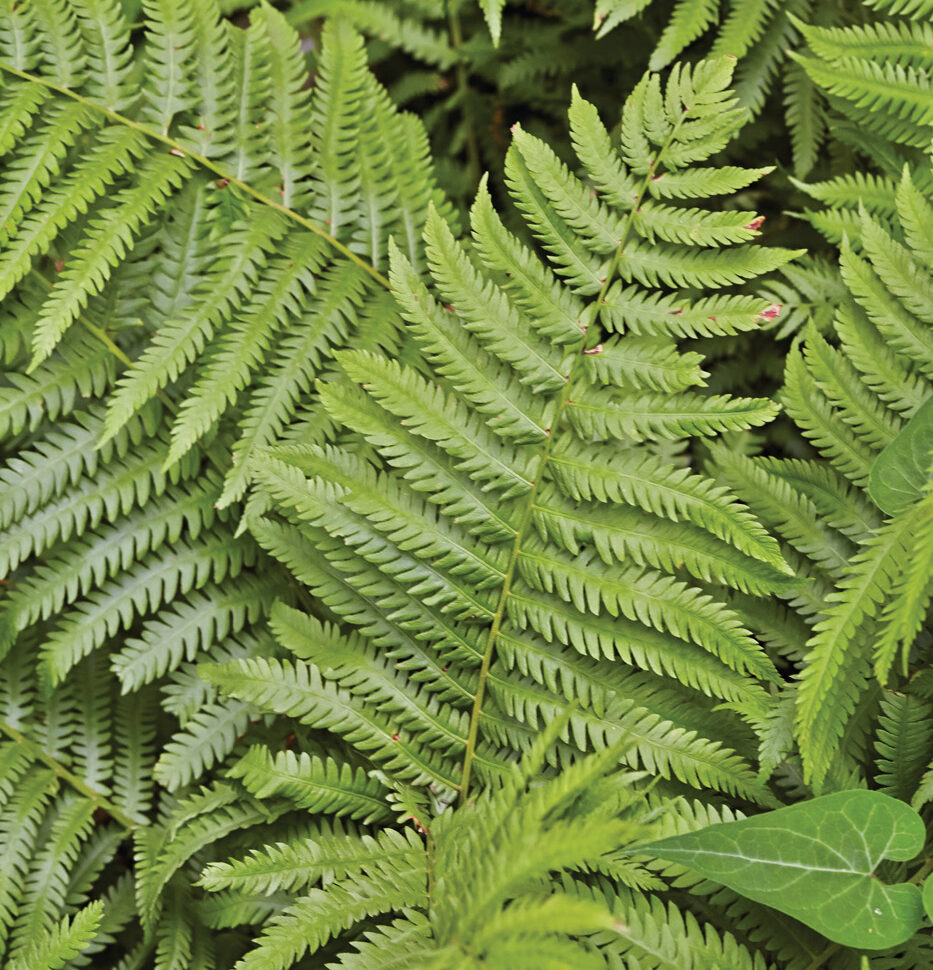
Name: Matteuccia struthiopteris
- Zones: 3–7
- Size: 3 to 6 feet tall and 5 to 8 feet wide
- Conditions: Partial to full shade; medium to wet soil
- Native range: Eastern Asia, Europe, and northern and eastern North America
I’m known at local nurseries as Mr. Fern, so saying that this is arguably my favorite fern speaks volumes. Its spectacular vegetative fronds emerge in early spring as a harbinger of warmer weather. They resemble ostrich plumes, hence the name. The fronds, called “fiddleheads” when young, are often sautéed with butter as a culinary delight, but I cannot bear to cut them for consumption.
In mid- to late spring, the broad plumes unfurl from the center of the plant and persist through winter. I’ve grown this plant in both wet and average to dry soil. In the latter scenario, it grew only 1 foot tall and wide. In wet to soggy soil it will tolerate a little sun and will quickly realize its full potential to spread over a sizeable area.
‘Running Tapestry’ tiarella
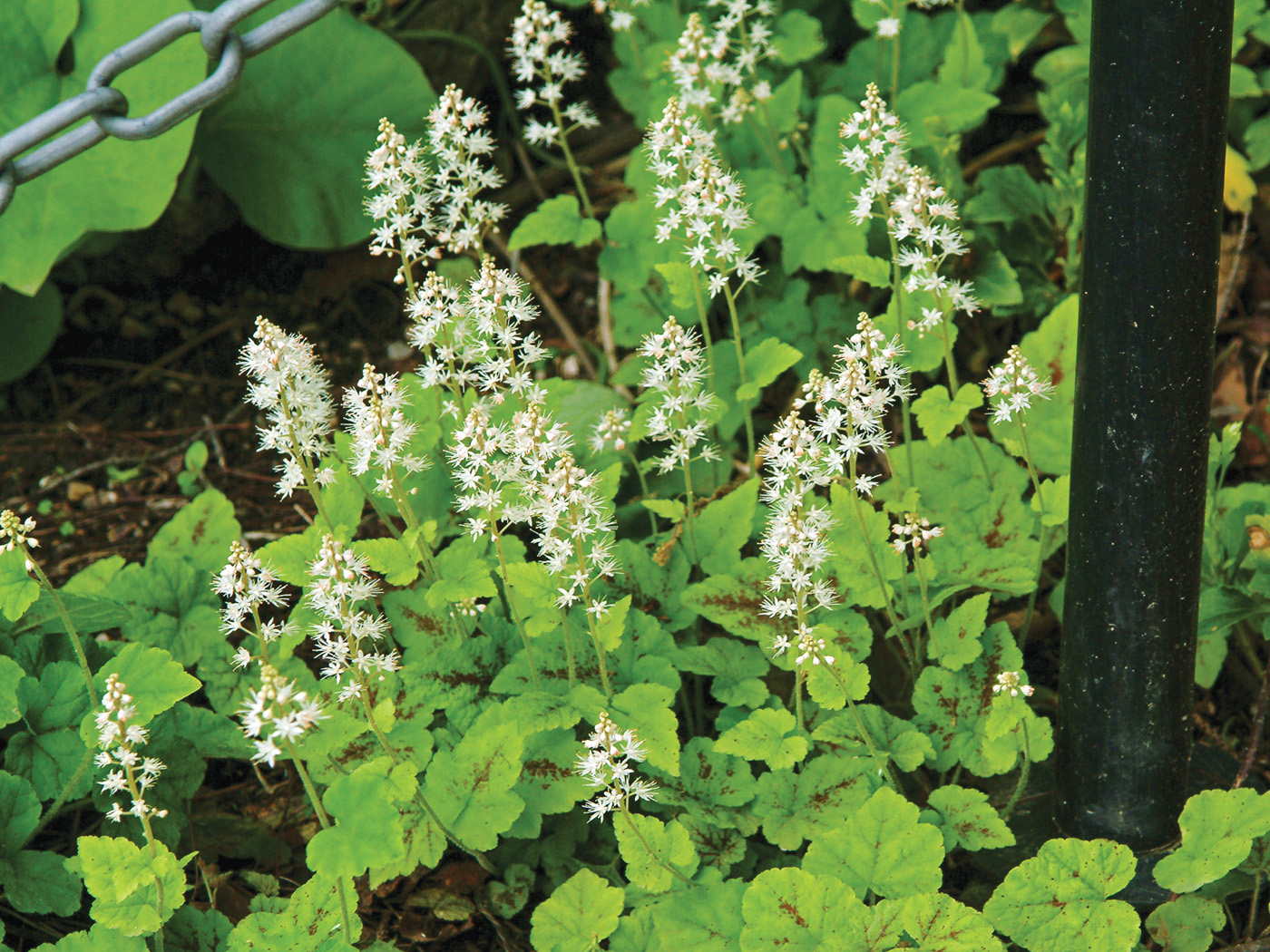 Photo courtesy of millettephotomedia.com
Name: Tiarella cordifolia ‘Running Tapestry’
- Zones: 4–8
- Size: 10 to 12 inches tall and 12 to 18 inches wide
- Conditions: Partial to full shade; consistently moist soil
- Native range: Eastern North America
This variety of a North American native is exceptional in every way. It sports lovely heart-shaped foliage with dark purple veining. In spring, it sends up inflorescences covered in small star-shaped white flowers. While the straight species can be slow to fill in, ‘Running Tapestry’ puts out stolons that quickly but politely colonize. It looks particularly good when planted on a moist, shady slope where the stolons can work their way over boulders, like tiny mountain climbers. Related to heucheras (Heuchera spp. and cvs., Zones 3–9), which can be deer candy, tiarellas seem to be fairly deer- and rabbit-resistant. They are generally evergreen, although the foliage may bronze a bit in cold weather.
‘Streib’s Findling’ cotoneaster
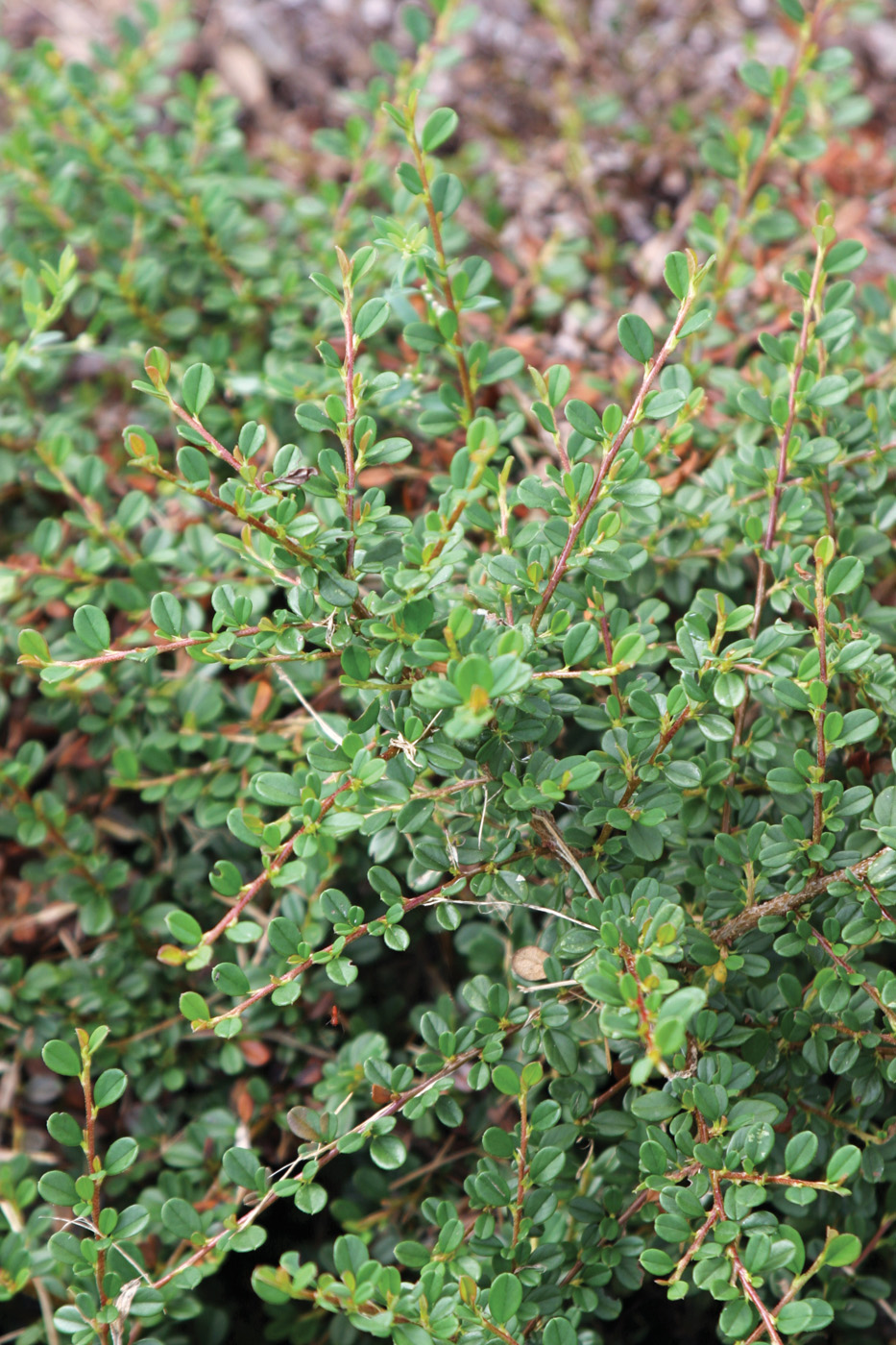 Photo by Jennifer Benner
Name: Cotoneaster dammeri ‘Streib’s Findling’
- Zones: 6–8
- Size: ½ foot tall and 8 feet wide
- Conditions: Full sun to partial shade; average, well-drained soil
- Native range: Central and southern China
I’ve always had a dislike for cotoneasters, except for this one, which you’ll find in my garden. It’s a workhorse of a ground cover that hugs the earth and climbs over rock masses, keeping the lowest of profiles. Its habit is tight, with roundish evergreen foliage. Small white flowers emerge in spring, followed by red berries, which the birds seem to enjoy, in late fall and winter.
‘Streib’s Findling’ is considered deer- and rabbit-resistant. It is great on a slope and versatile enough to be sought after by bonsai enthusiasts. When using it as a ground cover, space plants 4 feet apart, and watch them fill in within a couple of years.
Regional expert: Jay Sifford is an award-winning garden designer residing in Charlotte, North Carolina.
More from Fine Gardening:
Listen to Our Podcast!
Watch Our Gardening Videos on YouTube
Subscribe to Fine Gardening All-Access
Fine Gardening Recommended Products

A.M. Leonard Deluxe Soil Knife & Leather Sheath Combo
Fine Gardening receives a commission for items purchased through links on this site, including Amazon Associates and other affiliate advertising programs.
MULTITASKING DUAL EDGES: a deep serrated edge and a tapered slicing edge ideal for tough or delicate cuts. DURABLE 6-inch stainless steel blade withstands 300 lbs of pressure. TWINE CUTTING NOTCH, DEPTH GAUGE MARKINGS & spear point – no need to switch tools when using this garden knife. LEATHER SHEATH: heavy duty, protective, clip on sheath to keep your knife convenient and secure. LIFETIME WARRANTY.
We reference Fill gaps southeast briefly to keep the thread coherent.












So cozy — makes me want a cup of tea and a quiet afternoon ☕. Thanks for this!
Tiny tip · So helpful — thanks for pointing it out. Great share.
Tiny tip · So helpful — thanks for pointing it out. Great share.
Small note · Such a warm note about “Fast-Growing Plants That Help Fill Gaps” — lovely. Will try it.
On a similar note: Loved this about “Fast-Growing Plants That Help Fill Gaps” — such a pleasant idea. Will try it.
Nice point — I noticed that too.