
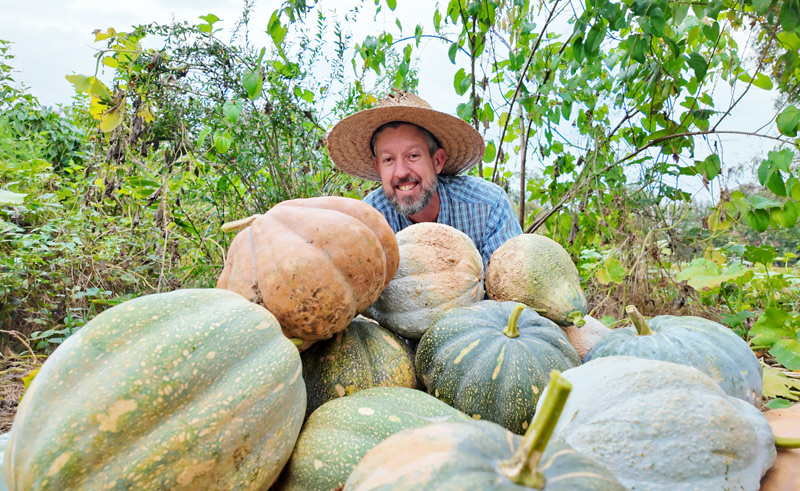
We saved seeds from a Grenadian black pumpkin way back in 2019 – and didn’t plant them out until 2024.
When we did, we got this:
I didn’t think a pumpkin of that color was a Cucurbita moschata. There were lots of interesting pumpkins down in Grenada that happily crossed together, but few looked anything like the C. moschata types we’d grown in the US.
Here are some examples of Grenadian pumpkins:
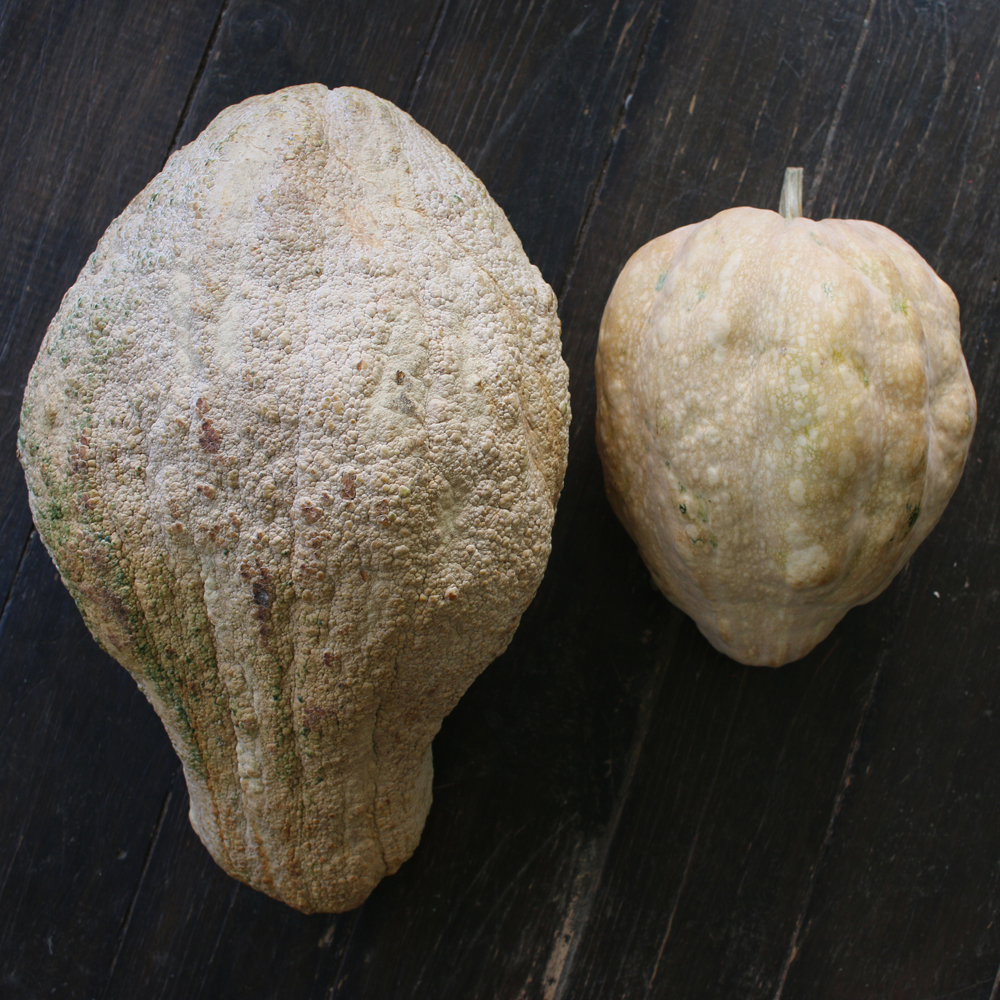
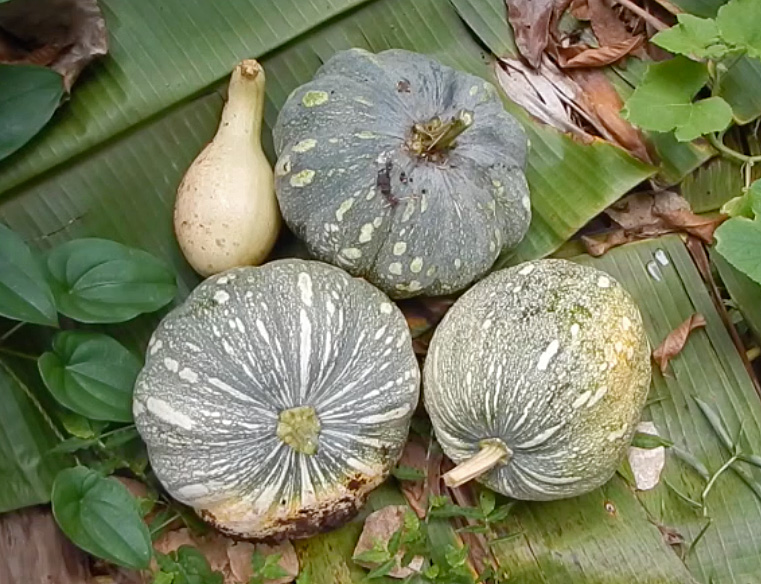
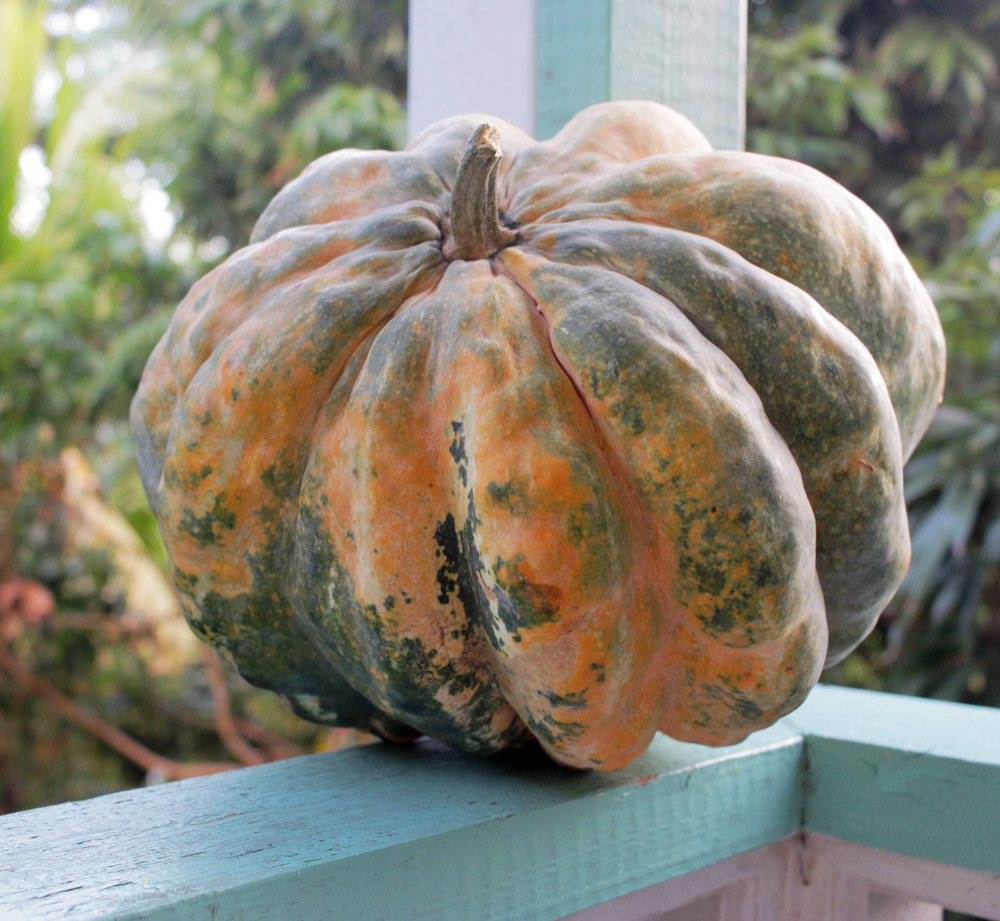
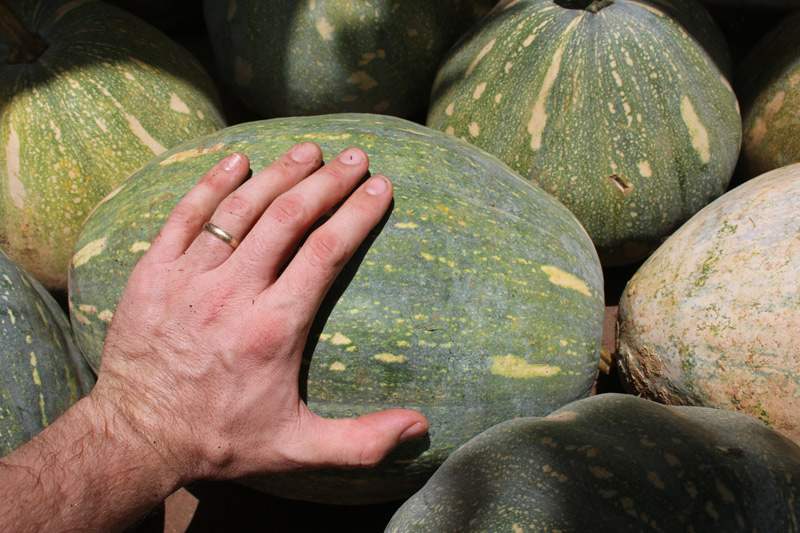
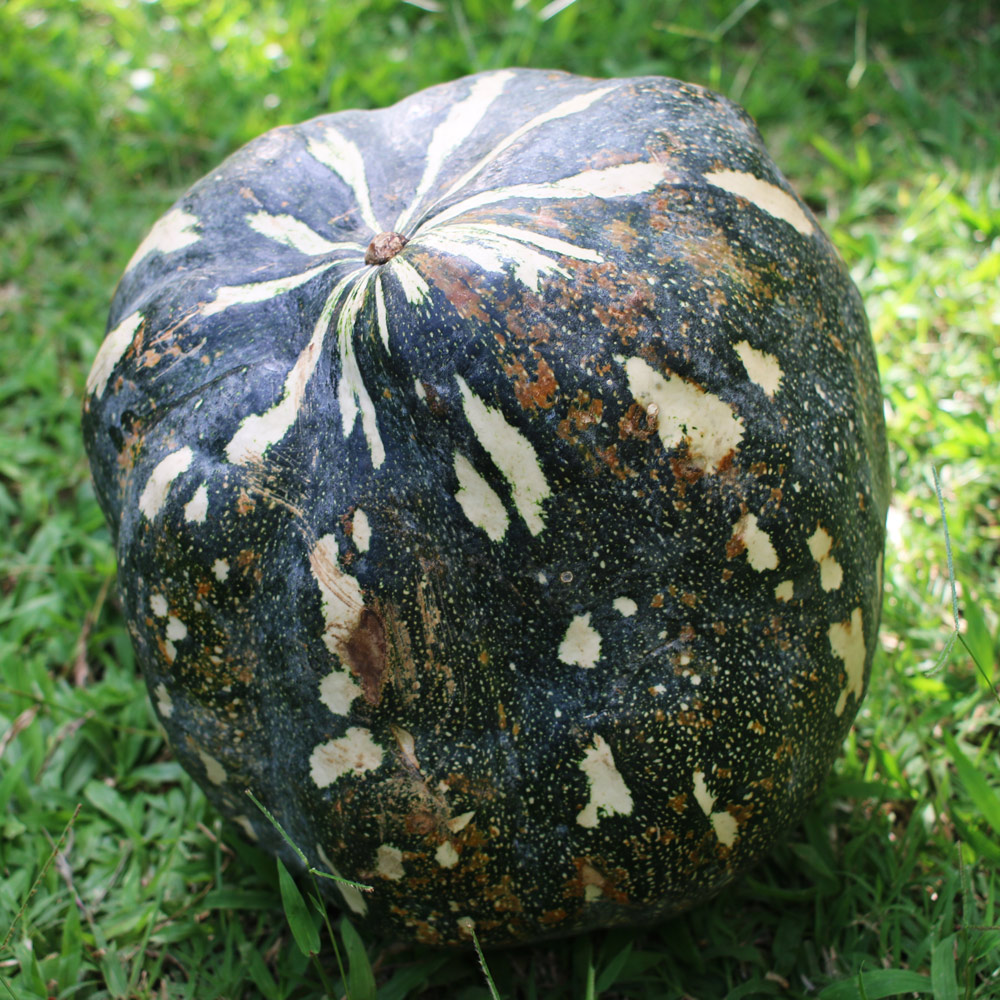
The colors, shapes, and skin textures varied widely.
When I planted the black pumpkin seeds, I assumed it was a different species from the Seminole pumpkins we normally grow.
I was wrong.
I planted the seeds we saved from the single black pumpkin we grew in 2024 out in the field and ended up with what we now call “Zombie Pumpkins.”
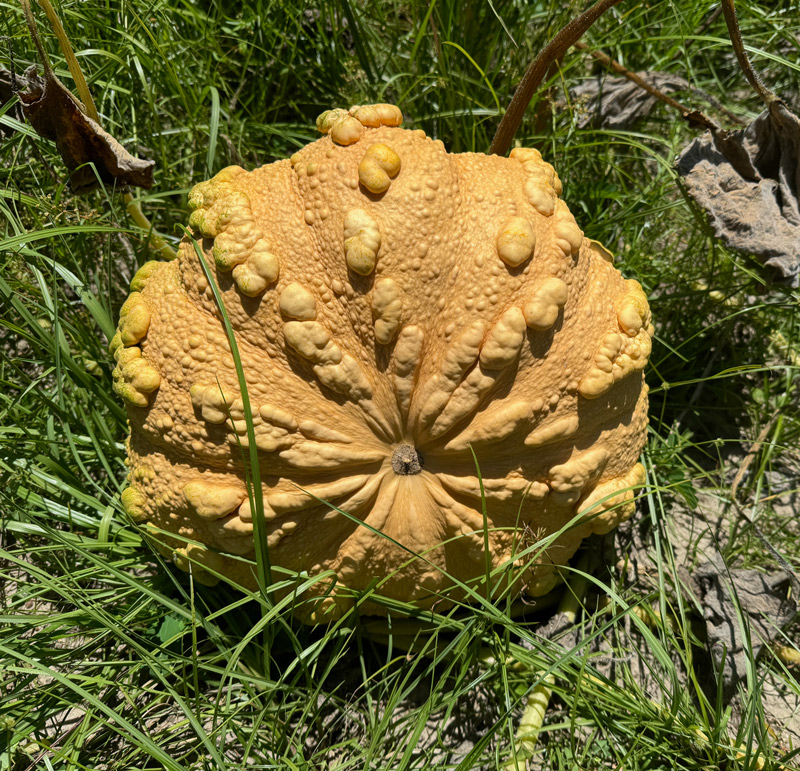
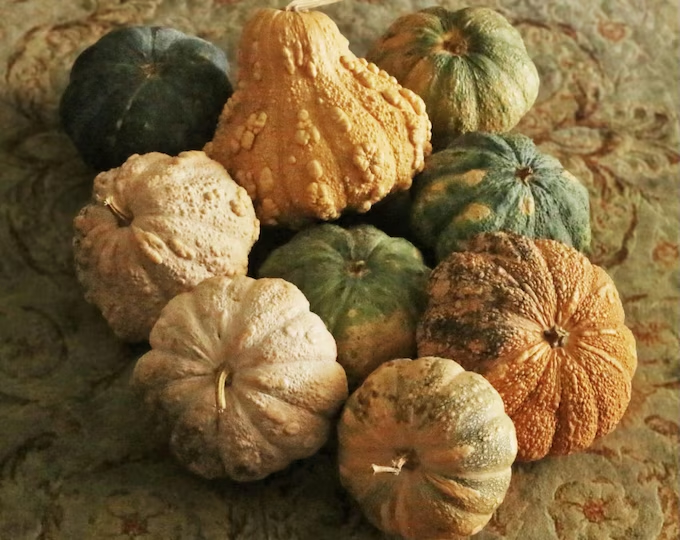
Now I thought those pumpkins were the end of the story.
But oh no… it gets weirder.
This spring we worked hard to get the Grocery Row Gardens cleaned up, mulched and planted. Yet around the edges, we ended up with a few volunteer plants… including pumpkins.
I assumed they were Seminole pumpkins, like usual.
I was wrong again.
They were hybrids between the Grenadian black pumpkin and our line of Seminole pumpkins.
As spring stretched into summer, we lost control of the gardens and the pumpkins conquered all the edges, running over trees, covering rows of peppers, and eating the open spaces beyond the beds.
As the pumpkins developed, the colors, shapes and textures were surprising. Some were almost black, some striped, some tan with warts, some dark green with warts, some round, some like pears – it’s an amazing mix. It seems the Grenadian black pumpkin had a lot of genetic variation in it, unlike our Seminole pumpkin line.
It will be fun to see how they grow next year. They weren’t watered, fed or sprayed, and yet they produced a few hundred pounds of pumpkin. Eating them will be interesting. The “Zombie pumpkins” that had Black Grenada pumpkin mothers were better tasting than either the original Black pumpkin or their Seminole fathers, with thick, non-stringy orange flesh and small seed cavities. If that keeps up, we may have a real winner landrace!
The Caribbean has a similar summer climate to Lower Alabama, which means these guys are right at home here.
Saving seeds and letting things run is a lot of fun – I highly recommend letting your pumpkins cross (on purpose or otherwise!) and seeing what you get. Thank the Lord for happy accidents.
Here’s the harvest video I posted yesterday:








FYI — This is inspiring — I’m excited to try it out. Will try it.