
House around trees: a concise orientation before we get practical.
House around trees: Quick notes
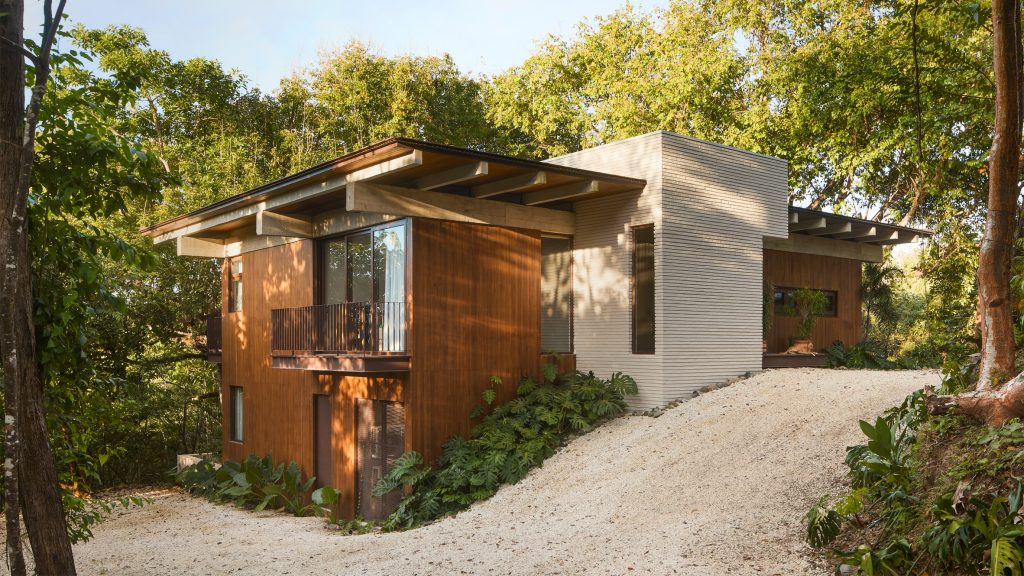
Costa Rican studio FAMM Arquitectura has created a coastal house that features overhangs and a central brick volume and was designed around preexisting trees on the site in Playa Hermosa, Costa Rica.
Aptly named Casa Tres Pochotes, the 440-square metre (4736-square foot) house sits on a 2-acre site with three large pochote trees that drove the design.
Three large trees informed FAMM Arquitectura’s design for Casa Tres Pochotes
“They gave us the orientation, the rhythm and even the spirit of the project,” said San Jose-based FAMM Arquitectura on the trees’ role in the project.
“Our goal was to design a home that felt completely tied to its place, where the climate, the landscape, the lessons of Costa Rican architecture and the materials guided our decisions.”
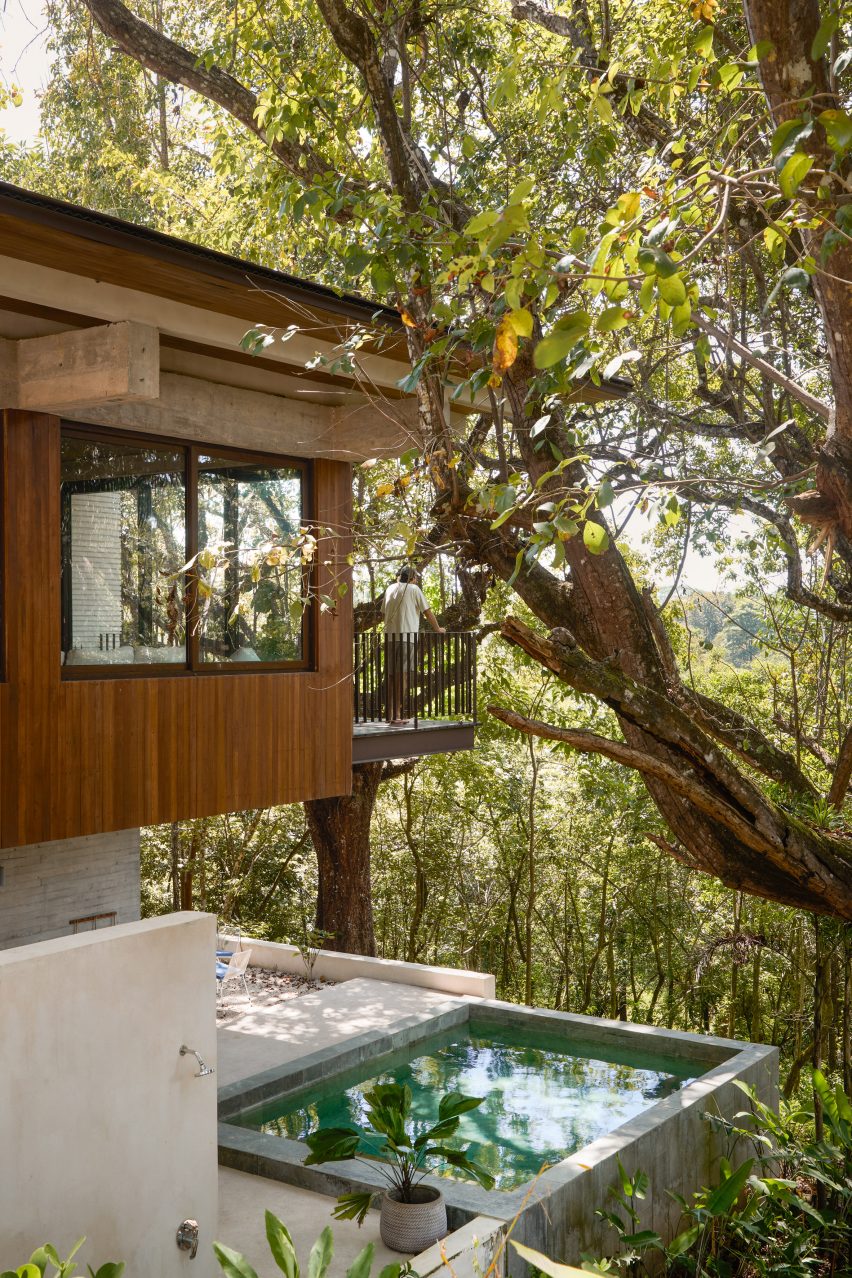 The tree canopies shade the outdoor spaces
Completed for one of the studio’s cofounders, the house keeps the trees in focus at all times, with rooms looking out to or wrapping around them. Terraces and balconies frame the trees while using their canopies to shade outdoor gathering spaces.
“Because of this, the house feels naturally integrated with its surroundings and not just placed randomly on the land,” the studio said.
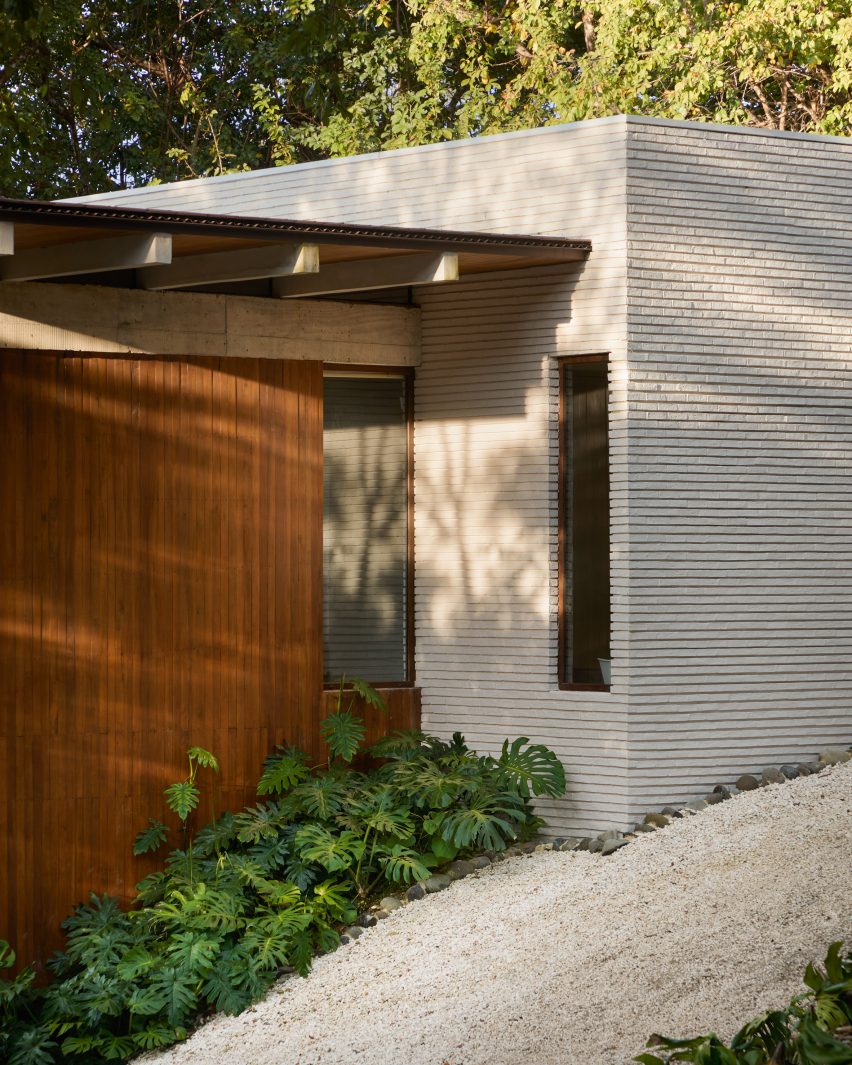 Pochote wood and white bricks clad the exterior
“Rather than forcing a form to the site, we tried to let the site speak first and used a palette of materials that acknowledged some of our favourite features of vintage Costa Rican design,” the studio said.
“The result is a house that is in a harmonious dialogue with the land and respects and understands the way life happens in the tropics.”
The team used pochote wood siding to clad the exterior, as it is a water-resistant, local material that ages well. A white brick volume sets off from the rich wood tones and complements the exposed concrete beams, columns and walls that express “strength and simplicity” according to the studio.
Selected for durability and natural beauty, teak transfers from the soffit outside to the ceiling inside, where red pigmented cementitious urethane flooring adds to the material palette of wood and concrete.
Formafatal creates pair of rammed-earth villas in Costa Rica
“This combination of wood, concrete, glass and red accents creates a warm, modern, and grounded atmosphere that reflects both a respect for traditional Costa Rican building and a reinterpretation of tropical contemporary design,” the studio said.
“The use of local materials also reduces environmental impact by minimising transportation. The design avoids unnecessary surface treatments, which saves resources and keeps the materials honest.”
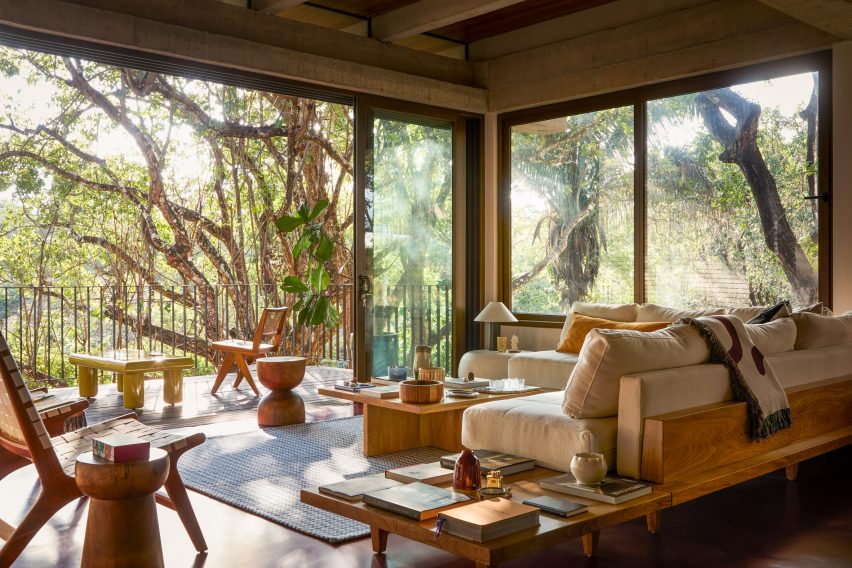 The living room features sliding glass doors overlooking the treetops
The white brick central volume separates two wings of the house that extend outward toward the trees, which provides an organising system. The living room and terraces are located in the site’s most breezy and shaded portions, while the private sleeping quarters were oriented for light and ventilation.
“This approach helped the design feel natural and logical, because every part of the house has a clear purpose and connection to the environment,” the studio said.
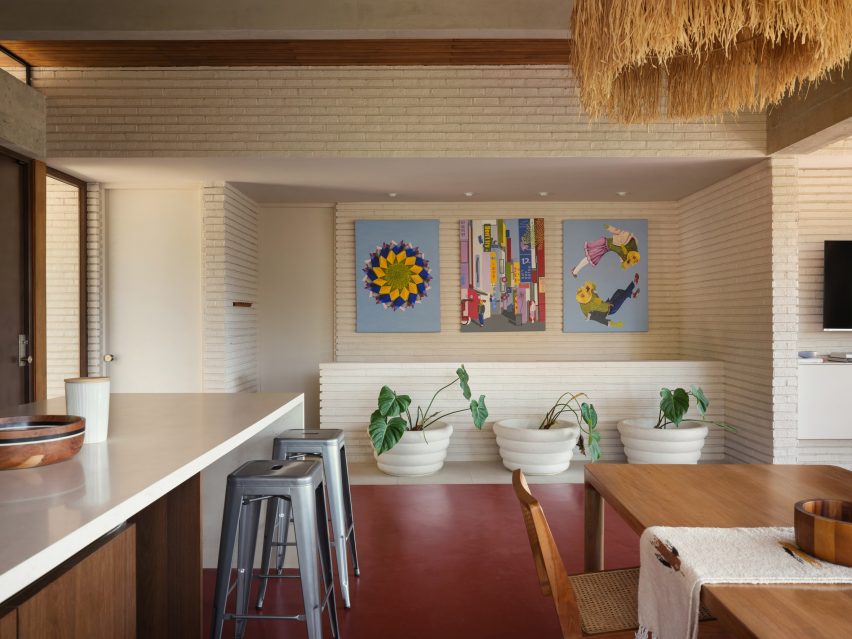 A white-brick volume separates the house into to wings
Large windows, shaded by the roof’s deep overhangs, open the rooms to views and cross breezes.
Also in Playa Hermosa, Formafatal designed twin villas made out of rammed earth. Other projects recently completed in Costa Rica include a doughnut-shaped courtyard house in Carate and a series of hotel pods in Sardinal – both elevated on columns by Studio Saxe.
The photography is by Thibault Cartier.
Project credits:
Lead architects: Felipe Apéstegui, Mariano Mesalles
Project architects: Luis Diego Benavente, Andrés Hartman, Karina Odio, Kenneth Thompson
We reference House around trees briefly to keep the thread coherent.
House around trees comes up here to connect ideas for clarity.











On a similar note: So useful — clear and practical, much appreciated. Thanks for this!
🌿 Heads up · I appreciate the point about “FAMM Arquitectura designs Costa Rican ho” — very helpful. So cozy.
🌿 Heads up · I appreciate the point about “FAMM Arquitectura designs Costa Rican ho” — very helpful. So cozy.