An editor for a magazine that published an article on our garden several years ago described it as “an unusual garden.” This struck me as not an insult per se, but perhaps uninformed. Do I need to defend my plant choices? Does it have to be what your magazine considers a “usual” garden? I think the comment was directed primarily at my plant palette. Mostly dry loving plants, no boxwood hedge parterres or floriferous herbaceous borders here, though I do admire the look. No, ours is a low-maintenance dry garden rich in drought-adapted plants. Low maintenance for its size, that is if it were a typical 50′ x 100′ urban lot it would be really low maintenance. Nothing is low maintenance on two acres.
Maybe a better description would be “a bit wild.” Whatever one’s definition, we continue to garden with drought-adapted plants. That leads me to today’s post about what we call the south bank. As its name suggests, it’s the southern most border stretching from east to west along the some 300′ line of our fence. It’s primarily full sun with average to poor soil, once covered in field grass. It’s about as far away from garden hoses as can be on our property. We’ve been putting in plants over the years, connected the dots with wood chips and FM recently added a few finishing touches around the olive trees. I thought it would be fun to see its progression these past several years as it has been a border we hadn’t anticipated or even dreamed of; it just sort of came about in typical Chickadee Gardens fashion.
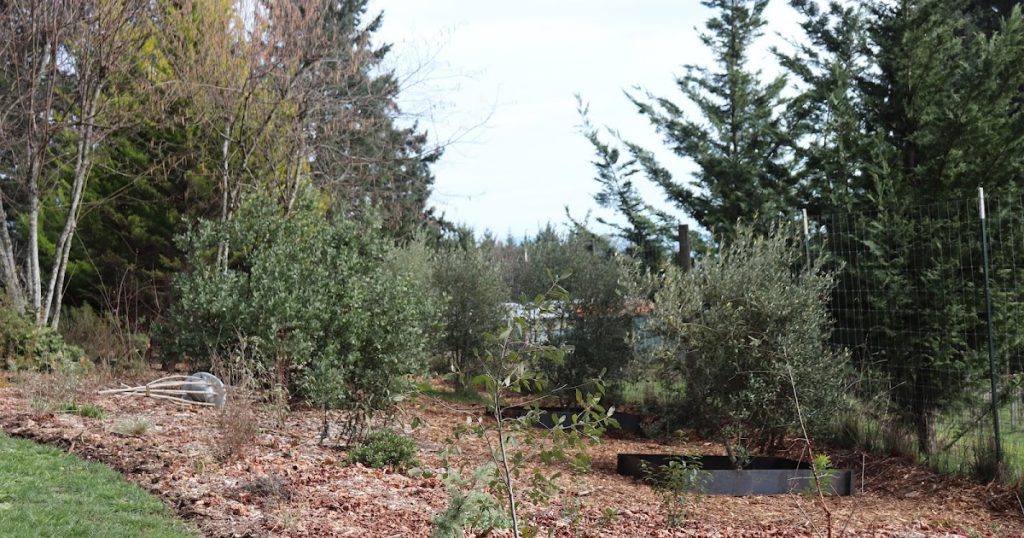
This is what a portion of it looks like today. But first, there was this:
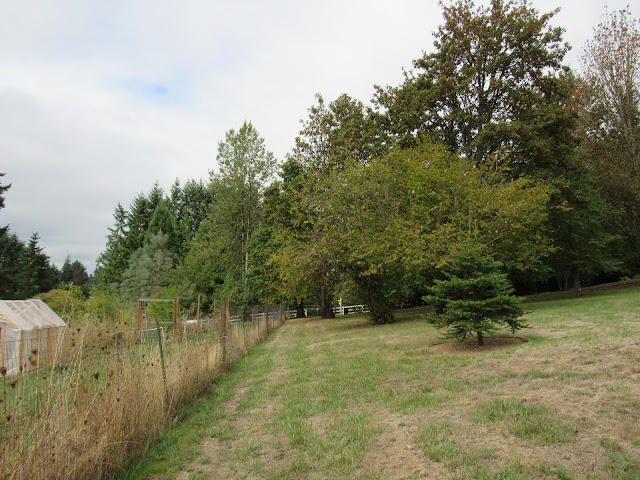
In 2015 it was simply field grass. This view is to the west.
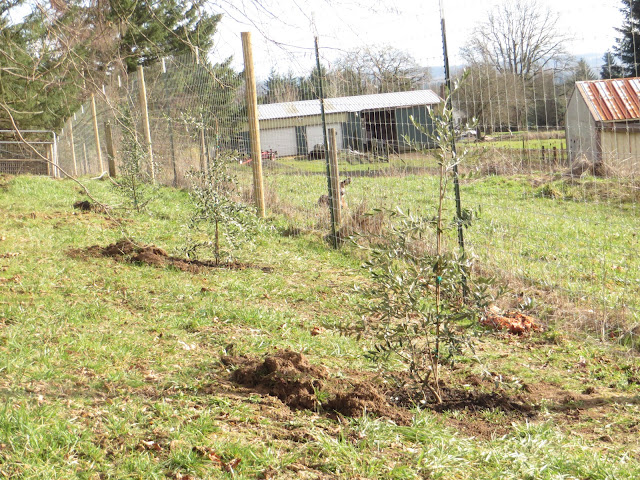
In early 2016, some of the very first plants I put in the ground were these four Olea ‘Arbequina’. While they did die to the ground after a severe winter (2017/18), they did regrow from the roots. We’ll see them a bit later. This is looking east.
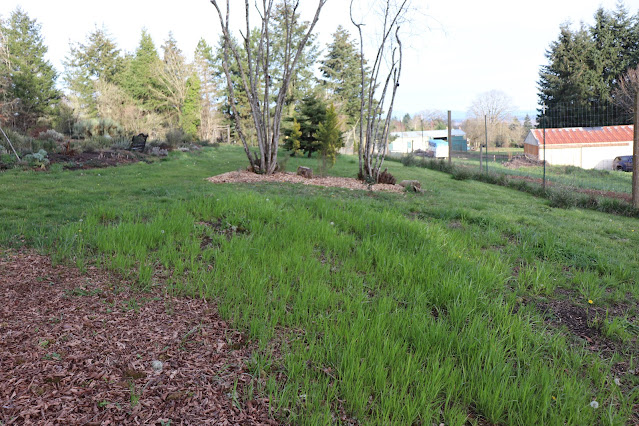
About 2019 or so, looking east. You can see the olive “shrubs” along the fence line. This is after they had regrown a bit the summer following the bad winter. The hazelnuts in the center were here, we planted a few little things around them and thus, hazelnut island was born.
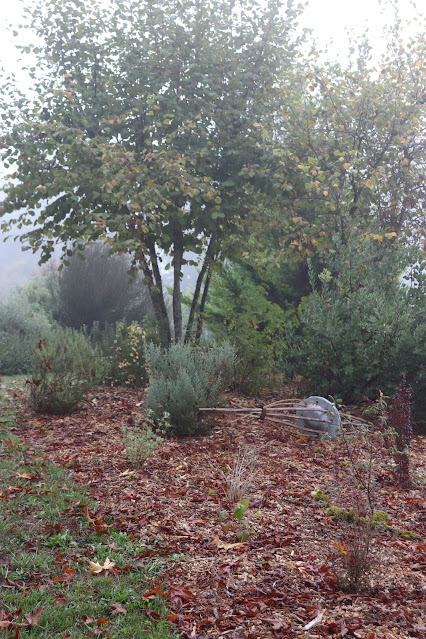
Hazelnut island as it looked last autumn. It has filled in and many plants have been added on either side. But I’m jumping ahead once more.
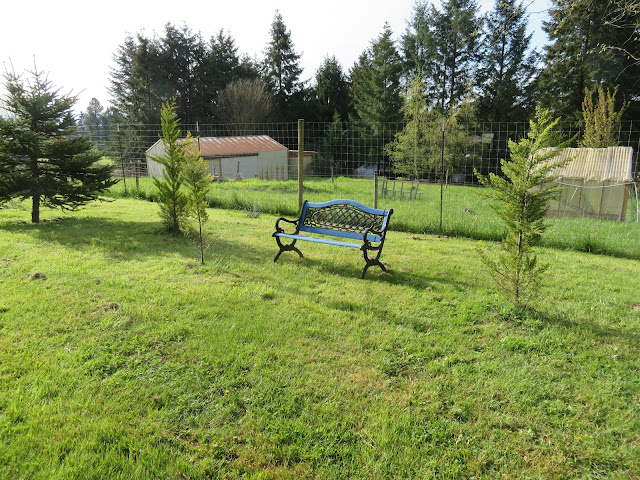
Right about in the middle, we planted three Cupressus ‘Donard Gold’ that were given to me by a friend in about 2017. This image is from 2018, so a year in the ground.
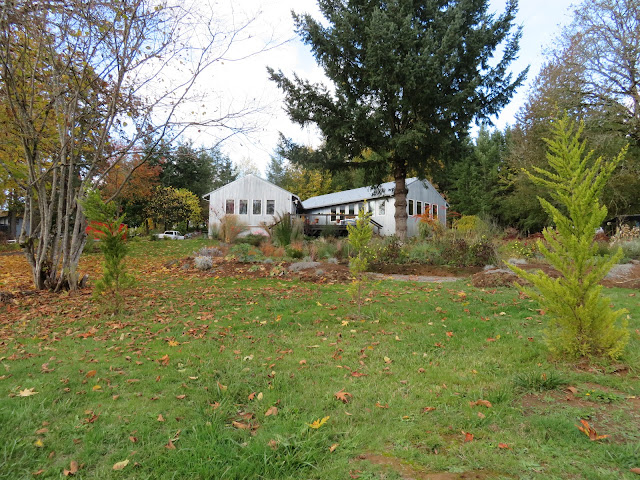
Standing at the fence looking north, three Cupressus ‘Donard Gold’ barely stand out at this point.
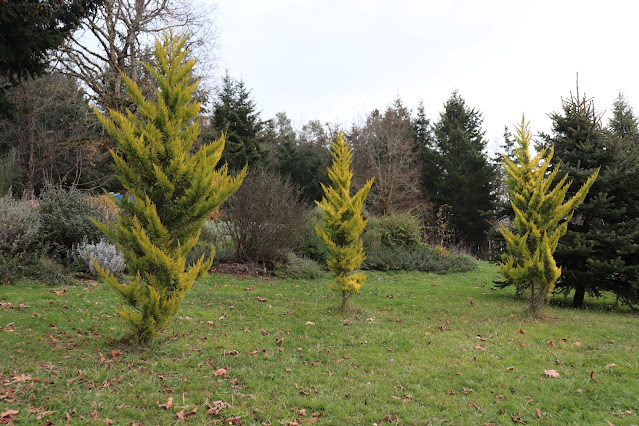
Getting a little larger, a little more presence.
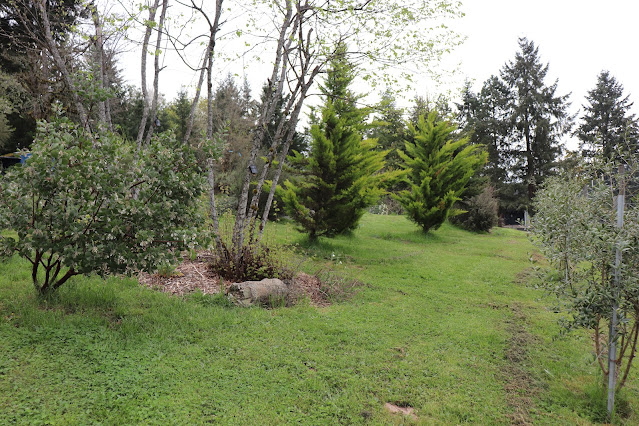
A little larger still, as are the olive trees on the right.
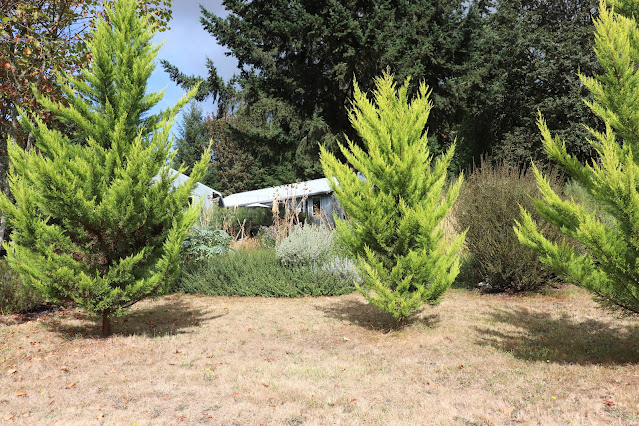
Really large.
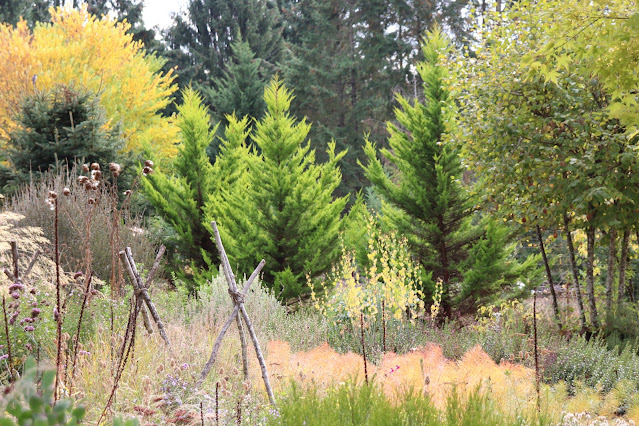
As seen from standing in the gravel garden looking south, hazelnut island is on the right. They grew nicely and are now very large.
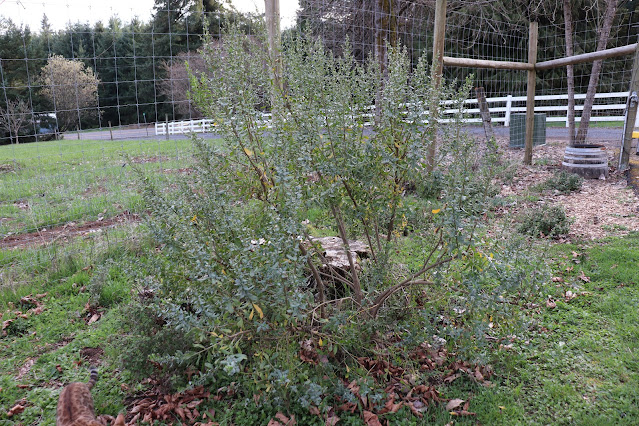
Another area is the far western side of south bank. A crumbling Acer macrophyllum was removed in 2016, you can just make out its stump behind this Baccharis pilularis. This corner of the garden is rarely if ever irrigated as it’s so far away from the reach of most hoses.
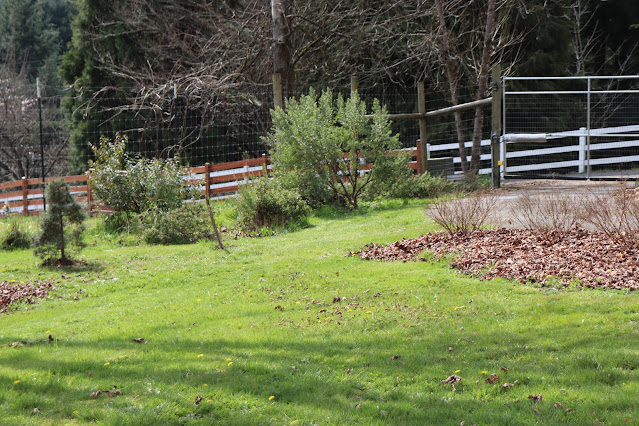
A pulled back view with a few surrounding plants. Note the Cupressus arizonica ‘Blue Ice’ on the far left, a short thing planted at the same time as C. ‘Donard Gold’.
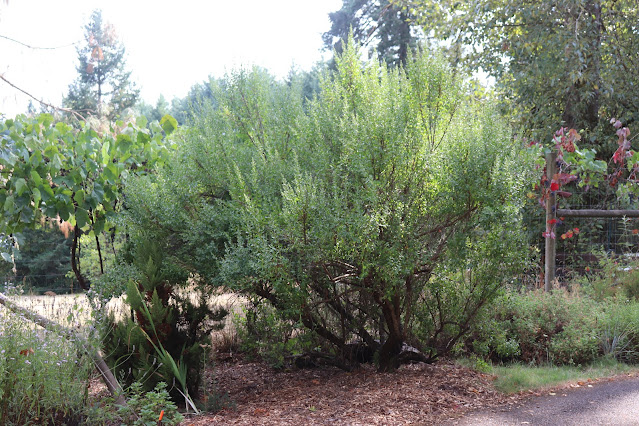
This is the Baccharis pilularis today.
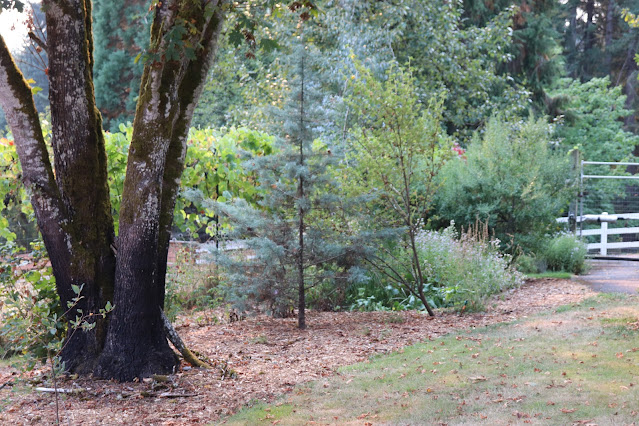
A wider shot with Cupressus arizonica ‘Blue Ice’ and behind it Fremontodendron ‘San Gabriel’. FM dug out the grass and weeds and we put down layers of wood chips to create a border rather than a random group of plants, the first area of south bank to be connected.
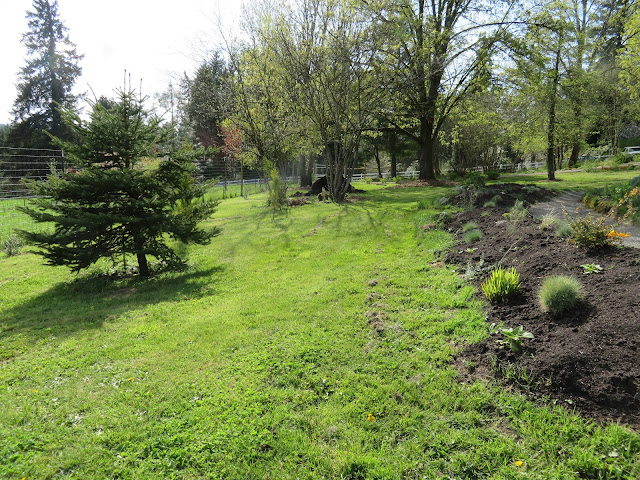
These next few images are down the chute in the middle. The Himalayan mounds are on the right in their very early stage. There are a lot of plants on the left just hanging out, no real cohesion at this point.
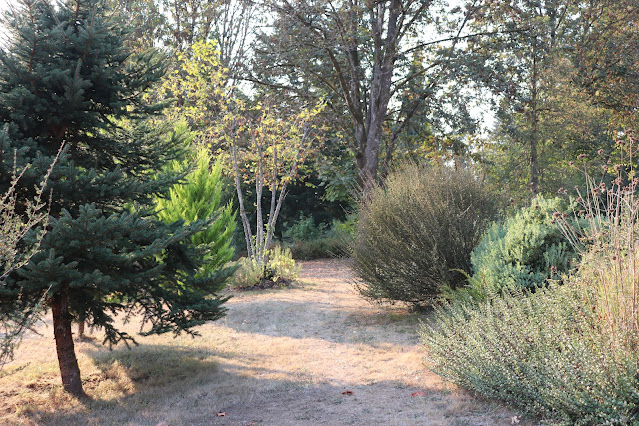
Plants starting to fill in, the Himalayan mounds have really grown large at this stage. This was about three years ago in summer, thus the dormant grass.
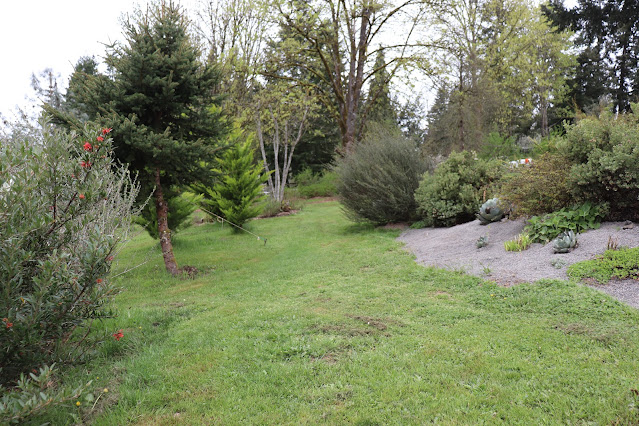
Spring 2023.
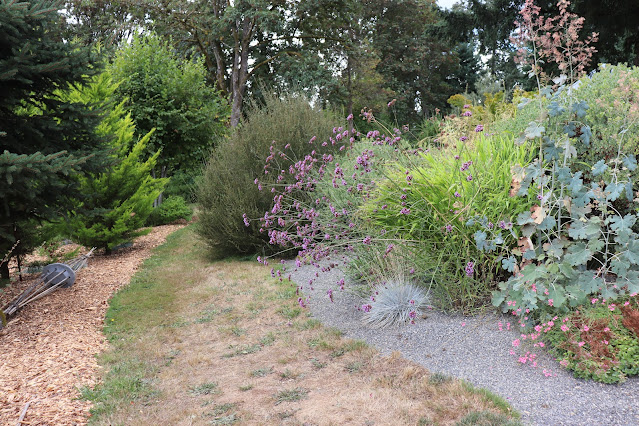
Aah, the woodchips make an appearance. This was summer 2023.
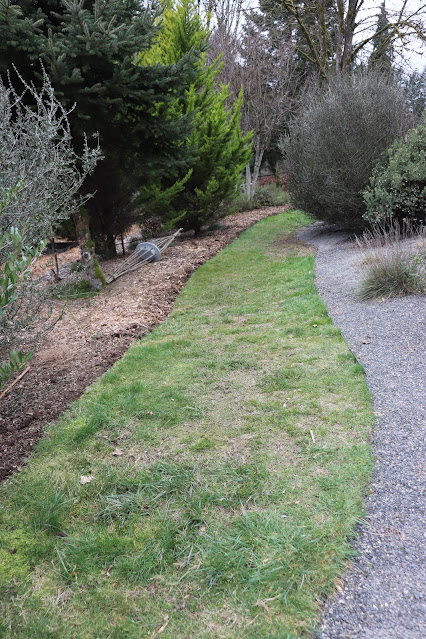
This was taken March 2026, edging has been installed on the right by FM and I dug out a crisper edge on the left between the wood chips and field grass.
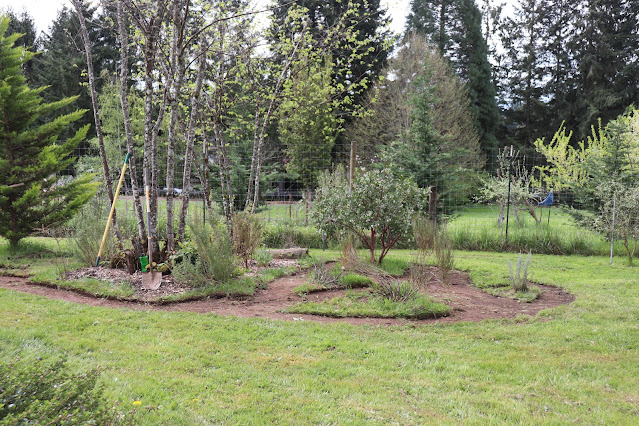
May of 2023, FM rented a sod cutter and began a large project of removing sod from this point all the way to the eastern end of south bank. This is hazelnut island, for reference.
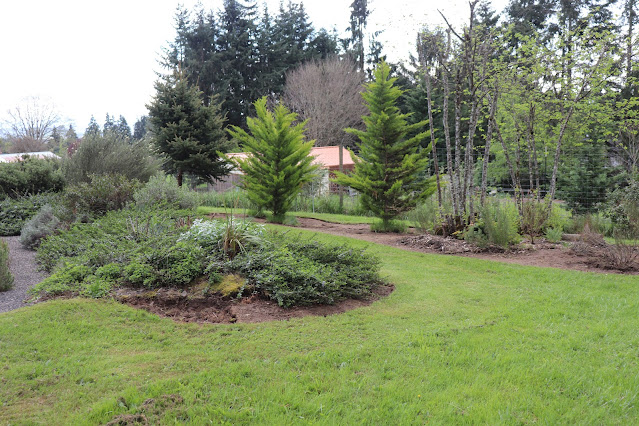
More sod removal.
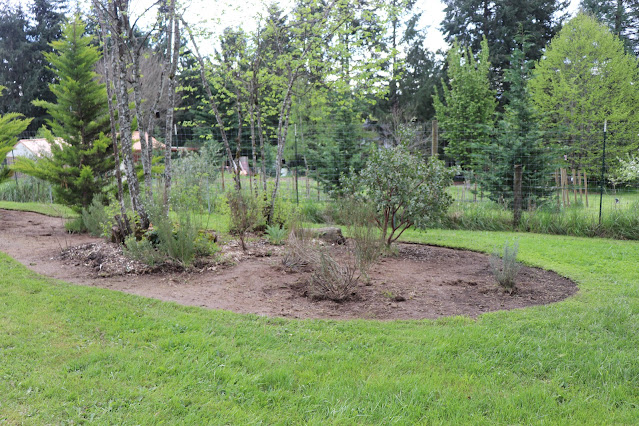
After some refinement.
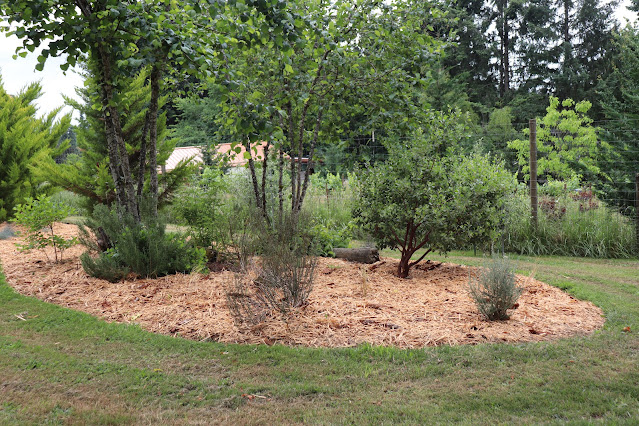
After woodchips were added.
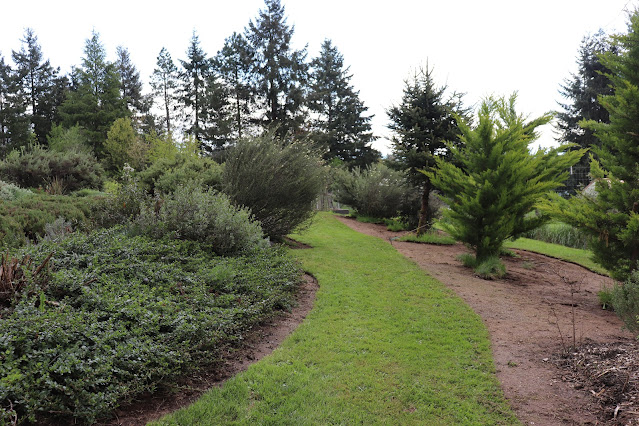
Wide shot with Cupressus ‘Donard Gold’ on the right, getting quite large by this point.
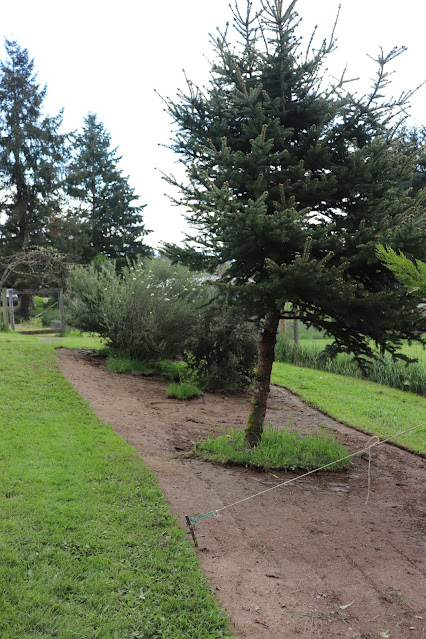
FM says that using the sod cutter is one of his least favorite jobs. Howevern he’s quite good at it.
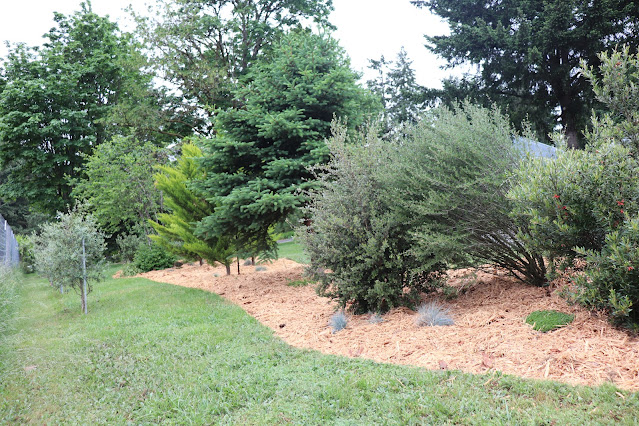
Other side of the border with fresh wood chips. Now this area feels a little more cohesive, a proper border is born.
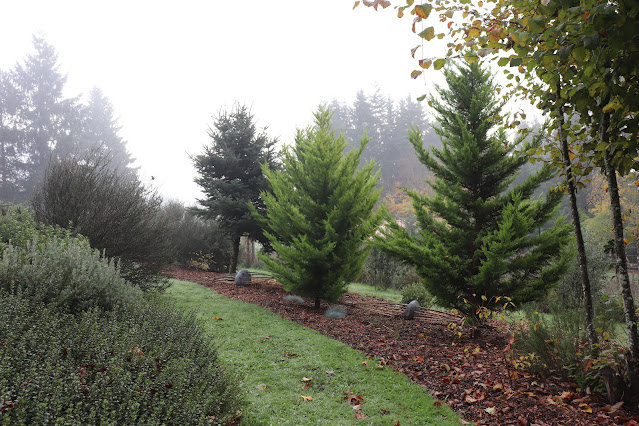
This is a year or so in after the wood chips have mellowed and aged.
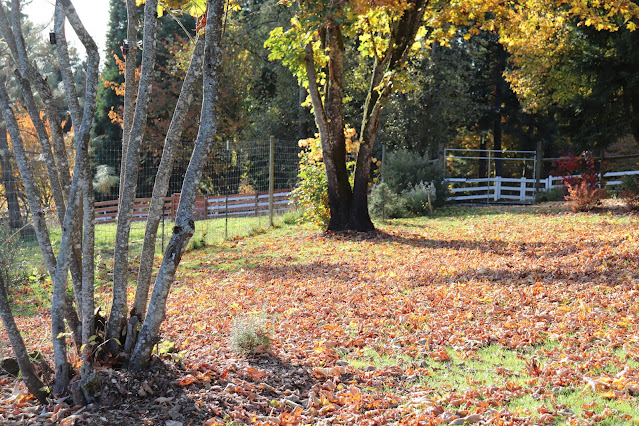
Next, let’s look at this area with an early version of hazelnut island on the left. This is facing west towards the Baccharis pilularis which is near the gate.
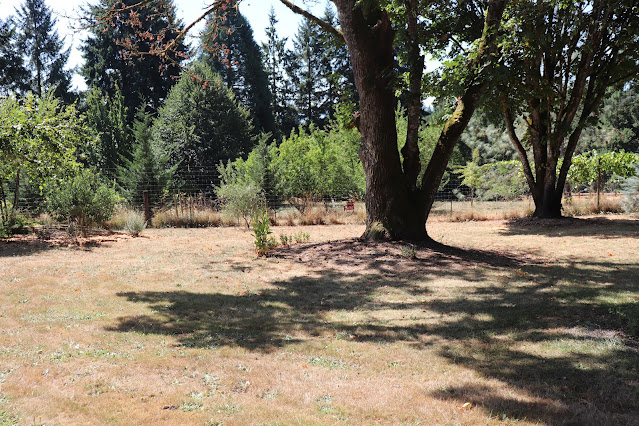
Hazelnut island is on the left, this is looking due south.
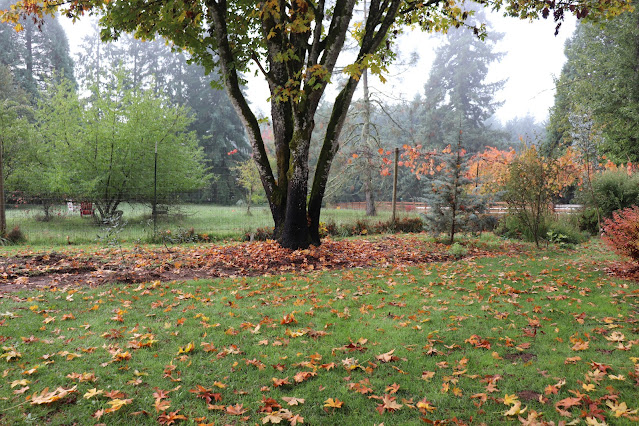
Autumn 2023 FM removed sod between the Baccharis area and hazelnut island, thus connecting the two areas. Right away I planted it up with a selection of drought-adapted plants, many California and Oregon natives which are drought-adapted.
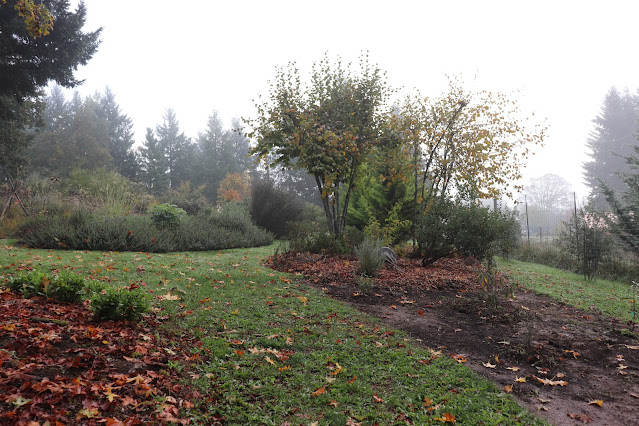
A clearer image showing the area of sod removed.
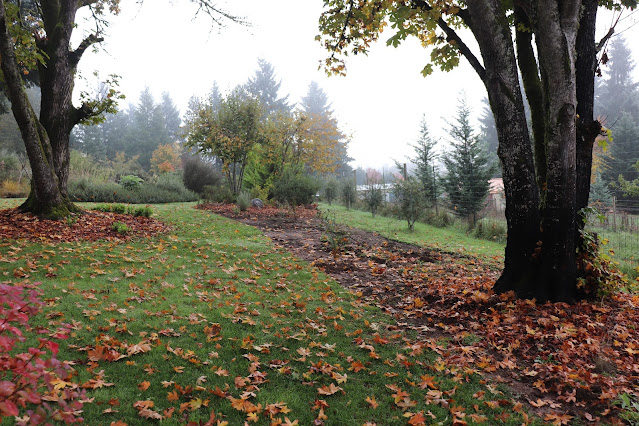
A wider shot illustrating the length of the area. The olive trees can be seen near the fence, four of them in a row.
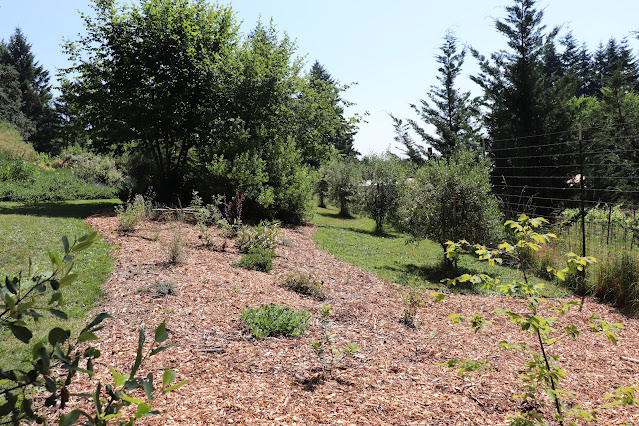
This is the same area as it looked last summer, the four olive trees on the right of the woodchips. You’ll note the woodchips now reach the edge of our property at the fence line as FM continued to remove sod. Mowing is no fun, besides it’s really a bunch of weeds, not really grass and it looks terrible by summer.
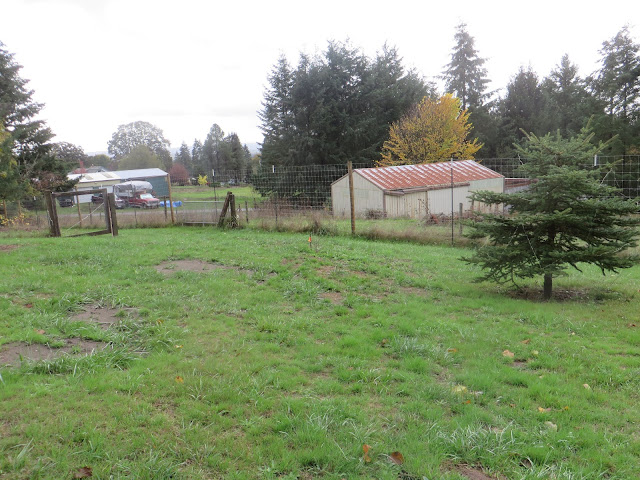
Now for the far eastern side of the border. As you can see, there was nothing here but a lonely tree.
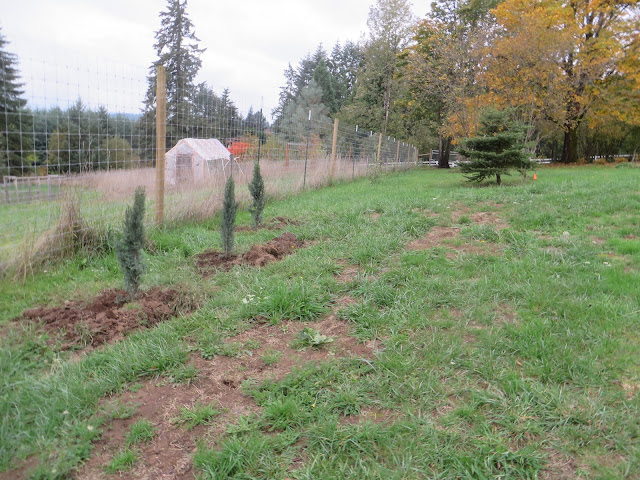
We planted a few Cupressus sempervirens around 2017, five total. Three survived and are growing nicely.
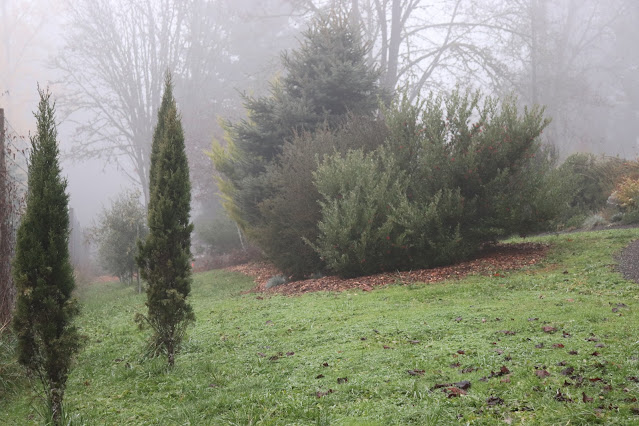
The far eastern side of the bed now, with Grevillea ‘Neil Bell’, Ceanothus cuneatus ‘Adair Village’ and Leptospermum grandifolium adding to the scene.
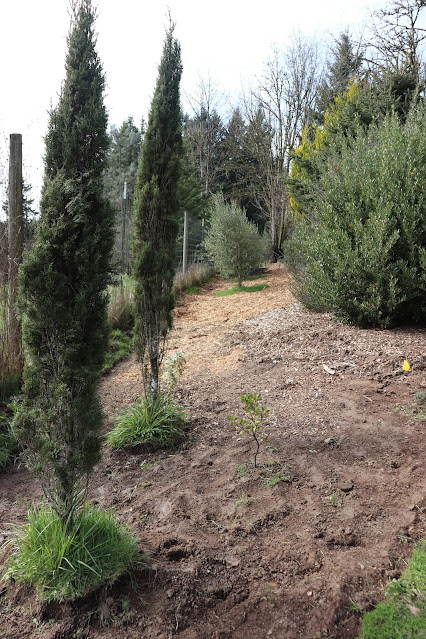
The same area as it looked recently, sod removed but awaiting another chip drop delivery to polish it off.
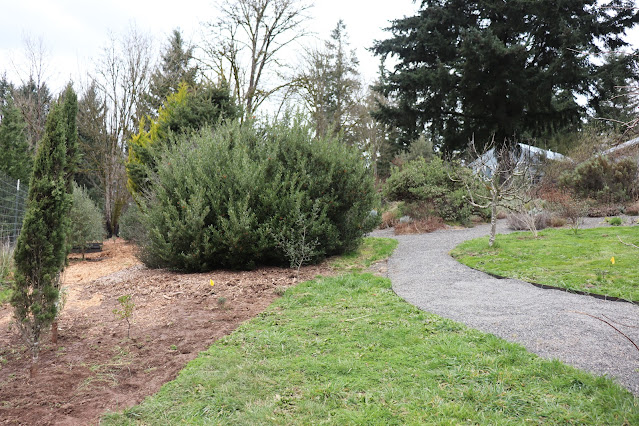
A wider image. Check out the size of Grevillea ‘Neil Bell’ – it’s a monster.
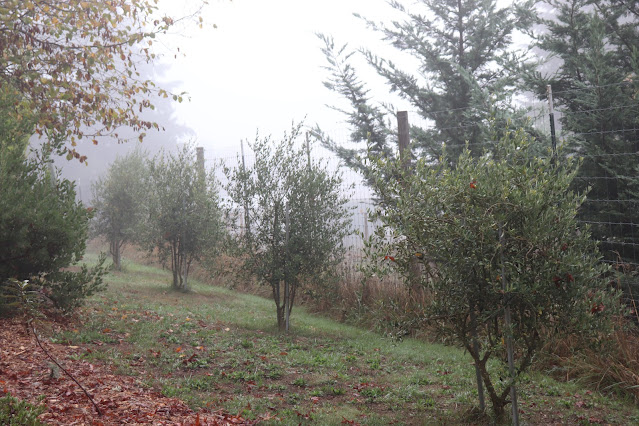
Here, FM was inspired to remove the sod between the four olive trees (which have totally recovered from their early-stage winter damage).
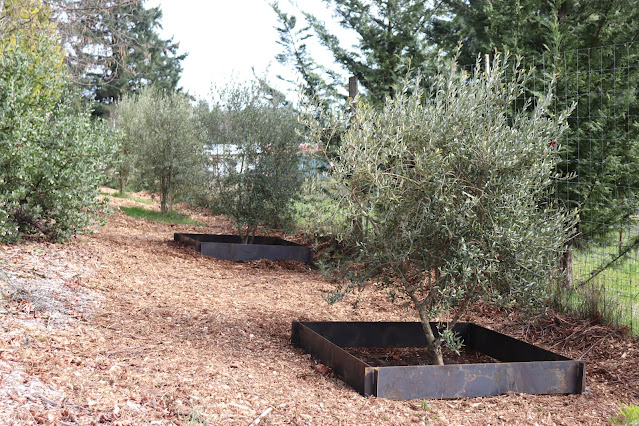
So this winter/early spring after many wheelbarrows full of sod were removed, wood chips were then added in a fairly thick layer. FM designed and built these steel surrounds for the olive trees. You can see the green sod on the far olive tree has yet to be removed at this stage.
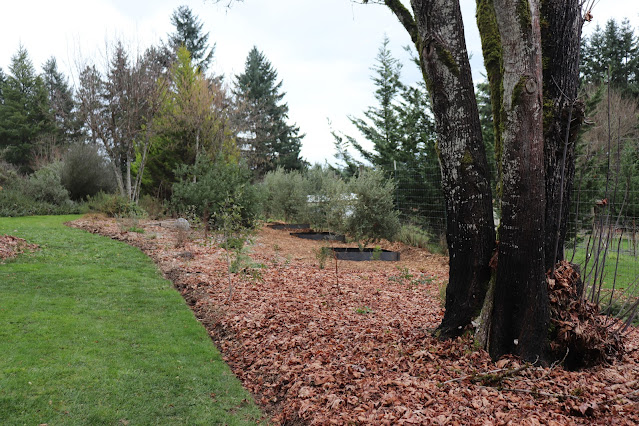
A wider image.
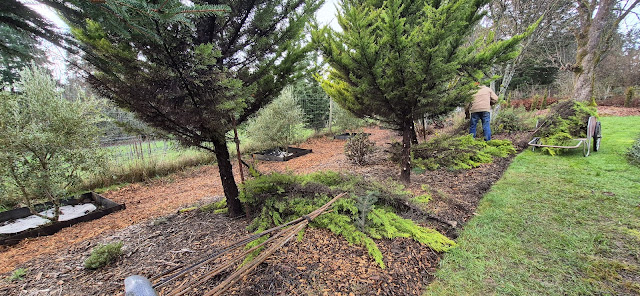
A few final touches – Cupressus ‘Donard Gold’ was so large that air flow was not happening down here so we lifted them a little to be able to see the olive trees behind.
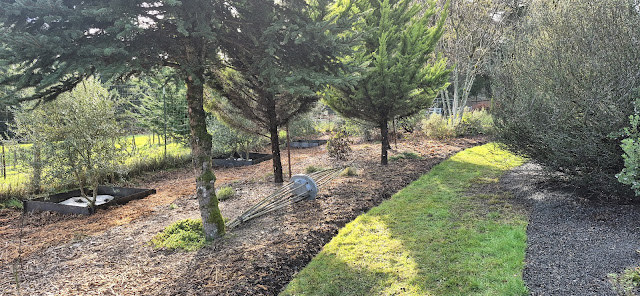
It’s nice to see sunshine down this corridor again and to see wood chip mulch reaching all the way to the fence. Just this one strip of grass is left after what was one giant field.
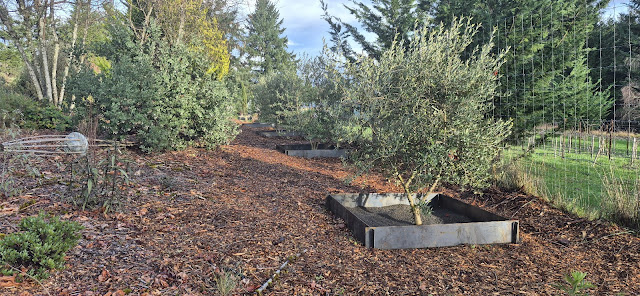
And FM’s olive surrounds are now filled with crushed gravel for a finishing touch.
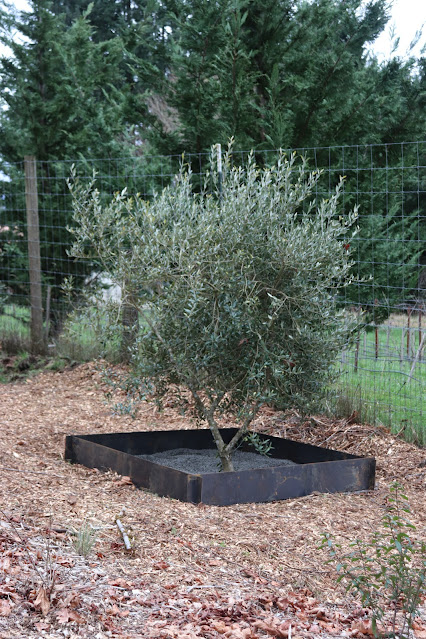
Nice. A totally different look than when we began in January 2016.
This border, south bank, is our latest project. It is one we had not anticipated but as is our way, it evolved over time and moments of what it wanted to be were revealed slowly. I did know that all these satellite plantings felt disjointed and needed to connect somehow, something accomplished with the relatively simple task of removing sod and replacing it with wood chips. This created paths and designated areas for plants so that my brain could make sense of what was happening and what our intentions are. This final added bonus of steel framing and the additional sod removal by FM this winter was a bonus and totally his idea. That’s how we roll, we each contribute what we can and I for one really enjoy having a partner in this who also brings ideas to the table.
Everything in this garden border is drought-adapted. Nothing is thirsty. Combine that with a deep layer of wood chip mulch and the whole area is pretty self sustaining – a little bit of weeding the first few seasons in the wood chips and that’s about it. Whether or not our garden is considered “unusual” is inconsequential to us, what is important is that it is sustainable and practical, so no boxwood hedges for us, it seems.
That’s a wrap for this week at Chickadee Gardens. As always thank you so much for reading and commenting, we do love hearing from you all!