Looking for an easy project to create the look of vintage milk glass? Here’s the step-by-step for this DIY hobnail vase project.
You probably have a vase that looks just like you.
It’s your ordinary, run-of-the-mill glass vase that comes with a flower arrangement.
If you check your pantry cabinets or under the sink or in the hall closet, a vase that looks almost just like this will hop out at you.
But here’s the thing.
Who wants to be ordinary?
Who wants to be run-of-the-mill?
When you could click your ruby red slippers together and go on an adventure.
This vase just got a supermodel makeover.
And now?
This plain, simple, ordinary vase….
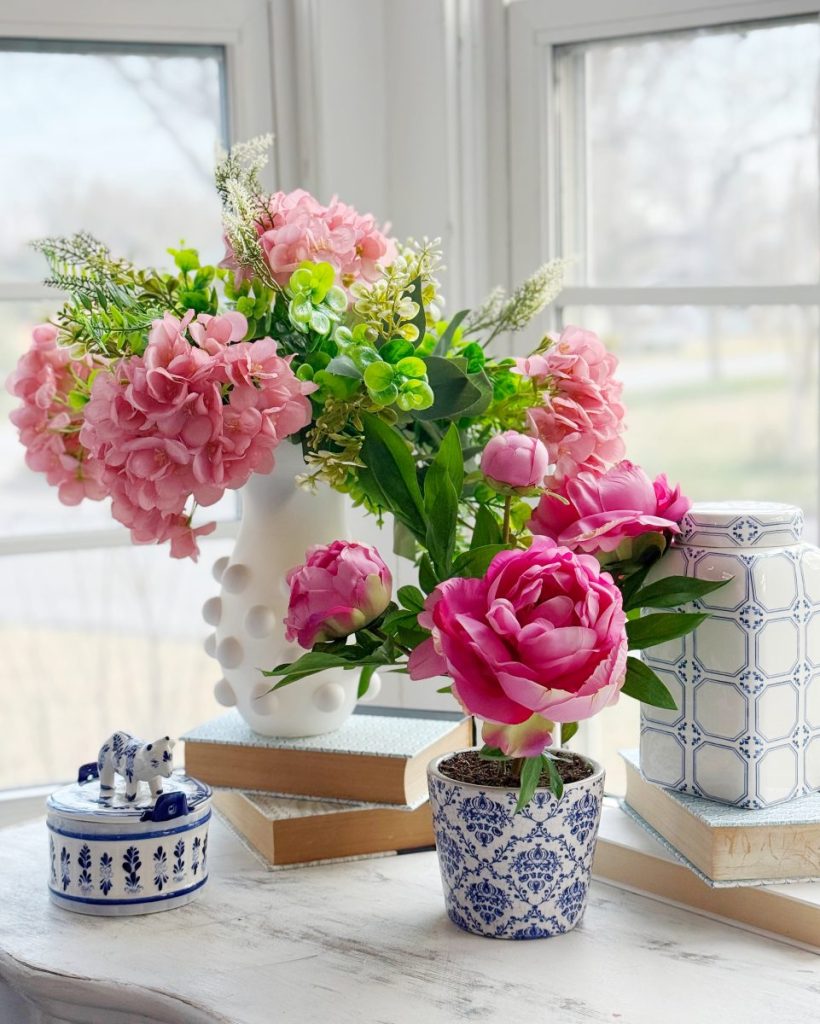
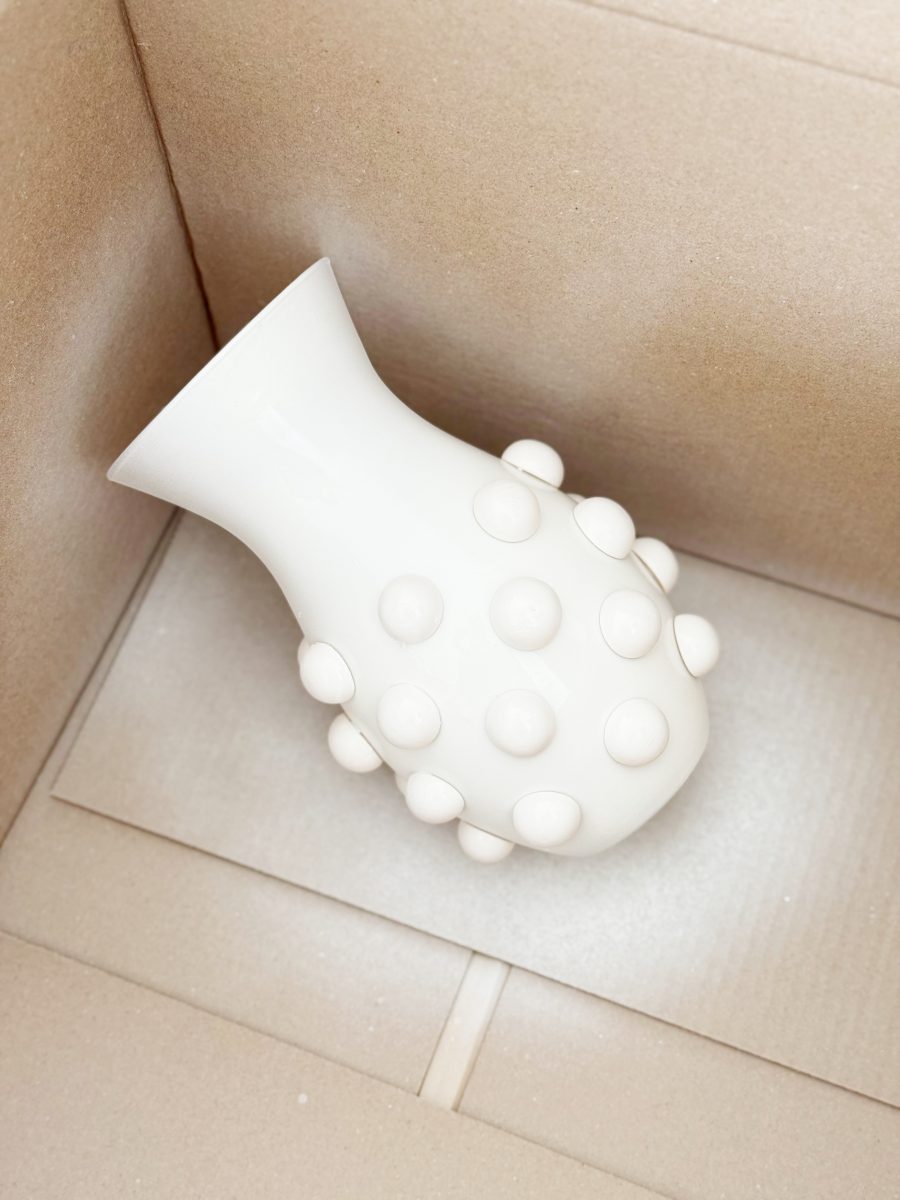
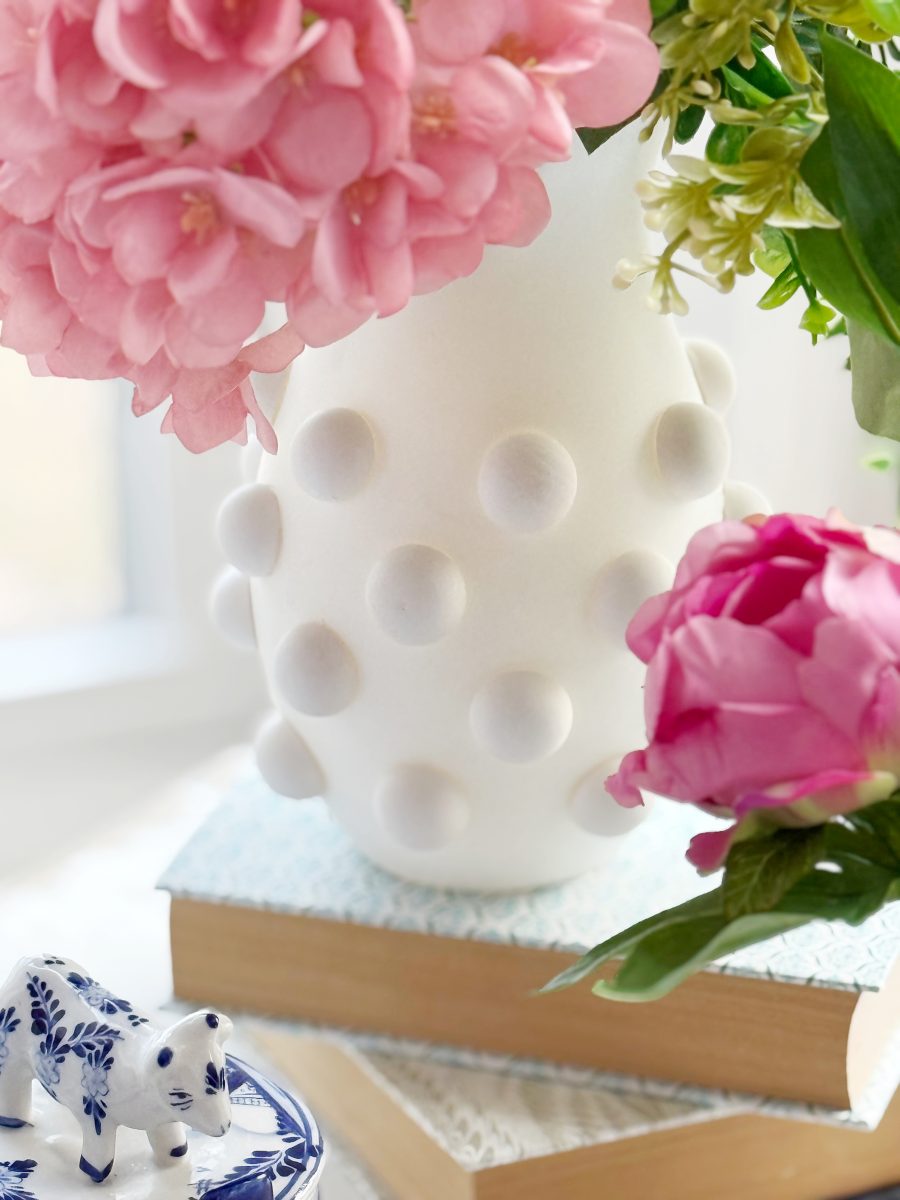
…looks like this.
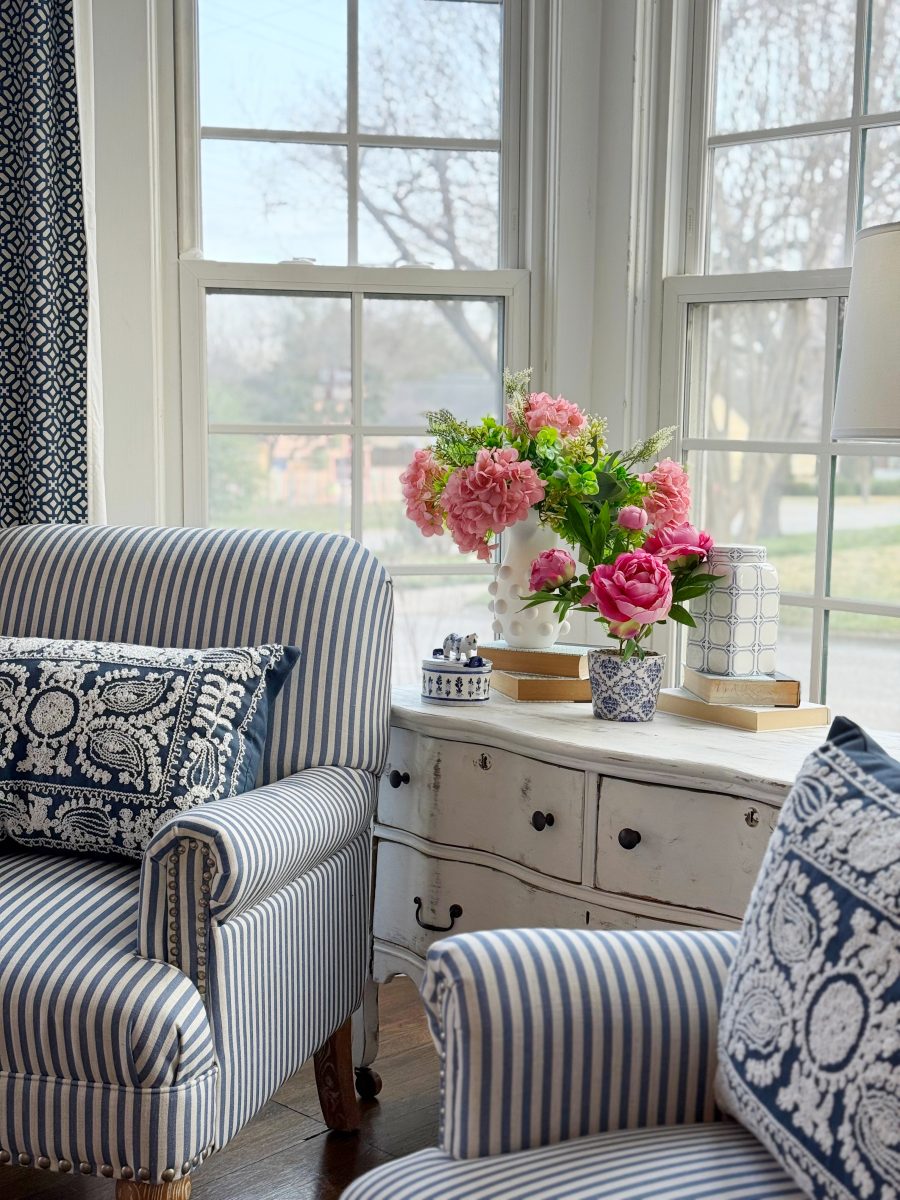
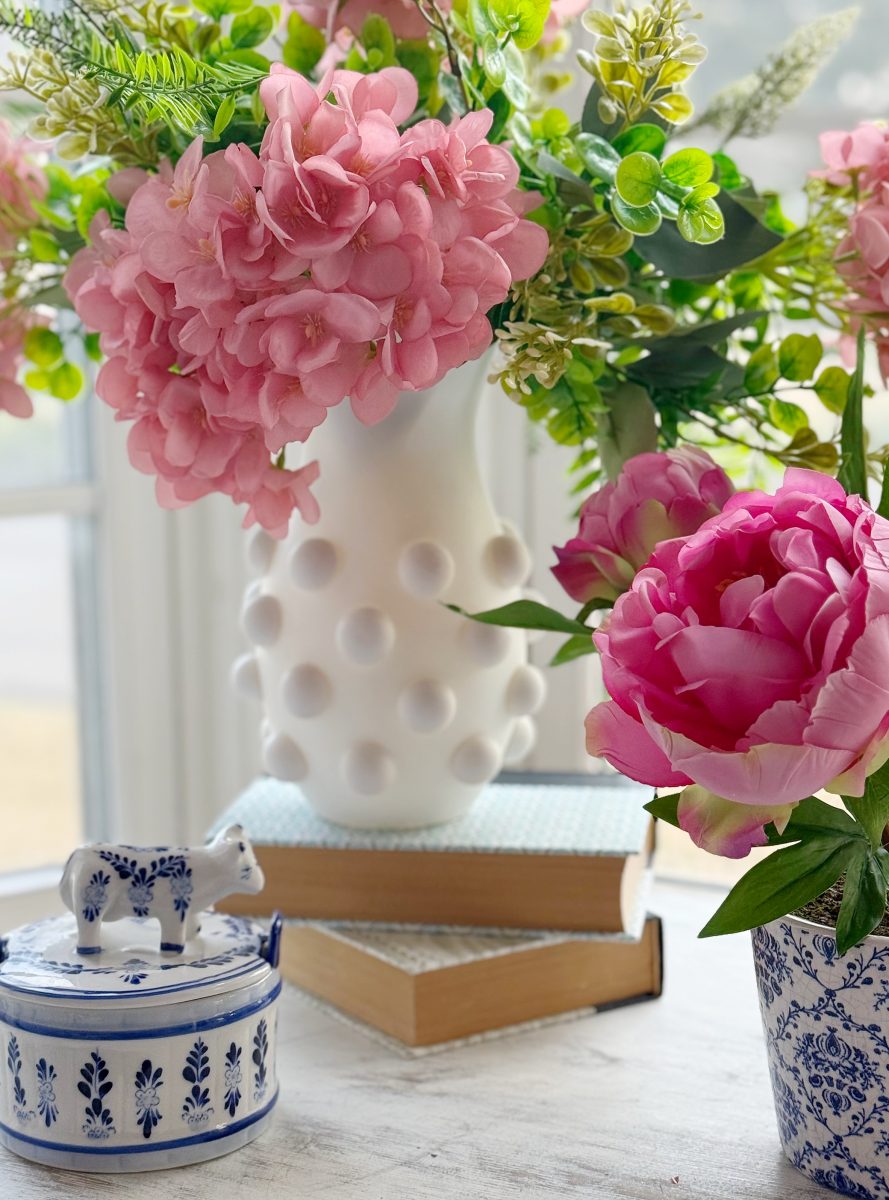
CAN YOU EVEN?
Seriously.
Will you do me a favor and scroll back up again and look where we started?
Yes. I promise it’s the same vase.
Where has this project been my whole life?
Here’s the best part. It’s so much easier than it looks and if you saw the vase in real life, it really looks like vintage milk glass because it has a slight translucency.
Want to make your own?
Oh, good.
Here’s the step-by-step.
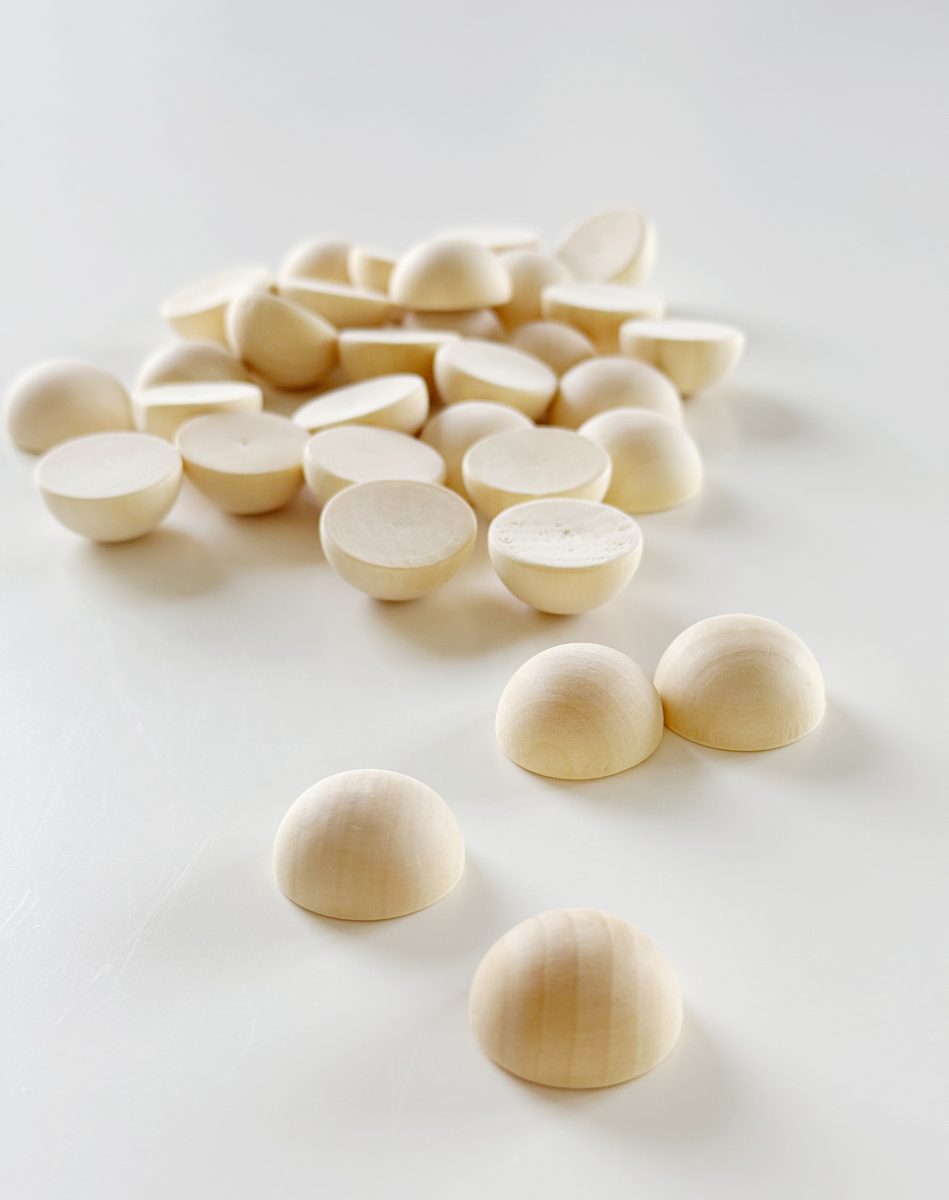
DIY Hobnail Vase
supplies:
glass vase
1-inch half wooden balls
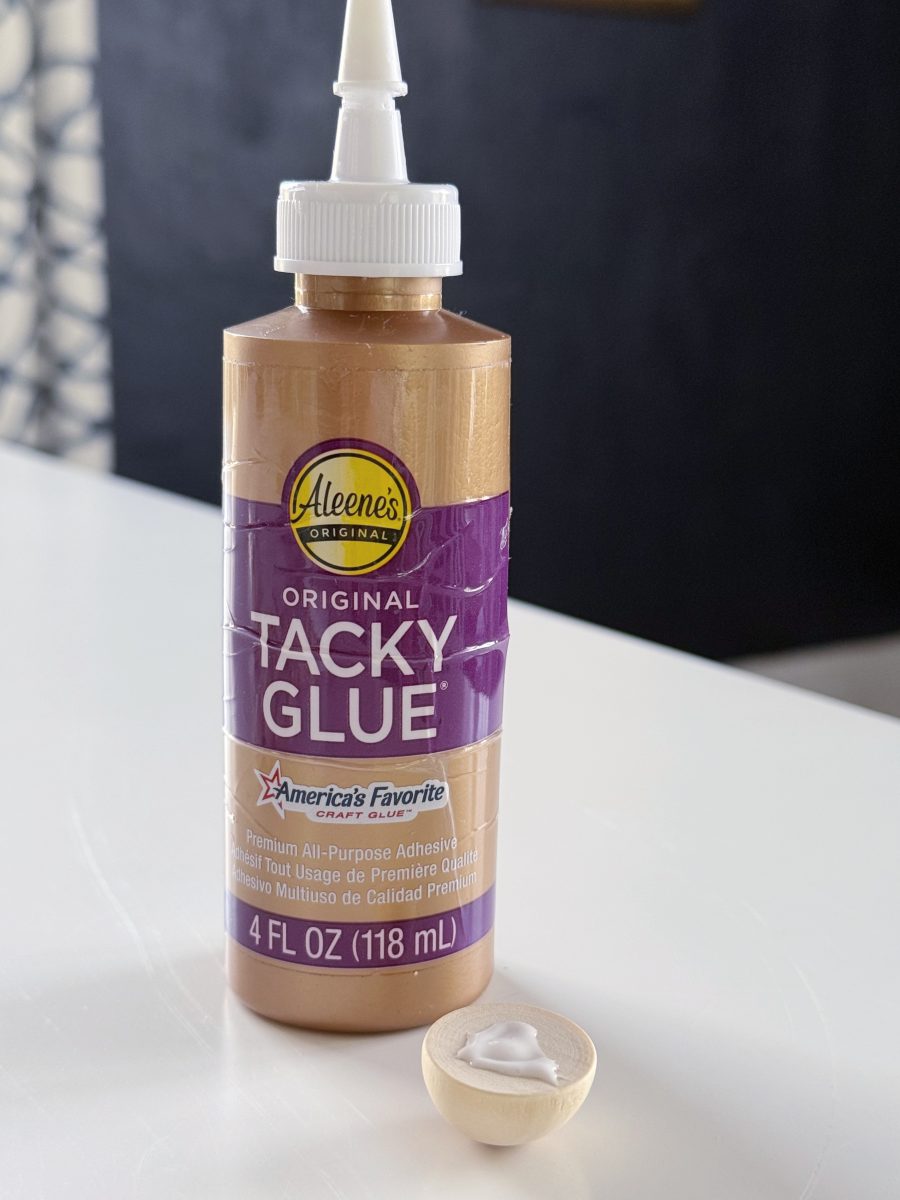
Aleene’s Tacky Glue
flat white spray paint
1. Choose vase
I went ahead and linked a similar vase in case you didn’t have one (or if you just liked the vase and didn’t even want to use it for this project).
But truly?
I’d check the cabinets and thrift stores and yard sales.
Vases like these are a dime-a-dozen.
2. Add glue to wood pieces
We are going to be adding the wood pieces to the vase.
At first, I was going to use hot glue, but it made the wood pieces stick out from the vase a little and I wanted them to look more like hobnail glass, so I decided to use my go-to Aleene’s Tacky Glue.
It works so well.
You don’t want to add a lot of glue.
Just a little goes a long way. You can see the amount here in the picture above.
Let the glue sit for just a little bit so it gets slightly tacky.
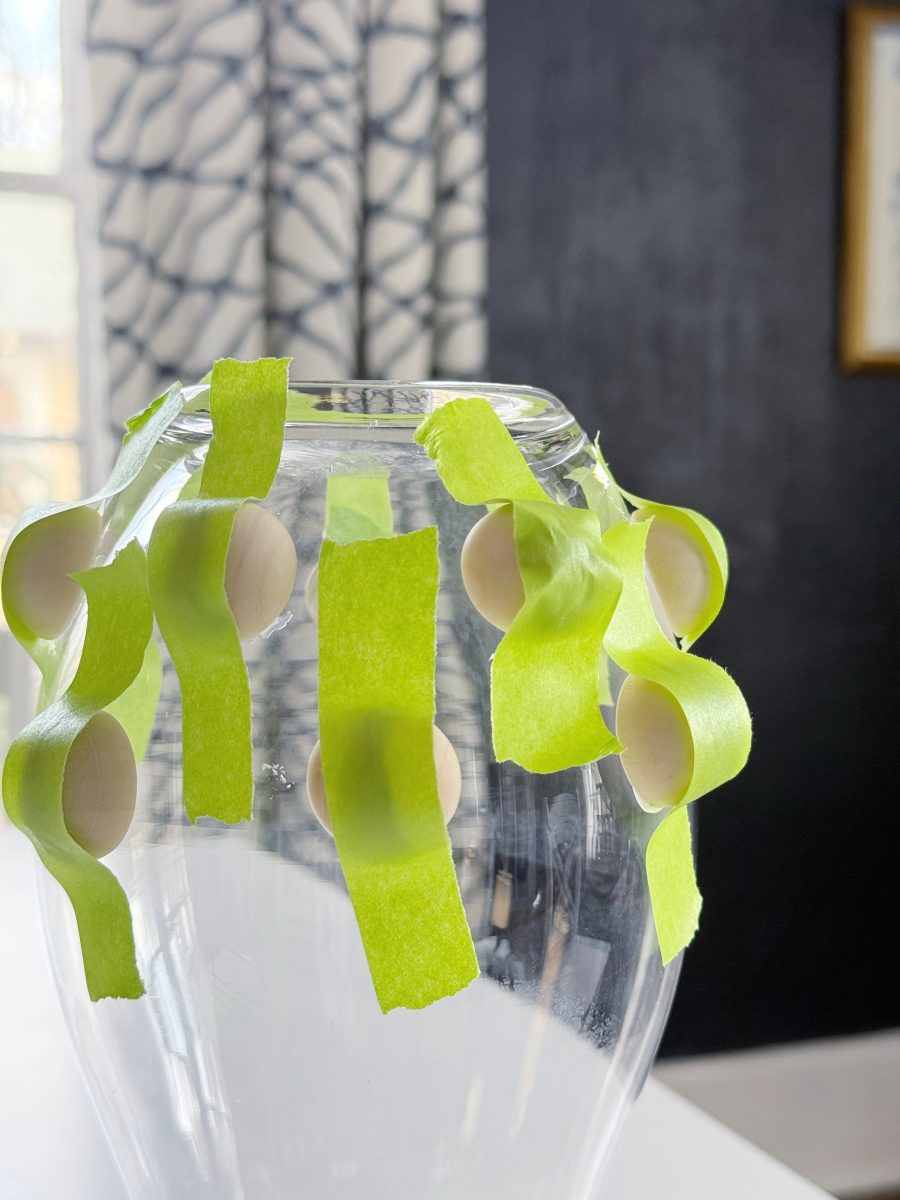
3. Glue the wood pieces to vase
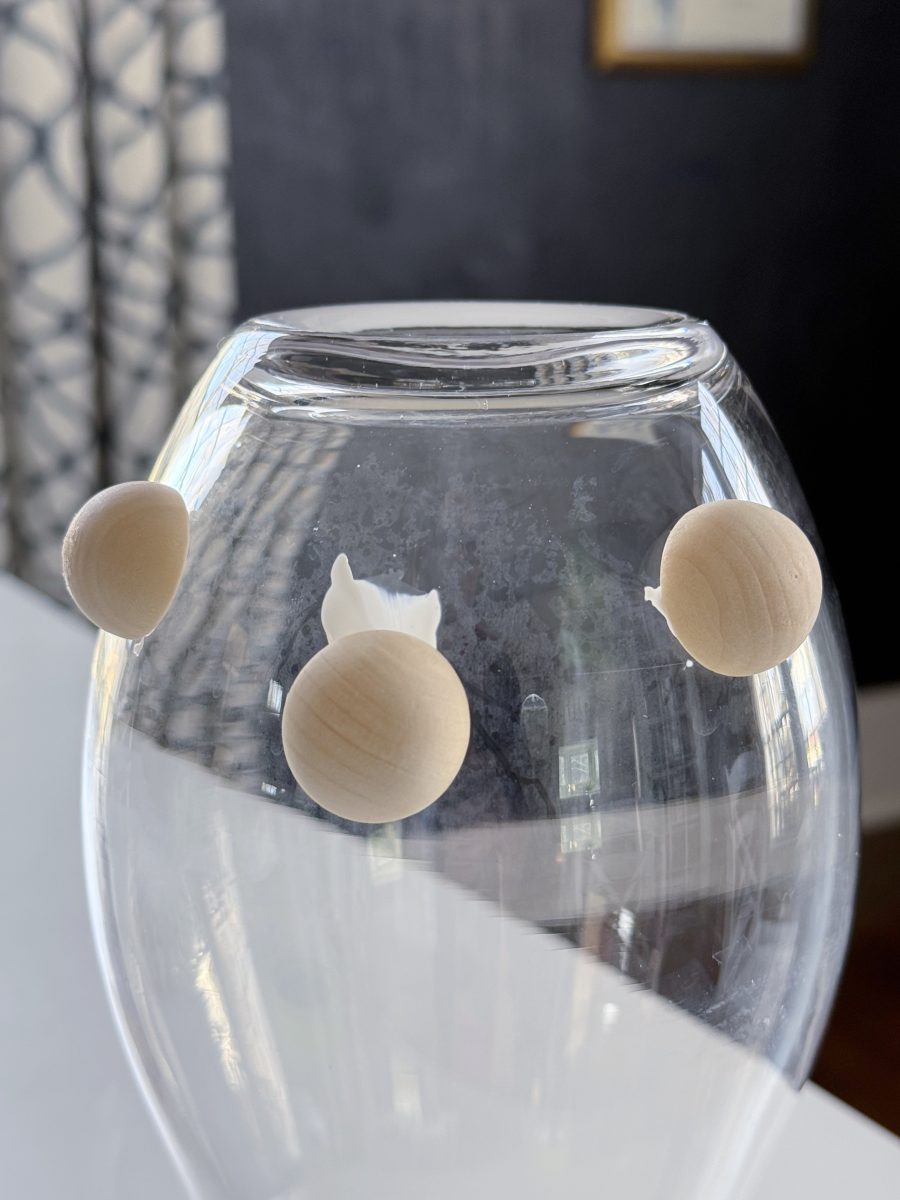
I added the picture above because I wanted to show the mess-ups I make sometimes.
Turn the vase upside down. This makes it so much easier to figure out how to add the pieces and keep them straight.
When I spaced out the wood pieces and glued them in place, they started to slide down the vase.
So I held them in place with this painter’s tape.
I added one row (I used two fingers as a measurement between the wood pieces).
Then, I staggered the next row to create a diamond pattern.
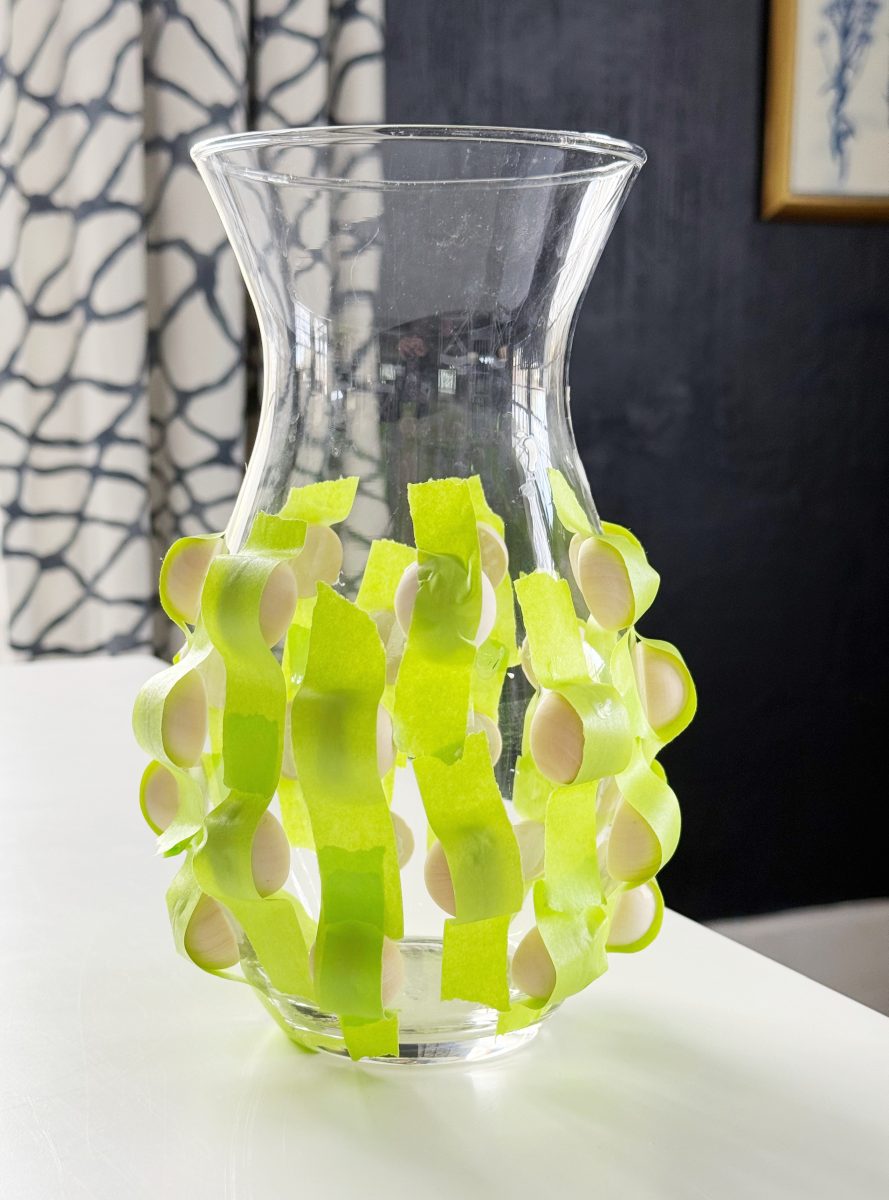
4. Keep adding rows of wood pieces
Here’s what the vase looked like when I glued all the wood pieces in rows and taped them in place.
My original plan was to keep adding rows of wood pieces until I reached the top.
But then?
The vase curves and the pieces didn’t really stick to the vase in the gap. So I went as far as I could until I couldn’t glue the good pieces anymore.
I let the glued pieces dry for a couple of hours.
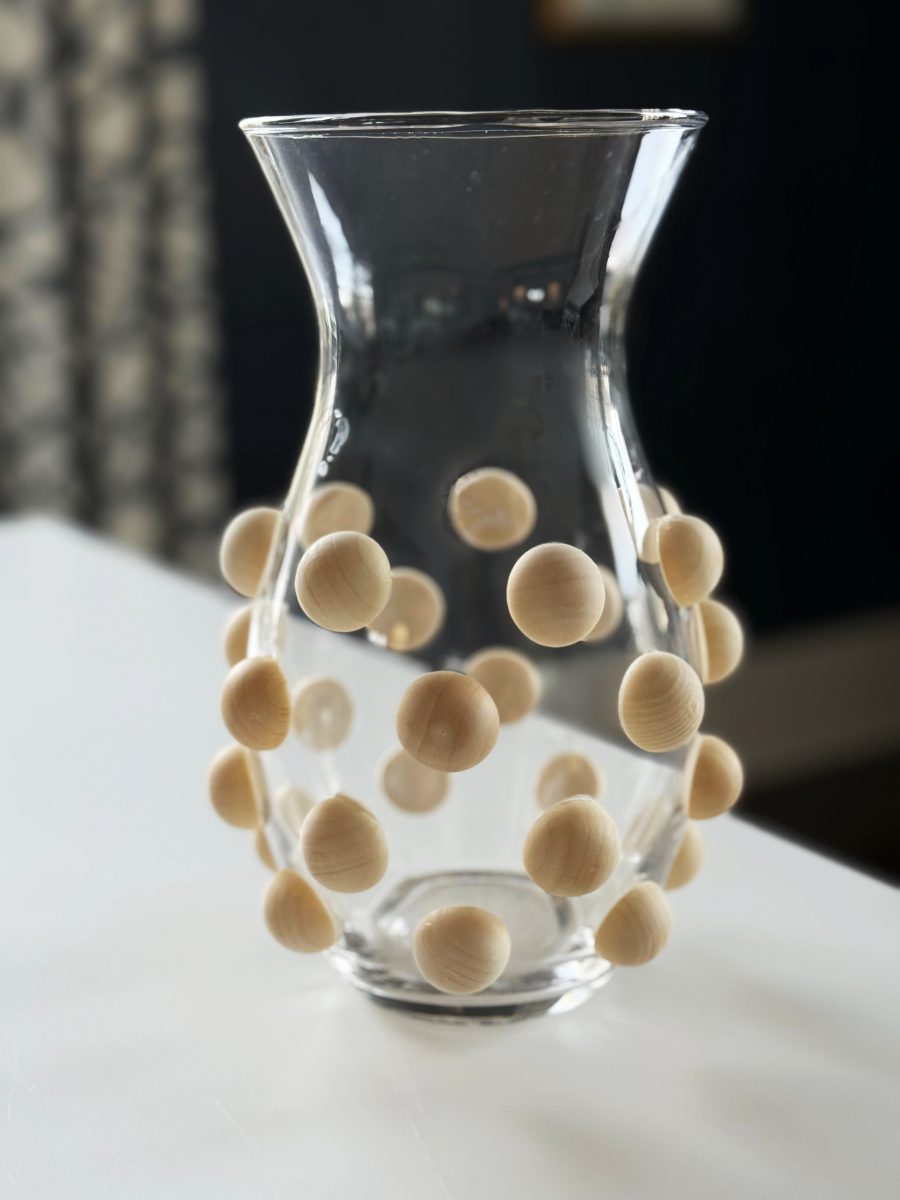
5. Remove the tape and spray paint
After the wood pieces dry, remove the painter’s tape.
Make sure to scrape off any excess glue that may have seeped out around the edges of the wood pieces.
Now it’s time to spray paint.
I used a flat spray paint with a built-in primer.
Here are a few spray painting tips:
- spray super lightly and let dry between coats (I used about 8 light coats)
- spray in a large cardboard box to avoid overspray
- flat spray paint looks so much more realistic and looks more like milk glass
- you don’t need to spray the inside of the vase
- let dry before you add flowers
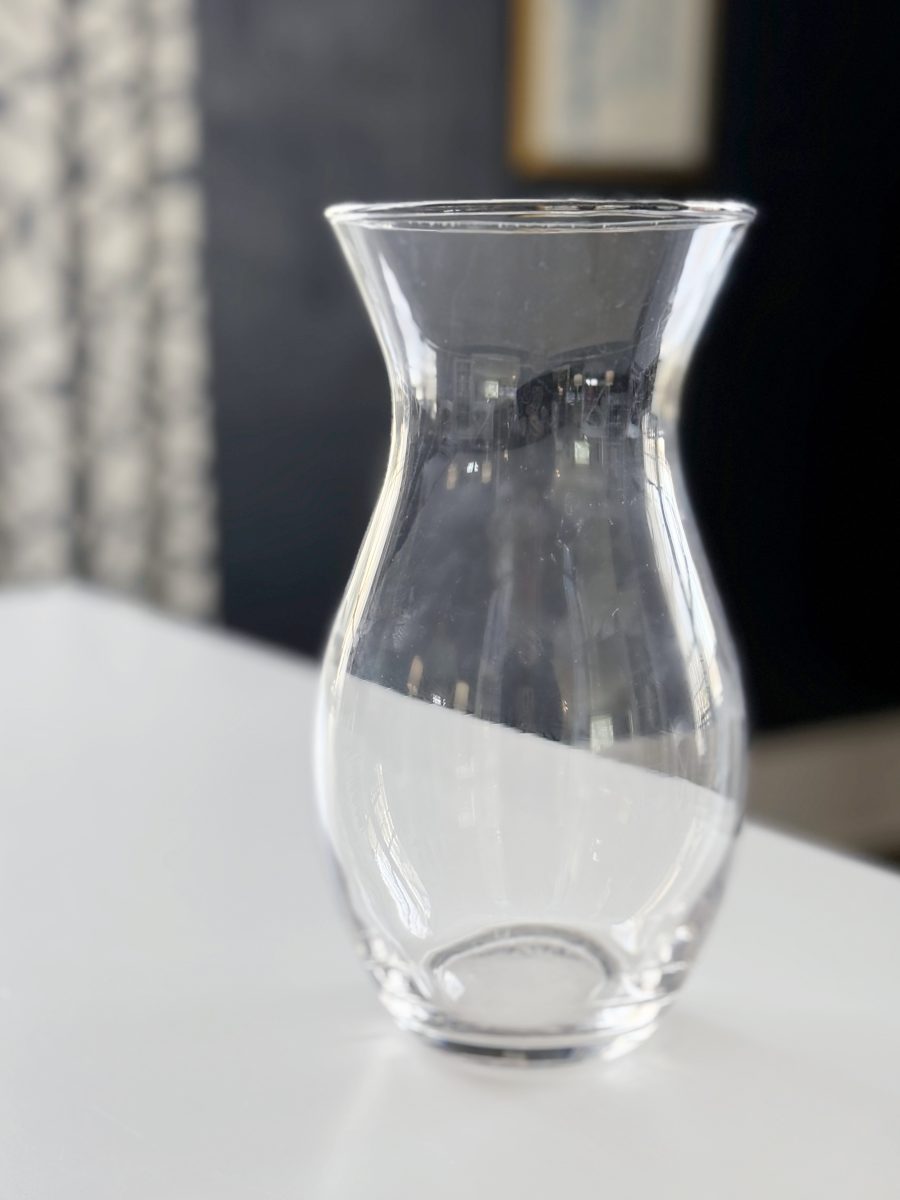
One more time.
How it started.
// faux peony in blue and white planter //
// faux peony in blue and white planter //
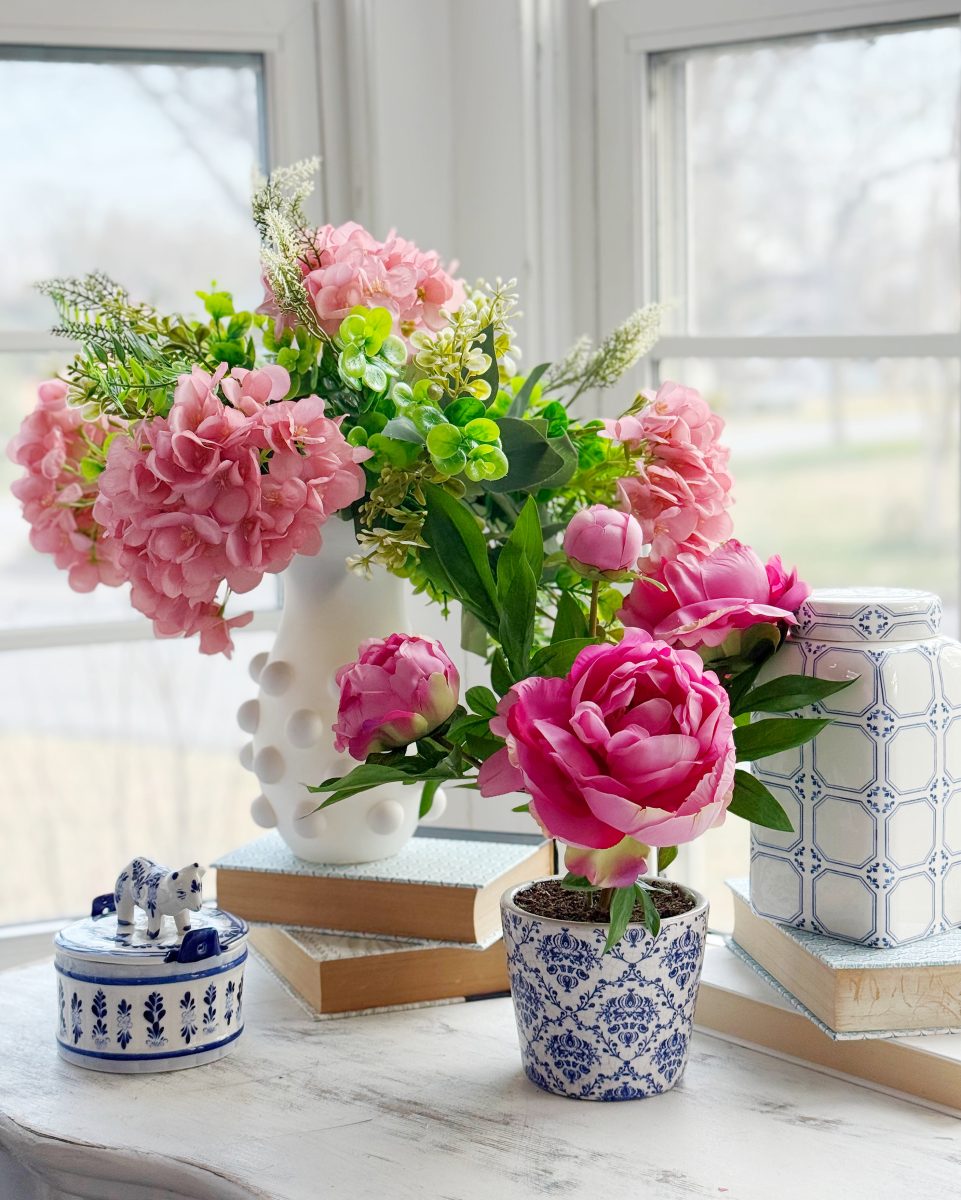
How it’s going.
And now? This plain, ordinary, run-of-the-mill vase is living it’s best life.
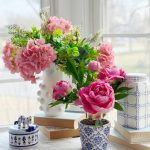
It’s in the window now and filled with hydrangeas.
And ready for the catwalk. 🙂
PS Look at this amazing faux hydrangea I found in this blue and white planter. Isn’t it the cutest?
You can see it here.
Disclosure: Affiliate links are used in this post.