Hi GPODers!
Spring is still young and many gardens are just starting to wake up for the growing season. Flowers are emerging and bright new growth is unfurling left and right, but—for many for us—our landscapes are still quiet. The gentle sounds of activity from birds, pollinators, and other wildlife hasn’t reached the fever pitch of the high season. As a reminder of the important role gardeners play in supporting this intricate web of life, Kathy Schreurs in Sheldon, Iowa has shared some fantastic photos of the butterflies that inhabit her garden and the plants that they are most fond of visiting. Kathy is a frequent contributor who has shared many photos of her gorgeous plantings (Check out some of her previous submissions: Kathy’s Iowa Garden, Looking Back at Last Year’s Garden, Bringing the Outdoors In, Kathy’s Iowa Garden in July, Not Only Violets Are Blue, and more), but today is the first time she is presenting her garden from the perspective of these winged guests.
My husband and I have lived (and gardened) for 30 years in a home built on native prairie in the 1890’s. (The northwest corner of Iowa where we live is still considered planting zone 4b, although most of Iowa is now 5a.) When Sheldon was settled 150 years ago, native common milkweed (Asclepias syriaca, Zones 3–9) would have been abundant, and monarch butterflies (Danaus plexippus) would have been, I’m sure, a common sight! The first years that we lived here, we enjoyed an annual roost of monarchs hanging in our trees in early September—an amazing sight when they took flight in the morning (and making evident why monarchs in flight are sometimes referred to as a kaleidoscope.)
Fast forward, and today monarchs are a vulnerable species, and we haven’t seen a roost in years. Knowing that habitat becomes more scarce every year, we decided in 2023 to allow a random milkweed plant on the edge of our property to stay rooted, and a year or two later when another popped up in our front border (behind a picket fence and adjoining a hosta bed), we let it grow.
A long introduction to say that, while we were vacationing the second week in June, our granddaughter sent us this picture of a monarch caterpillar, and we were hopeful. Even expectant!
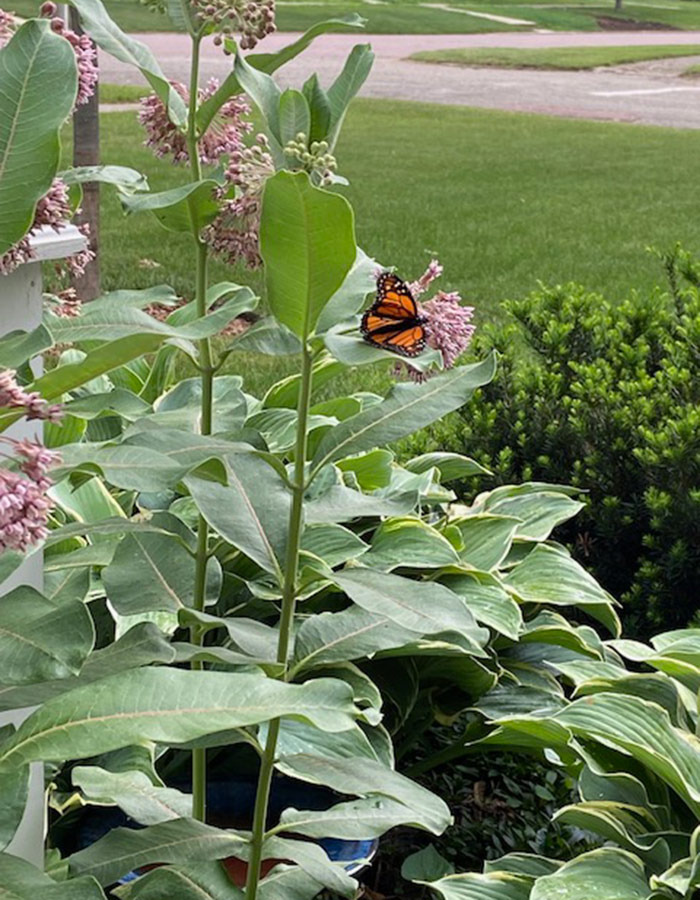 Two weeks later, I spotted our “newborn.”
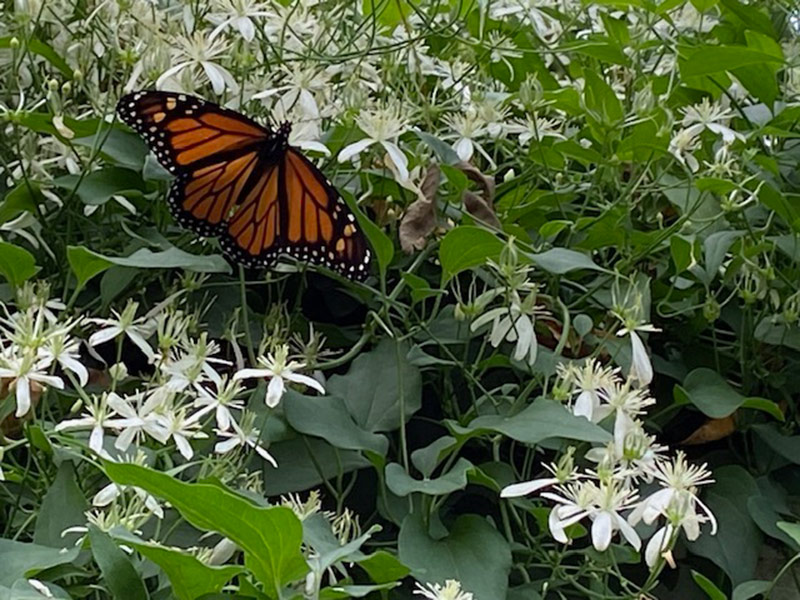 Occasionally throughout the summer I saw a solitary monarch flitting over our flowerbeds, but when September arrived and the sweet autumn clematis (Clematis terniflora, Zones 5–11) bloomed, I spotted monarchs—probably at least two generations removed from the June arrival—enjoyed snacking near our back door. That was just the beginning.
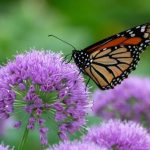
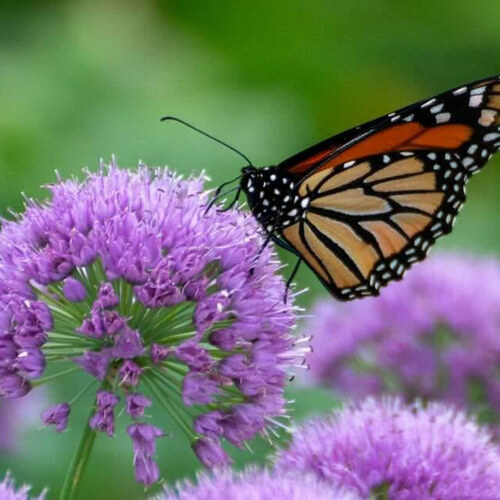
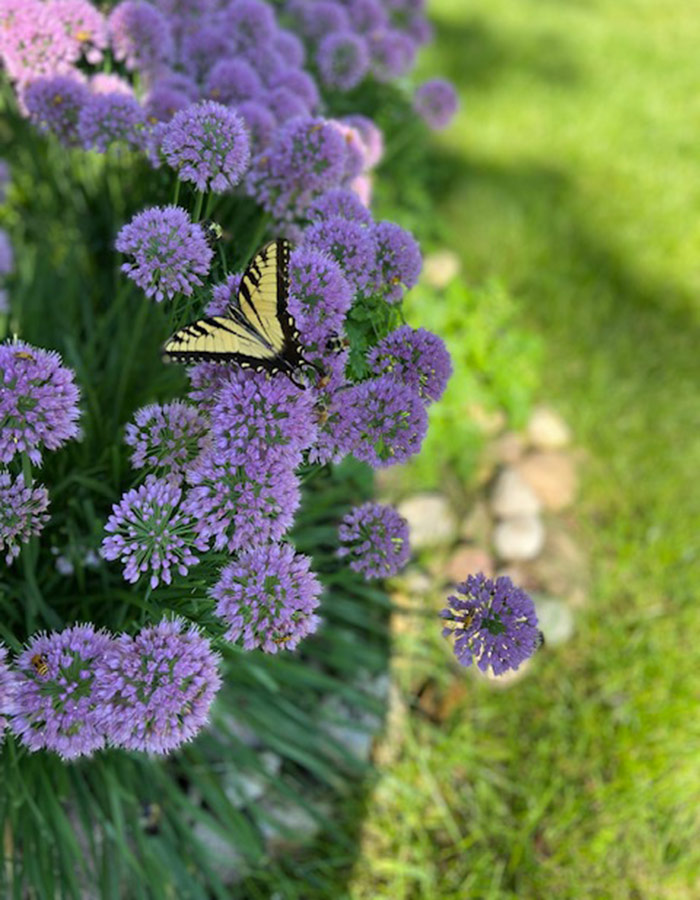 In August, although none are pictured here, a clump of goldenrod attracted numerous insects, including butterflies. But the Serendipity alliums (Allium ‘Serendipity’, Zones 4–8) were the main attraction for monarchs, eastern swallowtails (Papilio glaucus), and cabbage whites (Pieris rapae). (What is there about their oniony scent that makes them so inviting, I wonder?)
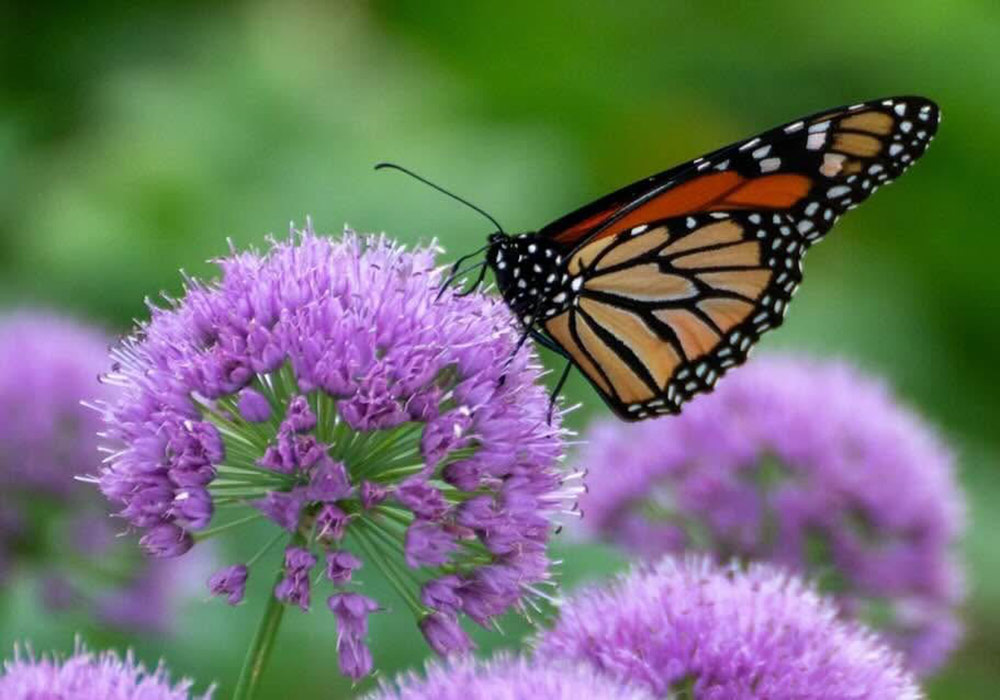 A monarch butterfly visiting Kathy’s Serendipity alliums.
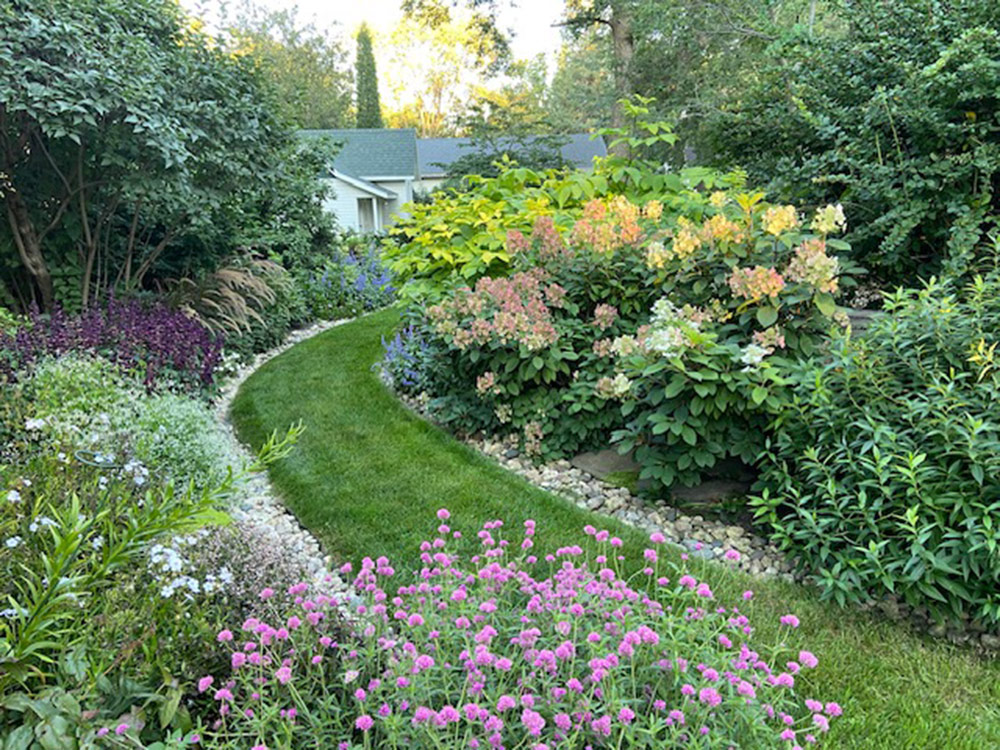 In September, along this path lined a mix of perennials and colorful annuals, butterflies and other insects had what my mother would have called “a heyday.”
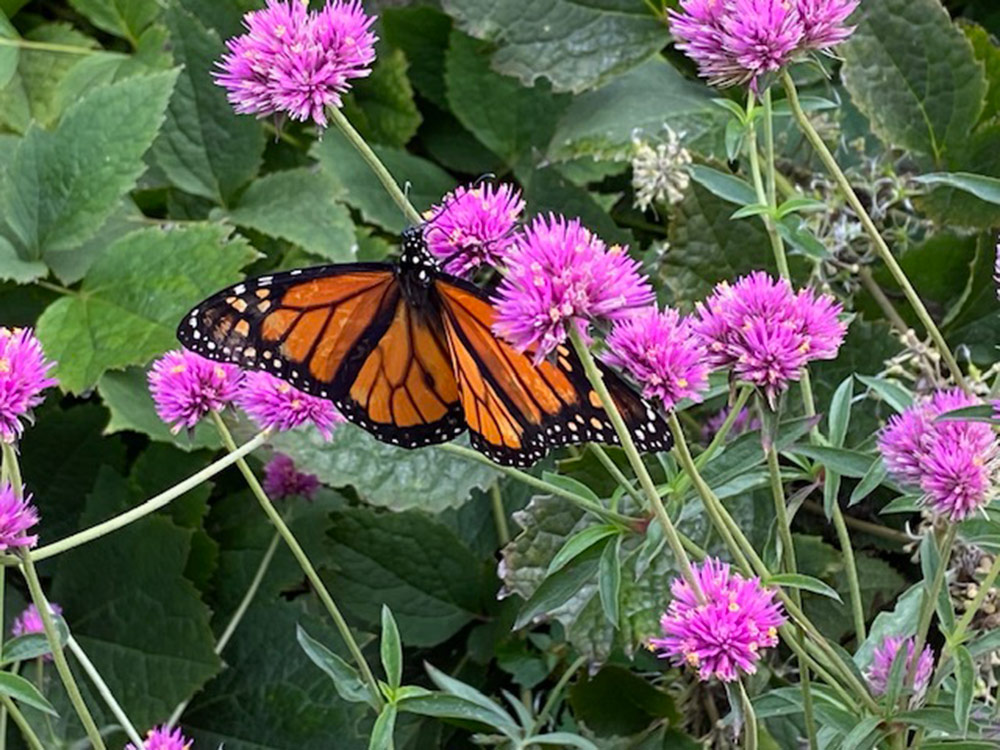 They partied day after day, first on the blooming Sun King aralia (Aralia cordata ‘Sun King’, Zones 4–8), and then on the Truffula Pink gomphrena (Gomphrena pulchella ‘PAST0517E’, annual) and the Unplugged So Blue salvias (Salvia farinacea‘G14251’, Zones 8–10 or as an annual) further down the path that leads to our garden shed.
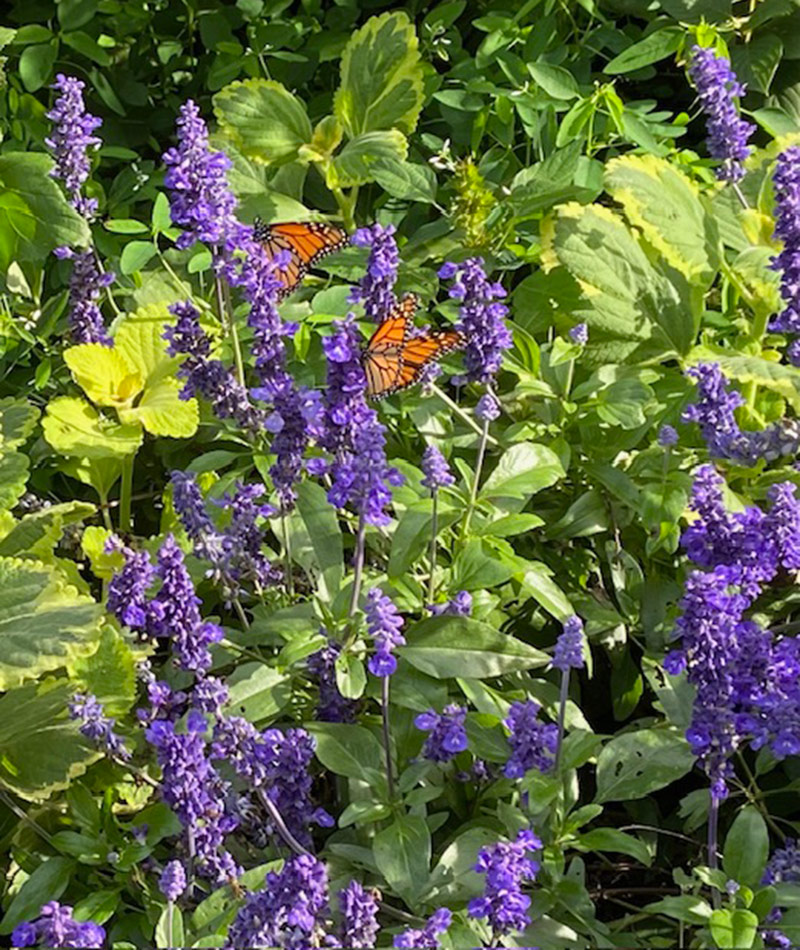 Unplugged So Blue annual salvia and a few of its visitors… Makes me think the Creator enjoyed the orange and black crayons when he added butterflies to the realm of winged things!
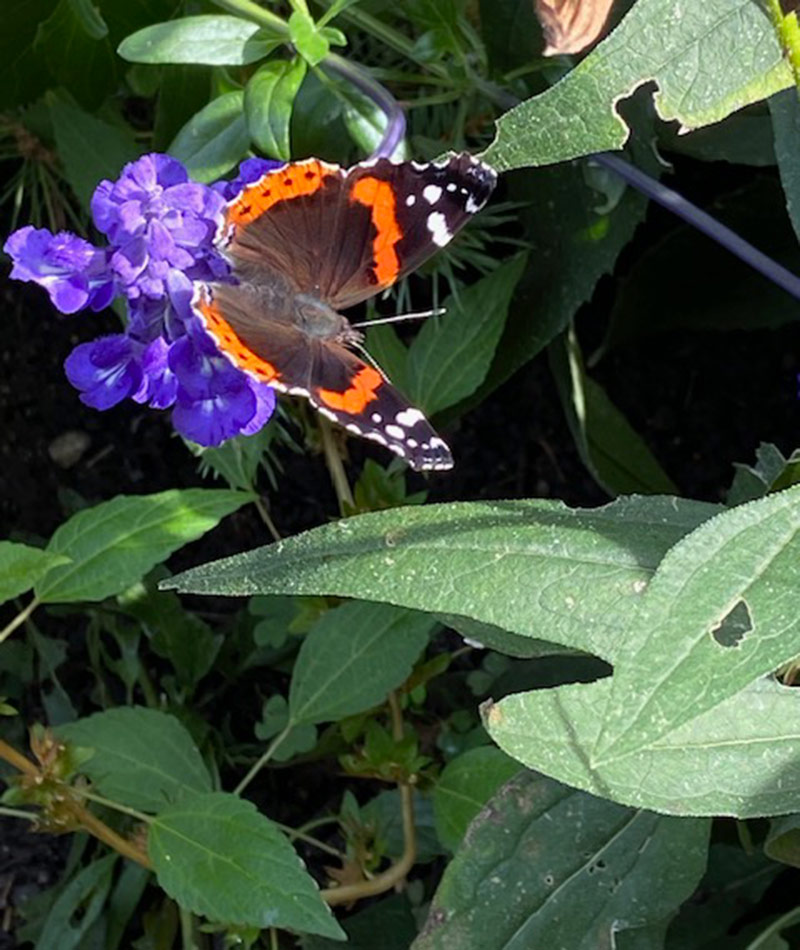 A whole troop of orange and black butterflies came to visit Kathy’s bright blue blooms, this one is a red admiral (Vanessa atalanta).
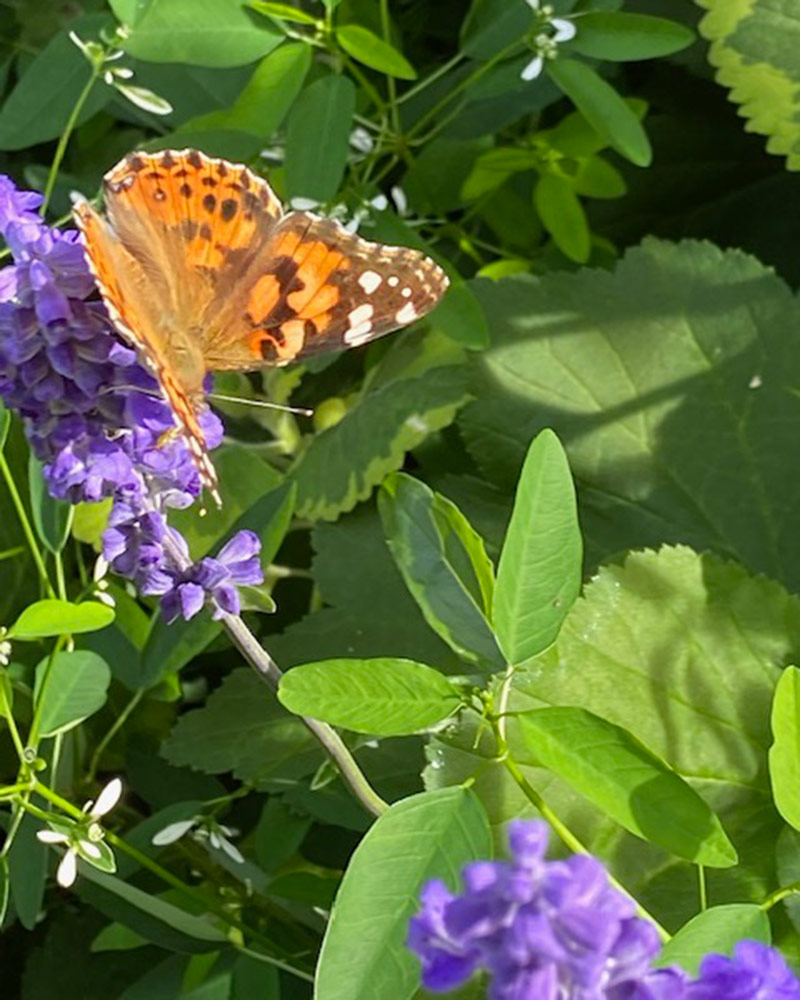 A painted lady (Vanessa cardui), the most widespread butterfly species in the world, also enjoyed a visit to Kathy’s beautiful blue salvias.
Thank you so much for sharing these beautiful photos and for becoming a haven for these important garden visitors, Kathy! Your submission is a well-timed reminder for the impact we can have in our gardens.
What garden visitors are you excited to see in your landscape this year? Do you garden for busy butterflies, like Kathy, do birds brighten your day, or are you happy with any kind of wildlife that wanders through (as long as they don’t devour your plants—of course)? Let us know in the comments, or consider sharing photos of your favorite garden visitors from previous seasons. Follow the directions below to submit your photos to Garden Photo of the Day!
We want to see YOUR garden!
Have photos to share? We’d love to see your garden, a particular collection of plants you love, or a wonderful garden you had the chance to visit!
To submit, fill out the Garden Photo of the Day Submission Form.
You can also send 5–10 photos to [email protected] along with some information about the plants in the pictures and where you took the photos. We’d love to hear where you are located, how long you’ve been gardening, successes you are proud of, failures you learned from, hopes for the future, favorite plants, or funny stories from your garden.
Do you receive the GPOD by email yet? Sign up here
Fine Gardening Recommended Products
National Wildlife Federation®: Attracting Birds, Butterflies, and Other Backyard Wildlife, Expanded Second Edition (Creative Homeowner) 17 Projects & Step-by-Step Instructions to Give Back to Nature
Fine Gardening receives a commission for items purchased through links on this site, including Amazon Associates and other affiliate advertising programs.
From the National Wildlife Federation, the largest U.S. nonprofit conservation organization, with 6 million members and 51 state and territorial affiliated organizations. 17 step-by-step projects that everyone can do together make getting your family back to nature easy, educational, and fun. Over 200 color photos of backyard wildlife habitats and the wide variety of creatures they attract, plus step-by-step photos and illustrations for family projects. Learn wildlife-friendly practices for gardening, landscape design, supplemental feeders, birdbaths, nesting places, and more. Learn how to attract backyard pollinators, from bees and butterflies to beetles, bats, and hummingbirds
Get your garden certified by the National Wildlife Federation’s Garden for Wildlife(TM) program by following the included certification application checklist.
Gilmore Rubber Hose Washer 10pk
Fine Gardening receives a commission for items purchased through links on this site, including Amazon Associates and other affiliate advertising programs.
– Live red rubber construction, 3/4in. washers
– Clip of 10
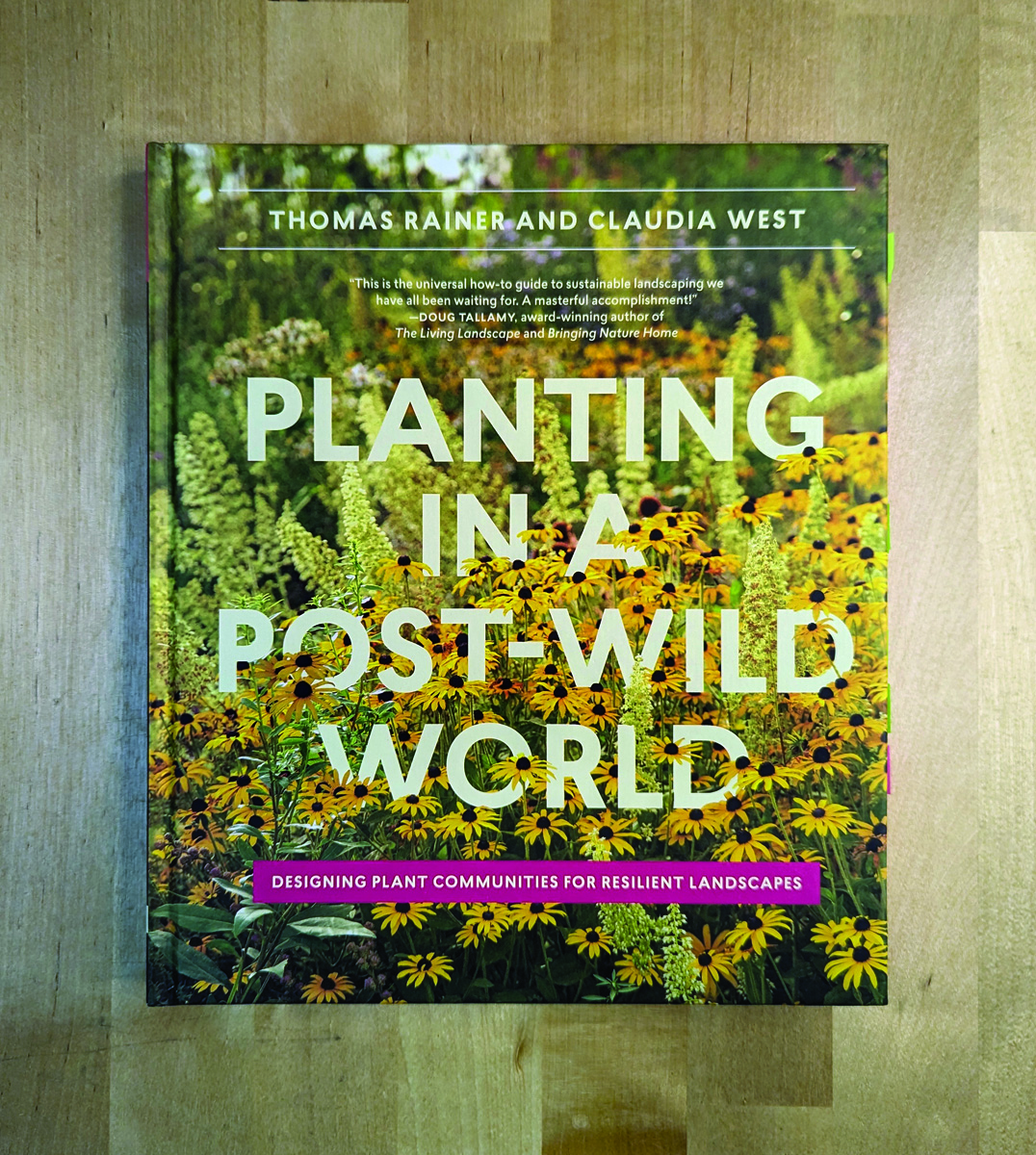
Planting in a Post-Wild World: Designing Plant Communities for Resilient Landscapes
Fine Gardening receives a commission for items purchased through links on this site, including Amazon Associates and other affiliate advertising programs.
Featuring gorgeous photography and advice for landscapers, Planting in a Post-Wild World by Thomas Rainer and Claudia West is dedicated to the idea of a new nature—a hybrid of both the wild and the cultivated—that can nourish in our cities and suburbs.