
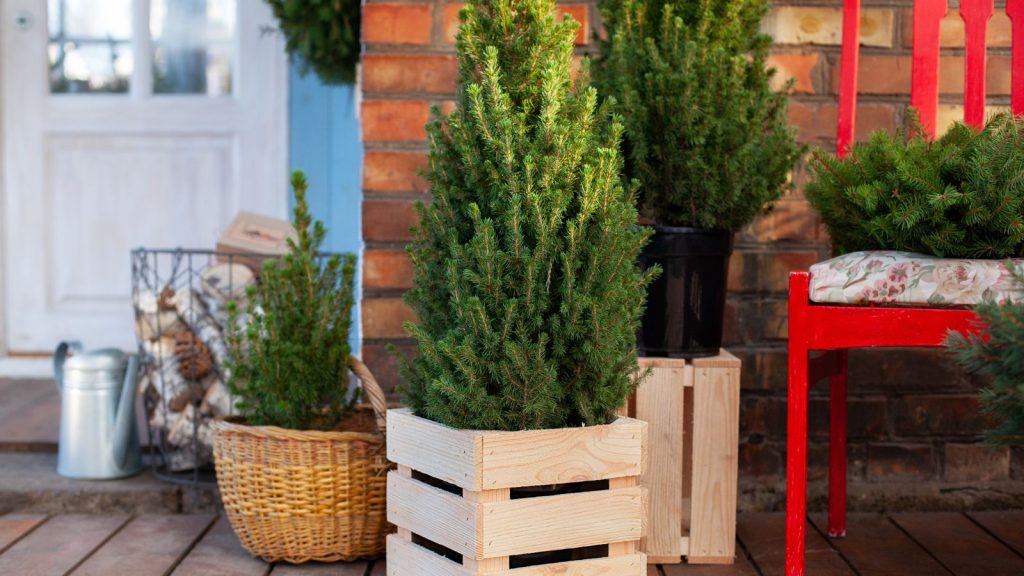
Mini evergreens you: a concise orientation before we get practical.
Mini evergreens you: Quick notes
The notion that first impressions are everything is particularly true when it comes to the entry of your home. That’s just one reason why front porches are prime real estate for container gardening.
However, finding plants that look good year-round can be challenging. You don’t want high-maintenance species, or ones that will become sticks in winter and make your porch look sad.
That’s where mini evergreens shine. These compact shrubs provide structure and (mostly green) color through every season while staying small enough for pots. Some even have flowers or berries to enjoy for a few weeks of the year.
Unlike their full-sized relatives that can reach towering heights, dwarf evergreens are bred specifically for tight spaces. They grow slowly, maintain manageable proportions, and many thrive in containers for years with minimal maintenance. Whether your porch gets full sun or partial shade, you’ll find ideal mini evergreens for your front porch on this list.
Tater Tot® grows incredibly slowly, reaching only about 24 inches tall and wide. It will typically stay even smaller in a pot, especially when paired with other plants in an arrangement. For anyone worried about plants outgrowing their containers, this is about as low-maintenance as it gets.
The foliage stays bright green year-round. It handles both sun and partial shade well, though you’ll get the best color and densest growth with at least six hours of sunlight daily. Cold hardiness is excellent (zones 3 through 8), and the naturally rounded form requires little pruning to maintain its shape.
‘Nana’ Dwarf Balsam Fir
The needles have a wonderful scent when brushed.
When you imagine evergreens in sight and smell, you’re probably thinking of something similar to this plant. ‘Nana’ dwarf balsam is one of the best mini evergreens for a front porch, forming in a cushion-like mound that rarely exceeds two feet in height.
The dark green needles are soft to the touch and release that wonderful piney scent when brushed, which is almost impossible not to notice whenever you walk past.
Balsam firs prefer cooler climates and appreciate some afternoon shade in warmer regions. They’re happiest in zones 3 through 6, where cool nights and moderate summers mimic their native mountain habitats.
In containers, make sure the soil stays evenly moist but never waterlogged. These firs don’t tolerate drought well, so you’ll need to stay on top of watering during hot summer months.
‘Blue Star’ Juniper
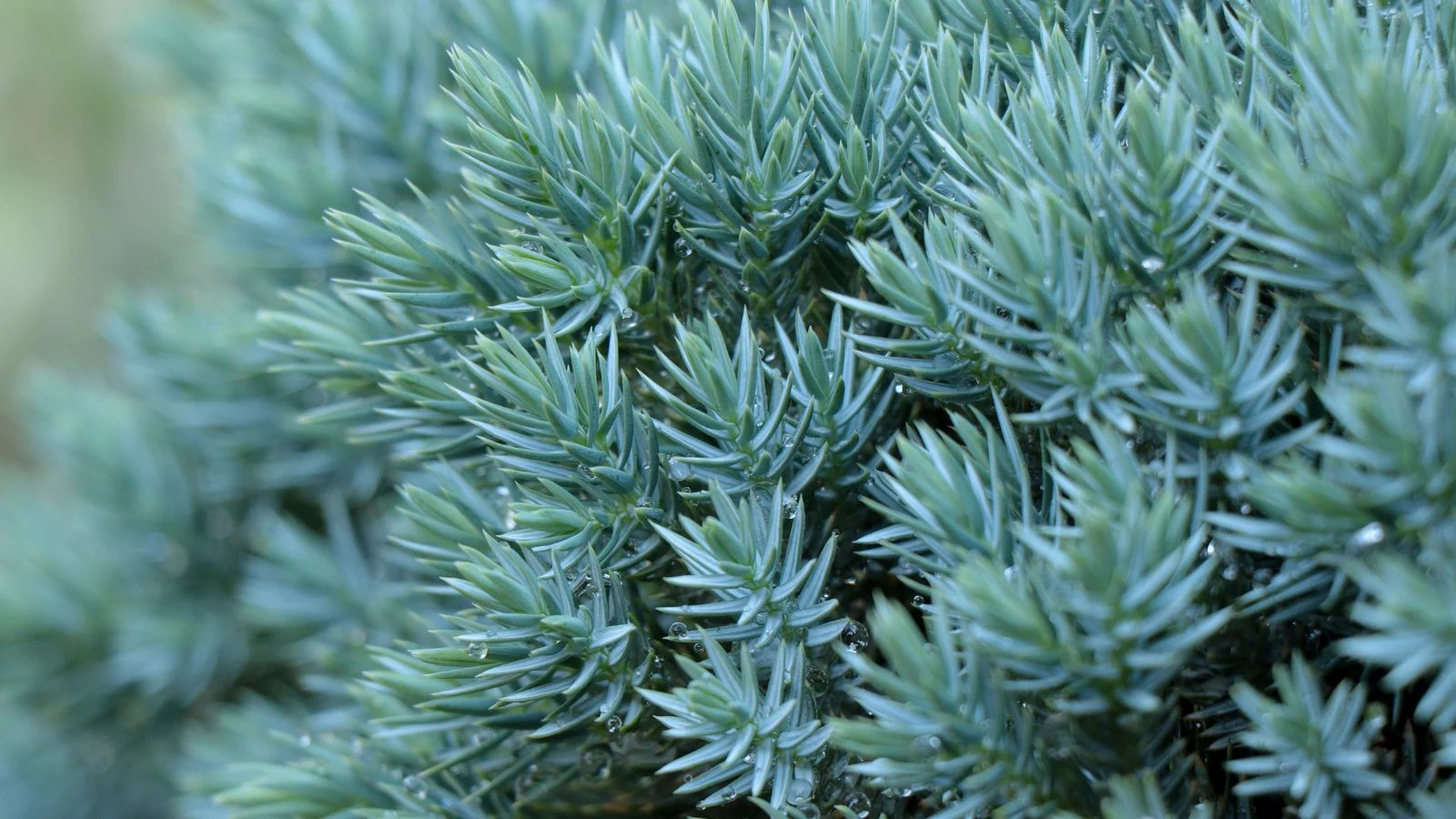 For blue hues, this mini evergreen is perfect.
‘Blue Star’ juniper is a great mini evergreen to add cool tones to your front porch. This slow-growing shrub forms a neat, rounded mound (say that three times fast) about three feet tall and wide at maturity, though it takes many years to reach that size. The sought-after steel-blue foliage is especially vibrant during cooler months.
Junipers handle heat, drought, and cold without complaint. But ‘Blue Star’ prefers full sun for the best color. In shadier spots, the blue tones won’t be as pronounced, and growth becomes more open.
This variety pairs beautifully with other mini evergreens in mixed containers on a front porch. The blue foliage creates a striking contrast against green, gold, or variegated companions, which is helpful if you’re building a more complex arrangement.
Glow Pop® Japanese Holly
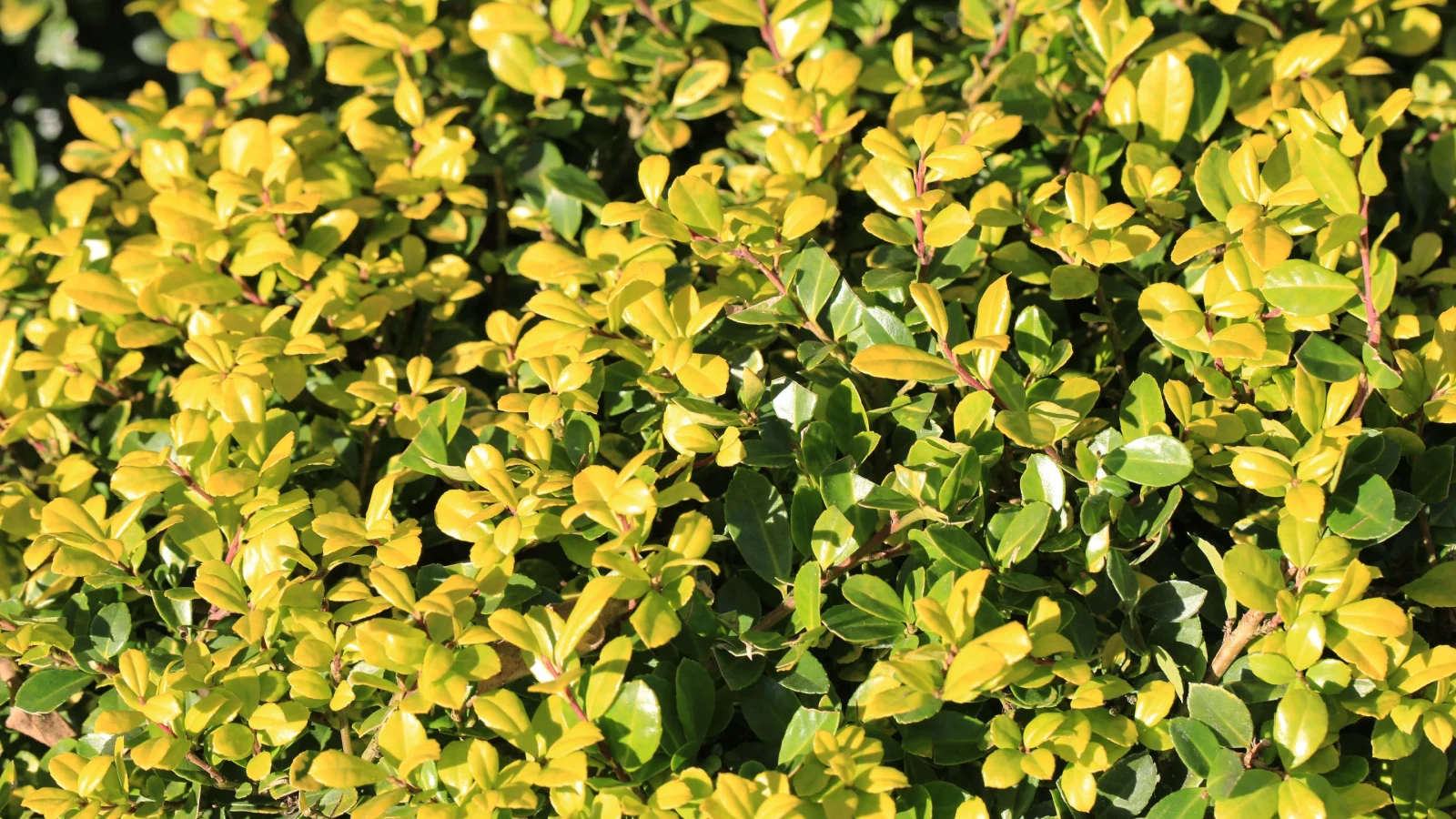 This holly is an ideal alternative to boxwood.
Japanese hollies are a great alternative to boxwood if you want something a little more exciting. Don’t get me wrong, I love boxwood (there’s one on this list), but you have to admit, they are a safe and more traditional choice.
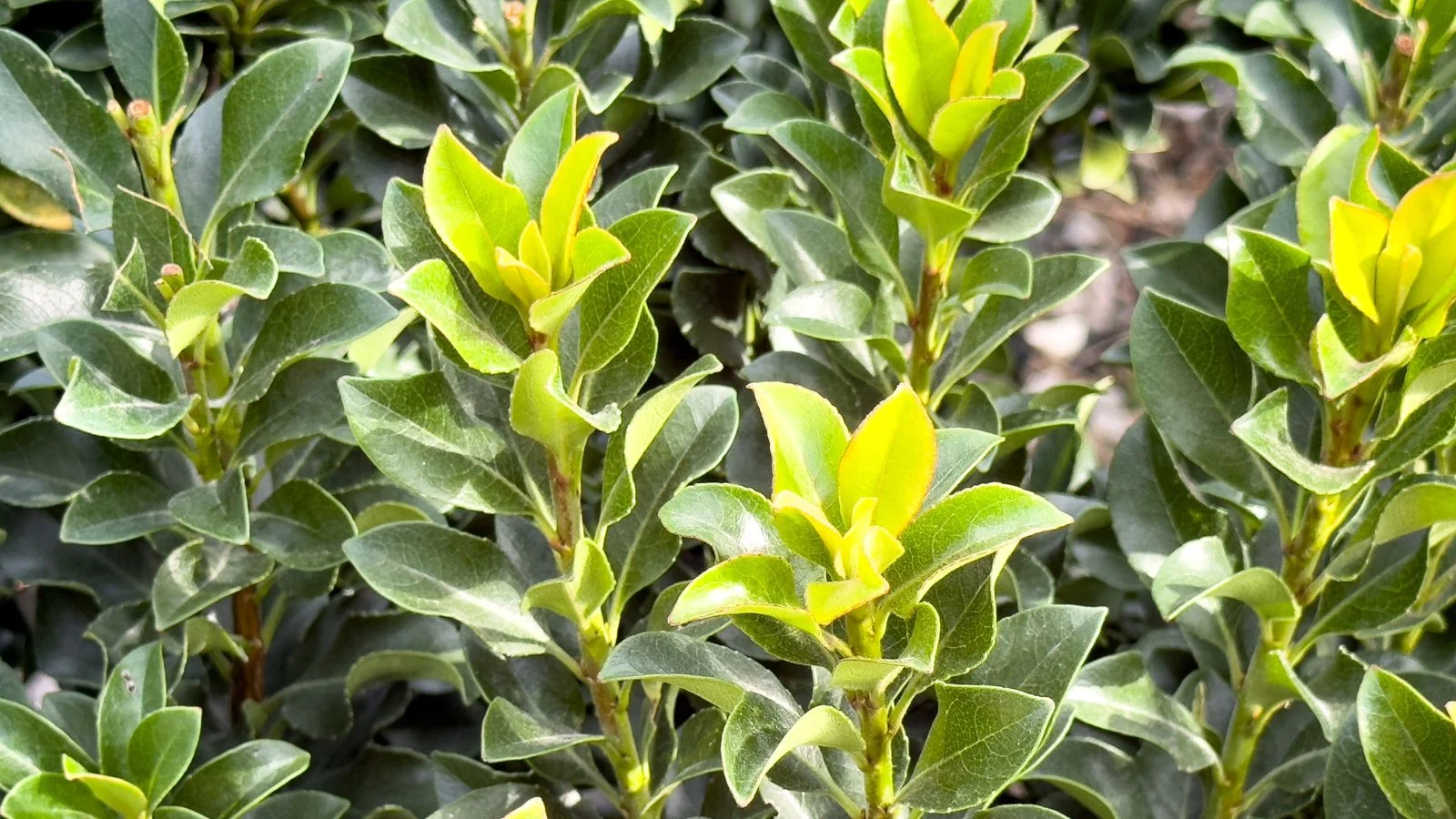
Glow Pop® in particular is one of the better mini evergreen cultivars for front porch containers. The compact growth tops out around two feet tall and wide, perfect for framing doorways.
Bright yellow new growth emerges in spring, gradually maturing to chartreuse and eventually green. This color progression creates a glowing effect that brings energy to porch displays, ensuring this cultivar earns its name.
This plant is reliably cold-hardy through zone 5, which isn’t always the case with hollies. It performs best with morning sun and afternoon shade, particularly in warmer climates. In cooler regions, full sun is fine and actually brightens the yellow new growth.
‘Little Gem’ Norway Spruce
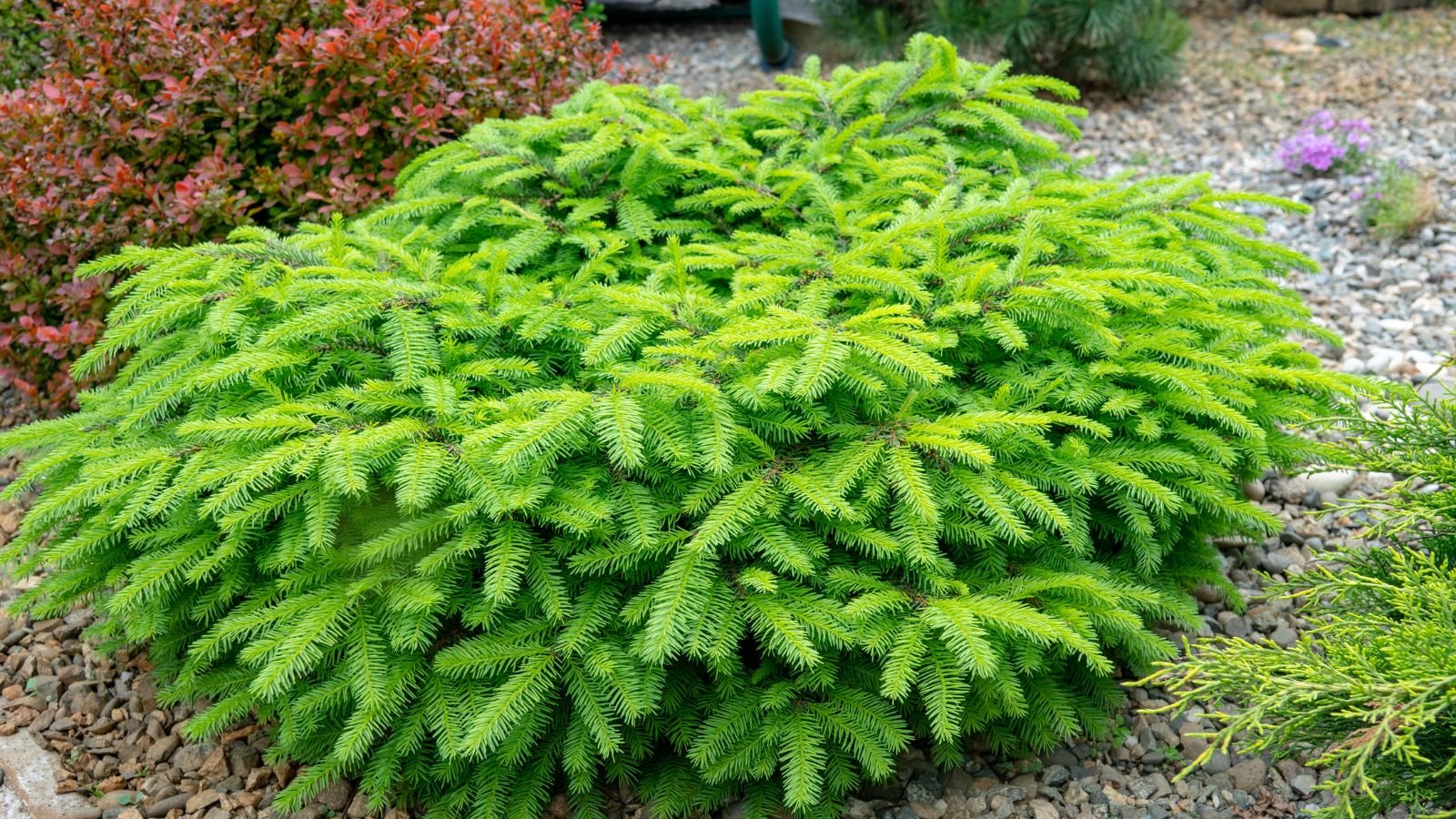 The shrub only grows to 18 inches high.
Norway spruce typically grows into a massive tree, but ‘Little Gem’ stays small and is perfect for containers. This dwarf conifer forms a dense, rounded form that grows to 18 inches in height. The short, green mini evergreen needles create a fine texture that looks stunning on a front porch.
New growth emerges bright green in spring before darkening to match the older needles. The contrast between old and new growth adds great dimension to an otherwise flat color scheme. ‘Little Gem’ grows slowly and maintains its tidy form, so you don’t have to worry about excessive maintenance.
This spruce prefers cooler climates in zones 3 through 8. In containers, double-check that there is enough drainage, as Norway spruce doesn’t tolerate wet feet. The compact size makes it suitable for smaller pots or pairing with other container favorites.
Dwarf Mountain Pine
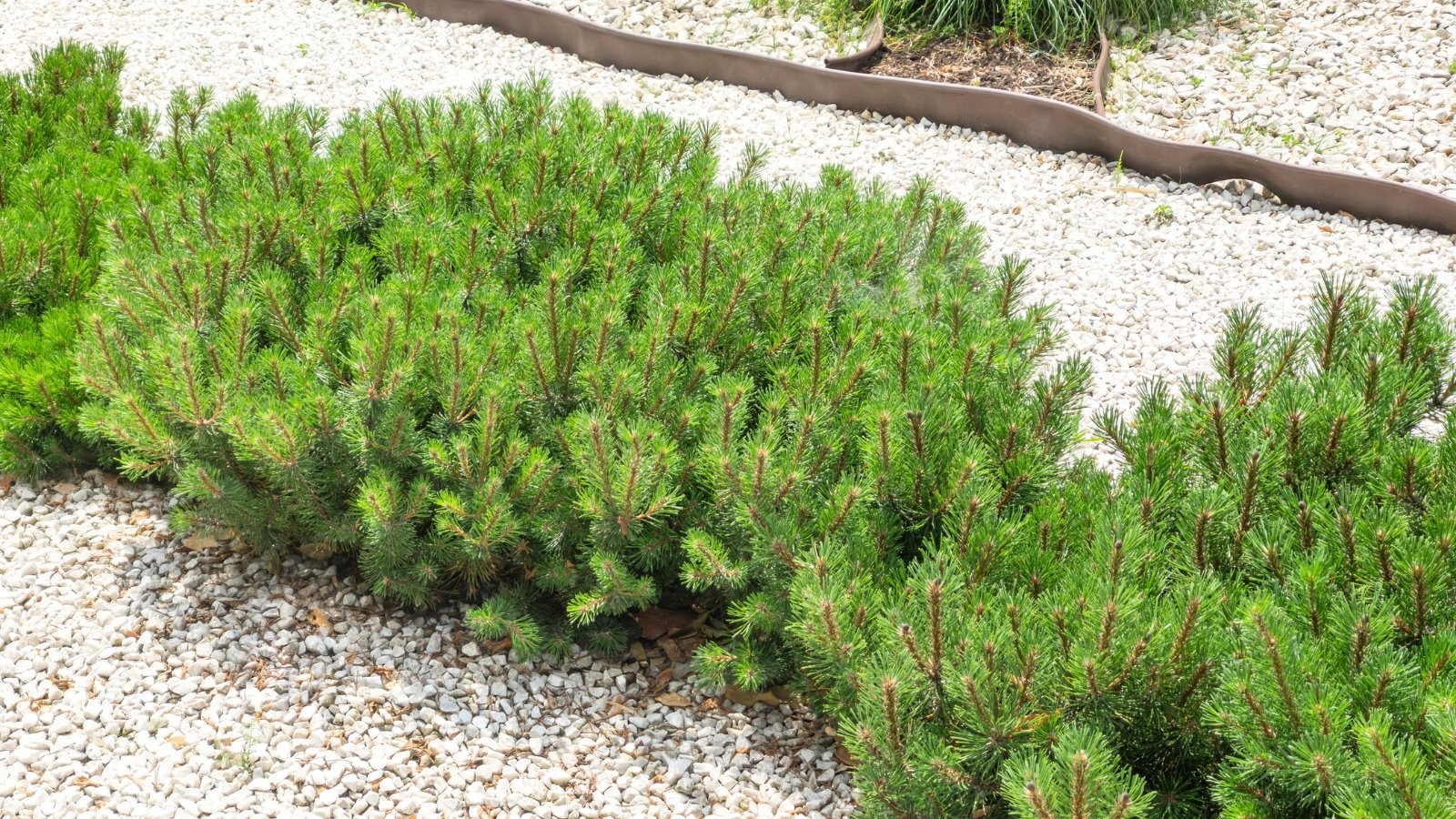 Compact needles grow to three feet tall.
Dwarf mountain pine has the same character as full-sized pines in a container-friendly package. These mini evergreens for your front porch stay around three feet tall, developing dense clusters of dark green needles that give them an aged and sophisticated appearance (even when young).
Mountain pines are incredibly tough. They handle exposed locations, wind, and poor soil, perfect for sunny areas where fussier mini evergreens on front porches might struggle. They are also incredibly cold-tolerant (growing in zones as low as 2), making them suitable for harsher winter climates.
The irregular growth pattern gives these pines an almost bonsai-like quality. They look the most striking in simple containers that don’t compete with their sculptural forms.
‘Green Gem’ Boxwood
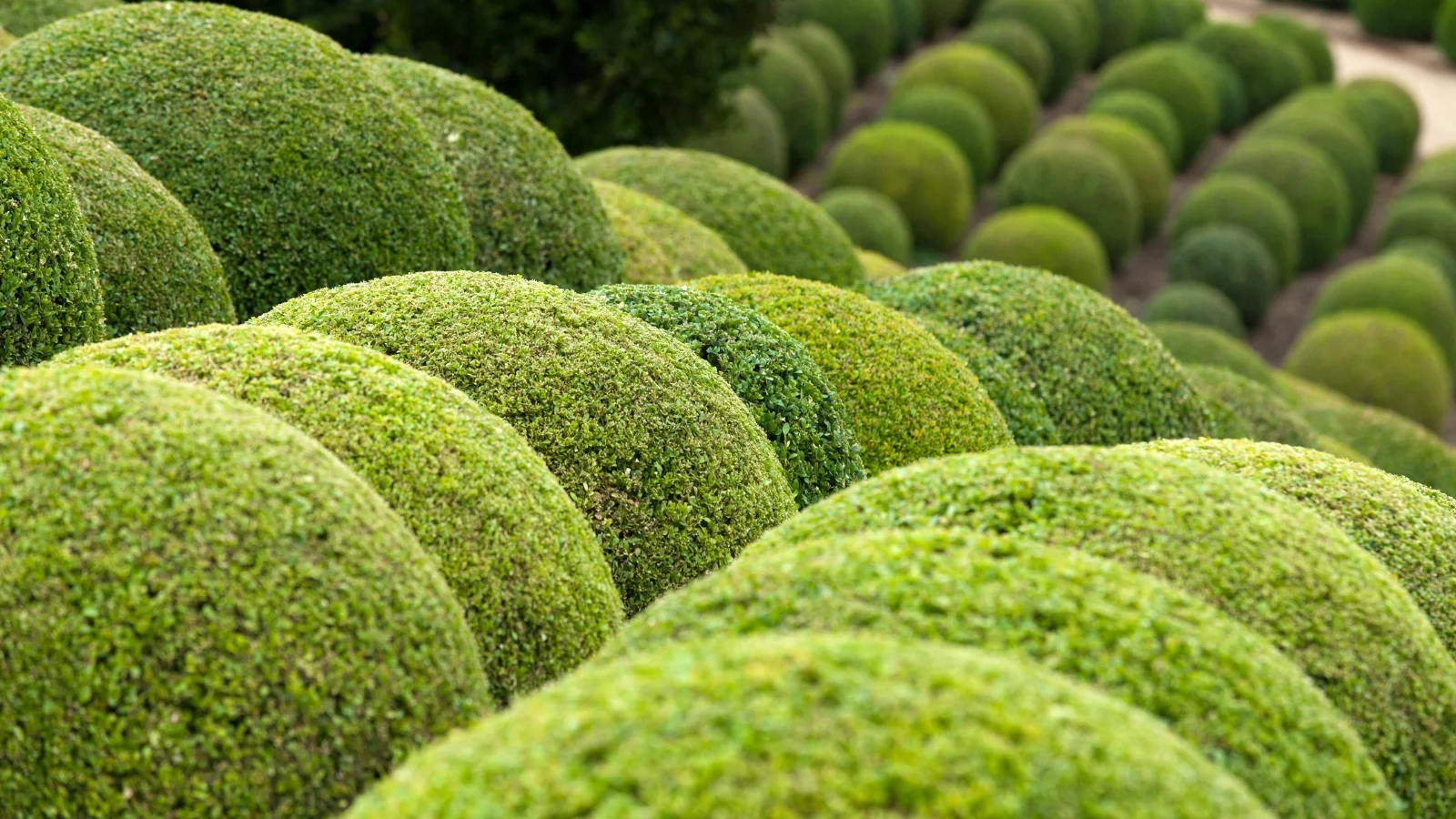 Boxwood is easy to shape in formal gardens.
Boxwood is a first choice for formal containers, and if you’re dealing with mini evergreens for a front porch, ‘Green Gem’ is one of the best compact varieties available.
This hybrid stays naturally rounded, reaching about three feet in both height and width. The glossy leaves maintain a rich green color year-round in most climates, though cold can cause some bronzing.
‘Green Gem’ handles both sun and shade well, great for those tricky covered porch positions where sun exposure changes throughout the year. The dense growth responds well to pruning if you prefer a more manicured look (though the natural form is quite tidy if you don’t want the extra maintenance).
‘Minor’ Indian Hawthorn
 Birds love the berries in fall and winter.
This broadleaf evergreen shrub deserves a spot on any porch, especially if you enjoy beautiful flowers. Who doesn’t?
‘Minor’ stays compact at just four feet tall, with leathery green leaves that take on darker tints in cold weather. White flowers appear in spring, followed by blue-black berries that birds love.
This shrub thrives in zones 7 through 10, the first on this list that’s better for warmer climates. Full sun to partial shade works, though you’ll see the best flowering in a full sun position. If you’re more interested in the leaves, this isn’t too much of a concern.
Japanese Skimmia
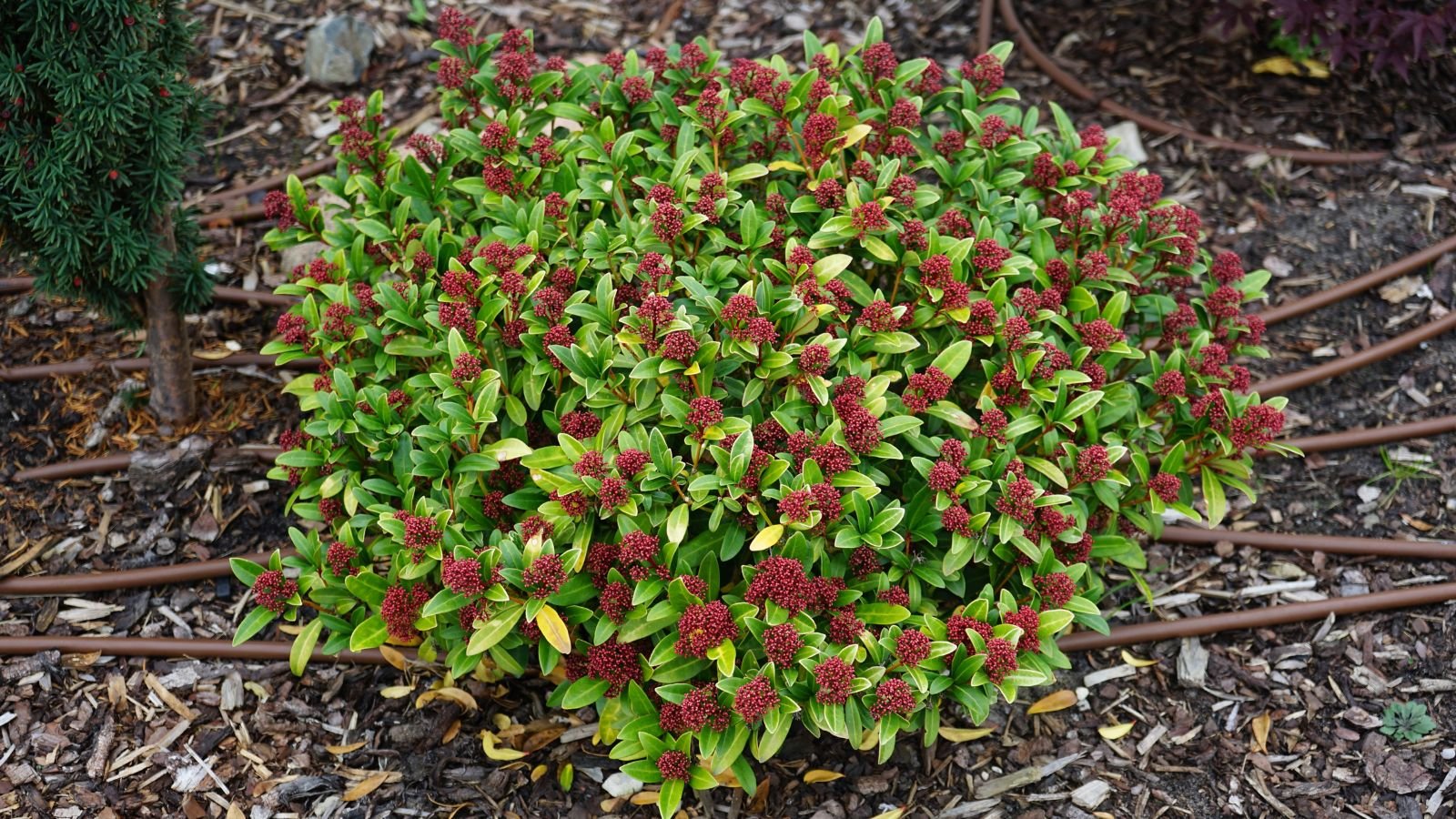 The berries are beautiful but poisonous.
Japanese skimmia also has beautiful spring flowers, but more eye-catching berries than the previous entry, a beautiful, bright red. When not in flower, the glossy green leaves provide year-round interest. They are a little larger, but will stay compact in containers.
The berries on these mini evergreens add welcome color to your front porch. Just don’t be tempted to eat them, as they are poisonous. If you have young children, this may be one to avoid for containers that will be close by.
Skimmia is the first mini evergreen on this list that prefers partial to full shade, perfect for north-facing porches or covered areas. Zones 6 through 8 are ideal, though some varieties tolerate zone 5 with protection.
A short mention of Mini evergreens you helps readers follow the flow.











Quick thought · Such a warm note about “9 Mini Evergreens You Can Grow on Your F” — lovely. Will try it.
FYI · I appreciate the point about “9 Mini Evergreens You Can Grow on Your F” — very helpful. So cozy.
Tiny tip — Practical and pretty — bookmarking this. Love this!
Tiny tip – Such a gentle approach — I really like it. Thanks for this! ✨